Retail Investor's Comeback Weapon: Seize Pre-Market and After-Hours US Stock Surge Opportunities with Efficient Fiat On/Off-Ramp Channels





Image Source: unsplash
If you want to capture sudden surge opportunities in US stocks during pre-market and after-hours sessions, the speed of fund movement is the key factor. Efficient fiat on/off-ramp channels have become the retail investor’s comeback weapon. If funds are delayed in arriving, you may miss out on massive overnight gains. You need to understand how to select the right channels, master the operation process, and avoid potential risks.
Key Points
- Understand US stock pre-market and after-hours trading sessions to capture more investment opportunities and increase return potential.
- Choose appropriate deposit and withdrawal channels to ensure fast fund arrival and avoid missing market opportunities.
- Utilize third-party payment platforms and direct broker connections to improve fund circulation efficiency and respond quickly to market changes.
- Pay attention to the security and compliance of fund flows to ensure capital safety during transactions.
- Plan fund arrangements in advance, rationally select deposit/withdrawal methods, and maximize investment returns.
Retail Investor’s Comeback Weapon and Pre/After-Hours Opportunities
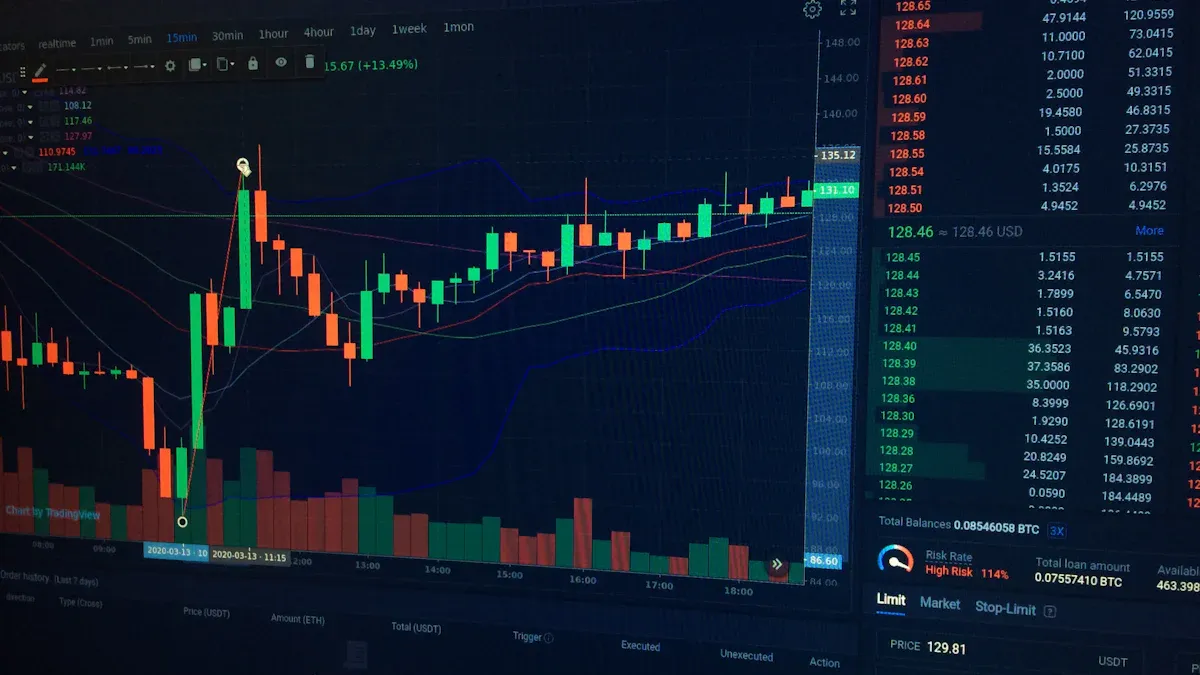
Image Source: unsplash
Pre-Market and After-Hours Trading Sessions
You can capture more opportunities during US stock pre-market and after-hours trading sessions. US pre-market trading runs from 4:00 AM to 9:30 AM (Eastern Time), and after-hours trading runs from 4:00 PM to 8:00 PM. Pre-market mainly overlaps with European open and Asian close, while after-hours overlaps with European close and Asian open. The table below shows the main trading windows and corresponding market activities:
| Trading Window | US Time (ET) | Main Market Activity |
|---|---|---|
| Pre-market | 4:00 AM – 9:30 AM | European open, Asian close |
| After-hours | 4:00 PM – 8:00 PM | European close, Asian open |
In recent years, pre-market trading volume has grown 15-fold, after-hours trading has grown 2.3-fold, and overall non-regular-hours trading volume has doubled. You can see that pre-market and after-hours trading have become one of the retail investor’s comeback weapons.
Causes of Surge Opportunities
Pre-market and after-hours sessions often experience sharp price swings. You will find that corporate earnings announcements, economic data releases, global market events, and breaking news can all trigger US stock surges during these extended hours. For example, after major news breaks, extended trading sessions allow you to react quickly before the regular market opens and position ahead of the crowd. Due to thin liquidity, a single large order can cause price movements of 5-10% or more. Futures markets also influence pre/after-hours trading, with traders closely watching futures contract movements. You can use limit orders and stop-loss orders to manage risk, monitor global news to anticipate market direction, and choose higher-liquidity windows for trading.
Challenges for Retail Participation
You face numerous challenges during pre-market and after-hours trading. Lower liquidity makes execution difficult, volatility increases, bid-ask spreads widen, and trading costs rise. The table below summarizes the main challenges:
| Challenge Type | Detailed Description |
|---|---|
| Limited liquidity | After-hours volume is significantly lower than regular market hours, making it harder to buy or sell specific stocks. |
| Higher volatility | Thin volume amplifies price swings; a single large trade can cause dramatic stock price changes. |
| Wider bid-ask spreads | Spreads expand, increasing transaction costs and reducing potential profits. |
You need to rely on information technology, fintech, and social media to enhance your capabilities. The new generation of retail investors accesses real-time information via social media, uses advanced research tools to analyze markets, and responds quickly to pre/after-hours breaking events. Fund circulation efficiency has become the core element of the retail investor’s comeback weapon. Only when funds can arrive efficiently can you timely capture surge opportunities during pre-market and after-hours sessions and truly achieve a comeback.
Deposit and Withdrawal Channels

Image Source: pexels
When participating in US stock pre-market and after-hours trading, efficient fund circulation is the key to capturing market opportunities. Choosing the right deposit and withdrawal channels not only affects arrival speed but also directly impacts trading costs and capital safety. You need to understand the basic principles, applicable scenarios, and characteristics of different channels to make the optimal choice based on your needs.
Mainstream Channel Types
Currently, mainstream US stock deposit and withdrawal channels mainly include the following categories:
- Bank wire transfer: Direct fund transfer through the banking system, suitable for large-amount, cross-border fund movements.
- Third-party payment: Platforms such as BiyaPay support global payments & collections, international remittance, real-time fiat-to-crypto conversion, ideal for users seeking flexibility and multi-currency needs.
- Direct broker connection: Some brokers offer account direct-link services, enabling real-time transfers between broker and bank accounts, suitable for high-frequency traders and users with extremely high requirements for arrival speed.
You can flexibly choose the most suitable channel based on fund size, arrival speed, fee structure, and operational convenience.
Wire Transfer Method
Bank wire transfer, as a traditional and widely used deposit/withdrawal method, offers the following significant advantages:
- Speed and efficiency: Wire transfer is one of the fastest fund transfer methods, usually available same day, especially suitable for US stock trading scenarios that require quick arrival.
- Security: Wire transfers use strong encryption and multi-factor authentication to ensure funds safely reach the designated account.
- Reliability: Electronic settlement occurs through trusted banking networks, making the fund flow process highly reliable.
- International transfer: Wire transfers support global fund movement, facilitating international investors’ participation in the US stock market.
When choosing wire transfers, you need to pay attention to fees and arrival time. Taking Hong Kong licensed banks as an example, domestic wire fees are usually between $0 and $50, while international wire fees are about $45. In terms of processing time, bank wire transfers to your account are usually same-day, electronic funds transfers take 1-3 business days, and paper checks take 5-6 days. Some brokers like Fidelity support near-instant wire arrival with no hold period, greatly improving fund utilization efficiency.
| Method | Processing Time |
|---|---|
| Electronic funds transfer to bank | 1–3 business days |
| Bank wire to bank | Same day |
| Paper check | 5–6 days |
If you need large-amount, cross-border fund circulation, wire transfer remains the most reliable choice, but you should plan fund arrangements in advance to avoid delays due to bank holidays or time zone differences.
Third-Party Payment
In recent years, third-party payment platforms have become the preferred choice for more and more US stock investors. Taking BiyaPay as an example, you can achieve global payments & collections, international remittance, real-time fiat-to-crypto conversion, and USDT-to-USD or HKD exchange through such platforms, meeting multi-currency and multi-scenario fund needs. Third-party payment platforms generally have the following characteristics:
- Convenient operation: You can quickly initiate deposit/withdrawal operations via mobile or web without cumbersome bank procedures.
- Fund flexibility: Supports multi-currency and multi-channel fund transfers, suitable for users who need frequent fund reallocation.
- Real-time arrival: Some platforms support real-time fund arrival, greatly improving circulation efficiency and helping you respond quickly to market changes during pre/after-hours.
- Transparent fees: Platforms usually clearly display service fees and exchange rates, allowing you to calculate costs in advance.
When selecting a third-party payment platform, you should focus on the platform’s compliance status, capital security measures, and whether it supports deposit/withdrawal needs for mainstream markets such as US stocks and Hong Kong stocks. For investors pursuing fund efficiency and diversified asset allocation, third-party payment is undoubtedly one of the retail investor’s comeback weapons.
In this type of setup, it also helps to break the tool choice down further. If you care about both funding speed and the connection between conversion and follow-up trading, you can first review the account structure on the BiyaPay website, then compare its remittance service, fiat exchange rate converter, and stock information page to see whether the workflow fits your own needs. In practice, it is more useful as a supporting tool for cross-border payments, fund transfers, and investment preparation than as a substitute for your own timing, cost, and risk judgment.
From a positioning perspective, BiyaPay is a multi-asset wallet covering cross-border payments, investing, and fund management, with relevant compliance registrations in jurisdictions including the United States and New Zealand. In an article focused on time-sensitive pre-market and after-hours opportunities, that matters mainly because it helps you evaluate channel stability, information transparency, and how smoothly funds can connect to the next step.
Tip: Although third-party payment platforms are convenient and efficient, you must ensure the platform has legitimate qualifications and strictly complies with relevant regulations to protect fund safety.
Direct Broker Connection
Direct broker connection channels provide the ultimate fund circulation experience for high-frequency traders and professional investors. Through direct broker connections, you can achieve the following advantages:
- Real-time execution: Fund transfers are completed almost instantly, suitable for traders relying on fast market entry/exit strategies.
- Advanced platforms: Brokers usually provide charting tools, market scanners, and real-time data to meet your needs for professional trading tools.
- Direct market access: Significantly reduces slippage and improves execution speed, especially noticeable during high market volatility.
- Fee structure: Some brokers adopt competitive, volume-based fee structures suitable for active traders.
You need to note that direct broker connection platforms are relatively complex to operate and are more suitable for experienced investors. Before using them, you should fully understand the platform’s functions and risks to ensure capital safety and operational compliance.
Note: While direct broker connections can greatly improve fund efficiency, they require higher operational proficiency and risk control capabilities. You should choose carefully based on your experience and needs.
By comparing the principles and characteristics of different deposit/withdrawal channels, you can flexibly combine multiple channels according to your fund size, trading frequency, and risk preference to maximize fund circulation efficiency, seize pre/after-hours surge opportunities, and truly realize the value of the retail investor’s comeback weapon.
Channel Pros and Cons
Speed vs. Cost
When choosing deposit/withdrawal channels, arrival speed and fees are the most intuitive considerations. Bank wire transfers usually arrive same day and are suitable for large fund movements, but handling fees are higher, with international wires around USD 45. Third-party payment platforms like BiyaPay support global payments and multi-currency conversion, with some scenarios achieving real-time arrival and transparent service fee structures, suitable for users seeking fund flexibility. Direct broker connections provide near-instant fund transfer experience for high-frequency traders, with fees varying by trading volume. The table below compares speed and cost across the three mainstream channels:
| Channel Type | Arrival Speed | Fees (USD) | Applicable Scenarios |
|---|---|---|---|
| Bank wire | Same day or 1-3 days | 0-50 (domestic) / 45 (international) | Large-amount, cross-border fund movement |
| Third-party payment | Real-time or within 1 day | Transparent service fees | Multi-currency, flexible allocation |
| Direct broker connection | Real-time | Volume-based | High-frequency, professional trading |
Entry Barrier & Security
Different channels have varying requirements for account opening thresholds and security safeguards. Bank wire transfers require complete identity information and bank account details, offering high security suitable for users with larger capital. Third-party payment platforms usually support online account opening with simple processes, ideal for users wanting quick entry. Direct broker connections require securities accounts and certain operational experience. You can refer to the following points:
- Bank wire: Strict identity verification, high fund security.
- Third-party payment: Convenient account opening; platform must have compliant qualifications and fund custody measures.
- Direct broker connection: Well-established account system, suitable for experienced investors.
When choosing, you should prioritize channels with strong security safeguards to ensure the fund flow process is under regulatory protection.
Compliance
Compliance directly affects fund safety and transaction legality. The US market requires all financial institutions to comply with the Expedited Funds Availability Act, ensuring customer deposits are available within specified timeframes and disclosing relevant policies to clients. When using any deposit/withdrawal channel, you should pay attention to its compliance standards. The main compliance requirements are shown in the table below:
| Regulation | Content |
|---|---|
| Funds availability | Financial institutions must make deposits available for withdrawal within specified timeframes. |
| Disclosure requirements | Financial institutions must provide customers with funds availability disclosures and notices. |
You can review the platform’s disclosure information to determine whether it meets relevant regulations and protect your rights.
Reasons to Recommend Efficient Channels
If you want to capture pre-market and after-hours surge opportunities, fund circulation efficiency is the retail investor’s comeback weapon. Efficient channels such as third-party payment and direct broker connections can help you achieve real-time fund arrival and flexible allocation, greatly improving trading response speed. When choosing, you should comprehensively consider arrival speed, fees, compliance, and security, prioritizing platforms with compliant qualifications, transparent services, and fast arrival. This way, you can seize more opportunities in the US stock market and achieve dual improvement in fund efficiency and returns.
Operation Process and Risk
Quick Account Opening
You can quickly open a US stock trading account through efficient fiat deposit/withdrawal channels. Taking the Wallbit app as an example, you can complete USD account opening in just a few minutes. The account opening process usually includes identity verification, filling in basic information, and setting account security measures. Some platforms support instant fund transfers between investment accounts and main accounts, helping you eliminate fund delays and maintain liquidity. Some brokers also offer FDIC bank sweep programs, where cash balances earn interest without being affected by 30% IRS withholding tax. When opening an account, you should ensure the selected platform has compliant qualifications and strictly complies with US and relevant regional regulatory requirements.
Linking Bank Accounts/Cards
After completing account opening, you need to link your bank account or debit card to the trading account. The general process is as follows:
- Go to the account page and click the menu option.
- Select transfer, go to linked accounts, and click add account.
- Choose your bank from the major bank list or use the search bar to find it.
- Enter your online banking username and password, then select the account to link.
If you need to link a debit card, you can select debit card during add account, enter card information, and confirm the link. Some platforms support direct linking with Hong Kong licensed bank accounts, improving fund transfer efficiency. During the linking process, you should ensure information accuracy to avoid fund transfer failures due to incorrect details.
Deposit and Withdrawal Operations
You can perform deposit and withdrawal operations in multiple ways. Taking BiyaPay as an example, you can achieve global payments & collections, international remittance, real-time fiat-to-crypto conversion, and USDT-to-USD or HKD exchange to meet multi-currency fund needs. Bank wire transfers are suitable for large-amount, cross-border fund movement with fast arrival and transparent fees. Direct broker connections provide near real-time fund transfer experience for high-frequency traders. During operations, you should pay attention to arrival time, service fees, and exchange rate changes, rationally arrange fund allocation, avoid missing pre/after-hours surge opportunities due to delays, and truly unleash the value of the retail investor’s comeback weapon.
Common Issues and Risk Warnings
In actual operations, you may encounter issues such as account review delays, bank card linking failures, deposit/withdrawal limits, and exchange rate fluctuations. Some platforms have additional review requirements for large fund movements, which may affect arrival speed. You should prioritize platforms with compliant qualifications to ensure fund safety. It is recommended to regularly check account information to avoid operational restrictions due to expired identity information or mismatched details. You also need to be vigilant against phishing websites, fake platforms, and other security risks, and never transfer funds to unknown accounts. Compliant operations and risk prevention are the foundation for ensuring fund safety and efficient circulation.
Real-World Case: Practical Guide to the Retail Investor’s Comeback Weapon
Capturing Pre-Market and After-Hours Surge Opportunities
In the US stock market, you often encounter sudden positive news during pre-market and after-hours. For example, a tech company releases better-than-expected earnings after hours, causing the stock to rise 8% shortly after regular trading ends. If you can transfer funds into your US stock account in advance through efficient fiat channels (such as BiyaPay or Hong Kong licensed bank wire), you can buy immediately during after-hours and enjoy the gains from the price surge.
Assume you use BiyaPay for fund transfers—the platform supports global payments and USDT-to-USD conversion with near real-time arrival. You avoid the 1-3 day processing cycle of traditional banks and can complete funding and place orders within 30 minutes of news release. In contrast, relying on traditional paper checks or inefficient transfers may delay funds, causing you to miss the best entry window and significantly compress profit potential.
You can improve operational efficiency in the following ways:
- Choose third-party payment platforms that support real-time arrival to reduce waiting time.
- Complete account linking and identity verification in advance to ensure funds are always available.
- Monitor important US stock pre/after-hours announcements and prepare fund allocation ahead of time.
Impact of Fund Efficiency on Returns
Fund circulation efficiency directly determines whether you can capture market opportunities. In early 2024, retail investor fund inflows coincided with S&P 500 all-time highs. Over the past two years, fund transfers into investment accounts have increased significantly, participation among lower-income groups has risen, and the return gap has narrowed—all indicating that fund efficiency has an important impact on returns.
If you can use the retail investor’s comeback weapon—efficient deposit/withdrawal channels—to quickly move funds into a US stock account after news breaks, you can enter positions early in the price movement and achieve higher returns. For example, an investor wired USD 50,000 via a Hong Kong licensed bank before market open; funds arrived same day, allowing a low-position buy in pre-market and a 10% intraday profit. Another investor, whose funds arrived two days late, could only chase the high and realized less than 3% return.
You should value fund efficiency, rationally select deposit/withdrawal channels, and plan fund arrangements in advance. This way, you can truly unleash the value of the retail investor’s comeback weapon, capture more US stock pre/after-hours surge opportunities, and maximize returns.
You now understand the importance of efficient fiat deposit/withdrawal channels for capturing US stock pre-market and after-hours opportunities. Choosing the right channel allows faster fund circulation and improved operational efficiency. You should emphasize compliant operations and focus on risk prevention. Only in this way can you truly leverage the retail investor’s comeback weapon and seize more US stock investment opportunities.
FAQ
How to choose the right US stock deposit/withdrawal channel for yourself?
You should make a comprehensive evaluation based on fund size, arrival speed, fee structure, and security. Large amounts can prioritize bank wire transfers, flexibility seekers can choose third-party payment, and frequent traders can consider direct broker connections.
Are third-party payment platforms safe for deposits and withdrawals?
You need to choose platforms with compliant qualifications. Legitimate platforms use multi-layer encryption and fund custody measures to effectively protect capital safety. It is recommended to verify platform qualifications and user reviews to avoid fund risks.
What are common reasons for deposit/withdrawal operation failures?
Failures may occur due to incorrect account information, failed identity verification, exceeding limits, or bank holidays. It is recommended to check documents in advance and arrange fund timing reasonably.
Are there time restrictions for fund arrival in US pre-market and after-hours?
You need to pay attention to each channel’s arrival time. Some third-party payments and direct broker connections support real-time arrival, while bank wires are affected by business days and time zones. It is recommended to prepare funds in advance to avoid missing trading opportunities.
How to reduce costs caused by exchange rate fluctuations?
You can choose platforms that support real-time conversion to lock in exchange rates in advance. Some third-party payment platforms provide transparent rates, helping you calculate costs and reduce uncertainty from exchange rate fluctuations.
*This article is provided for general information purposes and does not constitute legal, tax or other professional advice from BiyaPay or its subsidiaries and its affiliates, and it is not intended as a substitute for obtaining advice from a financial advisor or any other professional.
We make no representations, warranties or warranties, express or implied, as to the accuracy, completeness or timeliness of the contents of this publication.
Related Blogs of

What Is the Difference Between DRAM Contract Price and Spot Price? Which Indicator Should Investors Watch?


What Are NOR Flash, SLC NAND, and EEPROM? Why They Help Explain Hong Kong-Listed Memory-Related Stocks


What Is the Relationship Between ASMPT 0522.HK and HBM? The Role of Advanced Packaging Equipment in the AI Memory Supply Chain


Why Is HDD Supply and Demand Tightening? AI Data Centers, Long-Term Agreements, and Western Digital/Seagate Pricing Power

Choose Country or Region to Read Local Blog
 Australia
 Austria
 Belgium
 Canada
 Cyprus
 Czech Republic
 Denmark
 Estonia
 Finland
 France
 Germany
 Greece
 Hong Kong
 India
India Indonesia
 Ireland
 Italy
Italy Japan
Japan Latvia
 Lithuania
 Luxembourg
 Malaysia
 Malta
Malta Morocco
 Nepal
Nepal Netherlands
 New Zealand
 Norway
 Pakistan
 Philippines
 Poland
 Portugal
 Romania
 Singapore
 Slovakia
 Slovenia
 South Africa
 South Korea
 Spain
Spain Sweden
 Thailand
 The United States
 Turkey
 United Arab Emirates
 United Kingdom
 Vietnam
Contact Us




BIYA GLOBAL LLC is registered with the Financial Crimes Enforcement Network (FinCEN), an agency under the U.S. Department of the Treasury, as a Money Services Business (MSB), with registration number 31000218637349, and regulated by the Financial Crimes Enforcement Network (FinCEN).
BIYA GLOBAL LIMITED is a registered Financial Service Provider (FSP) in New Zealand, with registration number FSP1007221, and is also a registered member of the Financial Services Complaints Limited (FSCL), an independent dispute resolution scheme in New Zealand.