
Deploying Agent from 0 to 1: Payment Gateways Connecting Web3 and AI





Image Source: pexels
If you want to deploy an Agent payment gateway, you first need to clarify the key steps in each phase. You should conduct market research and planning, assemble a professional team, complete design and development, integration testing, compliance certification, and finally achieve deployment and ongoing maintenance. The table below shows the growth potential of Agent payment gateways in the Web3 and AI fields:
| Sector | Current Market Value | Projected Market Value | Compound Annual Growth Rate (CAGR) |
|---|---|---|---|
| Agentic AI | $5.25 billion (2024) | $199.05 billion (2034) | 43.84% |
| Web3 Payment Solutions | $9.64 billion (2023) | $93.5 billion (2032) | 28.5% |
| Proportion of AI Agent Activity | N/A | N/A | 19% |
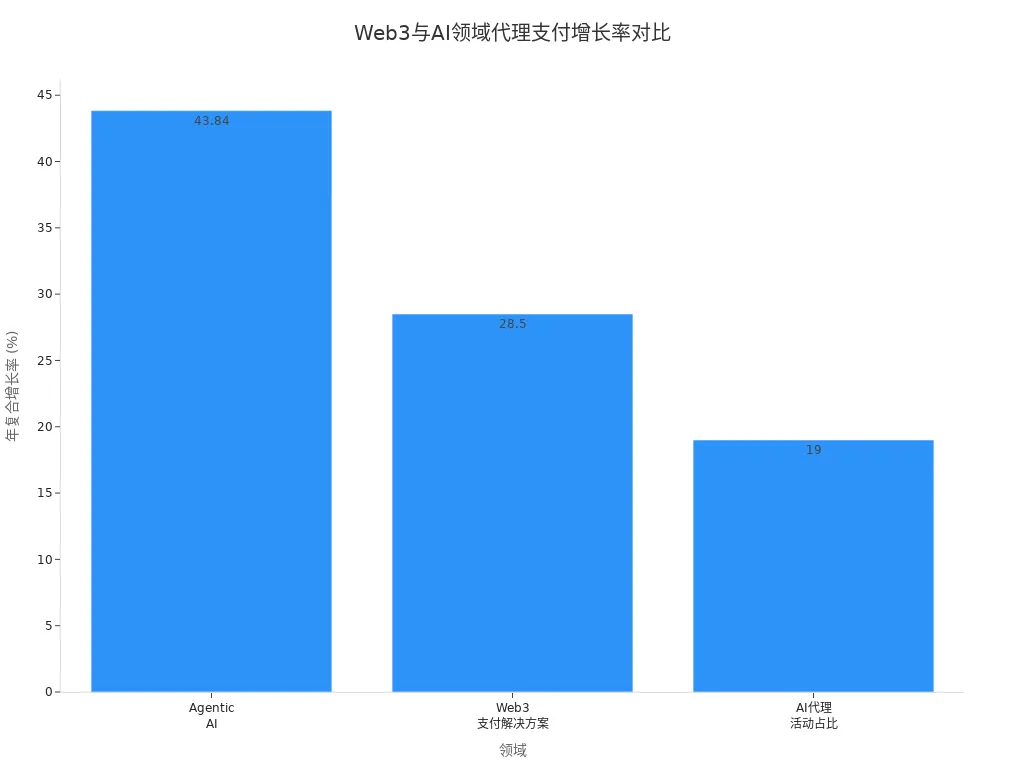
You will find that deploying an Agent not only connects the Web3 and AI ecosystems but also captures high-growth market opportunities.
Core Key Points
- Clearly defining business goals and user needs is the first step in deploying an Agent payment gateway; ensuring compliance and data security is critical.
- Selecting the appropriate technical architecture and protocols, such as the Kite protocol, can enhance system security and scalability while supporting multiple payment methods.
- AI integration enables automation of payment processes, reduces manual intervention, and improves overall operational efficiency and security.
- Focus on compliance and security, ensure adherence to data protection regulations, reduce legal risks, and build user trust.
- Collaborate with various parties in the payment industry to promote ecosystem synergy, meet diverse market needs, and drive continuous innovation in Agent payment gateways.
Full Deployment Process for Agent Payment Gateways

Image Source: unsplash
Requirements Analysis and Objectives
When deploying an Agent payment gateway, you must first clarify your business objectives and user needs. The development process for Web3 projects differs fundamentally from traditional software development. You need to focus on challenges related to compliance, regulatory requirements, and data protection. The table below compares the main differences between Web3 projects and traditional software projects:
| Aspect | Web3 Projects | Traditional Software Projects |
|---|---|---|
| Compliance | Faces unclear and conflicting rules, must operate across multiple jurisdictions | Typically follows clear legal frameworks |
| Regulatory Requirements | Must comply with strict KYC/AML requirements | Relatively few regulatory requirements |
| Data Protection Law Conflicts | Immutable blockchain records conflict with data protection laws | Usually follows data protection laws |
You need expertise in blockchain, smart contracts, and decentralized application architecture. Traditional software developers often need to acquire new knowledge in areas such as blockchain consensus mechanisms and cryptography principles. The lack of these specialized capabilities directly impacts project timelines and budgets. During the requirements analysis phase, you should fully consider compliance, regulation, and data security, and clearly define the target users, business scenarios, and core functions of the Agent payment gateway.
Technology Selection and Architecture
When selecting technology, you need to balance system scalability, security, and compatibility. 5G technology will transform the real-time nature and multi-terminal experience of transactions. You should choose strong encryption algorithms for the Agent payment gateway to protect sensitive data, especially in multi-device transaction scenarios. An API gateway can consolidate microservices through a unified endpoint, simplifying client access. Built-in traffic management, rate limiting, and load balancing mechanisms can improve system resilience. In the future, artificial intelligence will further optimize routing, security, and scalability.
The Kite protocol provides powerful underlying support for Agent payment gateways. You can leverage the Kite protocol infrastructure to enable autonomous AI agents to seamlessly discover, negotiate, and pay for services. The Kite protocol connects traditional finance and Web3 through native payment capabilities, supporting instant micropayments and low transaction fees. You can deploy Agents in both Web2 and Web3 applications to achieve millions of global micropayments. The Kite protocol also provides native identity, governance, and payment capabilities for AI agents, addressing deficiencies in the current internet infrastructure regarding identity, trust, and scalable payment systems.
Step Overview
You can deploy an Agent payment gateway following the process below:
- Clearly define business needs and compliance goals, outline user personas and application scenarios.
- Assemble a diverse team with expertise in blockchain, AI, and security, and develop a project plan.
- Design the system architecture, select underlying components such as the Kite protocol, and plan the API gateway and encryption mechanisms.
- Develop and integrate each module, with emphasis on implementing identity authentication, payment settlement, and multi-protocol compatibility.
- Conduct integration testing covering multi-chain, multi-terminal, and high-concurrency scenarios to ensure system resilience and security.
- Complete compliance certification, meet KYC/AML and other regulatory requirements, and mitigate conflicts with data protection laws.
- Deploy to production, continuously monitor system performance and security, and perform regular upgrades and maintenance.
During the deployment of Agents, you need to focus on system scalability and security. 5G and AI technologies will bring more innovation opportunities to payment gateways. As a universal execution layer, the Kite protocol enables you to achieve multi-protocol compatibility, connect Web2 and Web3 ecosystems, and enhance the overall capabilities of the Agent payment gateway.
Value of Web3 and AI Integration

Image Source: unsplash
Web3 Empowering Payments
You can enhance the security and transparency of payment systems through Web3 technology. The decentralized nature of blockchain reduces reliance on intermediaries and lowers risks in traditional payment systems. All transaction records are publicly transparent on-chain, allowing anyone to verify them, greatly increasing trust between users. You will find that AI-related payment systems have already raised $1.8 billion, accounting for 26% of total Web3 investment. Gartner predicts that the agentic AI market could grow to $30 trillion by 2030. When AI and blockchain are combined, the productivity of decentralized applications increases by 30%.
| Evidence Type | Specific Content |
|---|---|
| Investment Amount | AI-related payment systems raised $1.8 billion, accounting for 26% of total Web3 investment. |
| Market Forecast | The agentic AI market is expected to grow to $30 trillion by 2030. |
| Productivity Increase | Combining AI with blockchain increases the productivity of decentralized applications by 30%. |
AI-Driven Agent Commerce
You can see that AI agents have become independent participants in economic activity. Future commercial transactions will feature various settlement relationships such as “agent-to-agent” and “enterprise-to-agent,” forming an economic network with both human and agent participation. PolyFlow’s PID (Payment Identity) provides verifiable digital identities for AI agents, enhancing transaction security and trust. PLP (Payment Liquidity Pool) supports high-frequency micropayments, ensuring efficient business operations. On-chain credit data accumulated through PID provides a trust foundation for the agent economy, guaranteeing transaction reliability.
The Bridging Role of Agents
When deploying Agents, you can make AI agent payments the core pillar of commerce between autonomous machines, supporting high-frequency small-value payments suitable for interactions in Web3 and AI ecosystems. MEMO’s blockchain payment channel supports on-chain micropayments as low as 1 cent, breaking through the limitations of traditional payment gateways in AI scenarios. The x402 protocol enables payments to be automatically completed within agent workflows, achieving sub-second settlement and supporting real-time large-scale agent economies. Through these technical means, you can truly achieve deep integration of Web3 and AI, driving the implementation of agent commerce.
Key Technologies for Deploying Agents
Protocols and Standards
When deploying Agents, you must prioritize compatibility with protocols and standards. Currently, the core protocol stack for Agentic Commerce is gradually maturing, providing a solid foundation for AI-driven commercial systems. The MCP (Model Context Protocol) focuses on how agents securely access external tools and data, while the A2A protocol addresses collaboration between agents. You can refer to the table below to understand the features of mainstream protocols:
| Protocol Name | Description | Key Features |
|---|---|---|
| Model Context Protocol (MCP) | Open protocol connecting LLMs/Agents with external systems | Unified interface, low integration cost, high scalability |
| Agentic Commerce Protocol (ACP) | Structured order placement process, secure purchase initiation | Compatible with e-commerce systems, merchants retain control |
| Agent Payments Protocol (AP2) | Compliant payment process, supports multiple channels | Auditable, supports various payment methods |
You can achieve multi-protocol compatibility and cross-chain operations through the Kite protocol, improving the flexibility and scalability of the Agent payment gateway.
Identity and Trust Mechanisms
When deploying an Agent payment gateway, you must ensure the security of identity and trust mechanisms. Agent identity requires entirely new verification methods because agents not only represent users in payments but also need to establish trust with merchants. You can adopt multi-signature mechanisms to ensure transaction security. The table below shows common signature types and their functions:
| Signature Type | Function |
|---|---|
| Agent Identification Signature | Ensures the agent is trustworthy, allows merchants to identify and authorize |
| Consumer/Device Identity Signature | Confirms consumer identity or account status |
| Payment Container Signature | Ensures the integrity of payment credentials |
You can have agents sign requests with private keys, and servers verify with public keys; any tampering will cause the signature to fail, preventing replay attacks.
Payment and Asset Management
When managing digital assets, you need to conduct regular risk assessments and stress tests to ensure system stability. You should select payment service providers that comply with PCI DSS standards and adopt multi-factor authentication and the latest security technologies. You must also regularly patch security vulnerabilities and ensure the team stays informed about new threats. Compliance and security are equally important when deploying Agents; only in this way can you guarantee asset safety and compliance in the payment process.
AI Integration and Automation
You can achieve end-to-end automation through AI integration, greatly improving payment gateway efficiency. Agentic AI can independently make financial decisions, automatically handle payments, perform real-time monitoring and logging, and possess anomaly detection and adaptive learning capabilities. You will find that automation not only reduces manual intervention but also allows finance teams to focus on strategic work, improving overall productivity. When deploying Agents, AI integration is key to achieving intelligence and efficient operations.
Application Scenarios and Cases
Decentralized AI Settlement
You can experience autonomous value transfer completed by AI agents in decentralized AI settlement scenarios. Drones can pay ground sensors for real-time weather data, and digital assistants automatically complete micropayments when accessing advanced models, with all transactions securely recorded on-chain. You can also participate in decentralized API marketplaces charged per inference, protecting data privacy. The table below shows typical use cases:
| Use Case | Description |
|---|---|
| Autonomous Drone Payment | Drones pay ground sensors for real-time weather data |
| Decentralized API Marketplace | Users charged per inference, protecting traffic pattern privacy |
| Everyday Digital Assistants | Digital assistants pay for access to advanced models via streaming micropayments, securely aggregated on-chain |
You can also use frameworks like NuNet to ensure automatic payment triggers upon service completion via smart contracts, enabling secure on-chain value transfer between AI agents.
Smart Contract Content Distribution
You can use smart contracts to automate and transparently distribute content. Content creators upload works on-chain, and smart contracts automatically settle revenue based on views or subscriptions. You do not need to rely on traditional platforms; revenue distribution is open and transparent. Digital currency accounts supported by Hong Kong licensed banks provide compliant settlement channels for content distribution, improving capital flow efficiency.
Data and Model Trading
You can participate in data and AI model trading through Agent payment gateways. Data providers and model developers upload resources on-chain, and buyers complete payment and delivery via smart contracts. You can obtain the required data or models in real time, with the transaction process secure and traceable. BiyaPay provides global payments and real-time digital currency conversion services for Chinese-speaking users, supporting USDT to USD or HKD exchanges and meeting settlement needs for cross-border data and model trading.
Cross-Border Payment Gateways
In cross-border payment scenarios, you can achieve real-time global settlement through Agent payment gateways. BiyaPay has been deployed on multiple public chains, supporting global payments and receipts, international remittances, and real-time conversion between digital currency and fiat. You can exchange USDT for USD or HKD with efficient and transparent capital flow. Some Web4 Agent payment channels are under construction and will further enhance the automation and intelligence level of cross-border payments in the future. Under compliant conditions, you can enjoy low-cost, high-efficiency international settlement experience.
If a team is currently more focused on cross-border settlement and fund movement, rather than building a full agent-payment infrastructure on its own, it can also separate the funding layer from the orchestration layer first. For example, the BiyaPay website can be used to review its cross-border payment and fund-management capabilities, while its exchange rate converter and remittance service can support settlement-path planning.
Challenges and Solutions
Technical Integration Challenges
When deploying an Agent payment gateway, you often encounter multiple technical integration challenges. The main difficulties include:
- Security: Agents may fail to verify the sender’s identity, easily leading to erroneous responses and potential risks.
- Compliance: Complex cross-regional regulatory requirements significantly increase compliance risks.
- Operational complexity: Requires robust infrastructure to support automated payments and high-concurrency transactions.
You can improve system integration capabilities through the following measures:
- Deploy secure payment APIs to ensure complete identity verification, rate limiting, and encryption protocols.
- Establish strict identity and access management systems, clearly defining which agents have payment initiation rights and setting spending limits.
- Leverage cloud infrastructure to support large-scale transaction volumes and improve system flexibility.
Compliance is a core challenge during deployment, especially when regulatory frameworks differ significantly across regions—the cost of non-compliance can reach up to $14 billion. You need to involve compliance experts from the design stage to reduce later-stage risks.
Compliance and Security
When addressing compliance and security issues for Agent payment gateways, you must focus on data protection regulations such as PCI DSS, PII, and PHI. These regulations impose strict requirements on the handling of sensitive information, increasing the complexity of autonomous AI agents in payment processing. You need to ensure that the AI system has data traceability and strictly complies with various legal standards to prevent penalties and security vulnerabilities due to non-compliance.
User Experience and Trust
To win user trust, you must focus on the following aspects:
- Consistency: Ensure consistent user experience across all channels and platforms to build reliability and professionalism.
- Support: Provide multiple support channels to ensure timely assistance when users encounter issues during transactions.
- Transparency: Proactively display security measures such as SSL certificates to enhance customer trust.
- Security Measures: Adopt solutions compliant with PCI DSS standards to safeguard every transaction.
Through these strategies, you can effectively improve user trust and satisfaction with the Agent payment gateway.
Ecosystem Collaboration
When promoting the implementation of Agent payment gateways, ecosystem collaboration is crucial. You need to work closely with various parties in the payment industry to improve payment method accessibility and meet the needs of different markets and users. For example, consumers want to see familiar payment options at checkout; the lack of localized choices may lead to customer churn. You can draw on international cooperation experience, optimize digital payment strategies together with partners, continuously evaluate and adjust collaboration methods, and achieve optimal business outcomes. Ecosystem collaboration not only expands the addressable market but also provides a solid foundation for the continuous innovation and large-scale application of Agent payment gateways.
Participation and Ecosystem Opportunities
Developer Entry Points
You can quickly participate in the development and innovation of Agent payment gateways through various methods. The North payments platform provides developers with a complete payment ecosystem, supporting low-code or no-code integration. You can:
- Access the sandbox environment to quickly develop and test Agent payment functions, receive technical support, and easily go live in production.
- Create e-commerce experiences, support card-not-present payments and simplified checkout, and improve user experience.
- Integrate authenticated terminals to accept in-person payments and expand offline scenarios.
- Complete merchant onboarding integration to simplify merchant management processes.
You can combine underlying capabilities such as the Kite protocol and BiyaPay to develop Agent payment applications that support multi-protocol compatibility, global payments and receipts, and real-time digital currency conversion, meeting diverse business needs.
Enterprise and Community Collaboration
You can promote the prosperity of the Agent payment gateway ecosystem through enterprise and community collaboration. Enterprises can co-build standards with the technical community to advance protocol compatibility and security compliance. You can participate in industry salons, open-source projects, and standard formulation to enhance your influence. Community members can contribute code, test cases, and best practices to drive continuous optimization of Agent payment gateways. You can also collaborate with payment service providers, compliance experts, AI developers, and other parties to form an open and win-win innovation ecosystem.
Future Trends
You will witness profound changes in Agent payment gateways driven by the integration of Web3 and AI. In the future, automatic payments will be handled and settled by AI agents, reshaping the global financial industry. You will find:
- Deep integration of AI and blockchain is driving transformation in the financial sector, giving rise to entirely new economic entities.
- Web3 AI agents replace traditional intermediaries through transparent and automated protocols, promoting financial technology innovation.
- Autonomous decision-making on blockchain data and automatic execution via smart contracts will create open, transparent, personalized, and low-threshold global inclusive financial protocols.
- AI can process and analyze massive amounts of data, automate processes, predict trends, and change the delivery of financial services.
- In decentralized finance and Web3 scenarios, AI-driven systems can analyze market dynamics and user preferences to achieve data-driven and context-aware decision-making.
You can seize this trend, actively participate in the innovation and practice of Agent payment gateways, and become a driver of the next generation of financial technology transformation.
You can promote deep integration of Web3 and AI by deploying Agent payment gateways and achieve automation of transactions and financial management. You will find that more and more developers and enterprises are entering the AI agent economy, using AI to simplify payment processes. You can:
- Adopt agent payment modules to build sustainable ecosystems
- Establish trust through a “know your agent” framework
- Assess needs and identify key use cases for AI assistance
- Select suitable partners and participate in payment services that support agent protocols
You should focus on challenges such as security, identity, and compliance, actively pilot and iterate, and seize opportunities brought by emerging ecosystems.
FAQ
What is the difference between an Agent payment gateway and a traditional payment gateway?
You will find that an Agent payment gateway supports automated and intelligent payment processes, enabling AI agents to autonomously initiate and settle transactions. Traditional payment gateways mainly rely on manual operations, with limited automation and intelligence levels.
How to choose the appropriate underlying protocol to achieve multi-chain compatibility?
You should prioritize underlying protocols that support multi-protocol and cross-chain operations. The Kite protocol offers good compatibility and can connect Web2 and Web3 ecosystems, meeting multi-chain asset management and payment needs.
How to ensure compliance when deploying an Agent payment gateway?
You need to involve compliance experts in the design phase to ensure the system meets international standards such as KYC and AML. You should also pay attention to data protection regulations, adopt compliant identity authentication and payment processes, and reduce legal risks.
What are the advantages of BiyaPay in global payments and digital currency conversion?
You can achieve global payments and receipts, international remittances, and real-time conversion between fiat and digital currencies through BiyaPay. BiyaPay provides convenient and secure digital currency and fiat settlement services for Chinese-speaking users, supporting multi-scenario applications.
How do AI agents improve the operational efficiency of payment gateways?
After deploying AI agents, you can achieve automated payments, real-time monitoring, and anomaly detection. AI agents can independently make decisions, reduce manual intervention, and improve overall operational efficiency and system security.
*This article is provided for general information purposes and does not constitute legal, tax or other professional advice from BiyaPay or its subsidiaries and its affiliates, and it is not intended as a substitute for obtaining advice from a financial advisor or any other professional.
We make no representations, warranties or warranties, express or implied, as to the accuracy, completeness or timeliness of the contents of this publication.
Related Blogs of

Crypto Trading Bots: Types, Costs, and Security Risks


Cheapest Way to Transfer Money Internationally: Small vs. Large Transfers



Choose Country or Region to Read Local Blog
 Australia
 Austria
 Belgium
 Canada
 Cyprus
 Czech Republic
 Denmark
 Estonia
 Finland
 France
 Germany
 Greece
 Hong Kong
 India
India Indonesia
 Ireland
 Italy
Italy Japan
Japan Latvia
 Lithuania
 Luxembourg
 Malaysia
 Malta
Malta Morocco
 Nepal
Nepal Netherlands
 New Zealand
 Norway
 Pakistan
 Philippines
 Poland
 Portugal
 Romania
 Singapore
 Slovakia
 Slovenia
 South Africa
 South Korea
 Spain
Spain Sweden
 Thailand
 United States
 Turkey
 United Arab Emirates
 United Kingdom
 Vietnam