- More
- Download
Personal Assistant Evolved Again: Let OpenClaw Help You Organize Monthly Crypto Asset Tax Reports




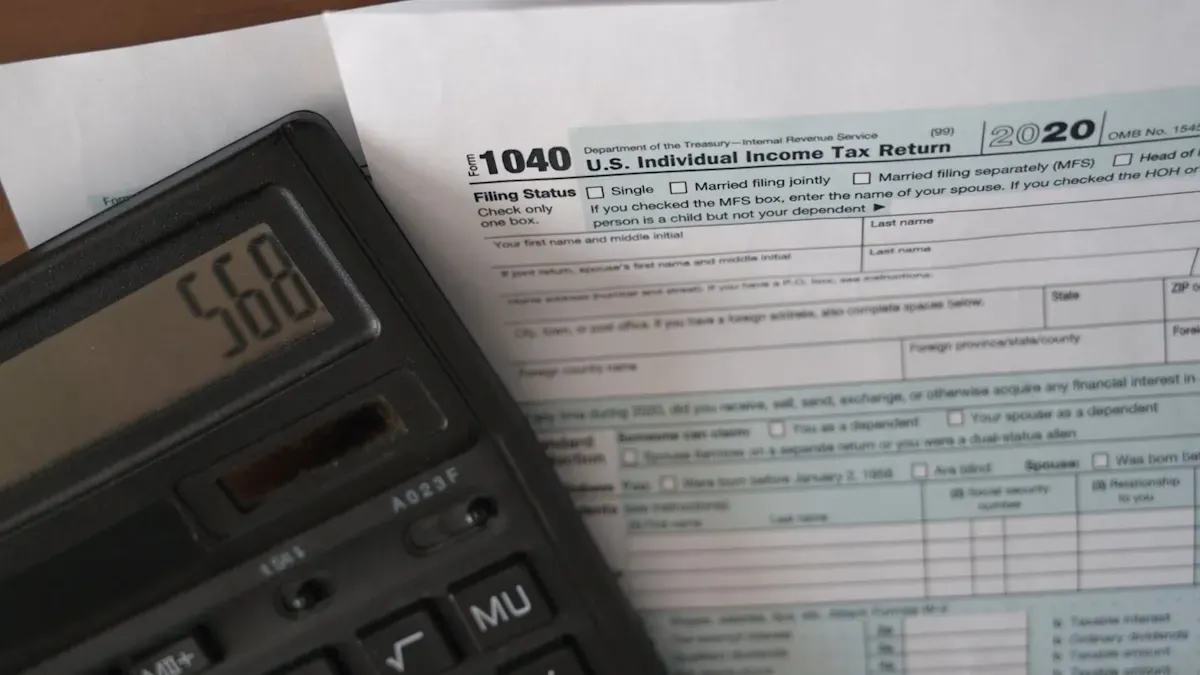
Image Source: pexels
You only need to set it up simply, and OpenClaw can automatically collect, organize, and generate compliant crypto asset tax reports. As a representative of the personal assistant evolved again, OpenClaw has execution authority and can directly operate your system, significantly improving organization efficiency. You will experience the convenience brought by automation, with high accuracy maintained in the data synchronization and organization process. You also don't need to worry about compliance and data security issues, as OpenClaw has provided you with comprehensive protection.
Core Key Points
- OpenClaw automatically collects and organizes crypto asset tax data, saving time and reducing errors.
- The system supports multi-platform data integration, providing a unified API interface to simplify the data processing flow.
- Generating compliant tax reports requires just one-click operation, supporting multiple export formats for easy submission to tax authorities.
- OpenClaw ensures data security, using local storage and multiple security measures to protect user privacy.
- User feedback shows that OpenClaw significantly improves tax management efficiency and is suitable for both individuals and professional institutions.
Personal Assistant Evolved Again and Crypto Asset Tax Organization

Image Source: unsplash
Pain Points of Manual Organization
When organizing crypto asset tax data, you often encounter many challenges.
- Complexity of data interpretation: You need to understand transaction data on the blockchain, which usually requires professional knowledge.
- Rapid technological evolution: It is difficult for you to keep up with the latest changes in the crypto industry.
- Lack of standardized tax reporting forms: Centralized exchanges may not provide you with complete tax reports.
- Volatility of cryptocurrency value: Coin prices fluctuate significantly in a short time, increasing the difficulty of report preparation.
These issues make manual organization time-consuming and error-prone. You need a more efficient and intelligent solution.
Multi-Platform Data Integration Challenges
You may manage assets across multiple exchanges and wallets. Data formats vary across different platforms, and manual integration is highly prone to errors. OpenClaw helps you solve this challenge in the following ways:
- OpenClaw provides a unified cryptocurrency pricing and market data API, aggregating real-time data from multiple exchanges.
- You only need to connect to one standardized endpoint, without having to deal with scattered APIs or inconsistent data formats anymore.
- OpenClaw outputs consistent JSON responses, greatly simplifying the data processing flow.
This is precisely the embodiment of the personal assistant evolved again, allowing you to focus on decision-making rather than tedious technical details.
Compliant Reporting Requirements
When generating tax reports, you must meet the compliance requirements of different jurisdictions. Taking the United States and the European Union as examples:
| Jurisdiction | Main Requirements |
|---|---|
| United States | Under FATCA, report foreign crypto assets exceeding $50,000, using Form 8938; FinCEN Form 114 applies to foreign financial accounts exceeding $10,000. |
| European Union | MiCA regulation unifies crypto asset supervision across member states, enhances information sharing, and establishes standardized reporting procedures. |
As a representative of the personal assistant evolved again, OpenClaw has system-level execution authority, distinguishing it from traditional tax software. You can refer to the table below to understand the core differences between the two:
| Feature | OpenClaw | Traditional Tax Software |
|---|---|---|
| Decision-making capability | Understands goals | Executes scripts |
| Adaptability | Dynamically adapts | Fragile and error-prone |
| Input processing | Understands natural language | Requires structured data |
| Work scope | Coordinates end-to-end processes | Focuses on micro-tasks |
| Learning ability | Continuously evolves | Static |
You can see that OpenClaw can not only automatically adapt to different scenarios but also continuously evolve, truly realizing the personal assistant evolved again and helping you efficiently and compliantly complete crypto asset tax organization.
Core Functional Advantages
Automatic Asset Data Synchronization
When managing crypto assets, you often face data synchronization issues across multiple exchanges and wallets. As a representative of the personal assistant evolved again, OpenClaw can automatically connect to mainstream exchanges and wallets, syncing your asset data in real time. You don't need to manually import or organize spreadsheets; the system automatically pulls the latest transaction records and balance information.
You can use OpenClaw to centrally manage all assets, whether Bitcoin, Ethereum, or stablecoins—data is automatically aggregated. For example, BiyaPay supports global payments and digital currency trading, and OpenClaw can automatically sync your transaction flows on BiyaPay, helping you track asset changes in real time.
OpenClaw directly interacts with the operating system, automatically scheduling data synchronization tasks, greatly improving data processing efficiency. You only need to authorize once, and all subsequent data updates can be completed automatically, saving a lot of time.
Intelligent Classification and Tax Adaptation
When organizing crypto asset tax reports, what often troubles you most is the complex transaction types and tax categorization. OpenClaw adopts a hybrid classification strategy, combining tool name patterns and parameter semantics to accurately identify economically significant transaction types. Even if the transaction description is not obvious, the system can perform intelligent classification through algorithms.
You can refer to the table below to understand OpenClaw's intelligent classification and tax adaptation methods:
| Method | Description |
|---|---|
| Hybrid classification strategy | Uses tool name patterns and parameter semantics for classification, ensuring that even if tool names are relatively harmless, economically significant transactions can still be identified. |
| Manual approval mechanism | Infers nominal value in USD to associate proposed actions with measurable risks, ensuring no automatic authorization under uncertainty. |
| Shared policy module | Centrally handles configuration, classification tool calls, detection of trading behavior, extraction of quantitative risk information, etc., to prevent deviations between different execution points. |
When handling airdrops, staking, or DeFi-related transactions, OpenClaw will automatically identify these special types and adapt them according to tax requirements in different jurisdictions. For example, the IRS requires you to treat the market value of airdrops at the time of receipt as taxable income, and staking rewards may trigger capital gains tax. OpenClaw can automatically distinguish between capital gains tax and income tax events, helping you accurately categorize each transaction and reduce tax risks.
You don't need to worry about compliance issues caused by classification errors; the system will automatically trigger manual approval in high-risk or uncertain situations, ensuring every decision is traceable.
One-Click Report Generation
You only need to click once, and OpenClaw can generate compliant crypto asset tax reports for you. The system automatically aggregates all transaction data and outputs standardized report formats according to the requirements of different jurisdictions. You can choose to export PDF, Excel, or JSON files for easy submission to tax authorities or accountants.
OpenClaw supports report merging for multi-currency, multi-platform, and multi-account scenarios, greatly simplifying the challenge of cross-platform asset management. Taking BiyaPay as an example, your global digital currency conversions, fiat deposits/withdrawals, and U.S. stocks/Hong Kong stocks transaction flows can all be included in the tax report with one click, meeting multi-scenario compliance needs.
You don't need to worry about format compatibility or data omissions; the system automatically validates data integrity to ensure the report is accurate. This is exactly the efficient experience brought by the personal assistant evolved again, allowing you to focus on asset allocation and investment decisions.
If your asset flow also involves cross-border payments, digital-asset conversion, or overseas market investing, tax organization usually requires those records to be reconciled under the same reporting logic. A product such as BiyaPay, positioned as a multi-asset wallet, covers fund management, remittance, and investment-related scenarios, so records tied to conversions, remittance flows, and U.S. or Hong Kong stock funding are often better archived separately in a monthly report.
In practice, you can first use its exchange rate comparison tool to review conversion pricing, then use the stock information page to help identify investment-related records; where cross-border transfers are involved, the remittance service records can also be checked together. Compliance coverage such as U.S. MSB and New Zealand FSP registration can also make document retention and reconciliation more traceable.
Data Security and Privacy Protection
When using OpenClaw, data security and privacy protection are always the top priorities. The system adopts multiple security measures to ensure your assets and personal information are not leaked. You can refer to the table below to understand OpenClaw's main security mechanisms:
| Security Measure | Description |
|---|---|
| Tailscale | Uses Tailscale for secure access, ensuring the UI remains on loopback while handling access control. |
| Password authentication | Strongly recommended to use password-based authentication with short-term pairing codes instead of static tokens. |
| Sandboxed sessions | Recommends sandboxing non-primary sessions, using per-session containers, no workspace access by default, and strict tool whitelisting. |
You deploy OpenClaw locally, with all sensitive data retained on your own hardware or private servers, eliminating risks brought by cloud data storage. The system processes all data locally, naturally complying with modern privacy regulations such as GDPR and CCPA. You don't need to worry about data leaks, prompt injection, or isolation failures caused by configuration errors; OpenClaw ensures data always remains under your control through its local-first AI agent approach.
You can confidently authorize OpenClaw to manage your crypto assets, enjoying the security and compliance assurance brought by the personal assistant evolved again.
Operation Flow
Image Source: pexels
Account Connection and Authorization
When using OpenClaw for the first time, you need to complete account connection and authorization. The system supports API docking for mainstream exchanges and wallets. You only need to enter the API key in the OpenClaw interface, and the system will automatically verify permissions. It is recommended to deploy OpenClaw locally to ensure all sensitive information is stored only on personal hardware or private servers. You should regularly change API keys to avoid asset risks due to key leaks. The system uses password-based authentication combined with short-term pairing codes to enhance security. You can use Tailscale for secure access, ensuring the UI is limited to loopback access and reducing external attack risks.
Data Synchronization and Verification
After completing authorization, OpenClaw will automatically sync asset data from various platforms. The system periodically pulls transaction records and balance information, automatically aggregating multi-currency and multi-platform assets. You can view the synchronization status in the interface, and the system will prompt for anomalies or missing data. You should regularly verify synchronization results to ensure data completeness. If synchronization fails or the gateway does not respond, it is recommended to use command-line tools for troubleshooting. For example, openclaw gateway restart can restart the gateway, openclaw config get api-key can verify the API key, and sudo lsof -i :18789 can find processes conflicting on the port. You can refer to the official OpenClaw troubleshooting guide to quickly locate issues.
Report Generation and Export
You only need one-click operation, and OpenClaw can generate compliant tax reports. The system automatically aggregates all transaction data and outputs standardized formats according to requirements in different jurisdictions such as mainland China, the United States, and the European Union. You can export PDF, Excel, or JSON files for easy submission to tax authorities or accountants. OpenClaw supports integration with third-party tax filing software, as follows:
| System Type | Example | Content Generated by DocuClaw |
|---|---|---|
| Government portals | ELSTER (Germany), HMRC (UK), IRS (United States) | Tax declarations, compliance reports |
| Tax and accounting synchronization | DATEV, Lexoffice, SevDesk (EU), QuickBooks (United States) | Exported parsed financial data |
You can choose the export method according to your needs to achieve seamless docking with mainstream tax software and improve filing efficiency.
Common Problem Handling
During use of OpenClaw, you may encounter various technical issues. The system provides you with detailed troubleshooting resources and support channels. Common issues and solutions are as follows:
| Error Type | Solution |
|---|---|
| Gateway not responding or "0 Tokens Used" | Restart the gateway and verify the API key |
| "RPC Probe: Failed" | Check if port 18789 is occupied and terminate conflicting processes |
| EACCES permission error | Do not run npm with sudo; fix npm permissions |
| SQLITE_BUSY: Database is locked | Stop OpenClaw, delete the lock file, and restart |
| Memory sync failed: "Database not open" | Downgrade Node.js version or wait for a fixed version |
| Memory file not found (ENOENT error) | Manually create the missing file and restart |
| Out of memory | Increase Node.js heap size |
| Rate limit exceeded | Refer to the troubleshooting guide |
You can quickly locate and resolve issues through command-line tools. The system provides official documentation and community support to ensure a smooth operation flow and enhance the overall experience.
User Experience and Cases
User Feedback Summary
After using OpenClaw, you can clearly feel the efficiency improvement in data organization and tax report generation. Many users say that the system has a high degree of automation and reduces errors from manual operations. You can manage multi-platform assets through a unified interface to avoid data omissions. The local deployment method gives you greater confidence in data security.
You can refer to the table below to understand the actual experiences and satisfaction levels of different user types:
| User Type | Use Case | Satisfaction |
|---|---|---|
| Individual investors | AI news aggregation, competitor analysis, returns tracking | 4.5/5 |
| Accountants | Invoice processing, data extraction | 4.0/5 |
You will find that whether individual investors or professional accountants, all can improve work efficiency and simplify data processing flows through OpenClaw.
Use Case Sharing
When working at a licensed bank in Hong Kong, you often need to manage multi-currency crypto assets for clients. OpenClaw can help you automatically sync clients' asset data across different exchanges and wallets, quickly generate compliant reports, and meet regulatory requirements in multiple places such as Hong Kong and the United States. You don't need to manually organize transaction flows; the system automatically identifies different transaction types and classifies them according to the latest regulations.
As an individual investor, you may need to track crypto asset investments related to the U.S. stock market. OpenClaw supports automatic aggregation of multi-platform data, helping you grasp returns in real time. You can also use the AI news aggregation function to stay informed about market dynamics and assist investment decisions.
When working at an accounting firm, you often need to process large amounts of invoices and financial data for clients. OpenClaw's data extraction and classification functions can significantly reduce manual entry time and improve report accuracy. You can directly import the generated standardized reports into mainstream tax software to enhance filing efficiency.
In actual operations, you can feel the automation and compliance advantages brought by OpenClaw. These real cases show that OpenClaw is not only suitable for individual users but can also meet the high-standard needs of professional institutions.
You can achieve efficient and automated crypto asset tax organization through OpenClaw. The system automatically syncs data, intelligently classifies transactions, and ensures report compliance. You don't need to worry about data security, as all sensitive information is stored locally.
It is recommended that you properly configure and deploy OpenClaw, regularly check permission settings, and ensure the security of assets and privacy.
- You can immediately experience the professional convenience brought by the intelligent personal assistant and improve tax management efficiency.
FAQ
Which mainstream exchanges and wallets does OpenClaw support?
You can connect to mainstream platforms such as Binance, Coinbase, OKX, MetaMask, etc. The system continuously updates the support list to meet your multi-platform asset management needs.
How to ensure my data will not be leaked?
You deploy OpenClaw locally, with all sensitive data stored only on personal hardware or private servers. The system adopts multiple security mechanisms to prevent unauthorized access.
Can the reports generated by OpenClaw meet compliance requirements in China, the United States, the European Union, and other places?
You can select report templates according to different jurisdictions. The system automatically adapts to tax regulations in China, the United States, the European Union, etc., ensuring compliance.
How to handle synchronization failures or data anomalies?
You can troubleshoot issues through command-line tools, such as restarting the gateway, verifying API keys, or checking port occupancy. The system provides detailed documentation and community support.
Does OpenClaw support integration with third-party tax software?
You can export standardized reports and directly connect to mainstream tax systems such as ELSTER, IRS, QuickBooks, etc., improving filing efficiency.
*This article is provided for general information purposes and does not constitute legal, tax or other professional advice from BiyaPay or its subsidiaries and its affiliates, and it is not intended as a substitute for obtaining advice from a financial advisor or any other professional.
We make no representations, warranties or warranties, express or implied, as to the accuracy, completeness or timeliness of the contents of this publication.
Related Blogs of

What Is Kevin Warsh’s Policy Framework? How It Affects the U.S. Dollar, Treasuries, and Tech Stocks


AI Revenue Quality at IBM, Oracle, and ServiceNow: Breaking Down Subscription, Cloud, and Consulting Businesses


Are SMH, SOXX, and Hardware Leaders Absorbing Outflows from Software Stocks?


How Should ASML’s New Orders Be Read? Revenue Differences Between EUV, DUV, and High-NA EUV
Choose Country or Region to Read Local Blog
 Australia
 Austria
 Belgium
 Canada
 Cyprus
 Czech Republic
 Denmark
 Estonia
 Finland
 France
 Germany
 Greece
 Hong Kong
 India
India Indonesia
 Ireland
 Italy
Italy Japan
Japan Latvia
 Lithuania
 Luxembourg
 Malaysia
 Malta
Malta Morocco
 Nepal
Nepal Netherlands
 New Zealand
 Norway
 Pakistan
 Philippines
 Poland
 Portugal
 Romania
 Singapore
 Slovakia
 Slovenia
 South Africa
 South Korea
 Spain
Spain Sweden
 Thailand
 United States
 Turkey
 United Arab Emirates
 United Kingdom
 Vietnam
Contact Us



