How to Convert Cryptocurrency Donations Received by AI Open-Source Projects into Fiat Currency as Development Funds Without Loss?





Image Source: pexels
When managing an AI open-source project, you often face the challenge of safely converting cryptocurrency donations into fiat currency. You need to address the security risks caused by multiple people accessing private keys, handle complex cryptocurrency transaction processes, and deal with the impact of severe price volatility on financial planning.
- Security issues: Multiple people managing private keys can easily lead to funds being stolen.
- Transaction complexity: Cryptocurrency transaction processes are cumbersome.
- Value volatility: Large price fluctuations make it difficult to stabilize the funding budget.
Core Key Points
- Choose platforms with high liquidity to ensure fund safety and efficiency when converting cryptocurrency to fiat.
- Complete KYC identity verification to avoid fund freezing or withdrawal delays due to incomplete information.
- Use cold wallets and multi-factor authentication to enhance fund security and prevent network attacks and unauthorized access.
- Pay attention to handling fees and exchange rate fluctuations, select the appropriate timing for transactions to reduce costs.
- Regularly monitor transaction records, ensure compliant reporting, and reduce legal and tax risks.
Platform Selection and Liquidity
Image Source: pexels
When converting cryptocurrency received by AI open-source projects into fiat currency, platform selection directly affects conversion efficiency and fund safety. Global mainstream trading platforms offer high liquidity, which can effectively reduce conversion losses. You can refer to the table below to understand the fees and applicable regions of different platforms, making it easier to choose the appropriate channel based on your needs:
| Trading Platform | Fees | Applicable Regions |
|---|---|---|
| Monica | Free bank withdrawal | Nigeria |
| Coinbase | Competitive fees | United States |
| Kraken | 0.16% maker | Europe |
| Bitstamp | Competitive fees | Europe |
| OKX | 0.08% maker | Global |
| Gemini | 0.03% maker | Global |
Pros and Cons of Centralized Exchanges
When choosing centralized exchanges, you can enjoy high liquidity and convenient fiat withdrawal services. Many platforms partner with payment providers to support instant cryptocurrency-to-fiat conversion, saving time and financial costs. You don’t need to repeatedly register or transfer funds, and withdrawal fees can also be reduced.
- Advantages: Easy operation, transparent fees, ability to hedge against cryptocurrency price fluctuation risks.
- Disadvantages: Requires trust in the platform, may encounter unfavorable exchange rates, and is greatly affected by regulatory policies.
For Chinese-speaking users, global payment platforms like BiyaPay also provide real-time exchange between USDT and USD/HKD as well as international remittance services, making them suitable for AI open-source projects that require high liquidity and compliant fund management.
If donation sources are fragmented, it is usually more important to map the settlement path and target currency first than to focus only on headline fees. In that case, you can use BiyaPay’s exchange rate converter to estimate the real-time cost of converting different assets into USD or HKD before deciding whether to settle in batches. As a multi-asset wallet, BiyaPay covers cross-border payments, treasury management, and fiat-to-digital-asset conversion scenarios, which makes it a practical part of a compliant development-fund settlement workflow.
OTC and DeFi Applications
You can also choose OTC (over-the-counter) trading or DeFi (decentralized finance) applications. OTC is suitable for large transactions and can avoid market slippage, but requires careful vetting of counterparty risks. DeFi applications require no intermediaries and support on-chain conversions, enhancing fund autonomy, but liquidity and security depend on the protocol itself. When choosing, pay attention to the platform’s compliance and fund security.
Considerations When Choosing a Platform
When selecting a conversion platform, focus on the following points:
- Liquidity: Platforms with large trading volumes allow quick execution and reduce price losses.
- Fee structure: Compare handling fees and exchange rates across different platforms and choose the channel with the lowest total cost.
- Compliance: Prioritize regulated platforms; for fund withdrawals, it is recommended to consider Hong Kong licensed bank accounts first to ensure fund safety and compliance.
- Service coverage: Platforms like BiyaPay provide multi-currency exchange and international remittance services for Chinese-speaking users, suitable for the diversified funding needs of AI open-source projects.
By reasonably selecting platforms, you can effectively improve fund flow efficiency, reduce conversion losses, and provide solid financial support for the continuous development of AI open-source projects.
Preparation for Conversion
KYC and Real-Name Authentication
Before converting cryptocurrency received by AI open-source projects into fiat currency, you must complete the KYC (identity verification) process. Mainstream exchanges have strict KYC requirements to prevent money laundering and ensure fund safety. The authentication processes of different platforms vary, usually requiring submission of identity proof, address proof, and other information. The table below shows the KYC requirements of two mainstream exchanges:
| Exchange | KYC Requirement Description |
|---|---|
| OKEx | Users need identity verification when purchasing cryptocurrency with fiat, divided into three levels: basic ID, photo ID, and disclaimer. |
| Kraken | Accounts are divided into four levels, requiring email, full name, date of birth, phone number, and address; certain levels also require valid identity proof and residence proof. |
You should prepare the relevant documents in advance to ensure smooth authentication. This can avoid fund freezing or withdrawal delays due to incomplete information.
Wallet Security Management
When managing funds for AI open-source projects, wallet security is crucial. You can adopt multiple methods to enhance security:
- Use cold wallets for long-term holding to prevent network attacks.
- Enable multi-factor authentication (MFA) on active wallets to increase account security.
- Conduct regular security audits to identify potential risks in a timely manner.
- Provide security training to team members to improve their ability to prevent phishing and unauthorized access.
You can also consider multi-signature wallet solutions to add an extra layer of protection for fund management. This can effectively prevent asset losses caused by single-point failures.
Understanding Platform Policies
When choosing a trading platform, you need to thoroughly understand its policies, including withdrawal limits, supported fiat currencies, fund custody methods, etc. Rules vary across platforms depending on jurisdictions, and some platforms only support conversion between cryptocurrency and specific fiat currencies. Many platforms provide fiat wallets denominated in USD for users, making it convenient to directly manage and withdraw funds. You should check whether the platform supports two-way conversion and the specific requirements for withdrawing to Hong Kong licensed bank accounts. Understanding these policies in advance helps you plan fund flows reasonably and avoid impacts on the normal operation of AI open-source projects due to policy restrictions.
Conversion Process for AI Open-Source Projects
When converting cryptocurrency received by AI open-source projects into fiat currency, you need to follow a standard process. Each step relates to fund safety, flow efficiency, and compliance. The following details the operation steps to help you achieve lossless conversion and efficient fund management.
Transferring Coins to the Platform
You first need to transfer the cryptocurrency from the project wallet to the selected trading platform. The operation process is as follows:
- Log in to your exchange account.
- Go to the “Wallet” or “Balance” section.
- Select the type of cryptocurrency you want to send.
- Click the “Send” button.
- Choose the correct blockchain network, such as Bitcoin, Ethereum, or BEP20. Choosing the wrong network may result in irrecoverable funds.
- Paste the wallet address provided by the platform.
- Enter the amount of cryptocurrency to send.
- Carefully check all details, including address, amount, and network type.
- Confirm the transaction.
- Wait for blockchain network confirmation, usually taking a few minutes to tens of minutes.
During operation, ensure every step is accurate. Blockchain transactions are irreversible, and any negligence may lead to fund losses. For AI open-source projects, it is recommended to use multi-signature wallet authorization for transfers to enhance security.
Placing Orders and Execution
After transferring cryptocurrency to the platform, you need to place orders and complete execution. You can choose limit orders or market orders for conversion. Limit orders help lock in ideal exchange rates, while market orders are suitable for quick execution. The table below summarizes common risks and countermeasures during the order placement process:
| Error Type | How to Avoid | Useful Tips |
|---|---|---|
| Large-amount trades | Carefully check all numbers | Set price alerts for abnormal inputs |
| Market maker bait | Stick to limit orders | Set clear price limits and avoid chasing prices |
| Strike price error | Carefully review the options chain | Compare strike price with the current price of the underlying asset |
| Time pressure error | Plan trades in advance | Avoid hasty decisions in volatile markets |
When placing orders, pay attention to market liquidity. Mainstream exchanges like OKX, Kraken, and Coinbase have high liquidity, enabling quick execution and reducing slippage losses. For Chinese-speaking users, BiyaPay supports real-time exchange between USDT and USD/HKD, suitable for AI open-source projects requiring efficient fund flows. You can flexibly choose market orders or limit orders based on project funding needs to optimize conversion costs.
Fiat Withdrawal Operations
After completing the cryptocurrency conversion, you need to withdraw the fiat currency to your bank account.
In practice, many teams find that the real bottleneck appears after the withdrawal step—how to efficiently use the fiat funds afterward. Instead of treating exchanges and bank accounts as separate steps, you can connect the converted funds into a more complete cross-border workflow. For example, platforms like BiyaPay allow you to first check real-time exchange rates and then arrange subsequent international transfers based on actual funding needs, reducing friction and extra costs caused by switching between multiple services.
Positionally, BiyaPay works more like a multi-asset wallet rather than just a trading tool. It connects the full flow of “crypto → fiat → cross-border payment → spending or allocation,” which is especially useful for AI open-source projects that continuously receive donations and need to deploy funds efficiently. You can also review its supported features and regions on the official website.
Mainstream exchanges and payment platforms usually require the following materials:
- Perform identity verification.
- Make the first fiat deposit.
- Ensure the withdrawal account name matches the name provided during identity verification.
When withdrawing, pay attention to platform policies and processing times. Processing speeds vary significantly across platforms. The table below shows the fiat withdrawal processing times of some mainstream platforms:
| Exchange | Processing Time |
|---|---|
| Bybit | 7 to 14 business days |
| Monica Cash | 5 to 40 minutes for automatic conversion to Naira |
| Coinbase | 1 to 5 business days |
| Kraken | 1 to 5 business days |
You can prioritize platforms that support USD withdrawals to Hong Kong licensed bank accounts to ensure fund safety and compliance. BiyaPay provides real-time USD/HKD exchange and international remittance services for Chinese-speaking users, suitable for the diversified funding needs of AI open-source projects. During the process, retain all transaction records for subsequent fund management and compliant reporting.
Tip: Exercise caution at every step of the operation, plan fund flows in advance, and avoid impacts on project fund safety due to policy changes or market fluctuations. It is recommended to regularly review platform policies to ensure fund management meets the latest compliance requirements.
Handling Fees and Exchange Rate Optimization

Image Source: pexels
Handling Fee Comparison
When converting cryptocurrency to fiat currency, the fee structure directly affects fund costs. Fees vary significantly across different trading platforms, mainly including deposit, withdrawal, trading, and additional fees. You can refer to the table below to understand the fee situations of mainstream platforms:
| Exchange | Deposit Fees | Withdrawal Fees | Trading Fees | Additional Fees |
|---|---|---|---|---|
| Binance | 2.5% | Fixed amount | Low | Possible spreads |
| MEXC | Free | Variable | Medium | Possible spreads |
| Pionex | 1% | Fixed amount | Low | Possible spreads |
Note that deposit and withdrawal fees vary depending on asset type and transfer method. Trading fees usually include maker and taker fees. Additional fees such as spreads and inactivity fees also affect total costs. You can reasonably compare and optimize fund flows by choosing platforms with transparent fee disclosures.
Tip: Choosing bank transfers usually has the lowest fees, but processing times are longer. Credit and debit cards provide instant purchases but come with higher fees, potentially up to 5%. You can flexibly choose payment methods based on project funding needs and time arrangements.
Exchange Rate Selection and Timing
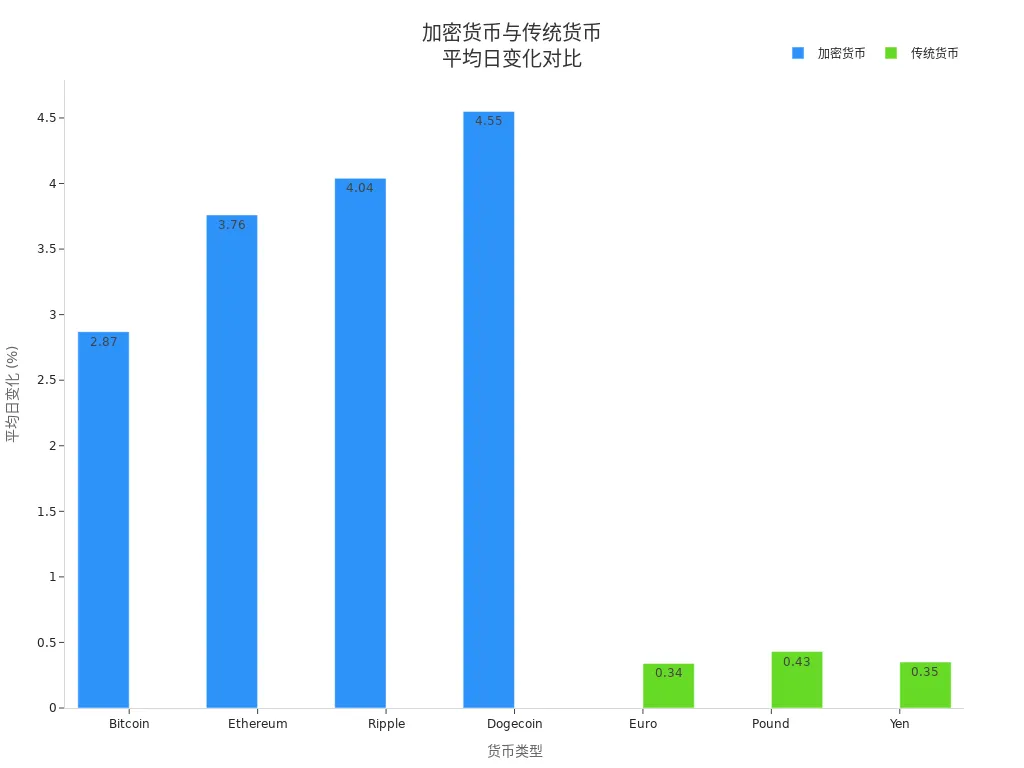
During the conversion process, exchange rate fluctuations directly affect fund value. The average daily change in cryptocurrency far exceeds that of traditional currencies. The table below shows the average daily percentage change for major cryptocurrencies and traditional currencies:
| Cryptocurrency | Average Daily Change (%) | Traditional Currency | Average Daily Change (%) |
|---|---|---|---|
| Bitcoin | 2.87 | Euro | 0.34 |
| Ethereum | 3.76 | Pound | 0.43 |
| Ripple | 4.04 | Yen | 0.35 |
| Dogecoin | 4.55 | N/A | N/A |
You can reduce network fees and slippage risks by trading during non-peak periods (such as late nights, weekends, or early mornings). BiyaPay provides real-time USDT to USD/HKD exchange services for Chinese-speaking users, supporting international remittances and fund management to help achieve efficient conversions during exchange rate fluctuations. You can also use tools like CoinPanel to track assets in real time and execute trades at the best exchange rates, enhancing fund value.
Coping with Exchange Rate Fluctuations
When managing funds for AI open-source projects, exchange rate fluctuation risks cannot be ignored. You can adopt various hedging strategies to reduce risks:
- Use derivatives such as perpetual futures and options to hedge spot position risks.
- Utilize automated tools or trading bots to adjust hedging exposure based on market conditions.
- Adopt hedging mode during high-risk periods, maintaining long-term spot positions while opening short positions to reduce net exposure.
You can also obtain real-time exchange rate data through services like ExchangeRate-API to assist decision-making. With over 15 years of stable operation and multi-currency support, it is suitable for SaaS, dashboards, and e-commerce scenarios. By reasonably utilizing these tools and strategies, you can effectively optimize fund management and improve project fund safety and value.
Fund Management and Compliance
Fund Flow Records
When managing cryptocurrency received by AI open-source projects, fund flow records are the foundation of compliant management. You can adopt the following methods to enhance transparency and security:
- Use blockchain explorers to monitor every transaction in real time and ensure traceable fund flows.
- Establish internal policies to clarify fund allocation and tax reporting processes.
- Verify fund allocation through third-party audits, enhancing project credibility.
- Implement a donation dashboard to show donors how funds are used and project progress.
- Regularly update guidelines from the U.S. Internal Revenue Service (IRS) on cryptocurrency donations to reduce compliance risks.
- Use cold wallets to securely store large amounts of funds and enable multi-factor authentication (MFA) on active wallets.
- Confirm reporting or licensing requirements for cryptocurrency donations in regions such as mainland China and the United States.
- Proactively communicate fund usage to donors and regularly publish updates on donation impact.
Through these measures, you can effectively improve fund management transparency and reduce legal and tax risks.
Compliance Reporting and Taxation
After converting cryptocurrency to USD, you need to comply with reporting requirements for different amount ranges. The table below summarizes the main U.S. reporting standards:
| Donation Amount Range | Documentation Requirements |
|---|---|
| Below $250 | Standard donation receipt including cryptocurrency type and amount |
| $250-$5,000 | Written acknowledgment with no goods or services statement |
| Over $5,000 | Requires signing IRS Form 8283 and a qualified appraisal |
When reporting, note that some regions require selling digital assets to cash before donation, then completing the donation within the specified time. This method helps obtain tax deductions for donations. You can also choose tax-exempt sale methods, donating digital assets in kind, with the tax-exempt organization selling them and reporting the sale amount. This approach improves transaction transparency but requires additional paperwork. You should formulate compliant reporting processes based on the actual situation of the project to avoid tax penalties.
Tip: Regularly follow the latest policies of tax authorities in various regions regarding cryptocurrency donations and conversions, adjust reporting strategies in a timely manner, and ensure the project remains legal and compliant.
Policy Differences Across Regions
When managing funds for AI open-source projects globally, you need to understand policy differences regarding cryptocurrency conversion in different regions:
- Common law jurisdictions such as the United States, United Kingdom, and Hong Kong tend to favor stablecoins and support market innovation and private sector legal frameworks.
- Civil law jurisdictions such as the EU and mainland China prioritize central bank digital currencies (CBDC), emphasizing sovereign control and monetary stability.
- Mainland China has piloted the digital yuan (e-CNY) since 2019, designed with “controllable anonymity” to track fund flows while retaining certain privacy.
- The EU digital euro aims to complement cash, focusing on privacy, security, and compliance.
When selecting fund conversion and management solutions, combine them with policies in the project’s location, prioritizing compliant channels and security measures. This ensures legal fund flows and supports the sustainable development of the project.
When managing funds for AI open-source projects, prioritize platforms with high liquidity and transparent fees to ensure efficient fund circulation. Strictly implement KYC and security measures to prevent fund losses due to excessive permissions of automated tools or attacks on trading bots. You can collaborate with professional crypto donation platforms to formulate clear policies on whether to convert to fiat in a timely manner and reduce cryptocurrency price fluctuation risks. You also need to continuously monitor transactions, analyze blockchain data, keep compliant records, and report suspicious activities in a timely manner. The table below summarizes key details to focus on during the conversion process:
| Monitoring Details | Description |
|---|---|
| Transaction monitoring | Identify large or abnormal transactions to prevent money laundering risks |
| Blockchain analysis | Track fund flows to detect potential financial crimes |
| Reporting suspicious activities | Proactively report to regulatory authorities to enhance compliance |
| Record keeping | Completely retain customer information and transaction records for subsequent audits |
By reasonably utilizing third-party services like Swapple, combined with team education and compliance management, you can effectively optimize costs and improve fund safety. Only by paying attention to every detail can AI open-source projects achieve sustained and healthy development.
FAQ
How to choose a cryptocurrency conversion platform suitable for AI open-source projects?
You should prioritize platforms with high liquidity, transparent fees, and support for USD withdrawals to Hong Kong licensed bank accounts. The platform needs to have compliant qualifications, support multi-currency exchange and international remittances, facilitating project fund management.
How to reduce handling fees and exchange rate losses when converting cryptocurrency to fiat currency?
You can compare the fee structures of different platforms and choose the channel with the lowest total cost. You should also pay attention to exchange rate fluctuations, use real-time conversion tools, and trade during periods of high market liquidity.
How can the project team ensure the security of cryptocurrency funds?
You should use multi-signature wallets and cold wallets to store large amounts of funds. Team members need regular security training, enable multi-factor authentication, periodically audit wallet permissions, and prevent unauthorized access and network attacks.
How to compliantly report and pay taxes on the fiat currency obtained from conversion?
You need to retain complete transaction records based on policies in the project’s location. You should proactively report fund flows and comply with local tax regulations. Regions like the United States have clear reporting standards for different amounts; it is recommended to consult professional tax advisors.
Can AI open-source projects in mainland China directly convert cryptocurrency to USD?
In mainland China, you cannot directly convert cryptocurrency to USD through local banks. You can choose regulated international platforms to withdraw funds to Hong Kong licensed bank accounts, then conduct compliant management and reporting.
*This article is provided for general information purposes and does not constitute legal, tax or other professional advice from BiyaPay or its subsidiaries and its affiliates, and it is not intended as a substitute for obtaining advice from a financial advisor or any other professional.
We make no representations, warranties or warranties, express or implied, as to the accuracy, completeness or timeliness of the contents of this publication.
Related Blogs of

Which Products Are Affected by NAND Price Increases? SSDs, Smartphones, Servers, and Consumer Electronics


Who Are the Leading HBM Companies? Business Differences Between Samsung, SK hynix, and Micron


Why Are AI Storage Stocks Suddenly Getting Attention? From Compute Bottlenecks to Data Storage Demand


What Is the Difference Between HBM Stocks and GPU Stocks?
Choose Country or Region to Read Local Blog
 Australia
 Austria
 Belgium
 Canada
 Cyprus
 Czech Republic
 Denmark
 Estonia
 Finland
 France
 Germany
 Greece
 Hong Kong
 India
India Indonesia
 Ireland
 Italy
Italy Japan
Japan Latvia
 Lithuania
 Luxembourg
 Malaysia
 Malta
Malta Morocco
 Nepal
Nepal Netherlands
 New Zealand
 Norway
 Pakistan
 Philippines
 Poland
 Portugal
 Romania
 Singapore
 Slovakia
 Slovenia
 South Africa
 South Korea
 Spain
Spain Sweden
 Thailand
 The United States
 Turkey
 United Arab Emirates
 United Kingdom
 Vietnam
Contact Us




BIYA GLOBAL LLC is registered with the Financial Crimes Enforcement Network (FinCEN), an agency under the U.S. Department of the Treasury, as a Money Services Business (MSB), with registration number 31000218637349, and regulated by the Financial Crimes Enforcement Network (FinCEN).
BIYA GLOBAL LIMITED is a registered Financial Service Provider (FSP) in New Zealand, with registration number FSP1007221, and is also a registered member of the Financial Services Complaints Limited (FSCL), an independent dispute resolution scheme in New Zealand.