How to Allocate Foreign Currency Assets? Arranging USD, HKD, EUR, and Multi-Currency Funds





The focus of foreign currency asset allocation is not deciding which currency is “the best,” but first clarifying where the funds will be used in the future, what currency they will be denominated in, and whether they need to enter markets such as U.S. stocks, Hong Kong stocks, or ETFs. Users who should pay attention to this topic usually already have needs such as cross-border spending, global payments and collections, U.S. or Hong Kong stock deposits, multi-currency holdings, or digital asset and fiat conversion. Users should first consider three questions: what the funds are for, whether FX conversion and holding costs are acceptable, and whether the funding path is clear and verifiable.
Who Should Pay Attention to Foreign Currency Assets?

Foreign currency assets are more suitable for users with clear cross-border funding needs, rather than users who frequently exchange currencies to chase short-term FX movements. To decide whether foreign currency assets are needed, users should first look at whether they will actually use a certain foreign currency in the future, and then decide whether to convert, hold, deposit, or use it for payments and collections.
Foreign currency assets can include fiat balances such as USD, HKD, and EUR. They can also include foreign currency-denominated stocks, ETFs, bond funds, money market funds, bank deposits, cash balances in brokerage accounts, balances in cross-border payment and collection accounts, or multi-currency payment balances used for overseas spending and online subscriptions. For ordinary users, the core question of foreign currency asset allocation is usually not “what can I buy to make money,” but “how should I prepare multi-currency funds to meet future spending, investment, remittance, and collection needs?”
Users With Overseas Spending or Online Subscription Needs
If you frequently pay for overseas e-commerce, travel, hotels, software subscriptions, ad accounts, cloud services, or cross-border platform fees, you will encounter issues such as payment currency, card network exchange rates, bank FX spreads, transaction fees, and payment success rates. In this case, holding a suitable amount of commonly used foreign currency or using tools that support foreign currency payments may be more convenient than exchanging currency temporarily every time.
However, convenience does not always mean better value. Users still need to compare three things: the cost of temporary FX conversion, exchange rate volatility from holding foreign currency in advance, and the fees charged by the payment tool itself. If overseas spending only happens a few times a year, over-preparing multi-currency balances may not be necessary. If there are fixed monthly expenses in USD, EUR, or HKD, foreign currency funds can be managed as part of the spending budget.
Users With Global Payment and Collection Needs
Freelancers, cross-border e-commerce sellers, overseas service providers, content creators, or remote workers may receive payments in USD, EUR, HKD, or other currencies. If each payment is immediately converted into local currency, users may be affected by exchange rate fluctuations and FX conversion costs. If they hold foreign currency over the long term, they also need to bear currency volatility, account management, withdrawal paths, and compliance review requirements.
These users need to pay more attention to “how the funds will be used after they are received.” If the collection currency matches the spending currency, such as receiving USD and then using USD to pay for advertising, software, or suppliers, keeping part of the funds in the same currency may reduce repeated FX conversion. If the funds will ultimately be used for local living expenses, the cost and arrival time of converting back into local currency should be included in the decision.
Users Planning to Invest in Hong Kong Stocks, U.S. Stocks, or ETFs
Hong Kong stocks are usually traded in HKD, while U.S. stocks and many global ETFs are usually denominated in USD. If users want to enter these markets, they need to understand not only product risks, but also how funds are converted from local currency or digital assets into the trading currency and then deposited into the trading account. Foreign currency assets in this context are not a return promise, but a form of fund preparation before entering certain markets.
For example, users planning to trade U.S. stocks or USD-denominated ETFs need to prepare USD funds. Users planning to trade Hong Kong stocks or Hong Kong-listed ETFs need to focus on HKD funds. The U.S. SEC Investor.gov provides investor-facing information on the basic structure and risks of ETFs, which is suitable for users to read before understanding trading products. Regardless of the deposit path used, trading itself involves price volatility, liquidity, exchange rate, and fee risks.
Users With Education, Travel, or Relocation Plans
If future expenses may occur in USD, EUR, HKD, or other regions, understanding the target currency’s use cases in advance can help reduce uncertainty from last-minute FX conversion. However, preparing in advance also brings exchange rate volatility and idle fund issues. Users should not look only at “convenience,” but also consider opportunity cost and the timing of fund use.
A more prudent approach is to classify future expenses by certainty. Expenses with confirmed amounts and timing, such as tuition, rent, insurance, or fixed service fees, can be planned earlier by currency. Expenses that may only vaguely occur, such as possible travel or relocation, should not lead to excessive early FX conversion.
Users Who Need Digital Asset and Fiat Conversion
Some users hold USDT, USDC, or other digital assets and hope to convert them into fiat currencies such as USD, HKD, or EUR when needed for remittances, deposits, spending, or withdrawals. This type of path requires close attention to platform rules, identity verification, on-chain transfer costs, arrival times, anti-money-laundering reviews, and the accuracy of payment and collection account information.
Digital asset and fiat conversion is not a way to bypass banks or regulation. Users should use their real identity, lawful sources of funds, and a clear transaction purpose, retain necessary records, and complete verification and review according to platform and local requirements. Any attempt to hide the source of funds, bypass risk controls, or circumvent regional restrictions may create account, fund, and compliance risks.
What Roles Can Different Foreign Currencies Play in Fund Allocation?
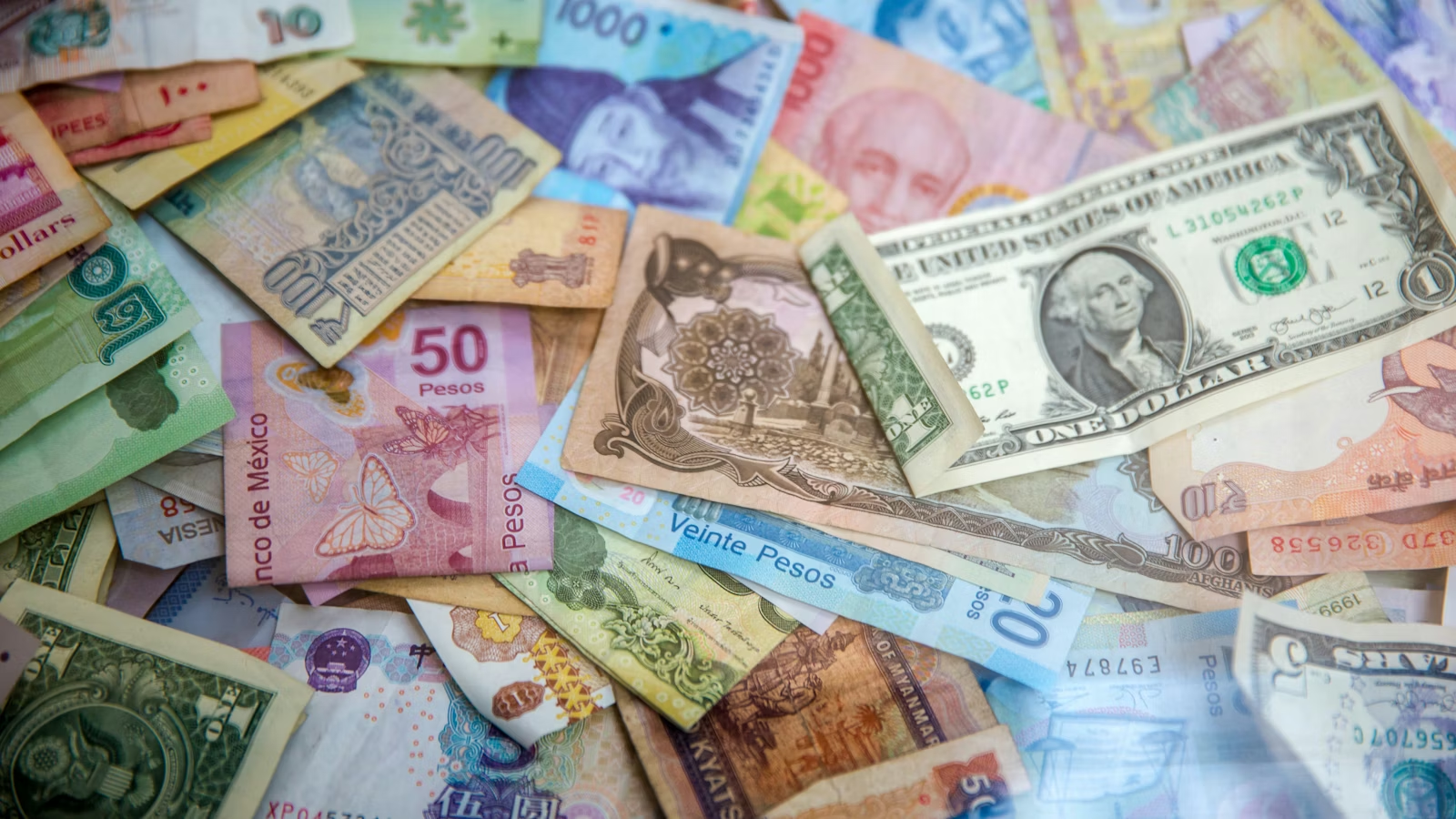
The roles of USD, HKD, and EUR in fund allocation are mainly determined by denominated assets, usage regions, payment networks, and market access. Users should not assume that one currency is always optimal, but should choose the target currency based on the final use case.
USD Assets: Commonly Used for Global Market Pricing and U.S. Stock Trading
The U.S. dollar is a frequently used pricing currency in global financial markets. Many U.S. stocks, U.S. ETFs, USD money market funds, some commodity quotations, and international trade settlements are related to USD. For users planning to invest in U.S. stocks or USD-denominated ETFs, USD is usually the core funding currency before trading.
However, USD assets are not low-risk assets by default. USD can fluctuate against other currencies, and U.S. stocks and ETFs themselves also have market risk. If a user’s income, living expenses, and liabilities are mainly not denominated in USD, holding USD creates exchange rate exposure. For example, when the user’s home currency appreciates, USD assets converted back into the home currency may decrease. When the USD interest rate cycle changes, the performance of USD cash-like products and related assets may also change.
USD is more suitable for the following roles: deposit currency for U.S. stocks and USD ETFs, payment currency for international subscriptions and overseas spending, temporary holding currency after receiving USD, and transition currency after converting some digital assets into fiat. Whether to hold USD should come back to the actual use case, rather than treating USD simply as a “stable choice.”
HKD Assets: Connecting the Hong Kong Market and Hong Kong Stock Trading
HKD is common in cross-border funding paths for Chinese-speaking users, mainly because the Hong Kong market, Hong Kong stock trading, local Hong Kong payments, and some cross-border funding arrangements may all use HKD. Hong Kong stocks are usually traded in HKD. If users plan to participate in Hong Kong stocks or Hong Kong-listed ETFs, they need to pay attention to HKD fund preparation, deposit paths, trading fees, and FX costs.
The Hong Kong Monetary Authority provides public information on the Hong Kong dollar Linked Exchange Rate System. Users can read the HKMA introduction to the Linked Exchange Rate System to understand the institutional background between HKD and USD. However, this does not mean HKD assets are risk-free. HKD can still fluctuate against the user’s home currency, Hong Kong stock market prices can fluctuate, and deposits and withdrawals may also be affected by brokers, banks, payment institutions, and account reviews.
HKD is more suitable for the following roles: funds for Hong Kong stock trading, local Hong Kong payment and collection funds, certain cross-border spending and settlement funds, and an intermediate currency for switching between USD and HKD. If users do not have Hong Kong stock, Hong Kong spending, or Hong Kong payment and collection needs, they should not over-hold HKD simply because it seems “offshore and convenient.”
EUR Assets: Suitable for European Spending, Collections, and Eurozone-Related Assets
EUR mainly corresponds to eurozone spending, payments to and collections from European suppliers, European study and travel, eurozone assets, and some cross-border trade settlement. For users with European business, European clients, euro income, or euro expenses, holding EUR can reduce uncertainty from repeated FX conversion.
EUR also has its own interest rate cycle, economic cycle, and exchange rate fluctuations. If users do not earn in EUR and do not have future expenses in the eurozone, long-term EUR holdings may simply add another source of exchange rate risk. The European Central Bank provides information on the euro and euro area, which is suitable for users who need to understand the euro background.
EUR is more suitable for the following roles: European spending and subscription payments, temporary holding of EUR collections, remittances to European accounts, and trading preparation for EUR-denominated assets. If users hold EUR only for “diversification” without actual use cases, they should carefully assess FX conversion costs and idle fund costs.
More Currencies Are Not Always Better
The goal of multi-currency fund planning is not to split money into as many currencies as possible, but to give each currency a clear purpose. The more currencies involved, the higher the management cost, the more complex the exchange rate fluctuations, and the more difficult account, tax, transaction record, and deposit/withdrawal path management becomes.
A more practical approach is to divide foreign currencies into three categories: commonly used payment currencies, trading deposit currencies, and future spending currencies. Commonly used payment currencies solve spending and subscription needs. Trading deposit currencies correspond to U.S. and Hong Kong stocks, ETFs, or other markets. Future spending currencies correspond to education, travel, relocation, family support, or business payments. Currencies that cannot be placed into these three categories should be held cautiously.
What Factors Matter in Multi-Currency Fund Planning?
Multi-currency fund planning should first consider use case, timing, path, cost, and risk, rather than setting a fixed allocation ratio from the beginning. Different users have different income currencies, spending regions, investment markets, and payment and collection methods, so suitable foreign currency arrangements also differ.
Start With Fund Use
Users can first divide fund use into four categories.
- Spending funds
These include travel, hotels, overseas online platforms, software subscriptions, advertising accounts, cross-border e-commerce procurement, and daily payments. The focus of spending funds is payment success rate, exchange rate, fees, card or account availability, rather than pursuing investment returns. - Investment deposit funds
These include deposits for U.S. stocks, Hong Kong stocks, ETFs, options, or other trading products. Investment deposit funds need to consider trading currency, deposit method, fund arrival time, trading fees, withdrawal path, and market volatility. After funds enter the trading account, they will still be affected by market price changes. - Payment and collection funds
These include cross-border service income, platform settlement, client payments, supplier payments, and family remittances. Payment and collection funds should focus on receiving accounts, remittance methods, intermediary bank fees, arrival time, payer and recipient information consistency, and source-of-funds explanations. - Backup working capital
These include possible future foreign currency expenses. Backup funds should not be overly complex. Liquidity and accessibility should be prioritized. If backup funds are held in trading accounts, digital asset accounts, or unfamiliar currencies, users may face price fluctuations or withdrawal limits when they urgently need the funds.
Then Consider When the Funds Will Be Used
Short-term funds and long-term funds should be arranged differently. Funds that will be used soon should focus more on exchange rate locking, arrival time, and payment availability. Funds with long-term uncertain use should focus more on exchange rate risk, holding cost, and whether there is a clearer funding plan.
For example, if USD tuition, software subscriptions, or U.S. stock deposits need to be paid within the next month, preparing USD in advance may reduce last-minute FX pressure. But if a user only vaguely believes they “may need USD in the future” without a specific time or purpose, idle fund costs and exchange rate volatility should be considered.
Also Consider Income Currency and Liability Currency
Foreign currency allocation cannot look only at the asset side. It should also consider income and liabilities. If income is mainly in local currency, and spending and loans are also mainly in local currency, holding too much foreign currency will expose personal net worth to exchange rate fluctuations. If income itself is in USD, EUR, or HKD, retaining part of the same-currency funds for same-currency expenses may better match cash flow.
This is also a point many users overlook: if income, liabilities, and future expenses are denominated in different currencies, foreign currency assets may appear to “diversify,” but in reality may add new exchange rate exposure. Users do not need to set fixed ratios for themselves, but they do need to know where each foreign currency fund will be used in the future.
Finally, Check Whether the Funding Path Is Executable
When discussing foreign currency assets, many users only focus on “which currency to convert into,” while ignoring “how to convert, where to hold it after conversion, how to deposit it, how to use it, and how to exit.” A complete path should include at least:
- Source of funds: local bank account, salary income, business income, digital assets, platform collections, or existing foreign currency balance.
- FX conversion method: bank, broker, payment platform, multi-currency wallet, or digital asset and fiat conversion channel.
- Holding location: bank account, e-wallet, trading account, card account, or platform balance.
- Use direction: spending, remittance, U.S. or Hong Kong stock deposit, ETF trading, supplier payment, or withdrawal.
- Exit path: selling assets, converting back into the target currency, remitting to a bank account, or continuing to use the funds for other expenses.
If any part of the path is unclear, it is not suitable to make an allocation decision based only on exchange rates. An unclear funding path often affects the actual experience more than short-term exchange rate fluctuations.
How to Compare FX Conversion Costs, Holding Costs, and Use Cases
When comparing foreign currency asset allocation plans, users should not look only at the exchange rate displayed on a page. The real cost is affected by FX spreads, fees, arrival time, intermediary bank charges, card network exchange rates, withdrawal fees, account management costs, and secondary FX conversion costs.
FX Conversion Cost: Look at the Combined Result of Exchange Rate and Fees
FX conversion cost usually consists of two parts: the difference between the quoted exchange rate and the market reference rate, and the explicit fee charged by the platform or bank. Some platforms have low fees but wider FX spreads. Others may show rates close to the market rate but charge fixed or percentage-based fees. Users should compare the final received amount, not just a single fee rate.
For example, when converting local currency into USD for U.S. stock deposits, users should look at the final USD amount entering the trading account. When converting USDT into USD or HKD and then remitting funds, users should look at on-chain transfer costs, platform conversion prices, withdrawal fees, and possible bank-side charges. For cross-border remittances, SWIFT may also involve intermediary bank fees, and the actual received amount may be lower than the amount sent.
The Bank for International Settlements’ research on foreign exchange markets and payment systems can help users understand the market structure behind FX trading and cross-border fund flows. Ordinary users do not need to study complex trading mechanisms, but they should at least understand that an FX price is not a single number. The real cost depends on the final usable amount.
Holding Cost: Consider Accounts, Opportunity Cost, and Secondary Conversion
Holding foreign currency does not necessarily involve explicit fees, but there may be hidden costs. Funds held in foreign currency balances may not earn returns comparable to local currency assets. Funds held in trading accounts may be subject to deposit and withdrawal rules. Funds held in digital assets also involve on-chain asset price volatility, platform risk, and withdrawal path uncertainty.
If users ultimately need to convert foreign currency back into local currency, a second FX conversion cost will occur. Frequent switching among USD, HKD, EUR, and local currency may allow FX spreads and fees to continuously erode funds. Therefore, multi-currency allocation should not be adjusted too frequently, and FX conversion should not be treated as short-term trading.
Use Case: Look at Where the Money Will Finally Be Spent
The most suitable currency to hold is often not the one with the most attractive exchange rate trend, but the one that will most likely be used in practice. USD is suitable for USD payments, USD asset trading, and USD collections. HKD is suitable for Hong Kong stock trading and Hong Kong scenarios. EUR is suitable for European spending, EUR collections, and eurozone-related expenses. If the final use of the funds is local spending, long-term foreign currency holdings must consider the cost and volatility of converting back into local currency.
This judgment also applies to U.S. and Hong Kong stock or ETF deposits. If users temporarily convert currency just to buy a market product, they need to consider both exchange rates and market prices. If they later need to sell the asset and convert funds back into another currency, the exit path is equally important.
Arrival Time: Check Whether the Scenario Allows Waiting
Different paths can have very different arrival times. Local transfers, FPS, FAST, ACH, SEPA, SWIFT, and other methods have different processing times depending on the country, bank, and platform rules. BiyaPay’s Help materials mention that local and international remittances are supported, and users can view specific supported remittance methods when binding a receiving bank account. Actual information should be based on what is displayed during binding.
Arrival time is especially important for investment deposit users. If funds do not arrive in time, users may miss a trading opportunity. If users rush to convert and deposit funds to chase the market, they may face uncertainty from both exchange rates and market prices. For payment and collection users, arrival time also affects supplier payments, platform settlement, and cash flow planning.
Fee Information Should Be Based on Current Pages
Because fees, supported currencies, and arrival times may change with products, regions, banks, and channels, users should check platform pages and Help Center instructions before operating. BiyaPay users can use the Multi-Currency Conversion page to understand conversion entries, the Global Payments and Collections page to view remittance and payment/collection capabilities, and the Help Center to check current fees, arrival times, currencies, and operation instructions.
If an article or page needs to guide users to “view fee information,” it should preferably link to BiyaPay’s currently available fee information, Help Center, or specific operation page. Before publishing, it is recommended to confirm whether there is a separate fee information page. If there is no independent page, the Help Center and operation pages should be used as the reference.
Basic Path for Using BiyaPay for Multi-Currency Conversion
When using BiyaPay for multi-currency conversion, it is more appropriate to understand it as a funding path tool rather than an investment return tool. Its role is to help users build a clearer operational chain among multi-currency funds, digital asset and fiat conversion, global payments and collections, and U.S. or Hong Kong stock deposits.
Based on BiyaPay’s current pages and Help materials, BiyaPay provides functions such as multi-currency conversion, international remittance/global payments and collections, SwiftPay Card, and U.S. and Hong Kong stock trading. Its flash exchange explanation states that it supports not only crypto-to-crypto conversion, but also crypto-to-fiat and fiat-to-fiat conversion. Specific supported currencies, fees, limits, arrival times, and available regions should be based on the user’s actual page, account status, and Help Center instructions.
Start With the Fund Use, Not the Currency
Users can first confirm which path the funds belong to.
- If the target is U.S. stocks or USD ETFs, focus on USD conversion, trading account deposits, trading rules, and withdrawal paths.
- If the target is Hong Kong stocks or Hong Kong-listed ETFs, focus on HKD conversion, Hong Kong stock trading hours, order types, and fees.
- If the target is cross-border payments, focus on the receiving account, remittance method, arrival time, and intermediary fees.
- If the target is overseas spending, focus on payment tools, supported scenarios, currency conversion, and card rules.
- If the target is digital asset to fiat conversion, focus on on-chain transfers, flash exchange, withdrawals, identity verification, and source-of-funds explanations.
The benefit of this approach is that every step can return to a real use case. Foreign currency asset allocation is not about splitting money into several currencies and leaving it idle. It is about ensuring that funds can smoothly move to the next step when needed: conversion, collection, remittance, deposit, trading, spending, or withdrawal.
Common Operating Path for BiyaPay Multi-Currency Conversion
A more prudent usage path can be understood as follows.
-
Clarify the fund use
First confirm whether the funds will be used for USD assets, U.S. stock or ETF deposits, Hong Kong stock trading, European payments, overseas spending, global payments and collections, or digital asset to fiat conversion. Different uses correspond to different target currencies and subsequent paths. -
Check convertible currencies and quotes
Visit the BiyaPay Multi-Currency Conversion page or the relevant conversion entry in the App to view currently convertible currencies, real-time displayed prices, fee information, and arrival instructions. Do not look only at currency names; also check the final amount received. -
Complete identity verification and account preparation
Conversion, remittance, withdrawal, trading, or card usage usually requires necessary identity verification and security checks. If funds are to be remitted to a bank account, the recipient and bank account information must be correctly bound. Mismatches in payer and recipient names, account numbers, bank codes, regions, or currencies may cause failure, returns, or delays. -
Perform conversion or flash exchange
Users can convert existing currencies into the target currency according to the page prompts. For example, they may convert USDT into USD, HKD, or other supported currencies, or exchange between fiat currencies. Users need to pay attention to price refreshes, fees, received assets, and whether there are limits such as minimum conversion amounts. -
Choose the next use direction
After conversion is completed, funds may enter different use scenarios: global payments and collections, U.S. and Hong Kong stock deposits and trading, overseas spending, or certain online payment scenarios through the SwiftPay Card. If the target is U.S. or Hong Kong stock trading, users should further confirm the trading account, currency, order type, trading hours, and product risks. -
Keep records and review regularly
Foreign currency funds involve exchange rates, fees, use cases, and compliance reviews. Users should retain records of conversions, remittances, deposits, and trades. When reviewing regularly, users should not only look at asset gains or losses, but also whether the path still fits the original purpose: whether the target currency was actually used, whether fees are acceptable, whether funds are overly dispersed, and whether risk has exceeded tolerance.
Judging the Path From Foreign Currency to U.S./Hong Kong Stocks or ETFs
If the user’s target is U.S. or Hong Kong stocks or ETFs, they should not only ask “should I exchange into USD or HKD now?” They should also confirm whether the subsequent trading path is complete. A common judgment sequence is:
- Confirm the trading market: U.S. stocks, Hong Kong stocks, USD ETFs, HKD ETFs, or other products.
- Confirm the pricing currency: U.S. stocks and many ETFs are usually priced in USD, while Hong Kong stocks are usually priced in HKD.
- Confirm the deposit method: check supported deposit currencies, arrival times, and fees on the platform.
- Confirm trading risks: stock and ETF prices fluctuate, and execution prices are determined by market matching.
- Confirm the withdrawal path: after selling in the future, will the funds continue to be held in foreign currency, converted into another currency, or remitted back to a bank account?
BiyaPay’s value lies in helping users connect “FX conversion” with “use”: from multi-currency conversion into global payments and collections, U.S. and Hong Kong stock trading, or spending scenarios. Users still need to independently assess trading product risks and follow platform pages, trading rules, and Help Center instructions.
Risks and Limitations in Foreign Currency Asset Allocation
The most easily overlooked risk in foreign currency asset allocation is misunderstanding “multi-currency” as “naturally diversified risk.” Multi-currency arrangements can only change the source of risk, not eliminate risk. Users need to manage exchange rates, markets, liquidity, compliance reviews, and fee changes at the same time.
Exchange Rate Volatility Risk
Exchange rates between USD, HKD, EUR, and the user’s home currency all change. Even if a foreign currency strengthens for a period of time, it does not mean it will continue to strengthen in the future. If users eventually need to convert foreign currency back into their home currency, the actual result depends on the exchange rate and fees at the time of conversion.
The IMF provides a basic explanation of exchange rate regimes and foreign exchange concepts, which is suitable for users who want to understand why currencies fluctuate. For individual users, it is not necessary to predict exchange rates, but it is necessary to know that exchange rates may affect final usable funds.
Market Risk
If foreign currency funds enter U.S. stocks, Hong Kong stocks, ETFs, or other financial products, users are not only bearing exchange rate risk, but also stock market, sector, interest rate, liquidity, and product structure risks. ETFs are not risk-free products. Different ETFs have different underlying assets, leverage, tracking errors, trading hours, and fee structures.
Therefore, foreign currency asset allocation and securities investment should be judged separately. Preparing USD or HKD is only a funding step. Buying stocks or ETFs is an investment decision. The former focuses on path and cost, while the latter focuses on product risk and market volatility.
Liquidity and Arrival Risk
Cross-border funding paths may be affected by bank processing times, holidays, receiving account information, platform reviews, on-chain congestion, and intermediary bank processing. Some paths are usually faster, but that does not mean every transaction can arrive instantly. Users should not place all emergency funds in unfamiliar or not quickly accessible paths.
If funds are used for tuition, rent, supplier payments, or important deposits, it is recommended to reserve enough time and avoid waiting until the last day to exchange currency or initiate remittances. If the funding path involves multiple platforms, users should confirm names, accounts, bank codes, currencies, and arrival instructions in advance.
Compliance and Account Review Risk
Cross-border payments and collections, digital asset and fiat conversion, U.S. and Hong Kong stock deposits, and large fund transfers may all trigger identity verification, source-of-funds explanations, transaction purpose explanations, or recipient information reviews. Users should use real information and lawful sources of funds. They should not attempt to evade regulation, hide the source of funds, or bypass platform risk controls.
Compliance reviews do not necessarily mean there is a problem with the funds. They are a common part of cross-border financial services. What users really need to do is prepare clear records in advance, such as proof of income, platform settlement records, transaction records, remittance purpose explanations, or collection contracts.
Fee and Rule Change Risk
Fees, supported currencies, arrival times, and available regions from platforms, banks, card networks, brokers, and payment networks may change. Before operating, users should check BiyaPay’s current pages, Help Center, and relevant service terms. When financial product trading is involved, users should also read trading rules and risk disclosures.
This is especially important for cross-border remittance and digital asset to fiat paths, which may involve platform fees, on-chain fees, bank fees, and intermediary bank fees at the same time. Users should rely on real-time information displayed on the operation page and should not rely on outdated screenshots or third-party statements.
Over-Diversification Risk
Holding too many currencies and accounts increases management difficulty. Users may forget certain balances or frequently move funds between platforms, resulting in higher fees, confusing records, and increased security risks. For most users, two or three clear core currencies are often easier to manage than an overly complex multi-currency combination.
A practical check is this: if you cannot clearly explain the use, expected timing, and exit path of a currency over the next 12 months, you should not hold too much of it merely for the sake of “diversification.”
FAQ
Who Are Foreign Currency Assets Suitable For?
Foreign currency assets are more suitable for users with clear cross-border use cases, such as overseas spending, global payments and collections, U.S. or Hong Kong stock and ETF deposits, digital asset to fiat conversion, or Europe- and Hong Kong-related expenses. If there is no actual use case and the user is only exchanging currency to speculate on FX trends, both risks and costs may be underestimated.
What Are USD, HKD, and EUR Suitable For?
USD is commonly used for U.S. stocks, USD ETFs, international subscriptions, and USD collections. HKD is common in Hong Kong stock trading, Hong Kong payments and collections, and Hong Kong spending. EUR is common in European spending, EUR collections, and eurozone-related expenses. None of the three is absolutely best. The key is where the funds will ultimately be used.
How Should Multi-Currency Funds Be Arranged?
Multi-currency funds should first be classified by use: spending funds, investment deposit funds, payment and collection funds, and backup working capital. Do not start by setting a fixed ratio, and do not hold too many currencies just to “look diversified.” Every foreign currency should have a clear purpose and exit path.
What Factors Matter Most in FX Conversion Costs?
FX conversion costs mainly depend on FX spreads, fees, received amount, withdrawal fees, intermediary bank charges, card network exchange rates, and secondary conversion costs. When comparing different channels, users should look at the final usable amount rather than only a single fee or the exchange rate shown on the page.
Do Foreign Currency Assets Always Require an Overseas Bank Account?
Not necessarily. Different scenarios can be handled through bank accounts, multi-currency wallets, brokerage accounts, payment platforms, or digital asset and fiat conversion paths. However, if payments, collections, withdrawals, or deposits are involved, users still need to comply with platform, bank, and local regulatory requirements, and follow actual supported regions and account rules.
What Problems Can BiyaPay Multi-Currency Conversion Help Solve?
BiyaPay Multi-Currency Conversion can help users convert between different currencies and connect with funding scenarios such as global payments and collections, U.S. and Hong Kong stock deposits and trading, and digital asset and fiat conversion. Specific supported currencies, fees, arrival times, and restrictions should be based on the BiyaPay Help Center and the operation page display.
Should I Deposit Into a U.S. or Hong Kong Stock Account Immediately After FX Conversion?
Not necessarily. FX conversion is only fund preparation. Deposits and trading depend on your trading plan, market risk, arrival time, and withdrawal path. If you are only preparing future trading funds, first confirm account rules and fees. If you plan to deposit and trade immediately, you also need to understand the risks of stocks, ETFs, options, and other products themselves.
What Should I Pay Attention to When Converting Digital Assets Into Fiat?
You need to pay attention to the on-chain transfer network, address accuracy, conversion price, fees, arrival time, identity verification, source-of-funds explanations, and withdrawal path. Digital asset and fiat conversion cannot be used to evade regulation or hide the source of funds. Users should use real information and keep necessary records.
What Risks Exist in Foreign Currency Asset Allocation?
The main risks include exchange rate fluctuations, market price volatility, arrival delays, fee changes, account reviews, insufficient liquidity, and unclear funding paths. Foreign currency assets are not capital preservation tools, nor do they mean more stable returns. Users should arrange them cautiously based on their own use cases and risk tolerance.
If you have already confirmed that you need USD, HKD, EUR, or another currency, you can start from the conversion path rather than discussing asset ratios directly. You can visit BiyaPay Multi-Currency Conversion to view currently convertible currencies and page quotes, and then choose follow-up paths such as Global Payments and Collections, U.S. and Hong Kong stock trading, or SwiftPay Card application based on your use case. Before operating, it is recommended to also check the latest instructions in the Help Center regarding fees, arrival times, supported scope, and operation procedures.
*This article is provided for general information purposes and does not constitute legal, tax or other professional advice from BiyaPay or its subsidiaries and its affiliates, and it is not intended as a substitute for obtaining advice from a financial advisor or any other professional.
We make no representations, warranties or warranties, express or implied, as to the accuracy, completeness or timeliness of the contents of this publication.
Related Blogs of

Shanghai Fudan vs Micron: How Are Non-Volatile Memory and the Global DRAM/HBM Leader Different?


Micron MU vs Pure Storage PSTG: Which Is More Stable, a Memory Cycle Stock or an Enterprise Storage Subscription Model?


SanDisk SNDK vs NetApp NTAP: NAND Manufacturer vs Enterprise Storage Services Provider


Western Digital WDC vs NetApp NTAP: Investment Logic Comparison Between a Hard Drive Manufacturer and a Data Management Platform

Choose Country or Region to Read Local Blog
 Australia
 Austria
 Belgium
 Canada
 Cyprus
 Czech Republic
 Denmark
 Estonia
 Finland
 France
 Germany
 Greece
 Hong Kong
 India
India Indonesia
 Ireland
 Italy
Italy Japan
Japan Latvia
 Lithuania
 Luxembourg
 Malaysia
 Malta
Malta Morocco
 Nepal
Nepal Netherlands
 New Zealand
 Norway
 Pakistan
 Philippines
 Poland
 Portugal
 Romania
 Singapore
 Slovakia
 Slovenia
 South Africa
 South Korea
 Spain
Spain Sweden
 Thailand
 The United States
 Turkey
 United Arab Emirates
 United Kingdom
 Vietnam
Contact Us




BIYA GLOBAL LLC is registered with the Financial Crimes Enforcement Network (FinCEN), an agency under the U.S. Department of the Treasury, as a Money Services Business (MSB), with registration number 31000218637349, and regulated by the Financial Crimes Enforcement Network (FinCEN).
BIYA GLOBAL LIMITED is a registered Financial Service Provider (FSP) in New Zealand, with registration number FSP1007221, and is also a registered member of the Financial Services Complaints Limited (FSCL), an independent dispute resolution scheme in New Zealand.