London Currency Exchange Your Guide to the Top Bureaus




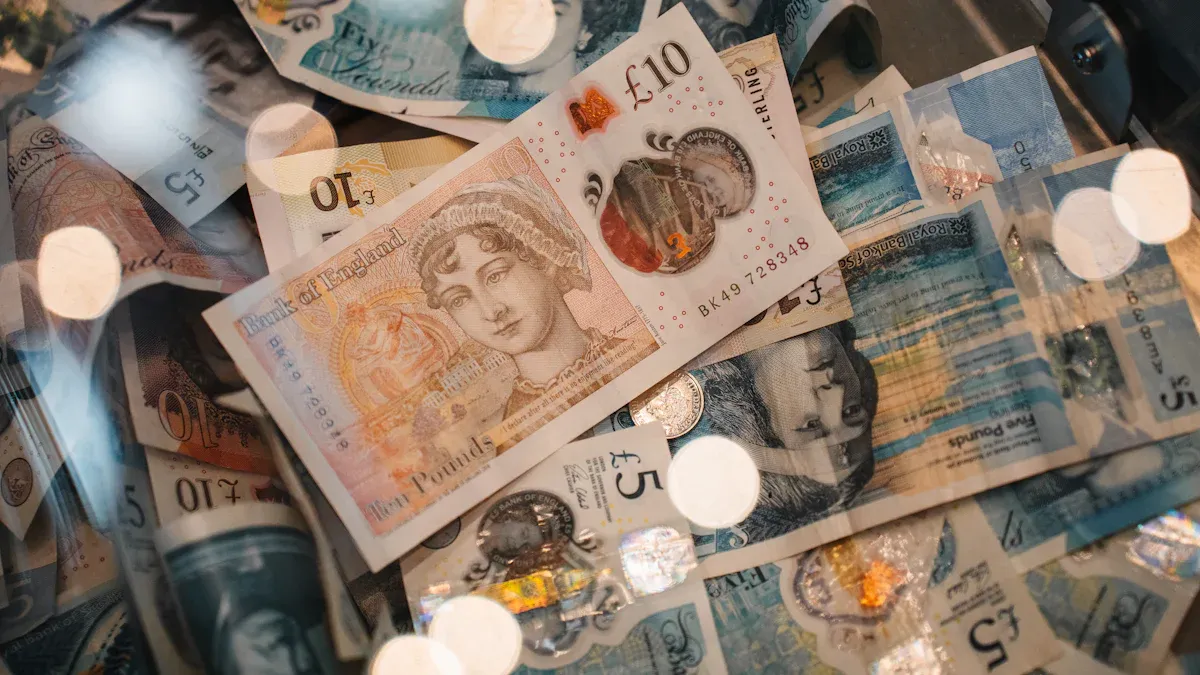
Image Source: pexels
These are the best places to exchange currency in London. Your top currency exchange options include:
- Thomas Exchange Global
- The Post Office
- Travelex
Tip: Specialist bureaus and online pre-ordering offer much better currency exchange rates than airport kiosks or high-street banks for your currency exchange.
This guide shows how you can exchange currency for the most pounds. A great currency exchange awaits when you exchange currency in London.
Key Takeaways
- Choose specialist bureaus or online services for better exchange rates.
- Avoid airport kiosks and high-street banks for currency exchange.
- Always pay in local currency (GBP) to avoid bad exchange rates.
- Know the mid-market rate before you exchange money.
- Count your cash at the counter to confirm the amount.
Best Places to Exchange Currency in London
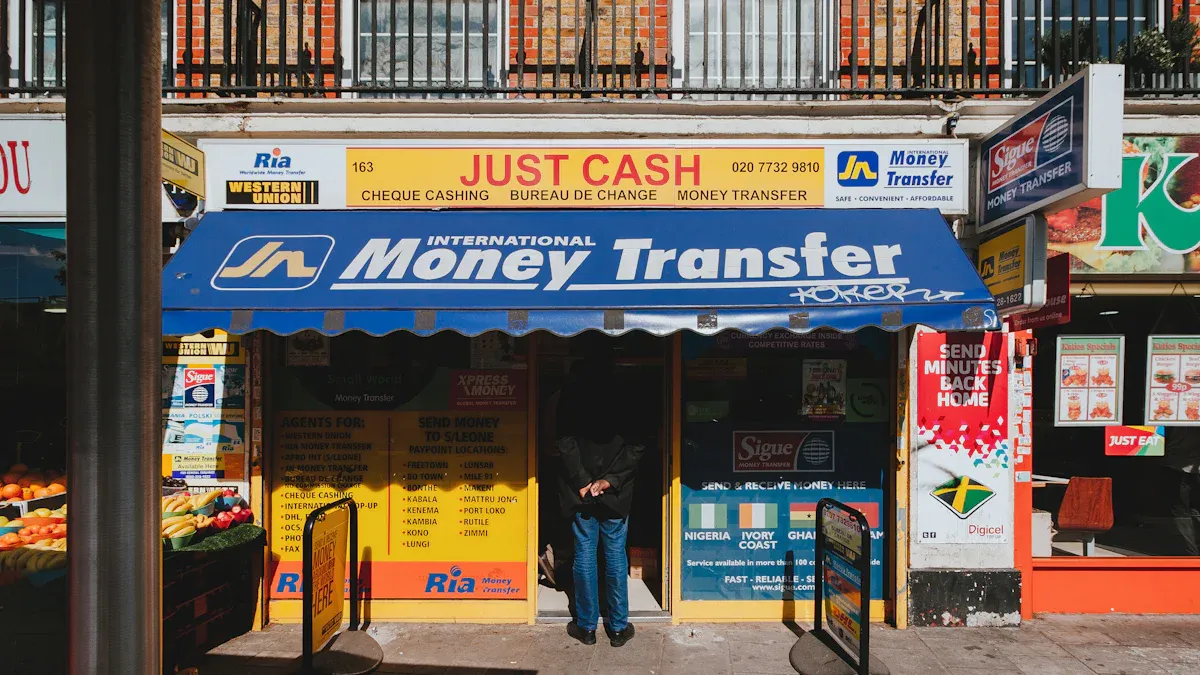
Image Source: unsplash
Finding the best places to exchange currency in London can save you a significant amount of money. While many shops offer this service, a few stand out for their excellent rates and reliability. These trusted currency exchange shops provide better value than you will find at airports or hotels. Here is your guide to the best money exchange locations.
Thomas Exchange Global
You will often see Thomas Exchange Global at the top of lists for the best money exchange, and for good reason. It is renowned for offering some of the best exchange rates in London with a 0% commission fee. This makes it a top choice if your goal is to maximize the pounds you receive. The company has built a strong reputation, which you can see in its customer feedback.
| Company Name | Rating | Number of Reviews |
|---|---|---|
| Thomas Exchange Global Ltd | 4.7 | 9K |
| Thomasexchange | 3.3 | 15 |
Note: When checking reviews, ensure you are looking at “Thomas Exchange Global Ltd,” which has thousands of positive ratings, rather than similarly named entities.
You can find their branches in several convenient central London locations, including one at 33 Liverpool Street, City of London, EC2M 7PD and another at 5 Market Place, London, W1W 8AE. Visiting a specialist like this is a smart way to exchange currency.
The Post Office
The Post Office is one of the most accessible options to exchange currency in London. With thousands of branches, you are never far from one. While their walk-in rates are convenient, you get the best value by ordering online for collection. The Post Office itself states that its online rates are “invariably better” due to lower operational costs.
Ordering your foreign exchange online comes with several advantages:
- Competitive Exchange Rates: You gain access to better rates than those offered in-branch.
- No Commission: Your currency exchange is completed without any commission fees.
- Rate Lock-in: You can secure an exchange rate online before you collect your cash.
- Convenience: With over 11,500 branches, collecting your order is simple. You can even get same-day collection for euros and US dollars if you order before 2 pm.
Remember that rates can differ from one branch to another. The Post Office explains this difference:
“Do all your branches have the same rate? No. Branch exchange rates depend on several factors like branch location, competition, cost of order, convenience, etc.”
For the best currency exchange experience at the Post Office, always plan ahead and order online.
Travelex
Travelex is a global leader in foreign exchange, and you will find its currency exchange shops at major airports, train stations, and city centers. While airport locations are best avoided for rate-sensitive transactions, their city branches offer a reliable currency exchange service.
A unique feature Travelex offers is its Buy Back Promise. For a small fee of £4.99, you can return any leftover currency.
- Travelex will buy back up to £250 at the original transaction rate.
- You must purchase this promise when you first exchange currency.
- The offer is valid for 45 days from your purchase date.
- You need the original receipt and a valid photo ID to redeem it in-store.
This service provides peace of mind, ensuring you do not lose money on unspent cash.
Eurochange
Eurochange is another excellent option for money exchange in London. You can find their branches on many high streets, providing a dependable and straightforward way to exchange currency in London. They are known for competitive exchange rates and consistently offer a 0% commission policy. This transparency makes them a popular choice for travelers who want to avoid hidden fees. Their service is quick and efficient, making it a great walk-in option if you are already in a city center.
Victoria Street FX
For those looking for a specialist service, Victoria Street FX is one of the best places to exchange money in London. Located near the major transport hub of Victoria Station, this independent bureau focuses on providing great value and flexible services. It is one of the best places to exchange currency if you want to secure a rate in advance.
Key services include:
- Click & Collect: You can reserve a rate online and it is guaranteed for 24 hours, protecting you from market fluctuations.
- Rate Tracker: The company helps you track currency movements to find the best time for your currency exchange.
- No Fees for Collection: You can order online and collect in-store without paying extra charges.
This bureau is an ideal choice for travelers who like to plan their foreign exchange transaction carefully to get the most value.
London Currency Exchange: Bureaus vs. Other Methods
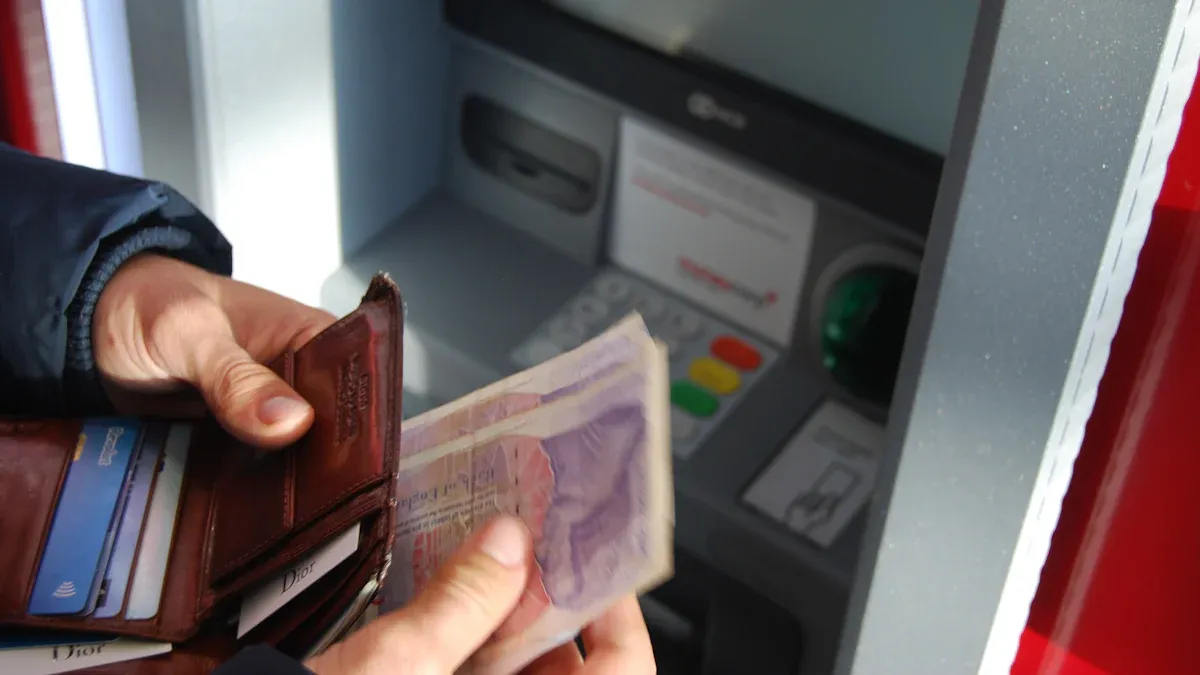
Image Source: unsplash
When you need to exchange currency in London, you have several options beyond the specialist bureaus. Understanding the pros and cons of each method helps you secure the best value for your money. This comparison will guide your currency exchange decisions.
Specialist Currency Exchange Bureaus
You will find many currency exchange shops advertising “0% commission.” While this sounds great, their profit often comes from a less favorable exchange rate. These bureaus add a margin, or “spread,” to the rate, which can be around 5%. This makes them a better choice than airports but not always the cheapest for your currency exchange. They offer competitive exchange rates but require you to compare them first.
Digital Banks and Apps (Wise, Revolut)
Digital apps like Wise and Revolut are revolutionizing foreign exchange. They offer a powerful alternative for your currency exchange needs. You must set up an account and order a physical card before you travel.
What is the mid-market rate? This is the real exchange rate that banks use to trade currencies between themselves. It is the fairest rate you can get, and services like Wise use it, adding only a small, transparent conversion fee (e.g., from 0.33%).
These apps let you hold and spend money in multiple currencies, often avoiding the high foreign transaction fees traditional banks charge. Be aware that some, like Revolut, may charge extra fees for currency exchange on weekends.
ATMs
Using an ATM is a convenient way to get cash when you exchange currency in London. However, it can come with costs.
- Pros: Widely available and quick. Some UK banks like Barclays are part of the Global ATM Alliance, offering fee-free withdrawals if your home bank is a partner.
- Cons: Your bank will likely charge a foreign transaction fee, and the ATM provider might add its own fee.
Tip: When an ATM asks if you want to be charged in your home currency or GBP, always choose GBP. Accepting the conversion (DCC) results in a poor exchange rate.
High-Street Banks
While banks offer safe exchanges, they are typically the most expensive way for exchanging currency in London. Major banks provide foreign exchange services, but their rates are often less favorable than specialist providers. They also charge high non-sterling transaction fees, usually between 2.75% and 2.99%, for purchases and withdrawals. This makes them a poor choice if you want the best exchange rates in London. For a simple money exchange in London, you will find better value elsewhere.
This chart shows that nearly every transaction with a traditional bank card will cost you an extra fee, reducing the value of your currency exchange.
Common Mistakes When You Exchange Currency
You can lose a lot of money if you are not careful when you exchange currency in London. Knowing the common pitfalls helps you get the best value. Avoiding these mistakes is key to a successful currency exchange.
Using Airport and Hotel Kiosks
You pay a high price for convenience when you use airport or hotel currency exchange services. These kiosks target travelers who need cash immediately. Their exchange rates are among the worst you will find. The operators know you have few other options upon arrival. For a much better currency exchange, you should wait until you reach the city center. Planning ahead ensures you do not start your trip by losing money on a poor currency exchange.
Falling for ‘No Commission’ Signs
You will see many bureaus advertising “0% commission” or “no fees.” This sounds like a great deal, but it is often misleading. These providers make their profit by giving you a less favorable exchange rate. They add a markup to the real mid-market rate, and this difference is their hidden fee. For example, a currency exchange service might offer you a rate that is significantly lower than the one banks use to trade with each other. This makes avoiding hidden fees a crucial part of your currency exchange strategy. Always compare the final amount of pounds you will receive.
Accepting Dynamic Currency Conversion (DCC)
When you use your card abroad, a payment terminal or ATM might ask if you want to pay in your home currency. This is Dynamic Currency Conversion (DCC). You should always decline this offer. If you accept, the vendor applies their own terrible exchange rate. Consumers can overpay by a significant amount, sometimes as much as 12% of the transaction value.
Tip: Always choose to pay in the local currency (GBP) to get your bank’s more competitive currency exchange rate. This simple choice saves you money every time you exchange currency. When you exchange currency in London, this is a critical rule to follow for every transaction.
Checklist to Exchange Currency in London
You can make your money go further with a smart approach. Following this checklist is the best way to learn how to exchange currency in london and secure a great deal. A successful currency exchange starts with good preparation.
1. Know the Mid-Market Rate
Before you exchange currency in London, you must know the real exchange rate. This is called the mid-market rate, and it is the rate banks use to trade with each other. It has no hidden markup. Knowing this number helps you spot a bad deal. You can use free apps and websites to track it in real time.
Tip: Check the live rate just before you head to a bureau. This gives you a powerful benchmark for your currency exchange.
Some of the best tools for tracking rates include:
- Wise: Shows you the mid-market rate, the same one you see on Google.
- Revolut: Provides interbank rates on weekdays for quick conversions.
- XE: Offers a popular currency converter with live rates and alerts.
Using these tools helps you find the best exchange rates in london.
Once you’ve checked the mid-market rate, it helps to sanity-check the “real outcome” with a quick conversion on the exact amount you plan to exchange. You can use BiyaPay’s currency converter to translate your budget into GBP and compare what different bureaus would actually give you after spreads and fees—useful for planning without relying on airport quotes.
If you’re also managing cross-border spending or funds while traveling, BiyaPay is a multi-asset wallet covering payments, investing, trading, and money management. For added peace of mind, it operates with compliance registrations such as a U.S. MSB and New Zealand FSP. For the latest entry points and terms, check the official website, browse the event center, or complete setup via register.
2. Carry Your Photo ID
You will need to prove your identity for certain transactions. UK anti-money laundering regulations require bureaus to ask for identification for larger amounts. This is a standard security measure for any reputable currency exchange.
Make sure you bring a valid government-issued photo ID. Acceptable forms include:
You will likely need your ID for any single currency exchange transaction over £4,950. Always have it with you to avoid any delays when you exchange currency in London.
3. Confirm the Final GBP Amount
Do not get distracted by signs that promise “0% Commission.” The most important number is the final amount of British Pounds (GBP) you will receive. Ask the cashier, “If I give you this much of my currency, how many pounds will you give me back?” This simple question cuts through confusing rates and fees. It helps you compare offers easily and find truly competitive exchange rates.
4. Count Your Cash at the Counter
Mistakes can happen, so you should always protect yourself. Once the cashier hands you your pounds, count the money right there at the counter. Do this before you walk away. Confirming the amount on the spot makes it easy to fix any errors. This final check ensures your currency exchange is accurate and you leave with the correct amount. It is a simple but crucial step when you exchange currency in London.
You get the best value on your currency exchange when you plan ahead. Visit a trusted specialist like Thomas Exchange Global, which customers praise for fair rates, or pre-order online from the Post Office. For daily spending, a fintech card from Wise or Revolut is your most cost-effective choice for foreign exchange.
Final Tip: Always avoid airport kiosks for foreign exchange. You must always choose to pay in the local currency (GBP) to avoid poor rates and hidden fees.
FAQ
Is it better to exchange money before I travel or in London?
You often get better rates by exchanging your money in London. Avoid airport kiosks. You should visit a specialist bureau like Thomas Exchange Global in the city center. Pre-ordering online from a service like the Post Office also secures competitive rates.
Can I use my credit card everywhere in London?
You can use credit cards in most London shops, restaurants, and transport systems. Visa and Mastercard are widely accepted. However, you should carry some cash for smaller purchases at independent shops or market stalls, as some may have a minimum spend for cards.
What is the best currency to bring to London?
You should always use the local currency, which is the British Pound (GBP). While some tourist-heavy shops might accept euros or US dollars, they will give you a very poor exchange rate. Always pay for everything in GBP to get the best value.
Do I need cash in London, or is it cashless?
London is largely cashless, and you can pay for most things with a card or phone. You will still find cash useful for small tips, market vendors, or as a backup. Carrying a small amount of pounds, perhaps £50, is a good idea.
*This article is provided for general information purposes and does not constitute legal, tax or other professional advice from BiyaPay or its subsidiaries and its affiliates, and it is not intended as a substitute for obtaining advice from a financial advisor or any other professional.
We make no representations, warranties or warranties, express or implied, as to the accuracy, completeness or timeliness of the contents of this publication.
Related Blogs of

AI Storage Supply Chain Map: Chips, HDDs, SSDs, Packaging Equipment, and Enterprise Storage Systems


Why Is HDD Supply and Demand Tightening? AI Data Centers, Long-Term Agreements, and Western Digital/Seagate Pricing Power


How Should SSDs and HDDs Work Together in AI Data Centers? Performance, Capacity, Cost, and Hot vs. Cold Data Compared


How Do AI Servers Drive Storage Demand? The Roles of HBM, Server DRAM, Enterprise SSDs, and HDDs
Choose Country or Region to Read Local Blog
 Australia
 Austria
 Belgium
 Canada
 Cyprus
 Czech Republic
 Denmark
 Estonia
 Finland
 France
 Germany
 Greece
 Hong Kong
 India
India Indonesia
 Ireland
 Italy
Italy Japan
Japan Latvia
 Lithuania
 Luxembourg
 Malaysia
 Malta
Malta Morocco
 Nepal
Nepal Netherlands
 New Zealand
 Norway
 Pakistan
 Philippines
 Poland
 Portugal
 Romania
 Singapore
 Slovakia
 Slovenia
 South Africa
 South Korea
 Spain
Spain Sweden
 Thailand
 The United States
 Turkey
 United Arab Emirates
 United Kingdom
 Vietnam
Contact Us




BIYA GLOBAL LLC is registered with the Financial Crimes Enforcement Network (FinCEN), an agency under the U.S. Department of the Treasury, as a Money Services Business (MSB), with registration number 31000218637349, and regulated by the Financial Crimes Enforcement Network (FinCEN).
BIYA GLOBAL LIMITED is a registered Financial Service Provider (FSP) in New Zealand, with registration number FSP1007221, and is also a registered member of the Financial Services Complaints Limited (FSCL), an independent dispute resolution scheme in New Zealand.