Why Does Stripe Want to Buy PayPal? The Value of Merchants, Digital Wallets, Venmo, and Stablecoins





Stripe’s interest in buying PayPal is not simply about acquiring an older payment company. The deeper logic is to fill gaps in consumer wallets, merchant checkout, Venmo’s social payment network, and stablecoin distribution. Stripe is strong in merchant infrastructure and developer tools, while PayPal is strong in consumer accounts, branded checkout, and global payment relationships. If the deal moves forward, Stripe could evolve from a back-end payment processor into a broader financial network spanning merchants, consumers, and digital-dollar settlement. However, price, financing, antitrust scrutiny, and integration complexity will all affect the final outcome.
Key Takeaways
- Stripe’s main weakness is not payment processing, but consumer wallets and account relationships.
- PayPal can add branded checkout, Braintree, cross-border payments, and merchant tools.
- Venmo’s value lies in young U.S. users, high-frequency P2P use cases, and monetization potential.
- PYUSD could connect with Stripe’s Bridge and Privy stablecoin infrastructure.
- The deal is still uncertain; price, regulation, and integration costs may all change the outcome.
Where Does Stripe’s Offer for PayPal Stand, and Why Is It Happening Now?
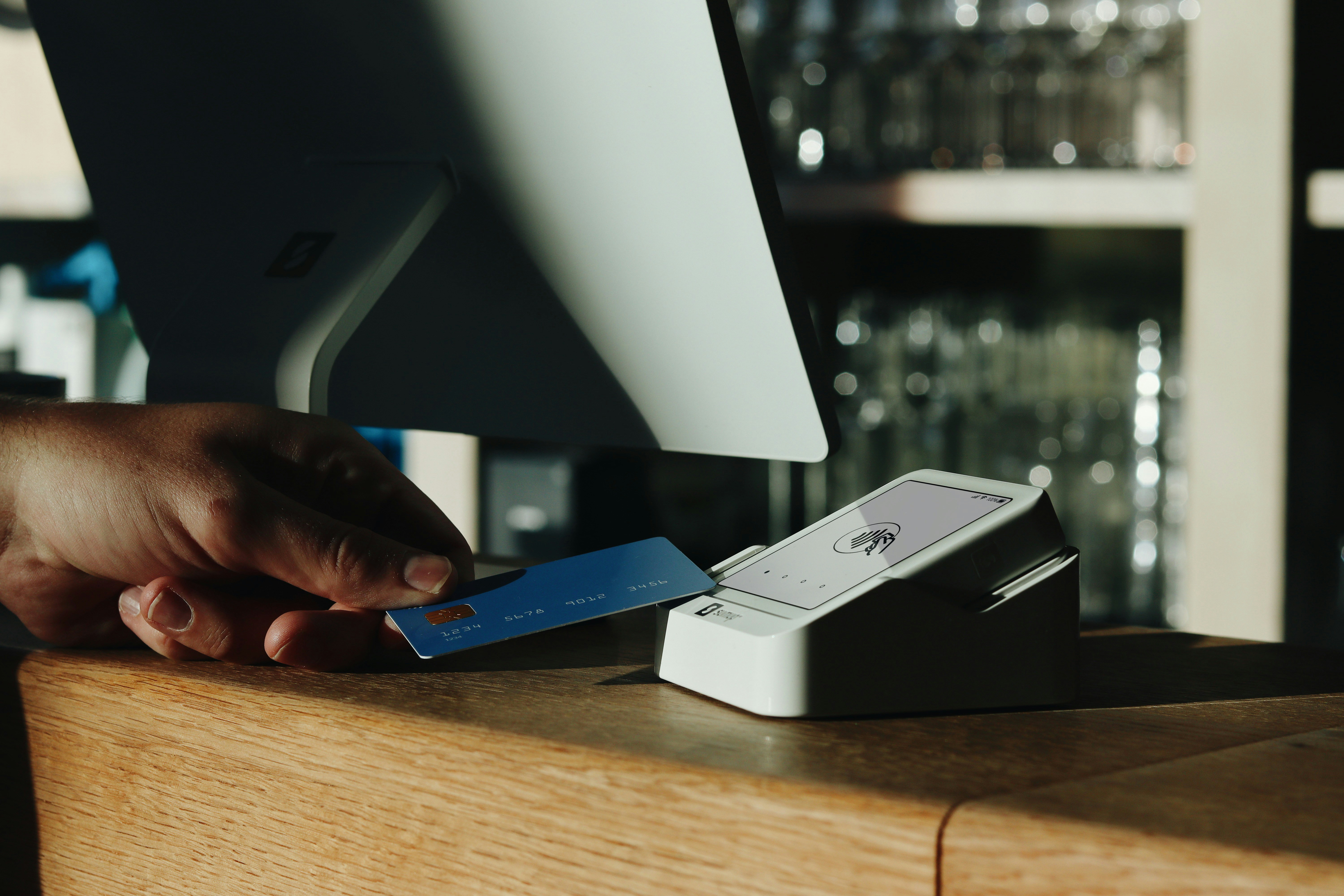
Stripe’s current interest in PayPal mainly reflects the fact that the two companies are now comparable in payment scale, but highly complementary in asset structure. Stripe is more like financial infrastructure for merchants and platforms, while PayPal owns global consumer accounts, branded checkout, Venmo, and a stablecoin entry point. The timing also relates to PayPal’s lower share price and valuation, rising payment-sector consolidation, and growing interest in stablecoin payments.
As of July 20, 2026, this transaction should still be understood as a potential acquisition proposal, not a completed deal. Media reports say Stripe and Advent International made a bid of $60.50 per share, valuing PayPal at more than $53 billion, with reportedly around $50 billion in bank financing support. Later reports suggested that the PayPal board viewed the offer as inadequate, citing price, financing certainty, regulatory obstacles, and the company’s standalone restructuring value.
The timing makes sense. Stripe’s 2025 update showed that its total payment volume reached $1.9 trillion, up 34% year over year, with a large customer base across internet businesses, AI companies, and platform merchants. PayPal’s 2025 Form 10-K showed that PayPal processed $1.79 trillion in TPV, had 439 million active accounts, and handled 25.4 billion payment transactions.
In scale terms, Stripe and PayPal are already in the same league as global payment networks. But their value centers are different:
| Dimension | Stripe | PayPal | Why PayPal Matters to Stripe |
|---|---|---|---|
| Core customers | Merchants, platforms, developers | Consumers, merchants, P2P users | Moves Stripe from merchant back end to consumer front end |
| Main capabilities | APIs, payment processing, subscriptions, fraud tools, issuing | Wallets, branded checkout, Venmo, Braintree | Adds accounts and payment choices |
| Growth direction | AI commerce, stablecoins, global merchant infrastructure | Consumer finance, digital wallets, merchant conversion | Builds an end-to-end payment network |
| Main risk | Weak consumer-facing brand | Slower growth, margin pressure | Integration must improve profit quality |
The key is not to simply add the two companies’ TPV figures together. PayPal defines active accounts as accounts that completed at least one transaction on its platform during the past 12 months, and one user may hold more than one account. Stripe’s total payment volume also comes from merchant and platform processing. The two metrics are not perfectly comparable. A combined payment volume of around $3.7 trillion only shows the size of the potential network; it does not directly translate into revenue, profit, or merger synergies.
A more realistic interpretation is that Stripe is not buying PayPal for its current growth rate alone. It is looking at PayPal’s hard-to-replicate consumer distribution. Consumers recognize PayPal at checkout, log in to PayPal, and store cards, bank accounts, or balances there. That relationship is harder to build than a payment-processing rail. If Stripe wants to push stablecoins, AI agent payments, and merchant financial services into mainstream use, back-end APIs alone are not enough. PayPal’s account network fills that missing layer.
Summary: The Stripe-PayPal acquisition window appears at the intersection of two shifts. On one side, Stripe has grown into one of the world’s largest payment infrastructure companies and needs a stronger consumer entry point. On the other side, PayPal’s growth has slowed, but it still owns massive accounts, branded checkout, and cash-flow assets. The current offer has not been formally accepted, and PayPal’s board may demand a higher price or continue with an independent turnaround. For investors, the key question is not simply whether $53 billion is cheap, but whether Stripe can turn PayPal’s consumer network, Venmo, and PYUSD into a new payment loop.
What Can PayPal’s Merchant and Payment Business Add to Stripe?

PayPal’s most direct value to Stripe is that it gives Stripe a more complete merchant payment stack. Stripe is already strong in online payments, subscriptions, platform payouts, and developer tools. PayPal can add branded checkout, Braintree’s unbranded processing, Venmo merchant payments, BNPL, Hyperwallet payouts, and Xoom cross-border remittances. The acquisition logic is not just about increasing processed volume; it is about improving merchant conversion and expanding consumer payment options.
Stripe’s strength is helping businesses get paid. It provides payment APIs, fraud protection, subscription billing, tax tools, invoicing, platform payouts, and global payment services. It is especially useful for SaaS businesses, platform companies, internet-native firms, and emerging AI applications. PayPal’s strength is closer to how consumers choose to pay. PayPal’s 2025 annual report says its merchant solutions include PayPal and Venmo branded checkout, unbranded payment processing, BNPL, point-of-sale solutions, business financing, payout capabilities, and risk tools.
This means Stripe would not just gain a competitor’s merchant list. It would acquire a toolkit that can be cross-sold across its own platform:
- Sell Stripe Billing, Tax, Radar, Issuing, and Connect to PayPal merchants.
- Offer PayPal, Venmo, and Pay Later to Stripe merchants.
- Use PayPal’s consumer recognition to improve checkout conversion.
- Expand global payouts through Hyperwallet, Xoom, and stablecoin infrastructure.
- Use a larger transaction-data base to improve fraud detection, authorization rates, and risk models.
The largest synergy point may also be the largest risk: Braintree. Braintree serves large enterprises and platform customers, and it overlaps meaningfully with Stripe Payments, Connect, and payment orchestration. PayPal’s annual report notes that Braintree products and services added around $150 million in revenue in 2025. But it also explains that Braintree’s transaction count, revenue, and TPV were pressured in the first half of the year because of a profit-first strategy, before recovering later. In other words, Braintree’s scale is valuable, but not all processing volume is equally worth keeping.
| PayPal Asset | Stripe’s Existing Capability | Potential Synergy | Main Challenge |
|---|---|---|---|
| PayPal Checkout | Stripe Checkout, Link | Adds a familiar branded payment option | Wallet-brand positioning |
| Braintree | Stripe Payments, Connect | Expands large-merchant processing | Customer and system overlap |
| Venmo merchant payments | Link, payment-method access | Improves conversion among young U.S. users | Concentrated in the U.S. |
| Pay Later | Installment-payment access | Can improve order value and conversion | Credit-regulation risk |
| Hyperwallet | Stripe Connect, Payouts | Strengthens global platform payouts | Complex system integration |
| Xoom | Cross-border payments, stablecoin settlement | Covers personal-remittance scenarios | Growth potential and compliance costs |
For merchants, the practical question is whether a combined Stripe-PayPal would change payment fees, authorization rates, and available payment methods. In the short term, Stripe may not immediately raise merchant costs because the payment-processing market remains competitive, with Adyen, Checkout.com, Worldpay, Fiserv, Block, Apple Pay, Google Pay, and others. Over the long term, if Stripe can bundle processing, wallets, fraud tools, and settlement, merchants may receive a stronger integrated experience. But they may also worry about supplier concentration, weaker bargaining power, and migration costs.
From an investor’s perspective, PayPal’s merchant business should not be valued by TPV alone. The more important indicators are transaction margin, branded-checkout share, Braintree customer quality, Venmo merchant penetration, and value-added services revenue. Large-scale low-margin processing does not automatically improve Stripe’s valuation. What matters is whether those merchant relationships can be extended into subscriptions, tax, issuing, payouts, stablecoins, and financial services.
If you follow trading opportunities in PayPal, Stripe-related payment names, or other U.S.-listed fintech companies, it is useful to separate “business model” from “trading cost.” When tracking PayPal and similar companies through Biya U.S. stock search, you should look not only at stock-price moves, but also at volume, company announcements, fee structures, and order-execution rules.
Summary: PayPal’s merchant value lies in completing the payment toolkit. Stripe already has powerful merchant infrastructure, while PayPal adds branded checkout, unbranded processing, Venmo, BNPL, cross-border payouts, and merchant-risk data. The main synergy comes from cross-selling and payment-method expansion. The main risks are Braintree’s overlap with Stripe’s core business, system integration costs, and changing merchant bargaining dynamics. The deal can create value only if Stripe turns PayPal’s merchant scale into higher-quality profit, not simply larger TPV.
Why Might PayPal’s Digital Wallet Be More Valuable Than Payment Processing Scale?

PayPal’s digital wallet may be more valuable than its payment-processing scale because a wallet represents a consumer relationship, while payment processing is mostly a merchant back-end capability. Stripe can already help businesses accept payments, but consumers may not know they are using Stripe. PayPal is different. Users actively recognize it, log in to it, store funding sources, manage balances, use credit products, and handle disputes through it.
Stripe does have consumer-facing capabilities. Link already covers more than 300 million consumers and allows saved payment details and faster checkout across many Stripe merchants. Link matters for conversion and is well positioned for AI agent shopping. But Link and the PayPal wallet are not the same thing. Link is more like a cross-merchant fast-checkout network. PayPal is a wallet system with an independent brand, account balances, bank-account connections, consumer apps, P2P transfers, merchant protection, and dispute-resolution capabilities.
The core value of a digital wallet is that it stores consumer identity, funding sources, and transaction preferences. When users pay with PayPal, they are not just entering a card once. They are reusing the same account across merchants, devices, and use cases. That matters a great deal for Stripe because it can extend merchant-side infrastructure into consumer-side relationships.
| Capability | Stripe Link | PayPal Wallet | Strategic Meaning After Combination |
|---|---|---|---|
| Fast checkout | Strong | Strong | Improves cross-merchant conversion |
| Independent consumer brand | Relatively limited | Globally recognized | Shortens consumer-acquisition time |
| Account balances | Limited scenarios | Mature | Increases fund retention |
| P2P payments | Not core | PayPal, Venmo | Raises daily usage frequency |
| Credit and installments | Mostly merchant-side tools | More complete consumer products | Expands financial services |
| Disputes and protection | Merchant-infrastructure oriented | Familiar to consumers | Strengthens trust |
| AI agent payments | Key area of focus | Can provide account authorization | Supports next-generation shopping entry points |
For Stripe, wallets also have a longer-term role in AI agent payments. In the future, users may ask AI agents to search for products, compare prices, place orders, and pay. At that point, payment networks need to answer three questions: who authorized the payment, which funding source should be used, and how can the merchant trust the transaction? PayPal Wallet, Link, and Stripe’s merchant network together could provide identity, authorization, payment, and risk infrastructure for AI commerce.
However, wallet value cannot be measured by simply adding account numbers. PayPal’s 439 million active accounts and Link’s 300 million consumers may overlap, and an active account does not necessarily mean a high-frequency user. The real metrics to watch are transaction frequency, transactions per account, branded-checkout share, wallet balances, credit-product penetration, and retention. If an acquisition happens, Stripe will need to decide how PayPal, Link, and Venmo coexist: PayPal for global branded checkout, Venmo for U.S. social payments, and Link for frictionless checkout across Stripe merchants.
Summary: Payment processing answers the question “How does a merchant get paid?” A digital wallet answers “What identity and funding source does the consumer use to pay?” Stripe already processes enormous transaction volume, but PayPal Wallet offers harder-to-replicate consumer accounts, brand trust, and funding relationships. If integration succeeds, Stripe could move from being an invisible back-end payment provider to a network spanning consumer login, payment authorization, merchant processing, stablecoin settlement, and financial services. The real challenge is not technical integration, but brand positioning, data boundaries, and user-habit migration across three wallet products.
What Makes Venmo Uniquely Valuable to Stripe, and Why Is It More Than a Transfer App?
Venmo’s value to Stripe is not limited to P2P transfers between U.S. users. It is a high-frequency, youth-skewing, localized consumer payment network. Venmo users are accustomed to using the account for friends, family, small merchants, and everyday consumption. That kind of daily habit is very difficult for a payment company to buy quickly through advertising. If Stripe acquired Venmo, it could bring more U.S. consumers into merchant checkout, subscriptions, creator-economy payments, and offline payment use cases.
When PayPal presents Venmo to merchants, it says merchants accepting Venmo can reach 95 million active Venmo accounts, with 68% of users being millennials or Gen Z. More importantly, Venmo and PayPal users do not fully overlap. The same PayPal merchant material says only 54% of active Venmo users also have an active PayPal account. This means Venmo is not merely an add-on to the PayPal wallet. It is a distinct U.S. consumer entry point.
Venmo’s monetization paths can be divided into five categories:
| Venmo Use Case | How Stripe Could Amplify It | Revenue Source | Main Limitation |
|---|---|---|---|
| P2P transfers | Adds social payment touchpoints | Instant cash-out, financial services | Strong free-use habit |
| Merchant checkout | Connects more Stripe merchants | Merchant transaction fees | Mainly U.S.-focused |
| Business profiles | Serves creators and small merchants | Merchant service fees | Overlaps with PayPal merchant products |
| Debit and credit cards | Connects with Stripe Issuing | Interchange and partner revenue | Credit and compliance requirements |
| Offers and advertising | Links to merchant marketing | Ads, referrals, promotions | Privacy and data-use boundaries |
Venmo’s distinctiveness lies in relationship-based payments. Users may use Venmo for restaurant splitting, rent, gifts, small services, or social events. That differs from pure e-commerce checkout. If Stripe can connect those relationship-based use cases to merchant acceptance, it may expand into more local U.S. consumption scenarios, such as local services, event ticketing, creator monetization, neighborhood merchants, and subscription bills.
But Venmo should not be overvalued blindly. Its limits are clear: it is heavily concentrated in the United States; frequent P2P usage does not automatically convert into high-profit merchant transactions; young users may resist higher fees; and using social-payment data for advertising or recommendations must stay within privacy and consumer-protection rules. If Stripe operates PayPal, Venmo, and Link at the same time, it must also avoid brand confusion. Otherwise, merchants and consumers may not know which wallet to choose, weakening checkout conversion.
From an investment perspective, Venmo should be understood as a monetizable user network, not just a transfer function. The question is not whether Venmo is popular. The question is whether it can generate a higher merchant-payment share, more instant-transfer revenue, stronger card-product income, and a more mature offers or advertising business. Only if those indicators improve can Venmo shift from being a user asset into a profit asset.
Summary: Venmo’s value lies in U.S. consumer habits and a younger user network. It can help Stripe gain more direct consumer relationships and extend P2P payments into merchant checkout, the creator economy, offline services, and card products. But Venmo’s U.S. concentration, free-transfer habit, and privacy boundaries limit its valuation upside. For Stripe, the most logical strategy would not be to merge Venmo into PayPal or Link, but to let it remain the U.S. youth-oriented entry point while using Stripe’s merchant network to improve monetization efficiency.
Are Stablecoins the Long-Term Strategic Endgame Behind Stripe’s Interest in PayPal?
Stablecoins are likely one of the long-term strategic reasons behind Stripe’s interest in PayPal, but they are not the only reason. Stripe already owns Bridge, Privy, and stablecoin-related infrastructure. The harder question is why ordinary consumers and merchants would use stablecoins for payments. PayPal, Venmo, and PYUSD could provide consumer distribution, trusted brands, and merchant acceptance — exactly what stablecoins need to move from on-chain tools to mainstream payments.
Stripe has accelerated its stablecoin strategy in the past two years. In February 2025, Stripe announced that it had completed its acquisition of Bridge, bringing stablecoin infrastructure into its system. Stripe has also stated that Stripe, Bridge, and Privy can be combined to support global stablecoin orchestration, crypto wallet infrastructure, and merchant access. Bridge’s Open Issuance allows businesses to issue their own stablecoins and expand usage through on-ramps, off-ramps, wallets, cards, and the Stripe ecosystem.
PayPal’s PYUSD sits on the other end of the chain. PayPal says PYUSD is a stablecoin designed to be redeemable 1:1 for U.S. dollars, supported by dollar reserves and cash equivalents, and transferable across PayPal, Venmo, external wallets, exchanges, and multiple blockchains. PayPal also highlights that U.S. merchants can accept PYUSD in PayPal Checkout where available.
When Stripe and PayPal’s assets are placed on the same map, the stablecoin loop becomes clearer:
| Layer | Stripe’s Existing Assets | What PayPal Could Add | Combined Value |
|---|---|---|---|
| Stablecoin issuance and orchestration | Bridge | PYUSD experience and distribution | Supports enterprise-grade digital dollars |
| Wallet infrastructure | Privy, Link | PayPal Wallet, Venmo | Connects consumer entry points |
| Merchant acceptance | Stripe Payments, Checkout | PayPal Checkout, Braintree | Expands acceptance network |
| Cross-border settlement | Bridge, Payouts | Xoom, Hyperwallet | Reduces some cross-border friction |
| Consumer trust | Stripe is more merchant-oriented | PayPal and Venmo are stronger | Improves mainstream adoption potential |
| Compliance and risk controls | Stripe fraud tools and KYC capabilities | PayPal’s global licensing and compliance experience | Supports large-scale operations |
This is why the deal may be about more than PayPal’s stock price. For stablecoins to enter everyday payments, three problems must be solved: merchants must be willing to accept them, consumers need usable wallets, and money must move compliantly between fiat and on-chain assets. Stripe has merchants and technology. PayPal has consumers and wallets. PYUSD provides a digital-dollar asset format. Together, these layers could form a full payment, settlement, and wallet network.
Stablecoins, however, also increase regulatory uncertainty. PYUSD is not a bank deposit and is not legal tender. PayPal’s PYUSD materials also stress that crypto-service availability, fees, redemption, and rewards depend on applicable conditions. Cross-border stablecoin use involves reserve assets, redemption, anti-money laundering, sanctions screening, consumer protection, tax treatment, and local digital-asset regulations. If Stripe controlled merchant processing, wallets, stablecoins, and consumer distribution at the same time, regulators would likely examine data, market power, and financial risk more closely.
This also connects to a cost issue investors and traders often overlook. When following PayPal or payment-industry stocks, you should not look only at merger headlines and short-term price moves. Actual trading costs also matter. U.S. stock trading costs may include not only commissions, but also platform fees, external institutional fees, transaction activity fees, and other charges. Biya charges $0 commission for U.S. stock trades, while platform fees, external institutional fees, and other charges are subject to the Biya U.S. stock fee schedule and the order page. Service availability depends on the user’s location, identity-verification results, platform rules, and applicable laws and regulations. Public market information and fee-structure discussion do not constitute investment advice.
Summary: Stablecoins help explain why Stripe might study a large and complex PayPal transaction. Stripe already has Bridge and Privy, which provide stablecoin issuance, orchestration, wallet infrastructure, and merchant access. PayPal brings consumer wallets, Venmo, PYUSD, and global payment trust. The real strategic endpoint may be a network where merchants, consumers, and digital dollars move within the same payment system. But that path requires clearing acquisition-price concerns, antitrust scrutiny, stablecoin compliance, brand integration, and user-habit migration. Industry synergy should not be mistaken for deal certainty.
What Are the Biggest Uncertainties in a Stripe-PayPal Deal?
The biggest uncertainty in a Stripe-PayPal deal is not whether the strategic logic is attractive. It is whether price, financing, regulation, and integration can all work at the same time. Payments are a classic two-sided or multi-sided platform business, and a transaction of this type would affect merchants, consumers, wallets, processors, and the stablecoin ecosystem. Even if Stripe and PayPal are clearly complementary, regulators may still examine competition in payment processing, digital wallets, and merchant checkout.
The U.S. DOJ and FTC merger guidelines specifically address mergers involving multi-sided platforms, noting that platform mergers can affect competition between platforms, within platforms, and against substitute platforms. A Stripe-PayPal combination fits this framework. Stripe is a merchant platform. PayPal is a consumer-and-merchant network. Braintree overlaps with Stripe’s processing business. PayPal, Venmo, and Link all touch digital wallets and checkout experience.
The main uncertainties can be grouped into five categories:
| Risk Type | Specific Issue | Possible Result |
|---|---|---|
| Price risk | PayPal’s board views the offer as inadequate | Stripe raises its bid, negotiations drag on, or Stripe exits |
| Financing risk | Large debt financing faces cost and market-condition changes | Lower returns, revised deal terms |
| Regulatory risk | Payment processing, wallets, data, and stablecoins become concentrated | Asset divestitures or business restrictions |
| Integration risk | Stripe, PayPal, Braintree, and Venmo systems are complex | Costs exceed expectations, synergies fail |
| Customer-loss risk | Large merchants worry about supplier concentration | Merchants move to Adyen, Worldpay, or other alternatives |
For Stripe, closing the deal would not mean strategic success is automatic. It would need to answer several key questions. Should Braintree be retained as a full business? How should PayPal, Venmo, and Link be positioned? Should PYUSD become the core stablecoin, or should Stripe continue to support multiple stablecoins such as USDC and others? Can PayPal’s consumer-protection and dispute-resolution mechanisms coexist with Stripe’s developer-friendly experience? If these questions are not handled well, post-merger complexity could offset scale advantages.
For PayPal shareholders, the key question is whether the company’s standalone turnaround value is higher than the acquisition offer. PayPal still has a large account base, TPV, cash flow, and global brand. But it also faces competition in branded checkout, Braintree margin pressure, Venmo monetization challenges, and pressure from Apple Pay and Google Pay. If management improves profit quality, the board has a reason to demand a higher price. If standalone growth remains weak, a takeover proposal becomes more attractive.
For ordinary investors, the observation sequence should be clear. First, watch whether PayPal issues an official response. Next, watch whether Stripe and Advent raise the bid. Then monitor whether financing commitments remain in place, whether rival bidders appear, and whether regulators require asset divestitures. Media reports should not be treated as a completed transaction, and short-term share-price jumps should not be the only basis for judgment. Merger deals can change at any stage from rumor to signing, review, and closing.
If you want to track PayPal, Block, Adyen, Visa, Mastercard, and other payment-industry names, you can use Biya to follow U.S. and Hong Kong market activity, and use real-time exchange rates to understand the currency impact of cross-border capital allocation and U.S. dollar assets. In payment-industry analysis, terms such as “scale,” “wallet,” and “stablecoin” are only analytical dimensions. Actual trading decisions still need to consider personal risk tolerance, fee details, and local rules.
Summary: The strategic logic of a Stripe-PayPal acquisition is strong, but the execution difficulty is just as high. On price, PayPal’s board may argue that the current offer does not fully reflect long-term value. On financing, large debt could increase return pressure. On regulation, concentration across payment processing, wallets, and stablecoins may trigger deep review. On integration, Stripe would need to manage Braintree, PayPal, Venmo, Link, and PYUSD at the same time. For investors, the best approach is to break the deal into five signals: whether the bid rises, whether the board accepts it, whether financing remains stable, whether regulation is manageable, and whether integration is executable.
If you follow fintech events such as a potential Stripe acquisition of PayPal, it is better to understand them within the broader payment value chain: merchant acquiring, digital wallets, P2P transfers, cross-border payments, stablecoin settlement, and U.S. stock valuations can all change at the same time. Biya is a global multi-asset trading wallet that supports U.S. stocks, Hong Kong stocks, and digital-asset trading. It also supports converting USDT into major fiat currencies such as U.S. dollars and Hong Kong dollars, and covers payments in more than 40 local currencies across over 190 countries and regions. You can use Biya to monitor market prices and company information for payment-industry stocks such as PayPal, while combining that with public filings, regulatory documents, platform fees, and your own risk tolerance. Market information is for research only and does not constitute investment advice. Specific service availability depends on user location, identity-verification results, platform rules, and applicable laws and regulations.
FAQ
Has Stripe’s Offer to Acquire PayPal Been Accepted?
As of July 20, 2026, PayPal has not formally accepted the reported offer. Current information comes from media reports, and PayPal’s board is reportedly still reviewing price, financing certainty, regulatory obstacles, and standalone turnaround value. A higher bid, failed talks, rival bidder, or formal merger agreement could still emerge, so company announcements and regulatory filings should be treated as the primary sources.
Would Merchant Fees Rise After a Stripe-PayPal Deal?
A completed Stripe-PayPal deal would not automatically mean higher merchant fees. Pricing depends on merchant size, payment method, region, contract terms, competition, and regulatory requirements. If Stripe and PayPal combine processing, wallets, and fraud tools, merchants may receive more bundled services, but they should still rely on their contracts, settlement statements, and published platform fee schedules.
What Value Would Braintree Add to Stripe?
Braintree would add large-merchant relationships, unbranded payment processing, and enterprise payment experience to Stripe. It could expand Stripe’s coverage among enterprise and platform customers, but it also overlaps with Stripe Payments and Connect. Its real value depends on customer retention, system integration, margin improvement, and whether regulators require related assets to be divested.
Why Would Venmo Affect the Valuation of a Stripe-PayPal Deal?
Venmo matters because it represents young U.S. users, high-frequency P2P transfers, and a potential merchant-payment entry point. If Stripe acquired Venmo, it could bring more consumer relationships into e-commerce, subscriptions, the creator economy, and offline services. However, Venmo is mainly U.S.-focused, and users are accustomed to free transfers, so monetization still needs careful assessment.
How Could PYUSD Support Stripe’s Stablecoin Strategy?
PYUSD could support Stripe’s stablecoin strategy by adding consumer distribution and PayPal-wallet use cases. Stripe already has Bridge, Privy, and merchant infrastructure, while PayPal brings PYUSD, wallets, and merchant acceptance. The complementary areas include cross-border settlement, merchant payments, and digital-dollar use cases, but stablecoins remain subject to reserve, redemption, AML, and local regulatory requirements.
How Should Ordinary Investors Judge the Risk of PayPal Acquisition Rumors?
Ordinary investors should focus on formal announcements, bid changes, board response, financing commitments, regulatory progress, and PayPal’s future earnings. Acquisition rumors may increase short-term volatility, but the deal may not close. PayPal’s value should also be assessed through TPV, active accounts, branded checkout, Venmo monetization, PYUSD progress, and trading costs.
*This article is provided for general information purposes and does not constitute legal, tax or other professional advice from BiyaPay or its subsidiaries and its affiliates, and it is not intended as a substitute for obtaining advice from a financial advisor or any other professional.
We make no representations, warranties or warranties, express or implied, as to the accuracy, completeness or timeliness of the contents of this publication.
Related Blogs of

How Would Stripe Integrate Venmo, Braintree, and Stablecoins After Acquiring PayPal?


Is Lucid Really Going Bankrupt? Official Response, Confirmed Facts, and Remaining Risks


Where Is Lucid’s Next Financing Window? Cash Burn, PIF Support, and New Vehicle Investment Scenarios


What Is Reflect Orbital? Orbital Mirror Technology, Use Cases, and Controversies Explained
Choose Country or Region to Read Local Blog
 Australia
 Austria
 Belgium
 Canada
 Cyprus
 Czech Republic
 Denmark
 Estonia
 Finland
 France
 Germany
 Greece
 Hong Kong
 India
India Indonesia
 Ireland
 Italy
Italy Japan
Japan Latvia
 Lithuania
 Luxembourg
 Malaysia
 Malta
Malta Morocco
 Nepal
Nepal Netherlands
 New Zealand
 Norway
 Pakistan
 Philippines
 Poland
 Portugal
 Romania
 Singapore
 Slovakia
 Slovenia
 South Africa
 South Korea
 Spain
Spain Sweden
 Thailand
 The United States
 Turkey
 United Arab Emirates
 United Kingdom
 Vietnam
Contact Us




BIYA GLOBAL LLC is registered with the Financial Crimes Enforcement Network (FinCEN), an agency under the U.S. Department of the Treasury, as a Money Services Business (MSB), with registration number 31000218637349, and regulated by the Financial Crimes Enforcement Network (FinCEN).
BIYA GLOBAL LIMITED is a registered Financial Service Provider (FSP) in New Zealand, with registration number FSP1007221, and is also a registered member of the Financial Services Complaints Limited (FSCL), an independent dispute resolution scheme in New Zealand.