Where Is Lucid’s Next Financing Window? Cash Burn, PIF Support, and New Vehicle Investment Scenarios





Lucid’s next financing window is unlikely to appear only when the company is close to running out of cash. It is more likely to come while the market still believes in the Gravity ramp, PIF support, and the midsize vehicle platform. Based on the cash, credit facilities, and July drawdown disclosed so far, Lucid still has a near-term liquidity buffer. However, operating cash outflow, inventory build, capital expenditure, and new model investments will continue to consume capital. For investors, the key question is not simply whether Lucid will raise capital again, but when it may do so, what type of financing it may use, and how much dilution pressure common shareholders may face.
Key Takeaways
- Lucid’s “total liquidity” is not the same as cash on hand, because undrawn credit still depends on borrowing conditions.
- First-quarter cash burn was high, with inventory growth and Gravity supply chain issues acting as major variables.
- PIF support reduces near-term liquidity risk, but preferred equity and loans still carry funding costs.
- Gravity volume growth may improve revenue, but it may also first increase inventory, rework, and supplier payment pressure.
- In the base case, Lucid is more likely to raise capital between late 2026 and the first half of 2027.
How Long Is Lucid’s Current Cash Runway? Start by Separating Cash From Total Liquidity

Lucid’s cash runway cannot be judged by “total liquidity” alone. A more accurate view separates cash and investments that can be used directly, undrawn debt that must meet borrowing conditions, and asset-backed credit that depends on borrowing-base rules. Based on the disclosures available so far, Lucid does not face an immediate lack of funding, but it remains in a stage where external capital is needed to support R&D, production scale-up, and new vehicle expansion.
In Lucid’s 2026 first-quarter 10-Q, the company disclosed that it held about $714 million in cash, cash equivalents, and investments as of March 31, 2026. It also had about $1.98 billion of undrawn DDTL capacity, $468.4 million of available ABL capacity, and a small amount of other credit availability. In other words, Lucid’s liquidity structure includes capital already held in cash or investments, as well as future borrowing capacity.
This is where cash runway analysis for Lucid can easily go wrong. The company said in its first-quarter 2026 financial results that total liquidity at quarter-end was about $3.2 billion, and it later raised additional funds from PIF, Uber, and a common stock offering. Including the April financing, pro forma liquidity appears higher, but that does not mean every dollar can be used unconditionally to cover operating losses.
After July, the structure changed again. Following Lucid’s July 6 drawdown of $800 million, reported cash should increase, while undrawn capacity should fall. For ordinary investors, this should not be interpreted simply as “another $800 million added.” It is more accurately understood as part of the standby credit facility being converted into drawn debt.
| Liquidity item | Approximate amount | Directly equivalent to cash? | Impact on financing window |
|---|---|---|---|
| Cash, cash equivalents, and investments | About $714 million | Yes | Determines short-term payment capacity |
| Undrawn DDTL capacity | About $1.98 billion at March-end | No | Becomes cash after borrowing, but increases debt |
| ABL availability | About $468.4 million | No | Subject to asset and borrowing conditions |
| April equity and preferred equity funding | More than $1 billion | Mostly cash funding | Extends runway, but may bring dilution or seniority |
| July DDTL drawdown | $800 million | Cash after drawdown | Changes cash and debt structure |
When assessing Lucid’s cash runway, you can break the question into three layers. First, how much cash and investment balance does the company actually have? Second, how much can it still borrow, and what is the cost of that borrowing? Third, will free cash flow burn decline in the next quarter? Looking only at total liquidity can lead you to underestimate debt costs and borrowing restrictions. Looking only at cash can lead you to overestimate near-term bankruptcy risk.
Summary: Lucid’s cash runway still has a buffer, but the quality of that buffer is uneven. Cash on hand can directly cover payroll, supplier payments, R&D, and capital expenditure. Undrawn credit is more like standby fuel: it can be converted into cash, but at the cost of a higher debt balance. The next financing window will not be determined only by whether cash is close to running out. It will depend on remaining credit capacity, quarterly cash burn, Gravity delivery progress, and market financing conditions. A more reliable approach is to recalculate cash, investments, drawn debt, undrawn credit capacity, and free cash flow burn after the second-quarter report, rather than relying on a static number from the end of the first quarter.
Why Is Lucid Still Burning Cash Quickly? Operating Losses, Inventory, and Capital Expenditure
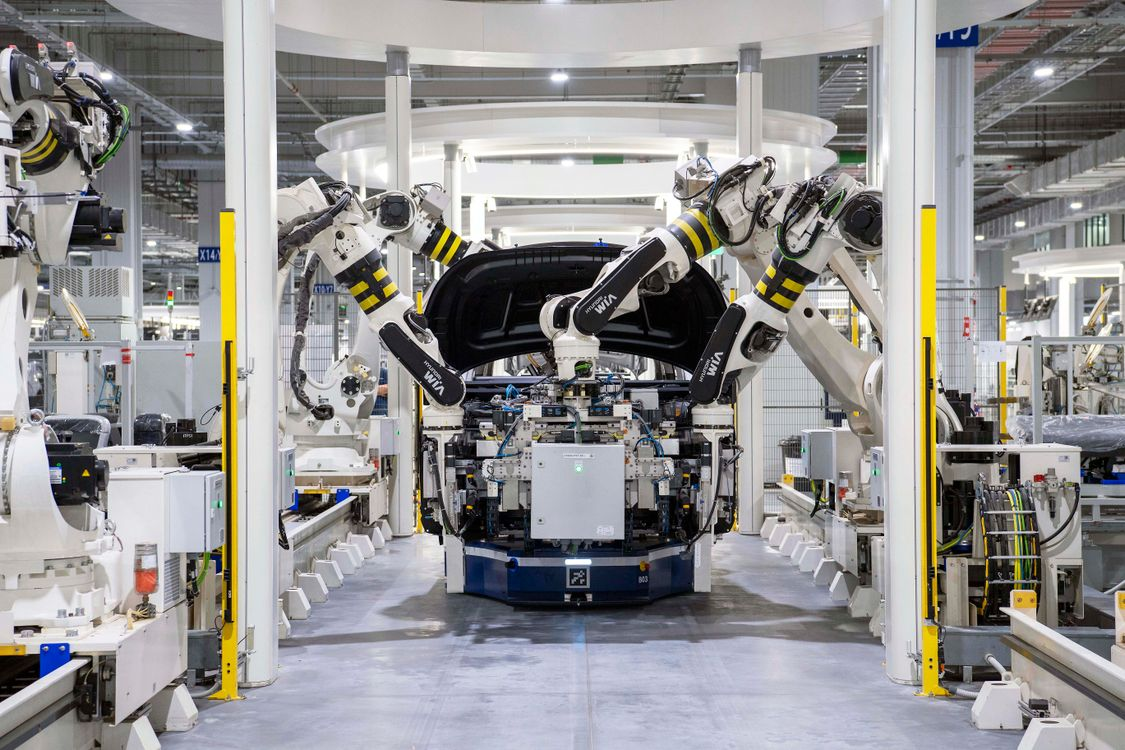
Lucid’s cash burn is not caused by one single loss line. It is the result of operating losses, inventory build, capital expenditure, and new vehicle ramp-up happening at the same time. During the stage when Gravity moves from validation to production ramp and then to customer deliveries, faster production does not always mean better cash flow. If deliveries, quality control, or supplier timing fail to keep pace, cash can be locked up in inventory and work-in-process vehicles.
The first quarter provides a clear example. Lucid had negative operating cash flow, and after adding capital expenditure, free cash flow burn was significant. More importantly, in its quarterly operating data, inventory growth created a major drag on cash flow. For an EV company still expanding its product lineup, inventory does not only mean unsold cars. It can also include work-in-process vehicles, components, safety stock, vehicles waiting for rework, and channel inventory.
The gap between production and deliveries also deserves separate attention. Lucid’s second-quarter production and delivery data showed 4,774 vehicles produced and 3,953 delivered in the second quarter of 2026. In the first quarter, Lucid produced 5,500 vehicles and delivered 3,093. For the first half of the year, production exceeded deliveries, which means inventory and working capital remain important variables for the cash runway.
| Source of cash burn | Impact on Lucid | Can it improve? | What to watch |
|---|---|---|---|
| Operating losses | Ongoing quarterly cash consumption | Depends on gross margin and expense control | Unit gross margin, operating expense ratio |
| Inventory growth | Locks cash into vehicles and components | Can improve if deliveries catch up with production | Production-delivery gap |
| Gravity ramp | Early quality, rework, and supplier costs are high | Can decline as scale and yield improve | Rework, inventory, delivery pace |
| Capital expenditure | Supports factories, service network, and new platforms | Can be delayed but not fully eliminated | Actual CAPEX versus annual guidance |
| Long-term purchase commitments | Reduces cost flexibility | Depends on contracts and demand | Component inventory and impairment risk |
Lucid also expects 2026 capital expenditure of about $1.2 billion to $1.4 billion. This spending supports AMP-1, AMP-2, product technology, the service network, and manufacturing capacity. Even if management reduces costs through layoffs, cancelled production shifts, or executive changes, capital expenditure and vehicle development will not disappear overnight. Reuters’ coverage of Lucid’s removal of 2026 production guidance and restructuring actions also places supply chain issues, demand pressure, and cash burn on the same analytical chain.
This means Lucid’s cash burn should be divided into “reversible” and “structural” categories. Inventory growth may release cash if deliveries improve, and a production interruption may be temporary. But R&D, factories, service centers, software, and midsize vehicle platform investment are strategic spending items. As long as the company continues to pursue scale, they are difficult to cut completely.
Summary: First-quarter free cash flow burn was high, but it should not be mechanically extrapolated into every future quarter, because inventory pressure and Gravity supply chain issues may be partly temporary. At the same time, Lucid’s financing need should not be underestimated. Until the company generates positive free cash flow, operating losses, capital expenditure, and new vehicle investments will continue to consume liquidity. For the next financing window, the most important question is not the loss in one quarter. It is whether the second and third quarters can prove that inventory is no longer expanding, Gravity delivery conversion is improving, and capital expenditure is tracking below the pressure-case scenario.
How Long Can PIF Support Lucid? Financing Tools, Costs, and Limits

PIF support significantly reduces Lucid’s near-term funding-break risk, but it does not give common shareholders cost-free protection. Convertible preferred equity, loans, and related-party financing from PIF can extend Lucid’s operating runway. At the same time, these instruments may bring interest expense, seniority, conversion dilution, and a more complex capital structure.
In April 2026, Lucid disclosed that PIF affiliate Ayar agreed to purchase $550 million of Series C convertible preferred stock, while Uber also invested $200 million in common stock through a subsidiary. The company later raised additional capital through a common stock offering, bringing total financing to about $1.05 billion. You can view the April financing package as three types of capital entering at the same time: strategic shareholder capital, commercial partner capital, and public-market capital.
However, PIF funding should not be treated as free capital for common shareholders. Under the Series C convertible preferred stock terms, the preferred stock includes accrual and conversion arrangements, and preferred claims generally rank ahead of common equity. Preferred stock may reduce short-term cash interest pressure, but its accrued value and conversion terms can still affect future per-share value.
| Financing tool | Role in cash runway | Main cost | Impact on common shareholders |
|---|---|---|---|
| PIF convertible preferred equity | Directly adds cash | Seniority, accrued return, conversion terms | Potential dilution and lower value priority |
| PIF DDTL loan | Provides large standby liquidity | Interest, debt balance, covenant restrictions | No direct dilution, but higher debt burden |
| Common stock offering | Adds permanent capital | Low share price reduces financing efficiency | Direct dilution of common equity |
| Uber strategic investment | Links funding with order visibility | Depends on project execution | Dilution is clear, strategic value still to be proven |
| Asset-backed credit | Supports working capital | Depends on asset quality and borrowing base | Limited flexibility, better for short-term liquidity |
Whether PIF continues to support Lucid should be viewed in the context of Saudi Arabia’s industrial strategy. Lucid’s AMP-2 facility, Saudi EV manufacturing capacity, technology transfer, and local supply chain development have strategic value for PIF. But strategic value does not mean unconditional capital injection. Each new round of funding may come with stronger investor protections, higher priority, or more complex conversion rights.
That is why ordinary investors should not only ask whether PIF will “rescue” Lucid. They should ask how PIF would do it. If the support comes through loans, common shareholders may not face immediate dilution, but the debt balance rises. If it comes through common stock, the structure is simpler but dilution is direct. If it comes through preferred equity, short-term cash interest pressure may be reduced, but common equity may be pushed further down the value stack.
Summary: PIF support increases the probability that Lucid can continue operating and raise capital again, but it does not automatically translate into value for common shareholders. For Lucid, PIF is the most important liquidity backstop. For common shareholders, PIF is also a capital provider with stronger negotiating power. If the next financing round is again led by PIF, the market will focus on whether the instrument is more debt-like, whether it includes conversion rights, whether it raises seniority, and whether it further dilutes common equity. In cash runway analysis, PIF support should be treated as an important buffer, not as an unlimited guarantee.
How Much Investment Do Gravity and the Midsize Platform Require? How New Models Change Financing Needs
Gravity and the midsize platform are Lucid’s growth hopes, but they are also the largest variables in its cash runway. New models can expand the revenue base, improve fixed-cost absorption, and increase the company’s addressable market. Before mass production, however, they consume cash through R&D, validation, supplier tooling, factory upgrades, inventory, and channel investment. The more important the vehicle program is, the more likely Lucid is to raise capital early rather than wait until funding becomes tight.
Gravity has the most immediate impact. Once it enters the SUV market, it theoretically gives Lucid access to a larger demand pool than the Air sedan and better fits family and premium mobility use cases. But if Gravity’s early production encounters supplier quality issues, the cash flow logic becomes more complicated. Production requires component purchases, completed vehicles add inventory, delivery delays slow cash conversion, and rework or quality control creates additional costs.
The midsize platform has a longer investment cycle. In Lucid’s Investor Day midsize platform plan, the company discussed Cosmos, Earth, the Atlas drive unit, and a larger-volume market opportunity. If executed well, this direction could change Lucid’s dependence on high-end, low-volume models. But before it contributes meaningful cash, it first appears as capital expenditure and R&D expense.
The Uber partnership also needs to be understood on a timeline. Under Lucid’s Uber vehicle production agreement, Uber and designated fleet operators committed to purchasing at least 25,000 Midsize Plus robotaxis, bringing the combined minimum commitment for Gravity Plus and Midsize Plus to at least 35,000 vehicles. The issue is that Midsize Plus production is targeted for late 2028, so it does not directly solve Lucid’s 2026–2027 cash burn.
| Vehicle or project | Short-term cash impact | Mid-term potential benefit | Main uncertainty |
|---|---|---|---|
| Gravity SUV | Higher inventory, rework, and supplier payments | Expands revenue and premium SUV coverage | Delivery conversion and quality stability |
| Gravity robotaxi | Conversion, validation, and partnership costs | Bulk orders and platform cooperation | Autonomous driving integration and regulation |
| Cosmos / Earth | R&D, testing, tooling, and supply chain spending | Access to a larger-volume segment | Cost target and launch timing |
| Atlas drive unit | Upfront engineering investment | Lower component and unit cost | Production yield and supply chain execution |
| AMP-2 | Construction and equipment CAPEX | Saudi local manufacturing capacity | Utilization and construction progress |
Uber, Nuro, and Lucid are also moving forward with the Houston robotaxi plan, but partnerships like this usually support the valuation story before they support free cash flow. In other words, they can improve future order visibility, but they do not mean current cash flow has already improved.
Summary: Gravity determines whether Lucid’s near-term cash burn can decline, while the midsize platform determines whether Lucid’s long-term business model can work. Gravity should be judged by production, deliveries, inventory, and gross margin. The midsize platform should be judged by R&D milestones, capital expenditure, cost targets, and order conversion. New vehicles are not an immediate cure for short-term cash pressure. They are core variables that shape the size and timing of future financing. If Gravity ramps smoothly, Lucid may be able to raise capital on better terms. If midsize development accelerates, the company may actually raise capital while liquidity remains adequate, so it can prepare for the 2027–2028 industrialization phase.
Where Is Lucid’s Next Financing Window? Three Cash Runway Scenarios and Key Indicators
Lucid’s base-case financing window is more likely to fall between the fourth quarter of 2026 and the first half of 2027. In a pressure case, if inventory keeps expanding, Gravity deliveries miss expectations, and capital expenditure remains high, the company may raise capital earlier in the third or fourth quarter of 2026. In an improvement case, if inventory releases cash, deliveries catch up with production, and capital expenditure moves toward the low end of guidance, financing could be delayed until the second half of 2027.
Pressure Case: Early Financing in Q3–Q4 2026
The core of the pressure case is not that cash runs out immediately. It is that management may not want to wait until market sentiment worsens before raising money. If quarterly free cash flow burn remains close to the first-quarter high, and if the July DDTL drawdown is interpreted by the market as a sign of recurring reliance on external capital, Lucid may move earlier with additional PIF loans, preferred equity, or common stock issuance.
Potential triggers include:
- Gravity deliveries continue to lag production, preventing inventory cash release.
- Supplier quality, rework, or production scheduling continues to disrupt cash flow.
- Capital expenditure remains close to the high end of the $1.2 billion to $1.4 billion annual guidance.
- Market rumors and share price volatility increase the difficulty of public financing.
- PIF remains willing to support the company, but requests stronger seniority or conversion terms.
Base Case: Financing From Q4 2026 to the First Half of 2027
The base case assumes Lucid’s cash burn declines from the first-quarter peak, but the company still cannot fund itself through operating cash flow. Management may wait for second- and third-quarter data to confirm better Gravity delivery execution before choosing a financing window, in order to secure a better valuation and lower funding cost.
This timing also fits the vehicle investment cycle. In 2027, Lucid will still need to support Gravity scale-up, midsize vehicle validation, AMP-2, and the service network. If the company raises capital in the first half of 2027, it could still preserve more than 12 months of liquidity buffer rather than entering a reactive financing position.
Improvement Case: Financing Delayed Until the Second Half of 2027
The improvement case requires several conditions to occur at the same time: Gravity deliveries clearly catch up with production, inventory cash is released, capital expenditure moves toward the low end of guidance, cost cuts start to show results, Uber and robotaxi partnerships continue to improve order visibility, and remaining PIF credit capacity stays available. In this scenario, Lucid could delay financing or use more project financing and strategic investment instead of a large common stock issuance.
| Scenario | Possible financing window | Cash flow assumption | Key trigger | Possible financing form |
|---|---|---|---|---|
| Pressure case | Q3–Q4 2026 | Quarterly burn stays high | Inventory expansion, weak deliveries, frequent drawdowns | PIF loan, preferred equity, common stock |
| Base case | Q4 2026–H1 2027 | Burn declines but remains negative | Gravity stabilizes but free cash flow remains negative | Mixed debt and equity financing |
| Improvement case | H2 2027 | Burn declines materially | Inventory release, lower CAPEX | Strategic investment or project financing |
Instead of only watching share price movements, track these indicators continuously:
- Gap between cash, investment balance, and total liquidity.
- Remaining undrawn DDTL capacity and new drawdown frequency.
- Operating cash flow, capital expenditure, and free cash flow.
- Whether the production-delivery gap keeps widening.
- Inventory, work-in-process vehicles, and possible impairment risk.
- PIF ownership, preferred equity terms, and related-party loans.
- Whether the midsize platform is delayed or requires additional spending.
- Whether the company files new S-3, 8-K, convertible security, or loan documents.
If you track Lucid or other high-cash-burn U.S. stocks, you should monitor not only financing announcements but also actual trading costs and order execution. U.S. stock trading costs usually include more than commission; they may also include platform fees, external institution fees, and trading activity fees. Biya supports multi-asset trading across U.S. stocks, Hong Kong stocks, and digital assets. Its U.S. stock trading commission is $0, while platform fees, external institution fees, and other charges are subject to the U.S. stock trading fee schedule and the order screen. If your region, identity verification status, and applicable laws and platform rules allow access to the relevant services, you can also use the U.S. stock screener to follow basic information on LCID and other U.S. stocks, then combine company filings, SEC documents, and your own risk tolerance before making decisions.
Summary: Lucid’s next financing window is better viewed as a range rather than a single date. The base-case view is the fourth quarter of 2026 to the first half of 2027. If cash burn stays above expectations, the window may move earlier. If inventory releases cash and Gravity deliveries improve, the window may move later. The financing structure matters more than the date itself. Common stock issuance directly dilutes shareholders, preferred equity raises the value threshold for common equity, and debt increases repayment pressure. If Lucid raises capital while it still has a liquidity buffer, that would actually be consistent with capital-market logic, because financing terms usually become worse once liquidity pressure becomes obvious.
For ordinary investors, tracking a volatile growth stock like Lucid should not stop at “whether PIF will keep supporting it” or “whether the share price rebounds.” Cash runway, capital structure, vehicle investment, and trading cost should be evaluated together. You can use Biya to follow U.S. stock quotes, company information, and related market activity, while confirming order types, fee structure, and your own risk tolerance before trading. After you download the app, you can place Lucid, Rivian, Tesla, and other EV supply chain names on the same watchlist to compare cash burn, delivery growth, financing dilution, and valuation differences. Service availability depends on your location, identity verification result, platform rules, and applicable laws and regulations. Public market information and fee structure explanations do not constitute investment advice.
FAQ
Why Is Lucid’s Total Liquidity Different From Cash?
Lucid’s total liquidity includes cash, investments, and undrawn credit facilities, so it should not all be treated as freely usable cash. Undrawn loans must satisfy agreement conditions, and asset-backed credit also depends on borrowing-base rules. To judge cash runway, look at cash balance, investment balance, drawn debt, and remaining credit capacity together.
Would Lucid’s 2026 Financing Dilute Common Shareholders?
If Lucid raises capital through common stock or convertible preferred equity, common shareholders may face dilution. If it raises capital through loans, dilution is usually not immediate, but interest expense and debt pressure increase. The actual impact depends on financing price, conversion terms, seniority, and issuance size.
Can PIF Support Eliminate Lucid’s Bankruptcy Risk?
PIF support can reduce Lucid’s near-term liquidity pressure, but it cannot eliminate operating and financing risk. The company still needs to improve deliveries, gross margin, inventory, and free cash flow. For common shareholders, PIF funding may also come with seniority, loan terms, or potential dilution.
Will Lucid Gravity Volume Growth Immediately Improve Cash Flow?
Lucid Gravity volume growth will not necessarily improve free cash flow immediately. Early production usually requires inventory, supplier payments, quality validation, and channel investment, which may increase cash usage first. Cash flow improvement becomes more sustainable only when deliveries catch up with production, unit costs decline, and inventory releases cash.
Would a Lucid Midsize Platform Delay Affect the Financing Window?
A delay in Lucid’s midsize platform could bring the financing window forward, because R&D, factory spending, and fixed costs would need to be carried for longer while new vehicle revenue is pushed further out. If the delay also comes with higher inventory or capital expenditure, Lucid may need to raise a larger liquidity buffer earlier.
*This article is provided for general information purposes and does not constitute legal, tax or other professional advice from BiyaPay or its subsidiaries and its affiliates, and it is not intended as a substitute for obtaining advice from a financial advisor or any other professional.
We make no representations, warranties or warranties, express or implied, as to the accuracy, completeness or timeliness of the contents of this publication.
Related Blogs of

Which Matters More to the Fed, CPI or PPI? The Differences Between Core Inflation, Production Costs, and Corporate Profit Margins


How Would Stripe Integrate Venmo, Braintree, and Stablecoins After Acquiring PayPal?


How Long Can Lucid’s Cash Last? Liquidity, Quarterly Losses, and Financing Needs Explained


Why Does Stripe Want to Buy PayPal? The Value of Merchants, Digital Wallets, Venmo, and Stablecoins

Choose Country or Region to Read Local Blog
 Australia
 Austria
 Belgium
 Canada
 Cyprus
 Czech Republic
 Denmark
 Estonia
 Finland
 France
 Germany
 Greece
 Hong Kong
 India
India Indonesia
 Ireland
 Italy
Italy Japan
Japan Latvia
 Lithuania
 Luxembourg
 Malaysia
 Malta
Malta Morocco
 Nepal
Nepal Netherlands
 New Zealand
 Norway
 Pakistan
 Philippines
 Poland
 Portugal
 Romania
 Singapore
 Slovakia
 Slovenia
 South Africa
 South Korea
 Spain
Spain Sweden
 Thailand
 The United States
 Turkey
 United Arab Emirates
 United Kingdom
 Vietnam
Contact Us




BIYA GLOBAL LLC is registered with the Financial Crimes Enforcement Network (FinCEN), an agency under the U.S. Department of the Treasury, as a Money Services Business (MSB), with registration number 31000218637349, and regulated by the Financial Crimes Enforcement Network (FinCEN).
BIYA GLOBAL LIMITED is a registered Financial Service Provider (FSP) in New Zealand, with registration number FSP1007221, and is also a registered member of the Financial Services Complaints Limited (FSCL), an independent dispute resolution scheme in New Zealand.