
Is SMH ETF Worth Buying? NVIDIA, TSMC, Micron and ASML Weight Analysis





Whether SMH ETF is worth buying depends on whether you are bullish on the long-term growth of AI semiconductor leaders and whether you can accept higher holdings concentration and industry volatility. It is not a broad technology ETF. Instead, it is a sector fund focused on GPUs, foundries, HBM, semiconductor equipment and chip manufacturing. If you want to participate in the AI chip supply chain without betting only on NVIDIA, SMH is worth adding to your research list. If you seek low volatility or already hold heavy chip exposure, you should control position size carefully.
Key Takeaways
- SMH is a high-purity semiconductor ETF with concentrated exposure to AI chip leaders.
- NVIDIA has a high weight, making SMH highly sensitive to the AI GPU cycle.
- TSMC, Micron and ASML correspond to foundry, HBM and equipment themes.
- SMH has an expense ratio of about 0.35%, but true cost also depends on spreads and platform fees.
- SMH is suitable for investors bullish on the AI semiconductor cycle and able to tolerate volatility.
- High valuation, industry cycles, policy restrictions and concentrated holdings are the main risks.
Search Intent Behind SMH ETF: What Investors Really Want to Know

When users search “Is SMH ETF worth buying?”, they are usually not looking for a simple buy-or-sell answer. They want to know whether SMH still represents the AI semiconductor theme, whether its current valuation is too high, whether NVIDIA’s weighting is overly concentrated, and how it differs from buying NVIDIA, TSMC, Micron or ASML directly. You need to break the question down into holdings, costs, risks and portfolio fit.
Common search terms include “SMH holdings,” “SMH NVIDIA weight,” “SMH ETF expense ratio,” “SMH vs SOXX” and “AI semiconductor ETF.” These searches usually reflect five needs: investors want exposure to the AI chip theme without buying NVIDIA alone; they want to know whether the top 10 holdings are too concentrated; they want to confirm whether SMH covers HBM, foundries and semiconductor equipment; they want to compare ETF holding costs with the research burden of individual stocks; and they want to assess whether phased allocation still makes sense when valuations are high.
The difference between SMH and a regular technology ETF lies in industry purity. A broad technology ETF usually covers software, internet platforms, cloud services, consumer technology and communication platforms, with AI chips only making up part of the portfolio. SMH ETF tracks semiconductor production and equipment companies, making its theme narrower, its upside sensitivity stronger and its volatility more concentrated. The MVIS US Listed Semiconductor 25 Index focuses on U.S.-exchange-listed companies with relatively large size, strong liquidity and revenue mainly from semiconductors or semiconductor equipment. Therefore, SMH is more suitable for expressing a semiconductor industry view than replacing a broad market index.
| Search Intent | What Investors Care About | Materials to Check |
|---|---|---|
| Whether it is worth buying | Whether SMH still represents the AI chip theme | Holdings structure, valuation, AI semiconductor cycle |
| Leader weights | How much NVIDIA, TSMC, Micron and ASML account for | Top 10 holdings and weights |
| Cost assessment | Whether expense ratio and trading cost are reasonable | Expense ratio, bid-ask spread, platform fees |
| Risk control | Whether SMH may suffer large drawdowns | High valuation, industry cycle, policy restrictions |
| Alternatives | Buying SMH or individual chip leaders | ETF versus individual stock advantages and disadvantages |
Summary: The core search intent behind SMH ETF is to find a balance between “participating in the long-term AI semiconductor trend” and “avoiding single-chip-stock risk.” You should not only look at past performance, nor should you focus only on NVIDIA’s weight. A better framework is to first confirm whether SMH covers key AI chip layers, then review the weights of NVIDIA, TSMC, Micron, ASML and other core holdings, and finally assess fees, liquidity, valuation, investment horizon and existing technology exposure in your portfolio.
What Is SMH ETF: Index Rules, Expense Ratio and Fund Structure
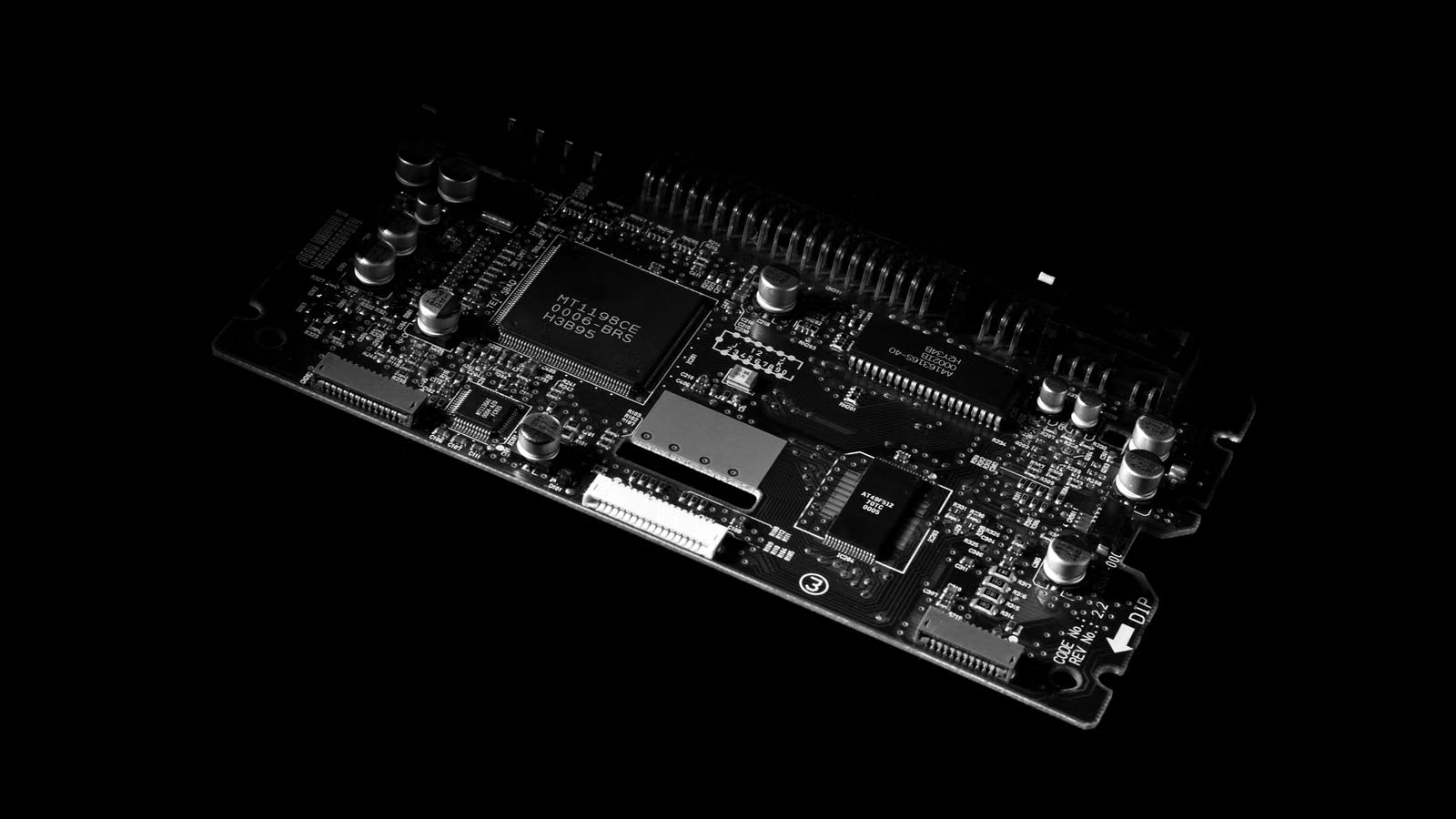
SMH is an ETF focused on semiconductor production and equipment companies. It is more suitable for expressing a view on AI chips and the semiconductor supply chain than for replacing broad indexes such as the S&P 500 or Nasdaq 100. Its advantages are a clear theme, high leader weighting and strong AI semiconductor purity. Its drawback is high sector concentration, which means drawdowns may be more obvious than those of broad ETFs.
Which Index Does SMH Track?
SMH tracks the MVIS US Listed Semiconductor 25 Index. According to the MarketVector index rules, the index only includes securities listed on U.S. exchanges, and companies must derive at least 50% of revenue from semiconductors or semiconductor equipment, with different continuation thresholds for existing constituents. The index uses a modified float-adjusted market cap weighting method, so large-cap leaders are more likely to receive higher weights.
These rules create three results. First, SMH has high semiconductor purity and is clearly different from a regular technology ETF. Second, large-cap leaders such as NVIDIA and TSMC can become major sources of weighting. Third, it is more suitable for expressing an AI semiconductor sector view than for broad market diversification.
SMH’s Expense Ratio, Scale and Number of Holdings
The VanEck SMH Fact Sheet shows that as of June 30, 2026, SMH had 26 holdings, total net assets of about $77.198 billion, a net expense ratio of 0.35%, a P/E ratio of about 48.64 and a P/B ratio of about 13.38. The expense ratio sits within the common range for mainstream semiconductor ETFs, but the limited number of holdings shows that it is not a highly diversified product.
| Metric | SMH Feature | Investment Meaning |
|---|---|---|
| Tracked index | MVIS US Listed Semiconductor 25 Index | High semiconductor purity |
| Number of holdings | About 26 | Limited diversification and higher concentration |
| Net expense ratio | About 0.35% | Common range for sector ETFs |
| Total net assets | About $77.198 billion | Strong market attention and liquidity |
| Suitable view | AI chip and semiconductor leader cycle | More of a sector allocation tool |
What Investment View Is SMH Suitable For?
SMH is suitable for expressing four types of views: you are bullish on continued AI data center capital expenditure; you are bullish on demand for GPUs, ASICs, HBM, advanced nodes and semiconductor equipment; you do not want to choose NVIDIA, TSMC, Micron, ASML and other individual stocks one by one; and you can accept the high volatility of a sector ETF. It is not suitable for investors seeking low-volatility cash flow, nor for investors who already have excessive AI chip exposure through other ETFs and individual stocks.
Summary: SMH is essentially a sector ETF highly focused on semiconductor production and equipment companies. It is not a broad technology fund, nor is it a single-stock NVIDIA substitute. Instead, it combines GPUs, foundries, HBM, semiconductor equipment and some mature chip companies in one portfolio. Its advantages are a clear AI semiconductor theme, large fund size and a mainstream expense ratio. Its shortcomings are a limited number of holdings and high leader concentration. If you seek broad diversification, SMH is not diversified enough. If you want direct exposure to the AI chip supply chain, its positioning is clearer.
How to View NVIDIA’s Weight: How Sensitive Is SMH to the AI GPU Cycle?

NVIDIA is the most important holding in SMH and the core variable for judging whether SMH is close to the AI chip theme. SMH’s sensitivity to the AI GPU cycle mainly comes from NVIDIA’s high weighting in the fund. If you are bullish on AI data centers and GPU accelerator demand, high NVIDIA weighting is an advantage. If you worry about valuation correction, it also becomes the main source of risk.
NVIDIA represents more than GPU chips. It also represents data center accelerators, AI server systems, high-speed networking and a software ecosystem. NVIDIA’s Data Center revenue reached $75.2 billion in fiscal 2027 Q1, up 92% year over year, explaining why the market treats it as a core indicator of the AI infrastructure cycle. SMH’s heavy NVIDIA exposure essentially amplifies fund-level sensitivity to AI GPUs, cloud provider CAPEX and data center construction.
High NVIDIA weighting has obvious benefits: you can use one ETF to participate in AI GPU leader growth while retaining exposure to TSMC, Micron, ASML, AMD, Broadcom and other parts of the supply chain. Compared with buying NVIDIA alone, SMH diversifies part of the single-stock risk. But the risk is also direct: if the market starts worrying about AI CAPEX returns, slower GPU orders, weaker-than-expected data center demand or excessive NVIDIA valuation, SMH will find it difficult to avoid NAV pressure.
| Evaluation Dimension | Impact of High NVIDIA Weight | Investment Meaning |
|---|---|---|
| AI theme purity | Increases SMH’s sensitivity to AI GPUs | Closer to the AI chip theme |
| Upside sensitivity | Leader rally contributes more to NAV | Suitable for investors bullish on the GPU cycle |
| Drawdown risk | Leader correction drags more visibly | Not suitable for low-volatility needs |
| Portfolio overlap | May duplicate exposure if you already own NVIDIA | Need to check total technology exposure |
| Substitution effect | More diversified than buying NVIDIA alone | Still not a balanced broad ETF |
To judge whether NVIDIA’s weight is too high, first look at your own portfolio. If you already heavily own NVIDIA, QQQ or other AI technology ETFs, buying SMH may increase overlapping exposure. If you have almost no chip leader exposure, SMH can serve as a relatively concentrated sector tool. The key question is not whether high NVIDIA weighting is good by itself, but whether you are willing to expose your portfolio more clearly to the AI GPU theme.
Summary: NVIDIA weighting is the first core factor in deciding whether SMH is worth buying. High NVIDIA weighting makes SMH look more like an AI GPU leader ETF than a regular semiconductor industry basket. The advantage is more direct participation in the AI compute cycle; the disadvantage is greater sensitivity to NVIDIA’s stock price, valuation and market expectations. For you, the real question is whether you believe AI GPU demand can continue and whether you are not already taking too much NVIDIA risk through other ETFs or individual stocks.
TSMC, Micron and ASML Weight Analysis: Does SMH Cover the Full AI Chip Chain?
SMH is not just an NVIDIA ETF. TSMC, Micron and ASML represent advanced foundry manufacturing, HBM/memory and semiconductor equipment in the AI chip supply chain. SMH covers compute chips, wafer manufacturing, memory bottlenecks and equipment expansion at the same time, making it closer to an “AI semiconductor supply-chain basket” than buying NVIDIA alone. However, it also introduces more cyclical and geopolitical variables.
TSMC Weight: Advanced Nodes and AI Chip Foundry Manufacturing
TSMC represents advanced nodes, AI GPU and ASIC foundry manufacturing, and advanced packaging capability within SMH. TSMC’s CoWoS technology is used in artificial intelligence and high-performance computing scenarios, enabling logic chips and HBM to be integrated through high-density interconnects. For SMH, TSMC weighting means the fund is not only betting on chip design, but also covering AI chip manufacturing and packaging bottlenecks.
The investment implication is clear: if AI GPUs, ASICs and data center accelerators continue to expand, demand for advanced nodes and packaging can support TSMC’s long-term orders. But TSMC also faces customer concentration, capital expenditure, geopolitical and supply-chain risks. Buying SMH means indirectly holding this global AI manufacturing exposure.
Micron Weight: HBM, DRAM and the AI Memory Cycle
Micron represents HBM, DRAM and data center memory demand within SMH. AI servers need more than compute chips; they also need high-bandwidth memory to support data throughput. Micron’s HBM and data center business shows that AI is changing the growth structure of traditional memory companies.
However, memory remains cyclical. Rising HBM demand does not mean all DRAM and NAND products rise in sync, nor does it mean prices will always go up. If industry expansion is too aggressive, inventories rise or traditional memory prices fall, Micron and other memory stocks may still drag on ETF performance. Through Micron, SMH covers the AI memory bottleneck while also taking on the memory pricing cycle.
ASML Weight: EUV and Advanced Node Equipment
ASML represents the equipment barrier for advanced nodes within SMH. ASML’s Q1 2026 financial results show that the company revised its full-year 2026 net sales outlook to €36 billion to €40 billion and mentioned that AI-related infrastructure investment is driving semiconductor industry growth. For SMH, ASML provides upstream equipment exposure.
ASML’s investment logic differs from NVIDIA’s. GPU leaders are more affected by data center orders, product cycles and cloud provider CAPEX. Equipment stocks are more affected by foundry expansion, order recognition, export licenses and customer investment schedules. The equipment cycle may lag chip demand, and it may also come under pressure first when expansion slows.
| Company | SMH Weight Positioning | Role in AI Semiconductor Chain | Key Metrics to Watch |
|---|---|---|---|
| NVIDIA | Largest core holding | GPUs, AI accelerators, data center platform | Data center revenue, GPU orders, valuation |
| TSMC | Advanced manufacturing core | Advanced nodes, foundry, CoWoS | Advanced nodes, customer orders, geopolitical risk |
| Micron | AI memory exposure | HBM, DRAM, data center memory | HBM yield, memory prices, inventory cycle |
| ASML | Upstream equipment exposure | EUV, advanced node equipment | Orders, export licenses, customer CAPEX |
Summary: SMH’s value does not only come from NVIDIA, but also from its exposure to multiple AI chip supply-chain bottlenecks. TSMC provides advanced manufacturing capability, Micron connects HBM with the memory cycle, and ASML represents the equipment barrier for advanced nodes. This combination makes SMH closer to an AI semiconductor supply-chain basket than buying NVIDIA alone. But it also introduces more variables: TSMC faces geopolitical and foundry-cycle risks, Micron faces memory pricing cycles, and ASML faces equipment order and export license risks. If you buy SMH, you are essentially betting on AI GPUs, advanced nodes, memory bottlenecks and equipment expansion at the same time.
Is SMH Worth Buying: Which Investors Is It Suitable For, and Which Investors Should Avoid It?
Whether SMH is worth buying depends on your investment objective and existing holdings. If you are bullish on long-term AI semiconductor growth, want to use an ETF to diversify single-stock risk, and can withstand significant drawdowns, SMH is worth adding to your research list. If you seek low volatility, broad diversification or already hold heavy NVIDIA exposure, SMH may not be suitable as a main allocation.
Investors suitable for considering SMH usually share several traits: they are bullish on AI data center capital expenditure; they believe GPUs, ASICs, HBM, advanced nodes and semiconductor equipment still have long-term demand; they do not want to choose NVIDIA, TSMC, Micron and ASML one by one; they can accept high semiconductor industry volatility; they have a longer investment horizon; and they are willing to regularly track holdings and valuation changes.
Investors who should avoid holding too much SMH are also clear: those seeking low volatility and stable cash flow; those who already have high AI chip exposure through QQQ, technology stocks or NVIDIA stock; those unwilling to bear meaningful industry drawdowns; those who do not understand semiconductor inventory cycles; those chasing short-term gains; and those without preparation for geopolitical, export restriction and valuation risks.
| Investor Situation | SMH Suitability | Reason |
|---|---|---|
| Bullish on AI semiconductors but does not want to pick stocks | Relatively high | SMH covers core chip-chain layers |
| Already heavily owns NVIDIA | Medium to low | May increase overlapping exposure |
| Seeks broad diversification | Relatively low | SMH is a sector ETF |
| Can tolerate high volatility | Relatively high | Semiconductor ETF drawdowns can be significant |
| Only chasing short-term rallies | Relatively low | Vulnerable to valuation and sentiment swings |
The difference between SMH and buying individual chip leaders should also be clear. The advantage of buying SMH is that it diversifies single-stock risk while covering GPUs, foundries, memory, equipment and some mature chip companies, making it suitable as a thematic ETF. The advantage of buying individual stocks is stronger upside if your judgment is correct, and the ability to choose the companies you prefer, but it requires stronger financial statement research capability. If you want an industry basket, you can start by researching SMH. If you are clearly bullish on a specific company, then research that stock separately. If you already heavily own NVIDIA, be careful about adding SMH because of overlapping exposure.
Summary: Whether SMH is worth buying cannot be answered with a single absolute conclusion. It is suitable for investors who are bullish on the AI semiconductor supply chain, willing to accept industry volatility, and do not want to bet on only one chip stock. It is not suitable for investors who seek low volatility, already heavily own NVIDIA or only want broad indexes. A more reasonable approach is to first check how much AI, technology and semiconductor exposure your current portfolio already has, then decide whether to use SMH as a thematic allocation. If you already have high chip exposure, SMH may simply add more of the same risk. If you lack AI semiconductor exposure, it can serve as a research starting point.
Costs and Risks to Watch Before Buying SMH ETF
Before buying SMH ETF, you need to consider fund fees, trading costs, bid-ask spreads, valuation risk, industry cycles and policy restrictions at the same time. SMH’s net expense ratio is about 0.35%, but true cost also includes platform fees, spreads, exchange-rate costs and order execution differences. Risks come from holdings concentration, high valuation, semiconductor cycles and global supply-chain uncertainty.
Fund fees are only the first layer of cost. The ETF expense ratio continuously affects long-term net returns, but buying and selling ETFs can also involve trading commissions, platform fees, bid-ask spreads, exchange-rate costs, external institutional fees and tax requirements. The SEC’s ETF investor bulletin reminds investors that an ETF’s market price may differ from NAV, and bid-ask spread is also a real cost investors should consider.
If you trade SMH or related U.S. chip stocks through a platform, you should not look only at the ETF expense ratio. Biya charges $0 commission for U.S. stock trading. Platform fees, external institutional fees and other costs are subject to the U.S. stock trading fee schedule and the order page. Public market information, fund materials and fee structures are for research reference only and do not constitute investment advice. Availability of related services depends on the user’s location, identity verification result, platform rules and applicable laws and regulations.
Valuation risk also deserves separate attention. The SMH Fact Sheet shows a P/E ratio of about 48.64 and a P/B ratio of about 13.38, suggesting that the market has already priced in strong AI semiconductor growth. High valuation does not mean it cannot be bought, but it means future growth needs to keep being delivered. If cloud provider CAPEX slows, GPU orders miss expectations, memory prices decline or equipment orders weaken, valuation compression may happen faster than earnings changes.
Industry cyclicality is another layer of risk. The semiconductor industry often moves through CAPEX expansion, capacity buildout, inventory accumulation, price declines, destocking and recovery. AI GPUs, HBM and advanced packaging are structural growth areas, but traditional DRAM, NAND, analog chips and some equipment orders can still be dragged down by cycles. SIA’s semiconductor industry data can be used to track global chip sales trends, but long-term policy support cannot eliminate commercial cycles.
| Risk or Cost | Impact on SMH | How to Monitor |
|---|---|---|
| ETF expense ratio | Affects long-term holding cost | Check net expense ratio |
| Bid-ask spread | Affects actual execution cost | Watch bid/ask spread |
| High valuation | Amplifies drawdown risk | Track P/E, P/B and earnings expectations |
| Industry cycle | Affects chip and equipment stocks | Watch inventory, CAPEX and orders |
| Policy restrictions | Affects supply chain and revenue mix | Follow export rules and regional revenue |
| Holdings concentration | Leader volatility transmits to ETF | Watch top 10 holdings share |
Summary: Before buying SMH, you should not only look at the AI semiconductor story, but also at costs and risks. Fund expense ratio is only the first layer of cost; bid-ask spreads, platform fees, exchange-rate costs and order execution also affect real returns. On the risk side, SMH is exposed to high valuation, the semiconductor cycle, NVIDIA concentration, global supply-chain risks related to TSMC and ASML, and memory pricing cycles tied to Micron and other memory stocks. ETFs can reduce single-stock risk, but they cannot reduce the volatility of the overall semiconductor industry. Suitability depends on your holding period, drawdown tolerance and existing technology exposure.
If you want to track SMH continuously, you can place SMH and core holdings such as NVIDIA, TSMC, Micron, ASML, AMD and Broadcom in the same watchlist, then regularly compare weights, valuations, earnings and industry order changes. Users who meet local service availability, identity verification and platform rules can use Biya to view related ETFs and U.S. stock information, and use U.S. stock information search to compare quotes and company materials. If you later choose to trade, you should understand order types, fee structures, exchange-rate movements and your own risk tolerance in advance. For mobile use, you can also download the app to check whether the service is available in your location.
FAQ
Is SMH ETF suitable for long-term holding?
SMH ETF can be used as one long-term AI semiconductor thematic allocation tool, but it should not replace a broad market index. Whether it is suitable for long-term holding depends on whether you are bullish on long-term semiconductor growth and can tolerate industry drawdowns. You should also review expense ratio, valuation, holdings concentration and existing technology exposure before holding.
What is the difference between SMH ETF and NVIDIA stock?
SMH is a semiconductor ETF, while NVIDIA is a single company stock. SMH diversifies across TSMC, Micron, ASML, AMD, Broadcom and other companies, reducing single-stock risk but also lowering the upside from being right on NVIDIA alone. If you want industry exposure, SMH is more suitable. If you are only bullish on NVIDIA, you still need to study its earnings and valuation separately.
Is SMH ETF’s high NVIDIA weighting a risk?
High NVIDIA weighting is both an advantage and a risk. The advantage is that SMH is closer to the AI GPU theme. The risk is that if NVIDIA’s valuation corrects or order expectations cool, SMH’s net asset value may also be noticeably affected. You should assess whether you already have overlapping NVIDIA, QQQ or technology stock exposure.
Does SMH ETF cover HBM and AI memory themes?
SMH covers part of the HBM, DRAM and AI memory theme through holdings such as Micron, but it is not a pure memory ETF. If your focus is HBM, you still need to separately compare Micron, SK hynix, Samsung and related equipment and packaging companies, while paying attention to memory pricing cycles and inventory changes.
What fees should investors check before buying SMH ETF?
Before buying SMH ETF, investors should check the ETF expense ratio, platform commission, platform fees, bid-ask spread, exchange-rate cost and external institutional fees. Fees differ by platform and order type. Always refer to fund documents, platform fee disclosures, the order page and billing details before trading.
Is SMH ETF more suitable for beginners or semiconductor industry investors?
SMH is more suitable for beginners willing to learn semiconductor cycles and for industry investors bullish on AI chips. Investors who do not understand industry volatility, seek low-risk returns or already hold a large amount of technology exposure should decide position size carefully and avoid chasing short-term gains.
*This article is provided for general information purposes and does not constitute legal, tax or other professional advice from BiyaPay or its subsidiaries and its affiliates, and it is not intended as a substitute for obtaining advice from a financial advisor or any other professional.
We make no representations, warranties or warranties, express or implied, as to the accuracy, completeness or timeliness of the contents of this publication.
Related Blogs of

MACD Crypto Trading Strategy: Settings, Signals, and Risk Management


International Money Transfers: Methods, Requirements, and Costs





Choose Country or Region to Read Local Blog
 Australia
 Austria
 Belgium
 Canada
 Cyprus
 Czech Republic
 Denmark
 Estonia
 Finland
 France
 Germany
 Greece
 Hong Kong
 India
India Indonesia
 Ireland
 Italy
Italy Japan
Japan Latvia
 Lithuania
 Luxembourg
 Malaysia
 Malta
Malta Morocco
 Nepal
Nepal Netherlands
 New Zealand
 Norway
 Pakistan
 Philippines
 Poland
 Portugal
 Romania
 Singapore
 Slovakia
 Slovenia
 South Africa
 South Korea
 Spain
Spain Sweden
 Thailand
 United States
 Turkey
 United Arab Emirates
 United Kingdom
 Vietnam