
What Are the Hong Kong AI Infrastructure Stocks? Investment Logic for SMIC, Hua Hong Semiconductor, and Lenovo Group




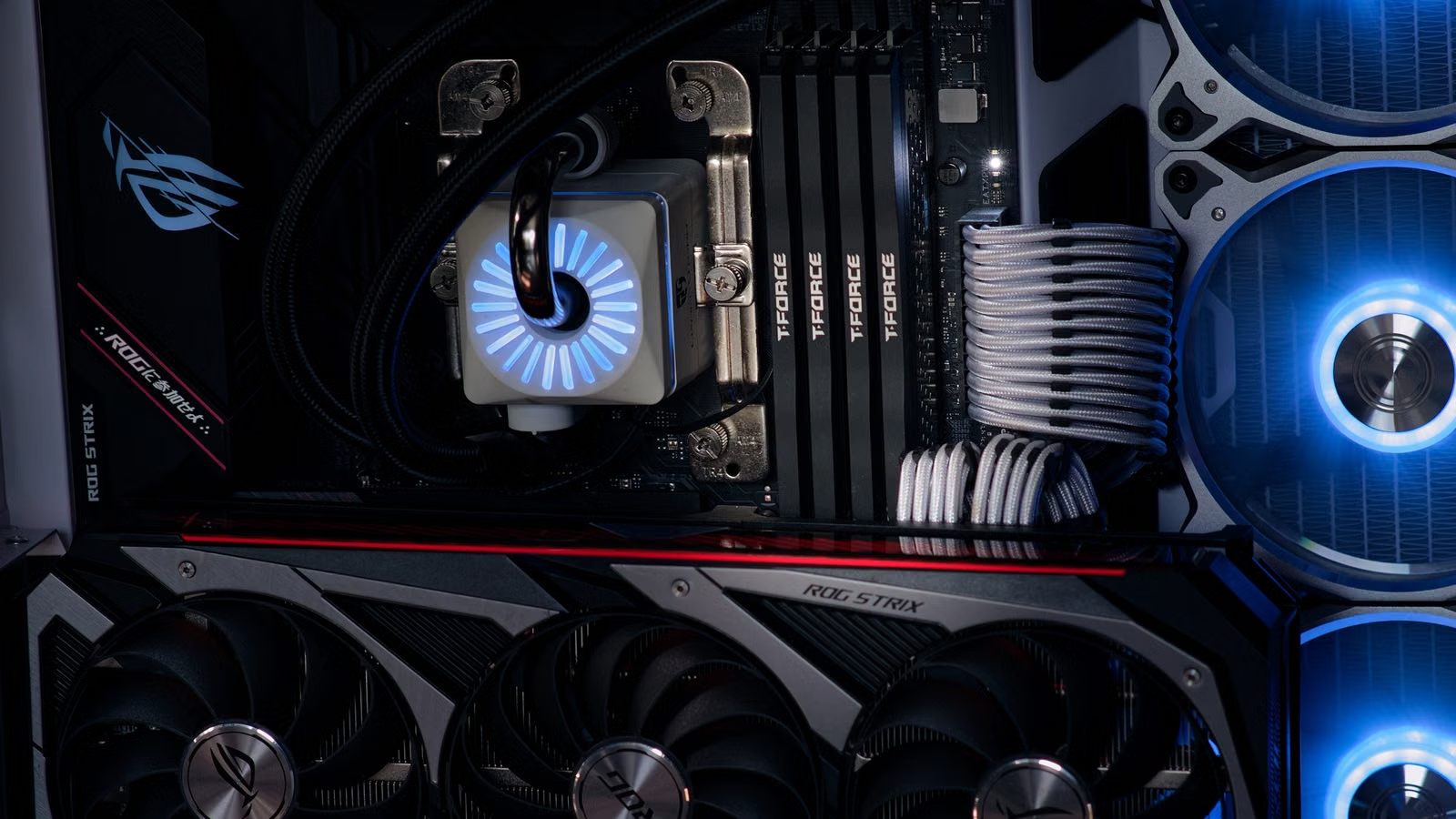
Hong Kong AI infrastructure stocks are not a group of companies with identical business models. SMIC represents integrated wafer foundry capacity and China’s domestic semiconductor manufacturing base. Hua Hong Semiconductor focuses on specialty processes, power devices, and mature nodes. Lenovo Group directly captures computing demand through AI servers, storage, liquid cooling, and enterprise infrastructure solutions. The key question is not which company “looks more like AI,” but whether AI demand can turn into orders, profits, and cash flow.
Key Takeaways
- Hong Kong AI infrastructure mainly covers wafer manufacturing, servers, storage, liquid cooling, and enterprise hybrid AI.
- SMIC’s core logic lies in wafer foundry expansion, local customer demand, and China’s semiconductor supply chain.
- Hua Hong Semiconductor maps to AI through MCU, power devices, storage, and power management chips.
- Lenovo Group has a more direct AI revenue link, but server profit margins still need close attention.
- These three companies require different valuation metrics; investors should not compare only P/E ratios or short-term share-price moves.
How Should Hong Kong AI Infrastructure Stocks Be Classified?
To assess Hong Kong AI infrastructure stocks, you first need to identify where each company sits in the supply chain. Wafer foundries provide chip manufacturing capacity. Server makers assemble GPUs, CPUs, memory, storage, and networking equipment into computing systems. Liquid cooling, power management, and cloud-edge infrastructure keep that computing power running reliably. Different layers have very different revenue elasticity, margins, and capital expenditure profiles, so they should not be analyzed with the same framework just because they are all related to AI.
AI Infrastructure Is More Than GPUs
A complete AI infrastructure stack usually includes:
- AI accelerators, CPUs, and supporting control chips;
- wafer foundry, packaging, testing, and semiconductor equipment;
- HBM, DRAM, enterprise SSDs, and high-capacity storage;
- AI servers, rack-scale systems, and high-speed interconnects;
- power management, liquid cooling, and data center power distribution;
- private cloud, hybrid cloud, edge computing, and managed services.
SMIC and Hua Hong Semiconductor are positioned on the manufacturing side. Their revenue comes from customer wafer orders, and not every order is separately labeled as “AI revenue.” Lenovo Group sits on the system side, where it can sell servers and infrastructure solutions more directly. However, Lenovo’s disclosed AI-related revenue also includes AI PCs, endpoint devices, services, and solutions, so it should not be treated entirely as AI server revenue.
Hua Hong Semiconductor’s specialty process business includes embedded and standalone non-volatile memory, power devices, analog and power management, logic, and RF. Lenovo covers high-density computing, enterprise private deployment, and usage-based infrastructure services through Neptune liquid cooling technology and TruScale infrastructure services.
| Company | Hong Kong Ticker | Supply Chain Position | AI Demand Transmission | AI Revenue Directness |
|---|---|---|---|---|
| SMIC | 00981 | Integrated wafer foundry | Chip design demand converts into wafer orders | Indirect to medium |
| Hua Hong Semiconductor | 01347 | Specialty process foundry | MCU, PMIC, power, and memory chip orders | Indirect |
| Lenovo Group | 00992 | Servers and enterprise infrastructure | Enterprises and cloud clients buy AI systems | Relatively direct |
When screening Hong Kong AI infrastructure companies, you can ask five questions in order: whether AI demand has turned into orders, whether the related business share is rising, whether revenue growth is improving margins, whether expansion is creating depreciation pressure, and whether export controls and supply chain risks are manageable. In particular, avoid the simple assumption that “higher AI purity means stronger share-price performance.” Share-price elasticity also depends on valuation, market expectations, and earnings delivery.
Summary: Hong Kong AI infrastructure is not a single industry. SMIC provides integrated wafer manufacturing capacity, Hua Hong Semiconductor focuses on specialty processes and peripheral chips, and Lenovo Group provides servers, storage, liquid cooling, and enterprise hybrid AI systems. You should first decide whether you want exposure to domestic semiconductor manufacturing, mature-node cycle recovery, or more direct AI server demand. Then compare orders, margins, capital expenditure, and valuation instead of grouping all AI-related companies into one concept-stock list.
What Is the AI Infrastructure Investment Logic for SMIC?
SMIC’s core investment logic is not direct sales of AI GPUs, but its ability to provide wafer manufacturing capacity to chip design companies. Demand for Chinese AI chips, connectivity chips, power management chips, and control chips may all translate into foundry orders. At the same time, customer localization, capacity expansion, and semiconductor supply-chain substitution form long-term drivers, while high capital expenditure, equipment depreciation, and export restrictions may weigh on margins.
How AI Demand Reaches SMIC
AI servers need more than core accelerators. They also require networking, clocking, power management, interfaces, storage controllers, and security chips. Even if some of these chips do not use the most advanced nodes, SMIC may receive related wafer orders as long as domestic chip design companies enter servers, data centers, or edge computing devices.
However, SMIC’s business still spans consumer electronics, smartphones, computers, industrial applications, and automotive markets. In the first quarter of 2026, consumer electronics accounted for a relatively large share of wafer revenue, so the company’s performance is not determined by AI demand alone. You also need to monitor electronics demand, domestic customer inventory, and mature-node price competition.
According to SMIC’s first-quarter 2026 results, quarterly revenue was US$2.5055 billion, up 11.5% year over year; gross margin was 20.1%; and capacity utilization was 93.1%. The company guided second-quarter revenue to grow 14% to 16% quarter over quarter, with gross margin at 20% to 22%.
| Operating Metric | Q1 2026 | Investment Meaning |
|---|---|---|
| Revenue | US$2.5055 billion | Wafer demand and orders grew year over year |
| Gross margin | 20.1% | Product mix and average selling prices improved |
| Capacity utilization | 93.1% | Overall fab loading remained high |
| Capital expenditure | US$1.5628 billion | Continued investment in new capacity |
| Q2 revenue guidance | 14%–16% QoQ growth | Short-term order visibility improved |
Why Revenue Growth May Not Lead to Parallel Profit Growth
Wafer foundry is a heavy-asset business. Once fabs, lithography tools, etching machines, and inspection equipment are installed, they generate depreciation over a long period. SMIC’s first-quarter depreciation and amortization reached about US$1.088 billion, higher than the same period a year earlier. Even when revenue grows, new capacity in the ramp-up stage can limit gross margin through higher unit manufacturing costs and depreciation pressure.
SMIC’s 2025 annual report shows that the company maintained high capital investment to expand production capacity. Management has also indicated that new equipment investment may significantly increase annual depreciation, and margin pressure from capacity expansion remains a variable to watch in 2026.
You can focus on the following indicators:
- whether capacity utilization stays above 90%;
- whether wafer average selling prices improve;
- changes in 12-inch wafer revenue and product mix;
- new line ramp-up speed and depreciation expenses;
- capital expenditure, operating cash flow, and free cash flow;
- domestic customer orders and inventory levels.
SMIC also faces clear geopolitical constraints. The company and some related entities remain on the U.S. Commerce Department Entity List, meaning that exports, reexports, or in-country transfers of certain U.S. technologies, software, and equipment may require licenses. This does not mean all business activity stops, but it can affect equipment access, maintenance, process upgrades, and valuation risk premiums.
Summary: SMIC is better viewed as a China semiconductor manufacturing capacity and domestic computing supply-chain company than as a pure AI GPU stock. Revenue growth is mainly driven by wafer orders, capacity utilization, average selling prices, and customer localization. Profit performance depends on product mix, depreciation, R&D spending, and fab ramp-up efficiency. If you are bullish on domestic chip manufacturing demand, you also need to accept the earnings volatility created by heavy-asset expansion and export restrictions.
Why Is Hua Hong Semiconductor Also Considered a Hong Kong AI Infrastructure Stock?

Hua Hong Semiconductor’s AI mapping mainly comes from specialty processes and peripheral chips, not high-end AI accelerators. AI servers and data centers require large volumes of power management chips, MCUs, power devices, analog chips, and non-volatile memory. These products can be manufactured on mature nodes or specialty processes. Therefore, Hua Hong is closer to an “AI infrastructure supporting-manufacturing” stock, while its results are still affected by consumer electronics, automotive, and industrial cycles.
How Specialty Processes Enter AI Data Centers
GPUs determine core computing performance, but stable server operations depend on power supply, device control, thermal monitoring, interface management, and data retention. Hua Hong’s embedded non-volatile memory process can be used in MCUs and smart-card chips, while its power devices, analog, and power management processes can serve server power, industrial equipment, and new-energy vehicle markets.
This means Hua Hong can benefit from AI infrastructure expansion, but demand transmission is more dispersed. Its orders may come from data centers, but they may also come from smartphones, home appliances, industrial control, or automotive electronics. Investors should not classify all MCU, PMIC, and flash memory revenue as AI revenue.
Hua Hong Semiconductor’s first-quarter 2026 results showed revenue of US$660.9 million, up 22.2% year over year; gross margin of 13.0%; and net profit attributable to shareholders of US$20.9 million. Revenue from 12-inch wafers rose to 62.7% of total revenue, while overall capacity utilization reached 99.7%. The company guided second-quarter revenue to US$690 million to US$700 million, with gross margin at 14% to 16%.
| Operating Metric | Q1 2026 | What to Watch |
|---|---|---|
| Revenue | US$660.9 million | Up 22.2% year over year |
| Gross margin | 13.0% | Up 3.8 percentage points year over year |
| Capacity utilization | 99.7% | Fabs remained highly loaded |
| 12-inch revenue share | 62.7% | New capacity continued contributing |
| Capital expenditure | US$924.9 million | Mainly invested in 12-inch lines |
Opportunities and Uncertainties From the Huali Micro Integration
Hua Hong is moving forward with the proposed share-issuance acquisition of a 97.4988% stake in Huali Micro. If completed, the deal could expand the company’s 12-inch manufacturing capacity, process coverage, and customer resources, potentially strengthening its position in higher-performance logic chips and domestic semiconductor manufacturing.
However, a larger asset base does not mean profits will improve immediately. New-line depreciation, financing costs, equipment procurement, customer qualification, and business integration all take time. Hua Hong’s first-quarter capital expenditure was nearly US$925 million, of which about US$886 million was used for 12-inch production lines, showing that expansion remains in a high-investment phase.
The main catalysts and risks can be summarized as follows:
| Potential Catalyst | Key Risk |
|---|---|
| 12-inch capacity utilization remains high | Higher depreciation and finance costs |
| MCU, PMIC, and power device demand grows | Mature-node supply expansion |
| Product mix shifts toward higher-value processes | Consumer electronics demand volatility |
| Huali Micro integration expands manufacturing capacity | Transaction approval and integration progress |
| Domestic equipment and supply chains mature | Restricted access to overseas equipment |
In April 2026, U.S. authorities reportedly required some equipment companies to suspend certain equipment supplies to facilities related to Hua Hong. These equipment shipment restrictions may affect equipment delivery and line upgrade timing. This risk should be assessed together with future licensing outcomes, domestic equipment substitution, and the company’s actual capital expenditure execution.
Summary: Hua Hong Semiconductor maps to AI infrastructure through specialty processes and peripheral manufacturing. Its key benefit areas include MCUs, power management, power devices, analog chips, and non-volatile memory. Current positive signals include revenue growth, near-full capacity utilization, and a rising 12-inch revenue share. Main pressures come from high capital expenditure, depreciation, mature-node competition, and equipment restrictions. You need to watch whether gross margin recovery can outpace expansion costs.
Has Lenovo Group’s AI Server Business Become a Real Growth Driver?
Lenovo Group has already built a clearer AI infrastructure growth driver. Among SMIC, Hua Hong Semiconductor, and Lenovo Group, Lenovo has the most direct connection to AI infrastructure revenue because it sells AI servers, storage, rack-scale systems, liquid cooling equipment, and enterprise solutions. However, large server revenue does not automatically mean high margins; order conversion and business mix remain crucial.
What Lenovo’s AI Infrastructure Business Includes
Lenovo’s Infrastructure Solutions Group, or ISG, covers:
- GPU servers, general-purpose compute servers, and rack-scale systems;
- enterprise storage and high-performance data management;
- Neptune direct liquid cooling and rack-scale cooling;
- high-performance computing and edge data centers;
- enterprise private cloud, hybrid cloud, and AI Factory;
- TruScale usage-based infrastructure services.
Lenovo’s hybrid AI strategy emphasizes deploying inference and computing capacity across personal devices, edge locations, enterprise data centers, and public cloud. Its advantage is that it can sell servers, storage, liquid cooling, services, and operations as a combined solution rather than supplying only a single hardware product.
According to Lenovo’s 2025/26 fiscal-year results, full-year revenue reached US$83.075 billion, up 20% year over year, and AI-related revenue accounted for 33% of group revenue. ISG revenue reached US$19.2 billion, up 32% year over year, while operating profit reached US$73 million, marking a return to full-year profitability. In the fourth quarter, ISG revenue was US$5.6 billion and operating profit was US$202 million.
| Indicator | FY2025/26 Data | Investment Meaning |
|---|---|---|
| Group revenue | US$83.075 billion | Overall scale continued expanding |
| AI-related revenue share | 33% | AI became an important growth driver |
| ISG revenue | US$19.2 billion | Up 32% year over year |
| ISG operating profit | US$73 million | Returned to full-year profitability |
| AI server pipeline | US$21 billion | Large potential order base |
| Customer AI deployments | More than 5,800 | Enterprise AI began moving into implementation |
Lenovo also disclosed annual server manufacturing capacity of more than 70,000 racks, including over 11,000 direct liquid-cooled racks designed for AI workloads. These figures were also included in the company’s 2025/26 annual report.
Why High Revenue Growth Still Requires Margin Analysis
AI servers require GPUs, CPUs, memory, networking equipment, and power systems. Key components are expensive, while large cloud customers often have strong bargaining power. If orders are concentrated in lower-margin hardware, rapid revenue growth may translate into only limited profit.
The key to Lenovo’s earnings quality is raising the share of high-end storage, liquid cooling, software, services, and subscription revenue. You should closely monitor:
- ISG quarterly revenue and operating margin;
- conversion speed of the US$21 billion business pipeline;
- shipments of direct liquid-cooled racks;
- revenue mix between cloud service providers and enterprise customers;
- share of high-end storage and services revenue;
- supply of GPUs, memory, and other key components;
- inventory, receivables, and working-capital changes.
Summary: Lenovo Group has the most direct AI infrastructure revenue exposure among the three companies. Its growth drivers include AI servers, rack-scale systems, storage, liquid cooling, and enterprise hybrid AI deployments. ISG achieved revenue growth and full-year profitability in FY2025/26, showing that scale expansion has started to translate into operating results. Still, you need to assess whether the order pipeline can convert into recognized revenue, and whether high component costs, customer bargaining power, and inventory management may limit margin improvement.
How Should SMIC, Hua Hong Semiconductor, and Lenovo Group Be Compared?
There is no single ranking that applies to all investors. If you are bullish on domestic wafer manufacturing and customer localization, SMIC deserves closer study. If you are focused on specialty processes, power devices, and mature-node recovery, Hua Hong Semiconductor is worth tracking. If you want more direct exposure to AI servers, liquid cooling, and enterprise infrastructure, Lenovo Group is more representative. The final choice also depends on valuation, holding period, and risk tolerance.
| Comparison Dimension | SMIC | Hua Hong Semiconductor | Lenovo Group |
|---|---|---|---|
| Directness of AI demand | Medium | Low to medium | Higher |
| Core business | Integrated wafer foundry | Specialty process foundry | Servers, storage, and services |
| Main driver | Domestic substitution, utilization | 12-inch ramp-up, product mix | AI servers, liquid cooling, enterprise AI |
| Capital intensity | High | High | Medium |
| Key profit indicator | Gross margin, depreciation, ASP | Gross margin, utilization, product mix | ISG margin, order conversion |
| Main external risk | Export controls, equipment supply | Equipment restrictions, mature-node competition | Component supply, global trade |
| Common valuation reference | P/B, EV/EBITDA | P/B, cycle earnings | P/E, cash flow, margin |
Research Direction by Investment Objective
- If you prefer semiconductor manufacturing and domestic supply-chain exposure, SMIC is more representative.
- If you prefer mature-node recovery and specialty processes, Hua Hong Semiconductor’s earnings elasticity is worth tracking.
- If you prefer enterprise AI servers and data center equipment, Lenovo Group offers more direct revenue exposure.
- If you cannot bear single-company policy or execution risk, diversified exposure or sector ETFs may be more suitable.
- If you focus on short-term trading, you need to evaluate earnings surprises, valuation, and market sentiment together.
The most common valuation mistakes are treating the order pipeline as confirmed revenue, treating all AI-related revenue as AI server revenue, or comparing wafer foundries and server makers using only one P/E ratio. Wafer foundries should be assessed based on asset base, depreciation, and cycle earnings, while server companies require close monitoring of operating margin, inventory, and cash flow.
How Trading Costs Affect Hong Kong AI Infrastructure Allocation
Hong Kong stock trading costs do not only include broker commissions. Under the Hong Kong Exchange trading fee schedule, stock trades also involve a trading fee, SFC transaction levy, and AFRC transaction levy. Hong Kong stock buyers and sellers are generally also subject to a 0.1% stamp duty on the transaction amount. Different platforms may also charge platform fees, settlement fees, and FX spreads.
For smaller trades or frequent rebalancing, minimum fees and FX spreads can materially affect actual returns. You can first use the Hong Kong stock search tool to verify ticker codes and market information, then use real-time FX rates to estimate the cost of converting your account currency into Hong Kong dollars. Actual fees should always be based on the order preview, platform rules, and final trade statement.
A quarterly tracking sheet should include at least the following:
| Tracking Item | SMIC | Hua Hong Semiconductor | Lenovo Group |
|---|---|---|---|
| Revenue indicator | Wafer revenue and ASP | 12-inch and specialty process revenue | ISG and AI-related revenue |
| Profit indicator | Gross margin, depreciation | Gross margin, ramp-up cost | ISG operating margin |
| Demand indicator | Utilization, orders | Utilization, MCU and PMIC demand | AI server pipeline |
| Cash-flow indicator | Capital expenditure | Expansion and integration spending | Inventory and working capital |
| Risk indicator | Export restrictions | Equipment supply and integration | GPU supply and trade policy |
Summary: SMIC leans toward integrated wafer manufacturing and domestic substitution. Hua Hong Semiconductor leans toward specialty processes, 12-inch expansion, and cycle recovery. Lenovo Group leans toward AI servers, storage, liquid cooling, and enterprise deployment. The three companies require different profit and valuation metrics. Before allocating capital, you should also calculate stamp duty, transaction levies, platform charges, and FX costs, instead of relying only on share-price moves or AI concept popularity.
After comparing fundamentals and valuation, you still need to verify real-time prices, ticker codes, order size, and actual trading costs. Biya web trading covers Hong Kong stocks, U.S. stocks, and digital assets, making it suitable for observing assets across markets in one interface. Availability depends on your location, identity verification result, platform rules, and applicable laws and regulations. Before trading, you can also download Biya to review order previews and fee details. Hong Kong AI infrastructure stocks may be affected by industry cycles, FX rates, policy developments, and market sentiment. The information above is for public-market research and analytical reference only and does not constitute investment advice.
FAQ
Does Lenovo Group’s AI-Related Revenue Come Entirely From AI Servers?
No. Lenovo’s AI-related revenue also includes AI PCs, smart devices, servers, services, and solutions. To assess its AI infrastructure business, you should separately monitor ISG revenue, operating profit, AI server pipeline, liquid-cooled rack shipments, and customer deployment numbers.
Does Near-100% Fab Utilization Mean Long-Term Chip Shortage?
Not necessarily. Near-100% or temporarily above-100% utilization may come from overtime production, line efficiency, or reporting methodology, and it may also reflect customer pre-stocking. To judge whether supply-demand tightness is sustainable, you need to consider wafer pricing, order visibility, new capacity, and downstream inventory.
What Is the Difference Between SMIC and Hua Hong A-Shares and H-Shares?
A-shares and H-shares represent shares of the same company listed in different markets, but they may differ in trading currency, investor base, liquidity, and valuation. Prices in the two markets do not always move in line. Tradability and related fees should be checked against broker rules and local regulatory requirements.
Are Hong Kong AI Infrastructure Stocks Affected by RMB Exchange Rates?
Yes. These companies’ revenue, procurement costs, and financial statements may involve RMB, U.S. dollars, or Hong Kong dollars. International investors may also face exchange-rate risk when converting account currency into Hong Kong dollars. Return analysis should include share-price changes, FX movements, and currency-conversion costs.
What Fees Should International Investors Consider When Buying Hong Kong AI Infrastructure Stocks?
Investors usually need to consider commissions, platform fees, Hong Kong stamp duty, trading fees, transaction levies, settlement fees, and FX spreads. Minimum charges and currency-conversion rules vary by broker, so the actual amount should be based on the order page, fee schedule, and final trade statement.
Can Hong Kong AI Infrastructure ETFs Reduce Single-Stock Risk?
Yes, ETFs can reduce company-specific operating, earnings, and policy risk, but they cannot eliminate industry risk. Related ETFs may still have concentrated exposure to semiconductors, servers, or Chinese technology companies, and they also involve management fees, tracking error, and market volatility. Check the index methodology and top holdings before investing.
*This article is provided for general information purposes and does not constitute legal, tax or other professional advice from BiyaPay or its subsidiaries and its affiliates, and it is not intended as a substitute for obtaining advice from a financial advisor or any other professional.
We make no representations, warranties or warranties, express or implied, as to the accuracy, completeness or timeliness of the contents of this publication.
Related Blogs of
Crypto Trading Bots: Types, Costs, and Security Risks


Choosing a Stock Trading App: Beginner Checklist



Choose Country or Region to Read Local Blog
 Australia
 Austria
 Belgium
 Canada
 Cyprus
 Czech Republic
 Denmark
 Estonia
 Finland
 France
 Germany
 Greece
 Hong Kong
 India
India Indonesia
 Ireland
 Italy
Italy Japan
Japan Latvia
 Lithuania
 Luxembourg
 Malaysia
 Malta
Malta Morocco
 Nepal
Nepal Netherlands
 New Zealand
 Norway
 Pakistan
 Philippines
 Poland
 Portugal
 Romania
 Singapore
 Slovakia
 Slovenia
 South Africa
 South Korea
 Spain
Spain Sweden
 Thailand
 United States
 Turkey
 United Arab Emirates
 United Kingdom
 Vietnam