- More
- Download
AI Data Center Storage Architecture: What Do HBM, DRAM, SSD, and HDD Each Do?




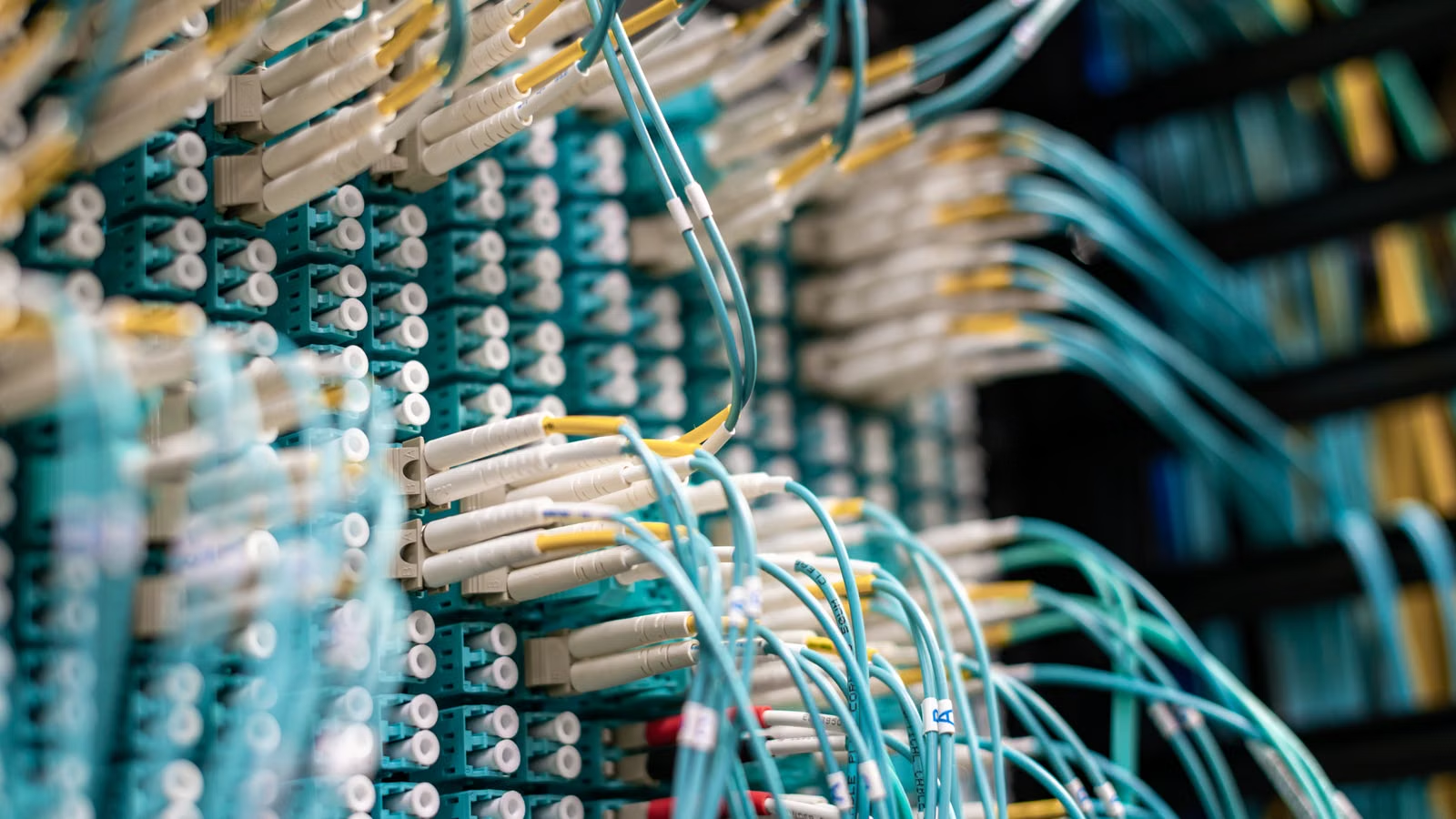
AI data centers do not run on GPUs and HBM alone. They rely on a layered storage architecture made up of HBM, DRAM, SSD, and HDD. The closer a storage layer is to the compute chip, the more it emphasizes bandwidth, latency, and power efficiency. The closer it is to the data lake and archive layer, the more it emphasizes capacity, reliability, and cost per terabyte. Once you understand how these four types of storage divide responsibilities, you can better judge AI server bottlenecks, cloud CAPEX, the order in which memory companies may benefit, and why AI can simultaneously drive demand for HBM, NAND, and HDD.
Key Takeaways
- HBM handles high-bandwidth compute close to the GPU, not long-term data storage.
- DRAM supports CPU-side system memory, scheduling, preprocessing, and cache spillover.
- SSD handles hot data, model loading, checkpoints, and high-speed persistent access.
- HDD remains the cost foundation for cold data, archiving, backup, and large-capacity data lakes.
- AI inference can increase demand for HBM, DRAM, SSD, and HDD at the same time.
- To judge which storage segment benefits first, you need to identify where the bottleneck appears.
What Is AI Data Center Storage Architecture: From GPU HBM to Cold-Data HDD
AI data center storage architecture is a layered system. HBM sits closest to GPUs and AI accelerators, providing high-bandwidth data delivery. DRAM on the CPU side supports system memory and task scheduling. SSDs in servers and storage nodes hold frequently accessed data. Larger-scale data lakes, backups, and archives rely on HDDs. These four layers are not substitutes for one another. They work together based on speed, capacity, cost, and access frequency.
Micron AI data center describes AI infrastructure as a complete memory and storage hierarchy. This framing is important: AI workloads do not put all data into the fastest medium. Instead, different types of data are placed where they fit best.
| Layer | Product | Closest To | Key Metrics | Main Tasks |
|---|---|---|---|---|
| Layer 1 | HBM | GPU / AI accelerator | Bandwidth, latency, power | Model compute, hot KV cache, GPU data delivery |
| Layer 2 | DRAM | CPU / host system | Capacity, latency, channel count | System memory, scheduling, preprocessing, cache spillover |
| Layer 3 | SSD | Server / storage node | IOPS, throughput, endurance | Model loading, training data reads, hot data storage |
| Layer 4 | HDD | Storage cluster / object storage | Cost per TB, capacity, reliability | Data lake, cold data, archiving, backup |
Why should you not focus only on GPUs and HBM? AI training needs to continuously read datasets, so SSDs and networked storage affect GPU utilization. AI inference needs to process user context, logs, and cache, so DRAM and SSDs affect throughput. Model files, training data, monitoring logs, vector data, and historical interactions also cannot stay in HBM for the long term. A real data center is designed to balance compute, capacity, and energy cost.
There are four common misconceptions. First, more HBM does not make SSDs irrelevant. Second, cheaper SSDs do not immediately eliminate HDDs. Third, DRAM is not just traditional server memory; it matters for AI inference. Fourth, AI storage demand does not only come from training. It also comes from inference, logs, and the data feedback loop. In practice, AI data flow is circular: raw data enters the storage layer, gets cleaned, read, trained on, and converted into models; those models are then used for inference, and inference results generate new logs and feedback data that return to the storage system.
Summary: AI data centers need layered storage because different data types have different access frequencies, latency requirements, and cost constraints. HBM solves the bandwidth bottleneck near GPUs. DRAM solves system memory and scheduling bottlenecks. SSD solves hot-data and high-speed persistence bottlenecks. HDD solves the cost bottleneck of long-term large-scale data storage. Understanding this layered architecture is more realistic than analyzing any single storage product in isolation.
What Does HBM Do: High-Bandwidth Memory Close to the GPU
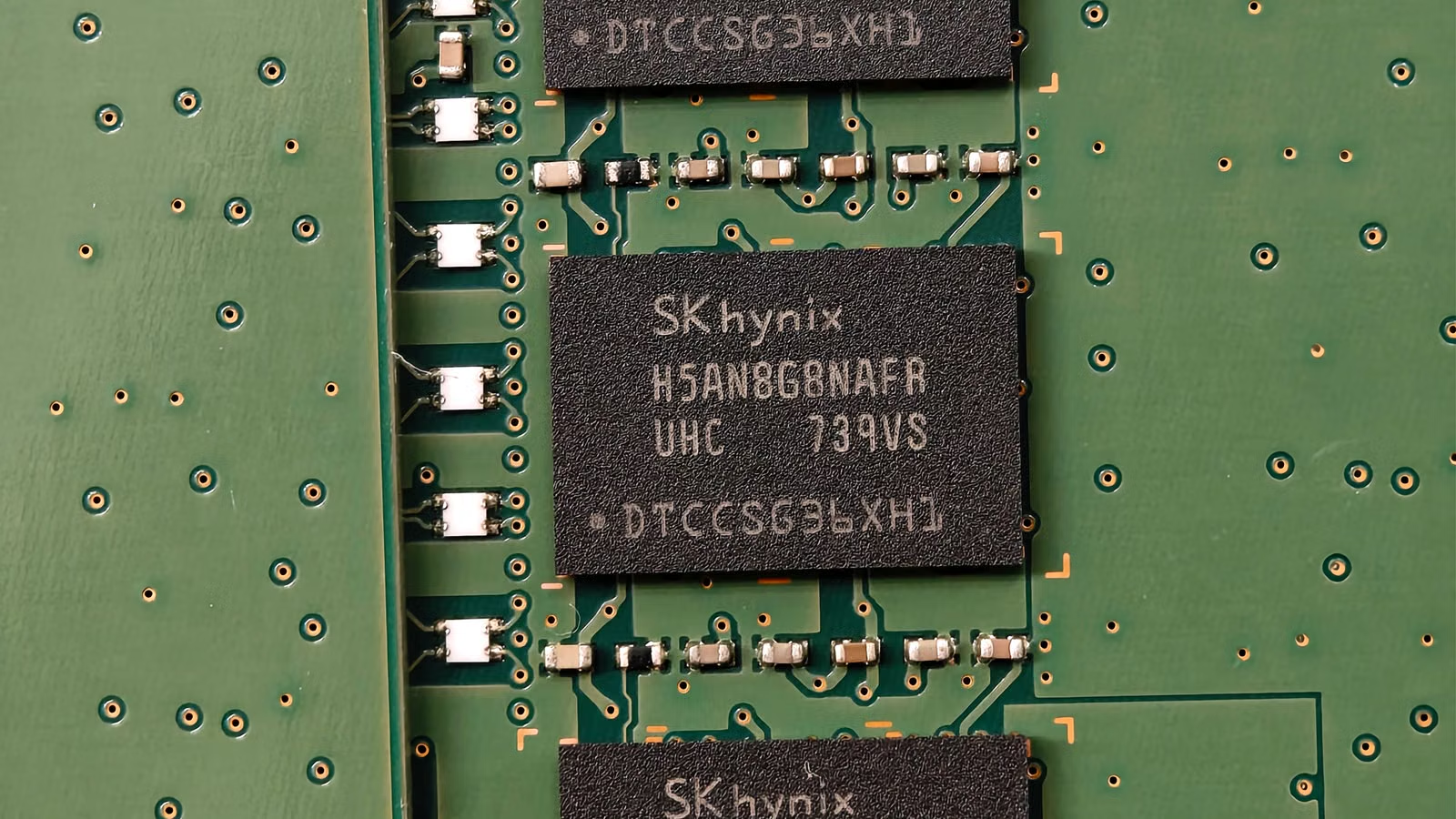
HBM handles frontline data delivery for AI accelerators. It is not a hard drive, nor is it ordinary server memory. It is high-bandwidth memory that directly serves GPUs, AI ASICs, and high-performance computing chips. During large-model training and inference, compute cores constantly read weights, activations, and cached data. If the data supply cannot keep up, GPU compute capacity sits idle. HBM’s value lies in reducing that waiting time.
The basic idea behind HBM is to vertically stack multiple DRAM dies and connect them to compute chips through wide interfaces and advanced packaging. Samsung HBM4E materials show that next-generation HBM4E targets AI, GPUs, and high-performance computing, with bandwidth at the 4.0 TB/s level. These metrics show that HBM competition is no longer just about capacity. It is also about bandwidth, power consumption, packaging, and stable supply.
| AI Stage | Main HBM Task | Why It Cannot Easily Be Moved Down |
|---|---|---|
| Model training | Stores frequently accessed weights, activations, and intermediate data | Extremely high bandwidth and low latency are required |
| Inference generation | Supports model execution and hot KV cache | User concurrency amplifies bandwidth pressure |
| Long context | Carries high-value context cache | Longer context windows increase memory usage |
| Multi-GPU coordination | Works with high-speed interconnects to move data | Reduces synchronization wait time and communication loss |
However, HBM’s bottleneck is not just price. It is also constrained by advanced process technology, stacking, TSV, packaging, testing, yield, and customer qualification. Entering the supply chain of a GPU or AI ASIC usually requires a long validation cycle. Suppliers need not only to produce samples, but also to prove that their products can run reliably under high power, high temperature, and high-concurrency conditions. Samsung, SK hynix, and Micron are the major HBM suppliers, but each company may differ in product generation, yield, customer certification, and capacity allocation.
When tracking HBM, you should not only look at the phrase “strong demand.” More useful indicators include HBM3E, HBM4, and HBM4E production timelines, single-package capacity, bandwidth, customer certification, packaging capacity, yield, price premium, and HBM revenue as a share of each memory company’s business. If HBM supply is tight and customer qualification progresses smoothly, earnings leverage can be stronger. If expansion is too fast or customers switch designs, valuations can also adjust quickly.
Summary: HBM is the high-bandwidth memory layer closest to the compute core in AI data centers. It mainly solves data delivery for GPUs and AI accelerators. It is important for training, inference, long context, and multi-GPU coordination, but it is constrained by packaging, yield, power, capacity, and customer qualification. HBM demand growth usually benefits advanced memory leaders with strong mass-production capabilities most directly; not every storage company benefits equally.
What Does DRAM Do: CPU-Side System Memory and Scheduling Buffer Layer
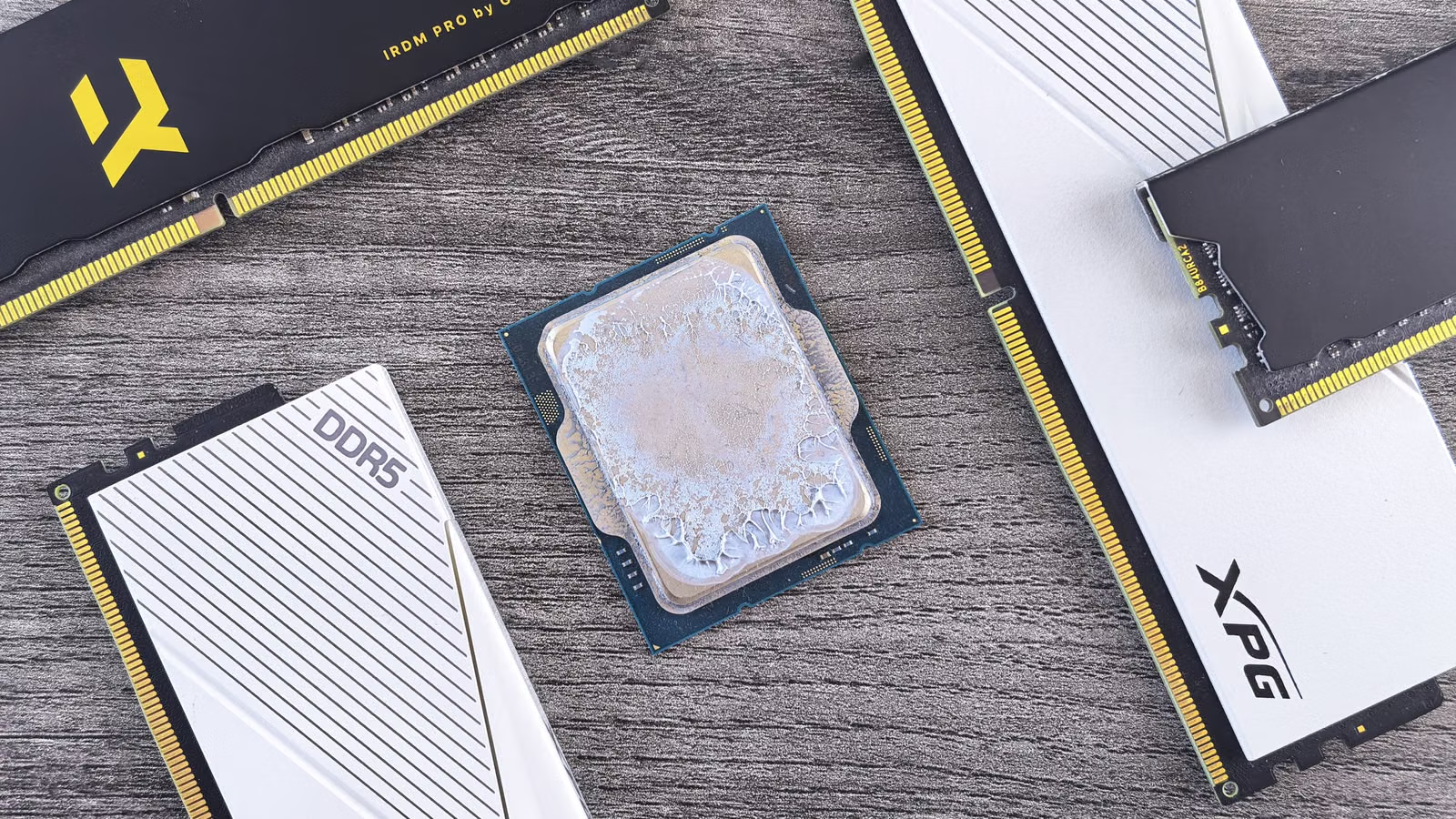
DRAM supports CPU-side system memory, task orchestration, data preprocessing, and cache spillover in AI servers. It is not as close to the GPU as HBM, but it determines whether the server can organize data, schedule requests, manage I/O, and absorb some cache pressure. Without enough DRAM, a GPU may have strong compute power but lack stable system-level data and task support.
The difference between HBM and DRAM can be understood through location and function. HBM sits beside the GPU or AI accelerator and prioritizes extremely high bandwidth and low latency. DRAM sits on the CPU and host-system side and prioritizes larger system memory capacity, more flexible task scheduling, and lower unit cost. Micron COMPUTEX 2026 materials mention that HBM supports high-speed model execution and hot KV cache, while LPDDR and DDR support system memory, orchestration, and long-context expansion.
| Dimension | HBM | DRAM |
|---|---|---|
| Location | Beside GPU / AI accelerator | CPU / host system side |
| Main goal | Extremely high bandwidth and low latency | Larger capacity and system scheduling |
| Typical use | Model compute, hot KV cache | Preprocessing, system memory, cache spillover |
| Cost structure | Higher unit cost | Relatively lower unit cost |
| Scaling limits | Constrained by packaging and GPU platform | Constrained by memory channels, motherboard design, and power |
AI inference increases DRAM demand because inference is not simply “running the model once.” As user concurrency rises, context windows lengthen, and agent workflows increase, systems must manage more requests, caches, network I/O, input preprocessing, and output logs. KV cache is often described as the short-term memory of an AI model. The longer the input sequence, the greater the cache and data management pressure. Some hot cache remains in HBM, while some may spill into DRAM, SSD, or lower tiers. This is a common direction in inference system architecture.
DDR5 remains a key foundation for server system memory. LPDDR may play a role in low-power AI devices and new module formats. CXL offers future possibilities for memory expansion and memory pooling. For example, the Marvell CXL switch highlights rack-level memory pooling to expand memory available to CPUs, GPUs, XPUs, and other accelerators. This shows that AI memory bottlenecks are expanding from individual chips to racks and clusters.
Summary: DRAM is the system memory and buffer layer in AI data centers. It supports CPU-side scheduling, data preprocessing, request management, and partial cache spillover. It is not as close to the GPU as HBM, but it is important for inference concurrency, long context, I/O management, and stable server operation. To judge DRAM demand, you need to consider AI servers, traditional servers, PCs, smartphones, and data center memory expansion trends—not just HBM momentum.
What Does SSD Do: Hot Data, Model Files, and High-Speed Persistent Storage
SSD handles high-speed persistent storage in AI data centers. It is slower than HBM and DRAM, but it can retain data after power loss. It is faster than HDD, but its cost per unit of capacity is higher. Therefore, SSD is best suited for frequently accessed, performance-sensitive data that must be read or written quickly, such as model files, training samples, checkpoints, hot data, logs, and some persistent KV cache.
Solidigm inference context memory storage describes context storage in AI inference as a new flash storage problem. The core idea is that when context and cache scale beyond HBM and DRAM, high-density SSDs close to GPU pods become an important layer for expanding inference capacity. NVIDIA BlueField-4 CMX also places GPU HBM, system DRAM, and local or rack-attached storage within the same inference context hierarchy. This shows that SSD is not merely a replacement for traditional hard drives. It is part of AI inference architecture.
| AI Workflow | SSD Role | Key Metrics |
|---|---|---|
| Data preparation | Quickly reads and cleans training data | Sequential reads, throughput |
| Model training | Saves checkpoints and intermediate results | Write endurance, latency |
| Model deployment | Quickly loads model weights | Random reads, capacity |
| Inference service | Supports hot data and log writes | IOPS, tail latency |
| Hot layer of data lake | Stores high-value, frequently accessed data | Cost, scalability |
The difference between enterprise SSDs and consumer SSDs is also important. AI data centers care more about sustained writes, power-loss protection, low tail latency, endurance, thermals, and form factors than just headline read speed. U.2, E1.S, E3.S, PCIe Gen5/Gen6, QLC, and TLC all affect rack density, energy consumption, and cost per terabyte. High-capacity SSDs can improve per-rack capacity and performance density, but for long-term archival and low-frequency access data, their cost is still usually higher than HDD.
SSD cannot replace HBM because its latency and bandwidth are far below those of high-bandwidth memory beside the GPU. It also cannot replace DRAM because it is not suitable as general-purpose system memory. SSD can replace some high-frequency HDD workloads, especially in model loading, hot data access, checkpointing, and cache expansion. From an investment perspective, SSD demand should be judged through enterprise SSD procurement, NAND pricing, QLC adoption, data center customer orders, NAND inventory, and gross margins—not only AI server shipments.
Summary: SSD is the high-speed persistent layer in AI data centers. It mainly handles hot data, model loading, training data reads, checkpoints, and log writes. It connects the memory layer with the long-term storage layer. It cannot replace HBM or DRAM, nor can it fully replace HDD. SSD’s core value is balancing speed, capacity, and persistence, especially under the context and hot-data pressure created by inference growth.
What Does HDD Do: Massive Data, Archiving, Backup, and the AI Data Loop
HDD handles the large-capacity, low-cost, long-term data layer in AI data centers. It is not suitable for replacing HBM, DRAM, or high-performance SSDs, but it remains critical for raw training data, historical logs, video, backup, archiving, object storage, and cold data. The more data AI produces, the more it needs a low-cost, horizontally scalable capacity foundation.
HDD has not been eliminated in the AI era for a simple reason: not all data deserves to be stored on SSD. Model training requires large volumes of raw data. Inference services continuously generate logs, user interactions, monitoring data, and feedback data. Multimodal AI also produces more images, audio, and video files. Some of these datasets require fast access; others only need long-term retention. For the latter, HDD’s capacity economics still matter. Seagate mass-capacity storage emphasizes that AI scaling requires high-capacity hard drives to support large-scale data storage.
| Scenario | Why HDD Fits | Does It Need SSD Support? |
|---|---|---|
| Raw training data | Huge capacity, uneven access frequency | Hot data needs SSD caching |
| Model archiving | Long-term retention, lower access frequency | Can be moved to SSD during deployment |
| Logs and feedback data | Continuous data growth, cost-sensitive | High-frequency logs can enter SSD first |
| Backup and disaster recovery | Capacity-first, long-term retention | Depends on recovery speed requirements |
| Object storage | Horizontal scaling and pooled capacity | Front-end cache layer can use SSD |
HDD technology continues to improve. HAMR, ePMR, SMR, and UltraSMR aim to increase per-drive capacity, reduce cost per terabyte, and improve data center energy and space efficiency. Western Digital AI era storage innovation highlights UltraSMR, ePMR, HAMR, and software abstraction layers for AI-scale workloads. Seagate 32TB drives also show that high-capacity HDDs continue to evolve for AI video, NAS, and data center use cases.
The investment logic for HDD is different from HBM. HBM is about bandwidth, packaging, and customer certification. HDD is about per-drive capacity, cloud customer purchasing, cost per terabyte, capacity discipline, and gross margins. AI data centers are simultaneously pursuing faster inference and generating more data, creating a loop of compute, generation, storage, and retraining. The larger this loop becomes, the harder it is for cold data and nearline storage to disappear.
Summary: HDD is the capacity foundation of AI data centers. It handles long-term retention, archiving, backup, cold data, and object storage. It does not aim for the lowest latency or handle high-bandwidth compute, but it still has advantages in cost per terabyte and large-scale capacity expansion. SSD and HDD are not simple substitutes. SSD handles hot data and high-speed access, while HDD handles long-term data and capacity economics.
Using Storage Architecture to Analyze Investment Logic: How to Judge the Benefit Order of HBM, DRAM, SSD, and HDD
From an investment perspective, which segment benefits most—HBM, DRAM, SSD, or HDD—depends on where the AI demand bottleneck appears. If the bottleneck is GPU data delivery, HBM is the most direct beneficiary. If the bottleneck is inference concurrency and system scheduling, DRAM becomes more important. If the bottleneck is model loading and hot data, SSD is more relevant. If the bottleneck is long-term data retention and cost, HDD becomes more critical.
| Bottleneck | More Relevant Product | Company Type | Key Indicators |
|---|---|---|---|
| Bandwidth bottleneck | HBM | Memory chip leaders | HBM share, certification, yield |
| System memory bottleneck | DDR5 / DRAM | DRAM manufacturers | Server memory pricing, capacity allocation |
| Hot-data bottleneck | Enterprise SSD | NAND and SSD companies | Enterprise SSD demand, NAND pricing |
| Capacity-cost bottleneck | Nearline HDD | HDD companies | Cloud customer contracts, per-drive capacity |
| Architecture-efficiency bottleneck | Tiered storage systems | Enterprise storage platforms | Software, caching, data management |
AI training and AI inference benefit different parts of the stack. Training depends more on GPUs, HBM, training data reads, and checkpoint storage. Inference depends more on concurrency, context cache, hot-data access, and log retention. Multimodal AI increases storage needs for images, video, and audio. Agent workflows and enterprise knowledge bases increase the need to store vector data, interaction records, and long-term context. Over time, normalized inference workloads may make SSD and HDD demand more stable, while HBM is more tied to the cycle of individual GPU platforms and customer certification.
The most common investor mistake is to group all “AI storage” into one logic. Memory chip companies, enterprise SSD vendors, HDD companies, and enterprise storage system providers have different earnings leverage and valuation logic. You need to look at product position, pricing cycles, inventory changes, capacity expansion, customer concentration, and trading costs together.
If you follow HBM, DRAM, SSD, and HDD names within the AI data center storage chain, you need to evaluate not only the industry trend but also actual trading costs. U.S. stock trading costs often include more than commissions. They may also include platform fees, external agency fees, trading activity fees, bid-ask spreads, and foreign exchange conversion costs. You can use U.S. stock market data to compare Micron, Western Digital, Seagate, Samsung ADRs, or related ETFs, and then check Biya U.S. stock trading fees for commissions, platform fees, external agency fees, and order-displayed costs. Biya’s U.S. stock trading commission is $0, while platform fees, external agency fees, and other costs are subject to the fee disclosure and order page.
Summary: AI storage investment analysis should not focus only on HBM or on “data growth” in general. HBM corresponds to bandwidth. DRAM corresponds to system memory and inference support. SSD corresponds to hot data and high-speed persistence. HDD corresponds to capacity economics and long-term retention. A more useful approach is to first locate the data center bottleneck, then map it to products, companies, pricing cycles, valuations, and actual trading costs.
When analyzing AI data center storage architecture, you can place HBM, DRAM, SSD, and HDD on the same layered map instead of chasing a single hotspot. The closer a layer is to the GPU, the more it depends on bandwidth and latency. The closer it is to the data lake, the more it depends on capacity and cost. If you want to compare U.S.- and Hong Kong-listed memory chip, enterprise SSD, HDD, and data center infrastructure companies, you can use Biya to view relevant assets and use Hong Kong stock market data to track Asian semiconductor and hardware names. You can also download the Biya App to manage watchlists and trading records. Service availability depends on the user’s location, identity verification result, platform rules, and applicable laws and regulations. Public market information, trading rules, and fee structures are for analytical reference only and do not constitute investment advice.
FAQ
Why Do AI Data Centers Need Both HBM and DRAM?
AI data centers need both HBM and DRAM because they sit in different places and perform different tasks. HBM mainly supports high-bandwidth GPU compute, while DRAM mainly supports CPU-side system memory, scheduling, preprocessing, and cache spillover. HBM is faster but more expensive, while DRAM is more suitable for system-level capacity and flexible orchestration.
Does AI Inference Growth Increase SSD Demand?
Yes. AI inference growth can increase demand for model loading, hot-data access, log writing, user-context retention, and some persistent caching. SSDs balance speed, capacity, and non-volatile storage, making them suitable for the hot-data layer. Actual demand still depends on model architecture, concurrency, and caching strategy.
Does HDD Still Have Investment Value in AI Data Centers?
HDD may still have investment value in AI data centers under the right conditions. It is not suitable for high-bandwidth compute or low-latency hot-data access, but it has cost-per-terabyte advantages in raw data, archiving, backup, cold data, and object storage. Cloud customer procurement, per-drive capacity, and gross margins are key factors to watch.
Does HBM Demand Growth Benefit All Memory Companies?
Not necessarily. HBM demand mainly benefits companies with advanced HBM mass production, packaging partnerships, yield control, and customer qualification capabilities. Ordinary NAND, HDD, or niche memory companies have different paths to benefit and should not be grouped under the same logic. Investors should examine each company’s product mix and revenue exposure.
How Can Ordinary Investors Track the AI Memory Cycle?
Ordinary investors can track HBM certification progress, DRAM and NAND pricing, enterprise SSD procurement, nearline HDD shipment capacity, cloud provider CAPEX, and memory company gross margins. No single indicator is enough to judge the full cycle. It is better to combine pricing, inventory, capacity, and valuation signals.
Does AI Data Center Storage Architecture Affect ETF Selection?
Yes. ETFs tilted toward HBM and DRAM are more sensitive to memory chip pricing cycles, while funds covering SSD, HDD, or enterprise storage system companies may reflect capacity and data center infrastructure logic more strongly. Before choosing, investors should review holdings, expense ratios, geographic exposure, concentration, and risk disclosures.
*This article is provided for general information purposes and does not constitute legal, tax or other professional advice from BiyaPay or its subsidiaries and its affiliates, and it is not intended as a substitute for obtaining advice from a financial advisor or any other professional.
We make no representations, warranties or warranties, express or implied, as to the accuracy, completeness or timeliness of the contents of this publication.
Related Blogs of

AMAT, LRCX, or KLAC: Which Company Benefits Most from the Semiconductor Equipment Cycle? How ASML’s Guidance Transmits Across the Supply Chain


Which Software Stocks Could IBM’s Selloff Drag Down? Comparing ServiceNow, Salesforce, Adobe, and Oracle


Which AI Hardware Stocks Benefit More Under IBM’s Warning? Comparing the Sensitivity of NVDA, DELL, MU, and HPE


Where Will IBM Stock Go After Q2 Earnings? Three Scenarios Based on Revenue, Red Hat, and Free Cash Flow

Choose Country or Region to Read Local Blog
 Australia
 Austria
 Belgium
 Canada
 Cyprus
 Czech Republic
 Denmark
 Estonia
 Finland
 France
 Germany
 Greece
 Hong Kong
 India
India Indonesia
 Ireland
 Italy
Italy Japan
Japan Latvia
 Lithuania
 Luxembourg
 Malaysia
 Malta
Malta Morocco
 Nepal
Nepal Netherlands
 New Zealand
 Norway
 Pakistan
 Philippines
 Poland
 Portugal
 Romania
 Singapore
 Slovakia
 Slovenia
 South Africa
 South Korea
 Spain
Spain Sweden
 Thailand
 United States
 Turkey
 United Arab Emirates
 United Kingdom
 Vietnam
Contact Us



