Why Does GPU Utilization Matter? The Key Metric Behind AI Data Center Profitability




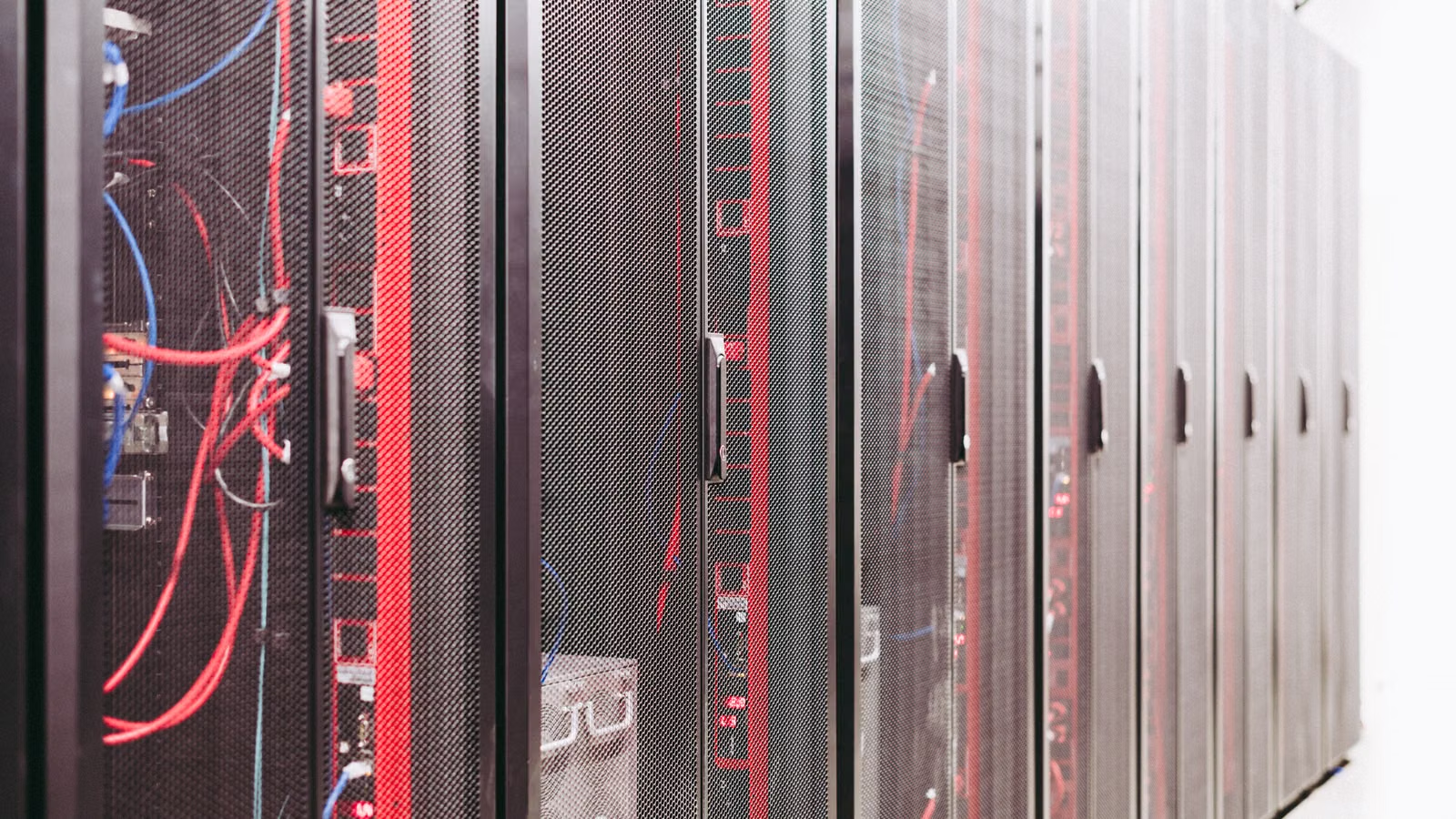
GPU utilization matters because the core asset of an AI data center is not the building itself, but how long expensive GPUs are used effectively, billably, and at high quality. Buying more GPUs only means capital expenditure is rising; using GPUs well is what may indicate that training, inference, cloud instances, and enterprise AI services are turning into revenue. Understanding GPU utilization can help you judge whether AI CAPEX is generating returns, why cloud gross margins are under pressure, and what assumptions sit behind the valuations of NVIDIA, Microsoft, Alphabet, Meta, AWS, CoreWeave, and other AI infrastructure companies.
Key Takeaways
- GPU utilization measures whether expensive compute is becoming useful workloads.
- High utilization does not equal high profit; latency, power, depreciation, and pricing also matter.
- Training is more like centralized construction, while inference is closer to recurring revenue realization.
- AI data center ROI depends on CAPEX, OPEX, customer demand, and chip life cycles.
- Investors should analyze GPU utilization together with cloud revenue, margins, and cash flow.
- Enterprises optimizing GPU utilization should not sacrifice stability, SLA, or compliance.
What Is GPU Utilization, and Why Is It Not Just About Whether a GPU Is “Busy”?
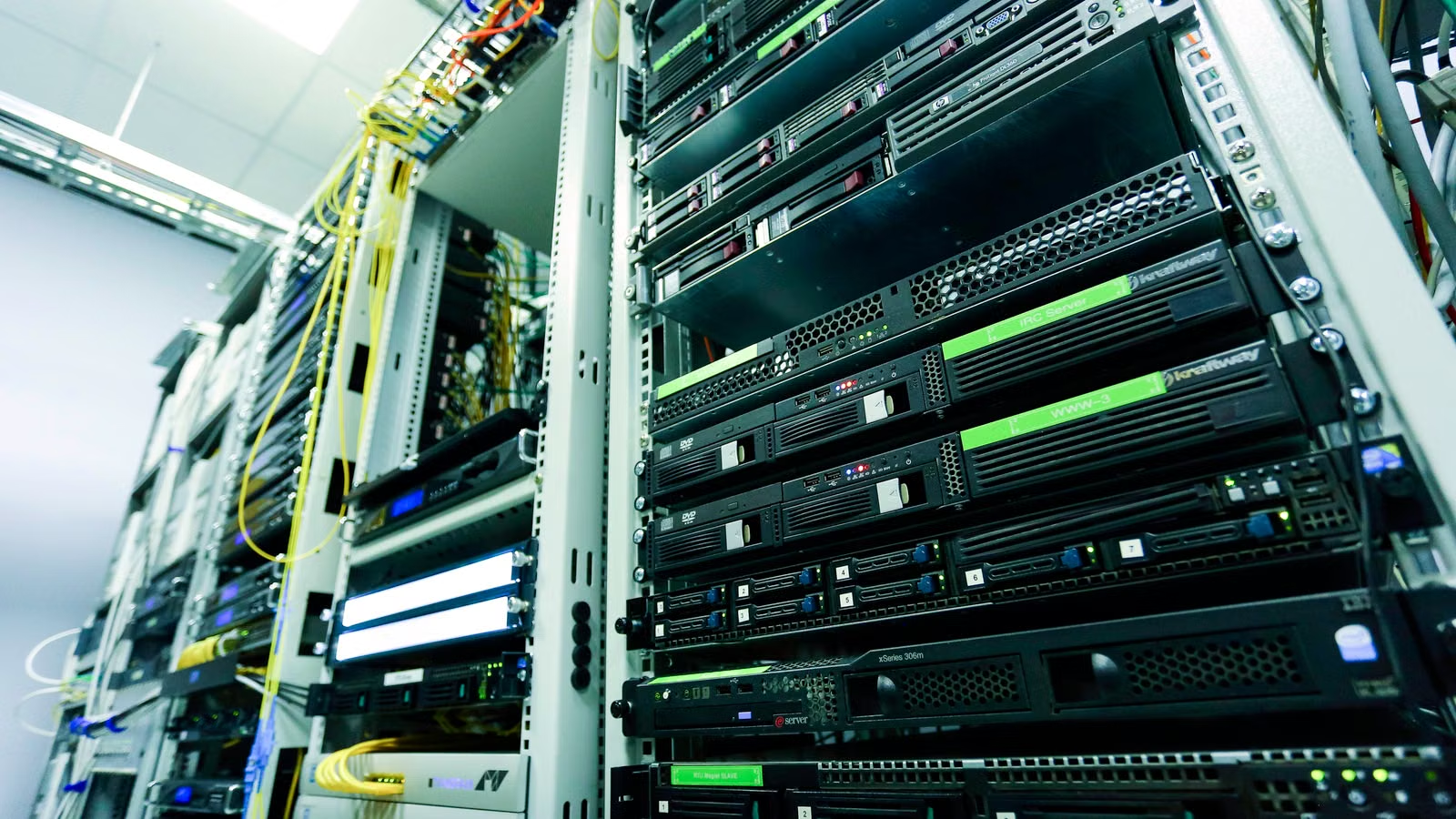
GPU utilization cannot be explained simply as whether a graphics card is running at full load. The useful question is whether compute units are performing effective calculations, whether memory is being used efficiently, whether data transfer is smooth, whether power consumption is controlled, and whether the workload ultimately serves training, inference, or customer-paid tasks. Looking only at a single GPU utilization percentage can easily cause you to mistake “the hardware is busy” for “the asset is profitable.”
In AI data centers, GPU utilization should be broken into several layers. The first is compute utilization, such as whether Streaming Multiprocessors are continuously involved in matrix operations. The second is memory utilization, especially because KV cache, context length, and concurrent requests in large-model inference can consume large amounts of GPU memory. The third is memory bandwidth and network communication, since distributed training, MoE models, and multi-node inference may all be constrained by NVLink, InfiniBand, PCIe, or Ethernet bottlenecks. The fourth is power and cooling, because high GPU load pushes up electricity and thermal costs.
This is why cloud providers and data center operators do not look at only one metric. NVIDIA DCGM covers GPU activity, Tensor Core activity, memory, power, temperature, and hardware health, showing that real operations require compute, memory, energy, and stability to be evaluated together.
| Metric | What It Measures | Common Misinterpretation | Impact on Profitability |
|---|---|---|---|
| GPU utilization | Whether the GPU is active | Activity does not equal useful output | Only an entry-level indicator |
| SM utilization | Use of compute units | High compute does not guarantee low cost | Affects training and inference throughput |
| Memory utilization | GPU memory occupancy | Full memory does not mean full compute utilization | Affects large-model concurrency and context length |
| Memory bandwidth | Data read and transfer speed | Ignoring it can overestimate compute efficiency | Determines LLM decode efficiency |
| Power draw | Actual power consumption | High power does not always mean high revenue | Directly affects OPEX and gross margins |
| Latency | Response speed | Chasing high utilization can slow user experience | Determines inference service usability |
Training, inference, image generation, and recommendation systems also have different requirements for GPU utilization. Large-model training is usually long-running, batched, and distributed, with the goal of keeping the entire cluster continuously active. Inference services are closer to online businesses: they must handle user requests while controlling first-token latency, p95/p99 latency, and throughput. Recommendation, ad ranking, and search-enhancement tasks often place greater emphasis on low latency and stable output than on keeping GPUs at 100% utilization forever.
Summary: GPU utilization is the entry point for observing AI data center asset efficiency, but it should not be simplified into whether GPUs are busy. Meaningful utilization must include compute units, memory, memory bandwidth, networking, power, latency, and workload quality. For investors, a single percentage cannot prove whether an AI data center is profitable. For enterprises, high utilization should not come at the cost of stability and response speed. GPU utilization only has commercial meaning when GPUs are continuously occupied by high-value workloads that translate into revenue, efficiency, or better product experience.
Why Does GPU Utilization Directly Affect AI Data Center Profitability?
GPU utilization directly affects AI data center profitability because GPUs, servers, networking, power, and cooling systems all require heavy upfront investment. Once a data center is built, depreciation, financing costs, operating expenses, and electricity bills continue to accumulate. If GPUs sit idle for long periods, those costs still appear in financial statements. If GPUs are used continuously by high-quality customers, depreciation can be spread across training jobs, inference requests, and cloud service revenue.
The business model of an AI data center is essentially “invest capital first, then sell compute time, model capability, and inference output.” McKinsey estimates that global data center construction could require nearly $7 trillion in capital spending by 2030, with AI-related data centers accounting for the majority. This scale shows that the market is no longer only asking “who has GPUs,” but “whether these GPUs can pay back within their economic life.”
Chip life cycles are especially important. GPUs upgrade quickly, and training and inference frameworks are also evolving fast. Older GPUs may still run workloads, but their cost per token, energy efficiency, memory capacity, and network capability may fall behind newer systems. In its analysis of the AI build-out, Goldman Sachs also treats chip life, data center cost, and power constraints as important variables affecting AI capital expenditure.
GPU utilization affects profitability mainly through five channels:
- Spreading depreciation: The more hours the same GPU works, the lower the hardware cost allocated per hour.
- Reducing unit token cost: Higher inference throughput lowers the cost per answer, per request, or per million tokens.
- Improving cloud gross margins: Cloud providers can serve more customers with fewer idle resources, helping ease margin pressure.
- Shortening payback periods: Higher-quality utilization accelerates the conversion of CAPEX into cash flow.
- Increasing expansion certainty: If existing clusters are heavily used and customers are willing to pay, new data center construction has stronger support.
But there is one important condition: utilization must be billable utilization. Internal R&D, free trials, low-priced fill-in demand, and repeated computation can all push up surface-level utilization without improving profit. The ideal state for an AI data center is high utilization, strong pricing, controlled energy use, stable SLA, and customer renewal all occurring together.
| Scenario | GPU Status | Financial Meaning | Investment Interpretation |
|---|---|---|---|
| Idle GPUs | Hardware purchased but insufficient workloads | Heavy depreciation pressure | CAPEX return is uncertain |
| GPUs used for internal R&D | High utilization but limited external revenue | Near-term margin pressure | Watch product commercialization |
| GPUs rented at low prices | Surface-level utilization is high | Revenue quality may be weak | Watch gross margins and renewal pricing |
| GPUs serving paid inference | Sustained external demand | Closer to revenue realization | Watch throughput, pricing, and retention |
| GPUs locked by long-term contracts | Future capacity has customers | Better payback visibility | Watch contract quality and fulfillment cost |
Summary: AI data centers do not make money by owning GPUs; they make money by converting GPU hours into billable training, inference, cloud instances, and enterprise AI service revenue. The lower GPU utilization is, the harder it becomes for revenue to cover depreciation, energy, maintenance, and financing costs. Higher utilization can improve profitability only when pricing, customer quality, latency, and renewal conditions also hold up. To judge whether an AI data center can make money, do not just look at how many facilities were built or how many chips were purchased. Look at whether those chips are continuously, stably, and profitably serving real demand.
How Are Training and Inference Different in Their GPU Utilization Requirements?
Training and inference both require GPUs, but their utilization requirements are very different. Training is more like “centralized construction”: one model training run can last for days, weeks, or even longer, and the focus is keeping a large GPU cluster efficiently parallelized. Inference is more like “continuous business operation”: every search, conversation, image generation, code completion, and enterprise API call must be completed within acceptable latency, so the focus is throughput, stability, and cost per request.
The training stage focuses on model capability and R&D efficiency. Large-model training requires massive data processing, parameter synchronization, checkpointing, fault tolerance, and distributed communication. Low GPU utilization may indicate slow data loading, excessive communication overhead, poor cluster scheduling, or insufficient parallelization in the training job itself. For an AI company, high training efficiency can accelerate model iteration; however, training does not necessarily generate revenue directly unless it translates into stronger products, higher paid conversion, or lower inference costs.
The inference stage is closer to commercial realization. Every user request consumes compute, memory, electricity, and network resources. If AI search, ad recommendation, Copilot, customer service bots, code assistants, and image generation products have stable paid demand, inference GPU utilization directly affects revenue and gross margins. NVIDIA’s LLM inference optimization explains that large-model execution is often constrained by memory bandwidth, and once model weights are loaded, efficiency should be improved through parallel processing as much as possible.
LLM inference also includes prefill and decode phases. The prefill phase processes user input and can be computed in parallel, making it easier to raise GPU compute utilization. The decode phase generates output token by token and is often more limited by memory, KV cache, and memory bandwidth. In other words, some GPUs may look busy, but if the decode stage is constrained, overall throughput and user experience can still be poor.
| Dimension | Training | Inference |
|---|---|---|
| Task type | Large-batch, long-duration, centralized computation | High-frequency, real-time, volatile requests |
| Core goal | Model capability and iteration speed | Low latency, low cost, high availability |
| Key metrics | Cluster utilization, throughput, communication efficiency | p95/p99 latency, QPS, tokens/s |
| Main bottlenecks | Network communication, data loading, synchronization overhead | Memory, bandwidth, KV cache, queuing |
| Commercial meaning | Supports future product capability | More directly affects revenue and gross margins |
Common ways to optimize inference utilization include batching, concurrent model execution, quantization, distillation, KV cache optimization, and routing. NVIDIA Triton treats dynamic batching and concurrent model execution as important mechanisms for improving resource utilization. The logic is straightforward: processing scattered requests one by one wastes GPU parallelism, while combining them into batches can improve throughput. But if the batch is too large, waiting time increases and user latency worsens.
Summary: Training determines model capability, while inference determines commercial realization. GPU utilization during training mainly reflects R&D efficiency, data pipelines, and distributed computing quality. GPU utilization during inference more directly affects cost per token, cloud service gross margins, and user experience. When evaluating AI data center profitability, the key is whether inference workloads are growing steadily and whether platforms can raise throughput without sacrificing latency, stability, or security boundaries. The central question for AI investment returns is not only whether models can be trained, but whether inference can run for the long term at low cost and high quality.
How Does GPU Utilization Affect Big Tech Earnings and AI CAPEX Returns?
GPU utilization usually does not appear directly in big tech earnings reports, but it shows up through cloud revenue, gross margins, depreciation, free cash flow, and capacity guidance. For investors, AI CAPEX growth itself is neither automatically bullish nor bearish. The key is whether that spending corresponds to real customer demand and whether it leads to cloud business growth, paid AI products, long-term contracts, and higher compute turnover.
Microsoft, Alphabet, Meta, Amazon, and others continue to expand AI data centers, and the market focus has shifted from “who is spending the most” to “who can prove returns faster.” Microsoft FY2026 Q3 mentioned that Azure and other cloud services revenue grew 40%, and said customer demand continued to exceed available capacity. The core implication is that both AI and non-AI workloads are consuming cloud capacity, so cloud providers need more compute while also proving that new capacity can be absorbed by customers.
Meta is an even more typical example. Meta Q1 2026 raised its 2026 capital expenditure guidance to $125–145 billion, citing higher component prices and future data center capacity needs. For investors, AI spending at this scale must eventually be recovered through ad efficiency, AI assistants, content recommendation, enterprise tools, or future model services. Otherwise, it will weigh on free cash flow and valuation flexibility.
Alphabet faces a similar logic. Google Cloud revenue growth of 63% and backlog expansion indicate strong cloud demand, but AI infrastructure investment also brings depreciation and capital expenditure pressure. In other words, the faster cloud revenue grows, the more important it becomes to see whether GPU utilization supports gross margins. The larger CAPEX becomes, the more important it becomes to see whether future contracts and inference demand can cover new capacity.
Investors can indirectly observe GPU utilization through six earnings signals:
- Whether AI CAPEX growth remains above revenue growth for too long: If spending keeps outpacing revenue, return pressure increases.
- Whether cloud gross margins are dragged down by AI depreciation: GPUs, networking, and data center depreciation affect profitability.
- Whether management mentions capacity constraints: Demand exceeding supply usually means capacity has room to be absorbed.
- Whether enterprise AI products generate usage-based revenue: Copilot, Gemini, APIs, and AI advertising all need paid conversion.
- Whether RPO, backlog, and long-term contracts grow: Long-term demand improves expansion certainty.
- Whether free cash flow remains under pressure: Large CAPEX tests a company’s cash generation ability.
If you follow U.S. stock opportunities related to AI infrastructure, you need to look not only at chip orders, cloud revenue, and data center expansion, but also at actual trading costs. U.S. stock trading costs often include more than commissions; they may also include platform fees, external institutional fees, and trading activity fees. Biya charges US$0 commission for U.S. stock trading, while platform fees, external institutional fees, and other fees are subject to the fee center and order display. Before trading, you should review U.S. stock trading fees and assess service availability based on your location, identity verification result, platform rules, and applicable laws and regulations.
Summary: GPU utilization is not a financial metric most companies disclose directly, but it is reflected in cloud revenue, gross margins, depreciation, free cash flow, capacity constraints, and long-term contracts. The larger AI CAPEX becomes, the more the market will ask whether these GPUs are being used continuously by high-value customers and whether they can recover cost within their economic life. When judging big tech AI returns, do not look only at management saying “demand is strong.” Also examine whether revenue growth covers depreciation pressure, whether AI products generate real payment, and whether valuation has already priced in sustained high utilization.
Is High GPU Utilization Always Good? What Risks Can It Create?
High GPU utilization is not always good. Reasonable high utilization indicates strong asset efficiency, but excessively high utilization may mean the system lacks redundancy, latency is worsening, failure recovery capacity is falling, or the platform is using low-priced orders to fill capacity. What AI data centers need is sustainable, billable, serviceable high utilization—not full-load utilization that sacrifices user experience and profit quality.
The first risk is latency and stability. Inference services face real-time user requests, especially in AI search, customer service, coding assistants, and enterprise APIs. If GPUs are pushed to the limit for long periods, batch queuing time may increase, and p95/p99 latency may deteriorate. For users, average response time may still look acceptable, but peak-hour slowdowns, occasional timeouts, and unstable output can damage product experience. Production environments usually need capacity buffers rather than running every GPU at maximum load forever.
The second risk is revenue quality. GPU rental platforms can use discounts, short contracts, or promotions to raise surface-level utilization, but low-priced orders may not improve gross margins. Cloud providers may also fill GPUs with internal workloads such as model training, recommendation optimization, or free AI features. These workloads can have strategic value, but they do not necessarily generate external revenue immediately. Investors need to distinguish between “apparently fully utilized” and “continuously paid for by high-value customers.”
The third risk is energy, power, and infrastructure constraints. IEA expects global data center electricity consumption to rise to around 945 TWh by 2030, with data center power demand growing much faster than many other sectors. The higher GPU utilization becomes, the more power and cooling pressure it creates per unit of time. If local power access, cooling, substations, or water resources are constrained, data center expansion will be limited by infrastructure.
The fourth risk is reliability and operational complexity. Uptime Institute’s annual data center survey shows that power availability, supply chains, and AI demand have become major concerns for operators. Uptime Institute findings also reflect that AI workloads are changing the risk priorities of data center operators. For customers in finance, healthcare, and government, security isolation, compliance audits, and service levels may matter more than maximum utilization.
| High-Utilization Phenomenon | Positive Meaning | Potential Risk | Key Question |
|---|---|---|---|
| GPUs are fully loaded for long periods | Demand is strong and assets are not idle | Lack of redundancy at peaks | Are latency and failure rates rising? |
| Inference batches get larger | Throughput improves | First-token latency worsens | Is SLA still being met? |
| GPU rental orders are plentiful | Capacity is being absorbed | Demand may rely on discounts | Are gross margins improving? |
| Internal AI workloads are heavy | R&D investment is active | External revenue is unclear | Can this become a paid product? |
| Data center expansion accelerates | Long-term demand looks optimistic | Power and construction bottlenecks | Do contracts cover new capacity? |
Summary: Higher GPU utilization usually means better asset efficiency, but it is not always better. The more important concept is “healthy utilization”: improving throughput, spreading depreciation, and supporting revenue while maintaining latency, stability, security, and compliance. If high utilization comes from low-priced orders, internal consumption, or excessive pressure on systems, it may hide margin and service-quality risks. Long-term AI data center profitability requires balancing utilization, pricing, SLA, power consumption, and customer quality rather than chasing an attractive full-load number.
How Can Ordinary Investors Use GPU Utilization to Judge AI Data Center Companies?
Ordinary investors usually cannot directly see the GPU utilization of each company’s data centers, but they can use an indirect framework to judge AI data center quality. First, identify where the company sits in the compute value chain. Then judge whether GPU usage is turning into sustainable revenue. Finally, ask whether valuation has already assumed long-term high utilization. Buying many GPUs does not equal a moat; converting GPUs into revenue and cash flow is what matters.
The first step is understanding the company’s position. Chip companies benefit from demand for GPUs, HBM, networking, and accelerators, but they also face customer self-developed chips, export restrictions, and product replacement risks. Cloud providers benefit from AI cloud revenue and enterprise contracts, but they carry heavy capital expenditure, depreciation, and gross-margin pressure. Data center REITs, power companies, and cooling providers benefit from capacity demand, but their returns depend on leases, construction timelines, land, power, and regulation. AI application companies may not own GPUs, but inference costs directly affect their gross margins and pricing power.
The second step is judging whether utilization becomes revenue. High-quality utilization usually corresponds to enterprise customers, long-term contracts, API usage, subscription revenue, and industry use cases. Demand driven only by training enthusiasm can be cyclical, while inference demand is better suited for observing long-term commercialization because it comes from daily search, advertising, office productivity, customer service, coding, image generation, and video generation requests. AWS Trainium emphasizes training and inference economics, while AWS Inferentia highlights low-cost deep learning and generative AI inference, showing that major cloud providers already treat “unit inference cost” as a core competitive factor.
The third step is judging whether valuation has already been stretched. Markets often price in GPU shortages, AI cloud growth, and surging inference demand in advance. If future model efficiency improves, inference prices decline, customers increase self-developed chips, or new capacity is released all at once, GPU rental pricing and cloud gross margins may come under pressure. Systems such as NVIDIA GB200 NVL72 significantly improve real-time large-model inference capability, which also means older systems may face cost competition more quickly.
Ordinary investors can ask seven questions:
- Is the company disclosing GPU count and data center capacity, or actual AI revenue?
- Is AI CAPEX backed by clear customer demand and long-term contracts?
- Are cloud gross margins declining because of GPU depreciation and power costs?
- Has inference become repeatable, billable, renewable revenue?
- Is the chip’s economic life shorter than the expected payback period?
- Are power, networking, liquid cooling, and data center delivery becoming bottlenecks?
- Does the current valuation already imply years of high utilization and high pricing?
For individual investors, tracking NVIDIA, Microsoft, Alphabet, Meta, Amazon, Oracle, CoreWeave, AI storage, and data center supply chains should include earnings, valuation, and fee structure. If you need to review U.S. stock names, industry classifications, and basic market information, U.S. stock information search can help organize your watchlist. If you proceed to trade, you should confirm order type, trading fees, risk tolerance, and local regulatory requirements before placing any order.
Summary: Ordinary investors cannot directly read GPU utilization inside every data center, but they can infer the trend through earnings language and financial indicators. Cloud revenue growth, margin changes, AI CAPEX, free cash flow, long-term contracts, capacity constraints, and management commentary are all indirect signals for judging whether GPUs are being used effectively. The real question is not who bought the most GPUs, but who can convert GPUs into stable, priced, renewable AI service revenue. The higher the valuation, the stronger the embedded assumptions about utilization and returns, and the more cautious investors need to be.
If you follow AI data centers, GPU utilization, and technology earnings, you can focus on three types of information going forward. First, whether cloud providers continue to say AI demand exceeds available capacity. Second, whether CAPEX growth starts converting into cloud revenue, AI subscriptions, and enterprise contracts. Third, whether gross margins and free cash flow can absorb depreciation and power costs. As a global multi-asset trading wallet, Biya supports U.S. stocks, Hong Kong stocks, and cryptocurrency trading, as well as USDT conversion into major fiat currencies such as USD and HKD. Service availability depends on the user’s location, identity verification result, platform rules, and applicable laws and regulations. You can download App to keep tracking AI infrastructure-related stocks, but before making any trade, you should fully understand fee structures, order rules, and price volatility risks. No single metric should be treated as a buy or sell signal.
FAQ
Does Higher GPU Utilization Always Mean Higher AI Data Center Profit?
Not necessarily. High GPU utilization may improve profit only when customer pricing, latency, power consumption, depreciation, and operating costs are all controlled. If utilization comes from low-priced orders, internal R&D, or free features, apparent full load may not translate into better gross margins.
Why Is AI Inference Better for Verifying GPU Returns?
Inference is closer to daily paid usage. AI search, ad recommendation, Copilot, APIs, customer service, and image generation all continuously consume GPU resources, making it easier to see whether compute is becoming revenue, retention, and unit-cost advantage.
How Can Investors Infer GPU Utilization from Earnings Reports?
Investors can look at cloud revenue, gross margins, AI CAPEX, free cash flow, long-term contracts, and management commentary on capacity. Most companies do not disclose GPU utilization directly, so investors need to infer it from whether demand exceeds capacity, whether depreciation pressure rises, and whether revenue growth keeps pace.
How Is GPU Utilization Related to AI Chip Demand?
High-quality GPU utilization can strengthen demand for additional chips, while low utilization increases the risk of overinvestment. Future demand will also depend on chip replacement cycles, customer-developed ASICs, inference efficiency gains, export restrictions, and cloud provider purchasing schedules.
What Should Enterprises Focus on Before Building GPU Clusters?
Enterprises should not look only at GPU purchase price, but at total cost of ownership and real workloads. Model size, request concurrency, SLA, power, operations, data security, compliance requirements, and cloud rental alternatives all affect whether building a GPU cluster makes sense.
Does GPU Utilization Affect NVIDIA Stock Analysis?
Yes, but it is not the only variable. NVIDIA benefits from AI GPU demand, but its stock also depends on customer CAPEX, inference commercialization, competition, export restrictions, gross margins, product replacement cycles, and market valuation expectations.
*This article is provided for general information purposes and does not constitute legal, tax or other professional advice from BiyaPay or its subsidiaries and its affiliates, and it is not intended as a substitute for obtaining advice from a financial advisor or any other professional.
We make no representations, warranties or warranties, express or implied, as to the accuracy, completeness or timeliness of the contents of this publication.
Related Blogs of

Alphabet AI Capex Analysis: Can Google Cloud Margins Offset Search Pressure?


Meta vs. Amazon AI CAPEX: Which Company Is More Likely to Overinvest?


Will AI CAPEX Drag Down Free Cash Flow? Tech Stock Valuations Depend on This


AI Spending War: Will the Cloud Capex Battle Drag Down Profits?

Choose Country or Region to Read Local Blog
 Australia
 Austria
 Belgium
 Canada
 Cyprus
 Czech Republic
 Denmark
 Estonia
 Finland
 France
 Germany
 Greece
 Hong Kong
 India
India Indonesia
 Ireland
 Italy
Italy Japan
Japan Latvia
 Lithuania
 Luxembourg
 Malaysia
 Malta
Malta Morocco
 Nepal
Nepal Netherlands
 New Zealand
 Norway
 Pakistan
 Philippines
 Poland
 Portugal
 Romania
 Singapore
 Slovakia
 Slovenia
 South Africa
 South Korea
 Spain
Spain Sweden
 Thailand
 The United States
 Turkey
 United Arab Emirates
 United Kingdom
 Vietnam
Contact Us




BIYA GLOBAL LLC is registered with the Financial Crimes Enforcement Network (FinCEN), an agency under the U.S. Department of the Treasury, as a Money Services Business (MSB), with registration number 31000218637349, and regulated by the Financial Crimes Enforcement Network (FinCEN).
BIYA GLOBAL LIMITED is a registered Financial Service Provider (FSP) in New Zealand, with registration number FSP1007221, and is also a registered member of the Financial Services Complaints Limited (FSCL), an independent dispute resolution scheme in New Zealand.