AI CAPEX Slowdown Risk: Which Is More Sensitive, NVIDIA, TSMC, ASML, or Micron?





If cloud providers slow AI CAPEX, NVIDIA is usually the most sensitive because it is closest to hyperscaler GPU procurement and data center revenue. Micron comes next because expectations for HBM, DRAM, and NAND pricing and capacity depend heavily on AI server demand. TSMC and ASML are affected with more lag, but their valuations may react before fundamentals change. When comparing these four companies, you should not simply treat them all as “AI value-chain stocks.” You need to assess how close they are to new cloud compute orders, how long their order cycles are, and how much growth has already been priced into valuation.
Key Takeaways
- An AI CAPEX slowdown first hits companies closest to new cloud-provider orders.
- NVIDIA is the most sensitive because data center revenue is directly tied to AI cluster procurement.
- Micron is exposed to HBM and memory pricing cycles, with a slightly delayed transmission.
- TSMC depends on advanced nodes and CoWoS, with a longer fundamental cycle.
- ASML is more tied to long-term expansion confidence, with lower short-term revenue sensitivity.
- Risk should be judged by revenue exposure, backlog, gross margin, and valuation assumptions.
How Does an AI CAPEX Slowdown Affect the Four Companies? Start With Their Value-Chain Positions
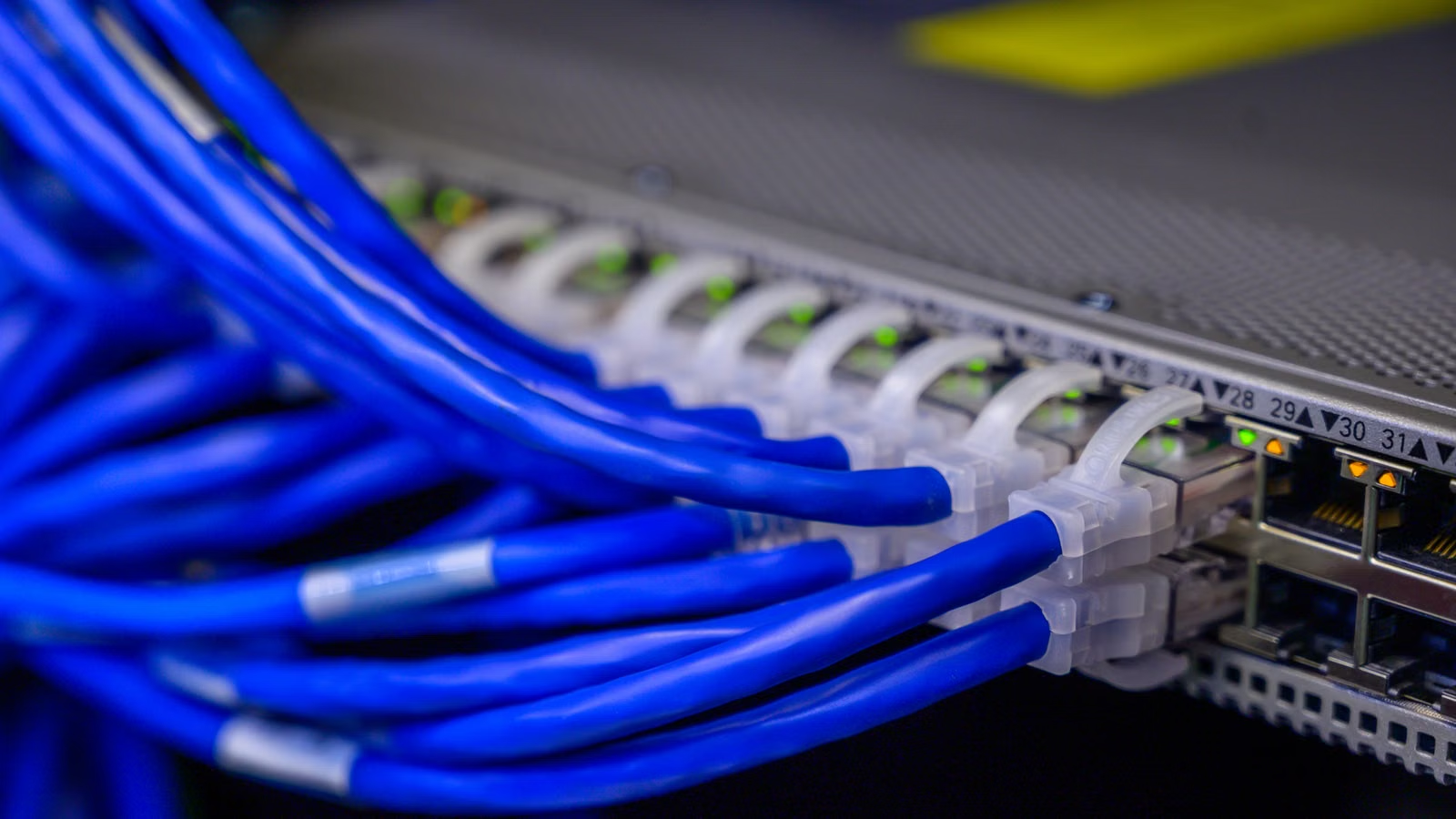
NVIDIA, TSMC, ASML, and Micron are all affected by an AI CAPEX slowdown, but through different paths. NVIDIA sells AI GPUs, networking, and system-level platforms. Micron sells HBM, DRAM, NAND, and data center SSDs. TSMC provides advanced-node manufacturing and CoWoS advanced packaging. ASML supplies lithography equipment such as EUV and DUV tools. The closer a company is to new cloud-provider AI cluster procurement, the faster its share price and expectations tend to react. The closer it is to long-term capacity buildout, the slower the fundamental transmission.
AI CAPEX transmission can be divided into four layers. The first layer is cloud-provider procurement of GPUs, ASICs, servers, and networking equipment. This layer is most directly tied to new buildout schedules at hyperscalers such as Microsoft, Amazon, Alphabet, Meta, and Oracle. The second layer is GPU and AI server demand pulling through HBM, DRAM, NAND, SSDs, and high-bandwidth storage. The third layer is AI accelerator demand driving advanced nodes, advanced packaging, CoWoS, and foundry demand. The fourth layer is fabs and memory makers buying EUV, DUV, etch, deposition, and inspection equipment for long-term capacity expansion.
| Company | Value-Chain Position | Main AI CAPEX Exposure | Speed of Impact | Sensitivity Driver |
|---|---|---|---|---|
| NVIDIA | AI GPUs / accelerators / networking | Cloud-provider training and inference cluster procurement | Fastest | Data center revenue and order expectations |
| Micron | HBM / DRAM / NAND / SSDs | AI server memory and storage demand | Fast, but slightly delayed | HBM pricing, customer volume commitments, memory cycle |
| TSMC | Advanced nodes / CoWoS | AI accelerator foundry and packaging demand | Medium to delayed | HPC revenue and advanced packaging capacity |
| ASML | Lithography equipment | Long-term semiconductor customer expansion | Most delayed | Net bookings and EUV/DUV orders |
Cloud providers have not exited the high-investment cycle. Alphabet’s Q1 2026 results showed that Google Cloud was supported by demand for AI products and infrastructure. Microsoft’s Microsoft Cloud gross margin was affected by AI infrastructure investment and AI product usage growth. Amazon’s Q1 2026 results continued to show AWS as an important channel for monetizing AI infrastructure. Meta’s in-house AI chip plan reported by Reuters also reflects the dual goal of expanding compute capacity while lowering infrastructure cost.
Summary: When comparing these four companies, do not only ask which one is an “AI stock.” Ask how close its revenue recognition is to new cloud-provider buildout. NVIDIA is the most direct, so market reaction is usually fastest. Micron depends on HBM and memory supply-demand, so transmission is slightly slower but price sensitivity can be high. TSMC is tied to AI chip manufacturing and advanced packaging, making its fundamentals more medium-term. ASML is more like a barometer of long-term semiconductor expansion confidence. Short-term stock sensitivity and long-term fundamental sensitivity are not the same: the former is about expectations, while the latter depends on orders, capacity, and pricing cycles.
Why NVIDIA Is the Most Sensitive: AI GPU Revenue Is Directly Tied to Cloud-Provider Procurement
NVIDIA is the most sensitive to an AI CAPEX slowdown because its data center GPUs, AI networking, and system-level products go directly into cloud-provider training and inference clusters. If hyperscalers such as Microsoft, Amazon, Alphabet, Meta, and Oracle reduce new procurement or delay data center launches, the market will first revise expectations for NVIDIA’s data center revenue, gross margin, and growth valuation. NVIDIA is both the biggest direct beneficiary of the AI investment cycle and the market’s most widely used AI infrastructure bellwether.
The key question for NVIDIA is not whether AI demand exists, but how long the current high growth rate can continue. In its Q1 FY2027 results, NVIDIA reported revenue of $81.6 billion, up 85% year over year, with data center revenue of $75.2 billion, up 92% year over year. With growth already at such a high base, even a shift in cloud-provider procurement from “extremely tight” to “selective expansion” could lead the market to compress valuation multiples before revenue actually declines.
A shift from training to inference is not necessarily negative for NVIDIA. Training clusters emphasize large-scale synchronized compute, interconnect bandwidth, and cluster stability. Inference clusters focus more on cost per token, memory capacity, energy efficiency, concurrency scheduling, and deployment scale. If enterprise AI applications, agents, multimodal workloads, search, and recommendation systems continue expanding, inference demand could still support accelerator purchases. The real question is whether Blackwell, Rubin, networking products, system-level solutions, and the software ecosystem can continue strengthening NVIDIA’s lock-in.
NVIDIA’s risks mainly come from three types of change. First, if cloud providers reduce total CAPEX or delay projects, new GPU order timing will be directly affected. Second, if in-house ASICs, custom chips, and alternative networking solutions gain share, the incremental opportunity for general-purpose GPUs may narrow. Third, export restrictions, supply constraints, and customer concentration can affect revenue timing. Meta’s plan to work with Broadcom and TSMC on in-house AI chips shows that hyperscalers may not reduce compute demand, but they may change supplier structures.
| Dimension | More Positive for NVIDIA | More Risky for NVIDIA |
|---|---|---|
| Cloud-provider CAPEX | Continued expansion of training and inference clusters | Slower new GPU orders |
| Inference demand | Rising token usage and enterprise deployment | Inference efficiency improves faster than demand grows |
| Supply structure | Stronger GPU ecosystem and networking lock-in | In-house ASICs replace part of demand |
| Gross margin | High-end platforms remain supply-constrained | Price competition or lower-end product mix |
| Valuation | High growth continues to be validated | Slower growth causes multiple compression |
Summary: NVIDIA is the most sensitive because it sits at the very front of the AI CAPEX transmission chain. Any change in cloud-provider procurement timing can immediately lead the market to reprice its data center revenue, product mix, gross margin, and valuation multiple. However, an AI CAPEX slowdown does not automatically mean NVIDIA’s fundamentals reverse immediately. If the slowdown is driven by a shift from training to inference, efficiency gains, or supply-structure optimization, NVIDIA may still maintain strong demand through GPUs, networking, systems, and software. The risk becomes more systemic if the slowdown reflects real weakness in AI demand or a large-scale cloud-provider shift toward in-house chips.
Why Micron Is Also Sensitive: HBM and Storage Pricing Would Be Repriced
Micron is also sensitive to an AI CAPEX slowdown, but through a different transmission path. It does not sell GPUs directly. Instead, it benefits from AI server buildout through HBM, DRAM, NAND, and enterprise SSDs. If cloud providers slow AI cluster expansion, the market will first adjust expectations for HBM demand, memory pricing, locked-in capacity, and data center revenue. Micron’s core risk is not that AI demand disappears, but that the memory pricing cycle may have become overheated.
Micron’s sensitivity comes from supply tightness, not just unit volume. In its FY2026 Q3 earnings call, the company said data center revenue exceeded $25 billion, while data center SSD revenue exceeded $5 billion and more than doubled sequentially. Its FY2026 Q3 presentation also showed record revenue for the Core Data Center Business Unit. AI demand has pushed HBM, DRAM, and NAND into a tight-supply narrative at the same time, so pricing and gross margin are naturally amplified in market expectations.
Micron may react with more lag than NVIDIA because HBM customer qualification, capacity planning, and contract arrangements usually have longer cycles. If cloud providers reduce or delay AI server orders, GPU shipment expectations are likely to adjust first, followed later by HBM, DRAM, and enterprise SSDs. Memory pricing is also split between contract pricing and spot pricing, which may not move in sync over the short term. But equity markets rarely wait for every contract to be repriced. They usually cut expectations for high gross margins and tight supply in advance.
Another risk for Micron is the capacity cycle. DRAM and NAND are classic cyclical products. Tight supply can bring high prices and high profits, but it also attracts capital spending and new capacity. Reuters reported that Micron’s U.S. investment plan increased to a larger scale, showing that AI storage demand is driving long-term capacity investment. If cloud-provider procurement slows, competitors bring on capacity, or customer volume commitments weaken, current assumptions around high pricing and high gross margins would be challenged.
| Metric to Watch | Positive Signal | Risk Signal |
|---|---|---|
| HBM orders | Customer commitments and stable pricing | Qualification delays or order cuts |
| DRAM/NAND pricing | Contract prices keep rising | Spot prices weaken and inventory rises |
| Data center revenue | Higher revenue mix and SSD growth | Slower growth and customer concentration |
| Gross margin | Higher mix of high-end products | Cycle rollover and price competition |
| CAPEX | Capacity absorbed by long-term contracts | Expansion outpaces real demand |
Summary: Micron’s sensitivity does not come from directly receiving cloud-provider GPU orders. It comes from the fact that AI server buildout determines the supply-demand balance for HBM and data center storage. If the AI CAPEX slowdown is only a short-term timing adjustment, Micron may be protected by contracts, customer qualification, and locked-in capacity. If the slowdown persists, the market will quickly cut expectations for HBM pricing, DRAM/NAND strength, data center SSD growth, and high gross margins. Micron is usually not the first company hit by order changes, but it can become a major focus in the second wave of valuation and pricing-cycle repricing.
Why TSMC and ASML React With More Lag: They Depend on Long-Term Capacity Cycles
TSMC and ASML are also sensitive to AI CAPEX slowdowns, but usually with more lag than NVIDIA and Micron. TSMC is affected by demand for advanced nodes, advanced packaging, and CoWoS used in AI accelerators. ASML is affected by semiconductor customers’ long-term expansion confidence. A single-quarter slowdown in cloud-provider CAPEX may not immediately pressure their fundamentals, but the market may reprice long-term growth assumptions early, especially around advanced nodes, packaging capacity, and equipment orders.
For TSMC, the key variables are HPC, advanced nodes, and CoWoS. AI accelerators from companies such as NVIDIA, AMD, and Broadcom require advanced-node manufacturing and advanced packaging to support high-bandwidth memory and chip interconnects. Reuters reported that TSMC’s second-quarter revenue reached a new high, mainly driven by demand from AI applications. Reuters also reported that TSMC’s advanced packaging expansion would continue, showing how AI chip demand is being transmitted to manufacturing and packaging.
However, TSMC is not directly exposed to single-quarter cloud-provider GPU procurement in the same way NVIDIA is. It is usually protected by long-term agreements, production schedules, customer diversification, and technology leadership. A short-term delay in cloud-provider projects may not immediately change TSMC’s wafer starts. The larger risk is that if AI CAPEX slows for several quarters, customers lower demand forecasts for AI accelerators, and expectations for advanced packaging expansion, HPC revenue growth, and high-end capacity utilization are revised down.
ASML sits further upstream. It does not sell directly to cloud providers, nor does it sell AI chips. It sells lithography equipment to foundries and memory makers. An AI CAPEX slowdown must first affect chip demand, then foundry and memory maker expansion plans, and only then ASML’s EUV and DUV orders. In its Q1 2026 results, ASML reported total net sales of €8.8 billion and expected 2026 net sales between €36 billion and €40 billion, indicating that the equipment cycle is still supported by backlog and long-term plans.
| Company | Transmission Path | Short-Term Protection | Main Risk Indicator |
|---|---|---|---|
| TSMC | AI chip demand → wafer manufacturing / CoWoS | Long-term agreements, production schedules, diversified customers | HPC growth and advanced packaging utilization |
| ASML | Chip demand → fab expansion → lithography equipment | Long equipment cycle and backlog support | Net bookings and EUV/DUV orders |
| Micron | AI server demand → HBM / DRAM / SSDs | Customer qualification, contract pricing, locked capacity | HBM pricing and memory inventory |
| NVIDIA | Cloud procurement → GPUs / networking / systems | Platform ecosystem and tight supply | Data center revenue and order timing |
Summary: TSMC and ASML are not immune to an AI CAPEX slowdown; the transmission is simply slower. TSMC is closer to AI chip demand than ASML, so it is more sensitive to HPC, CoWoS, advanced nodes, and packaging capacity. ASML is more of a long-term semiconductor expansion-confidence indicator. A single-quarter cloud budget change may not immediately alter its revenue, but it can affect net bookings and valuation multiples. If AI CAPEX is only a quarterly timing issue, their fundamentals may change little. If cloud providers slow spending for a sustained period, forward orders and capital spending confidence will be repriced.
Sensitivity Ranking: Short-Term Stock Reaction, Revenue Elasticity, and Long-Term Fundamentals Differ
If you only look at short-term share-price sensitivity to slower cloud-provider AI CAPEX, NVIDIA is usually the most sensitive, followed by Micron and TSMC, while ASML tends to react with more lag. But if you look at long-term fundamentals, the ranking depends on why CAPEX is slowing. Project delays, GPU-to-ASIC substitution, weaker AI demand, and training-to-inference shifts can all change the impact sequence. A scenario-based comparison is more useful than a single fixed answer.
The first scenario is project delay. Cloud providers still need AI compute, but data center, power-connection, or server launch schedules are pushed out. In this case, NVIDIA, server vendors, and networking suppliers usually move first. Micron depends on whether HBM customer commitments and memory pricing remain stable. TSMC and ASML may see limited fundamental impact, although their valuations can still move with AI value-chain sentiment.
The second scenario is GPU-to-ASIC substitution. Cloud-provider in-house ASICs may reduce part of general-purpose GPU demand, but that does not necessarily reduce total compute demand. Broadcom, Marvell, and TSMC may benefit from custom AI accelerators, while NVIDIA must offset some pressure through networking, system-level platforms, software ecosystems, and inference products. Micron may still benefit from HBM and DRAM, depending on the memory specifications and supplier relationships used in ASIC designs.
The third scenario is weaker-than-expected AI demand. If enterprise AI product revenue, inference demand, ad efficiency, or subscription monetization fail to justify massive CAPEX, cloud providers may slow overall expansion. All four companies would be pressured. NVIDIA would first face data center revenue expectation cuts; Micron would then face a pricing-cycle adjustment; TSMC’s HPC and CoWoS growth would be revised down; ASML’s equipment orders and long-term expansion assumptions would be compressed.
| Slowdown Scenario | NVIDIA | Micron | TSMC | ASML |
|---|---|---|---|---|
| Project delays | High sensitivity | Medium | Medium-low | Low |
| GPU to ASIC | High sensitivity | Medium | Medium-high | Medium-low |
| Weak AI demand | Extremely high | High | High | Medium-high |
| Inference replacing training | Medium-high | Medium-high | Medium | Low-medium |
| Cost optimization with demand growth | Medium | Medium | Medium | Relatively low |
This ranking is also affected by valuation. A high-valuation stock does not necessarily have the weakest fundamentals, but it is more sensitive to growth-rate changes. A low-valuation stock is not necessarily safe if its profits come from a cycle peak, because a pricing downturn can still lead to major estimate cuts. When comparing the four companies, you should look at revenue elasticity, order visibility, gross margin, customer concentration, and return on capital at the same time, rather than judging risk only by which company is “closer to AI.”
Summary: No fixed ranking applies to every AI CAPEX slowdown scenario. In short-term market reaction, NVIDIA is usually the most sensitive, Micron and TSMC sit in the middle, and ASML reacts with more lag. But if the issue is GPU-to-ASIC substitution, TSMC may receive more attention than Micron. If AI demand broadly falls short of expectations, the long-term growth assumptions for Micron, TSMC, and ASML will also be repriced. The key is not deciding which company is always more dangerous, but identifying the cause of the slowdown and mapping it to revenue, pricing, orders, and valuation.
How Should Investors Track AI CAPEX Slowdown Risk?
To track AI CAPEX slowdown risk, you cannot rely only on total cloud-provider CAPEX or NVIDIA’s share price. You need to watch cloud-provider CAPEX guidance, AI product revenue, data center orders, NVIDIA data center revenue, Micron HBM and memory pricing, TSMC HPC and CoWoS, ASML net bookings, and valuation assumptions across all four companies. Risk becomes more systemic only when multiple indicators weaken together.
| Company | Leading Indicators | Warning Signs |
|---|---|---|
| NVIDIA | Data center revenue, customer procurement, networking revenue, gross margin | Slower growth, delayed orders, lower gross margin |
| Micron | HBM orders, DRAM/NAND pricing, data center SSDs | Weaker contract pricing, higher inventory, lower customer commitments |
| TSMC | HPC revenue, advanced packaging, CoWoS capacity | Lower utilization, slower expansion, customer forecast cuts |
| ASML | Net bookings, EUV/DUV orders, customer CAPEX | Weaker orders and delayed customer expansion |
| Cloud providers | CAPEX, backlog, RPO, cloud gross margin, AI revenue | CAPEX cuts without enough revenue validation |
Do not interpret an AI CAPEX slowdown as “sell all AI stocks.” If the slowdown comes from efficiency gains and lower unit compute costs, it may only be a valuation reset. If it comes from weak real demand, it is a fundamental risk. If it comes from supplier substitution, you need to identify both beneficiaries and losers. If it comes from a shift from training to inference, you need to reassess GPUs, ASICs, memory, networking, and cloud-service structures.
If you follow AI value-chain stocks such as NVIDIA, TSMC, ASML, and Micron, you should consider actual trading costs, currency exposure, liquidity, and order types in addition to financial statements and CAPEX sensitivity. Biya supports US stock, Hong Kong stock, and digital-asset trading. Its US stock trading fees state that US stock commissions are 0 USD, while platform fees, external fees, and other charges are subject to the fee schedule and order-page display. Service availability depends on the user’s location, identity-verification results, platform rules, and applicable laws and regulations.
Summary: AI CAPEX slowdown risk should be tracked through a combination of indicators, not a single news headline. NVIDIA should be assessed through data center revenue and order timing; Micron through HBM and memory pricing; TSMC through HPC, advanced nodes, and CoWoS; ASML through net bookings and customer expansion confidence. Risk becomes more systemic only when cloud-provider CAPEX, supplier orders, pricing cycles, gross margin, and valuation assumptions all weaken together. If the issue is only construction timing or supplier mix, the four companies can diverge significantly.
The risks facing NVIDIA, TSMC, ASML, and Micron are not the same. Investors need to separate them by value-chain position, revenue exposure, order cycle, and valuation assumptions rather than judging them all under a single “AI stock” label. You can use US stock information to track market data and basic company information, then combine financial reports, orders, customer structure, and capital spending changes to assess risk. Users who meet the relevant service conditions can use account registration to learn more about multi-asset trading tools. Public-market investing involves price volatility, liquidity, currency, and policy risks. No AI value-chain theme constitutes investment advice, and investors should review fee structures, order types, and their own risk tolerance before trading.
FAQ
Why Is NVIDIA the Most Sensitive When AI CAPEX Slows?
NVIDIA is the most sensitive because its data center GPU and AI networking revenue are directly tied to cloud-provider training and inference cluster procurement. If the slowdown is only a project delay, the main impact is on order timing and valuation. If it reflects real demand weakness, data center revenue growth expectations face greater pressure.
Could TSMC Be More Affected Than Micron by an AI CAPEX Slowdown?
It depends on the type of slowdown. If the issue is GPU-to-ASIC substitution or changes in advanced packaging demand, TSMC may receive more attention. If AI server shipments are cut and memory prices fall, Micron is more sensitive. Their transmission paths are different, so short-term stock moves alone are not enough for comparison.
Why Does ASML React With More Lag to an AI CAPEX Slowdown?
ASML reacts with more lag because it does not sell compute hardware directly to cloud providers. It sells lithography equipment to foundries and memory manufacturers. AI CAPEX must first affect chip demand, fab expansion plans, and customer capital spending before it reaches ASML’s orders and long-term growth expectations.
Which Metrics Matter Most for Micron During an AI CAPEX Slowdown?
For Micron, the key metrics are HBM orders, DRAM/NAND pricing, data center SSD revenue, and inventory changes. If customer commitments remain stable and contract pricing is firm, near-term impact may be limited. If pricing weakens or capacity expands faster than demand, gross margin pressure can rise.
How Can Ordinary Investors Compare NVIDIA, TSMC, ASML, and Micron Risk?
Investors can compare them by value-chain position, revenue exposure, order cycle, valuation assumptions, and substitution risk. NVIDIA should be judged by data center revenue, Micron by memory pricing, TSMC by HPC and CoWoS, and ASML by net bookings, while also considering personal risk tolerance.
*This article is provided for general information purposes and does not constitute legal, tax or other professional advice from BiyaPay or its subsidiaries and its affiliates, and it is not intended as a substitute for obtaining advice from a financial advisor or any other professional.
We make no representations, warranties or warranties, express or implied, as to the accuracy, completeness or timeliness of the contents of this publication.
Related Blogs of

How to Evaluate AI ROI: 5 Metrics for Judging Whether Big Tech’s AI Investment Is Worth It


AI Spending War: Will the Cloud Capex Battle Drag Down Profits?


Why Does GPU Utilization Matter? The Key Metric Behind AI Data Center Profitability


Alphabet AI Capex Analysis: Can Google Cloud Margins Offset Search Pressure?
Choose Country or Region to Read Local Blog
 Australia
 Austria
 Belgium
 Canada
 Cyprus
 Czech Republic
 Denmark
 Estonia
 Finland
 France
 Germany
 Greece
 Hong Kong
 India
India Indonesia
 Ireland
 Italy
Italy Japan
Japan Latvia
 Lithuania
 Luxembourg
 Malaysia
 Malta
Malta Morocco
 Nepal
Nepal Netherlands
 New Zealand
 Norway
 Pakistan
 Philippines
 Poland
 Portugal
 Romania
 Singapore
 Slovakia
 Slovenia
 South Africa
 South Korea
 Spain
Spain Sweden
 Thailand
 The United States
 Turkey
 United Arab Emirates
 United Kingdom
 Vietnam
Contact Us




BIYA GLOBAL LLC is registered with the Financial Crimes Enforcement Network (FinCEN), an agency under the U.S. Department of the Treasury, as a Money Services Business (MSB), with registration number 31000218637349, and regulated by the Financial Crimes Enforcement Network (FinCEN).
BIYA GLOBAL LIMITED is a registered Financial Service Provider (FSP) in New Zealand, with registration number FSP1007221, and is also a registered member of the Financial Services Complaints Limited (FSCL), an independent dispute resolution scheme in New Zealand.