
Which Hong Kong-Listed Commercial Space Stocks Are Worth Watching? 2026 Beneficiaries of LEO Satellites, Rocket IPOs, and Space Computing





Hong Kong currently has no pure-play commercial space company with a business structure comparable to SpaceX. The available opportunities are mainly distributed across satellite operations, ground terminals and aerospace materials, equity investments in commercial rocket companies, satellite communications services, and space computing projects under validation. To identify genuine beneficiaries, you should compare revenue contribution, order status, customer certification, ownership stakes, and cash-flow capacity rather than relying solely on a company’s name or partnership announcements.
Key Takeaways
- Hong Kong has few commercial space stocks, and their business purity varies significantly.
- APT Satellite already generates operating revenue, but its core assets are not LEO constellations.
- Lens Technology supplies ground terminals, while its space computing products remain under validation.
- Goldwind is an equity proxy for LandSpace, but wind power still drives its core earnings.
- Space computing has long-term potential, but investors should first verify orders and revenue.
Which Hong Kong-Listed Commercial Space Stocks Are Available? Start by Classifying Business Exposure
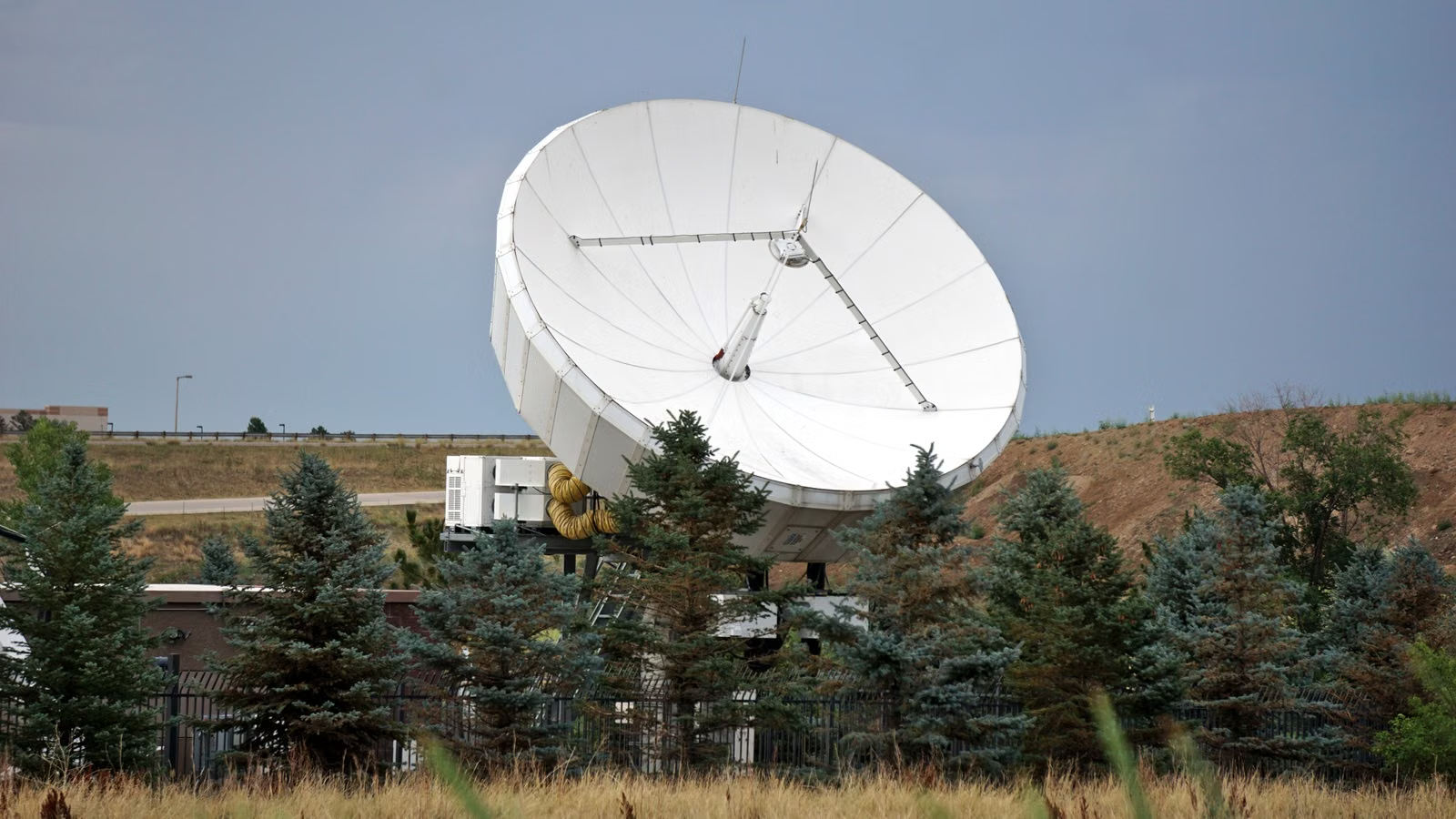
Hong Kong-listed commercial space stocks can be divided into four groups: companies that own satellites and generate operating revenue, suppliers of satellite components, listed companies holding stakes in commercial rocket developers, and telecom operators providing satellite communications services. Very few companies are directly exposed to LEO satellite manufacturing or commercial launch revenue. The longer a concept-stock list becomes, the more likely it is to include businesses with only limited exposure.
| Category | Representative Company | Ticker | Commercial Space Exposure | Current Commercialization |
|---|---|---|---|---|
| Satellite operator | APT Satellite | 1045.HK | Satellite capacity and communications services | Established revenue |
| Aerospace manufacturing transition | China Technology Industry Group | 1725.HK | Satellite structures, components, power systems, and data applications | Orders still need to recover |
| Supply-chain manufacturing | Lens Technology | 6613.HK | Ground terminals, aerospace materials, and spaceborne structures | Partly in production, partly under validation |
| Rocket equity proxy | Goldwind | 2208.HK | Minority investment in LandSpace | Indirect exposure |
| Aerospace-related group | China Aerospace International Holdings | 0031.HK | Aerospace services and technology manufacturing | Low business purity |
| Communications applications | China Telecom and peers | 0728.HK and others | Direct-to-device satellite services and integrated space-ground networks | Gradual service rollout |
APT Satellite is the company whose aerospace-related revenue is easiest to identify in its financial statements. Its 2025 revenue was approximately HKD 739 million, primarily generated from transponder capacity, satellite broadcasting, communications, and related services. However, its main assets—including APSTAR-5C, APSTAR-6C, APSTAR-7, and APSTAR-9—are geostationary satellites. Its business model is closer to that of a traditional satellite operator than a LEO internet platform built around hundreds or thousands of satellites.
Lens Technology is more closely aligned with the supply-chain growth thesis. The company disclosed that it has delivered structural modules for satellite ground-receiving equipment in volume to leading commercial space customers since 2023, although these products still represent a small share of total revenue. Aerospace-grade ultra-thin flexible glass, flexible solar-array components, and lightweight structures for spaceborne servers remain in sample delivery or customer-validation stages. China Technology Industry Group continues to target satellite components, power systems, and data applications, but its aerospace business segment generated no revenue in 2025, leaving a substantial gap between strategic plans and actual revenue.
Goldwind’s commercial space exposure comes from its wholly owned subsidiary’s approximately 4.14% stake in LandSpace, rather than from manufacturing rockets itself. Goldwind recorded approximately RMB 72.60 billion in 2025 revenue, with wind turbine sales, renewable-energy services, and wind farm investments continuing to determine its core earnings. China Aerospace International Holdings should also be classified carefully. Its disclosed aerospace services segment mainly includes property investment in the Shenzhen Aerospace Science and Technology Plaza, so the company should not be treated as a pure-play LEO satellite or commercial rocket stock based solely on its name.
Summary: Hong Kong commercial space companies should not be viewed as a single undifferentiated group. APT Satellite generates genuine satellite operating revenue, but it is not a pure LEO constellation company. Lens Technology has already commercialized some ground-terminal products, while its spaceborne products remain under validation. China Technology Industry Group still needs to restore aerospace orders and revenue, while Goldwind is primarily a minority-equity proxy for LandSpace. You should first determine whether the aerospace business is consolidated and revenue-generating before evaluating its potential impact on valuation.
As LEO Satellite Deployment Accelerates, Which Parts of the Hong Kong Supply Chain May Benefit?
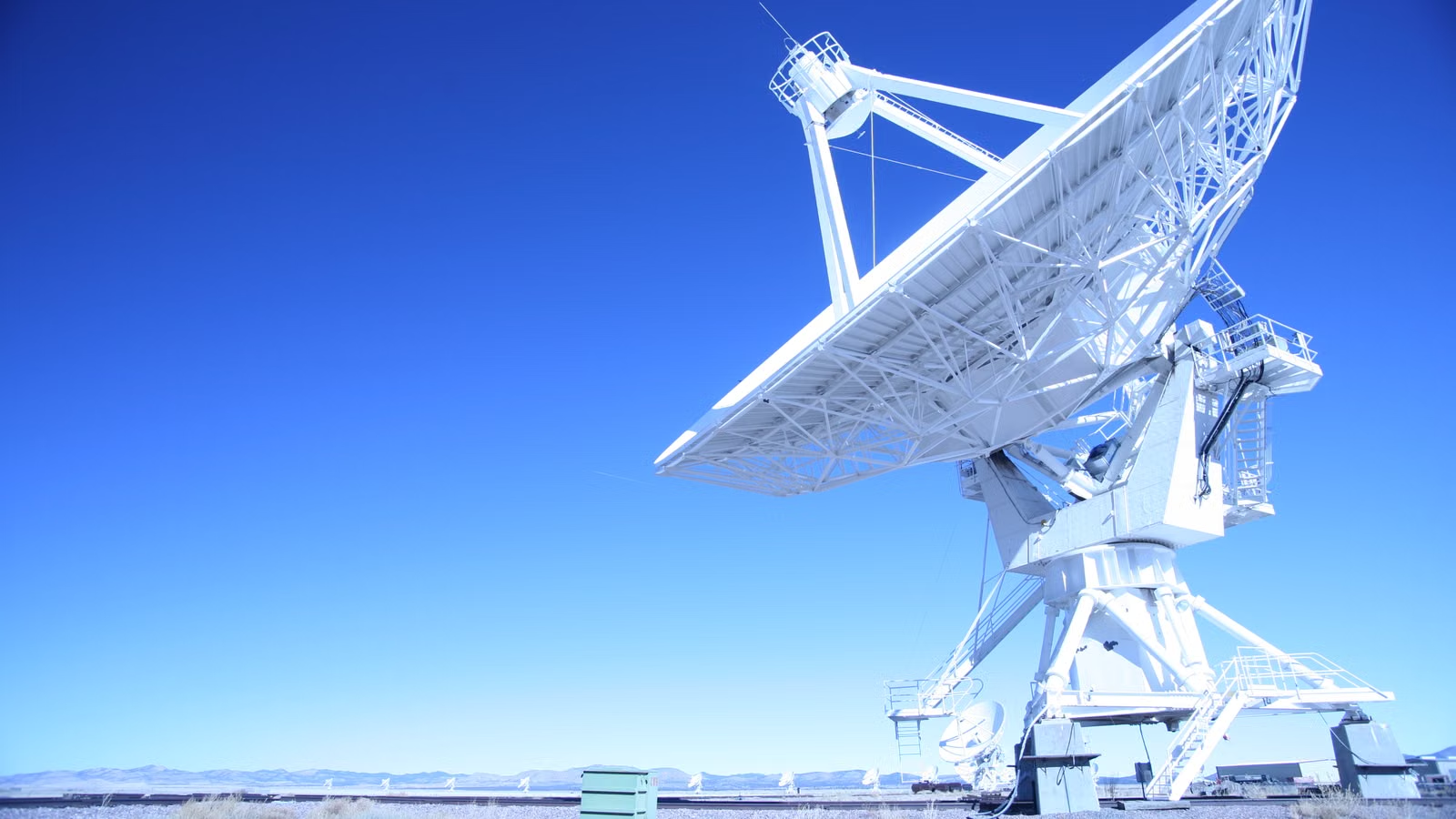
The first beneficiaries of LEO satellite expansion are usually not satellite internet subscription platforms. Demand typically appears earlier in satellite structures, power systems, solar arrays, ground terminals, tracking and control equipment, and rocket launches. Hong Kong-listed exposure is easier to find in ground-receiving equipment, aerospace materials, traditional satellite operations, and telecom services, while direct listed exposure to complete satellite manufacturing and rocket launches remains limited.
How Do LEO Satellites Differ from Traditional Communications Satellites?
LEO satellites operate much closer to Earth, allowing lower communications latency. However, each satellite covers a smaller area and generally has a shorter operating life, requiring large constellations and continuous replacement launches. Geostationary satellites operate much farther from Earth, allowing one satellite to cover a much wider area. They are suitable for broadcasting, fixed communications, maritime connectivity, and aviation services, but they usually have higher latency.
APT Satellite’s current business therefore overlaps with the broader satellite communications market, but it does not follow the same asset-expansion model as a LEO broadband constellation.
The economics of LEO networks depend on mass satellite production, low-cost launch capacity, and affordable user terminals. If any one of these areas develops more slowly than expected, satellite deployment may increase without producing corresponding revenue growth.
Which Segments Are Likely to Recognize Revenue First?
| Value-Chain Segment | Main Products or Services | Hong Kong Exposure | Key Indicators |
|---|---|---|---|
| Satellite manufacturing | Structures, power systems, solar arrays, thermal management | 1725, 6613 | Volume orders and value per satellite |
| Ground terminals | Antennas, receivers, routers, and structural modules | 6613 | Shipments and customer certification |
| Satellite operations | Capacity leasing, broadcasting, and communications services | 1045 | Utilization rates and contract renewal prices |
| Communications applications | Direct-to-device services, emergency communications, and NTN | 0728, 0941, 0762 | User numbers and service revenue |
| Commercial launches | Rockets and launch services | Indirect exposure through 2208 | Launch frequency and success rate |
Manufacturing and ground-terminal companies usually recognize revenue when products are delivered, so they can reflect constellation capital expenditure earlier. Telecom operators must wait for network coverage, device compatibility, and viable pricing models before technical progress can become meaningful user revenue.
China Telecom has extended its Tiantong satellite capabilities into direct-to-device satellite services, while China Unicom is developing integrated space-ground communications networks. However, satellite services remain small relative to their total revenue and are better viewed as new service capabilities than near-term earnings drivers.
A rising number of satellite launches only becomes listed-company revenue after the company enters an approved supplier list, receives contracts, completes production, and delivers products. Framework agreements, sample testing, and strategic partnerships should not be treated as equivalent to volume orders.
Summary: Revenue across the LEO satellite value chain is likely to emerge in stages. Manufacturing and launch services usually lead, ground terminals follow, and communications subscriptions and data applications take longer to scale. The clearest Hong Kong-listed opportunities currently include APT Satellite’s established satellite-service revenue, Lens Technology’s delivered ground-terminal structures, and telecom operators developing direct-to-device satellite services. To assess whether a company is genuinely benefiting, you should track orders, certifications, shipments, and segment revenue rather than launch headlines alone.
How Could Commercial Rocket IPOs Affect Hong Kong Space Stocks in 2026?
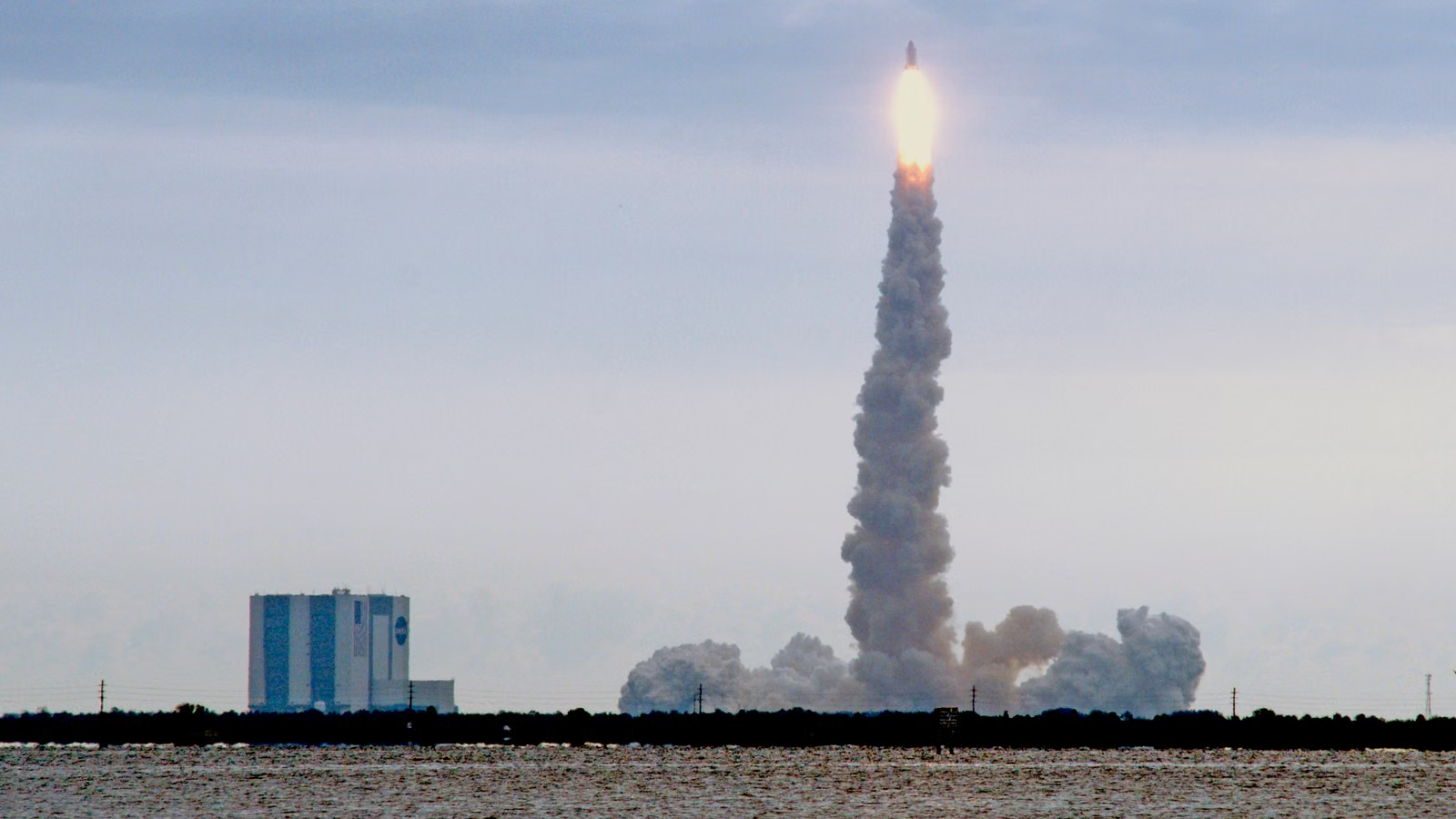
China’s leading commercial rocket IPO candidates are primarily targeting the Shanghai STAR Market rather than Hong Kong. For Hong Kong investors, the most direct effects are potential revaluations of minority investments, expectations that improved launch capacity will accelerate constellation deployment, and greater market enthusiasm for aerospace-related stocks. Goldwind is one of the clearest equity proxies for LandSpace, but its share price should not be treated as a direct substitute for LandSpace’s valuation.
How Far Have LandSpace and CAS Space Progressed Toward IPOs?
As of July 2026, LandSpace’s STAR Market IPO was under inquiry, with proposed fundraising of RMB 7.5 billion. The review was temporarily suspended while the company updated its financial information and later resumed.
CAS Space’s STAR Market IPO was also under inquiry, with proposed fundraising of RMB 4.18 billion. Acceptance, regulatory inquiries, listing committee review, registration, and public issuance are separate stages. Progress may be delayed by financial updates, regulatory questions, or market conditions.
IPO filings allow investors to compare launch revenue, research and development expenses, cash consumption, and order backlogs. Reusable-rocket testing is only the starting point. Sustained success rates, annual launch frequency, and cost per unit of payload will ultimately determine whether the business model is economically viable.
Three Ways Rocket IPOs Can Affect Hong Kong Stocks
- Equity revaluation: Once an invested company becomes publicly traded, minority stakes may gain a clearer market valuation.
- Order expansion: Greater rocket capacity may accelerate LEO constellation deployment and increase demand for satellites and ground terminals.
- Sentiment catalysts: Inquiry responses, maiden flights, recovery tests, and successful launches can increase short-term trading activity and valuations.
Minority holdings are generally not consolidated into operating revenue and may also be affected by lock-up periods, accounting classifications, and dilution. Even if LandSpace’s valuation rises, Goldwind’s turbine margins, cash flow, and renewable-energy operations will remain more important long-term drivers.
IPO Trading Requires Attention to Actual Costs
Commercial space stocks can experience heavy trading and substantial price volatility immediately after listing. In addition to valuation and orders, you should consider commissions, platform fees, external institutional charges, currency conversion, and order types.
For future aerospace companies listing in the United States or Hong Kong, you can use the Hong Kong stock search tool to confirm tickers and market data before checking whether the relevant services are available in your jurisdiction. Biya charges no commission for US stock trades, while platform fees, external institutional charges, and other costs are displayed in its fee information and order interface. For highly volatile IPOs, zero commission should not be interpreted as zero trading cost.
Summary: Commercial rocket IPOs mainly give Hong Kong investors a valuation reference rather than immediate exposure to rocket operating revenue. LandSpace and CAS Space remain in the review process, and their eventual listing dates are uncertain. Goldwind may benefit from the revaluation of its minority investment, but it remains fundamentally a wind-power company. You should separately monitor IPO progress, technology tests, launch contracts, and the listed company’s ownership percentage, while incorporating volatility and trading costs into any decision.
What Is Space Computing, and Which Hong Kong Stocks Could Benefit from Orbital Data Centers?
Space computing refers to placing part of the computing, storage, and data-processing workload on satellites or orbital platforms. Remote-sensing images, communications data, and scientific payload information can be processed in orbit before useful results are transmitted to Earth. The technology has progressed from a concept to in-orbit testing, but large-scale commercial revenue remains distant. Hong Kong-listed beneficiaries are currently more likely to be suppliers of structures, solar arrays, power systems, thermal management, and communications links than established operators of “space cloud” platforms.
Why Is Space Computing Attracting Attention?
Remote-sensing satellites generate large volumes of raw data, and transmitting all of it to Earth can create bandwidth constraints. Spaceborne AI can first perform identification, compression, and target selection, reducing unnecessary data transmission.
The first batch of 12 computing satellites, launched in 2025, completed approximately nine months of testing and demonstrated networking, model deployment, and in-orbit computing capabilities. The Three-Body Computing Constellation has also deployed multiple AI models and applications.
| Key Segment | Main Technical Challenge | Potential Hong Kong Exposure | Current Assessment |
|---|---|---|---|
| Spaceborne computing modules | Radiation resistance, low power consumption, reliability | Chip and precision-manufacturing suppliers | Validation stage |
| Server structures | Lightweight design and vibration resistance | Lens Technology | Customer validation |
| Aerospace energy systems | Flexible solar arrays and power management | 6613, 1725 | Research or business transition |
| Data transmission | Inter-satellite laser links and ground stations | Telecom and communications equipment companies | Gradual deployment |
| Thermal management | Heat dissipation in a vacuum and radiative cooling | Materials and thermal-management suppliers | Early stage |
The first computing satellites reportedly achieved up to 744 TOPS of computing power per satellite, with inter-satellite laser links and onboard storage. However, technical specifications cannot be directly converted into profitability. Power supply, thermal management, radiation exposure, weight, and launch costs remain major constraints.
Lens Technology has developed lightweight server cabinets and related structures for spaceborne applications, but the company has stated that these products remain under customer validation and have not yet generated revenue. China Technology Industry Group may offer exposure to satellite power systems and data applications, but investors first need evidence of contract recovery. Telecom operators could benefit from ground stations, backhaul, and integrated space-ground networks, but they should not be classified directly as orbital data-center operators.
When assessing a “space computing stock,” you should prioritize disclosed customers, validation status, contract value, mass-production timelines, and revenue contribution.
Summary: Space computing has established a basis for in-orbit testing, but commercialization remains at an early stage. The most realistic Hong Kong-listed opportunities currently involve companies supplying satellite structures, energy systems, ground communications, and data links rather than orbital data-center operators with proven recurring revenue. Product samples and technical tests are only the first step. Space computing can become a genuine listed-company growth driver only when customer certification, volume orders, delivered revenue, and sustainable margins emerge together.
How Should Retail Investors Screen Hong Kong Commercial Space Stocks?
When screening Hong Kong commercial space stocks, you should examine business purity, orders and revenue, technology progress, financial capacity, valuation, and the durability of catalysts. The most common mistake is treating a company name, group background, minority investment, or product sample as evidence of guaranteed commercial success. Commercial space development cycles are long, and cash flow is just as important as technological potential.
| Screening Factor | Key Question | Preferred Indicator |
|---|---|---|
| Business purity | Is aerospace a core business, supply-chain activity, minority investment, or future plan? | Segment revenue and consolidation scope |
| Commercialization | Are there executable orders and completed deliveries? | Contract value, shipments, and customer certification |
| Technology progress | Is the product in development, validation, or mass production? | Launch records, success rates, and validation cycles |
| Financial capacity | Can the company fund long-term research and expansion? | Operating cash flow, leverage, and financing needs |
| Valuation and liquidity | Has the share price already priced in distant expectations? | Price-to-sales ratio, trading volume, and volatility |
| Catalyst durability | Can news events become future revenue? | IPO progress, launch schedules, and financial recognition |
You can divide potential investments into three approaches.
The first is existing-revenue exposure, represented by companies such as APT Satellite, which already generates revenue from satellite capacity and services. The advantage is stronger financial visibility, while the disadvantage is that exposure to LEO growth is not particularly pure.
The second is supply-chain growth exposure, represented by companies such as Lens Technology, which has delivered ground-terminal products while spaceborne products remain under validation. The key question is whether customer certification will translate into rising order and revenue contributions.
The third is event-driven equity exposure, represented by Goldwind because of its stake in LandSpace. Potential catalysts may be stronger, but the share price can move well ahead of any earnings impact.
Your risk checklist should include:
- Rocket launch failures, delayed recovery tests, or lower-than-expected launch frequency;
- Slower constellation deployment, spectrum coordination, or terminal adoption;
- Changes to IPO review, registration, or issuance schedules;
- Aerospace revenue that remains too small to alter overall earnings;
- Research spending and capital expenditure that continue to consume cash;
- Limited liquidity in small-cap stocks and amplified news-driven volatility;
- Invested companies that are not consolidated into the listed company’s revenue.
Before trading, you can use Biya’s web trading platform to compare Hong Kong stock prices, trading volume, and position changes, while using its real-time exchange rate tool to assess the cost of different settlement currencies. Service availability depends on the user’s jurisdiction, identity-verification status, platform rules, and applicable laws and regulations.
Summary: Hong Kong commercial space stocks are better assessed through tiered classification than ranked by concept popularity. Satellite operators with existing revenue provide stronger visibility, supply-chain companies offer potential order growth, and minority-investment proxies are more event-driven. Regardless of category, you should require evidence from segment revenue, customer certification, disclosed ownership, and cash flow. Companies supported only by strategic plans, partnership intentions, or sample deliveries should be assigned more conservative valuations and risk limits.
Commercial space combines long-term technological development with frequent short-term catalysts, making it unsuitable for decisions based on a single launch or IPO headline. You can use Biya to view US stocks, Hong Kong stocks, and digital-asset markets in one place while combining company announcements, real-time prices, and transaction costs when maintaining a watchlist. As a global multi-asset trading wallet, Biya supports US stock, Hong Kong stock, and digital-asset trading, along with multiple payment currencies. US stock trading carries no commission, while the platform fee is USD 0.005 per share, subject to a minimum of USD 0.99 per order and a maximum of 1% of transaction value. External institutional and trading activity fees total USD 0.00396 per share. Fees and service eligibility remain subject to order details, platform rules, and local legal requirements. This information is intended only to explain public-market developments and industry trends and does not constitute investment advice.
FAQ
Are Hong Kong Commercial Space Stocks Suitable for Long-Term Holding?
Hong Kong commercial space stocks can be monitored as a long-term investment theme, but industry growth alone is not sufficient reason to hold them. You should also confirm whether aerospace operations generate revenue, whether cash flow can support research spending, and whether the valuation already assumes rapid order growth.
How Are LEO Satellite Orders Recognized in Hong Kong-Listed Companies’ Financial Statements?
LEO satellite orders generally pass through contract award, customer validation, production, delivery, and revenue recognition. A framework agreement or strategic partnership may not generate current-period revenue. Investors should examine contract values, fulfillment progress, receivables, and segment revenue.
How Long Does a Commercial Rocket Company Take to List After Its IPO Application Is Accepted?
There is no fixed timeline. After acceptance, a company must still complete regulatory inquiries, listing committee review, registration, and issuance. The process may be suspended for financial updates or regulatory matters. LandSpace and CAS Space’s progress should be verified through Shanghai Stock Exchange disclosures.
Can Investors Buy LandSpace or CAS Space Through a Hong Kong Brokerage Account?
Not at present. Both companies are applying to list on the Shanghai STAR Market and have not completed their IPOs. Future tradability, inclusion in Stock Connect, and investor eligibility will depend on exchange rules, brokerage requirements, and applicable regulations.
Which Indicators Matter When Space Computing Stocks Have High Valuations?
You should prioritize recognized revenue, customer-validation conversion rates, order backlogs, research expenses, operating cash flow, and the proportion of revenue generated from aerospace activities. When a company has only product samples or cooperation plans without a mass-production timetable, its valuation may be more sensitive to delays and changes in market sentiment.
*This article is provided for general information purposes and does not constitute legal, tax or other professional advice from BiyaPay or its subsidiaries and its affiliates, and it is not intended as a substitute for obtaining advice from a financial advisor or any other professional.
We make no representations, warranties or warranties, express or implied, as to the accuracy, completeness or timeliness of the contents of this publication.
Related Blogs of

Crypto Exchange Fees Comparison: Trading Fees, Spreads, and Withdrawals


Crypto Trading Bots: Types, Costs, and Security Risks


International Money Transfers: Methods, Requirements, and Costs


Wire Transfer Requirements: Sender and Beneficiary Details Checklist

Choose Country or Region to Read Local Blog
 Australia
 Austria
 Belgium
 Canada
 Cyprus
 Czech Republic
 Denmark
 Estonia
 Finland
 France
 Germany
 Greece
 Hong Kong
 India
India Indonesia
 Ireland
 Italy
Italy Japan
Japan Latvia
 Lithuania
 Luxembourg
 Malaysia
 Malta
Malta Morocco
 Nepal
Nepal Netherlands
 New Zealand
 Norway
 Pakistan
 Philippines
 Poland
 Portugal
 Romania
 Singapore
 Slovakia
 Slovenia
 South Africa
 South Korea
 Spain
Spain Sweden
 Thailand
 United States
 Turkey
 United Arab Emirates
 United Kingdom
 Vietnam