How Can One Company’s Earnings Affect the Entire AI Supply Chain? From TSMC and ASML to Micron and Seagate




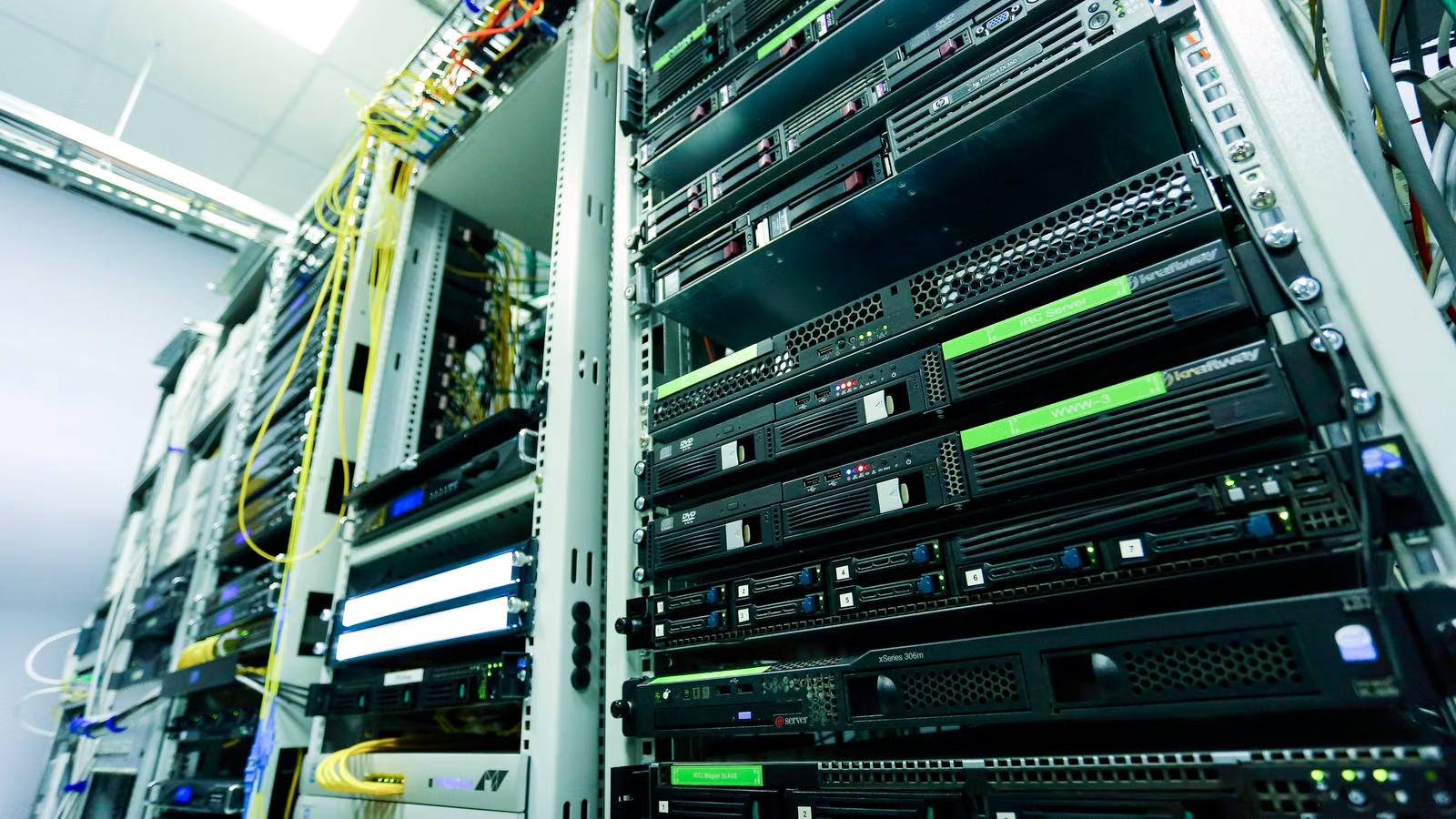
One company’s earnings can affect the entire AI supply chain because an earnings report reveals more than historical revenue. It also provides information about future capital expenditure, orders, capacity, inventory, and customer demand. When cloud companies increase server investment, the impact first reaches GPUs, networking equipment, and HBM, then spreads to TSMC’s advanced manufacturing, ASML lithography systems, enterprise SSDs, and eventually nearline HDDs. However, different segments monetize demand at different times, and correlated share-price movements do not necessarily mean fundamentals are improving simultaneously.
Key Takeaways
- AI earnings transmission is driven primarily by capital spending, orders, capacity, and inventory.
- TSMC connects chip designers, advanced packaging, and semiconductor equipment suppliers.
- ASML orders reflect future expansion and usually lead foundry revenue.
- Micron benefits from compute deployment, while Seagate benefits more from long-term data growth.
- Companies in the same AI supply chain do not necessarily share the same revenue cycle or price direction.
- Cross-checking multiple companies is more reliable than relying on a single earnings report.
Why Can One Company’s Earnings Become a Signal for the Entire AI Supply Chain?
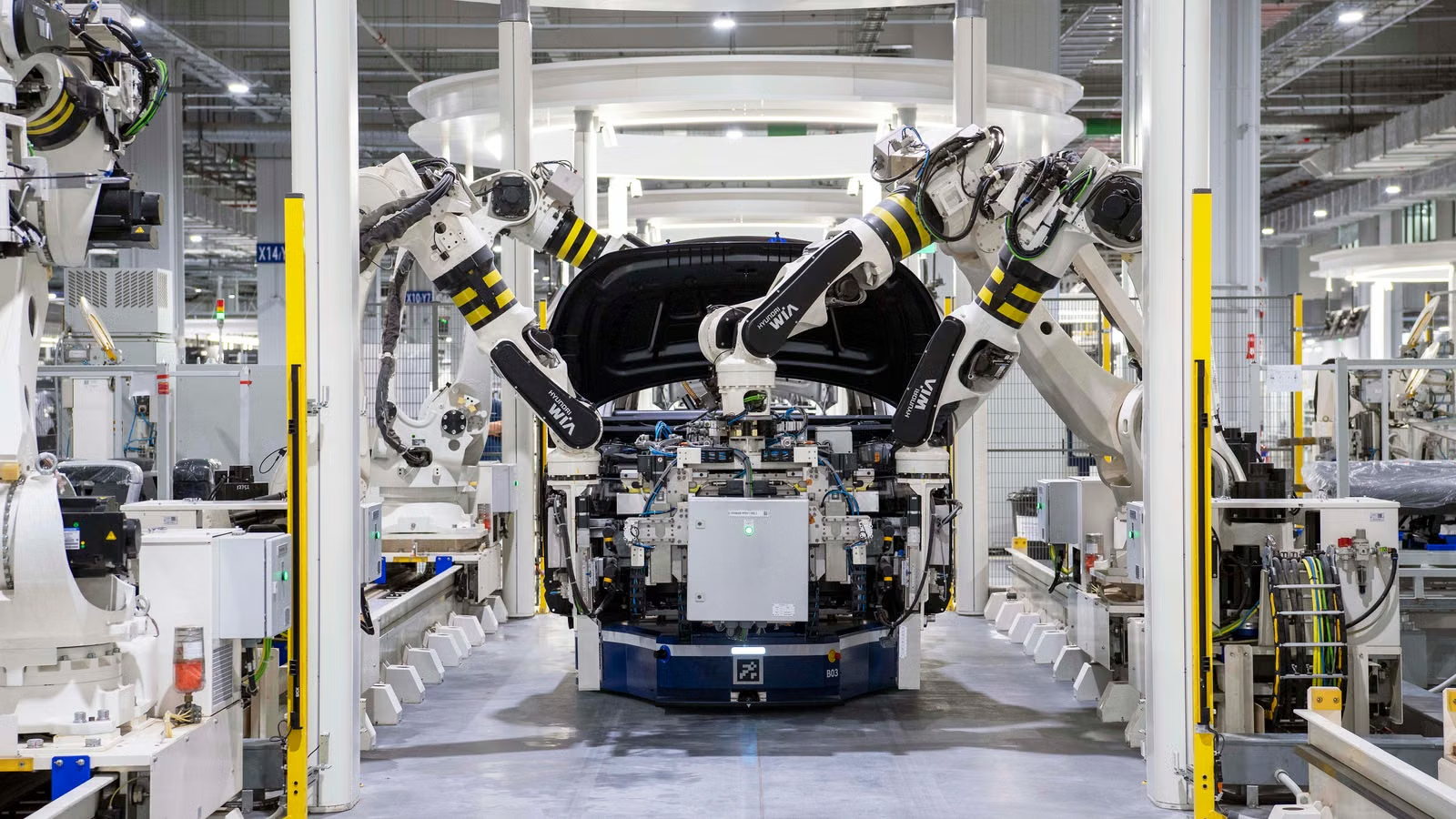
A company’s earnings can create a lasting supply-chain impact only when the report changes market expectations for orders, procurement, or capacity. A simple revenue beat does not necessarily mean upstream and downstream conditions are improving together. Higher capital expenditure, accelerating customer demand, stronger equipment orders, or lower inventory are more likely to cause analysts to revise revenue and earnings estimates for related companies.
AI infrastructure demand usually begins at the end-market level. Cloud providers decide how many data centers and servers to build, chip companies then reserve manufacturing capacity based on orders, and foundries purchase production tools from equipment and materials suppliers. Once servers enter operation, they also require HBM, DRAM, SSDs, and high-capacity hard drives for data processing and storage.
Alphabet’s first-quarter 2026 earnings showed quarterly capital expenditure of $35.7 billion, with roughly 60% of technical infrastructure spending allocated to servers and 40% to data centers and networking equipment. Information like this affects demand expectations for GPUs, custom chips, networking systems, power infrastructure, and storage companies at the same time.
Meta’s first-quarter 2026 results raised full-year capital expenditure guidance to $125 billion–$145 billion, partly because of higher component prices and future data center capacity. The market therefore had to reassess not only Meta’s cash flow, but also the scale of its server, accelerator, and storage purchases.
A relatively complete earnings transmission chain can be summarized as follows:
- Cloud providers increase AI capital expenditure;
- Orders rise for Nvidia, AMD, or custom ASIC suppliers;
- Demand tightens for TSMC’s advanced nodes and packaging capacity;
- Foundries increase equipment purchases, benefiting suppliers such as ASML;
- AI servers require more HBM, DRAM, and SSD capacity;
- Data growth eventually drives expansion in nearline HDD storage.
| Earnings Metric | What It Reveals | Main Segments Affected |
|---|---|---|
| Cloud capital expenditure | The pace of AI infrastructure construction | GPUs, networking, servers, storage |
| Chip revenue and guidance | Whether accelerator demand can continue | Foundries, packaging, HBM |
| Foundry utilization | Whether orders have entered production | Equipment, materials, manufacturing services |
| Equipment orders and backlog | Whether customers are preparing to expand | Future semiconductor and memory capacity |
| Memory pricing and shipments | Whether supply and demand are tightening | DRAM, NAND, SSDs |
| Exabyte shipments | Whether cloud storage capacity is expanding | Nearline HDDs |
Supply-chain companies do not move in perfect synchronization. Microsoft’s fiscal 2026 third-quarter earnings may confirm that cloud and AI demand are still growing, but Microsoft purchases Nvidia GPUs, custom chips, and several types of storage from different suppliers. Each supplier may receive a different share of the spending. Similarly, growth in Nvidia’s fiscal 2027 first-quarter data center revenue does not prove that mature-node semiconductors, consumer NAND, or conventional HDD products are recovering at the same time.
Summary: The real effect of an earnings report on the AI supply chain is not whether related stocks rise on the same day. What matters is whether the report changes orders, procurement plans, capacity, and earnings estimates in other segments. To judge the strength of transmission, first identify whether the company operates at the demand, chip design, foundry, equipment, or storage level, then assess customer overlap, revenue-recognition timing, and business relevance.
How Do TSMC’s Earnings Affect AI Chips, Equipment, and Packaging Companies?
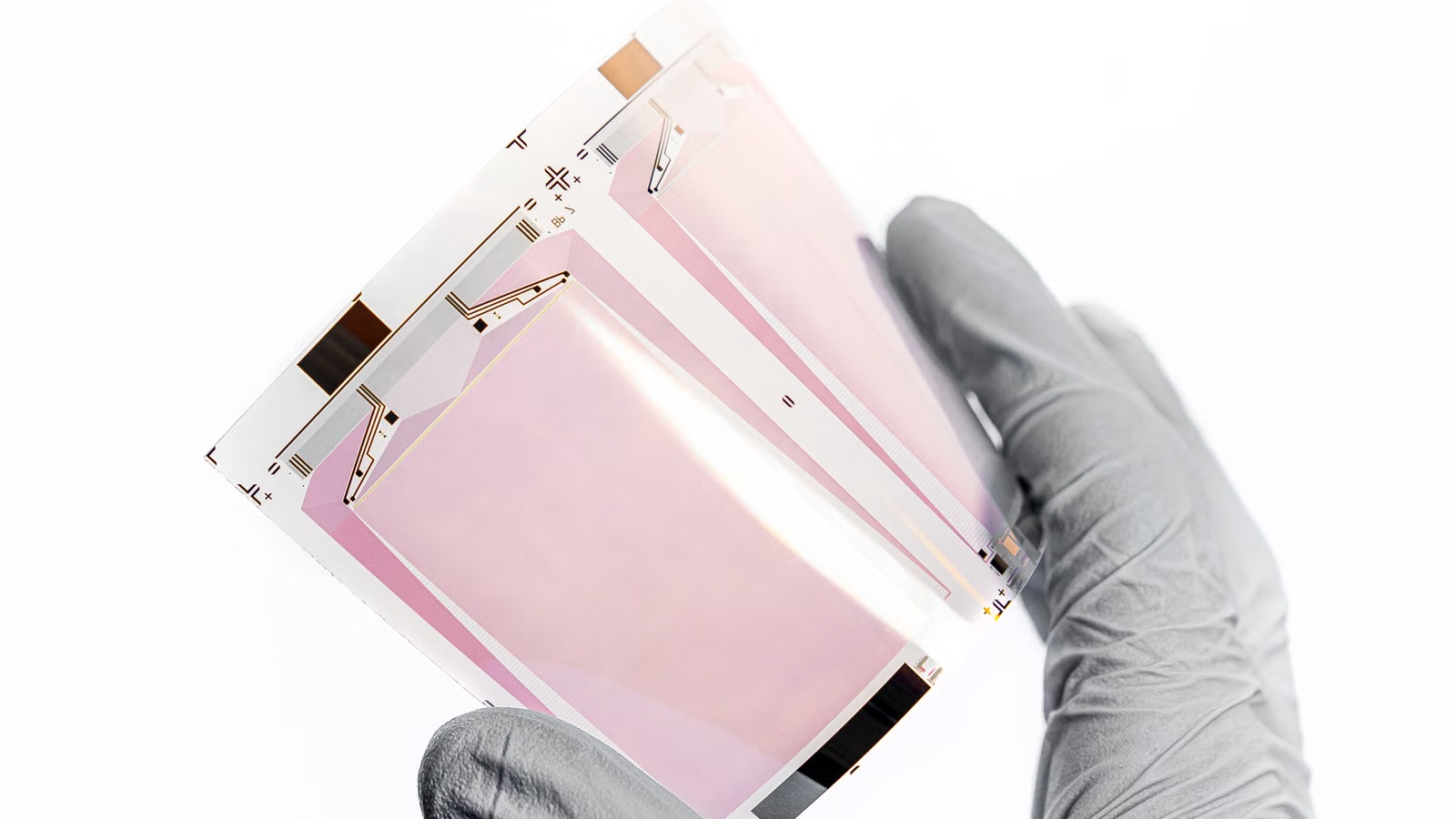
TSMC’s earnings are a broad AI hardware supply-chain signal because they reflect actual production demand from chip designers such as Nvidia, AMD, and Broadcom while also influencing order expectations for ASML, Applied Materials, Lam Research, and advanced packaging suppliers. The most important indicators are not total quarterly revenue alone, but HPC growth, advanced-node mix, packaging capacity, and capital expenditure.
Advanced-Node Revenue Confirms Whether AI Chips Have Entered Mass Production
Chip designers can announce orders or product roadmaps before production begins, but demand becomes real at the manufacturing level only when wafers enter fabrication. TSMC’s first-quarter 2026 results showed quarterly U.S. dollar revenue of $35.9 billion, a gross margin of 66.2%, and second-quarter revenue guidance of $39 billion–$40.2 billion.
You should then examine:
- Whether HPC revenue continues to outgrow smartphones and other segments;
- Whether the share of 3-nanometer, 5-nanometer, and other advanced nodes is increasing;
- Whether growth comes from wafer volume, pricing, or a more advanced product mix;
- Whether demand is driven by a single GPU customer;
- Whether order visibility extends across several future quarters.
When HPC and advanced-node revenue rise together, AI chip demand has moved beyond market expectations and entered actual wafer production. If growth mainly reflects price increases or advance ordering from one customer, the broader supply-chain signal is weaker.
Advanced Packaging May Be Tighter Than Wafer Capacity
An AI accelerator cannot be delivered as soon as the wafer is completed. GPUs, HBM, and other components must be integrated using advanced packaging technologies such as CoWoS. A bottleneck in any packaging stage can delay final server deliveries.
During TSMC’s first-quarter earnings call, management said it would increase investment to meet strong AI-related demand and expand N3 capacity. This signal affects not only advanced-node manufacturing, but also packaging equipment, substrates, testing, materials, and HBM suppliers.
| TSMC Indicator | Companies Potentially Affected | Main Limitation |
|---|---|---|
| Accelerating HPC revenue | Nvidia, AMD, Broadcom | Customer concentration and advance ordering |
| Higher advanced-node mix | ASML and front-end equipment suppliers | Yield and depreciation pressure |
| Tight CoWoS demand | HBM, packaging, and testing suppliers | Speed of packaging expansion |
| Higher capital expenditure | Lithography, etching, and deposition equipment | Procurement and acceptance delays |
| More overseas capacity | Local equipment and engineering suppliers | Higher construction costs may reduce margins |
Capital Expenditure Determines the Next Stage of Equipment Demand
The effect of TSMC’s earnings on ASML is usually not immediate. It is transmitted through future capital expenditure. The foundry first confirms customer demand, then expands factories, production tools, and packaging capacity. Equipment suppliers enter production, shipment, installation, and acceptance stages later.
TSMC’s 2025 annual report identified advanced manufacturing, advanced packaging, and chip stacking as important capabilities for meeting AI demand. If management raises advanced-node and packaging investment over several consecutive quarters, equipment demand is more likely to be sustainable than when quarterly revenue merely exceeds expectations once.
Capital expenditure still needs to be separated by category. Spending may be allocated to advanced logic, mature processes, packaging, factory construction, or overseas facilities. Only the portion directly associated with production tools will translate into revenue for equipment suppliers.
Summary: TSMC’s earnings provide two types of signals: current production demand and future expansion plans. HPC, advanced nodes, and advanced packaging show that AI chips are entering actual production, while capital expenditure determines future opportunities for ASML and other equipment suppliers. Strong TSMC revenue does not mean every semiconductor company benefits at the same time. Process exposure, packaging bottlenecks, customer structure, and equipment delivery schedules still matter.
How Do ASML’s Earnings Signal the Next Foundry Expansion Cycle?

ASML’s earnings are more useful as a signal of future foundry expansion than as an indicator of current-quarter AI chip shipments. The process from a customer setting a capital budget to ordering, manufacturing, transporting, installing, and accepting a lithography system may take several quarters. Management commentary about demand and order momentum is therefore often more forward-looking than quarterly revenue.
Equipment Revenue Reflects Past Orders, While Order Momentum Reflects Future Investment
ASML’s first-quarter 2026 results showed net sales of €8.8 billion, a gross margin of 53%, and net income of €2.8 billion. The company also raised its 2026 net sales forecast to €36 billion–€40 billion.
Management stated that AI infrastructure investment was driving chip demand above supply and that customers were accelerating capacity expansion plans for 2026 and beyond. This suggests that demand seen by TSMC, memory manufacturers, and other foundries is beginning to influence medium-term capacity planning rather than only short-term orders.
When analyzing ASML’s earnings, monitor:
- Whether customers are raising short- and medium-term equipment demand;
- Whether EUV, DUV, and installed-base services are improving together;
- Whether full-year sales guidance is raised;
- Whether deliveries are constrained by the supply chain;
- Whether export controls are changing the regional sales mix.
EUV and DUV Reflect Different Types of Expansion
ASML’s EUV lithography systems are mainly used in critical layers for advanced logic and high-end memory chips. Stronger EUV demand is therefore more directly connected with TSMC’s advanced nodes and advanced DRAM processes used for HBM.
DUV tools are used across many more chip layers and also support mature-node production. Even when AI GPU demand is strong, foundries still require various DUV systems for additional manufacturing steps. ASML’s growth therefore should not be interpreted as a single EUV cycle.
| ASML Indicator | Main Meaning | Potential Supply-Chain Impact |
|---|---|---|
| Higher EUV demand | Advanced-node expansion | TSMC, advanced logic, high-end DRAM |
| Improving DUV demand | Multi-layer and mature-node investment | Broad foundry ecosystem |
| Growth in installed-base services | Higher utilization and equipment upgrades | Actual foundry production activity |
| Higher annual guidance | Stronger delivery and acceptance outlook | Upstream component suppliers |
| High-NA investment | Preparation for next-generation nodes | Long-term process migration |
High-NA EUV is designed for more advanced chip nodes, but customer qualification, process validation, and volume production take time. High-NA shipments are a long-term technology signal and should not be treated as a direct indicator of next-quarter GPU revenue.
Strong ASML earnings also do not mean TSMC and Micron are necessarily expanding at the same pace. Logic and memory chips can be in different supply-demand cycles, and customers adjust purchases based on utilization, cash flow, and long-term agreements. The expansion cycle is complete only when equipment demand, customer capital spending, and final wafer output all rise together.
Summary: The value of ASML’s earnings lies in revealing whether foundries are willing to invest ahead of future demand. Revenue reflects the delivery of previous orders, while customer demand, order momentum, and annual guidance are more closely tied to future capacity. EUV, DUV, and installed-base services must be analyzed separately rather than attributing all equipment growth to AI GPUs.
How Do Micron and Seagate Capture Different Stages of AI Demand?
Micron and Seagate can both benefit from AI data center investment, but they serve different stages of the demand cycle. Micron’s HBM and DRAM are directly involved in model training and inference, placing the company close to server deployment. Seagate’s nearline HDDs are mainly used for long-term storage of large datasets, so demand typically appears after data creation, accumulation, and cloud-capacity expansion.
Micron Captures AI Compute Deployment First
Each AI server requires not only GPUs, but also high-bandwidth memory, system memory, and high-speed storage. As model size, context length, and inference concurrency increase, memory capacity and bandwidth requirements per server also rise.
Micron’s fiscal 2026 third-quarter results showed quarterly revenue of $41.46 billion, with significant growth in cloud memory and core data center revenue. The company also said that HBM4 had begun high-volume shipments for major customer platforms.
Micron’s AI transmission path includes:
- More GPU shipments increase HBM demand per accelerator;
- HBM consumes more wafer and packaging resources;
- High-end DRAM demand may reduce available supply for conventional products;
- A richer product mix can improve gross margins;
- Enterprise SSDs support training data and high-performance access.
Micron’s HBM4 production plan also shows that next-generation AI platforms are raising requirements for memory bandwidth, capacity, and energy efficiency at the same time. New product announcements from Nvidia and other chip companies can therefore directly affect Micron’s product mix and capital investment.
Seagate Captures Long-Term AI Data Accumulation
AI models require training datasets, inference logs, video, documents, backups, and compliance archives. Not all of this information needs to remain on high-performance SSDs. Large volumes of infrequently accessed data continue to move to lower-cost, high-capacity hard drives.
Seagate’s fiscal 2026 third-quarter earnings showed revenue of $3.11 billion, a non-GAAP gross margin of 47%, and free cash flow of $953 million. Management connected the growth outlook with the expansion of data creation from AI applications and rising storage demand.
| Comparison | Micron | Seagate |
|---|---|---|
| Core products | HBM, DRAM, NAND, SSDs | Nearline HDDs |
| Main function | High-speed access during computation | Long-term storage of large datasets |
| Demand timing | Close to server deployment | Usually later than compute procurement |
| Key indicators | HBM shipments, pricing, margins | Exabyte shipments, capacity, cloud orders |
| Main bottleneck | Wafer supply, packaging, capacity expansion | Customer inventory and procurement cycles |
| Main risk | Reversal in the memory pricing cycle | Delayed cloud capacity expansion |
Seagate uses HAMR technology to increase capacity per drive, reducing the number of racks, power consumption, and devices required per terabyte. Seagate’s 30TB drives for AI data centers reflect demand for storage efficiency after AI applications are deployed, rather than demand for compute chips themselves.
Strong Micron earnings therefore do not immediately translate into equal demand for Seagate. Cloud providers may purchase GPUs and HBM first, use existing storage capacity for a period, and only expand nearline HDD capacity after data volumes and utilization rise. Both companies participate in AI infrastructure, but revenue recognition may be separated by several quarters.
Summary: Micron and Seagate represent two different stages of AI demand. Micron is closer to compute deployment, with HBM, DRAM, and SSD revenue appearing alongside server configurations. Seagate is closer to data accumulation, with nearline HDD demand depending on cloud capacity utilization, customer inventory, and long-term data retention. Micron’s growth can confirm AI compute demand, but it cannot independently prove that HDD purchases are improving in the same quarter.
How Can You Use Leading Earnings Reports to Measure Real AI Supply-Chain Momentum?
To determine whether the AI supply chain is truly entering an expansion phase, you should not simply look for the company with the strongest earnings. Cloud capital expenditure, chip orders, TSMC production, ASML equipment demand, Micron memory conditions, and Seagate capacity shipments must be placed on the same timeline to determine whether multiple segments provide continuous confirmation.
The first step is to identify where each company sits in the supply chain:
- Cloud services and AI applications determine capital expenditure;
- Chip designers reflect GPU, ASIC, and networking demand;
- Foundries and packaging providers confirm actual production;
- Equipment and memory companies reflect expansion and server configurations;
- High-capacity storage reflects the long-term accumulation of data.
The second step is to distinguish leading, coincident, and lagging indicators.
| Indicator Type | Representative Metric | Typical Companies |
|---|---|---|
| Leading | Cloud CAPEX, chip orders, equipment demand | Alphabet, Meta, ASML |
| Coincident | HPC revenue, advanced nodes, HBM shipments | TSMC, Micron |
| Lagging | Equipment acceptance, nearline HDD expansion | ASML, Seagate |
| Pricing | DRAM and NAND prices, gross margins | Micron |
| Risk | Inventory, customer concentration, export restrictions | Entire supply chain |
The third step is to remove company-specific factors. Revenue growth may come from pricing, acquisitions, currency movements, or one-time purchases rather than broader industry demand. Higher gross margins may also result from supply discipline instead of shipment growth.
From Supply-Chain Analysis to Trading, Costs Still Matter
After earnings, TSMC ADRs, ASML, Micron, and Seagate can move rapidly in pre-market and after-hours trading. In addition to judging fundamentals, you should consider bid-ask spreads, slippage, platform fees, and external institutional charges, particularly when trading several supply-chain stocks over a short period.
Under the current Biya U.S. stock fee structure, the commission is $0, while the platform fee is $0.005 per share, subject to a minimum of $0.99 per order and a maximum of 1% of the transaction value. External institutional and trading activity fees total $0.00396 per share. For fractional-share orders involving less than one full share, the platform fee is 1% of the transaction value, capped at $1. Actual charges remain subject to the fee center and the order screen.
You can use the following scoring framework:
- Has downstream capital expenditure been raised?
- Are AI chip revenue and guidance still growing?
- Are TSMC’s advanced-node and packaging requirements increasing?
- Are ASML customers accelerating expansion?
- Are HBM and DRAM supply-demand conditions tightening?
- Are nearline HDD shipments beginning to improve?
- Are analyst earnings forecasts rising across the supply chain?
This produces four possible industry conditions:
- Broad expansion: Capital spending, chips, foundries, equipment, and storage all improve;
- Localized strength: GPUs and HBM remain strong, while conventional storage has not yet followed;
- Supply bottleneck: Demand is strong, but wafer, packaging, or power constraints limit deliveries;
- Cooling expectations: Orders, guidance, and utilization begin to weaken together.
Seagate’s long-term product strategy emphasizes AI data growth and greater HAMR capacity, but such long-term expectations still need to be confirmed by future Exabyte shipments and cloud customer purchases. Management commentary about industry opportunity should not be used as the only evidence.
Summary: Using earnings to judge the AI supply chain requires consistent evidence across companies and segments. Cloud providers confirm budgets, chip companies such as Nvidia confirm compute demand, TSMC confirms production, ASML confirms expansion, Micron confirms memory content, and Seagate confirms capacity storage. A single company provides only one perspective. Sustained improvement across multiple indicators is needed before AI momentum can be considered broad and durable.
When tracking TSMC, ASML, Micron, and Seagate, you can use Biya’s U.S. stock search to organize earnings dates, price movements, and a supply-chain watchlist before comparing leading and lagging indicators. Biya can also be used to review relevant market information and trading arrangements, while the App supports ongoing mobile monitoring. Supply-chain correlation does not guarantee higher share prices, and publicly available earnings data does not constitute investment advice. Service availability depends on the user’s location, identity-verification results, platform rules, and applicable laws and regulations.
FAQ
Why Do Strong TSMC Earnings Not Mean Every Semiconductor Stock Will Rise?
Because different companies serve different customers, processes, and product cycles. Strong demand for TSMC’s advanced nodes may benefit high-end equipment and packaging, while mature-node products, consumer electronics, or conventional NAND remain weak. Valuation, pre-earnings gains, and market expectations also affect share-price reactions.
How Far Ahead Does ASML Equipment Demand Usually Lead Foundry Revenue?
There is no fixed period, but the lead time can span several quarters. Foundries must first approve capital budgets, then complete ordering, equipment manufacturing, shipping, installation, and acceptance. Investors should compare customer capital expenditure, ASML guidance, backlog, and delivery plans.
Does Growth in Micron’s HBM Revenue Immediately Increase Demand for Seagate Hard Drives?
No. HBM provides high-speed access during AI computation, while nearline HDDs store large datasets over longer periods at lower cost. Cloud providers usually deploy servers and HBM first, then expand HDD capacity based on utilization, inventory, and data growth.
How Should Semiconductor Earnings Be Analyzed When AI Demand Is Strong but Consumer Electronics Are Weak?
Data center, smartphone, PC, automotive, and industrial businesses should be analyzed separately. AI and HBM can grow while consumer DRAM, NAND, or mature-node products remain in a downturn. Total revenue may hide these differences, so segment revenue, pricing, and inventory should also be examined.
How Can Investors Distinguish Fundamental AI Supply-Chain Strength From Short-Term Stock Correlation?
Fundamental strength usually includes simultaneous improvement in capital expenditure, orders, utilization, shipments, and earnings estimates. If several stocks only move together on the earnings date, the reaction may be driven by ETFs, sentiment, or valuation changes rather than stronger underlying demand.
*This article is provided for general information purposes and does not constitute legal, tax or other professional advice from BiyaPay or its subsidiaries and its affiliates, and it is not intended as a substitute for obtaining advice from a financial advisor or any other professional.
We make no representations, warranties or warranties, express or implied, as to the accuracy, completeness or timeliness of the contents of this publication.
Related Blogs of

Alphabet Earnings Preview: Will AI Search Weigh on Advertising or Drive Google Cloud Growth?


How to Evaluate Google’s AI Investment Returns: Search, Cloud, and CAPEX Pressure


Why Do AI Stocks Fall After Strong Earnings? Understanding Expectation Gaps and “Sell the News”


Why Did APT Satellite’s Share Price Surge? Business, Valuation, and Risks in the Commercial Space Boom

Choose Country or Region to Read Local Blog
 Australia
 Austria
 Belgium
 Canada
 Cyprus
 Czech Republic
 Denmark
 Estonia
 Finland
 France
 Germany
 Greece
 Hong Kong
 India
India Indonesia
 Ireland
 Italy
Italy Japan
Japan Latvia
 Lithuania
 Luxembourg
 Malaysia
 Malta
Malta Morocco
 Nepal
Nepal Netherlands
 New Zealand
 Norway
 Pakistan
 Philippines
 Poland
 Portugal
 Romania
 Singapore
 Slovakia
 Slovenia
 South Africa
 South Korea
 Spain
Spain Sweden
 Thailand
 The United States
 Turkey
 United Arab Emirates
 United Kingdom
 Vietnam
Contact Us




BIYA GLOBAL LLC is registered with the Financial Crimes Enforcement Network (FinCEN), an agency under the U.S. Department of the Treasury, as a Money Services Business (MSB), with registration number 31000218637349, and regulated by the Financial Crimes Enforcement Network (FinCEN).
BIYA GLOBAL LIMITED is a registered Financial Service Provider (FSP) in New Zealand, with registration number FSP1007221, and is also a registered member of the Financial Services Complaints Limited (FSCL), an independent dispute resolution scheme in New Zealand.