
WDC vs. STX: Which HDD Giant Is More Dependent on Cloud Customers? A Comparison of Customers, Products, and Cash Flow




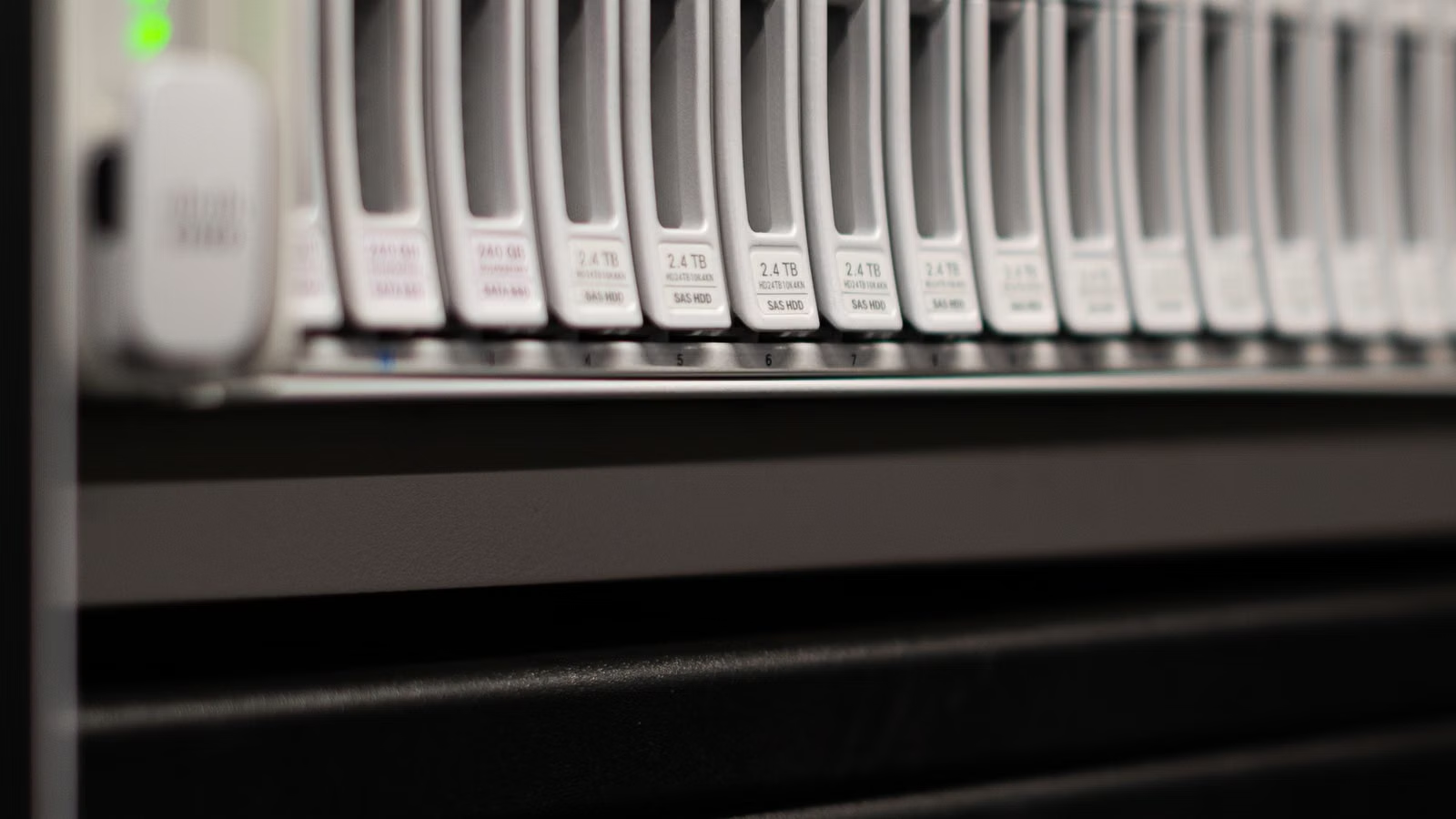
If you want to know whether WDC or STX is more dependent on cloud customers, the direct answer is this: based on reported revenue categories, WDC has the clearer and higher cloud exposure. After the Sandisk separation, Western Digital is now much more focused on HDD and data center storage. Seagate is also deeply tied to hyperscalers, but its cloud exposure is reflected more through mass capacity storage, nearline HDD, HAMR, and high-capacity drive cycles rather than a simple “cloud revenue percentage.” In other words, WDC is more visibly cloud-dependent, while STX is highly cloud-sensitive through product demand and technology transitions.
Key Takeaways
- WDC’s cloud exposure is clearer, with Cloud representing about 89% of Q3 FY2026 revenue.
- STX’s cloud dependence shows up through nearline HDD, mass capacity storage, and HAMR.
- WDC’s top ten customers generated 68% of FY2025 revenue, making concentration risk more visible.
- STX had one customer at around 10% of FY2025 revenue, but hyperscaler demand still matters greatly.
- Both companies generated nearly $1 billion in free cash flow in Q3 FY2026.
- To compare WDC and STX, you need to look at customers, products, margins, and cash flow together.
Start With Disclosure: WDC’s Cloud Exposure Is Easier to Measure
If you only use reported business segments, WDC looks more dependent on cloud customers. Western Digital reports Cloud, Client, and Consumer revenue, so you can directly see how much of the business is tied to cloud and data center demand. Seagate does not present revenue in the same Cloud / Client / Consumer structure. Its cloud dependence is embedded in mass capacity storage, nearline HDD, high-capacity drives, hyperscale customers, and HAMR product transitions.
The most important starting point is that Western Digital should no longer be analyzed with the old “HDD plus NAND flash” framework. In WDC Q3 FY2026 results, the company presented its results after the Sandisk separation, meaning the continuing business is now much more concentrated around hard drives and data storage infrastructure. For you, that changes the comparison with Seagate. The key variables are now HDD revenue, nearline exabytes, cloud customer demand, gross margin, and free cash flow.
WDC’s cloud revenue visibility is unusually high. In its Q3 FY2026 Financial Results, Western Digital reported that Cloud represented about 89% of revenue, while Client was about 5% and Consumer was about 6%. That is not a mild business tilt. It is a data center-led structure. From Q3 FY2025 to Q3 FY2026, Cloud stayed in the high-80% range, which tells you that WDC’s revenue is now highly sensitive to cloud customers, enterprise data centers, and high-capacity HDD procurement.
Seagate’s structure is different. In Seagate’s 2025 Form 10-K, the company emphasized that cloud and hyperscale data centers are increasing storage capacity for both AI-specific workloads and traditional cloud infrastructure. But Seagate does not break down revenue in a way that lets you simply say, “Cloud is X% of sales.” Instead, you need to infer cloud exposure from mass capacity revenue, nearline demand, high-capacity drive adoption, and management commentary on hyperscale customers.
| Comparison Point | WDC | STX | What It Means |
|---|---|---|---|
| Reporting structure | Cloud / Client / Consumer | Mass capacity / legacy / other | WDC is easier to quantify |
| Cloud revenue visibility | Very high | Medium | WDC is more transparent |
| Core product driver | Nearline HDD, ePMR | Nearline HDD, HAMR, Mozaic | STX has a stronger technology-cycle narrative |
| Dependency signal | High cloud revenue share | Cloud demand embedded in product mix | Both depend on cloud, but in different ways |
The distinction matters because investors often confuse “not directly disclosed” with “not important.” STX may not show a clean cloud revenue percentage, but that does not mean cloud customers are less important to Seagate’s cycle. A large part of Seagate’s growth story depends on whether hyperscalers continue buying high-capacity HDDs for data lakes, object storage, backup, AI data retention, and cold storage.
Bottom line: If you ask, “Which company looks more dependent on cloud customers in reported financials?” the answer is WDC. Its Cloud share is explicit and very high. If you ask, “Which company is more exposed to real cloud storage demand?” the answer becomes more balanced. STX is also deeply tied to cloud customers, but the exposure appears through nearline HDD, mass capacity storage, HAMR qualification, and hyperscaler procurement cycles. WDC is the clearer cloud-revenue story; STX is the more technology-cycle-driven cloud storage story.
Customer Concentration: WDC’s Large-Customer Risk Is More Visible

Customer concentration gives a more direct answer than product language alone. WDC has more visible large-customer exposure. In FY2025, Western Digital’s top ten customers generated 68% of net revenue, with three customers contributing 17%, 12%, and 10%, respectively. Seagate also has large-customer exposure, but its FY2025 disclosure showed one customer at about 10% of consolidated revenue. That makes WDC’s customer concentration risk more explicit.
Customer concentration is easy to underestimate in the HDD industry. Many investors look at AI data centers, stock price moves, and gross margin expansion, but they forget that the end-buyer structure has changed. High-capacity nearline HDD is no longer driven mainly by PC demand or fragmented retail channels. It is increasingly tied to hyperscalers, cloud infrastructure operators, large enterprise customers, and object storage platforms.
According to the WDC 2025 Annual Report, the company’s top ten customers represented 68% of FY2025 net revenue, up from 55% in FY2024 and 56% in FY2023. Three customers accounted for 17%, 12%, and 10% of net revenue. Those numbers show that WDC’s growth is heavily linked to large buyers, not a broad base of small customers.
That concentration can be positive. Large cloud customers usually have long planning cycles, strict qualification standards, and large-scale storage needs. Once a supplier is qualified, the relationship can bring better demand visibility than consumer channels. But the same concentration can also increase volatility. If a top cloud customer delays procurement, changes inventory policy, pushes harder on pricing, or shifts capacity to another supplier, the impact on WDC can be direct.
Seagate’s large-customer risk is less visible in the same way. In Seagate’s FY2025 filing, one customer accounted for around 10% of consolidated revenue. That does not mean STX is less exposed to hyperscalers. It means the risk is less obvious through a single customer concentration line. For Seagate, the bigger question is whether the broader cloud customer base continues buying mass capacity HDDs and whether new high-capacity products pass qualification smoothly.
| Metric | WDC | STX | Investment Meaning |
|---|---|---|---|
| Top ten customer share | 68% in FY2025 | Not directly comparable by the same metric | WDC’s concentration is more visible |
| Large individual customers | 17%, 12%, 10% | Around 10% for one customer | WDC needs closer customer monitoring |
| Cloud impact | Seen in revenue category and customer concentration | Seen in mass capacity demand | STX requires product-cycle analysis |
| Main risk | Large-customer order changes | Industry demand and product transition risk | Risk sources are different |
Customer concentration is not automatically good or bad. You should read it as a source of both scale and risk.
- High concentration can improve demand visibility and deepen supply relationships.
- High concentration can increase pricing pressure and order-cycle volatility.
- Lower visible concentration may reduce single-customer shock.
- Lower visible concentration does not remove industry-wide hyperscaler risk.
Bottom line: WDC’s cloud customer dependence is more visible because it appears in both revenue mix and customer concentration. The company’s top ten customers generated 68% of FY2025 revenue, and three customers each represented at least 10%. STX does not show the same level of visible customer concentration, but it is still highly tied to cloud spending through mass capacity HDD demand. For WDC, track large-customer behavior closely. For STX, track the broader cloud procurement cycle, high-capacity drive demand, and HAMR adoption.
Product Structure: WDC Has Higher Cloud Storage Purity, STX Has Stronger Technology-Cycle Leverage

Product structure gives a more nuanced answer. WDC looks like the purer cloud storage revenue play, while STX looks more like a technology-cycle leverage play. WDC’s key indicators are Cloud revenue, nearline exabytes, ePMR, high-capacity HDD shipments, and gross margin. STX’s key indicators are mass capacity revenue, HAMR, Mozaic, areal density, customer qualification, and cost per terabyte. WDC is easier to read through revenue mix; STX is easier to read through product transition.
WDC’s product focus is nearline HDD. In Q3 FY2026, Western Digital reported total exabytes of 222, including 199 nearline exabytes and 23 non-nearline exabytes. That means the shipped-capacity base is overwhelmingly driven by nearline products. Nearline HDD is commonly used for cloud data centers, object storage, backup, archives, data lakes, cold data, and large-scale persistent storage.
That is why WDC’s AI data center narrative is credible. AI infrastructure is not only about GPU, HBM, CoWoS, and advanced semiconductors. AI systems also create and consume massive amounts of data. Training datasets, inference logs, generated media, model checkpoints, compliance records, backups, and enterprise document stores all need persistent storage. Some of that data requires SSD performance, but a large share needs low-cost, high-capacity HDD storage.
Seagate’s product narrative is more tied to mass capacity and HAMR. In Seagate FY2025 results, management pointed to strong cloud customer demand for high-capacity drives and continued progress on HAMR product qualification. Seagate’s story is not just “cloud revenue is rising.” It is about increasing areal density, improving drive capacity, lowering cost per terabyte, and helping customers store more data with better power and space efficiency.
Seagate has also connected its product roadmap directly to AI storage demand. The company’s 30TB Exos HDD messaging highlights the relationship between AI workloads, data center demand, and high-capacity HDD. At the Seagate 2025 Investor and Analyst Event, the company focused on areal density leadership and long-term value creation in a data-driven world. That is the core STX thesis: higher density, larger drives, and better cost efficiency can support cloud storage growth.
| Product Variable | WDC Focus | STX Focus | How to Read It |
|---|---|---|---|
| Cloud revenue | Directly disclosed | Not disclosed in the same structure | WDC is more transparent |
| Capacity shipped | Nearline exabytes | Mass capacity HDD | Both depend on data centers |
| Technology path | ePMR, high-capacity nearline | HAMR, Mozaic, areal density | STX has stronger technology-cycle leverage |
| Key investment variable | Cloud purity, customer concentration, margin | HAMR ramp, qualification, ASP | Different analytical frameworks |
If you track WDC, focus on:
- whether Cloud revenue mix stays high;
- whether nearline exabytes continue to grow;
- whether non-GAAP gross margin remains strong;
- whether large customer demand remains visible;
- whether the post-Sandisk HDD business continues to convert revenue into free cash flow.
If you track STX, focus on:
- whether mass capacity revenue continues to grow;
- whether high-capacity nearline demand stays strong;
- whether HAMR and Mozaic qualification progresses;
- whether larger drives reduce cost per terabyte;
- whether cloud customer demand reflects long-term expansion rather than short-term inventory building.
Bottom line: WDC is the cleaner cloud storage exposure, while STX has stronger technology-cycle leverage. WDC’s Cloud revenue share and nearline exabytes make the cloud demand signal easier to verify. STX’s upside depends more on mass capacity demand, HAMR execution, and whether customers adopt higher-capacity drives at scale. You should not describe WDC as simply “better” or STX as simply “less cloud-dependent.” WDC has higher cloud revenue purity. STX has high cloud sensitivity through product innovation and high-capacity drive cycles.
Cash Flow: Both Companies Are Converting Cloud Demand Into Free Cash Flow
Cash flow tells a more balanced story than revenue mix. In Q3 FY2026, both WDC and STX converted strong cloud and AI storage demand into powerful operating cash flow. WDC generated $978 million in free cash flow, while STX generated $953 million. WDC had higher revenue and a higher non-GAAP gross margin, but Seagate also showed strong cash generation, debt reduction, dividends, and share repurchases. The gap is smaller than the cloud-revenue comparison suggests.
WDC’s cash flow improvement is significant. In Western Digital’s Q3 FY2026 results, revenue was $3.337 billion, up 45% year over year. Non-GAAP gross margin reached 50.5%, operating cash flow was $1.123 billion, and free cash flow was $978 million. For an HDD company, a 50% non-GAAP gross margin is a strong signal. It suggests that high-capacity product mix, cloud demand, supply discipline, and cost control are all improving earnings quality.
STX also delivered strong cash flow. In Seagate’s Q3 FY2026 results, revenue was $3.112 billion, non-GAAP gross margin was 47.0%, operating cash flow was $1.1 billion, and free cash flow was $953 million. During the same quarter, Seagate retired about $641 million of debt and returned $191 million to shareholders through dividends and share repurchases. That shows the company is not only benefiting from demand, but also repairing its balance sheet and returning capital.
| Metric | WDC Q3 FY2026 | STX Q3 FY2026 | Meaning |
|---|---|---|---|
| Revenue | $3.337 billion | $3.112 billion | WDC was slightly higher |
| Non-GAAP gross margin | 50.5% | 47.0% | WDC was stronger |
| Operating cash flow | $1.123 billion | About $1.1 billion | Very close |
| Free cash flow | $978 million | $953 million | Very close |
| Capital allocation | Buybacks, stronger net cash position | Debt reduction, dividends, buybacks | Both are in a strong cash-flow phase |
Still, one quarter does not define the cycle. HDD remains cyclical. Strong free cash flow can come from real demand growth, but it can also reflect supply discipline, pricing improvement, customer inventory rebuilding, and product mix. You should keep watching FCF margin, capex intensity, inventory, accounts receivable, purchase commitments, cloud capex guidance, and signs of order pushouts.
There is also a practical trading-cost angle. If you follow WDC and STX as U.S.-listed stocks, company research is only one part of the decision. You also need to understand transaction costs. U.S. stock trading costs may include commission, platform fees, external agency fees, trading activity fees, and other charges depending on the platform and order type. For example, Biya U.S. stock trading fees state that U.S. stock commission is $0, while platform fees, external agency fees, and other costs should be checked in the fee schedule and order page. Costs do not determine the business quality of WDC or STX, but they can affect frequent rebalancing, fractional-share trades, and small order sizes.
Bottom line: Cash flow does not support a simple “WDC is much stronger than STX” conclusion. WDC has stronger cloud revenue visibility, higher revenue, and a higher non-GAAP gross margin. STX has nearly the same free cash flow and is also reducing debt while returning capital to shareholders. The real question is whether this level of free cash flow can last across multiple quarters. If hyperscaler storage demand remains strong, both companies benefit. If AI capex cools or customers enter an inventory digestion phase, both companies can face pressure.
AI Data Center Demand: Why Cloud Procurement Changes the HDD Cycle
AI data centers have changed how investors view HDD companies. WDC and STX used to be seen mainly as hardware-cycle names tied to PCs, consumer storage, and enterprise replacement demand. Now high-capacity HDD is increasingly linked to cloud infrastructure, AI data retention, object storage, backup, and cold data. Neither WDC nor STX is a pure AI compute stock, but both sit in the capacity layer of the AI data lifecycle.
Many investors focus first on GPUs, HBM, advanced packaging, and power infrastructure. That makes sense, but storage is part of the same system. AI training requires datasets. Inference creates logs and user interaction data. Enterprise AI adoption increases demand for documents, images, video, voice data, audit trails, and compliance archives. Not all of this data needs expensive high-performance SSD storage. A large amount needs stable, scalable, low-cost capacity. That is where HDD remains important.
WDC has emphasized that AI workloads create large amounts of data that need persistent, cost-efficient storage. Seagate has made a similar argument in its filings and prepared remarks, connecting generative AI, digital content growth, cloud infrastructure, and hyperscale data center expansion to capacity demand. In Seagate Q4 FY2025 prepared remarks, management discussed strong mass capacity demand and the importance of high-capacity products. Market attention has also shifted: Reuters’ report on AI-driven demand for storage firms connected investor enthusiasm in data storage stocks to the expansion of AI infrastructure.
HDD still has a role because of cost and capacity. SSD is better for hot data, low-latency workloads, databases, caching, and performance-sensitive training infrastructure. HDD is better for large-scale capacity layers such as cold data, object storage, backup, archive, data lakes, and long-term retention. Cloud customers do not simply buy the fastest storage. They optimize across performance, cost per terabyte, energy use, rack space, reliability, and lifecycle management.
| AI Data Type | Common Storage Layer | Meaning for WDC and STX |
|---|---|---|
| Training hot data | SSD / high-performance storage | More indirect benefit |
| Inference logs | HDD plus object storage | Expands long-term capacity demand |
| Images, video, voice data | Tiered storage including HDD | Supports nearline HDD demand |
| Backup and archive | HDD / tape / cloud archive | Reinforces low-cost capacity needs |
| Compliance retention | HDD / object storage | Supports persistent storage demand |
But AI-driven HDD demand is not a straight line. Cloud companies may pull forward orders, delay capacity builds, adjust capex, or pause procurement if power, land, financing costs, or AI return on investment become concerns. If several large cloud buyers slow purchasing at the same time, WDC and STX can both see pressure on revenue, margins, and order visibility.
For WDC, the most direct AI storage indicators are Cloud revenue mix, nearline exabytes, and gross margin. For STX, the better indicators are mass capacity revenue, HAMR qualification, high-capacity drive adoption, and cloud customer demand. Both benefit from AI data growth, but you need different metrics to verify the strength of that benefit.
Bottom line: AI data centers have brought HDD companies back into the market conversation, but their role is not compute. Their role is the capacity layer of the AI data lifecycle. WDC has clearer Cloud revenue and nearline exabyte disclosure. STX has a stronger mass capacity and HAMR technology story. AI can increase storage demand, but it does not remove cyclical risk. The key question is whether data growth can keep converting into revenue, margin expansion, and free cash flow.
Investment Framework: Which Company Is More Dependent on Cloud Customers?
The final answer has three layers. By revenue mix, WDC is more dependent on cloud customers. By product demand, STX is also highly tied to cloud customers. By risk source, WDC requires closer attention to customer concentration, while STX requires closer attention to mass capacity demand, HAMR execution, and high-capacity drive adoption. Higher cloud dependence is not automatically good or bad. It means higher exposure to cloud storage growth and higher sensitivity to cloud procurement cycles.
If you prefer clean financial verification, WDC is easier to analyze. Cloud revenue share, nearline exabytes, gross margin, free cash flow, and customer concentration all provide direct signals. WDC’s advantage is that cloud storage purity is high and visible. Its risk is the same thing: if cloud customers change procurement timing, the impact can show up quickly in financial results.
If you prefer technology-cycle leverage, STX deserves a separate framework. Seagate’s cloud dependence is not low; it is simply disclosed differently. The company emphasizes high-capacity drives, mass capacity storage, HAMR, Mozaic, and areal density. The key question is whether Seagate can use higher drive capacity to improve customer total cost of ownership and convert the technology roadmap into revenue, margin, and cash flow.
| Decision Angle | More Relevant to WDC | More Relevant to STX | Practical Reading |
|---|---|---|---|
| Cloud revenue share | Yes | Not disclosed in the same way | WDC is clearer |
| Customer concentration risk | More visible | Less visible by single-customer disclosure | WDC needs closer customer tracking |
| Technology-cycle leverage | ePMR, nearline | HAMR, Mozaic | STX has stronger technology narrative |
| Free cash flow | Strong | Strong | Q3 FY2026 gap was small |
| AI data center sensitivity | High | High | Neither is a defensive stock |
A practical tracking framework can look like this:
- For WDC: monitor Cloud revenue share, nearline exabytes, customer concentration, gross margin, and free cash flow.
- For STX: monitor mass capacity revenue, HAMR qualification, high-capacity drive ramp, ASP trends, and gross margin.
- For the industry: monitor hyperscaler capex, AI infrastructure spending, HDD supply discipline, power constraints, and storage pricing.
- For financial quality: monitor free cash flow, inventory, receivables, debt reduction, dividends, and buybacks.
- For valuation: ask whether the stock price already discounts several quarters of strong demand.
For ordinary investors, WDC and STX should not be compared through one metric alone. WDC appears more dependent on cloud customers, but that can create strong upside during a cloud storage upcycle. STX’s cloud exposure is less directly reported, but its mass capacity and HAMR cycles are still driven by cloud storage demand. Both companies are high-sensitivity AI infrastructure storage names rather than defensive hardware stocks.
Bottom line: WDC is more visibly dependent on cloud customers, but STX is not a low-cloud-exposure company. WDC’s dependence appears in Cloud revenue, nearline exabytes, and customer concentration. STX’s dependence appears in mass capacity storage, nearline HDD, HAMR, and hyperscaler procurement. If you care about revenue transparency and cloud storage purity, WDC is easier to study. If you care about high-capacity HDD technology transitions, STX deserves close attention.
If you track WDC, STX, and other U.S.-listed storage stocks, do not rely only on price moves or one earnings headline. A better approach is to compare earnings, hyperscaler capex, gross margin, free cash flow, customer concentration, and supply discipline in one framework. You can use U.S. stock search to follow basic stock information, and if services are available in your region and your account verification is completed, Biya can support multi-asset trading scenarios across U.S. stocks, Hong Kong stocks, and digital assets. Before placing any order, you should review order types, fee structure, and volatility risk. For mobile access, the Biya app can help you manage your watchlist and trading workflow. These tools can improve information and execution efficiency, but they do not replace independent research and do not constitute investment advice.
FAQ
Which Company Has Higher Cloud Revenue Exposure, WDC or STX?
WDC has the higher and clearer reported cloud revenue exposure. In Q3 FY2026, Cloud represented about 89% of WDC revenue. STX does not report revenue using the same Cloud / Client / Consumer format, so its cloud exposure must be assessed through mass capacity revenue, nearline HDD demand, and hyperscaler commentary.
Is Seagate Mass Capacity Revenue the Same as Cloud Revenue?
No, Seagate mass capacity revenue is not the same as pure cloud revenue. It can include cloud, hyperscale, enterprise data center, edge, and other large-capacity storage use cases. For STX, mass capacity is a useful cloud-demand signal, but it should be combined with nearline HDD trends, HAMR progress, and customer qualification updates.
Should Western Digital Still Be Analyzed as a Flash Storage Company After the Sandisk Separation?
Western Digital should now be analyzed mainly as an HDD and data storage infrastructure company. After the Sandisk separation, WDC’s continuing business is much more focused on hard drives and data center storage. When comparing WDC with STX, it is better not to mix Sandisk’s flash business into WDC’s current operating profile.
Why Do AI Data Centers Still Need HDDs?
AI data centers still need HDDs because not all data requires high-performance SSD storage. Training datasets, inference logs, backups, archives, object storage, compliance data, and cold data often require low-cost, high-capacity, persistent storage. HDD demand still depends on cloud capex, data center expansion, and storage procurement cycles.
How Should Investors Compare WDC and STX Customer Concentration Risk?
WDC’s customer concentration risk is more visible because its top ten customers generated 68% of FY2025 revenue, with three customers at 17%, 12%, and 10%. STX had one customer around 10%, but it still depends heavily on overall hyperscaler storage demand. WDC has clearer large-customer risk; STX has broader product-cycle and cloud-demand risk.
What Metrics Should Investors Track for WDC and STX?
For WDC, track Cloud revenue, nearline exabytes, gross margin, free cash flow, and customer concentration. For STX, track mass capacity revenue, HAMR and Mozaic progress, high-capacity drive demand, gross margin, and free cash flow. Trading decisions should also consider platform rules, fee details, account eligibility, and local regulatory requirements.
*This article is provided for general information purposes and does not constitute legal, tax or other professional advice from BiyaPay or its subsidiaries and its affiliates, and it is not intended as a substitute for obtaining advice from a financial advisor or any other professional.
We make no representations, warranties or warranties, express or implied, as to the accuracy, completeness or timeliness of the contents of this publication.
Related Blogs of

Online Bank-to-Bank Transfers: Account Linking, Steps, and Limits


International Wire Transfer Time: What Affects Delivery?





Choose Country or Region to Read Local Blog
 Australia
 Austria
 Belgium
 Canada
 Cyprus
 Czech Republic
 Denmark
 Estonia
 Finland
 France
 Germany
 Greece
 Hong Kong
 India
India Indonesia
 Ireland
 Italy
Italy Japan
Japan Latvia
 Lithuania
 Luxembourg
 Malaysia
 Malta
Malta Morocco
 Nepal
Nepal Netherlands
 New Zealand
 Norway
 Pakistan
 Philippines
 Poland
 Portugal
 Romania
 Singapore
 Slovakia
 Slovenia
 South Africa
 South Korea
 Spain
Spain Sweden
 Thailand
 United States
 Turkey
 United Arab Emirates
 United Kingdom
 Vietnam