- More
- Download
How Should ASML’s New Orders Be Read? Revenue Differences Between EUV, DUV, and High-NA EUV





ASML’s new orders should not be judged only by the headline number. They need to be broken down into EUV, DUV, High-NA EUV, and Installed Base Management. EUV reflects expansion in advanced logic and leading-edge DRAM. DUV reflects mature-node demand, regional dynamics, and export restrictions. High-NA EUV is more like a technology option on next-generation nodes, while service and upgrade revenue determines cycle resilience. If you are watching ASML’s stock reaction, you need to consider order mix, delivery timing, gross-margin drivers, and the gap between results and market expectations.
Key Takeaways
- ASML’s new orders should be split into EUV, DUV, High-NA EUV, and service upgrades.
- EUV better reflects long-term demand for advanced logic, AI chips, and leading-edge DRAM.
- DUV covers mature nodes and non-critical layers, making it more exposed to regional demand and export rules.
- High-NA EUV has high unit value and strong technology significance, but its short-term revenue recognition is slower.
- Installed Base Management can smooth cycles and improve gross margin and cash-flow quality.
- Strong orders do not guarantee a rising stock price; expectations, valuation, and delivery visibility also matter.
Why Should ASML’s New Orders Not Be Judged Only by the Total Amount?
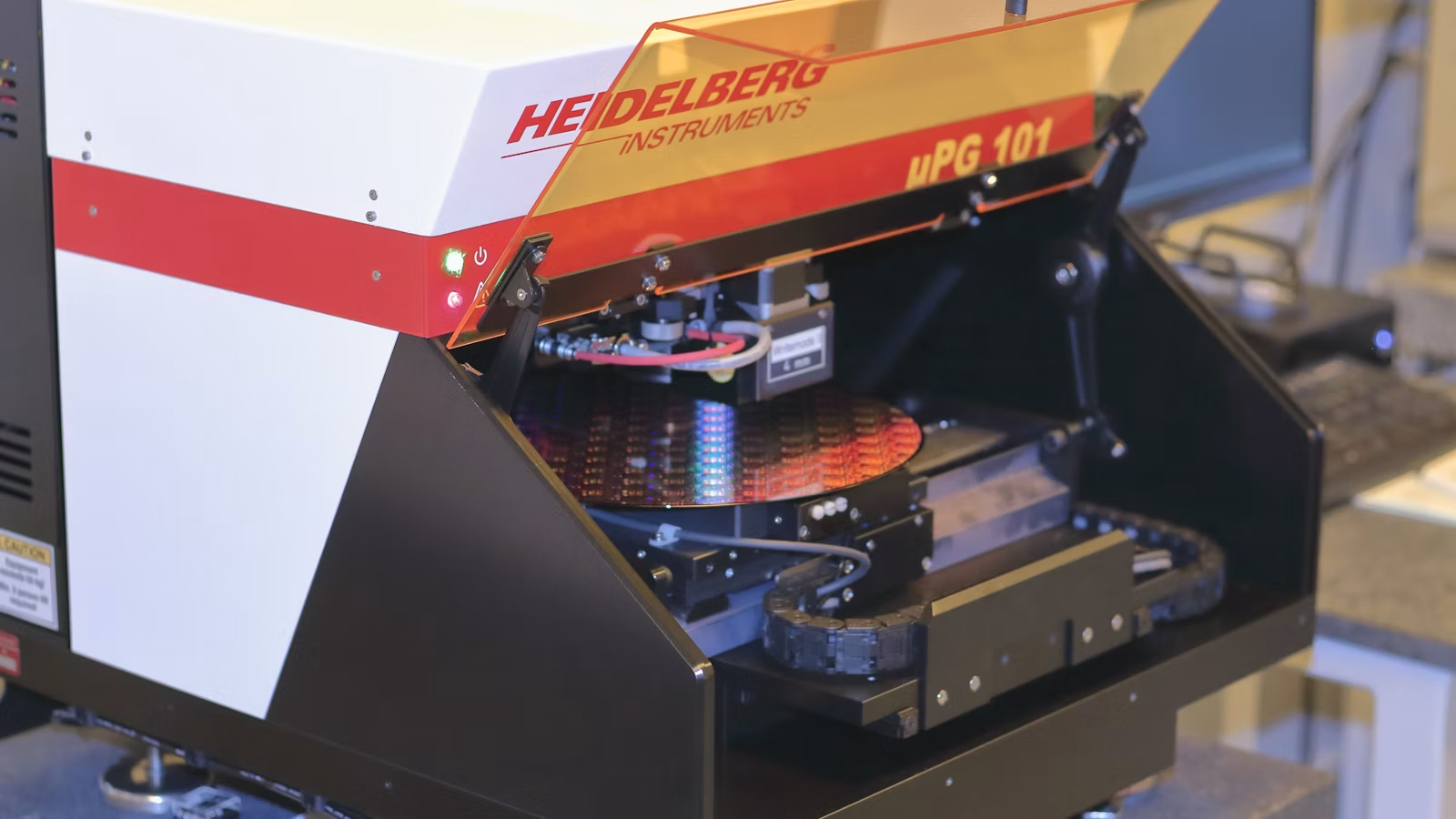
ASML’s total new-order value only shows customer purchasing intent; it does not directly reveal revenue quality. What you really need to know is whether orders come from EUV, DUV, High-NA EUV, or service and upgrade work for the installed base, because each category differs in customer type, process node, unit price, gross margin, delivery cycle, and export restrictions. The more the order mix tilts toward advanced processes and high-quality service revenue, the stronger its long-term value usually is.
ASML reported total net sales of €9.326 billion in the second quarter of 2026, with a gross margin of 54.0% and net income of €2.918 billion. The company also raised its full-year 2026 net sales guidance to €43 billion–€45 billion and its gross-margin guidance to 54%–56%. These numbers are strong, but understanding ASML requires going beyond the surface-level conclusion that revenue exceeded expectations.
There is a timing gap between ASML’s orders and revenue. In its fourth-quarter 2025 disclosure, the company explained that net bookings include system sales orders for which written authorization has been accepted, plus inflation-related adjustments. Backlog refers to authorized system orders that have not yet been recognized as total net sales. In other words, orders represent potential future revenue, sales represent delivered systems that meet revenue-recognition conditions, and backlog represents a pool of revenue not yet realized.
You can understand ASML’s order structure through four layers:
| Metric | What It Represents | Impact on Revenue | Impact on Valuation | Main Risk |
|---|---|---|---|---|
| EUV orders | Advanced-node capacity expansion | High unit price, long cycle | Raises long-term growth expectations | Customer expansion timing |
| DUV orders | Mature-node and non-critical-layer demand | High unit volumes, broad coverage | Supports revenue resilience | Export restrictions, cyclicality |
| High-NA EUV orders | Next-generation node adoption | Unstable in the short term, high unit price | Strengthens technology premium | Slow adoption, acceptance cycle |
| Installed Base Management | Service and field options | More stable, stronger margin quality | Improves revenue quality | Customer tool utilization |
One important reason ASML’s second-quarter results exceeded expectations was not simply new system shipments, but stronger-than-expected Installed Base Management sales. ASML defines this category as net service and field-option sales. It comes from maintenance, upgrades, and efficiency improvements for existing tools, and it usually smooths semiconductor equipment cycles better than one-time system sales.
Summary: The right way to read ASML’s new orders is not to assume that “bigger is always better,” but to identify which equipment category the orders come from, which customers and process nodes they correspond to, when they can be delivered, and whether they can be recognized as revenue. EUV better explains long-term advanced-node demand. DUV better explains mature-node demand and regional order resilience. High-NA EUV is closer to an option on the next technology roadmap, while Installed Base Management determines revenue quality and gross-margin stability. Only by placing the headline order number back into product mix, customer mix, and delivery cycles can you judge whether ASML’s growth reflects short-term inventory restocking, mature-node expansion, or a real upward revision in advanced-node capital expenditure.
How to Read EUV Revenue: The Core Signal for Advanced Logic and Leading-Edge DRAM

EUV is the part of ASML’s business that best reflects its technology moat and advanced-node demand. If EUV orders and revenue continue to strengthen, it usually indicates that TSMC, Samsung, Intel, and leading memory customers are moving forward with capacity expansion for advanced logic, AI chips, and high-end DRAM. However, you still need to distinguish between Low-NA EUV and High-NA EUV, because the former is closer to current mass-production revenue, while the latter is more tied to future node adoption.
ASML’s EUV lithography systems use a 13.5nm extreme-ultraviolet light source to print complex and fine patterns that DUV would struggle to achieve. ASML states that its NXE systems are used in high-volume manufacturing of advanced logic and memory chips, supporting key layers for 7nm, 5nm, 3nm, and related nodes. For investors, stronger EUV revenue usually means stronger expansion intent in advanced logic, AI accelerators, and leading-edge DRAM.
That said, not every layer in an advanced chip uses EUV. Even in processes related to 3nm or 2nm nodes, both EUV and DUV are still used. EUV handles the most complex, finest, and highest-value critical layers, while DUV still handles many non-critical layers. Strong EUV therefore signals strength in advanced nodes, but it does not mean DUV demand disappears.
You can evaluate EUV revenue quality through five indicators:
| Indicator | What It Shows | Positive Signal | Risk Signal |
|---|---|---|---|
| EUV orders | Advanced customer expansion plans | Repeated orders from multiple customers | Concentration in one customer |
| EUV shipments | ASML’s capacity and supply-chain capability | Stable shipment growth | Delivery delays |
| EUV revenue | Quality of order conversion | Revenue and margin improve together | Delayed revenue recognition |
| Customer mix | Distribution across advanced logic and DRAM | Logic and memory both expanding | Overdependence on one customer |
| Upgrade services | Efficiency of installed EUV tools | More field-option revenue | Falling utilization |
ASML said in the second quarter that AI-related investment is driving demand for advanced logic and memory chips. It also plans to increase Low-NA EUV capacity in 2027 by 30% from about 65 systems in 2026 and is assessing another roughly 30% increase in 2028. This shows that Low-NA EUV remains the most important revenue bridge over the next one to two years.
From a stock-price perspective, strong EUV does not necessarily lead to an immediate rally. The reason is simple: the market may already have expected strong advanced-node demand, and EUV tools have long delivery cycles. Orders may take multiple quarters to become recognized revenue. If customers delay capacity expansion because of fabs, power supply, yield, or changes in node roadmaps, ASML’s order conversion can also stretch out.
Summary: EUV is the part of ASML’s order structure that best represents long-term growth quality because it is directly tied to advanced logic, AI chips, and leading-edge DRAM. But you should not look only at whether EUV orders are growing. You should also examine the split between Low-NA EUV and High-NA EUV, delivery timing, customer mix, revenue recognition, and gross margin. Low-NA EUV better explains revenue over the next one to two years, while High-NA EUV better explains ASML’s long-term technology premium. If EUV orders are strong, customers are diversified, deliveries are stable, and service upgrades increase, ASML’s long-term fundamentals are better supported. If orders are overly concentrated or deliveries are delayed, the stock can still be volatile in the short term.
How to Read DUV Revenue: Mature Nodes, Regional Demand, and Export Restrictions

DUV is less eye-catching than EUV, but it is an important source of revenue resilience for ASML. DUV covers mature nodes, non-critical layers in advanced chips, automotive chips, industrial chips, analog chips, 3D NAND, and demand from certain regional customers. Therefore, changes in DUV orders reflect both global mature-node investment and the influence of regional mix, customer type, and export restrictions.
ASML describes its DUV lithography systems as foundational equipment for the semiconductor industry, covering both dry and immersion products. Immersion DUV introduces a layer of water between the lens and the wafer to improve resolution and imaging performance. Dry DUV has lower cost and broader coverage, making it suitable for many mature-node layers and 200mm or 300mm fabs.
DUV remains important for three reasons. First, even advanced chips that require EUV still use DUV for many layers. Second, mature processes remain the backbone of automotive, industrial, power-management, display-driver, analog, and IoT chips. Third, many customers do not pursue the most advanced node for every product; instead, they prioritize cost, capacity, reliability, and supply stability.
| DUV Type | Main Application | Revenue Characteristics | Demand Driver | Main Risk |
|---|---|---|---|---|
| Immersion DUV | DRAM and some layers in advanced logic | Higher ASP, stronger technical requirements | Memory and advanced-node support | Export restrictions, cycle volatility |
| Dry DUV | Mature nodes, 200mm/300mm | High unit volume, broad coverage | Automotive, industrial, analog chips | Mature-node oversupply |
| DUV upgrades | Improving installed-tool efficiency | More stable service revenue | Customer utilization | Lower fab utilization |
| Refurbished systems | Supplementing mature capacity | Lower unit price | Cost-sensitive customers | Limited demand elasticity |
ASML also said in the second quarter that it plans to increase DUV immersion capacity in 2027 by 30% from about 130 systems in 2026, and is assessing another roughly 30% increase in 2028. This indicates that ASML does not view DUV as a declining business, but as an important supporting capability for AI, memory, and mature-node expansion.
However, DUV is also the easiest category to misread. Strong DUV does not necessarily mean strong advanced-node demand, because orders may come from mature-node expansion, front-loaded purchases in certain regions, or customer responses to changes in export rules. This is especially relevant to China-related demand. The Dutch government has expanded export controls on advanced semiconductor manufacturing equipment, and ASML has said that certain TWINSCAN NXT:1970i and 1980i DUV immersion systems require export licenses from the Dutch government.
The United States has also continued updating export rules for semiconductor manufacturing equipment, making it even more necessary to analyze DUV orders by region. For you, the key question is not simply whether DUV orders are high, but whether those orders come from advanced-logic support, DRAM expansion, mature-node expansion, or purchases pulled forward by policy concerns.
Summary: DUV is one of the most underestimated and most easily misinterpreted parts of ASML’s order structure. It does not represent advanced nodes as directly as EUV, but it covers many layers, many customer types, and many regional variables, providing meaningful revenue resilience. When analyzing DUV, you should separate immersion DUV, dry DUV, upgrade services, and regional orders. China-related customers, mature-node investment, and export restrictions can all materially affect DUV revenue paths. Strong DUV can signal broader industry demand, but it may also reflect mature-node expansion or front-loaded orders in a specific region, so customer mix and delivery visibility are essential.
How to Read High-NA EUV Revenue: High Unit Price, Long Adoption Cycle, and Technology Option
High-NA EUV is a key driver of ASML’s future technology premium, but it should not be treated as the main source of near-term revenue. Its characteristics are high unit price, strong technological barriers, and high strategic value, but customer adoption, process validation, capacity ramp-up, and revenue recognition take longer. When evaluating High-NA EUV, the key is not how many systems are recognized in a single quarter, but whether customers are moving toward stable adoption and high-volume manufacturing.
The core difference between High-NA EUV and standard EUV is numerical aperture. ASML says the EXE platform increases NA from 0.33 in the NXE platform to 0.55, using a 13.5nm EUV light source to achieve higher contrast and about 8nm resolution. A higher NA means stronger imaging capability, helping future advanced logic and leading-edge DRAM nodes continue to shrink pattern dimensions.
At the product level, ASML’s TWINSCAN EXE:5200B is a second-generation 0.55 NA High-NA EUV system designed for high-volume manufacturing of sub-2nm logic nodes and leading-edge DRAM nodes. ASML says it offers higher imaging contrast than NXE systems and can print smaller features in a single exposure, reducing process complexity in high-volume manufacturing.
| Value Layer | What to Monitor | Positive Signal | Risk Signal |
|---|---|---|---|
| Revenue value | Shipments and revenue recognition | Multiple customers accept tools | Delivery delays |
| Technology value | Node adoption | Use below 2nm | Process-route changes |
| Valuation value | Long-term monopoly premium | Market raises long-term expectations | Expectations become too high |
| Industry value | Lower process complexity | Fewer multi-patterning steps | Excessive cost |
High-NA EUV is a combination of three signals. In the short term, it is a high-ASP system-sale and market-sentiment signal. In the medium term, it depends on sub-2nm logic, leading-edge DRAM, and customer node roadmaps. In the long term, it reflects ASML’s irreplaceability in next-generation lithography. If customers adopt High-NA quickly, ASML’s long-term valuation premium is easier to support. If adoption is delayed, market expectations for a rapid High-NA ramp may be revised downward.
You should also avoid interpreting High-NA EUV as “ASML’s next revenue explosion” by default. A high unit price does not equal high shipment volume. Early systems may be used more for R&D, process validation, and customer learning than for immediate high-volume production. Some customers may continue extending the life of Low-NA EUV combined with multiple patterning to balance cost, yield, and capacity.
Summary: High-NA EUV is a core variable in ASML’s long-term competitiveness, but it is more of a signal about technology roadmap and future revenue quality than a short-term order number. You need to monitor customer adoption, shipments, acceptance, node roadmaps, and high-volume manufacturing schedules rather than focusing only on whether one or two systems were recognized in a single quarter. If High-NA EUV enters stable adoption across multiple customers, ASML’s long-term technology premium becomes more durable. If customers delay adoption or continue relying on Low-NA EUV with multiple patterning, High-NA revenue contribution may fall short of market expectations, making the stock more sensitive to delivery timing.
How Can Order Mix Be Used to Judge ASML’s Revenue Quality and Stock-Price Risk?
To judge ASML’s revenue quality, you need to look at EUV, DUV, High-NA EUV, Installed Base Management, customer mix, and guidance changes together. The ideal combination would be strong EUV orders, stable DUV, gradual High-NA adoption, rising IBM revenue, a diversified customer base, and better delivery visibility. If orders are strong only in a single product category or region, stock-price risk tends to be higher.
Order mix directly affects gross margin. EUV and High-NA EUV have high unit prices and strong technological barriers, but early adoption costs are also high. DUV has higher unit volume and a mature product base, with margin depending on product mix, region, and customer. Installed Base Management includes services and field options, and it usually improves revenue stability. ASML’s second-quarter gross margin reached 54.0%, and the company raised its full-year gross-margin guidance to 54%–56%, which means the market should look not only at system shipments, but also at service upgrades, pricing, and product mix.
| Order Combination | What It Means | Usually Positive for Stock Price | What to Watch |
|---|---|---|---|
| Strong EUV + strong IBM | Advanced processes and services are both strong | Higher revenue quality | Whether valuation is already too high |
| Strong EUV + weak DUV | Advanced customers strong, mature-node demand weak | Better long-term logic | Short-term unit-volume pressure |
| Strong DUV + weak EUV | Mature process or regional demand is driving orders | Revenue resilience | Questions about growth quality |
| Strong High-NA + stable EUV | Next-generation nodes accelerating | Stronger technology premium | Revenue-recognition cycle |
| Strong single-region orders | Specific customer or policy-driven demand | Strong near-term orders | Weak sustainability |
Semiconductor Equipment Stocks Also Require Clear Trading-Cost Awareness
If you follow ASML ADRs or semiconductor equipment stocks, you should pay attention not only to orders, gross margin, and guidance, but also to trading costs. U.S. stock trading costs are not limited to commissions; they may also include platform fees, external institutional fees, trading-activity fees, and other charges displayed during order placement. You can first use Biya’s U.S. stock search to build a watchlist covering ASML, TSMC, NVIDIA, Micron, Applied Materials, and Lam Research, then decide whether to trade based on earnings, valuation, and risk tolerance.
Biya charges zero commission on U.S. equity trades. The platform fee is $0.005 per share, with a minimum of $0.99 per order and a maximum of 1% of transaction value. External institutional and trading-activity fees total $0.00396 per share. For fractional-share orders involving less than one share, the platform fee is 1% of transaction value, capped at $1. Actual fees, order eligibility, and potential adjustments should be confirmed through the latest U.S. stock trading fee schedule and the amount displayed before order submission.
When orders are strong but the stock falls, several explanations are common. First, the market may have expected even higher orders, so the actual result is only “not worse.” Second, High-NA EUV delivery and revenue recognition may be slower than expected. Third, the market may discount DUV orders if they are viewed as coming from mature processes or a specific region. Fourth, export restrictions, delayed customer expansion, or order postponements may reduce future visibility. Fifth, gross-margin improvement may come from a one-off mix effect rather than sustainable pricing power. Sixth, the increase in full-year guidance may fall short of market expectations.
Summary: Analyzing ASML’s order structure is ultimately about judging growth quality. EUV represents advanced processes and high barriers to entry. DUV represents revenue resilience and regional variables. High-NA EUV represents the next technology roadmap. Installed Base Management represents the value of installed tools and gross-margin stability. You should not look only at total orders, nor only at whether quarterly revenue beat expectations. A more robust approach is to break orders down by product, customer, region, delivery cycle, and margin source, then compare that structure with market expectations. If the order structure is healthy but valuation is already high, the stock can still be sensitive to even a small disappointment.
If you track ASML over time, it is better to place it within the broader semiconductor equipment chain rather than focusing only on one company’s earnings. Through Biya, you can organize a watchlist covering ASML, Applied Materials, Lam Research, KLA, TSMC, NVIDIA, and Micron, and compare earnings dates, order mix, gross margin, export rules, and valuation changes. Users who meet applicable regional service requirements can also download the app to manage multi-asset market data and trading. Service availability depends on the user’s location, identity-verification status, platform rules, and applicable laws and regulations. The information above only discusses publicly available market information, industry logic, and fee structures. It does not constitute investment advice or a guarantee of returns.
FAQ
Does High Growth in ASML’s New Orders Always Mean the Stock Will Rise?
No. High growth in ASML’s new orders only indicates strong customer purchasing intent. The stock price is also affected by market expectations, product mix, delivery timing, gross margin, and export restrictions. If the market expected even stronger orders, the stock can still be volatile despite solid numbers.
Which Matters More for ASML: EUV Orders or DUV Orders?
EUV better represents advanced-node demand and long-term growth quality, while DUV better represents mature-node demand, regional demand, and revenue resilience. The two cannot simply replace each other. If EUV is strong and DUV is stable, it usually means both advanced-node growth and baseline revenue support are present.
Why Should High-NA EUV Revenue Not Be Judged Only by Quarterly Shipment Volume?
High-NA EUV requires installation, customer acceptance, process adoption, and high-volume manufacturing validation, so quarterly shipment volume cannot fully reflect long-term demand. Early systems may be used for R&D and validation. The real revenue leverage depends on multi-customer adoption and production ramp timing.
Why Is ASML’s Installed Base Management Revenue Important?
Installed Base Management revenue comes from service and field options, and it can smooth system-order cycles. It reflects installed-tool utilization, upgrade demand, and customer stickiness, while also affecting ASML’s gross margin, cash flow, and revenue quality.
Are ASML’s DUV Orders Heavily Affected by Export Restrictions?
DUV orders can be affected by export restrictions, especially for certain high-end immersion DUV systems. Investors need to distinguish regional demand, licensing timing, and true global demand. Strength in one region’s DUV orders should not be directly equated with broad global mature-node strength.
Which ASML Earnings Metrics Should Beginners Prioritize?
Beginners should first look at net bookings, EUV orders, DUV orders, Installed Base Management sales, gross margin, backlog, and full-year guidance. Then they should assess order quality through customer mix, export rules, and revenue-recognition timing instead of focusing only on whether revenue beat expectations.
*This article is provided for general information purposes and does not constitute legal, tax or other professional advice from BiyaPay or its subsidiaries and its affiliates, and it is not intended as a substitute for obtaining advice from a financial advisor or any other professional.
We make no representations, warranties or warranties, express or implied, as to the accuracy, completeness or timeliness of the contents of this publication.
Related Blogs of

Are SMH, SOXX, and Hardware Leaders Absorbing Outflows from Software Stocks?


How Does Venmo Make Money? How Payments, Credit Cards, and Merchant Services Affect PayPal’s Valuation


AI Revenue Quality at IBM, Oracle, and ServiceNow: Breaking Down Subscription, Cloud, and Consulting Businesses


What Are IGV’s Holdings? Microsoft, Salesforce, Oracle, ServiceNow Weights and AI Risks

Choose Country or Region to Read Local Blog
 Australia
 Austria
 Belgium
 Canada
 Cyprus
 Czech Republic
 Denmark
 Estonia
 Finland
 France
 Germany
 Greece
 Hong Kong
 India
India Indonesia
 Ireland
 Italy
Italy Japan
Japan Latvia
 Lithuania
 Luxembourg
 Malaysia
 Malta
Malta Morocco
 Nepal
Nepal Netherlands
 New Zealand
 Norway
 Pakistan
 Philippines
 Poland
 Portugal
 Romania
 Singapore
 Slovakia
 Slovenia
 South Africa
 South Korea
 Spain
Spain Sweden
 Thailand
 United States
 Turkey
 United Arab Emirates
 United Kingdom
 Vietnam
Contact Us



