
Does AI Inference Need More Storage Than Training? Breaking Down Server Memory and Data Retention Demand





AI inference does not necessarily “need more storage” than training, but it is more continuous, more layered, and more closely tied to real-world business systems. Training usually requires large-scale datasets, model checkpoints, and high-speed data pipelines. Inference, by contrast, runs online over long periods. It needs to load model weights, maintain KV cache, support concurrent requests, call RAG knowledge bases, and retain logs and feedback data. When you assess AI server demand, you cannot look only at GPUs. You also need to separate HBM, DRAM, NVMe SSDs, HDDs, object storage, and enterprise storage systems.
Key Takeaways
- Training behaves more like a concentrated peak workload, while inference is a long-running online service.
- Inference memory pressure comes from model weights, KV cache, long context windows, and concurrency.
- RAG brings enterprise private data, vector indexes, and permission records into storage systems.
- AI server storage demand should be understood across HBM, DRAM, SSD, and HDD layers.
- Investment analysis should go beyond the “AI storage” label and examine pricing, capacity, and customer structure.
First Answer the Core Question: AI Inference Does Not Always Need More Total Storage, but It Is More Continuous and More Dependent on Tiered Storage
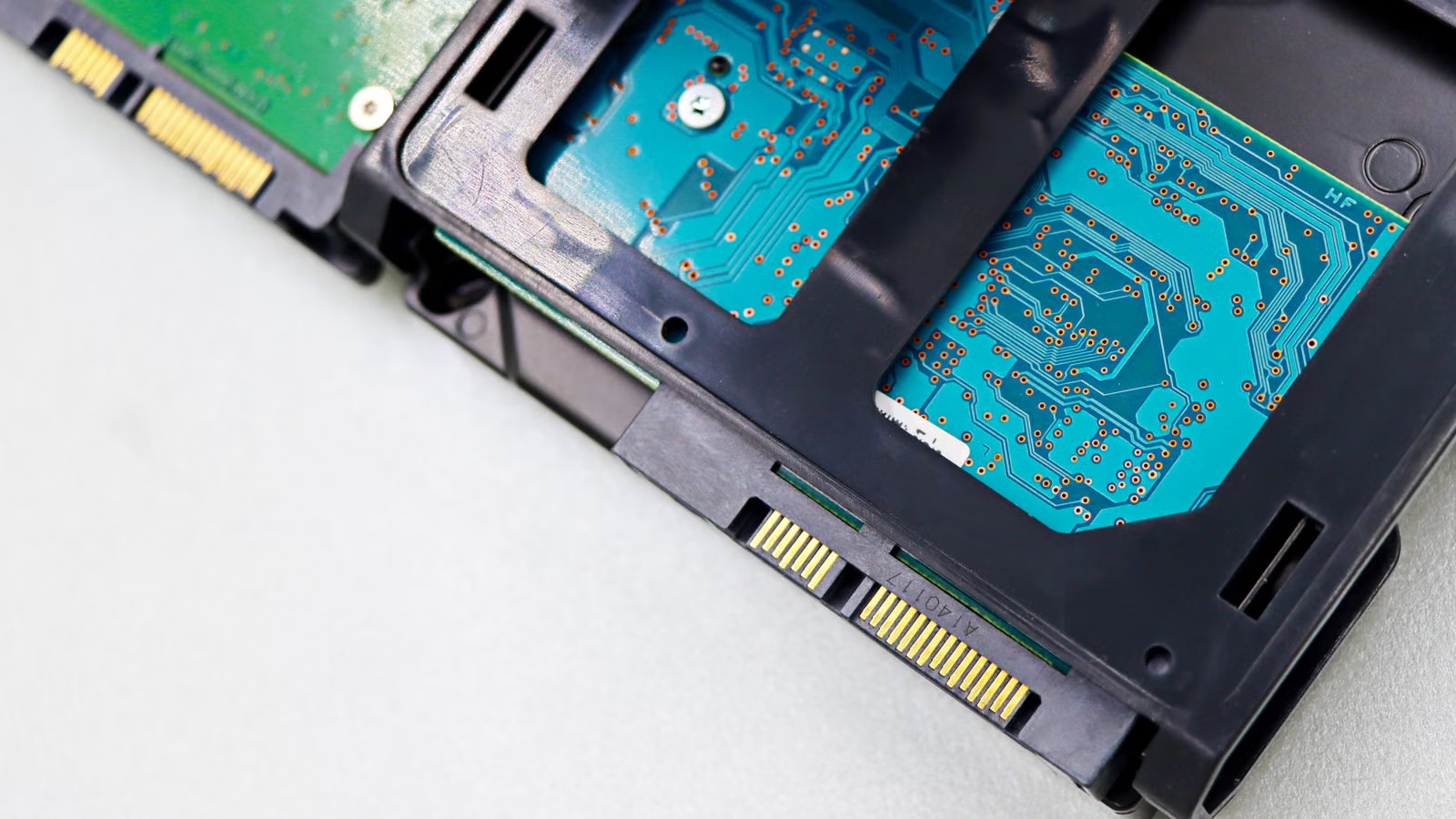
AI inference does not exceed training in every storage dimension. The training stage requires massive corpora, images, videos, cleaned datasets, tokenized datasets, model checkpoints, and experiment records. The inference stage requires keeping models online for long periods, continuously processing user requests, storing context cache, retrieving enterprise knowledge bases, and recording outputs and feedback. Training pressure is more concentrated, while inference pressure is more persistent. That is why “which one needs more storage” must be split into two questions: runtime memory and long-term data retention.
| Dimension | AI Training | AI Inference |
|---|---|---|
| Main Goal | Learn model parameters | Generate answers or perform tasks |
| Data Form | Training sets, cleaned data, checkpoints | Prompts, responses, KV cache, logs, RAG data |
| Time Profile | Concentrated training, periodic peaks | Continuous online service, long-term concurrency |
| Memory Pressure | HBM, GPU memory, activations | Model weights, KV cache, batching |
| Storage Pressure | Datasets, model versions, training records | Vector databases, logs, feedback, archives |
| Typical Bottleneck | Data throughput and distributed training efficiency | Latency, throughput, context length, cache management |
Why does training require so much storage? Because foundation model training repeatedly reads large-scale datasets and saves multiple training checkpoints. A checkpoint is a snapshot of the model state during training, used to resume training, compare experiments, or roll back to an earlier version. Large model training also produces cleaned data versions, evaluation results, logs, and model weight files, all of which require high-throughput file systems, object storage, or parallel storage systems.
Why does inference also create sustained storage demand? Because after a model goes live, it does not simply “load the weights once” and stop. Each request may generate a prompt, output, user feedback, error log, audit record, and intermediate state. Enterprise inference is also often combined with RAG, bringing internal documents, knowledge bases, vector indexes, permission records, and original files into the system. As inference expands from chatbots into customer service, search, code assistants, office automation, and agent workflows, the storage objects expand from “model files” to “business operating data.”
More importantly, HBM, DRAM, SSD, and HDD should not all be treated as the same kind of “storage.” HBM and DRAM are runtime memory, affecting model loading, GPU memory capacity, cache, and inference throughput. SSDs and HDDs are more related to persistent retention, affecting model reads, data retrieval, log retention, and cold-data archiving. Whether inference needs more storage than training depends on whether you are asking about “memory used during computation” or “data stored over the long term.”
Summary: AI inference does not necessarily exceed training in raw training-data scale, but it makes storage demand more continuous, more online, and more layered. Training is like a large construction project, requiring concentrated scheduling of large amounts of data and compute over a short period. Inference is like 24-hour infrastructure, continuously responding to requests, maintaining cache, retrieving knowledge bases, storing logs, and supporting business replay. When you assess AI server demand, split the issue into two layers: HBM and DRAM as runtime memory, which determine latency and throughput; and SSD, HDD, object storage, and enterprise storage systems, which determine whether data can be retained over time in a low-cost and governable way.
Breaking Down AI Server Memory Layers: What HBM, DRAM, SSD, and HDD Each Solve
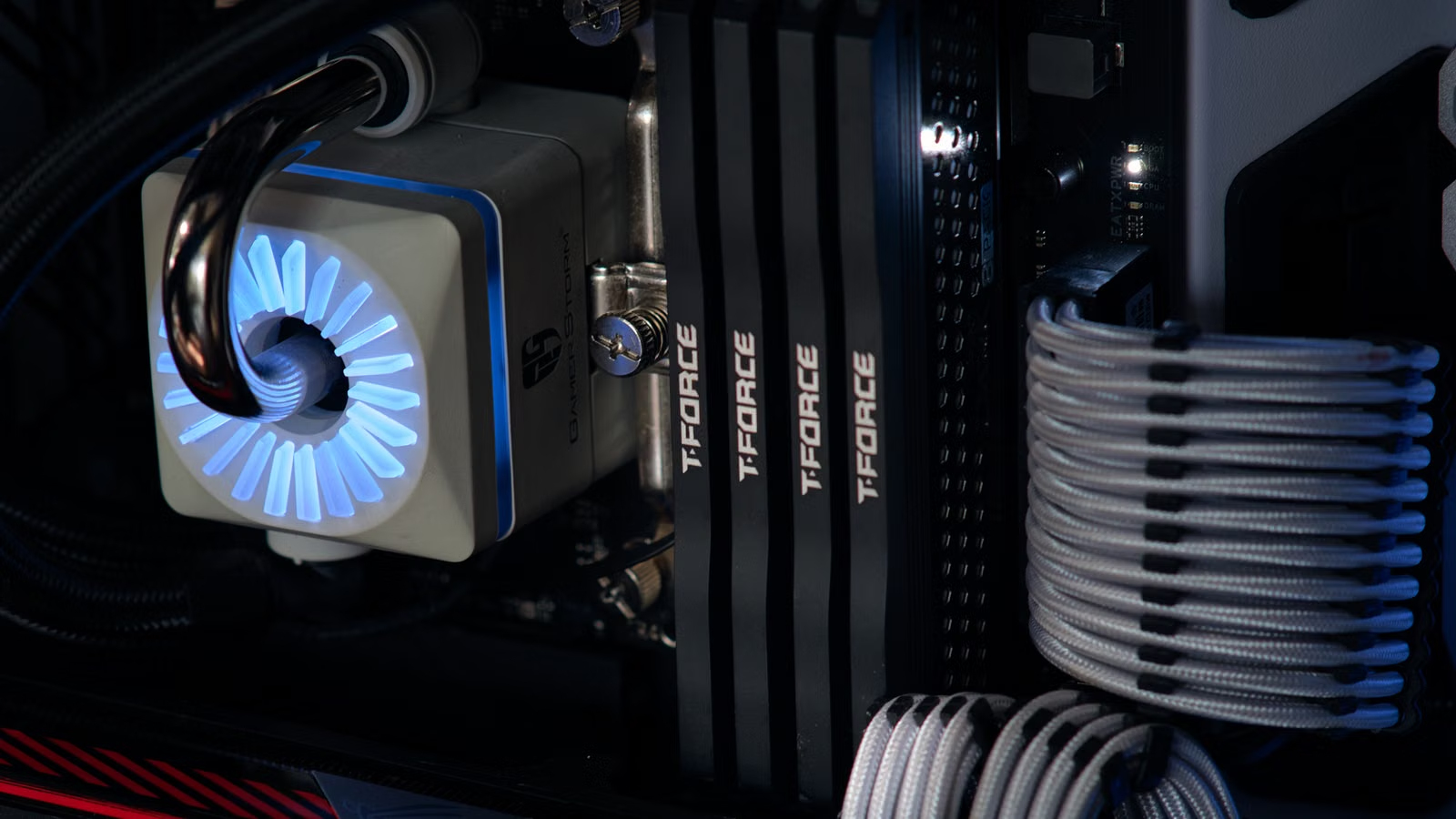
“Storage” inside an AI server is not a single concept. HBM sits close to the GPU and provides high-bandwidth compute support. CPU DRAM supports host memory, scheduling, and data caching. NVMe SSDs handle hot data, fast reads, model loading, and data prefetching. HDDs or object storage handle massive low-cost retention. Rising inference demand affects all of these layers, but each layer has a different supply-chain logic. They should not be lumped into one broad “AI storage demand” category.
NVIDIA GB200 NVL72 connects 36 Grace CPUs and 72 Blackwell GPUs in a rack-scale liquid-cooled system, highlighting a 72-GPU NVLink domain and real-time LLM inference capability. This kind of system shows that high-end AI servers have moved from single-card performance competition to rack-level coordination across memory, interconnect, power, and cooling. For inference, the larger the model, the longer the context, and the higher the concurrency, the more important memory bandwidth and capacity around the GPU become.
| Layer | Position | Main Function | Training Role | Inference Role |
|---|---|---|---|---|
| HBM | Near the GPU package | High-bandwidth model computation | Weights, activations, gradients | Weights, KV cache, batching |
| GPU Memory | Accelerator side | Model execution space | Distributed training | Low-latency inference |
| CPU DRAM | Host side | Scheduling, caching, data preparation | Data loading, task scheduling | Request queues, cache, RAG support |
| NVMe SSD | Local server or storage node | High-speed hot data | Data prefetch, checkpoints | Model loading, indexes, hot logs |
| HDD / Object Storage | Data center backend | Low-cost capacity | Training datasets, historical versions | Cold logs, archives, compliance retention |
Why is HBM a shared bottleneck for both training and high-end inference? Because it directly affects the read efficiency of model weights, activations, and KV cache. The larger the model, the more weights and intermediate states need to be placed in high-speed memory. Micron’s AI data center product materials include both AI training and inference in its memory and storage solutions, covering HBM, DRAM, and data center SSDs. This shows that AI servers are no longer just GPU purchases; they are full upgrades across memory, storage, and system architecture.
Why do CPU DRAM and NVMe SSDs become more important during inference? Because inference services must handle user request scheduling, model switching, retrieval-result caching, embedding reads, and log writes. In high-concurrency scenarios, the GPU is not the only bottleneck. Host memory, networking, SSD reads and writes, and service orchestration all affect end-to-end latency. Enterprise RAG, AI search, and code assistants are especially dependent on the hot-data layer because related documents, vector indexes, and permission metadata must be accessed quickly.
Why can HDDs still benefit from AI data growth? Because not all AI-generated data is “hot data.” Original videos, training corpora, logs, historical answers, evaluation sets, compliance archives, and cold backups rely more heavily on low-cost capacity over time. When Seagate launched its 30TB Exos M hard drives, it linked high capacity, energy efficiency, and AI data center storage demand in the same narrative. This shows that HDDs remain an important layer in the AI data lifecycle.
Summary: AI server demand should not be assessed only through GPUs, and all forms of “storage” should not be mixed together. HBM determines how efficiently data is supplied during model computation. DRAM supports host-side scheduling and caching. NVMe SSDs handle hot data and fast reads. HDDs and object storage take care of long-term retention and capacity-cost control. Training emphasizes high-throughput data pipelines and checkpoints, while inference emphasizes model residency, low-latency access, cache management, and log retention. When analyzing the AI server supply chain, first identify which layer the demand falls into, then determine whether it maps to HBM, DRAM, NAND, SSDs, HDDs, storage systems, or cloud service providers.
Why Inference Drives Memory Demand: KV Cache, Long Context, High Concurrency, and Agent Workflows
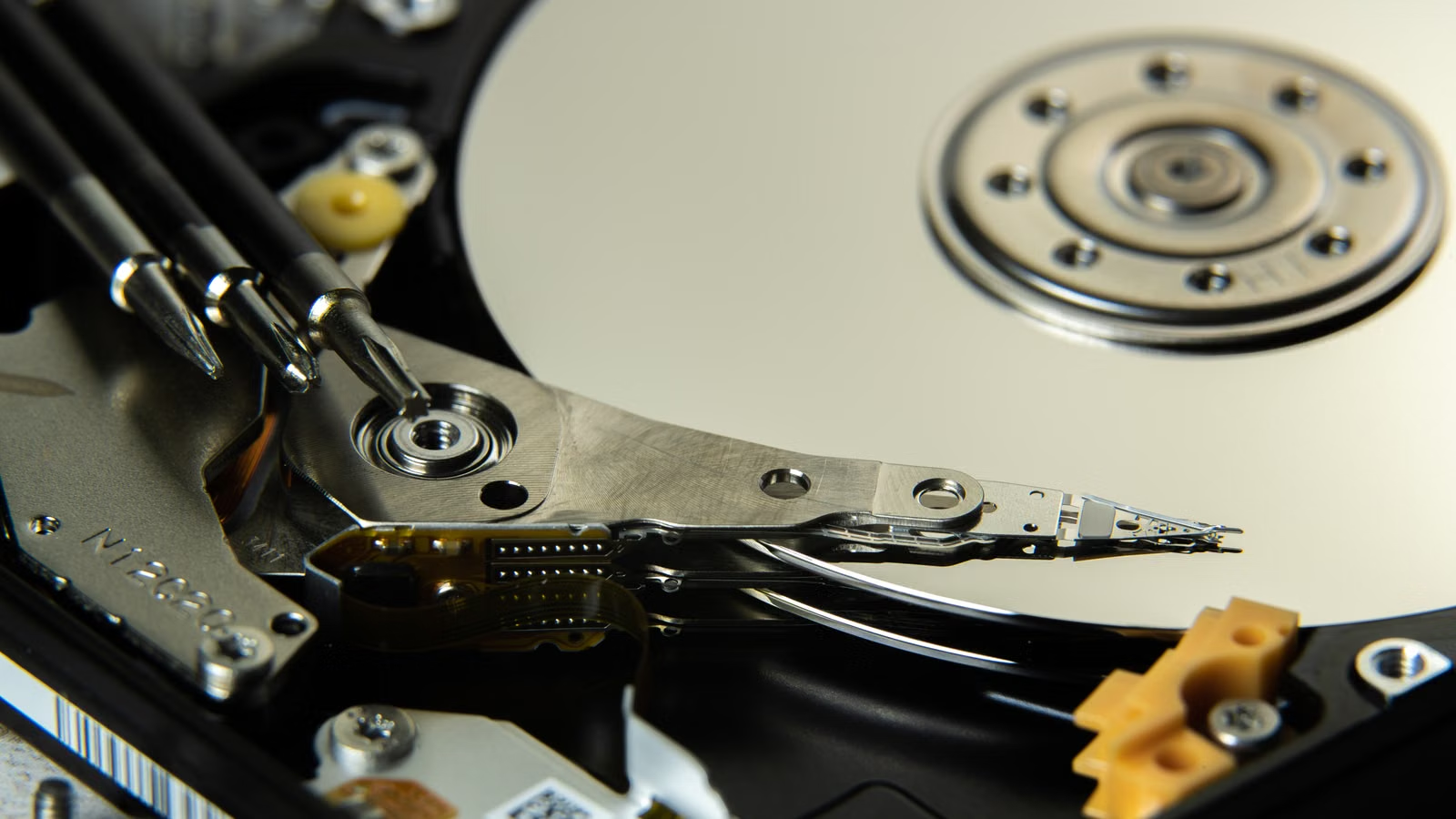
The memory pressure of AI inference mainly comes from KV cache, long context windows, high concurrency, and agent workflows. Once model training is complete, inference is not simply a matter of reading the weights once. Large language models generate text token by token, and each request must retain intermediate attention states for historical tokens. The longer the context, the higher the concurrency, and the more agent calls involved, the greater the pressure on GPU memory, CPU memory, and cache systems. At scale, memory management directly determines throughput, latency, and cost.
| Source of Inference Memory Pressure | Meaning | Server Impact |
|---|---|---|
| Model Weights | Model parameters resident in memory | Occupies HBM/GPU memory |
| KV Cache | Stores key/value states for historical tokens | Grows with context length and concurrency |
| Long Context | 128K, 1M token, or larger context windows | Raises memory usage and latency |
| Batching | Combines multiple requests for inference | Improves throughput but increases GPU memory pressure |
| RAG Retrieval | Reads vector indexes and source documents | Increases DRAM/SSD hot-data demand |
| Agent Workflows | Multi-step planning, tool calls, state retention | Produces more intermediate data and logs |
Why has KV cache become a key variable? Because autoregressive generation must refer to previously generated tokens every time it outputs a new token. To avoid recomputing the entire historical context, the system stores key/value intermediate states. That is KV cache. The PagedAttention paper points out that KV cache in LLM serving is large and dynamically grows and shrinks with requests. If managed inefficiently, fragmentation and redundant copying can limit batch size. vLLM’s paged management reduces KV cache waste, which reflects the central role of memory pressure in inference.
Why does long context turn inference from a compute problem into a memory problem? Because when the context window expands, the model must retain intermediate states for more historical tokens. The 2026 IceCache study also emphasizes that KV cache memory footprint grows linearly with sequence length, making long-sequence inference a severe memory bottleneck. In other words, long context is not simply “reading more text.” It pushes up cache, bandwidth, GPU memory capacity, and scheduling complexity together.
Agentic AI further increases memory and data pressure. In its analysis of Agentic AI memory demand, TrendForce notes that inference requests are evolving from one-time queries into continuous iterative loops, and that KV cache capacity will expand along with larger context windows. This means agents do more than answer questions. They plan, call tools, retrieve information, generate code, check results, and revise again. Each step may generate intermediate states and replayable records.
Summary: The more widespread inference becomes, the more important memory and cache systems become. In traditional thinking, training is the most resource-intensive stage. In real business systems, however, inference must stay online, support continuous concurrency, and respond with low latency. KV cache expands with context length and request volume. Long context amplifies GPU memory pressure. Agent workflows create more intermediate states and logs. When observing AI server demand, pay special attention to three questions: Are models getting larger? Are user requests increasing? Are context windows and agent steps getting longer? If these three variables keep rising, inference-side demand for HBM, DRAM, SSDs, and cache management will continue to grow.
Breaking Down Data Retention Demand: RAG, Vector Databases, Logs, Feedback Data, and Compliance Archives
The data retention demand created by AI inference does not come only from the model itself. It also comes from the system engineering required to connect enterprise private data to the model. RAG requires knowledge bases, vector databases, indexes, and source document storage. Production environments must retain request logs, answer records, user feedback, permission records, and audit information. The deeper inference enters business workflows, the more data objects must be stored, and the more storage systems must support low latency, scalability, access control, and compliance retention.
Google Cloud’s explanation of RAG emphasizes that RAG usually uses a retrieval system to obtain facts, and that modern retrieval often uses vector databases to store embeddings so relevant documents can be found quickly through semantic similarity. This shows that enterprise AI inference is not just about calling a model API. It requires a full data-processing chain: source files enter the system, are split into chunks, converted into embeddings, written into vector indexes, and retrieved by permission during inference.
| Data Type | Where It Is Generated | Common Storage Layer |
|---|---|---|
| Source Documents | Enterprise knowledge bases, file systems | Object storage, file systems, HDD |
| Cleaned Text | Data-processing pipelines | SSD, object storage |
| Embeddings | Vectorization process | Vector databases, SSD |
| Vector Indexes | RAG retrieval systems | Memory, SSD, database |
| Prompt / Response | Inference service | Logging systems, databases |
| User Feedback | Quality evaluation | Data warehouse, object storage |
| Audit Logs | Security and compliance | Cold storage, archive systems |
Why does RAG increase enterprise hot-data demand? Because it requires the system to quickly find relevant information during inference. The more frequently the knowledge base updates, the more documents it contains, and the more complex the permission structure becomes, the more storage systems must support low-latency retrieval, incremental updates, and multi-tenant isolation. Google Cloud’s generative AI RAG architecture breaks RAG into data ingestion, embedding, retrieval, generation, and governance, showing that RAG is essentially a combined engineering system of models, databases, retrieval systems, and permission controls.
Why are logs and feedback data retained over time? Because enterprises need to evaluate model quality, trace incorrect answers, analyze user needs, reproduce incidents, improve prompts, update knowledge bases, and meet audit requirements. In customer service, finance, healthcare, code review, and enterprise productivity scenarios, answer records usually cannot exist only temporarily in memory. In highly sensitive industries, companies must also distinguish which data can be used for improvement, which data must be desensitized, encrypted, or retained according to rules.
Hot data and cold data should also be understood separately. Hot data supports current inference, including vector indexes, popular documents, recent logs, and high-frequency model files. Cold data supports long-term archiving, including source corpora, historical logs, old model versions, expired feedback, and compliance records. Hot data depends more on SSDs, memory, and high-performance databases. Cold data depends more on HDDs, object storage, and low-cost archives. The larger inference becomes, the more important hot/cold tiering becomes. Putting all data in the high-performance layer raises costs, while placing everything in the cold layer slows down inference.
Summary: AI inference not only consumes memory; it also creates new data retention needs. RAG brings source documents, embeddings, vector indexes, and permission metadata. Production systems generate prompts, responses, feedback, error logs, and audit records. Long-term operations also create model versions, evaluation results, and compliance archives. When you assess whether inference drives storage demand, do not ask only how large the model is. Ask whether enterprises are connecting AI to knowledge bases, business workflows, and compliance systems. The more inference moves from “chat feature” to “enterprise workflow,” the more storage demand expands from model files into full data lifecycle management.
Which Drives the Storage Supply Chain More: Inference or Training? It Depends on Scenario, Scale, and Time Horizon
Training and inference pull the storage supply chain in different directions. Foundation model training drives demand for HBM, high-speed parallel file systems, training data pipelines, and checkpoint storage. Large-scale inference drives demand for HBM/DRAM, NVMe SSDs, vector databases, enterprise storage, log archiving, and HDD capacity. In the short term, training creates sharper peaks. Over the long term, inference is more continuous. You cannot determine which companies benefit by using only the word “training” or “inference.”
| AI Scenario | Main Workload | Storage Layer More Likely to Benefit |
|---|---|---|
| Foundation Model Training | Large datasets, distributed training | HBM, parallel file systems, SSD, object storage |
| Model Fine-Tuning | Smaller-scale training, data versions | GPU memory, SSD, model repositories |
| Enterprise RAG | Document retrieval, vector indexes | DRAM, SSD, vector databases |
| AI Search | Low-latency retrieval and generation | SSD, memory, indexing systems |
| AI Customer Service | High concurrency, multi-turn dialogue | HBM, DRAM, log storage |
| Code Assistants | Long context, project indexes | HBM, SSD, vector databases |
| Video Generation | Multimodal data and result retention | SSD, HDD, object storage |
| Edge Inference | Local models, small data caches | DRAM, eMMC, SSD |
The storage demand from foundation model training is more concentrated. Training needs to feed large amounts of data into GPU clusters at high speed. Storage systems must support high-throughput reads, concurrent access, and checkpoint writes. When training fails, checkpoints help recover progress. During model iteration, multiple versions of weights and evaluation records also need to be stored. Training is therefore like a large-scale engineering project, requiring extremely high compute, bandwidth, and data-throughput capacity over a limited period.
The storage demand from large-scale inference is more persistent. It is not a one-time process that ends after training; it processes requests every day, every hour, and every second. In AI inference drives memory demand, TrendForce breaks inference hardware demand into higher QPS, longer context windows, and more inference steps. All three variables push memory, cache, and data-system pressure higher. Once agent workflows become mainstream, inference requests shift from single-turn Q&A into continuous iteration, turning storage pressure into a long-term operating challenge.
Different parts of the supply chain benefit for different reasons. HBM mainly maps to high-end GPU platforms and large-model inference. DRAM maps to server host memory, cache, and scheduling. NAND/SSD maps to hot data, model loading, indexing, and logs. HDD maps to cold data, source corpora, videos, and long-term archives. Enterprise storage systems benefit from data governance, RAG projects, and hybrid cloud architectures. NetworkWorld, citing Dell’Oro, notes that the storage drive market, including HDDs and SSDs, is expected to grow at a CAGR of more than 20% over the next five years, with both technologies continuing to play different roles across AI infrastructure layers.
Summary: Both training and inference drive the storage supply chain, but in different ways. Training is more concentrated and more dependent on one-time large-scale data throughput and checkpoints. Inference is more persistent and more dependent on online memory, KV cache, RAG hot data, log retention, and cold-data archiving. When assessing supply-chain opportunities, first identify the scenario: foundation model training, enterprise RAG, AI search, customer service, code assistants, or multimodal generation. Different scenarios point to different layers. HBM, DRAM, NAND, SSDs, HDDs, and enterprise storage systems should not be merged into one broad concept.
How Investors Can Track AI Server Demand: From Chip Capacity to System Cost and Trading Risk
If you are tracking AI server demand, you should not look only at GPU shipments. You also need to watch HBM capacity, server DRAM configuration, enterprise SSD purchasing, HDD exabyte shipments, cloud capital expenditure, and inference API call volume. Expanding inference demand may support the storage supply chain, but it does not mean every storage company benefits equally. The real questions are: which layer does the demand land on, are prices sustainable, is capacity expanding too quickly, and are customers forming long-term purchasing patterns?
| Indicator | Question It Answers | Possible Impact |
|---|---|---|
| GPU Platform Specs | Is per-rack memory and interconnect capability improving? | HBM, server systems |
| HBM Capacity | Are high-end GPUs continuing to expand memory? | HBM, advanced packaging |
| Server DRAM | Is host memory upgrading? | DDR5, CXL, server memory |
| Enterprise SSDs | Are hot data and model loading increasing? | NAND, SSD controllers |
| HDD EB Shipments | Is cold data still growing? | Nearline HDD |
| Cloud CAPEX | Is AI data center buildout continuing? | Servers, storage, networking |
| Inference Call Volume | Is online workload truly growing? | HBM, DRAM, SSD |
| Storage Company Gross Margin | Are prices and product mix improving? | Earnings leverage |
Supply-chain analysis should not stop at the phrase “AI storage.” HBM is about high-end GPU attach and advanced packaging capacity. DRAM is about server platform upgrades and cache demand. NAND/SSD is about hot data, model loading, and enterprise storage purchasing. HDD is about exabyte shipments, nearline demand, and cold-data archiving. Storage systems are tied to enterprise RAG, data governance, and hybrid cloud deployment. Dell’Oro’s research on data center server and storage components projects that revenue from key server and storage components will grow at a 25% CAGR over the next five years and approach USD 1 trillion, showing that AI infrastructure has expanded from chips into system-level components.
If you extend AI server demand into public-market trading, you also need to consider actual transaction costs. Technology stocks, storage chip stocks, and AI infrastructure companies can be volatile. Trading costs may include not only commissions, but also platform fees, external institution fees, transaction activity fees, and order-page-displayed charges. Taking Biya’s U.S. stock trading fees as an example, U.S. stock trading commission is USD 0, while platform fees, external institution fees, and other charges are subject to the fee schedule and order-page display. Service availability depends on the user’s location, identity verification result, platform rules, and applicable laws and regulations.
The risks of AI storage investing should also be placed up front. First, cloud capital expenditure may slow down in phases. Second, HBM, DRAM, NAND, and HDD each have their own capacity cycles, and rising prices may trigger supply expansion. Third, inference optimization technologies may reduce the memory required for each request. Fourth, enterprise RAG and agent projects may be affected by data security, compliance, and ROI, so adoption may not rise in a straight line. Fifth, related stock valuations may price in optimistic expectations in advance. If prices, orders, or gross margins fall short of expectations, volatility can be amplified.
Summary: Ordinary investors should translate AI server demand into observable indicators rather than staying at the concept level. You can track GPU platform specifications, HBM capacity, server DRAM, enterprise SSDs, HDD exabyte shipments, cloud capital expenditure, inference call volume, and storage company gross margins. Inference growth can indeed make the storage chain more important, but the degree of benefit depends on product layer, customer structure, price cycle, and competitive landscape. Before trading, you should also understand order types, fee structures, platform rules, and local regulatory requirements, rather than treating an industry trend as a return guarantee.
If you regularly track AI servers, HBM, DRAM, NAND, SSDs, HDDs, and U.S. technology companies, you can place technical indicators, company earnings, market volatility, and trading fees into one shared framework. Biya is a global multi-asset trading wallet that supports U.S. stocks, Hong Kong stocks, and crypto trading. You can also use U.S. stock information search to follow storage chip, AI server, and cloud computing names. If your location, identity verification result, and applicable rules meet the relevant service conditions, you can also download the app to manage market data, watchlists, and trading workflows. The information above only introduces public-market information, technical logic, and fee structures. It does not constitute investment advice.
FAQ
Does AI Inference Need More Storage Than Training?
AI inference does not necessarily require more raw data than training, but it depends more continuously on memory and tiered storage. Training needs large datasets, checkpoints, and high-speed data pipelines. Inference needs resident model weights, KV cache, RAG databases, request logs, and feedback data. The right comparison should separate runtime memory from long-term data retention, rather than simply comparing one-time data scale.
Why Does KV Cache in LLM Inference Use So Much Server Memory?
KV cache stores key/value intermediate states generated during model inference so the model does not need to recompute historical tokens. The longer the context and the more concurrent requests there are, the more GPU memory and system memory KV cache consumes. It improves inference efficiency, but it can also limit batch size, throughput, and latency, making it a core memory variable in large-scale LLM serving.
What Is the Difference Between HBM, DRAM, and SSD in AI Servers?
HBM sits close to the GPU and provides high-bandwidth model computation. DRAM sits on the host side and supports scheduling, caching, and data preparation. SSDs handle model loading, hot-data reads, vector indexes, and log writes. All three support AI servers, but they differ in speed, capacity, cost, and system position. Supply-chain analysis should treat HBM, server memory, and enterprise SSD demand separately.
Why Do Enterprise RAG Applications Increase Data Retention Demand?
Enterprise RAG brings internal documents, knowledge bases, embeddings, vector indexes, permission records, and retrieval logs into the AI system. When the model answers questions, it needs to retrieve this data, while the system also stores prompts, responses, feedback, and audit information. The deeper RAG is embedded into workflows, the more enterprises need hot-data layers, vector databases, object storage, and cold archives.
How Can Ordinary Investors Judge Whether AI Storage Demand Is Real?
Ordinary investors can watch cloud capital expenditure, AI server shipments, HBM capacity, server DRAM configurations, enterprise SSD purchases, HDD exabyte shipments, and storage company gross margins. Real demand usually appears in orders, capacity utilization, product mix, and pricing changes. Conceptual market enthusiasm alone is not enough to prove long-term demand, so financial reports and risk disclosures still matter.
Does AI Storage Demand Growth Mean Storage Stocks Will Definitely Benefit?
AI storage demand growth does not mean all storage stocks will benefit equally. HBM, DRAM, NAND, SSDs, HDDs, and enterprise storage systems each have different demand drivers. Price cycles, capacity expansion, customer concentration, and competition all affect profitability. Before trading, investors should also consider valuation, fee structures, platform rules, and local regulatory requirements, instead of treating an industry trend as an investment return guarantee.
*This article is provided for general information purposes and does not constitute legal, tax or other professional advice from BiyaPay or its subsidiaries and its affiliates, and it is not intended as a substitute for obtaining advice from a financial advisor or any other professional.
We make no representations, warranties or warranties, express or implied, as to the accuracy, completeness or timeliness of the contents of this publication.
Related Blogs of

Choosing a Stock Trading App: Beginner Checklist


Crypto Exchange Fees Comparison: Trading Fees, Spreads, and Withdrawals




Choose Country or Region to Read Local Blog
 Australia
 Austria
 Belgium
 Canada
 Cyprus
 Czech Republic
 Denmark
 Estonia
 Finland
 France
 Germany
 Greece
 Hong Kong
 India
India Indonesia
 Ireland
 Italy
Italy Japan
Japan Latvia
 Lithuania
 Luxembourg
 Malaysia
 Malta
Malta Morocco
 Nepal
Nepal Netherlands
 New Zealand
 Norway
 Pakistan
 Philippines
 Poland
 Portugal
 Romania
 Singapore
 Slovakia
 Slovenia
 South Africa
 South Korea
 Spain
Spain Sweden
 Thailand
 United States
 Turkey
 United Arab Emirates
 United Kingdom
 Vietnam