CSOP SK Hynix 2x Long ETF Investment Guide





The CSOP SK Hynix 2x Long ETF is more accurately understood as a daily 2x leveraged trading product built around a single underlying stock: SK Hynix. You are usually not looking at it because you want a regular semiconductor ETF. Instead, you may want to use a Hong Kong market product to express a short-term view on SK Hynix, HBM, AI servers, and the memory cycle. Its advantage is high elasticity, and its risk also comes from that same high elasticity: daily 2x does not mean long-term returns will double. Holding period, volatility path, premium/discount, fees, and exchange rates can all affect real outcomes.
Key Takeaways
- 7709.HK targets 2x the daily performance of SK Hynix, not a diversified ETF structure.
- Its elasticity comes from HBM, AI servers, DRAM, and Korea’s semiconductor cycle.
- “Daily 2x” only applies to the daily target; multi-day holding may create large deviations.
- Before trading, check NAV, iNAV, premium/discount, bid-ask spread, and turnover.
- Costs include not only product-level fees, but also trading costs, swap costs, and FX factors.
- It is more suitable for short-term trading and theme monitoring, not low-maintenance long-term investing.
What Is the CSOP SK Hynix 2x Long ETF? First Understand 7709.HK’s Product Identity
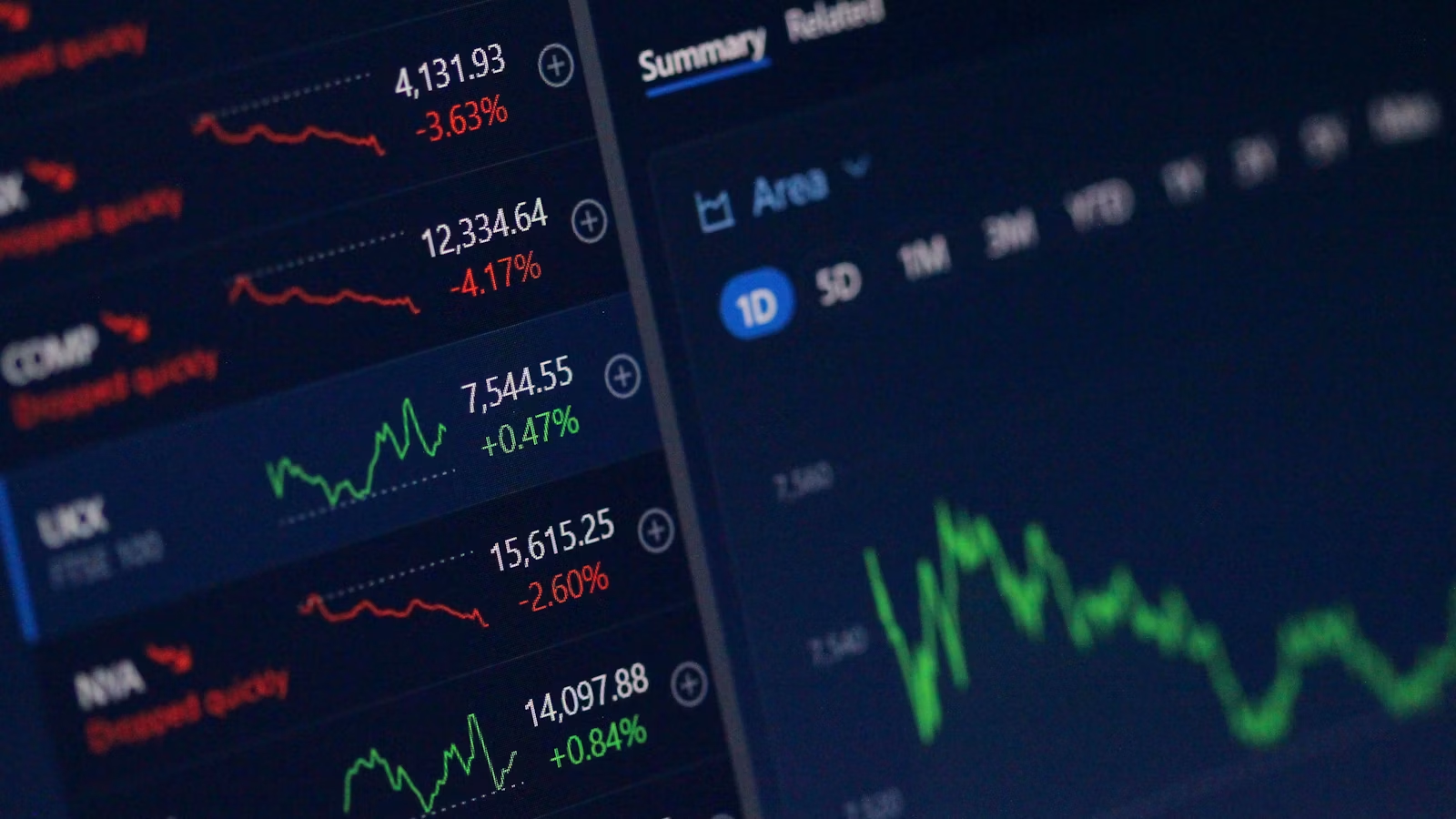
The core of the CSOP SK Hynix 2x Long ETF is not “buying a basket of semiconductor stocks.” It is about building daily 2x long exposure to one single stock: SK Hynix. You can treat it as a trading tool. If you are bullish on SK Hynix in the short term and are willing to take higher volatility, it can amplify intraday or single-day directional exposure. But if you want long-term exposure to the AI semiconductor sector, it is not the same as an ordinary sector ETF.
From a product identity perspective, the CSOP SK Hynix Daily (2x) Leveraged Product trades under the HKD counter code 7709. Its underlying asset is the ordinary share of SK hynix Inc. listed on the Korea Exchange. The product seeks, before fees and expenses, to deliver investment results close to two times the daily performance of SK Hynix. The most important word here is “daily,” not “long-term.”
7709.HK Is Not a Regular ETF, but a Single-Stock L&I Product
HKEX classifies this type of product as a Leveraged and Inverse Product. According to HKEX’s definition of an L&I Product, these products seek to deliver short-term investment results corresponding to either 2x leveraged or up to -2x inverse daily performance of the underlying benchmark. In the case of 7709.HK, the underlying is not an index, but SK Hynix itself.
This is also the biggest difference between 7709.HK and a regular semiconductor ETF. A regular ETF usually spreads exposure across multiple companies, while a single-stock L&I product concentrates risk in one company. HKEX’s material on Single Stock L&I Products also highlights that these products may face more concentrated price risk due to movements in the underlying stock.
| Dimension | 7709.HK SK Hynix 2x Long Product | SK Hynix Stock | Regular Semiconductor ETF |
|---|---|---|---|
| Underlying asset | Single stock: SK Hynix | SK Hynix itself | Multiple semiconductor stocks |
| Leverage feature | Daily 2x target | No embedded product leverage | Usually no leverage |
| Diversification | Very low | Very low | Higher |
| Suitable scenario | Short-term bullish view, event-driven trading | Fundamental stock holding | Sector allocation |
| Main risks | Leverage, compounding, tracking deviation | Single-stock volatility | Sector drawdown |
“Daily 2x” Does Not Mean Long-Term Returns Will Double
Many investors see “2x long” and naturally assume that if SK Hynix rises 10%, the product should rise 20%. That is only approximately true over a single day. The Product Key Facts for 7709.HK clearly state that the product seeks to provide investment results close to twice the daily performance of SK Hynix ordinary shares, and does not seek to achieve its target performance over a period longer than one day.
For example, if the underlying stock rises 10% on day one and falls 9.09% on day two, it roughly returns to its starting point after two days. But a 2x product would theoretically rise 20% on day one and fall 18.18% on day two, which does not bring it exactly back to the starting point. The more volatile the underlying is and the longer you hold the product, the more likely the actual performance will differ from the intuitive idea of “long-term 2x.”
How It Differs from Buying SK Hynix Directly
Buying SK Hynix shares directly means holding the company’s equity. Buying 7709.HK means using a Hong Kong-listed product to express a daily 2x long view. The former is more suitable for medium- to long-term analysis of the company’s competitiveness, earnings, valuation, and capital expenditure. The latter is more suitable for short-term trading around earnings windows, HBM orders, NVIDIA supply-chain news, and sentiment in Korea’s semiconductor sector.
If you already use Biya to monitor U.S. stocks, Hong Kong stocks, or digital assets, tools like 7709.HK are better placed on a “theme watchlist” rather than treated as ordinary ETFs. You can monitor SK Hynix, NVIDIA, Micron, Samsung Electronics, and AI memory-related assets under one framework, first confirming the industry logic before deciding whether to use a leveraged product.
Summary: The key to understanding the CSOP SK Hynix 2x Long ETF is not the word “ETF,” but three features: single-stock exposure, daily 2x leverage, and a leveraged product structure. It builds amplified exposure around SK Hynix alone and is more suitable when you have a clear short-term directional view, can monitor the market continuously, and can tolerate larger volatility. If your goal is long-term AI semiconductor allocation, regular semiconductor ETFs or direct fundamental stock research may be easier to understand. If your goal is to express a strong short-term view on SK Hynix and HBM momentum, 7709.HK is closer to the appropriate tool.
Why Is the Market Paying Attention to the SK Hynix 2x Long ETF? The Core Logic Is HBM and the AI Memory Cycle
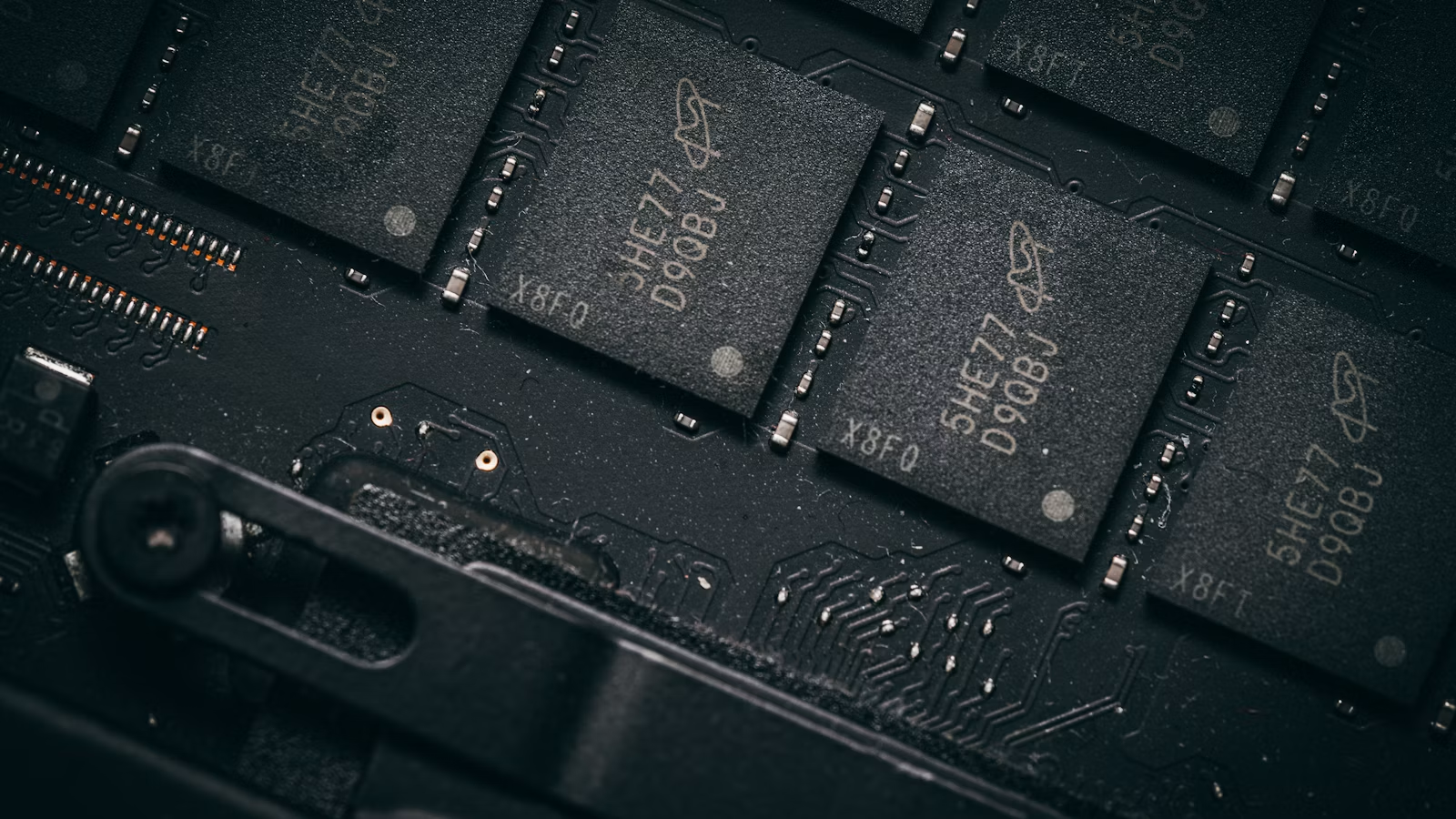
The market is paying attention to the SK Hynix 2x Long ETF because SK Hynix has moved from being viewed mainly as a traditional memory-cycle company to being seen as a key HBM supplier in AI infrastructure. When you trade 7709.HK, you are effectively trading the view that “AI server demand will continue to support HBM and high-end DRAM strength.” If HBM remains supply-constrained and expectations around NVIDIA’s supply chain improve, the product may amplify upside. If AI capital expenditure cools or memory prices weaken, drawdowns may also be amplified.
SK Hynix’s changing market position comes from the rising importance of HBM in AI training and inference hardware. Reuters’ analysis of SK Hynix’s HBM position noted that HBM has become critical in AI accelerators and that SK Hynix is one of NVIDIA’s important HBM suppliers. For investors, this means the story behind 7709.HK is not just about one Korean stock, but about the memory segment of the AI hardware supply chain.
Why SK Hynix Has Become a Core AI Memory Play
HBM is not simply an upgraded version of ordinary memory modules. It uses stacked DRAM layers and high-bandwidth interconnects to solve data-feeding bottlenecks when GPUs train large AI models. The stronger AI chips become, the greater the need for memory bandwidth and capacity, which increases HBM’s strategic value.
This is also the source of SK Hynix’s share-price elasticity. It is no longer driven only by PCs, smartphones, traditional servers, and the conventional memory cycle. It is also affected by AI servers, GPU shipments, cloud capital expenditure, advanced packaging capacity, HBM yield, and customer qualification schedules. For 7709.HK, these variables first affect SK Hynix’s share price and then feed into the product through its daily 2x mechanism.
Earnings Elasticity Comes from Demand, Pricing, and Capacity Constraints
From a fundamental perspective, SK Hynix’s 1Q26 business results reflected the contribution of AI memory demand to the company’s revenue and profit. Reuters also reported on SK Hynix’s quarterly profit growth and AI chip demand, noting that AI-driven demand supported DRAM and NAND prices and that demand for AI chips exceeded capacity.
You should not focus only on one positive headline. The more important question is whether the supply chain remains in a combination of strong demand, tight supply, rising prices, and high customer-order visibility. If that combination holds, SK Hynix may continue to receive a valuation premium. If future capacity ramps too quickly, or if AI capital expenditure expectations are revised, the market may reprice the stock.
HBM4 and Korea’s Semiconductor Investment Are Medium-Term Variables
Product-level short-term movement comes from share prices, but behind share prices are industry variables. SK Hynix announced that it had completed HBM4 development and readied mass production, and Reuters also reported that SK Hynix shipped 12-layer HBM4E samples to major customers. These developments help you assess whether the company remains at the leading edge of the high-end AI memory supply chain.
Policy and capital expenditure in Korea also matter. South Korea’s semiconductor and AI mega projects show that Samsung, SK Group, data centers, and AI infrastructure remain policy priorities. Industrial support can strengthen long-term competitiveness, but large-scale investment may also create future supply expansion and valuation volatility.
| Variable Type | Bullish Signal | Risk Signal |
|---|---|---|
| Demand | Rising AI server orders, strong GPU demand | Cloud providers cut capex |
| Supply | Tight HBM capacity, slow yield ramp | New capacity ramps too quickly |
| Pricing | DRAM/NAND contract prices rise | Memory prices fall |
| Competition | SK Hynix gains customer share | Samsung and Micron catch up |
| Market | Korean semiconductor valuations rise | KOSPI and tech stocks pull back |
Summary: The SK Hynix 2x Long ETF has attracted attention not simply because it offers a “2x” label, but because SK Hynix sits at the center of the AI memory and HBM theme. When you trade 7709.HK, you are essentially judging whether HBM supply-demand, AI server capital expenditure, memory pricing, and Korean semiconductor valuations can continue to reinforce each other. If these variables strengthen together, the leveraged product may amplify directional upside. If any part weakens, the drawdown can also be faster than that of a regular stock or ordinary ETF.
How Does the SK Hynix 2x Long ETF Generate Returns? Understand Daily Rebalancing, Swaps, and Tracking Deviation
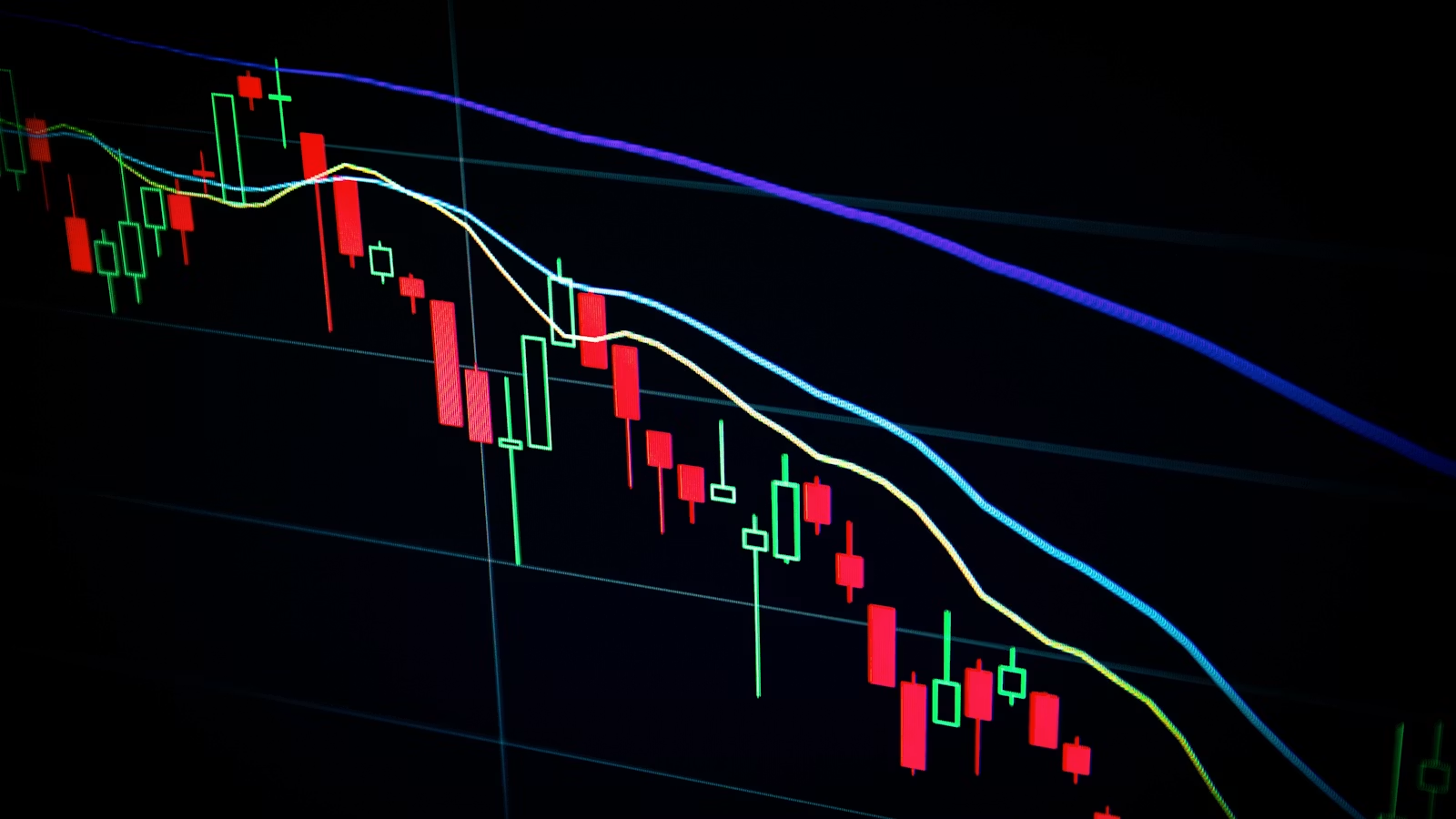
Returns from the SK Hynix 2x Long ETF come from “daily movement of the underlying stock × the 2x target exposure.” But your actual outcome will also be affected by fees, swap costs, daily rebalancing, premium/discount, trading-session differences, and bid-ask spreads. It is not a machine that automatically multiplies long-term gains by two. It is a trading structure that resets its target every day. The longer you hold it, the more you need to care about path dependency.
According to CSOP materials, 7709.HK obtains amplified exposure through derivatives such as swaps, and its gross notional exposure is generally around 200% of NAV, though it may be affected by daily rebalancing and market volatility. In other words, the 2x target is maintained through structure and adjustments; it does not naturally exist in the stock itself.
Daily 2x Return in an Ideal Scenario
Start with the simplest theoretical case. If SK Hynix rises 3% on a given trading day, 7709.HK seeks to rise about 6% before fees and expenses. If SK Hynix falls 3% on that day, the product seeks to fall about 6%. This is the basic meaning of “2x long.”
But in real trading, you cannot look only at that multiplication. The secondary-market price may differ from NAV. Korea’s market and Hong Kong’s market do not have completely identical trading hours. Product quotes may also be affected by market makers, order books, and liquidity.
| Scenario | SK Hynix Daily Move | Theoretical Direction of 7709.HK | Extra Checks Before Trading |
|---|---|---|---|
| Single-day rise | +3% | Around +6% | Premium/discount, turnover |
| Single-day fall | -3% | Around -6% | Stop-loss level, position limit |
| High-volatility sideways move | Repeated up and down moves | May suffer compounding drag | Holding period |
| Overnight positive news | Gap-up open | Risk of chasing too high | Bid-ask spread |
| Overnight negative news | Gap-down open | Amplified loss | Exit plan |
Why Daily Rebalancing Matters
Daily rebalancing is the key mechanism that allows leveraged products to maintain their target multiple. If the product’s NAV rises, it needs to adjust derivative exposure so that the next day’s exposure remains close to 2x. If NAV falls, it also needs to rebalance. This mechanism allows the product to operate around “daily returns,” but it also creates path dependency.
In a trending market, daily compounding can be favorable. For example, if the underlying stock rises continuously, the product may continue amplifying returns on a higher NAV base. But in a choppy market, compounding can cause drag. If the underlying stock repeatedly moves up and down, the 2x product may lose money even if the final change in the stock is small.
How to Understand Tracking Deviation and Premium/Discount
You also need to distinguish among three price concepts: secondary-market price, NAV, and iNAV. NAV reflects the fund’s net asset value. iNAV is an estimated intraday value during the trading session. The secondary-market price is determined by supply and demand in the order book. CSOP defines daily TD as the difference between the leveraged product’s daily return and twice the daily performance of the underlying stock, while tracking error measures how stable that difference is.
When trading, if the secondary-market price is significantly higher than estimated NAV, you may be buying at a premium. If it is significantly lower than estimated NAV, you may be trading at a discount, but you should also check whether liquidity or quote abnormalities are involved. For short-term traders, premium/discount can sometimes affect entry quality more directly than the directional view itself.
Summary: The return mechanism of 7709.HK can be summarized as the combined effect of the underlying stock’s daily performance, 2x target exposure, daily rebalancing, derivative replication, and secondary-market trading price. You cannot use SK Hynix’s long-term stock return alone to estimate product performance, and you should not ignore NAV, iNAV, premium/discount, and trading costs. The shorter your trading horizon, the more you need to focus on the order book and NAV. The longer you hold, the more you need to consider volatility path and compounding drag.
What Costs and Trading Conditions Should You Check Before Trading the SK Hynix 2x Long ETF?
Before trading 7709.HK, you need to calculate two types of costs. The first is product-level cost, including management fee, ongoing charges, and swap or option-related costs. The second is trading-level cost, including broker commission, platform fee, bid-ask spread, FX cost, and slippage. Directional judgment only answers the question of whether to buy. Costs and trading conditions determine whether you buy at a reasonable level and whether you can exit smoothly.
The Product Key Facts show that 7709.HK trades in HKD, has USD as its base currency, uses SK hynix Inc. (KRX:000660) as the underlying stock, and has a board lot size of 100 units. You see a Hong Kong market price, but the underlying share price comes from Korea, which naturally creates cross-market timing and currency conversion issues.
First Check Price, NAV, iNAV, and Premium/Discount
Before buying, you should confirm at least four numbers: current trading price, latest NAV, intraday estimated NAV, and bid-ask spread. If the price is significantly above estimated NAV, even a correct directional view may be weakened by buying at too high a premium. If turnover is thin, you may face slippage when exiting.
CSOP materials explain that 7709.HK’s intraday estimated NAV references the underlying stock price on the Korea Exchange, but different markets have different trading sessions. When the Korea Exchange is closed, estimated NAV may reference the underlying stock’s closing price on the relevant trading day. The price you see during Hong Kong trading hours may not always fully reflect the latest reasonable value after Korean market movements.
Fees Are Not Just the Product Management Fee
The cost structure of leveraged products is more complicated than that of ordinary stocks. Product-level costs may include management fees, ongoing charges, derivative costs, and rebalancing trading costs. Account-level costs may include platform fees, commissions, exchange charges, FX costs, and bid-ask spread. The 2.00% estimated ongoing charges and 1.6% management fee for 7709.HK are only part of the cost framework, not your total trading cost.
If you also follow overseas stocks or ETF opportunities, you should separate product costs from account-level trading costs. For Biya U.S. stock trading fees, U.S. stock commission is USD 0, the platform fee is USD 0.005 per share, with a minimum of USD 0.99 per order and a maximum of 1% of the trade value; external institutional fees and trading activity fees total USD 0.00396 per share. For fractional-share orders below one share, only a platform fee of 1% of the transaction value is charged, capped at USD 1. Actual fees are subject to the fee center and order-page display.
Exchange Rates and Market Hours Also Affect Trading Experience
7709.HK trades through an HKD counter, while the underlying stock trades in Korea and the product’s base currency involves USD. Your observed return may be affected by the relationship among HKD, USD, and KRW. In short-term trading, exchange rates are usually not the main driver, but they can affect NAV conversion, account P&L, and cash management.
Before placing an order, use the following checklist:
| Check Item | Why It Matters | What to Check |
|---|---|---|
| Product code | Avoid buying the wrong counter or product | 7709.HK, HKD counter |
| Underlying asset | Confirm the real risk source | SK Hynix 000660.KS |
| NAV/iNAV | Judge whether pricing is reasonable | Difference between NAV and market price |
| Bid-ask spread | Affects entry and exit cost | Distance between best bid and ask |
| Turnover | Affects slippage | Daily turnover and order-book depth |
| Fees | Affects real returns | Product fees, platform fees, trading fees |
| FX | Affects account result | HKD/USD/KRW movements |
| Exit conditions | Avoid being forced to hold | Take-profit, stop-loss, holding period |
If you need to view exchange rates, overseas assets, and trading costs together, Biya’s real-time FX rates and trading records can be used as references for cash management. Service availability depends on the user’s location, identity verification results, platform rules, and applicable laws and regulations.
Summary: Before trading the SK Hynix 2x Long ETF, directional judgment is only the first step. You also need to confirm the product code, underlying asset, NAV, iNAV, premium/discount, turnover, bid-ask spread, product fees, account-level trading costs, and FX variables. For leveraged products in particular, even a small entry-price deviation can make actual returns differ significantly from the “theoretical 2x” result. A more prudent approach is to build a trading checklist first, then decide position size based on order-book conditions and risk tolerance.
What Are the Main Risks of the SK Hynix 2x Long ETF? Focus on Four Categories
The risks of the SK Hynix 2x Long ETF can be summarized into four categories: single-stock concentration risk, leverage amplification risk, compounding deviation risk, and derivative/liquidity risk. Being bullish on AI and HBM does not mean you should automatically buy 7709.HK. Being able to tolerate the volatility of ordinary SK Hynix shares also does not mean you can tolerate the speed of drawdowns in a daily 2x product. For ordinary investors, risk management is more important than directional judgment.
HKEX’s Leveraged and Inverse Product material notes that L&I products may face market risk, counterparty risk, tracking error, premium/discount, and liquidity risk. In the case of 7709.HK, these risks are layered on top of the volatility of a single underlying stock, SK Hynix.
Risk 1: Single-Stock Concentration
7709.HK builds exposure only around SK Hynix, unlike semiconductor ETFs that diversify across multiple companies. SK Hynix’s earnings, HBM orders, customer concentration, capital expenditure, yield, competitor progress, and Korean market sentiment can all directly affect the product’s performance.
If SK Hynix falls sharply due to weaker-than-expected earnings, delayed HBM customer qualification, declining memory prices, or a broader Korea market sell-off, 7709.HK’s decline will be amplified by leverage. Other stocks in a diversified ETF may buffer shocks, but a single-stock product does not provide that protection.
Risk 2: Leverage and Extreme Volatility
Leverage is simple: it amplifies gains when you are right and losses when you are wrong. The issue is that short-term markets do not always move linearly according to fundamentals. Earnings events, AI supply-chain rumors, Korean market sentiment, and currency moves can all cause sharp single-day moves in SK Hynix.
If you directly apply the same position size you would use for an ordinary stock to a 2x product, your actual risk exposure will be amplified. For example, being willing to use 10% of your capital for an ordinary stock does not automatically mean you should use 10% for a daily 2x product. A more reasonable approach is to reverse-engineer position size based on risk exposure.
Risk 3: Compounding Drag and Holding-Period Deviation
If SK Hynix rises continuously, 7709.HK may perform well. If SK Hynix moves up and down repeatedly, the product may suffer from compounding drag through repeated rebalancing. A small final gain in the underlying stock does not guarantee a small profit in the 2x product. A flat final result in the underlying stock does not guarantee the product will not lose money.
This is why trading this type of product requires a defined holding period. You may treat 7709.HK as a tactical tool for a few hours to a few days, but you should not automatically place it into a long-term asset allocation basket.
Risk 4: Derivative, Liquidity, and Termination Risks
7709.HK obtains exposure through derivatives such as swaps and options, so it also involves counterparty, margin, derivative pricing, and extreme-market handling risks. If market volatility is too high, the underlying asset behaves abnormally, product size is too small, or liquidity is insufficient, the trading experience may deteriorate.
| Risk Type | Trigger | Possible Impact | Response |
|---|---|---|---|
| Single-stock concentration | Negative SK Hynix news | Product falls quickly | Control position size |
| Leverage amplification | Sharp drop in underlying stock | Losses amplified by target multiple | Set stop-loss |
| Compounding deviation | Multi-day volatility | Correct view may still produce poor result | Shorten holding period |
| Liquidity risk | Turnover weakens | Wider slippage | Check order book |
| Derivative risk | Market stress | Tracking error expands | Read product documents |
| FX risk | KRW/USD/HKD moves | NAV conversion affected | Review account records |
Summary: The most easily underestimated risk in the SK Hynix 2x Long ETF is not simply “whether it can fall,” but how fast it can fall, how far it can deviate, and how different the holding experience may feel compared with ordinary stocks. You need to understand single-stock concentration, daily leverage, compounding drag, derivative replication, and secondary-market liquidity at the same time. If you cannot monitor the position, tolerate fast drawdowns, or set clear stop-loss and exit rules, this type of product is not suitable as a major holding.
How Should Ordinary Investors Decide Whether the SK Hynix 2x Long ETF Fits Them?
Ordinary investors can use five questions to decide whether 7709.HK is suitable: Do you have a clear short-term bullish view on SK Hynix? Do you understand that daily 2x is not long-term 2x? Can you tolerate fast drawdowns? Can you monitor NAV, turnover, and bid-ask spread in real time? Do you have an exit plan? If more than two answers are unclear, it is not suitable to rush into a trade.
Not everyone needs to participate in trading products. You may be bullish on AI and HBM but choose not to use leverage. You may also track 7709.HK as a sentiment indicator without actually buying it. Investment tools are not absolutely good or bad. What matters is whether they match your time horizon, risk tolerance, and trading discipline.
Three Scenarios Where It May Fit
The first group is short-term traders. If you have a clear view on SK Hynix’s near-term trend, can monitor the market, can set stop-losses, and can tolerate large single-day moves, 7709.HK may serve as a high-elasticity directional tool.
The second group is event-driven traders. If you trade around earnings, HBM orders, NVIDIA supply-chain news, Korean semiconductor policy, or memory price changes, the product’s daily leverage feature may fit your strategy.
The third group is theme observers. You do not necessarily have to trade 7709.HK, but you can observe its turnover, premium, and price movement as one indicator of AI memory sentiment.
Three Types of Investors It Does Not Suit
It does not suit long-term dollar-cost averaging investors. The daily leverage mechanism and compounding deviation mean it is not a low-maintenance long-term holding.
It does not suit low-risk investors. Even though the underlying is a large semiconductor company, 2x leverage can make drawdowns much sharper.
It does not suit beginners who trade only on headlines. Strong HBM demand does not mean the product will always rise. Profit-taking after good news, high valuations, and market corrections can all cause losses.
| Investor Type | Is 7709.HK Suitable? | Reason |
|---|---|---|
| Short-term trader | Relatively suitable | Can monitor market and control position size |
| Event-driven trader | May consider | Has a clear time window |
| Long-term DCA investor | Not suitable | Daily leverage is not suitable for long-term holding |
| Beginner investor | Cautious or avoid | Product structure is complex |
| Low-risk investor | Not suitable | Drawdowns may amplify quickly |
| AI theme observer | Can monitor | May serve as a sentiment indicator |
Build a Five-Step Pre-Trade Framework
You can use the “direction—volatility—time—cost—exit” framework:
- Direction: Are you bullish on SK Hynix, or on the semiconductor sector as a whole?
- Volatility: Can you tolerate moves several times sharper than an ordinary stock?
- Time: Is your horizon intraday, overnight, or multi-day?
- Cost: Have you checked fees, premium/discount, bid-ask spread, and FX?
- Exit: Do you have take-profit, stop-loss, and invalidation conditions?
If you are only broadly bullish on AI, regular semiconductor ETFs or direct research into leading companies may be more appropriate. If you specifically believe SK Hynix will outperform the sector in the short term and can manage the risk, then 7709.HK may be a closer match.
Before trading, you can also use Biya U.S. stock information to monitor related U.S. names such as NVIDIA and Micron, placing AI chips, memory pricing, GPU supply chains, and Hong Kong trading tools in the same watchlist. The goal is not to increase trading impulse, but to avoid looking only at one product’s price movement.
Summary: Ordinary investors do not need to rush into 7709.HK just because of the words “AI” and “2x.” A more reasonable sequence is to first confirm that you are trading the short-term direction of SK Hynix, not the entire AI industry; then confirm that you understand daily leverage, compounding deviation, fees, and liquidity; and finally manage risk through position sizing, stop-losses, and holding-period limits. If this framework cannot be implemented, it is enough to monitor the product and the industry trend without forcing a trade.
If you are watching overseas market tools such as the SK Hynix 2x Long ETF, the more important task is to build a process: first analyze the underlying asset, then the product structure, then fees and risks. AI, HBM, semiconductors, and the memory cycle may all create opportunities, but leveraged products amplify both wrong judgments and execution costs. Biya is a global multi-asset trading wallet that can be used to follow opportunities across U.S. stocks, Hong Kong stocks, and digital assets, while transaction records and fee information can help you review real trading costs. Biya’s U.S. stock commission is USD 0, and platform fees, external institutional fees, and other charges are subject to the fee center and order-page display. Service availability depends on the user’s location, identity verification results, platform rules, and applicable laws and regulations. The above only discusses public market information, product structure, and risk framework, and does not constitute investment advice.
FAQ
Is the CSOP SK Hynix 2x Long ETF suitable for long-term holding?
The CSOP SK Hynix 2x Long ETF is not suitable as a core long-term buy-and-hold position. It seeks 2x the daily performance of SK Hynix, not 2x the long-term cumulative return. The longer you hold it, the more compounding, volatility path, fees, and tracking deviation may affect the result.
What is the difference between 7709.HK and SK Hynix stock?
7709.HK is a Hong Kong-listed daily 2x leveraged product with SK Hynix as the underlying asset, while buying SK Hynix stock directly is an ordinary single-stock position. The former is more suitable for short-term directional exposure, while the latter is more suitable for judging company fundamentals, valuation, and industry cycles.
How should investors understand the fees of the SK Hynix 2x Long ETF?
The fees of the SK Hynix 2x Long ETF should be viewed from both product-level and account-level perspectives. Product-level costs include management fees, ongoing charges, swap or option-related costs; trading-level costs include commissions, platform fees, bid-ask spreads, FX costs, and slippage. Product documents and account statements should be the final reference.
How do AI and HBM trends affect 7709.HK?
AI and HBM trends first affect SK Hynix’s share price, then influence 7709.HK through the daily 2x mechanism. If HBM demand is strong, memory prices rise, and customer-order visibility remains high, the product may amplify upside. If expectations reverse or valuations pull back, the product may also amplify downside.
Can beginner investors trade the SK Hynix 2x Long ETF?
Beginner investors should be very cautious with the SK Hynix 2x Long ETF. The product involves single-stock concentration, daily leverage, compounding deviation, derivative replication, and liquidity risk. It is more suitable for trading-oriented investors who understand product documents, monitor positions continuously, and set clear exit conditions.
What real-time indicators should be checked before trading 7709.HK?
Before trading 7709.HK, focus on SK Hynix’s share price, 7709.HK’s market price, NAV, iNAV, premium/discount, turnover, bid-ask spread, Hong Kong-Korea trading-session differences, exchange rates, and relevant news. If these indicators cannot be checked clearly, it is not advisable to place an order based only on a single headline or price movement.
*This article is provided for general information purposes and does not constitute legal, tax or other professional advice from BiyaPay or its subsidiaries and its affiliates, and it is not intended as a substitute for obtaining advice from a financial advisor or any other professional.
We make no representations, warranties or warranties, express or implied, as to the accuracy, completeness or timeliness of the contents of this publication.
Related Blogs of

Western Digital WDC vs Pure Storage PSTG: Which Is Better Suited for AI Data Centers, HDD Capacity Storage or All-Flash Arrays?


ASMPT vs Micron: What Is the Difference Between the HBM Equipment Chain and a Memory Chip Manufacturer?


Shanghai Fudan vs Micron: How Are Non-Volatile Memory and the Global DRAM/HBM Leader Different?

Western Digital WDC vs NetApp NTAP: Investment Logic Comparison Between a Hard Drive Manufacturer and a Data Management Platform

Choose Country or Region to Read Local Blog
 Australia
 Austria
 Belgium
 Canada
 Cyprus
 Czech Republic
 Denmark
 Estonia
 Finland
 France
 Germany
 Greece
 Hong Kong
 India
India Indonesia
 Ireland
 Italy
Italy Japan
Japan Latvia
 Lithuania
 Luxembourg
 Malaysia
 Malta
Malta Morocco
 Nepal
Nepal Netherlands
 New Zealand
 Norway
 Pakistan
 Philippines
 Poland
 Portugal
 Romania
 Singapore
 Slovakia
 Slovenia
 South Africa
 South Korea
 Spain
Spain Sweden
 Thailand
 The United States
 Turkey
 United Arab Emirates
 United Kingdom
 Vietnam
Contact Us




BIYA GLOBAL LLC is registered with the Financial Crimes Enforcement Network (FinCEN), an agency under the U.S. Department of the Treasury, as a Money Services Business (MSB), with registration number 31000218637349, and regulated by the Financial Crimes Enforcement Network (FinCEN).
BIYA GLOBAL LIMITED is a registered Financial Service Provider (FSP) in New Zealand, with registration number FSP1007221, and is also a registered member of the Financial Services Complaints Limited (FSCL), an independent dispute resolution scheme in New Zealand.