Hong Kong Stock Market Lunch Break and Trading Hours: Pre-Opening, Midday Break, and Closing Rules




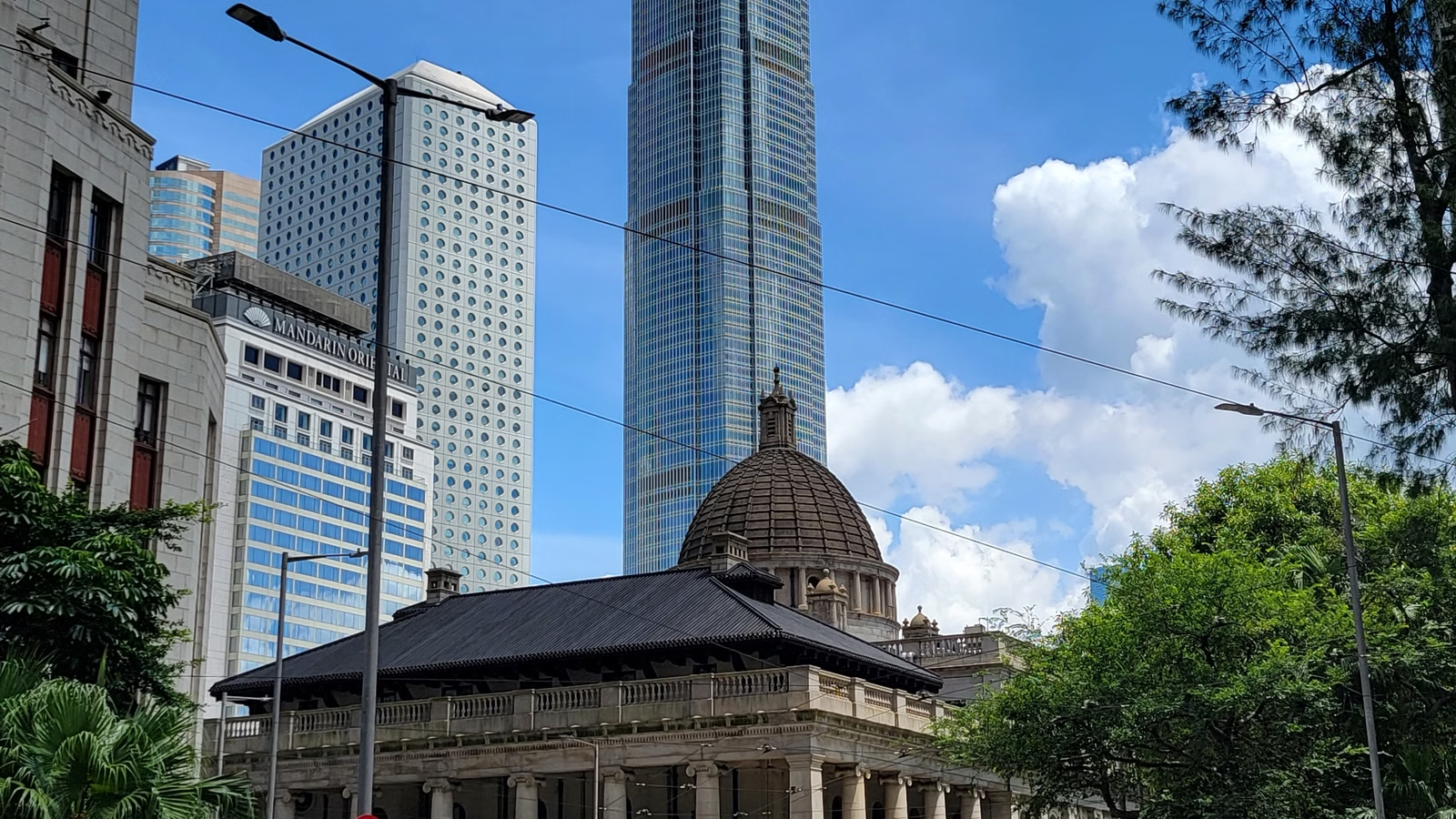
The Hong Kong stock market usually takes a lunch break from 12:00 to 13:00 Hong Kong time, and the afternoon session resumes at 13:00. You need to understand the pre-opening session, morning session, midday break, afternoon session, and closing auction because Hong Kong stocks are not simply governed by one “open” and one “close” time. For international investors, Stock Connect users, and beginners tracking Hong Kong stock prices, knowing these time periods can help reduce the risk of placing orders during the lunch break, misreading half-day trading schedules, or chasing prices during the closing auction.
Key Takeaways
- The morning session runs from 9:30 to 12:00, and the afternoon session runs from 13:00 to 16:00.
- The 12:00–13:00 period is commonly called the lunch break, but HKEX also uses the term Extended Morning Session.
- Hong Kong pre-market trading mainly refers to the pre-opening auction, not the same type of pre-market session seen in U.S. stocks.
- After 16:00, eligible securities enter the closing auction, and the final market close has a random element.
- On half-day trading days, there is usually no afternoon session, and the closing process moves to midday.
- Stock Connect users also need to check the trading calendar, quota arrangements, and broker order prompts.
What Time Is the Hong Kong Stock Market Lunch Break?
The core lunch break for Hong Kong stocks is from 12:00 to 13:00 Hong Kong time. For most retail investors, this can be understood as the gap between the morning and afternoon trading sessions: continuous trading in the morning ends at 12:00, and continuous trading resumes at 13:00. Even if your brokerage app still shows quotes, positions, or order buttons during this period, it does not mean all Hong Kong stocks can be traded immediately during lunch. Whether an order is actually routed for matching depends on the HKEX session, the security type, and your broker’s order-handling rules.
The Hong Kong securities market trading hours listed by HKEX include the Pre-opening Session, Morning Session, Extended Morning Session, Afternoon Session, and Closing Auction Session. The part that most often confuses beginners is the “Extended Morning Session.” Although it appears in the official trading-hours table from 12:00 to 13:00, it should not be understood as meaning that all ordinary Hong Kong stocks continue trading at midday. For most stock investors, the lunch break should still be treated as a pause in ordinary continuous trading.
| Common term | Time range | What you need to know |
|---|---|---|
| Morning Session | 9:30–12:00 | Normal continuous trading in the morning |
| Lunch break | 12:00–13:00 | Usually not treated as ordinary continuous trading |
| Extended Morning Session | 12:00–13:00 | Official session name; applicability depends on the security |
| Afternoon Session | 13:00–16:00 | Continuous trading resumes in the afternoon |
| Closing Auction Session | After 16:00 | Applies to CAS securities and includes random closing |
You also need to pay attention to the time standard. Hong Kong stock market times are based on Hong Kong time. Beijing and Singapore are usually in the same UTC+8 time zone as Hong Kong, so many Chinese-language users do not need to convert the time. If you are in Europe or North America, you need to convert Hong Kong time into your local time and pay attention to daylight saving time. This is especially important when using an overseas broker or a multi-asset trading platform, because an app may display time based on your account region, device time zone, or the market’s local time. Before confirming an order, check the displayed market status carefully.
Summary: The practical answer is that the Hong Kong stock market lunch break runs from 12:00 to 13:00, and continuous afternoon trading resumes at 13:00. The “Extended Morning Session” in HKEX’s official schedule should not be misread as meaning that every Hong Kong stock can be traded at midday. Whether you can submit, cancel, or amend an order during the lunch break depends on the security type, order type, and broker system. The safest approach is to treat 12:00 and 13:00 Hong Kong time as two key checkpoints: complete your morning-session decisions before 12:00, and reassess price, volume, and order status after 13:00 when the afternoon session begins.
How Are Hong Kong Stock Market Trading Hours Divided?
A full Hong Kong trading day can be divided into five parts: 9:00–9:30 is the pre-opening auction, 9:30–12:00 is the morning session, 12:00–13:00 is the midday interval, 13:00–16:00 is the afternoon session, and the period after 16:00 is the closing auction. Most retail investors mainly use the morning and afternoon sessions, but the pre-opening and closing phases can also affect the opening price, closing price, whether an order can be amended or cancelled, and whether the “last traded price” you see is the final closing price.
The key times on a full trading day are as follows:
| Session | Full-day trading hours | Main purpose |
|---|---|---|
| Pre-opening Session | 9:00–9:30 | Auction process for forming the opening price |
| Morning Session | 9:30–12:00 | Morning continuous trading |
| Extended Morning Session | 12:00–13:00 | Session relevant to designated securities |
| Afternoon Session | 13:00–16:00 | Afternoon continuous trading |
| Closing Auction Session | After 16:00 to around 16:08–16:10 | Auction process for forming the closing price |
Half-day trading must be treated separately. HKEX explains that on certain dates, such as the eves of Christmas, New Year, and Lunar New Year, there may be no Extended Morning Session or Afternoon Session. On a half-day trading day, the market usually trades until 12:00 in the morning and then enters the midday Closing Auction Session. This means you cannot assume that trading will resume at 13:00 simply because you know the normal lunch-break schedule. On a half-day trading day, the closing process has already started at midday.
| Session | Full day | Half day |
|---|---|---|
| Pre-opening Session | 9:00–9:30 | 9:00–9:30 |
| Morning Session | 9:30–12:00 | 9:30–12:00 |
| Extended Morning Session | 12:00–13:00 | Not applicable |
| Afternoon Session | 13:00–16:00 | Not applicable |
| Closing Auction Session | After 16:00 | After 12:00 |
If you trade across markets, trading hours also affect how efficiently you use your funds. For example, if you follow Hong Kong stocks, U.S. stocks, and digital assets at the same time, the Hong Kong lunch break may be a useful window to review morning executions, check order costs, and decide whether to keep orders active in the afternoon. When using a multi-asset platform such as Biya, which covers U.S. stocks, Hong Kong stocks, and digital asset trading scenarios, you should first confirm the specific market status, product availability, and order prompts before placing an order.
Summary: Hong Kong stock trading hours are not simply 9:30 open and 16:00 close. They consist of the pre-opening auction, morning session, midday interval, afternoon session, and closing auction. On a full trading day, the key time points are 9:00, 9:30, 12:00, 13:00, 16:00, and the random closing window. On a half-day trading day, the closing process moves to midday. Before trading, you should first determine whether the day is a full-day or half-day session, then judge whether your order will enter continuous trading, the pre-opening auction, or the closing auction. International investors also need to compare Hong Kong time with local time, broker system time, and the exchange trading calendar.
Hong Kong Pre-Market Trading: How Should You Understand the Pre-Opening Session?
Hong Kong pre-market trading mainly refers to the 9:00–9:30 Pre-opening Session. In essence, it is an auction session, not an extended period of continuous trading like the U.S. pre-market. When you enter an order during this stage, the main purpose is to participate in the formation of the opening price, not to trade continuously against the order book as you would during the morning or afternoon session. This session can be especially important before the open after major announcements, large overnight moves in overseas markets, hot IPOs, or index constituent changes.
HKEX explains that the Pre-opening Session is a 30-minute single-price auction mechanism before the morning session. It allows buy and sell orders to be entered into the system and helps form a more orderly opening price through price discovery. The most important point for beginners is that some orders can be entered from 9:00, but trading does not occur continuously from 9:00. Matching takes place according to the rules in the designated auction stage.
The Pre-opening Session can be simplified into four stages:
| Stage | Approximate time | What to watch |
|---|---|---|
| Order input period | 9:00–9:15 | Eligible auction orders can be entered |
| No-cancellation period | 9:15–9:20 | Order cancellation and amendment restrictions increase |
| Random matching period | 9:20–9:22 | The system randomly starts order matching |
| Blocking period | After matching until 9:30 | The market waits for continuous trading to begin |
You also need to distinguish between order types. HKEX explains that the Pre-opening Session mainly accepts at-auction orders and at-auction limit orders, while ordinary limit orders, enhanced limit orders, and special limit orders may not be accepted during this period. HKEX also uses a ±15% price limit to control abnormal price fluctuations during the pre-opening auction. For you, this means that “placing an order earlier” does not mean you can enter any price you want. Whether the order enters the system, is rejected, or carries forward into the morning session depends on the detailed rules.
The pre-opening session is especially worth watching in three situations:
- After a listed company releases earnings, resumes trading, or announces a major transaction;
- After major overnight moves in U.S. stocks, FX, interest rates, or commodities;
- Before the open of popular Hong Kong stocks, ETFs, IPOs, or index heavyweights when the order book is clearly imbalanced.
Summary: The core of Hong Kong pre-market trading is the pre-opening auction, not ordinary continuous trading. If you operate between 9:00 and 9:30, the key is not only whether an order can be submitted, but also the order type, price limits, cancellation rights, and whether the session has entered the no-cancellation stage. For beginners who are not familiar with at-auction orders, at-auction limit orders, and random matching, it is better not to treat the pre-opening session as an ordinary trading window. A more prudent approach is to observe the reference price, order direction, and likelihood of execution, then make a new decision after continuous trading begins at 9:30.
Can You Place, Cancel, Amend, or Execute Orders During the Hong Kong Stock Market Lunch Break?
During the Hong Kong stock market lunch break, ordinary stocks usually do not trade through normal continuous matching. You may still see “Buy,” “Sell,” “Amend,” or “Cancel” buttons in your brokerage app, but this depends more on whether the broker allows scheduled orders, queued orders, or internal instructions. It does not mean the exchange is matching all stocks during lunch. When judging lunch-break orders, you should separate four states: the platform has accepted the order, the exchange has received it, the order can be cancelled or amended, and the order has been executed.
There are three common misunderstandings during the lunch break. First, seeing an order button in the app and assuming the market is trading. Second, treating the last quote before 12:00 as a price that can still be executed during lunch. Third, assuming that all brokers apply the same cancellation and amendment rules during the midday break. In practice, different platforms may handle lunch-break orders differently. Some may only store the order, some may queue it for the next session, and some may set restrictions on certain order types.
| Lunch-break action | Common status | What to confirm |
|---|---|---|
| Check quotes | Usually available | Whether quotes are real-time and whether the order book is paused |
| Submit order | Depends on the broker | Whether it is a scheduled order, queued order, or already routed order |
| Cancel/amend order | Depends on order status | Whether the order has entered a no-cancellation stage or processing queue |
| Execute ordinary stock order | Usually not through continuous trading | Afternoon matching resumes after 13:00 |
| Check positions | Usually available | Whether cost basis and available funds have been updated |
Stock Connect users need to check one additional layer of rules. Stock Connect trading depends not only on whether the Hong Kong market is open, but also on whether both mainland China and Hong Kong are trading, whether quota arrangements apply, and whether the broker has opened the relevant service. The HKEX Stock Connect trading calendar helps investors confirm whether a specific date is tradable. For you, the lunch break is a time-window issue, while Stock Connect also adds calendar and market-connectivity considerations.
Midday is also a useful time to review trading costs. The lunch break does not directly change commission rules, but it can affect execution price, queue priority, and order timing. If you follow both U.S. and Hong Kong stocks, you should not only understand trading hours, but also check commissions, platform fees, external agency fees, trading activity fees, and order-page estimates across markets. Biya charges 0 USD commission for U.S. stock trading, while platform fees, external agency fees, and other charges should follow the fee schedule and the order page. Availability of relevant services depends on the user’s location, identity verification results, platform rules, and applicable laws and regulations.
Summary: The most important lunch-break question is not whether a button can be clicked, but what state your order is in. Ordinary Hong Kong stocks usually do not trade through continuous matching from 12:00 to 13:00. Even if a broker allows order submission, the order may only be accepted, stored, or queued. Before operating during the lunch break, confirm the order type, routing status, cancellation and amendment restrictions, whether the order remains valid after 13:00, and whether the day is actually a half-day trading day. Stock Connect users should also confirm whether the date is a Stock Connect trading day, instead of mixing up ordinary Hong Kong market status with Stock Connect availability.
Hong Kong Stock Market Closing Rules: Why Can Trading Continue After 16:00?
The Hong Kong stock market does not necessarily stop completely at 16:00, because some securities enter the Closing Auction Session. This session is designed to form a more representative closing price through an auction mechanism, which is especially important for index funds, ETFs, portfolio rebalancing, and institutional valuation. The price you see at 16:00 is not necessarily the final closing price; the final price may only be determined after the random closing process is completed.
HKEX explains that the Closing Auction Session applies to CAS securities and extends the close of the securities market to a random point between 16:08 and 16:10. This random mechanism is designed to reduce the risk of concentrated price impact at the very last moment and make the closing price formation process more orderly. Half-day trading has a similar mechanism, but the timing is moved to after 12:00.
| Stage | Full-day timing | Half-day timing | Key point |
|---|---|---|---|
| Reference price fixing | 16:00–16:01 | 12:00–12:01 | Reference price is determined |
| Order input | 16:01–16:06 | 12:01–12:06 | Eligible auction orders can be entered |
| No-cancellation period | 16:06–16:08 | 12:06–12:08 | Orders usually cannot be cancelled |
| Random closing | 16:08–16:10 | 12:08–12:10 | The system randomly closes the auction |
The most important points in the closing stage are cancellation restrictions and price limits. Once the no-cancellation period begins, you can no longer treat the order as if it were in ordinary continuous trading, where amendments and cancellations are more flexible. HKEX has explained that the Closing Auction Session uses price-limit arrangements, and market participants need to enter orders within the reference price and the allowed range. Retail investors may not need these details every day, but once you place an order after 16:00, you should understand that you are facing an auction process, not ordinary order-book matching.
The Closing Auction Session is especially useful to understand in three scenarios:
- Index constituents or large ETFs show active trading before the close;
- Funds, portfolios, or institutional investors need valuation based on closing prices;
- A stock shows concentrated buying or selling pressure, or sharp price movement, near the end of the day.
Summary: Trading may continue after 16:00 in Hong Kong because the market enters the Closing Auction Session, not because the ordinary afternoon session has been extended. On a full trading day, the random close usually occurs between 16:08 and 16:10; on a half-day trading day, it usually occurs between 12:08 and 12:10. If you place an order during this stage, confirm whether the security is eligible for the Closing Auction Session, whether the order can be cancelled or amended, whether the price complies with the limits, and whether the execution price may become the final closing price. Near the close, it is not advisable to treat post-16:00 orders as ordinary limit orders, especially on volatile days or index rebalancing days.
Special Situations: How Do Half-Day Trading, Holidays, and Severe Weather Affect Hong Kong Stock Trading?
Special situations can change how you interpret Hong Kong stock trading hours. The most common ones are half-day trading, Hong Kong public holidays, Stock Connect trading-day differences, and severe weather arrangements. On half-day trading days, there is usually no 13:00–16:00 afternoon session. On holidays, the Hong Kong market may be closed. Stock Connect also depends on shared trading-day arrangements between mainland China and Hong Kong. Under severe weather arrangements, HKEX now generally continues to operate according to the scheduled trading calendar, but banking, brokerage services, and offline processing may still be affected.
You can group special dates into four categories:
| Situation | Impact on trading hours | What to check |
|---|---|---|
| Half-day trading | Closing process begins at midday | Whether there is still an afternoon session |
| Hong Kong public holiday | The Hong Kong market may be closed | HKEX trading calendar |
| Non-Stock Connect trading day | Hong Kong may be open but Stock Connect may not be available | Southbound trading arrangements |
| Severe weather trading day | The market generally continues to operate | Whether broker or bank services are restricted |
HKEX information on Hong Kong public holidays and half-day trading days is useful to check before trading. This is especially important around Christmas Eve, New Year’s Eve, and Lunar New Year’s Eve. You should not simply remember that “Hong Kong stocks reopen at 13:00.” Instead, confirm whether the day is a half-day trading day. On a half-day trading day, the period after 12:00 is not an ordinary lunch break but the midday closing stage.
Severe weather rules have also changed. HKEX’s severe weather trading arrangements took effect in 2024. The securities and derivatives markets, including Stock Connect-related trading, generally continue to operate according to the scheduled trading calendar. HKEX also reminds investors to consult their brokers and banks during severe weather because services that rely on physical branches or paper documents may not operate as usual.
Before trading, check in this order:
- Whether today is a Hong Kong public holiday;
- Whether today is a half-day trading day;
- If using Stock Connect, whether today is a Stock Connect trading day;
- Whether your broker shows system maintenance, order restrictions, or market suspension prompts;
- During severe weather, whether fund transfers, settlement, and customer service have special arrangements.
Summary: Hong Kong stock trading hours are stable on ordinary trading days, but special situations can change the actual tradable status. Half-day trading has no afternoon session, and the Closing Auction Session begins after 12:00. Hong Kong public holidays may close the market. Stock Connect users must also check shared trading-day arrangements and broker rules. Under severe weather, the market generally continues operating, but that does not mean banks, counters, offline services, and all broker processes are completely unaffected. Around holidays, typhoons, black rainstorms, cross-border trading, or Stock Connect trading, you should check the HKEX calendar, broker notifications, and order page together instead of relying only on your usual memory.
Hong Kong stock trading hours may look simple, but the actual order experience is shaped by the pre-opening auction, lunch break, afternoon resumption, closing auction, and special trading days. If you follow Hong Kong stocks, U.S. stocks, and digital assets at the same time, managing trading sessions across markets becomes even more important: the Hong Kong lunch break can be used to review morning orders; U.S. pre-market trading may follow a different rule set; and digital assets usually do not have a traditional exchange lunch break. Biya is a global multi-asset trading wallet that supports trading scenarios for U.S. stocks, Hong Kong stocks, and digital assets. It also supports conversion between USDT and major fiat currencies such as USD and HKD, and covers payments in more than 40 local currencies across over 190 countries and regions. You can use the Biya App to view account and trading access, and combine it with real-time exchange rates to evaluate funding arrangements across currencies. Specific product availability, fees, order restrictions, and execution results are subject to platform pages, order confirmation pages, and local regulatory requirements. This content does not constitute investment advice.
FAQ
Is the Hong Kong stock market lunch break fixed?
The Hong Kong stock market lunch break is usually from 12:00 to 13:00 Hong Kong time. This applies to ordinary full trading days, but half-day trading, Hong Kong public holidays, non-Stock Connect trading days, or special market arrangements may change the actual tradable status. Always check the HKEX calendar and your broker’s order page.
Will orders submitted during the Hong Kong stock market lunch break be executed?
Ordinary Hong Kong stock orders generally do not execute through continuous trading during the lunch break. A broker may allow scheduled, queued, or cancellation/amendment instructions, but whether the order reaches the exchange, when it is processed, and whether it can be amended depend on order status, security type, and broker rules.
Is Hong Kong pre-market trading the same as U.S. pre-market trading?
Hong Kong pre-market trading is not the same as U.S. pre-market trading. The Hong Kong 9:00–9:30 session is mainly a pre-opening auction used to form the opening price, while U.S. pre-market trading is closer to an extended trading session. Beginners should not treat the Hong Kong pre-opening session as ordinary continuous trading.
Does the Hong Kong Closing Auction Session affect the closing price?
Yes, the Hong Kong Closing Auction Session can affect the final closing price. Securities entering the auction process after 16:00 go through reference price fixing, order input, no-cancellation, and random closing stages. When trading near the close, pay attention to order restrictions, cancellation rules, and price volatility.
Is there afternoon trading on Hong Kong half-day trading days?
There is usually no afternoon trading on Hong Kong half-day trading days. A half-day session generally completes morning trading from 9:30 to 12:00, followed by the Closing Auction Session after 12:00. There is no 13:00–16:00 afternoon session, so holiday-eve schedules should be checked separately.
How should overseas investors convert Hong Kong stock market trading hours?
Overseas investors should first use Hong Kong time as the base and then convert it into local time. Beijing and Singapore are usually in the same UTC+8 time zone as Hong Kong, while Europe and North America need to account for daylight saving time. When using an overseas broker, also check whether the app displays market time, local time, or account-region time.
*This article is provided for general information purposes and does not constitute legal, tax or other professional advice from BiyaPay or its subsidiaries and its affiliates, and it is not intended as a substitute for obtaining advice from a financial advisor or any other professional.
We make no representations, warranties or warranties, express or implied, as to the accuracy, completeness or timeliness of the contents of this publication.
Related Blogs of

Routing Number vs Wire Routing Number: What to Use for Transfers


E*TRADE vs Fidelity: Mobile App, Research Tools, Fees and Fractional Shares




Choose Country or Region to Read Local Blog
 Australia
 Austria
 Belgium
 Canada
 Cyprus
 Czech Republic
 Denmark
 Estonia
 Finland
 France
 Germany
 Greece
 Hong Kong
 India
India Indonesia
 Ireland
 Italy
Italy Japan
Japan Latvia
 Lithuania
 Luxembourg
 Malaysia
 Malta
Malta Morocco
 Nepal
Nepal Netherlands
 New Zealand
 Norway
 Pakistan
 Philippines
 Poland
 Portugal
 Romania
 Singapore
 Slovakia
 Slovenia
 South Africa
 South Korea
 Spain
Spain Sweden
 Thailand
 The United States
 Turkey
 United Arab Emirates
 United Kingdom
 Vietnam
Contact Us




BIYA GLOBAL LLC is registered with the Financial Crimes Enforcement Network (FinCEN), an agency under the U.S. Department of the Treasury, as a Money Services Business (MSB), with registration number 31000218637349, and regulated by the Financial Crimes Enforcement Network (FinCEN).
BIYA GLOBAL LIMITED is a registered Financial Service Provider (FSP) in New Zealand, with registration number FSP1007221, and is also a registered member of the Financial Services Complaints Limited (FSCL), an independent dispute resolution scheme in New Zealand.