
Nasdaq Composite vs Nasdaq-100: Differences, Trading Methods, and Risks





The Nasdaq Composite and the Nasdaq-100 both reflect the performance of U.S. growth stocks and technology-related companies, but they are not the same index. The Nasdaq Composite covers a broad range of stocks listed on the Nasdaq exchange, making it more useful for observing overall market sentiment. The Nasdaq-100 includes large non-financial companies and is more commonly used in ETFs, futures, and options. If you want to understand how “the Nasdaq” is performing, the Composite is often more representative. If you want to trade Nasdaq-linked products, the Nasdaq-100 is usually more practical.
Key Takeaways
- The Nasdaq Composite is broader, while the Nasdaq-100 is more concentrated.
- The Nasdaq-100 excludes financial companies and leans toward large growth stocks.
- Most investors trade related exposure through ETFs, funds, or futures.
- Both indexes are influenced by major technology companies, so diversification is not complete.
- International investors should also consider FX, tax, fees, and trading rules.
What Are the Nasdaq Composite and Nasdaq-100?

The Nasdaq Composite is a broad market gauge for the Nasdaq market, while the Nasdaq-100 is a selected index of large non-financial companies. You can think of the former as a measure of “the overall performance of Nasdaq-listed stocks,” and the latter as a portfolio of “representative large growth companies listed on Nasdaq.” Both are indexes, which means you cannot buy the index itself like a stock.
The Nasdaq Composite measures U.S. and international common stocks listed on the Nasdaq Stock Market. Nasdaq’s index description shows that it covers more than 2,500 companies, so it provides a broader view of the Nasdaq market. It is market-cap weighted, meaning companies with larger market values have a greater impact on index performance. In other words, broader coverage does not mean every company has the same influence; large technology companies can still drive the index direction.
The Nasdaq-100, by contrast, includes 100 of the largest non-financial companies listed on Nasdaq. It covers sectors such as technology, communication services, consumer businesses, healthcare, and industrials. Unlike the Nasdaq Composite, it does not aim to cover the entire market. Instead, it focuses more on large innovative and growth-oriented companies. Because financial companies are excluded, the Nasdaq-100 is often treated as a key proxy for technology and growth stocks, but it is not a pure technology index.
| Comparison Point | Nasdaq Composite | Nasdaq-100 |
|---|---|---|
| English name | Nasdaq Composite | Nasdaq-100 |
| Common ticker | COMP / IXIC | NDX |
| Coverage | Nasdaq-listed common stocks | 100 large non-financial companies |
| Weighting method | Market-cap weighted | Modified market-cap weighted |
| Main use | Tracking the broader Nasdaq market | Investing, trading, and growth-stock exposure |
For beginners, the easiest terms to confuse are “Nasdaq,” “Nasdaq index,” and “Nasdaq-100.” Nasdaq is both an exchange operator and an index provider. The Nasdaq Composite is a broad market index. The Nasdaq-100 is a large-cap non-financial company index. When financial news says “the Nasdaq rose,” it often refers to the Nasdaq Composite. When investors discuss QQQ, Nasdaq ETFs, or Nasdaq futures, they are usually talking about Nasdaq-100-related products.
Summary: The Nasdaq Composite answers the question, “How is the overall Nasdaq market performing?” The Nasdaq-100 answers the question, “How are large non-financial growth companies listed on Nasdaq performing?” The Composite is broader and more useful as a market indicator. The Nasdaq-100 is more concentrated, has more tradable products, and is more commonly used for asset allocation, short-term trading, and hedging. You may use the Composite to judge market direction, but when selecting trading products, you are more likely to encounter the Nasdaq-100.
Nasdaq Composite vs Nasdaq-100: What Are the Key Differences?

The key differences are not just in the names, but in component coverage, sector rules, concentration, and tradability. The Nasdaq Composite is more like a broad market snapshot, while the Nasdaq-100 is more like a large-cap growth-stock benchmark. The former is better for observing market breadth; the latter is more useful for mainstream Nasdaq-linked investment products.
In terms of component coverage, the Nasdaq Composite includes common stocks listed on Nasdaq, so it contains more mid-cap and small-cap companies and better reflects the full Nasdaq ecosystem. The Nasdaq-100 selects only large non-financial companies. Its sample size is smaller, but its components usually have higher market attention, stronger liquidity, and clearer representation in index-linked products.
In terms of weighting, the Nasdaq Composite is market-cap weighted, while the Nasdaq-100 uses modified market-cap weighting. Modified market-cap weighting is still based on market value, but it uses rules designed to limit excessive concentration in a single company or a small group of large companies. Even so, the Nasdaq-100 can still be heavily influenced by a few major technology and platform companies.
In terms of tradability, the Nasdaq-100 is clearly easier to trade. Many ETFs, futures, options, and structured products are built around the Nasdaq-100. By comparison, the Nasdaq Composite is more often used for market observation and broad trend analysis, while mainstream products directly tracking it are less common.
| Comparison Dimension | Nasdaq Composite | Nasdaq-100 |
|---|---|---|
| Market coverage | Broader | More concentrated |
| Number of components | More than 2,500 companies | 100 companies |
| Financial companies excluded | Not the core rule | Yes |
| Technology-stock influence | Significant | More significant |
| Tradable product availability | Relatively limited | More extensive |
| Best use | Tracking the broader market | Allocating or trading growth-stock exposure |
This difference directly affects your investment experience. If you simply want to judge whether U.S. growth stocks are strong, both the Nasdaq Composite and the Nasdaq-100 can be useful references. If you actually want to place a trade, you need to check which index a specific product tracks. For example, some “Nasdaq ETFs” track the Nasdaq-100, some track the Nasdaq Composite, and others may use leveraged, inverse, or equal-weighted strategies. Their risks and costs can be very different.
Summary: The difference between the Nasdaq Composite and the Nasdaq-100 ultimately comes down to three questions: What market do you want to observe? What product do you want to trade? What risk exposure can you accept? The Composite is broader, but it is not necessarily the better trading benchmark. The Nasdaq-100 has more tradable products, but it is more concentrated. You should not judge only by historical returns. You also need to look at index methodology, component structure, product fees, and overlap with your existing holdings.
How Can Individual Investors Trade the Nasdaq Composite and Nasdaq-100?
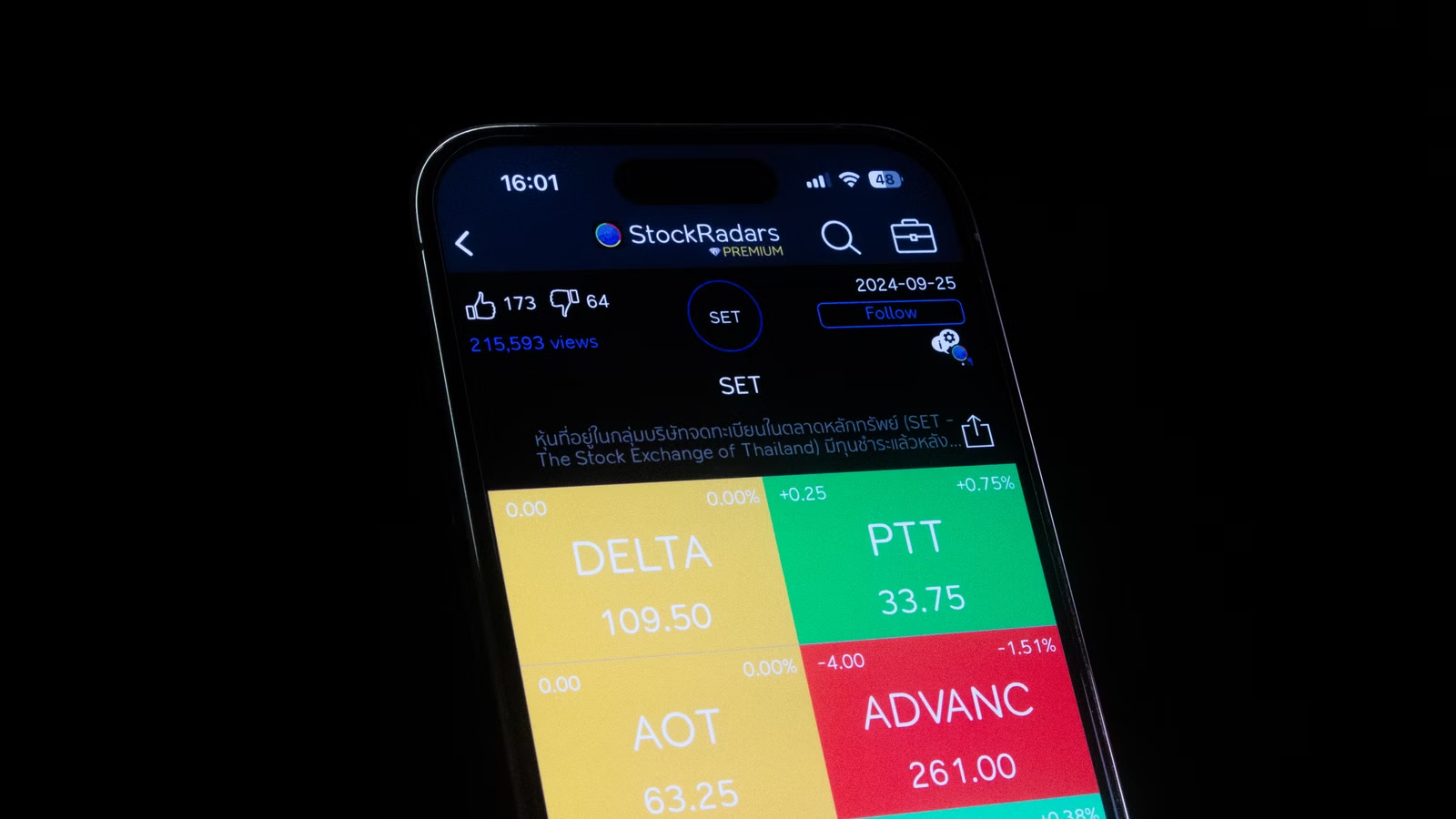
Individual investors usually cannot buy an index directly. Instead, they gain exposure through ETFs, index funds, futures, options, or other trading products. Long-term investors commonly use ETFs or funds, while futures and options are more often used for short-term trading and hedging. Before choosing a tool, you need to confirm the tracked index, fee structure, and risk level.
The most common route is through ETFs. For example, QQQ tracks the Nasdaq-100, and Invesco discloses a total expense ratio of 0.18%. Its strengths include strong liquidity, convenient trading, and a clear underlying index, making it suitable for investors seeking Nasdaq-100 exposure. Products linked to the Nasdaq Composite also exist. For example, ONEQ describes its index basis around the Nasdaq Composite, although products of this type are generally less discussed than QQQ.
More advanced traders may use futures. CME’s E-mini Nasdaq-100 provides exposure to the Nasdaq-100 Index, with a contract multiplier of $20 times the index level. The Micro E-mini Nasdaq-100 has a smaller multiplier of $2 times the index level. Futures can be useful for hedging, short-term trading, and professional risk management, but leverage can magnify both gains and losses.
| Trading Method | Suitable For | Advantages | Main Risks |
|---|---|---|---|
| ETFs | Long-term investors and beginners | Transparent, relatively liquid | Management fees, tracking error, market volatility |
| Index funds | Regular investing and long-term holding | Simple operation | Subscription/redemption timing, fee differences |
| Futures | Professional traders | High leverage, extended trading hours | Margin risk, forced liquidation, amplified volatility |
| Options | Hedging or strategy traders | Flexible strategies | Time decay, complex pricing |
| Leveraged or inverse products | High-risk short-term traders | Amplified directional exposure | Long-term deviation, rapid drawdowns |
Costs also matter. Index returns are only market performance; what you actually receive in your account is affected by trading commissions, platform fees, bid-ask spreads, fund expense ratios, FX costs, and tax treatment. If you trade U.S. stock-related products through a platform that is available under your local rules, you can review Biya U.S. stock trading fees before placing an order, and use real-time exchange rates to estimate how currency conversion may affect your final cost.
Summary: Trading “the Nasdaq” does not mean buying an abstract index. It means selecting a specific instrument. ETFs are easier for most individual investors to understand and use. Futures, options, and leveraged products require more trading experience and risk controls. Before choosing, you should confirm at least three things: whether the product tracks the Nasdaq Composite or the Nasdaq-100, whether its fees and bid-ask spreads are clear, and whether the service is available in your jurisdiction. Even if your index view is correct, the wrong product, excessive fees, or inappropriate leverage can still hurt actual results.
Which Index Is More Suitable for You?
If you want to observe the overall Nasdaq market, the Nasdaq Composite is more suitable. If you want to use mainstream ETFs or futures to participate in large-cap growth-stock performance, the Nasdaq-100 is more commonly used. Neither index is naturally “better”; the right choice depends on whether your goal is market observation, long-term allocation, or short-term trading.
For long-term investors, the advantage of the Nasdaq-100 is that its exposure is clear, its products are widely available, and its market liquidity is strong. It focuses on large non-financial companies and can more directly reflect trends in U.S. technology, platform businesses, semiconductors, cloud computing, consumer internet, and some healthcare innovation companies. But concentration is also its weakness. If major components experience valuation pressure, the index may decline sharply.
The Nasdaq Composite’s advantage is broader coverage. It can help you observe the overall performance of Nasdaq-listed companies. If you care about market breadth, such as whether gains in mega-cap companies are also spreading to mid-cap and small-cap growth stocks, the Composite may provide a more useful reference than the Nasdaq-100. However, because it is still market-cap weighted, large companies remain highly influential. Broader coverage should not be automatically treated as lower risk.
| Your Goal | More Suitable Reference |
|---|---|
| Assess overall Nasdaq market sentiment | Nasdaq Composite |
| Trade mainstream Nasdaq ETFs | Nasdaq-100 |
| Allocate to large technology and growth stocks | Nasdaq-100 |
| Observe market breadth | Nasdaq Composite |
| Conduct short-term trading or hedging | Nasdaq-100-related products |
| Reduce single-style exposure | Combine with other broad-market indexes |
You should also check portfolio overlap. Many global equity funds, S&P 500 ETFs, technology funds, and active funds already hold companies such as Apple, Microsoft, Nvidia, Amazon, Meta, and Alphabet. If you add a Nasdaq-100 ETF on top, you may not be diversifying; you may simply be increasing your exposure to large technology companies. You can use Biya U.S. stocks to review related U.S. stock symbols, then compare them with your fund holdings and order records to assess whether your portfolio is too concentrated.
Summary: Choosing between the Nasdaq Composite and the Nasdaq-100 is really about choosing a different way to observe the market and take risk exposure. Use the Composite if you want to understand the broader Nasdaq market. Use the Nasdaq-100 if you want to allocate to or trade mainstream Nasdaq-linked products. Do not decide only by historical returns. You should also consider portfolio overlap, investment horizon, fee structure, currency effects, and your ability to tolerate drawdowns. An index that suits someone else may not suit your portfolio.
What Risks Come With Investing in the Nasdaq Composite and Nasdaq-100?
The main risks of products linked to these two indexes include market volatility, technology-stock concentration, valuation drawdowns, currency movements, product fees, tracking error, liquidity risk, and leverage risk. Index investing can reduce single-stock risk, but it cannot eliminate market risk or guarantee principal or returns.
The first risk is concentration. Although the Nasdaq-100 contains 100 companies, its top holdings carry significant weight. Earnings expectations, regulatory pressure, AI investment cycles, semiconductor demand, and interest-rate changes affecting a few major technology companies can all influence index performance. The Nasdaq Composite includes more companies, but its market-cap-weighted structure still gives large companies greater influence.
The second risk is product structure. An ETF is an exchange-traded investment product whose market price can fluctuate and whose performance may be affected by fees and tracking error. ETPs can include ETFs, ETNs, commodity pools, and other structures, so similar names do not mean similar risks. Leveraged ETFs, inverse ETFs, futures, and options are more appropriate for traders who understand their mechanics and should not be the default choice for beginners.
The third risk is the extra cost faced by international investors. You may convert your local currency into U.S. dollars to trade, or you may buy a Nasdaq ETF listed in your local market. The former involves FX spreads, deposit and withdrawal costs, tax issues, and time-zone differences. The latter requires attention to fund premiums or discounts, quotas, trading hours, and local regulatory rules. Even if the index rises, currency movements and fees can affect final returns.
| Risk Type | Possible Impact | Practical Response |
|---|---|---|
| Market volatility | Net asset value or price may fall quickly | Control position size and holding period |
| Concentration risk | A few large companies may drive index moves | Check top holdings |
| Valuation risk | High-valuation periods may bring larger drawdowns | Do not rely only on recent performance |
| Currency risk | Local-currency returns may differ from U.S.-dollar returns | Estimate FX costs |
| Fee risk | Costs may reduce long-term returns | Compare expense ratios and spreads |
| Leverage risk | Gains and losses may be amplified | Beginners should avoid heavy leveraged positions |
Summary: Neither the Nasdaq Composite nor the Nasdaq-100 is a low-risk asset. They can help reduce single-company risk, but they cannot prevent broad U.S. market declines, technology-stock valuation pressure, U.S. dollar fluctuations, or product-structure risks. Before trading, read fund documents, fee disclosures, and risk statements carefully, especially for leveraged, futures, options, or inverse products. A more prudent process is to understand the index methodology first, select the product type second, and then manage position size and trading frequency.
From Index Selection to Trading Costs: What Should You Check Before Placing an Order?
When comparing the Nasdaq Composite, Nasdaq-100, QQQ, ONEQ, or other U.S. stock products, what you need to manage is not just index movement. You also need to manage the underlying instrument, fees, exchange rates, orders, and risk records. The index tells you market direction; your trading record tells you actual cost. Only when both are reviewed together can you better understand real investment outcomes.
Biya is a global multi-asset trading wallet that supports services related to U.S. stocks, Hong Kong stocks, and digital assets. Availability depends on your location, identity verification results, platform rules, and applicable laws and regulations. If the relevant services are available in your region, you can use Biya to monitor U.S. stock markets, review related instruments, and check fee structures before placing an order.
U.S. stock trading costs usually include more than commissions. They may also include platform fees, external agency fees, trading activity fees, FX costs, and bid-ask spreads. Biya charges $0 commission for U.S. stock trading, with a platform fee of $0.005 per share, subject to a minimum of $0.99 per order and a maximum of 1% of the trade value. External agency fees and trading activity fees are $0.00396 per share. For fractional orders below one share, only a platform fee equal to 1% of the total transaction amount is charged, capped at $1. Fees, product availability, and trading rules are subject to the fee schedule, order page, and applicable local regulatory requirements.
Before trading, you can review the following checklist:
- Confirm whether you are buying an index ETF, individual stock, fund, or derivative.
- Confirm whether the product tracks the Nasdaq Composite or the Nasdaq-100.
- Review platform fees, external fees, spreads, and FX costs before placing an order.
- Keep order and funding records after trading to review real costs.
- Do not assume an index gain means your personal account must be profitable.
Summary: Biya is better understood as part of the workflow for market monitoring, trade execution, and cost review, not as a substitute for investment judgment. You can use indexes to assess direction, product documents to understand rules, fee disclosures to estimate actual costs, and order records to review decision quality. This content introduces public market information, trading rules, and fee structures only and does not constitute investment advice. Before any trade, confirm product risks, account eligibility, and applicable legal and regulatory requirements.
FAQ
Can investors buy the Nasdaq Composite directly?
No, investors cannot buy the Nasdaq Composite itself directly. Most investors gain related exposure through ETFs, index funds, or derivatives. Before trading, check whether the product actually tracks the Nasdaq Composite and review its fees, liquidity, tax treatment, and local trading rules.
Is the Nasdaq-100 the same as a technology index?
No, the Nasdaq-100 is not exactly the same as a technology index. It includes 100 large non-financial companies listed on Nasdaq. Technology has a high weight, but the index may also include consumer, communication services, healthcare, and industrial companies. It can be viewed as a growth-stock benchmark, but not a pure technology index.
What is the relationship between QQQ and the Nasdaq-100?
QQQ is an ETF that tracks the Nasdaq-100; it is not the index itself. When you buy QQQ, you are buying fund shares. Your actual return can be affected by Nasdaq-100 performance, fund fees, bid-ask spreads, market price movements, and trading rules.
Which is riskier, the Nasdaq Composite or Nasdaq-100?
Risk cannot be judged by the index name alone. The Nasdaq-100 is more concentrated and more affected by major technology companies. The Nasdaq Composite is broader, but large-cap companies still have significant influence. Actual risk also depends on the product type, position size, and holding period.
What should international investors consider before buying a Nasdaq-100 ETF?
International investors should consider trading venue, U.S. dollar exchange rates, ETF expenses, bid-ask spreads, tax treatment, deposit and withdrawal costs, and local regulatory requirements. Nasdaq ETFs listed in different regions may have different structures, so investors should read product documents and platform fee disclosures before trading.
Is the Nasdaq-100 suitable for long-term regular investing?
Whether the Nasdaq-100 is suitable for long-term regular investing depends on your risk tolerance and asset allocation. It can experience significant volatility and is more suitable for investors who understand concentration risk, can tolerate drawdowns, and are willing to hold for the long term. It should not be treated as the only asset in a portfolio.
*This article is provided for general information purposes and does not constitute legal, tax or other professional advice from BiyaPay or its subsidiaries and its affiliates, and it is not intended as a substitute for obtaining advice from a financial advisor or any other professional.
We make no representations, warranties or warranties, express or implied, as to the accuracy, completeness or timeliness of the contents of this publication.
Related Blogs of

Online Bank-to-Bank Transfers: Account Linking, Steps, and Limits


US to Portugal Online Money Transfer Limits: Per-Transaction Caps Explained


Wire Transfer Requirements: Sender and Beneficiary Details Checklist



Choose Country or Region to Read Local Blog
 Australia
 Austria
 Belgium
 Canada
 Cyprus
 Czech Republic
 Denmark
 Estonia
 Finland
 France
 Germany
 Greece
 Hong Kong
 India
India Indonesia
 Ireland
 Italy
Italy Japan
Japan Latvia
 Lithuania
 Luxembourg
 Malaysia
 Malta
Malta Morocco
 Nepal
Nepal Netherlands
 New Zealand
 Norway
 Pakistan
 Philippines
 Poland
 Portugal
 Romania
 Singapore
 Slovakia
 Slovenia
 South Africa
 South Korea
 Spain
Spain Sweden
 Thailand
 United States
 Turkey
 United Arab Emirates
 United Kingdom
 Vietnam