How Much Are the Fees for Buying $1,000 of U.S. Stocks? A Breakdown of U.S. Stock Trading Costs





There is no fixed answer to how much the fee is for buying $1,000 of U.S. stocks. The actual cost depends on whether the platform charges commission, how platform fees are calculated, whether external agency fees exist, whether a per-order minimum charge is triggered, and whether the order is a buy or sell order. Zero commission only means the commission item may be $0. It does not mean platform fees, external agency fees, or regulatory-related fees are also $0. Before placing an order, review the fee schedule and order estimate. After execution, use the trade confirmation, account activity, and monthly statement to verify the final charge.
Simply put, the fee for buying $1,000 of U.S. stocks should be checked item by item across commission, platform fees, external agency fees, regulatory-related fees, and hidden execution costs, with the final result based on the order page and trade records.
Key Takeaways
- A $1,000 U.S. stock order should not be judged only by commission.
- Zero commission does not mean platform fees and agency fees are also zero.
- Small orders are most easily affected by per-order minimum charges.
- Sell orders may include regulatory-related fees or trading activity fees.
- Final costs should be based on the order page, trade records, and statements.
What Fees Make Up the Cost of Buying $1,000 of U.S. Stocks?

When buying $1,000 of U.S. stocks, the fee usually consists of commission, platform fees, external agency fees, and other possible charges. Different platforms use different field names. Some split fees into detailed line items, while others combine them, so investors should not look only at the “commission” number.
Common Buy-Side Fees: Commission, Platform Fees, and External Agency Fees
Commission is the easiest fee to understand. It usually refers to the basic fee charged by a broker or trading platform for completing a trade. Many platforms now offer zero commission on U.S.-listed stocks and ETFs. For example, Fidelity states that online U.S. stock and ETF trades have a $0 commission, and Charles Schwab also sets the base commission for online U.S.-listed stocks and ETFs at $0.
But outside commission, there may still be platform fees and external agency fees. Platform fees are usually charged according to the platform’s own rules, and may be calculated by executed shares, order value percentage, per-order minimum charge, or fee cap rules. External agency fees are usually related to trading, clearing, regulatory, or third-party institution costs. A platform may collect them on behalf of others, or combine related costs in its fee display.
Sell Orders May Add Regulatory-Related Fees
Buy and sell orders do not necessarily have the same fee structure. When buying $1,000 of U.S. stocks, the main items are commission, platform fees, external agency fees, and order-related charges. When selling, regulatory-related fees or trading activity fees may also appear. For example, when selling securities, a statement may show fees or broker pass-through costs related to the SEC Section 31 fee rate, and the FINRA Trading Activity Fee may also appear in applicable scenarios.
Therefore, for the same $1,000 amount, buy-side and sell-side charges may not be the same. When judging fees, separate buy orders, sell orders, ordinary stocks, options, ADRs, and margin scenarios.
| Fee Name | Trigger Scenario | Common on Buy Orders? | Common on Sell Orders? | Where to Check |
|---|---|---|---|---|
| Commission | Buying or selling stocks or ETFs | Common | Common | Fee schedule, order page |
| Platform fee | Charged after execution according to platform rules | Common | Common | Order estimate, trade record |
| External agency fee | Trading, clearing, or related institution costs | Possible | Possible | Order page, statement |
| Regulatory-related fee | Sell-side securities scenarios | Less common | More common | Trade confirmation |
| Options contract fee | Trading options | Depends on product | Depends on product | Options order page |
| ADR fee | Holding ADR stocks | Not always | Not always | Account activity |
| Margin interest | Using margin | During holding period | During holding period | Monthly statement, rate schedule |
Summary: There is no universal fee answer for buying $1,000 of U.S. stocks, because cost is not determined by one item. Commission may be $0, but platform fees, external agency fees, regulatory-related fees, and product-specific fees may still exist. Buy orders usually focus on commission, platform fees, and external agency fees. Sell orders may additionally include SEC Section 31-related fees, FINRA TAF, or trading activity fees displayed by the platform. To judge the real cost, check each fee item separately instead of relying only on the “$1,000” order amount or the “zero commission” label.
How Can You Estimate the Fee for Buying $1,000 of U.S. Stocks?

To estimate the fee for buying $1,000 of U.S. stocks, use three steps: first confirm the actual trade value and executed shares, then calculate commission, platform fees, and external agency fees separately, and finally determine whether minimum charges or fee caps are triggered.
Step 1: Confirm Trade Value and Executed Shares First
$1,000 is usually only a budget and may not equal the final executed value exactly. For example, if a stock executes at $25, $1,000 can buy 40 shares. If the execution price is $33.30, $1,000 can buy about 30 shares, and whether fractional shares are supported depends on platform rules.
Fee calculation should generally be based on actual executed shares and execution price. A market order may deviate from the $1,000 budget due to price movement. A limit order may only be partially filled. Fractional share orders may have separate rules. The pre-order figure is an estimate, while the post-trade statement is the final verification basis.
Step 2: Calculate Commission, Platform Fees, and External Agency Fees Separately
The general formula is:
Total trading fee = commission + platform fee + external agency fee + other possible fees
Commission may be fixed, calculated by share count, calculated as a percentage of order value, or set to $0. Platform fees may be calculated as executed shares × per-share fee rate, and may also have a per-order minimum charge or a fee cap based on trade value. External agency fees may be calculated by share count, trade value, or specific trading scenarios. Platforms such as Webull distinguish regulatory, trading activity, CAT, and other fee items in their fee explanations, and different platforms may display fees differently.
Step 3: Determine Whether a Minimum Charge Is Triggered
A $1,000 order is a small to medium-sized order and can be affected by per-order minimum charges. Suppose the platform fee calculated by shares is only $0.35, but the platform’s per-order minimum fee is $0.99. The final platform fee may be charged at $0.99. In this case, do not look only at the per-share rate; also check the minimum charge.
The fee impact may also differ between high-priced and low-priced stocks, even with the same $1,000 order. If platform fees are calculated by share count, a lower stock price means more shares and more accumulated per-share fees. If buying a high-priced stock, the executed share count is lower, and the calculated per-share fee may fall below the minimum charge, so the final fee may instead be determined by the per-order minimum. In other words, the same $1,000 order amount does not mean the fee structure is exactly the same.
| Estimation Item | What to Input | Calculation or Judgment |
|---|---|---|
| Budget amount | $1,000 | Only the order budget |
| Execution price | Actual execution price | Determines executed shares |
| Executed shares | Shown in trade record | Basis for fee calculation |
| Commission | Platform commission rule | Fixed, per-share, or $0 |
| Platform fee | Shares, rate, minimum charge | Compare calculated value with minimum |
| External agency fee | Shares or trade value | Based on platform display |
| Fee subtotal | Sum of all fees | Pre-order estimate |
| Actual debit | Trade value + fees | Verified after execution |
| $1,000 Buy Scenario | Assumed Execution Price | Approximate Shares | Fee Focus |
|---|---|---|---|
| High-priced stock | $250 | 4 shares | More likely to trigger minimum charge |
| Mid-priced stock | $20 | 50 shares | Check both per-share fee and minimum charge |
| Low-priced stock | $5 | 200 shares | Per-share accumulated fees are more visible |
| Fractional share order | Variable | Less than 1 share or non-integer shares | Check fractional share fee rules |
Summary: Estimating the cost of buying $1,000 of U.S. stocks should start from the execution result. $1,000 is only a budget. The final trade value depends on execution price, executed shares, fractional share rules, and whether the order is partially filled. When calculating fees, separate commission, platform fees, external agency fees, and other possible charges, then check whether platform fees trigger a per-order minimum charge or fee cap. For small to medium-sized orders, minimum charges may make the effective fee rate higher than the visible per-share rate. You can estimate before ordering, but the final result should still be based on the order page, trade confirmation, and account activity.
Demonstrating $1,000 Order Costs Under Different Fee Rules
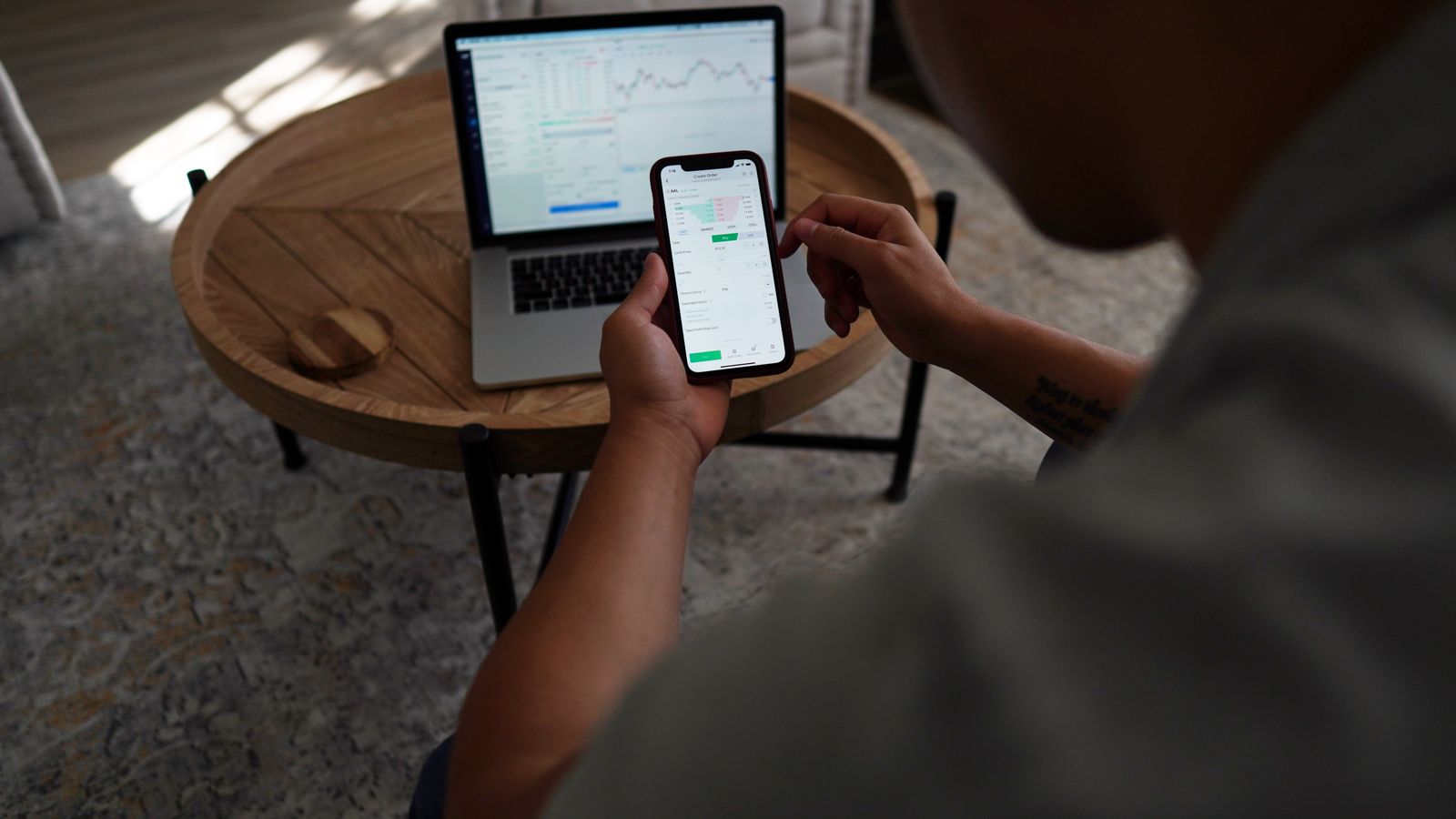
How much a $1,000 U.S. stock order costs depends on the platform’s fee rules. Even on zero-commission platforms, final cost can differ if platform fees, external agency fees, minimum charges, or sell-side fees differ.
Scenario 1: Zero Commission, but Platform Fees and Agency Fees Exist
Assume you use $1,000 to buy a stock at an execution price of $20, resulting in 50 executed shares. The platform commission is $0, the platform fee is $0.005 per share, and the external agency fee is $0.00396 per share.
The platform fee is 50 × $0.005 = $0.25. The external agency fee is 50 × $0.00396 = $0.198. If there is no minimum charge, the fee subtotal is about $0.45. But if the platform has a per-order minimum charge, the final platform fee may not be $0.25; it may be charged at the minimum.
Scenario 2: Platform Fee Triggers the Minimum Charge
Continuing the example above, if the platform requires a minimum platform fee of $0.99 per order, the calculated fee of 50 × $0.005 = $0.25 is below the minimum, so the platform fee is charged at $0.99. The external agency fee is about $0.20, making the total fee about $1.19.
This is a common fee pattern for small orders: the per-share calculation looks low, but the actual charge is affected by the minimum fee. A $1,000 order is not extremely small, but if the stock price is high and the executed share count is low, the minimum charge may still become the main cost.
Scenario 3: Selling $1,000 of U.S. Stocks May Have Different Fees
When selling, regulatory-related fees or trading activity fees should also be considered. If the sell amount is around $1,000, there may be regulatory fees related to selling securities in addition to platform fees and external agency fees. The exact amount depends on the fee rate, trade value, and platform display method, so buy-side costs cannot be directly reused for sell-side calculations.
| Scenario | Commission | Platform Fee | External Agency Fee | Regulatory-Related Fee | Estimated Total Fee | Note |
|---|---|---|---|---|---|---|
| Zero commission and no minimum | 0 | 0.25 | 0.20 | 0 | About 0.45 | Hypothetical only |
| Minimum platform fee triggered | 0 | 0.99 | 0.20 | 0 | About 1.19 | Common for small orders |
| Sell order | 0 | Depends on rules | Depends on rules | May appear | Based on statement | Buy and sell fees differ |
The numbers above are only used to explain the calculation method and do not represent the actual fees of all platforms. Taking Biya as an example, as of June 2026, Biya’s U.S. stock trading commission is $0, the platform fee is $0.005 per share, with a minimum of $0.99 per order and a maximum of 1% of trade value; external agency fees and trading activity fees are $0.00396 per share. Specific fees should still be based on the Fee Center, order page, and trade records.
Summary: Under different fee rules, the cost of a $1,000 U.S. stock order may range from a few dozen cents to more than one dollar. The key differences come from minimum charges, platform fee rates, and external agency fees. Zero commission does not mean there are no fees, especially when platform fees are calculated by shares and have a per-order minimum charge. Sell orders may also add regulatory-related fees or trading activity fees. You can use hypothetical fee rates for practice, but real charges must be verified through the platform fee schedule, order page, trade records, and account activity.
Why Can the Estimated Fee and Final Charge for a $1,000 U.S. Stock Order Differ?
The estimated fee and final charge for a $1,000 U.S. stock order may differ because of execution price, executed shares, multiple fills, minimum charges, rounding, and sell-side fees. The order estimate is a pre-order estimate, not the final statement.
Execution Price and Share Count Can Change Fees
If you buy with a market order, the final execution price may be higher or lower than the quote seen when placing the order. A $1,000 budget may finally execute at $998, or around $1,002 due to price movement. If fractional shares are not supported, executed shares will also be limited to whole shares.
A limit order may also be partially filled. For example, if you plan to buy 50 shares but only 30 shares execute, platform fees and external agency fees calculated by share count will also change. When there are multiple fills, the platform may show a summary fee or separate details.
Rounding, Minimum Charges, and Fee Caps Can Cause Differences
Fee items are often rounded to the smallest currency unit. External agency fees or regulatory-related fees may calculate to $0.198 manually, but the statement may show $0.20. If the platform fee is below the minimum charge, the final fee uses the minimum. If it exceeds the fee cap, the cap applies.
These rules can create differences between “manual calculation” and “platform final charge.” A difference does not necessarily mean the charge is wrong. Checking fee fields, rounding rules, and minimum charge rules first is more effective.
Order Type and Trading Session Affect Hidden Costs
Some costs do not appear as fee fields, but they affect actual execution. Bid-ask spreads and slippage are typical examples. During pre-market or after-hours trading, in less liquid stocks, or during volatile periods, spreads may widen and market order execution prices may deviate from expectations.
| Difference Reason | Impact on a $1,000 Order | How to Verify |
|---|---|---|
| Execution price change | Trade value differs from budget | Check trade confirmation |
| No fractional shares | Buy amount cannot equal exactly $1,000 | Check executed shares |
| Partial fill | Fees calculated on actual filled amount | Check order details |
| Multiple fills | Fee display may be more complex | Check fill records |
| Minimum charge | Effective fee rate rises for small orders | Compare fee rules |
| Rounding | Difference of a few cents | Check statement fields |
| Pre-market/after-hours | Spreads and slippage may widen | Check trading session |
Summary: The estimated fee and final charge for a $1,000 order differ because actual execution results and fee rules may change. Execution price, executed shares, fractional share limits, partial fills, multiple fills, minimum charges, fee caps, rounding, and sell-side regulatory-related fees can all affect the final number. Pre-order fee estimates are only for reference. After execution, the trade confirmation, account activity, and monthly statement should be the basis. When there is a difference, check fee fields item by item instead of only looking at the account balance change.
What Hidden Costs Should Be Considered When Buying $1,000 of U.S. Stocks?
In addition to visible transaction fees, buying $1,000 of U.S. stocks may involve bid-ask spreads, slippage, ADR fees, options contract fees, margin interest, and funding-related costs. These costs may not all appear in the “fee” field, but they affect real trading cost.
Bid-Ask Spread and Slippage
The bid-ask spread is the difference between the bid and ask prices. Suppose a stock has a bid price of $20.00 and an ask price of $20.04. If a market order is used, execution may occur close to $20.04. Even if commission is $0, the spread still affects cost.
Slippage is the difference between expected price and actual execution price. For a $1,000 order in highly liquid stocks, the effect may be small. But in pre-market or after-hours trading, less liquid stocks, or volatile markets, slippage can become more obvious.
ADR, Options, and Margin Fees
If the $1,000 is used to buy ADR stocks, depositary bank fees may appear during the holding period. If trading options, the cost should not be calculated like a normal stock order. Options may have contract fees, exchange fees, and higher strategy risks. If margin is used, margin interest must also be calculated.
Margin interest is not a one-time order fee. It accumulates with borrowed amount and time. Even if the purchase amount is only $1,000, once financing is used, the longer the holding period, the more noticeable the interest impact may become.
Funding-Related Costs
Some investors may also encounter currency conversion, deposits, withdrawals, arrival time, and account service-related costs. Funding costs may not appear in a single stock order, but they affect the overall trading experience. When different regions, identity verification results, and platform rules are involved, platform rules and applicable laws and regulations should apply.
| Hidden Cost | Shown in Order Fee? | How to Verify | Applicable Scenario |
|---|---|---|---|
| Bid-ask spread | Usually not shown | Check market quotes | Market orders, less liquid stocks |
| Slippage | Usually not shown | Compare order price and execution price | Volatile markets |
| ADR fee | Not always shown in the order | Check account activity | ADR holding |
| Options contract fee | Usually shown | Check options order page | Options trading |
| Margin interest | Usually shown monthly | Check monthly statement | Margin trading |
| Currency conversion cost | Not always shown in stock order | Check funding activity | Multi-currency funds |
| Deposit/withdrawal fees | Not always shown in trade order | Check funding records | Fund transfers |
Summary: The real cost of buying $1,000 of U.S. stocks is not limited to order fees. Bid-ask spreads, slippage, ADR fees, options contract fees, margin interest, and funding-related costs can all affect the final result. Visible fees are easier to see on the order page, while hidden costs need to be checked through execution price, market quotes, account activity, and monthly statements. For beginners, it is important to distinguish “transaction fees” from “total trading cost.” Fees are only one part of cost; real cost also includes execution quality, holding costs, and funding arrangements.
How to Check the Cost of a $1,000 U.S. Stock Trade Before Placing an Order
Before placing a $1,000 U.S. stock order, you can check costs in the order of “fee schedule, order estimate, trade confirmation, account activity, monthly statement.” This process helps connect estimated fees with final charges.
Check the Fee Schedule and Order Estimate Before Placing an Order
First review the platform fee center or fee schedule, focusing on commission, platform fees, external agency fees, minimum charges, fee caps, sell-side fees, and special product fees. Then check the estimated charge on the order page, including how many shares a $1,000 budget can buy and what the estimated fee is.
If the fee schedule and order page show different information, the order page and the latest platform rules should be prioritized. Platform fees, external agency fees, sell-side fees, and similar items should be checked against actual order fields.
Check Trade Confirmation and Account Activity After Execution
After execution, focus on the trade confirmation. Review trade value, executed shares, execution price, order type, commission, platform fees, external agency fees, and regulatory-related fees. Then check account activity to confirm whether the actual debit matches the trade value and fee items.
Monthly statements are useful for review. Margin interest, market data fees, ADR fees, and account service fees may not appear clearly in a single order, but may appear in account activity or monthly statements.
Use a Real Order Page as a Fee-Checking Exercise
If the relevant services are available in your region, you can also use a real order page as a fee-checking exercise. Taking Biya as an example, first use the Fee Center to understand fields such as commission, platform fees, external agency fees, minimum charges, and fee caps, then use Biya Web Trading to check estimated order fees, trade records, and account details. Users who prefer mobile can also compare the fee display for the same order in the Biya App. No matter which platform is used, fee disclosures should be read together with the actual order page, rather than judging final cost only by promotional rates.
| Checking Step | Specific Action |
|---|---|
| 1 | Review the platform’s latest fee schedule |
| 2 | Confirm how many shares a $1,000 budget can buy |
| 3 | Check estimated fees on the order page |
| 4 | Verify commission, platform fees, and external agency fees |
| 5 | Determine whether minimum charges are triggered |
| 6 | Review the trade confirmation after execution |
| 7 | Compare account activity and monthly statement |
| 8 | If differences appear, check multiple fills, sell-side fees, and special product fees |
Summary: Checking the cost of a $1,000 U.S. stock trade should not stop at a quick look at the pre-order estimate. A fuller process is: review the fee schedule to confirm commission, platform fees, external agency fees, and minimum charges; review the order page before placing the order to understand estimated shares and estimated charges; check the trade confirmation after execution to confirm actual execution price and fee fields; and review account activity and monthly statements at month end to find margin, ADR, market data, and account service fees. Using a real order page as practice can help beginners understand how fee fields connect to final charges.
FAQ
Is the Fee for Buying $1,000 of U.S. Stocks Fixed?
No. The fee for buying $1,000 of U.S. stocks depends on platform commission, platform fees, external agency fees, minimum charges, executed shares, and whether the order is a buy or sell order. Final fees should be based on the order page, trade records, and statements.
Will a $1,000 U.S. Stock Order Still Be Charged on a Zero-Commission Platform?
It may be. Zero commission only means the commission item is $0. Platform fees, external agency fees, regulatory-related fees, ADR fees, or account service fees may still exist. Check the fee schedule and order estimate before placing the order.
How Is the Platform Fee Calculated for Buying $1,000 of U.S. Stocks?
Platform fees may be calculated by executed shares, percentage of order value, per-order minimum charge, or fee cap rules. A $1,000 order should be checked item by item based on actual executed shares, trade value, and platform fee rules.
Why Are Fees Different When Selling $1,000 of U.S. Stocks?
Selling $1,000 of U.S. stocks may involve regulatory-related fees or trading activity fees. Final fees are also affected by execution price, executed shares, multiple fills, platform fee rules, and statement display methods.
Should You Consider Bid-Ask Spread When Buying $1,000 of U.S. Stocks?
Yes. Bid-ask spread and slippage may not appear as transaction fees, but they affect actual execution cost. They deserve more attention when liquidity is low, volatility is high, or trading occurs before or after regular market hours.
Will Buying High-Priced Stocks With $1,000 Lead to Higher Fees?
Not necessarily. High-priced stocks have fewer executed shares, so per-share fees may be lower, but they are also more likely to fall below the per-order minimum charge. Low-priced stocks have more executed shares, making accumulated platform or agency fees more noticeable.
How Can Beginners Verify the Actual Charges on a $1,000 U.S. Stock Order?
Beginners should first check the fee schedule and order estimate, then compare the trade confirmation, account activity, and monthly statement after execution. If there is a difference, first check multiple fills, minimum charges, sell-side fees, ADRs, or options-related fees.
After understanding the cost of a $1,000 U.S. stock trade, the next step is to verify fee fields in real orders instead of remembering only one estimated number. Biya can be used as a reference entry point for understanding services related to U.S. stocks, Hong Kong stocks, digital assets, and digital asset ETFs. As of June 2026, Biya’s U.S. stock trading commission is $0, while platform fees, external agency fees, and other charges are subject to the Fee Center, order page, and trade records. If the relevant services are available in your region, you can use Biya Web Trading or the Biya App to compare the order page, trade records, and account details, then decide whether it is suitable based on your trading frequency, order amount, and risk tolerance.
The above is only intended to introduce public market information, trading rules, and fee structures, and does not constitute investment advice. Whether related trading services are available depends on the user’s location, identity verification results, platform rules, and applicable laws and regulations. Investing in U.S. stocks and digital assets involves risks such as price volatility, liquidity, exchange rates, and regulatory restrictions. Specific fee rates and charge items should be based on the latest fee disclosures, orders, and trade records of the platform you use. Past fee rates do not represent future rules.
*This article is provided for general information purposes and does not constitute legal, tax or other professional advice from BiyaPay or its subsidiaries and its affiliates, and it is not intended as a substitute for obtaining advice from a financial advisor or any other professional.
We make no representations, warranties or warranties, express or implied, as to the accuracy, completeness or timeliness of the contents of this publication.
Related Blogs of

The Borderless Wallet: How Biya Is Quietly Rewriting What "Global Money" Means


How Are U.S. Stock Trading Fees Calculated? Using Commission, Platform Fees, and External Agency Fees as Examples


Why You Should Calculate Trading Costs Before Frequently Trading U.S. Stocks

How Do Zero-Commission U.S. Stock Trading Platforms Make Money? Fees and Service Models Explained
Choose Country or Region to Read Local Blog
 Australia
 Austria
 Belgium
 Canada
 Cyprus
 Czech Republic
 Denmark
 Estonia
 Finland
 France
 Germany
 Greece
 Hong Kong
 India
India Indonesia
 Ireland
 Italy
Italy Japan
Japan Latvia
 Lithuania
 Luxembourg
 Malaysia
 Malta
Malta Morocco
 Nepal
Nepal Netherlands
 New Zealand
 Norway
 Pakistan
 Philippines
 Poland
 Portugal
 Romania
 Singapore
 Slovakia
 Slovenia
 South Africa
 South Korea
 Spain
Spain Sweden
 Thailand
 The United States
 Turkey
 United Arab Emirates
 United Kingdom
 Vietnam
Contact Us




BIYA GLOBAL LLC is registered with the Financial Crimes Enforcement Network (FinCEN), an agency under the U.S. Department of the Treasury, as a Money Services Business (MSB), with registration number 31000218637349, and regulated by the Financial Crimes Enforcement Network (FinCEN).
BIYA GLOBAL LIMITED is a registered Financial Service Provider (FSP) in New Zealand, with registration number FSP1007221, and is also a registered member of the Financial Services Complaints Limited (FSCL), an independent dispute resolution scheme in New Zealand.