Are U.S. Stock Buying and Selling Fees the Same? Which Fees Are Charged Only When Selling?





U.S. stock buying and selling fees are usually not exactly the same. When buying, you mainly need to look at commissions, platform fees, settlement fees, and currency conversion costs. When selling, in addition to these fees, you may also see regulatory-related charges such as the SEC Fee and FINRA TAF. To judge whether a U.S. stock trade is expensive, you should not only look at “zero commission.” You also need to consider order direction, transaction value, number of shares, platform minimum fees, and billing details. For ordinary investors, the most practical method is to check the estimated fees before placing an order and then verify the fee items after the trade is executed.
Key Takeaways
- U.S. stock buying and selling fees are usually not exactly the same.
- Sell orders more commonly include SEC Fee and FINRA TAF.
- Commissions, platform fees, and settlement fees may apply on both sides.
- Low-priced stocks and large-share orders require closer attention to per-share fees.
- Zero commission does not mean zero cost; billing details matter more.
- Total cost should be judged by order value, share quantity, and trading frequency.
Why Are U.S. Stock Buying and Selling Fees Different?
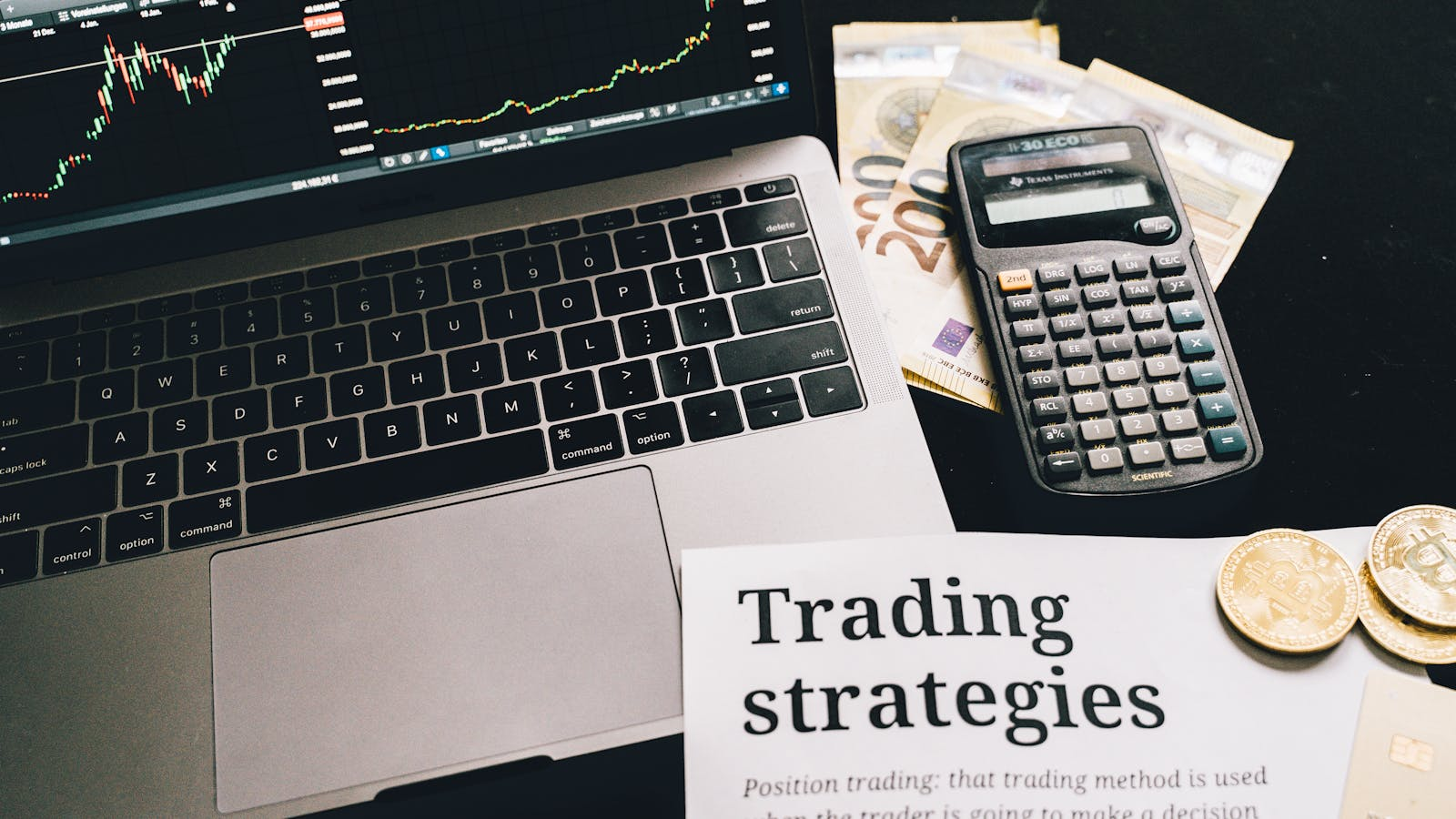
U.S. stock buying and selling fees differ mainly because the sources of those fees are different. Broker commissions, platform fees, clearing fees, and settlement fees are usually determined by the platform or trading channel and may apply to both buying and selling. Regulatory-related charges such as the SEC Fee and FINRA TAF are more commonly triggered on the selling side. In other words, buying and selling are not simply charged “once on each side”; different fee items are triggered in different trade directions.
The U.S. stock order bill you see is usually the combined result of multiple fee items. These costs generally fall into at least three categories. The first category is broker or platform charges, such as commissions, platform fees, and order service fees. The second category is external institution or market infrastructure-related costs, such as clearing fees, settlement fees, and CAT Fee. The third category is regulatory-related fees, such as the SEC Section 31 Fee and FINRA Trading Activity Fee.
The U.S. SEC’s Section 31 fee rate applies to covered sales. Starting April 4, 2026, the rate is US$20.60 per US$1 million in transaction value. The key phrase here is covered sales, which means it is usually related to sell transactions rather than ordinary buy orders.
FINRA’s explanation of the Trading Activity Fee also shows that TAF is one of the regulatory fees FINRA charges its members to cover regulatory, examination, and rulemaking costs. In stock trading, it is usually calculated based on the number of shares sold, so you are more likely to see “TAF,” “trading activity fee,” or a similar item on a sell order statement.
| Fee Type | Common on Buy Orders? | Common on Sell Orders? | Main Basis for Judgment |
|---|---|---|---|
| Commission | Possible | Possible | Broker fee schedule |
| Platform fee | Possible | Possible | Platform rules |
| Settlement fee | Possible | Possible | Clearing and settlement arrangements |
| SEC Fee | Usually less common | Usually common | Sell transaction value |
| FINRA TAF | Usually less common | Usually common | Number of shares sold |
| ADR Fee | Depends on the security | Depends on the security | Whether it is an ADR |
Buy-side fees are more like “trading service costs,” while sell-side fees are more likely to include “regulatory trading costs.” However, higher sell-side fees usually do not mean the platform is deliberately adding extra charges, because part of the cost may be collected or passed through under U.S. market rules. What really matters is comparing the buy and sell statements for the same platform, the same stock, and the same number of shares to see which additional fields appear.
Summary: U.S. stock buying and selling fees differ not because selling is always “charged more,” but because the selling direction is more likely to trigger regulatory-related fees. You can first divide costs into three categories: platform charges, external institution fees, and regulatory fees, then check whether each item is related to order direction. When buying, focus on commissions, platform fees, settlement fees, and minimum charges. When selling, in addition to those items, pay particular attention to SEC Fee, FINRA TAF, and possible CAT Fee. Only by breaking down fee sources can you judge whether the difference between buy and sell fees is reasonable.
Which U.S. Stock Fees Usually Appear on Both Buy and Sell Orders?

U.S. stock fees that may appear on both buy and sell orders are usually platform charges and transaction infrastructure-related costs. Common items include commissions, platform fees, settlement fees, clearing fees, certain CAT Fees, and currency conversion or funding channel costs. Not every platform charges them, and they may not be displayed under the same names. But as long as a platform passes on the costs of trade execution, clearing, or settlement services to users, these costs may appear on both sides.
The most commonly overlooked distinction is between “zero commission” and “zero cost.” Zero commission only means the commission item is zero. It does not mean platform fees, external institution fees, settlement fees, and regulatory fees are all zero. FINRA’s Fees and Commissions also reminds investors that fees for investment products can vary depending on account type, service type, and investment product.
Fees that may apply on both the buy and sell sides can be understood as follows:
| Fee Item | Common Calculation Method | Key Point to Watch |
|---|---|---|
| Commission | Per share, by transaction value, or fixed amount | Whether there is a minimum fee |
| Platform fee | By number of shares or order value | More noticeable for small orders |
| Settlement fee | By number of shares or transaction value | Whether there is a cap or minimum |
| CAT Fee | By executed shares | Whether the platform passes it on to users |
| Currency conversion cost | Exchange-rate spread or FX fee | Funding, conversion, and trading currency |
| ADR Fee | By ADR share count or custody arrangement | Whether the security is an ADR |
CAT Fee is an item that can easily cause confusion. FINRA Rule 6897 concerns Consolidated Audit Trail Funding Fees and refers to the roles of buyer executing brokers and seller executing brokers. For ordinary investors, the key is not to memorize every underlying role, but to know that CAT-related fees may not be limited to selling. Whether they appear on the customer bill depends on whether the platform passes them through and how it displays them.
If you trade ADRs, you should also pay attention to ADR fees separately. The SEC’s American Depositary Receipts explanation states that ADRs represent shares of foreign companies in the U.S. market. ADR fees are not strictly equivalent to buy fees or sell fees. They may appear during the holding period, when dividends are distributed, or on specific billing dates.
Summary: Buying does not necessarily mean there are no fees, and selling does not mean every fee is higher. Commissions, platform fees, settlement fees, CAT Fee, currency conversion costs, and ADR fees may all appear on both sides or during the holding period. Ordinary investors should not rely only on simple statements such as “buying is free” or “selling has fees.” Instead, they should look at the calculation basis of each fee: whether it is charged by transaction value, by number of shares, by order count, or by the type of security held. Only then can you understand the real cost of a trade instead of being influenced by a single fee item.
Which U.S. Stock Fees Are Usually Charged Only When Selling?

The U.S. stock fees that are more commonly seen only when selling are mainly the SEC Fee and FINRA TAF. The SEC Fee is mainly calculated based on the value of the sell transaction, while FINRA TAF is mainly calculated based on the number of shares sold. They are not broker commissions in the ordinary sense, but fee items within the U.S. market regulatory framework. Brokers may pass them on or list them separately in customer sell orders.
The SEC Fee usually refers to the Section 31 Transaction Fee. Starting April 4, 2026, the SEC Section 31 Fee rate for most covered sales is US$20.60 per US$1 million in transaction value. In simplified terms, the formula can be understood as:
| Item | Simplified Calculation | Suitable Scenario to Watch |
|---|---|---|
| SEC Fee | Sell transaction value × 0.0000206 | Large sell orders |
| FINRA TAF | Shares sold × per-share rate | Low-priced stocks and large-share orders |
| Sell-side CAT Fee | By executed shares or platform rules | Frequent trading and multiple orders |
FINRA’s Member Regulatory Fees page lists the current TAF for covered equity securities as US$0.000166 per share, with a maximum of US$8.30 per trade. The key feature of this fee is that it is calculated by share count, so users trading low-priced stocks or large numbers of shares may feel its effect more clearly.
For example, if you sell 10 shares of a high-priced stock at US$500 per share, the transaction value is US$5,000. The SEC Fee is calculated based on that amount, while TAF is calculated based on 10 shares. If you sell 5,000 shares of a US$1 stock, the transaction value is also US$5,000, but the share-count basis for TAF is much larger. The two trades have the same transaction value, yet their fee structures may differ.
Also note that the names on platform statements may not be exactly the same. Some platforms write SEC Fee, while others may display it as a securities regulatory fee. Some write FINRA TAF, while others write trading activity fee. Some platforms may combine external institution fees, regulatory fees, and clearing-related costs. If you see a sell statement that costs more than a buy statement, you should not immediately assume the platform is charging arbitrarily. First check whether the added items belong to sell-side regulatory fees.
Summary: The most typical additional fees on sell orders are the SEC Fee and FINRA TAF. The former is mainly related to transaction value, while the latter is mainly related to share count. For large sell orders, SEC Fee deserves more attention. For low-priced stocks or high-share-count sell orders, FINRA TAF can have a more noticeable impact. These are usually not broker commissions but regulatory-related costs. Whether they are passed on, how they are rounded, and whether a minimum applies should be checked against the platform’s fee schedule and executed order statement.
How Can You Break Down the Difference Between Buy and Sell Fees Using One Order?
The most effective way to compare buy and sell fees is not to look only at the fee schedule, but to break down the same stock, the same number of shares, and the same platform. For a buy order, list the commission, platform fee, and settlement fee. For a sell order, start with the same base items and then check whether SEC Fee, FINRA TAF, and any other sell-side charges appear. This helps you identify where the difference comes from.
You can break down a U.S. stock order from three angles:
| Dimension | Buy Order Focus | Sell Order Focus |
|---|---|---|
| Transaction value | Platform fee cap, currency conversion cost | SEC Fee, platform fee cap |
| Number of shares | Per-share platform fee, settlement fee | FINRA TAF, per-share fees |
| Number of orders | Per-order minimum fee | Per-order minimum fee and regulatory fees |
Suppose you buy 10 shares of a high-priced U.S. stock, and the platform charges a per-share platform fee with a minimum fee per order. In this case, the factor that most affects your perceived cost may not be the per-share rate, but the minimum fee. If the per-share fee generated by 10 shares is lower than the minimum, the final statement will be charged at the minimum amount.
If you sell the same 10 shares, the sell statement will usually add SEC Fee and FINRA TAF on top of the original fee items. Because the share count is small, the absolute amount of TAF may be very small. If the stock price is high, the SEC Fee may be relatively more noticeable. In other words, for small quantities of high-priced stocks, transaction value matters more; for large quantities of low-priced stocks, share count matters more.
Low-priced stock scenarios are different. Suppose you are buying or selling a stock priced at around US$1 per share. The transaction value may not be large, but the number of shares can be high. Per-share platform fees, settlement fees, and TAF all become more important. For low-priced stocks, fractional shares, and frequent traders, fees that look tiny on a per-share basis can still accumulate and affect total cost.
When checking the actual statement, you can follow this order:
- Confirm the order direction: buy or sell.
- Confirm the transaction value: executed price × executed shares.
- Check whether there is a commission or platform fee.
- Check whether SEC Fee or FINRA TAF appears.
- Check whether the fees are affected by minimum charges or caps.
- Finally, verify FX, deposit, withdrawal, or ADR-related costs.
The U.S. market has moved to a T+1 settlement cycle. The SEC’s explanation of the T+1 settlement cycle states that the U.S. securities market shifted to the standard T+1 settlement cycle on May 28, 2024. Settlement cycle is not the same as trading fees, but it affects cash availability, settlement arrangements, and cross-market fund management.
Summary: When breaking down the difference between buy and sell fees, do not simply ask whether buying or selling is more expensive. Instead, look at transaction value, number of shares, and number of orders. Small quantities of high-priced stocks require more attention to value-based fees and minimum charges. Large quantities of low-priced stocks require more attention to share-based fees. Frequent traders should also look at monthly accumulated costs. Any additional cost on the selling side usually comes from SEC Fee, FINRA TAF, and whether the platform passes through external charges.
Why Do U.S. Stock Buy and Sell Fees Differ So Much Across Platforms?
The differences in U.S. stock buy and sell fees across platforms mainly come from commissions, platform fees, minimum charges, settlement fees, fractional share rules, and funding costs, rather than SEC Fee or FINRA TAF themselves. Regulatory fees usually have a rule-based foundation, but whether the platform passes them on, how they are displayed, and whether service fees are added can make the final statement look very different.
Take platform fees as an example. Some platforms emphasize zero commission but may still charge platform fees. Some platforms charge commissions and platform fees by share and set a minimum amount per order. Others separately display trading, clearing, and regulatory-related costs. When comparing platforms, users should compare the same order size instead of looking only at a single advertised fee rate.
| Comparison Dimension | Why It Matters | Best Suited for Users Who Care About |
|---|---|---|
| Commission | Affects basic trading cost | All users |
| Platform fee | May still apply on zero-commission platforms | Small-order and frequent traders |
| Minimum fee | Small orders may have a higher effective fee rate | Beginners and smaller-account users |
| Fractional share rules | Orders below 1 share may have separate pricing | Recurring investors and fractional share users |
| FX cost | Affects funding and currency conversion | Cross-currency users |
| External fee pass-through | Affects buy and sell statement fields | Users who care about cost transparency |
For example, Interactive Brokers’ stock commissions information shows that different markets, order types, and pricing plans can affect final fees. Tiger Brokers’ U.S. stock trading fees also separates commissions, platform fees, SEC fees, settlement fees, and trading activity fees into different items. This shows that the differences among platforms often lie in the “fee structure,” not just whether there is a commission.
If you care more about fee transparency, you can focus on whether the platform displays estimated fees before order placement and whether it provides a clear statement after execution. For example, Biya is a global multi-asset trading wallet that supports U.S. stocks, Hong Kong stocks, and crypto trading, as well as USDT conversion into major fiat currencies such as USD or HKD. For U.S. stock trading costs, users can first review the U.S. stock trading fees, then confirm the actual fees on the order page.
Biya charges US$0 commission for U.S. stock trading. Its platform fee is US$0.005 per share, with a minimum of US$0.99 per order and a maximum of 1% of transaction value. External institution fees and trading activity fees total US$0.00396 per share. The fee schedule also states that fractional share orders with executed quantity below 1 share are charged only a platform fee of 1% of total transaction amount, capped at US$1. Platform fees, external institution fees, and other charges are subject to the fee schedule and order page display.
Summary: The real differences among platforms usually do not come from rule-based fees such as SEC Fee and FINRA TAF, but from commissions, platform fees, minimum charges, fractional share rules, FX costs, and how statements are displayed. When comparing platforms, it is best to use real order scenarios: how many shares you buy, how many shares you sell, whether the order is fractional, whether you trade frequently, and whether currency conversion is involved. Looking only at “zero commission” may underestimate total cost, while looking only at one sell-side fee may overstate platform differences.
How Should Ordinary Investors Judge the Total Cost of U.S. Stock Trading?
Ordinary investors should judge the total cost of U.S. stock trading in three layers: estimated fees before placing an order, executed statement after the trade, and long-term accumulated cost. Before placing an order, check the platform’s estimated fees. When selling, pay particular attention to SEC Fee and FINRA TAF. After execution, check statement fields and rounding rules. Over the long term, consider trading frequency, FX costs, and holding-period fees.
To assess total cost, start by asking six questions:
- Is this order a buy or a sell?
- Is the security a common stock, ETF, ADR, or OTC stock?
- Does the platform charge a commission?
- Is the platform fee calculated by share count, transaction value, or order count?
- Is there a minimum fee per order or a maximum cap?
- Does the sell order include SEC Fee, FINRA TAF, or CAT Fee?
For long-term investors, a single sell-side regulatory fee is usually not the most important variable. They should pay more attention to minimum buy-side fees, FX costs, holding-period ADR fees, and the total bill at the time of selling. For frequent traders, per-order minimum fees and per-share fee items accumulate continuously. Even if the amount per trade is low, the monthly total cost may become significant.
If you research individual stocks before deciding whether to trade, you can use the U.S. stock search tool to view stock information, then return to the order page to check trading fees. The benefit of doing this is that it separates “stock selection judgment” from “fee judgment,” helping you avoid ignoring security risk just because fees are low, or misjudging platform costs just because a sell order has one extra fee item.
If the relevant services are available in your region, you can also use the Biya App to further check account support, trading access, and fee display. Service availability depends on the user’s location, identity verification results, platform rules, and applicable laws and regulations. U.S. stock trading involves market volatility, exchange-rate changes, and fee differences. Before trading, you should fully understand order types, fee structures, and risks. This does not constitute investment advice.
Summary: To judge the total cost of U.S. stock buying and selling, do not look only at one side of the trade, and do not look only at whether the commission is zero. A more reliable method is to check estimated fees before placing the order, verify the statement after execution, and calculate accumulated cost over time based on trading frequency and funding path. On the selling side, focus on SEC Fee and FINRA TAF. On both buy and sell sides, focus on platform fees, minimum charges, settlement fees, FX costs, and ADR fees. The more transparent the fee display, the easier it is to make a rational decision before trading.
FAQ
Why Do U.S. Stock Sell Orders Cost More Than Buy Orders?
U.S. stock sell orders may commonly include SEC Fee and FINRA TAF. The former is mainly calculated based on sell transaction value, while the latter is mainly calculated based on the number of shares sold. The exact amount also depends on whether the platform passes the cost through, current fee rates, rounding rules, and the executed order statement.
Does Zero Commission Mean U.S. Stock Trading Is Free?
Zero commission does not mean U.S. stock trading is free. It only means the commission field is zero. Platform fees, settlement fees, regulatory fees, FX costs, or ADR fees may still apply. Total cost should be judged based on the fee schedule and order statement.
What Is the Difference Between SEC Fee and FINRA TAF?
SEC Fee is usually calculated based on sell transaction value, while FINRA TAF is usually calculated based on the number of shares sold. Both are common regulatory-related fees in the U.S. market, but their calculation bases differ, so large-value orders and high-share-count orders may feel the cost differently.
Which Fees Matter Most for Small U.S. Stock Orders?
Small U.S. stock orders should pay particular attention to platform minimum fees and fractional share rules. Even if the rate of a single fee item is low, a per-order minimum fee can raise the effective cost as a percentage of order value. Fee estimates should be checked before execution.
How Should Frequent U.S. Stock Traders Evaluate Trading Costs?
Frequent U.S. stock traders should look at monthly accumulated cost rather than only single-trade fees. Commissions, platform fees, SEC Fee, FINRA TAF, CAT Fee, and FX costs can all accumulate as trade frequency increases, so executed statements should be summarized and compared over time.
How Are Fractional U.S. Stock Buy and Sell Fees Calculated?
Fractional U.S. stock fees depend on platform rules. Some platforms apply separate pricing for orders below 1 share, while others process them under ordinary order rules. Actual fees should be based on the order page, executed statement, fee schedule, and applicable local rules.
*This article is provided for general information purposes and does not constitute legal, tax or other professional advice from BiyaPay or its subsidiaries and its affiliates, and it is not intended as a substitute for obtaining advice from a financial advisor or any other professional.
We make no representations, warranties or warranties, express or implied, as to the accuracy, completeness or timeliness of the contents of this publication.
Related Blogs of

Why U.S. Stock Short-Term Trading Requires You to Look at Fees, Slippage, and Order Types Together


Long-Term Investing vs Short-Term Trading: Where Do U.S. Stock Trading Costs Differ?


What Is the U.S. Stock External Institution Fee? What Retail Investors Should Know About Fees

Is Buying U.S. Stocks with Low Fees Reliable? How Beginners Can Judge Platform Fee Transparency

Choose Country or Region to Read Local Blog
 Australia
 Austria
 Belgium
 Canada
 Cyprus
 Czech Republic
 Denmark
 Estonia
 Finland
 France
 Germany
 Greece
 Hong Kong
 India
India Indonesia
 Ireland
 Italy
Italy Japan
Japan Latvia
 Lithuania
 Luxembourg
 Malaysia
 Malta
Malta Morocco
 Nepal
Nepal Netherlands
 New Zealand
 Norway
 Pakistan
 Philippines
 Poland
 Portugal
 Romania
 Singapore
 Slovakia
 Slovenia
 South Africa
 South Korea
 Spain
Spain Sweden
 Thailand
 The United States
 Turkey
 United Arab Emirates
 United Kingdom
 Vietnam
Contact Us




BIYA GLOBAL LLC is registered with the Financial Crimes Enforcement Network (FinCEN), an agency under the U.S. Department of the Treasury, as a Money Services Business (MSB), with registration number 31000218637349, and regulated by the Financial Crimes Enforcement Network (FinCEN).
BIYA GLOBAL LIMITED is a registered Financial Service Provider (FSP) in New Zealand, with registration number FSP1007221, and is also a registered member of the Financial Services Complaints Limited (FSCL), an independent dispute resolution scheme in New Zealand.