Why U.S. Stock Short-Term Trading Requires You to Look at Fees, Slippage, and Order Types Together





When doing short-term trading in U.S. stocks, judging direction is only the first step. What truly affects the result is whether the trade still makes sense after costs are deducted. Short-term trading relies on relatively small price movements, and fees, slippage, bid-ask spreads, and order types can all directly change your entry and exit prices. If you only look at zero commission, you may underestimate platform fees, regulatory fees, and sell-side costs. If you only look at price movement, you may ignore execution differences caused by market orders in volatile conditions. Even if you set a stop loss, it does not mean you will necessarily exit at your intended price. For day trading, popular tech stocks, earnings-driven moves, and pre-market or after-hours trading, fees, slippage, and order types must be evaluated within the same trading plan.
Key Takeaways
- Short-term trading should be evaluated as a full buy-and-sell cycle, not just one-sided fees.
- Zero commission does not mean zero cost; platform fees and regulatory fees still need to be checked.
- Slippage changes the actual execution price and directly compresses short-term profit potential.
- Market orders prioritize execution speed, while limit orders prioritize price control.
- Earnings days, pre-market and after-hours sessions, and hot stock moves require stricter price boundaries.
- Fees, slippage, position size, and rules should all be included in your pre-trade checklist.
Why U.S. Stock Short-Term Trading Is Not Just About Direction

U.S. stock short-term trading is not only about whether you correctly predict the price direction, because short-term profit margins are usually narrow, and fees, slippage, and order types can change your real buy and sell prices. You may be right about the direction, but if you chase the price when buying, suffer slippage when selling, and also pay platform fees or regulatory fees, your net return may be far lower than expected, or even turn from a gain into a loss.
The core of short-term trading is not simply “whether the stock went up,” but “whether the trade is still valid after all costs are deducted.” For example, if you aim to capture a 0.5% intraday move, but the entry spread, exit slippage, and sell-side fees together are already close to that range, the trade is not as attractive as it may look.
Many beginners oversimplify short-term trading: buy when there is a breakout, sell when there is a pullback, or make quick decisions based on earnings reports, AI news, or interest-rate data. But in real trading, your buy price is not necessarily the last displayed price, and your sell price is not necessarily the target price you imagined. Last traded price, bid price, ask price, order book depth, and execution speed all affect the result.
| Short-Term Variable | Impact on Results | What Is Often Overlooked |
|---|---|---|
| Direction judgment | Determines whether the trade logic is valid | Being right on direction does not guarantee net profit |
| Buy-side fees | Raise initial cost | Zero commission does not mean no other fees |
| Sell-side fees | Reduce final proceeds | Regulatory fees and trading activity fees often appear on the sell side |
| Bid-ask spread | Creates the first layer of implicit cost | Spreads can widen even in popular stocks during volatile periods |
| Slippage | Changes actual execution price | More sensitive with market orders and extended-hours trading |
| Order type | Determines the trade-off between execution speed and price control | Different orders suit different scenarios |
| Trading frequency | Magnifies all costs | Small single-trade costs accumulate through repeated trades |
Short-term traders also need to distinguish between gross return and net return. Gross return is when you see a stock move from US$100 to US$101, suggesting a 1% price move. Net return deducts buy-side costs, sell-side costs, spreads, slippage, financing costs, and possible FX costs. The shorter the trading period, the less you can ignore the gap between gross return and net return.
Popular tech stocks make execution costs especially easy to underestimate. Stocks such as NVIDIA, Tesla, Apple, Meta, and AMD are actively traded and usually liquid, but prices can still move quickly around earnings, product launches, AI-related news, and macroeconomic data releases. Quotes can change rapidly. A market order may execute immediately, but not necessarily at the price you expected.
Summary: U.S. stock short-term trading cannot rely only on direction judgment, because profit margins are usually thin and trading friction can directly change the result. To judge whether a short-term trade is worth taking, you should evaluate direction, fees, bid-ask spread, slippage, order type, and trading frequency together. Direction answers “Should I trade?” Costs and execution answer “Is the trade still worthwhile after execution?” Without putting these factors into the same framework, you may find during review that your market view was correct, but execution and costs worsened the outcome.
What Fees Are Involved in U.S. Stock Short-Term Trading, and Why Commission Alone Is Not Enough

U.S. stock short-term trading fees are not limited to commissions. They may also include platform fees, regulatory fees, trading activity fees, settlement fees, margin interest, FX costs, deposit fees, and withdrawal costs. Short-term trading involves frequent buying and selling, so even if a single fee is not high, it can be amplified by trading frequency. That is why costs cannot be judged only by whether commission is US$0.
The fees and commissions discussed in FINRA investor education are not limited to one charge. Trading, accounts, services, and products may all involve different types of costs. What short-term traders most often underestimate is that they are not buying only once; they may trade repeatedly within a day, several days, or a month.
Explicit fees usually appear on the order confirmation page or transaction statement, such as commissions, platform fees, external institution fees, settlement fees, and regulatory-related fees. In the U.S. market, the Section 31 fee rate, according to the fiscal year 2026 advisory, applies from April 4, 2026 at US$20.60 per million dollars for most securities transactions. FINRA’s Trading Activity Fee is charged on sales of covered equity securities on a per-share basis and is subject to a per-trade cap. For short-term traders, sell-side fees deserve special attention because closing trades happens frequently.
Implicit costs may not appear as separate line items on your statement. Typical examples include bid-ask spreads, slippage, and execution price differences. The bid-ask spread is essentially the difference between what buyers are willing to pay and what sellers are willing to accept. When you buy, you often execute closer to the ask. When you sell, you often execute closer to the bid. That creates natural trading friction.
If you are watching short-term U.S. stock opportunities, you need to look not only at price movement but also at actual trading cost. U.S. stock trading costs usually include more than commissions; they may also include platform fees, external institution fees, trading activity fees, settlement fees, and more. Using Biya’s fee structure as an example, Biya charges US$0 commission for U.S. stock trading. The platform fee is US$0.005 per share, with a minimum of US$0.99 per order and a maximum of 1% of the trade value. External institution fees and trading activity fees total US$0.00396 per share. The fee schedule also states that for fractional share orders with executed quantity below one share, only a platform fee of 1% of the total transaction amount is charged, capped at US$1. Biya’s U.S. stock trading commission is US$0, while platform fees, external institution fees, and other charges are subject to Biya U.S. stock fees and the order page.
| Cost Type | Common Items | When It Occurs | Impact on Short-Term Trading |
|---|---|---|---|
| Explicit fees | Commission, platform fee, regulatory fee, settlement fee | When buying or selling | Directly affects breakeven point |
| Sell-side fees | Section 31 fee, TAF, etc. | When closing or selling | More sensitive with frequent selling |
| Implicit costs | Bid-ask spread, slippage, execution price difference | During execution | Affects real execution price |
| Funding costs | FX conversion, deposits, withdrawals | Before and after trading | Cross-currency trading adds cost |
| Financing costs | Margin interest | During holding period | Especially relevant for leveraged short-term trading |
| Behavioral costs | Frequent test orders, chasing rallies, panic selling | Throughout the trading cycle | Magnifies all trading friction |
Short-term traders should review costs monthly rather than only looking at individual orders. A single US$1 or US$2 fee may not look high, but if you trade dozens of times a month, the real cost becomes obvious once slippage and spreads are included. More importantly, short-term trades often target relatively small gains, so costs may take up a higher proportion of the expected return than in long-term holding.
Summary: U.S. stock short-term trading cannot be evaluated only by commission, because commission is just one part of total cost. What short-term traders really need to calculate is the full buy-and-sell cycle: buy-side fees, sell-side fees, platform fees, regulatory fees, spreads, slippage, FX costs, deposits, withdrawals, and financing costs. Zero commission can reduce some explicit costs, but it cannot eliminate all trading friction. For short-term traders, the key is not whether one fee item looks low, but whether the actual net return after each entry and exit still covers all costs.
How Slippage and Bid-Ask Spreads Affect U.S. Stock Short-Term Trading Results
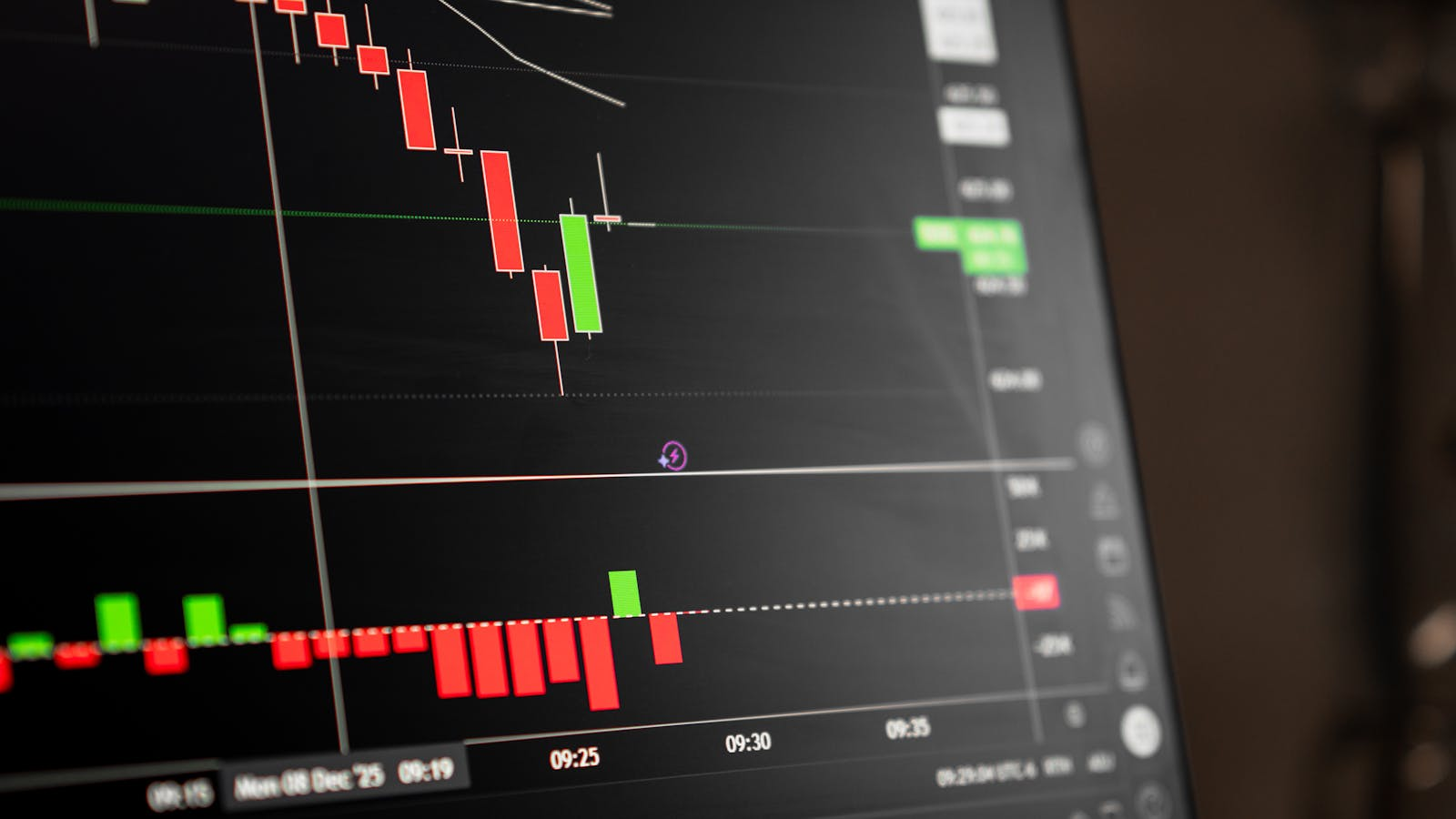
Slippage and bid-ask spreads change your actual execution price and are among the most easily underestimated implicit costs in U.S. stock short-term trading. Short-term trading usually aims to capture relatively small price differences. If your buy execution price is higher than expected, or your sell execution price is lower than expected, even a correct directional call may result in significantly reduced net profit.
The bid-ask spread is the first layer of implicit cost. Suppose a stock has a bid price of US$100.00 and an ask price of US$100.05. If you place a market buy order, you may execute near US$100.05. If you immediately sell, you may execute near US$100.00. Even if the stock price has not changed, the spread itself creates a cost. The wider the spread, the larger the price move you need just to cover the cost.
Slippage is the difference between your expected execution price and your actual execution price. It may come from fast-moving prices, insufficient order book depth, large order size, market orders, pre-market or after-hours trading, sudden news, or execution routes. The SEC’s recent updates on order execution quality disclosure also show that execution quality is not a minor detail that can be ignored.
| Scenario | Slippage Risk | Bid-Ask Spread Risk | Short-Term Trading Reminder |
|---|---|---|---|
| Popular stocks during regular trading hours | Low to medium | Usually narrower | Still check quotes and estimated fees |
| After earnings releases | High | May widen | Avoid blindly chasing with market orders |
| CPI, FOMC, and other macro data releases | High | May widen | Confirm market stability first |
| Pre-market and after-hours trading | High | More likely to widen | More suitable for price boundaries |
| Early trading in hot IPOs | High | May be unstable | Control position size and execution price |
| Low-priced or small-cap stocks | High | Often wider | Do not focus only on percentage moves |
| When volume drops sharply | Medium to high | May widen | Be cautious with large market orders |
Slippage is not always negative. In some cases, your execution price may be better than expected, which is positive slippage. But in short-term risk management, it is safer to first assume that unfavorable slippage may occur. This is especially important when stop orders are triggered. If many orders hit the market at the same time, the stop price and final execution price may differ.
To judge whether slippage may eat up your short-term profit, use a simple framework: is your target price movement clearly larger than the spread, slippage, and fees combined? If you are only trying to capture a 0.3% move, while the bid-ask spread, slippage, and fees on both entry and exit are already close to 0.3%, the trade has very little room for error.
Short-term traders should also keep an “execution deviation record.” Record the price at which you planned to buy and the actual execution price, then do the same for selling. Over time, you will see differences in slippage across stocks, time periods, and order types. That data is more useful than relying only on intuition.
Summary: Slippage and bid-ask spreads matter because they directly change your real entry and exit prices. The narrower the target return in a short-term trade, the less you can ignore implicit costs. Good liquidity in popular stocks does not mean every time period is suitable for unrestricted market orders. During pre-market or after-hours sessions, earnings days, macro data releases, and early trading in hot IPOs, both slippage and spreads may expand. Before making a short-term trade, ask yourself: is the target move enough to cover fees, spreads, and unfavorable slippage? If the answer is unclear, you should not trade based only on direction.
How Should Short-Term Traders Understand Market Orders, Limit Orders, and Stop Orders?
Short-term traders should choose order types based on trading objectives. A market order is suitable when execution is the priority, but price is not controlled. A limit order is suitable when price control matters, but execution is not guaranteed. A stop order helps set a risk trigger, but after being triggered, it may still be affected by slippage. A stop-limit order can set a price boundary, but it may fail to execute in extreme conditions.
Common order types in investor education include market orders, limit orders, and stop orders. FINRA’s explanation of stock order types is similar. The key difference is whether you care more about execution speed or execution price.
The advantage of a market order is a higher probability of execution. When you want to buy or sell quickly, a market order usually has a better chance of immediate execution. The problem is that it does not guarantee the execution price. In fast-moving markets, low-liquidity conditions, pre-market or after-hours sessions, or post-earnings moves, the final execution price may differ from the last price you saw. If short-term traders use market orders to chase rallies, they may raise their entry cost. If they use market orders to panic sell, they may execute at an unfavorable price.
The advantage of a limit order is a clear price boundary. A buy limit order sets the highest price you are willing to pay, while a sell limit order sets the lowest price you are willing to accept. It is suitable when you want to control cost rather than execute at any price. The risk is that the order may not be filled, or may only be partially filled. Short-term traders need to accept this trade-off: a limit order is not a slow system response; it is a deliberate choice to prioritize price.
Stop orders are commonly used as risk management tools. They help you submit a buy or sell instruction automatically once the price reaches a trigger point. However, a regular stop order may become a market order after being triggered, so the final execution price is not guaranteed. A stop-limit order becomes a limit order after being triggered, which can control the price boundary, but if the market moves quickly past your limit price, the order may not be filled.
| Order Type | Core Objective | Suitable Scenario | Main Risk |
|---|---|---|---|
| Market order | Immediate execution | High liquidity, lower volatility, speed priority | Execution price is not controlled |
| Limit order | Price control | Setting a buy ceiling or sell floor | May not execute |
| Stop order | Trigger risk exit | Discipline-based stop loss | May still suffer slippage after trigger |
| Stop-limit order | Control stop execution price | Limiting worst acceptable price | May not execute in extreme moves |
| Split orders | Reduce one-time market impact | Higher volatility or larger order size | More complex execution |
| Extended-hours limit order | Control price outside regular hours | Extended trading sessions | Execution probability is uncertain |
Short-term traders should not treat order types as just buttons. They should treat them as part of the trading strategy. Your entry logic, stop-loss level, target price, position size, and trading session should all match the order type. For example, right after earnings are released, if you care more about price control, blindly using a market order may not be appropriate. If you must exit quickly, you need to accept that a market order may come with slippage.
Summary: Order types determine the trade-off between speed and price control in short-term trading. Market orders are not wrong, but they suit high-liquidity, controlled-volatility scenarios where execution speed comes first. Limit orders are not merely conservative; they exchange execution probability for price boundaries. Stop orders are not insurance; they are discipline tools. Before placing a short-term U.S. stock trade, you must first ask: does this trade require fast execution, or does it require price control? Only when the order type matches the trading objective does fee and slippage management become meaningful.
How to Judge Fees, Slippage, and Order Types Together in Different Short-Term Trading Scenarios
Different U.S. stock short-term trading scenarios have different core risks, so you should not use the same order approach for every trade. For large-cap popular stocks during regular trading hours, the focus is controlling spreads and trading frequency. For earnings events, pre-market and after-hours sessions, hot IPOs, or low-liquidity stocks, the focus should be slippage, price boundaries, and position risk.
For popular tech stocks during regular trading hours, cost review is especially important. When trading actively traded stocks such as Apple, Microsoft, or NVIDIA, the bid-ask spread may be relatively narrow, but you still need to review estimated order fees, execution price differences, and total annual trading frequency. The common issue for short-term traders is not always that the spread is too wide on one trade, but that they trade too frequently and allow small costs to accumulate into large costs.
Earnings and news-driven moves test your price boundaries more. Earnings reports, guidance updates, AI product launches, regulatory news, and interest-rate expectations can all cause prices to move quickly within a short period. Market orders may help you execute quickly, but the price may not be ideal. Limit orders can control buy ceilings and sell floors, but you may miss the move. The key is not that one order type is always better, but whether you have accepted its trade-off in advance.
Pre-market and after-hours trading requires extra caution. FINRA has highlighted extended-hours trading risks, noting that extended sessions may involve lower liquidity, higher volatility, and differences in price availability. For short-term traders, this means spreads, slippage, and partial fills may all be more noticeable than during regular market hours.
| Short-Term Scenario | Fee Sensitivity | Slippage Risk | Order Setting to Focus On |
|---|---|---|---|
| Popular tech stocks during regular hours | Trading frequency, platform fees, sell-side fees | Low to medium | Limit orders; market orders only after checking quotes |
| After earnings releases | Frequent entry and exit costs | High | Limit orders, split orders, smaller positions |
| During macro data releases | Cost of repeated test trades | High | Avoid market orders without boundaries |
| Pre-market and after-hours | Spreads and incomplete execution | High | Set price boundaries and control position size |
| Early trading in hot IPOs | Price volatility and execution quality | High | Avoid blindly chasing prices |
| Low-priced or small-cap stocks | Spread as a percentage of stock price | High | Smaller positions, limit orders preferred |
| Short-term stop-loss scenarios | Sell-side costs and slippage | Medium to high | Understand the difference between stop and stop-limit orders |
If you are tracking short-term U.S. stock opportunities, you can first use U.S. stock information to understand basic market data, then combine order estimates, bid-ask spread, and trading session to judge whether it is suitable to place an order. Biya is a global multi-asset trading wallet that supports U.S. stocks, Hong Kong stocks, and digital asset trading. It also supports converting USDT into major fiat currencies such as USD or HKD. Service availability depends on the user’s location, identity verification results, platform rules, and applicable laws and regulations.
The core judgment across different scenarios can be summarized as follows: the calmer the market, the more important fees and trading frequency become; the more volatile the market, the more important slippage and order type become; the more unusual the trading session, the more important execution probability and price boundaries become. Short-term trading is not simply about choosing one platform, one button, and one direction. The result depends on the whole set of execution conditions.
Summary: Different short-term trading scenarios require different cost-control priorities. During regular trading hours, focus on fee rate, spreads, and number of trades. During earnings and news-driven moves, focus on slippage and market order risk. During pre-market and after-hours sessions, focus on liquidity, spreads, and incomplete execution. For low-priced stocks, small-cap stocks, and early trading in hot IPOs, focus on price distortion and position control. You do not need to use the same order type for every scenario. Instead, choose based on liquidity, volatility, trading session, and risk tolerance.
What Rules and Risk Boundaries Should U.S. Stock Short-Term Traders Also Watch?
In U.S. stock short-term trading, besides fees, slippage, and order types, you also need to pay attention to margin rules, day trading restrictions, account permissions, financing costs, forced liquidation risk, and local compliance requirements. Day trading rules are also changing, so you cannot simply apply old PDT rule wording or assume every broker follows the same implementation schedule.
FINRA has issued new intraday margin standards that will replace the old day trading margin requirements, including the old pattern day trader counting requirement and US$25,000 minimum equity requirement. According to the notice, the new rule takes effect on June 4, 2026, and member firms may implement it in phases until October 20, 2027. Since different brokers and account types may have different transition arrangements, actual rules should be based on what your broker displays.
Margin can amplify short-term trading risk. FINRA’s investor education on day trading margin requirements emphasizes that day trading involves high risk and is related to margin requirements, trading permissions, and account restrictions. If you use margin or financing, loss speed, margin calls, forced liquidation, and margin interest all change your risk structure.
Short-term traders also need to distinguish between “tradable” and “suitable to trade.” Just because your account can place an order does not mean the scenario is suitable for trading. Just because a platform shows that a session is tradable does not mean liquidity is sufficient. Just because you set a stop loss does not mean you will necessarily execute at the stop price. Risk control is not a single button; it is a process.
Before trading, you can use the following checklist:
- What are the estimated buy-side fees, sell-side fees, and total cost of this trade?
- Is the current bid-ask spread narrow enough?
- Does the order type fit the current volatility environment?
- Has the maximum acceptable loss been set in advance?
- Are you using margin or financing?
- Are you trading during earnings, macro data releases, pre-market, after-hours, or another high-volatility period?
- If the order is partially filled, do you have a backup plan?
- Have you considered sell-side regulatory fees and slippage when closing?
- Do your region, account status, and platform rules allow the relevant trade?
- Will you review the transaction statement and actual slippage after trading?
| Risk Boundary | Why It Matters | Short-Term Trading Reminder |
|---|---|---|
| Margin rules | Affect buying power and forced liquidation risk | Do not focus only on available buying power |
| Day trading rules | Affect account limits and trading permissions | Follow your broker’s real-time rules |
| Margin interest | Adds holding cost | Especially relevant for overnight short-term trades |
| Order permissions | Available order types vary by account | Confirm usable order types before trading |
| Trading session | Affects liquidity and spreads | Do not trade blindly in extended hours |
| Local compliance | Determines whether services are available | Follow local regulations and platform rules |
| Execution review | Helps identify real cost | Record the difference between expected and actual prices |
If your region meets the applicable service conditions, you can further review U.S. stock trading fees, market access, and account rules through Biya. It is important to note that short-term trading does not become less risky simply because tools are more convenient. Before trading, you should fully understand order types, fee structures, margin rules, and applicable local requirements.
Summary: Cost judgment in U.S. stock short-term trading cannot be separated from rules and risk control. Fees, slippage, and order types address trade execution. Margin rules, day trading requirements, account permissions, and compliance requirements determine whether you can execute the trade, whether it is suitable, and whether you can bear the risk. The more active a short-term trader is, the more clearly they need to understand rule boundaries. Especially while day trading rules are being updated, different brokers may implement changes at different speeds. Any specific restriction should be based on your broker’s real-time notices, account permissions, and applicable laws and regulations.
If you trade U.S. stocks short term, a more prudent approach is to put fees, slippage, and order types into the same trading plan. Before trading, confirm estimated order fees, bid-ask spread, order type, and maximum acceptable loss. After trading, review your transaction statement, actual slippage, and trading frequency. For users who meet the applicable service conditions, Biya charges US$0 commission for U.S. stock trading, while platform fees, external institution fees, and other charges are subject to the fee schedule and order page. You can also use web trading to view relevant market access. The above content only introduces public market information, trading rules, and fee structures, and does not constitute investment advice. Short-term trading involves high risk. Before trading, you should fully understand order types, fee structures, margin rules, and applicable laws and regulations in your location.
FAQ
Why Should U.S. Stock Short-Term Traders Not Look Only at Commission?
Because the real cost of short-term trading also includes platform fees, regulatory fees, spreads, slippage, and order execution. Zero commission only means one fee item is lower; it does not mean the full trading cost is zero. Before trading, you should evaluate estimated order fees, transaction statements, and actual execution prices.
How Does Slippage Affect U.S. Stock Short-Term Trading Returns?
Slippage causes the actual execution price to differ from the expected price, which can reduce short-term trading profits. Buy-side slippage raises entry cost, while sell-side slippage lowers exit proceeds. Earnings events, extended-hours trading, low-liquidity stocks, and market orders are more prone to slippage.
How Should U.S. Stock Short-Term Traders Choose Between Market and Limit Orders?
Market orders are suitable when execution is the priority, while limit orders are suitable when price control is more important. In fast-moving markets, market orders may lead to unfavorable execution prices. Limit orders provide price boundaries, but they may not be filled or may only be partially filled.
Do U.S. Day Trading Rules Affect Short-Term Stock Trading?
Yes, especially when using a margin account for day trading. FINRA’s new intraday margin standards are entering the implementation stage, and different brokers may have different transition arrangements. Before trading, you should follow broker rules, account permissions, and local regulatory requirements.
How Can Small U.S. Stock Short-Term Trades Judge Whether Fees Are Too High?
You can estimate the effective fee rate using “total fee per trade ÷ trade value.” Small trades are more easily affected by minimum fees, platform fees, and FX costs. If the target price move is small and the fee rate plus slippage is already close to the expected return, the trade may have weak cost efficiency.
What Should Traders Watch When Short-Term Trading U.S. Stocks in Pre-Market or After-Hours Sessions?
Pre-market and after-hours trading requires close attention to liquidity, spreads, and order types. Trading volume may be lower, quotes may move more sharply, and market orders may result in unfavorable execution. Before trading, review the order book, set price boundaries, and control position risk.
*This article is provided for general information purposes and does not constitute legal, tax or other professional advice from BiyaPay or its subsidiaries and its affiliates, and it is not intended as a substitute for obtaining advice from a financial advisor or any other professional.
We make no representations, warranties or warranties, express or implied, as to the accuracy, completeness or timeliness of the contents of this publication.
Related Blogs of

U.S. Stock Dollar-Cost Averaging, Short-Term Trading, and Lump-Sum Buying: Which Requires More Attention to Trading Costs?


Biya U.S. Stock Trading Fees Explained: Zero Commission, Platform Fees, and External Fees


How Is Biya’s U.S. Stock Platform Fee Calculated? What Fees Should You Check Before Placing an Order?

How to Read Biya’s U.S. Stock Trading Fee Center? Commission, Platform Fees, and Other Fees Explained

Choose Country or Region to Read Local Blog
 Australia
 Austria
 Belgium
 Canada
 Cyprus
 Czech Republic
 Denmark
 Estonia
 Finland
 France
 Germany
 Greece
 Hong Kong
 India
India Indonesia
 Ireland
 Italy
Italy Japan
Japan Latvia
 Lithuania
 Luxembourg
 Malaysia
 Malta
Malta Morocco
 Nepal
Nepal Netherlands
 New Zealand
 Norway
 Pakistan
 Philippines
 Poland
 Portugal
 Romania
 Singapore
 Slovakia
 Slovenia
 South Africa
 South Korea
 Spain
Spain Sweden
 Thailand
 The United States
 Turkey
 United Arab Emirates
 United Kingdom
 Vietnam
Contact Us




BIYA GLOBAL LLC is registered with the Financial Crimes Enforcement Network (FinCEN), an agency under the U.S. Department of the Treasury, as a Money Services Business (MSB), with registration number 31000218637349, and regulated by the Financial Crimes Enforcement Network (FinCEN).
BIYA GLOBAL LIMITED is a registered Financial Service Provider (FSP) in New Zealand, with registration number FSP1007221, and is also a registered member of the Financial Services Complaints Limited (FSCL), an independent dispute resolution scheme in New Zealand.