CoreWeave CRWV Stock Analysis: Fundamentals, Valuation Logic, and Key Risks




CoreWeave, Inc., ticker symbol CRWV, is listed on NASDAQ and is a company focused on AI cloud infrastructure. For investors searching for CoreWeave CRWV stock analysis, the key question is not simply whether the stock price will rise or fall, but how the company makes money, whether its revenue growth can continue, how its valuation should be understood, and what financial and competitive risks sit behind its high growth.
What Kind of Company Is CoreWeave?
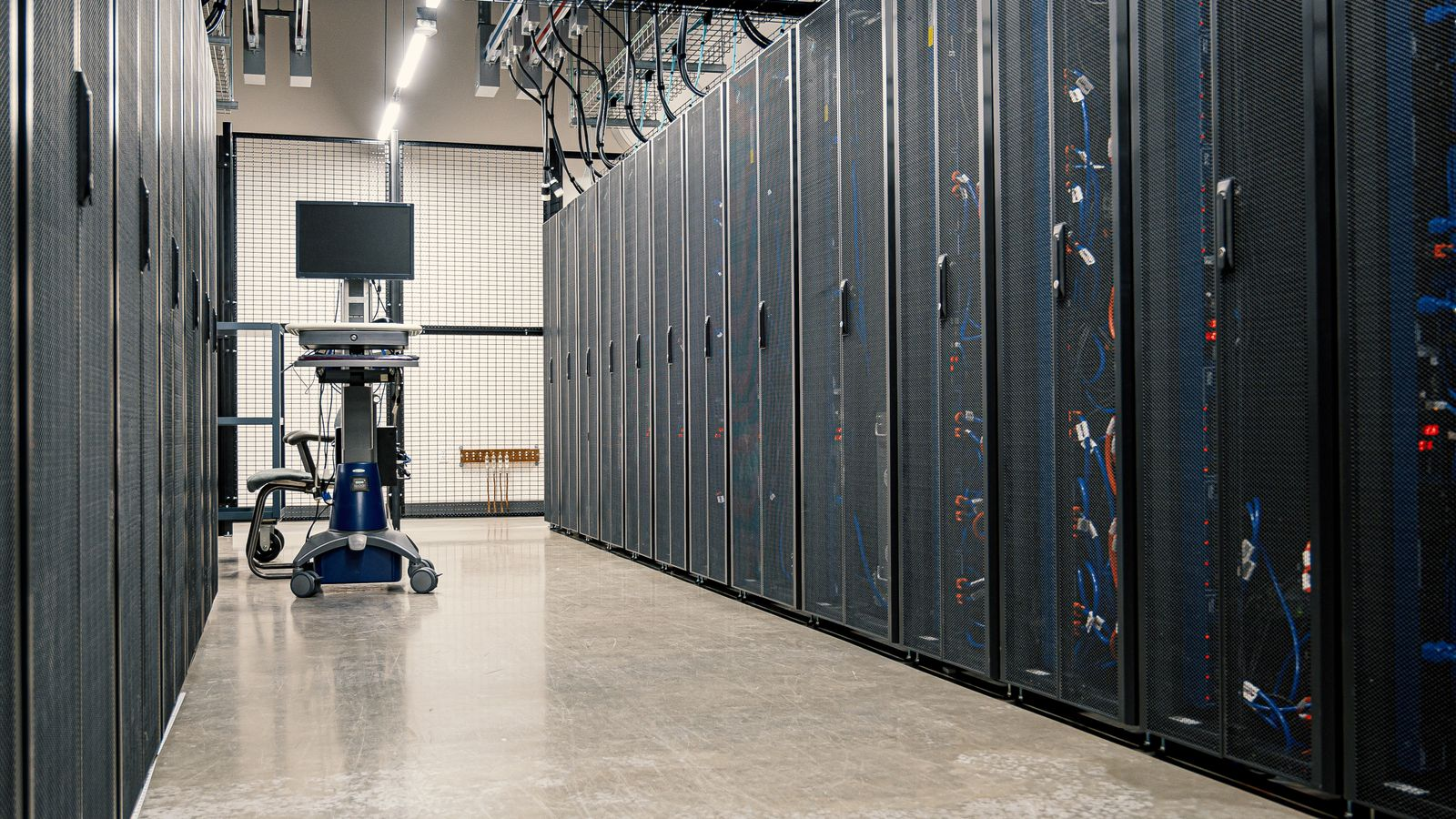
CoreWeave is a cloud computing infrastructure company built for AI workloads. The company describes itself as “The Essential Cloud for AI” and mainly provides AI labs, technology companies, and enterprise customers with high-performance GPU cloud computing power, data center resources, networking, storage, and related software tools. The company completed its Nasdaq listing in March 2025 under the ticker CRWV. Source: CoreWeave Q1 2026 earnings release.
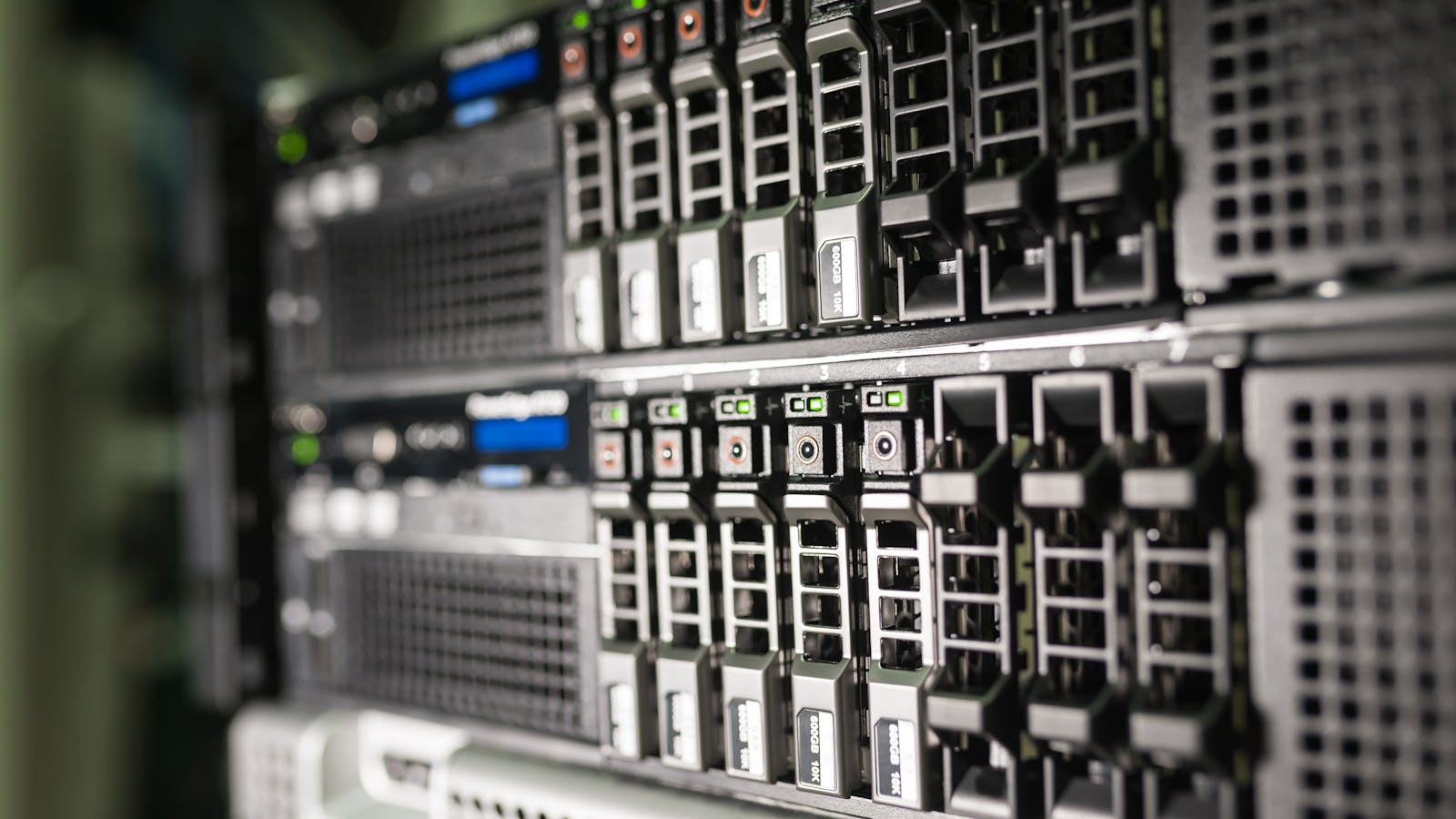
You can think of CoreWeave as an “AI compute infrastructure provider.” It does not train large models itself, nor does it design GPU chips. Instead, it combines GPUs, servers, data centers, power, networking, and software platforms to provide cloud services for AI training, inference, and high-performance computing.
From an industry perspective, CoreWeave sits within the AI cloud infrastructure, GPU cloud computing, and data center value chain. It is closely tied to NVIDIA’s GPU ecosystem, while also competing with large cloud providers such as AWS, Microsoft Azure, Google Cloud, and Oracle. If you simply want to verify CRWV’s stock code, exchange, and basic information, you can also use U.S. stock information lookup as a supporting tool.
CoreWeave’s Business Structure: Where Does Revenue Come From?

CoreWeave’s revenue mainly comes from cloud computing services. According to CoreWeave’s 2025 Form 10-K, the company currently reports one operating segment and one reportable segment. Therefore, it does not publicly break down the exact revenue contribution from “AI training revenue,” “AI inference revenue,” “storage revenue,” or “software revenue.” In other words, if you see precise product-line revenue percentages, the source needs further verification.
Based on current public disclosures, the most important feature of CoreWeave’s revenue structure is that customer commitment contracts account for a very high share of revenue. The company disclosed that customer commitment revenue accounted for 88%, 96%, and 98% of total revenue in 2023, 2024, and 2025, respectively. This indicates that CoreWeave’s business is more driven by long-term compute contracts than by purely temporary on-demand usage. Source: CoreWeave 2025 Form 10-K.
| Business / Revenue Dimension | Disclosed Information | Significance for CoreWeave’s Revenue Structure |
|---|---|---|
| Customer commitment contracts | Accounted for 98% of total revenue in 2025 | Improves revenue visibility, but requires the company to build compute and data center resources in advance |
| On-demand cloud services | Exact revenue share not separately disclosed | Can serve as a supplementary demand source, but is not currently the clearest growth metric in financial reports |
| AI training / inference | The company emphasizes the shift from AI training to inference, but does not disclose revenue breakdown | Important use cases, but specific revenue contribution requires further verification |
| Storage, software, and tools | Includes certain managed software, platform tools, and AI workflow-related capabilities | May help increase customer stickiness, but current public revenue share is unclear |
Core Business One
CoreWeave’s first core business is GPU cloud infrastructure services. Customers use CoreWeave’s cloud platform to access high-performance GPU computing resources for training large models, running inference tasks, processing AI workloads, and performing high-performance computing tasks.
This business forms the foundation of the company’s revenue growth. According to CoreWeave’s 2025 Form 10-K, revenue reached $5.131 billion in 2025, up 168% from $1.915 billion in 2024. The company stated that growth was mainly driven by demand from existing and new customers, as well as expansion of its data center footprint.
Core Business Two
The second core business is long-term customer commitment contracts. Customers reserve a certain amount of compute capacity in advance, while CoreWeave is responsible for building and delivering the corresponding infrastructure.
The advantage of this model is relatively high revenue visibility. In the first quarter of 2026, the company disclosed revenue backlog of $99.4 billion. Backlog here can be understood as contracted amounts that have not yet been recognized as revenue, or future expected revenue, and still depends on delivery progress, service availability, and customer demand. Source: CoreWeave Q1 2026 earnings release.
Core Business Three
The third business can be understood as software, platform, and service capabilities built around AI cloud infrastructure. In the first quarter of 2026, the company disclosed Flexible Capacity Plans, Dedicated Inference, CoreWeave ARENA, and capabilities related to the Weights & Biases platform. Source: CoreWeave Q1 2026 earnings release.
This type of business may not be the largest revenue source in the short term, but it could have potential significance for customer retention, workflow integration, and long-term margin improvement. It is important to note that the company has not publicly provided separate revenue shares for these software and platform services, so revenue breakdowns should not be invented when analyzing CoreWeave’s revenue structure.
Financial Performance: Revenue, Margins, and Cash Flow

CoreWeave’s financial profile can be summarized as follows: revenue is growing rapidly, but losses, capital expenditures, and debt pressure are also significant. This is the most important balance to keep in mind when conducting a CRWV fundamental analysis.
Revenue Growth
According to CoreWeave’s 2025 Form 10-K, the company’s revenue was $229 million, $1.915 billion, and $5.131 billion in 2023, 2024, and 2025, respectively. Revenue grew 736% year over year in 2024 and 168% year over year in 2025.
According to CoreWeave’s Q1 2026 earnings release, the company generated Q1 2026 revenue of $2.078 billion, compared with $982 million in the same period of 2025, representing year-over-year growth of approximately 112%.
This growth rate suggests that demand for AI cloud infrastructure remains strong. However, high growth usually comes with higher market expectations. If growth slows in future periods, valuation and stock price volatility could increase significantly.
Profitability
CoreWeave is still in a GAAP net loss position. According to CoreWeave’s 2025 Form 10-K, the company reported net losses of $1.167 billion in 2025, $863 million in 2024, and $594 million in 2023.
In Q1 2026, the company reported a net loss of $740 million, with a net loss margin of 36%. Adjusted EBITDA was $1.157 billion, with an adjusted EBITDA margin of 56%. Source: CoreWeave Q1 2026 earnings release.
Adjusted EBITDA can be understood as an operating performance metric that excludes certain non-cash and non-recurring items, but it is not the same as net income and is not the same as free cash flow. This means CoreWeave’s business can show a degree of scale effect at the adjusted EBITDA level, while GAAP net income is still affected by depreciation and amortization, interest expense, stock-based compensation, and infrastructure investment. When reading CoreWeave’s latest earnings, you should not look only at revenue growth; you also need to examine expense expansion and interest pressure.
Cash Flow
CoreWeave has positive operating cash flow, but free cash flow pressure is significant. In Q1 2026, the company generated $2.984 billion in operating cash flow, while purchases of property and equipment and capitalized internal-use software totaled $7.695 billion. Using the simple formula “operating cash flow minus capital expenditures,” free cash flow was clearly negative. Source: CoreWeave Q1 2026 financial results.
This reflects a key feature of the AI cloud infrastructure industry: revenue growth requires heavy upfront investment. The company must first purchase GPUs, servers, networking equipment, build data centers and power systems, and then deliver compute capacity to customers before revenue can be recognized.
Balance Sheet
As of March 31, 2026, CoreWeave had $2.244 billion in cash and cash equivalents, $36.424 billion in net property and equipment, and $55.573 billion in total assets. At the same time, the company had current debt of $7.547 billion and non-current debt of $17.312 billion, bringing total book debt to approximately $24.859 billion. Source: CoreWeave Q1 2026 financial results.
These figures show that CoreWeave’s balance sheet is expanding rapidly. The positive side is the expansion of infrastructure capacity; the pressure comes from rising debt, leases, and interest expenses. In Q1 2026, the company’s net interest expense was $536 million, up from $264 million in the same period of 2025. Source: CoreWeave Q1 2026 financial results.
Growth Drivers: What Will Drive Future Growth?
CoreWeave’s growth logic mainly comes from demand for AI cloud infrastructure. As large-model training, inference, enterprise AI applications, and agentic workflows develop, market demand for GPU cloud resources, low-latency networking, data center power, and high-density computing platforms remains strong.
In the short term, CoreWeave’s growth mainly depends on backlog conversion and data center delivery. In Q1 2026, the company reported revenue backlog of $99.4 billion and disclosed customer partnerships or expansions involving Meta, Anthropic, Cohere, Jane Street, Mistral, and others. Source: CoreWeave Q1 2026 earnings release.
In the medium term, growth depends on the continued expansion of active power and contracted power. In Q1 2026, the company disclosed active power of more than 1GW and contracted power of more than 3.5GW, and stated that it is working toward more than 8GW by 2030. Source: CoreWeave Q1 2026 earnings release.
In the long term, the key question for CoreWeave is not simply whether “AI enthusiasm remains,” but whether the company can turn AI training and inference demand into sustainable revenue while gradually improving margins, customer mix, and free cash flow.
Competitive Landscape: Where Is the Company’s Moat?
CoreWeave’s moat is not a traditional consumer brand, nor is it a single software product. Instead, it is the infrastructure capability formed around AI workloads. Its advantages mainly include GPU cloud resources, AI-specialized data centers, low-latency networking, software scheduling capabilities, and large customer relationships.
However, CoreWeave faces very strong competitors. In its Form 10-K, the company mentioned competitors including AWS, Google Cloud, Microsoft Azure, Oracle, and other smaller cloud service providers. Source: CoreWeave 2025 Form 10-K.
CoreWeave’s relative advantage lies in its stronger focus on AI workloads, which may allow it to differentiate in GPU cloud, inference, fast deployment, and customer customization. But its relative weaknesses are also clear: large cloud providers have stronger funding capacity, broader customer bases, more complete ecosystems, and the ability to purchase GPUs or develop proprietary AI chips.
Therefore, when comparing CoreWeave with its competitors, it would be inaccurate to simply say that “CoreWeave is ahead of cloud giants in every way.” A more balanced assessment is that CoreWeave has a stage-specific scarcity advantage in AI cloud infrastructure, but its long-term moat still needs to be validated through delivery capability, customer retention, cost control, and margin improvement.
Valuation Analysis: How Should the Current Valuation Be Understood?
CoreWeave is not well suited to valuation based only on PE. Based on market data as of June 3, 2026, CRWV traded at approximately $119.27 per share, with a market capitalization of approximately $62.855 billion and a negative PE ratio, because the company remains in a GAAP net loss position.
Therefore, CoreWeave valuation analysis is better focused on P/S, EV/Revenue, EV/Adjusted EBITDA, backlog conversion capability, and free cash flow trends. P/S refers to the ratio of market capitalization to revenue. EV/Revenue refers to the ratio of enterprise value to revenue and better reflects the impact of debt than P/S. EV/Adjusted EBITDA is used to compare enterprise value with adjusted operating performance, but different data platforms may calculate enterprise value and adjustment items differently.
Based on 2025 revenue of $5.131 billion and Q1 2026 revenue of $2.078 billion, CoreWeave’s TTM revenue was approximately $6.227 billion. Using the market capitalization of approximately $62.855 billion on June 3, 2026, the TTM P/S was roughly around 10x. This multiple is a rough estimate based on public revenue and market capitalization on that date. It may not fully match data vendor calculations and does not account for differences in EV calculation methods.
The market is willing to assign CRWV a higher revenue multiple mainly because it operates in a high-growth AI cloud infrastructure market, has a large revenue backlog, and is rapidly expanding data center capacity. However, this valuation also embeds optimistic expectations: future revenue must continue to grow rapidly, backlog must convert smoothly, margins must improve, and debt and interest expenses must remain manageable.
If future revenue growth falls short of expectations, capital expenditures continue to rise, interest expenses expand, customer concentration does not improve, or AI cloud price competition intensifies, valuation multiples could face downward pressure.
Stock Price Performance: What Expectations Is the Market Trading?
CRWV’s stock price mainly reflects changes in market expectations for AI compute demand, CoreWeave’s order delivery, capital expenditures, and future margins. It is not a stock priced simply on current earnings, but a high-expectation stock that depends heavily on future growth realization.
When the stock rises, the market is usually trading the following logic: strong AI cloud demand, backlog growth, expansion of large customer contracts, increased data center capacity, and the possibility that the company may eventually achieve scaled profitability.
When the stock falls, the market is often concerned about the other side: widening losses, excessive capital expenditures, rising debt and interest expenses, high customer concentration, or short-term guidance below market expectations. After Q1 2026 earnings, the market became highly sensitive to changes in CoreWeave’s capital expenditures, revenue guidance, and margins. For high-growth, high-investment companies like this, even if revenue continues to grow, stock price volatility may occur if capital expenditures or loss pressure exceed market expectations.
Therefore, to understand the reasons behind CoreWeave’s stock price fluctuations, you need to examine both “whether growth is being realized” and “whether the cost of growth is under control.” For a stock like CRWV, high revenue growth alone may not be enough to support the stock price. The market will also ask whether that growth can translate into better margins and cash flow.
If you later move into pre-trade preparation, you should pay attention not only to company fundamentals but also to order costs. Biya supports U.S. and Hong Kong stock trading services. For U.S. stocks, Biya charges $0 commission, with a platform fee of $0.005 per share, a minimum of $0.99 per order, and a maximum of 1% of trade value; external institution fees and trading activity fees are $0.00396 per share. Relevant U.S. stock trading fees should be checked before trading. Platform fees, external institution fees, and other charges are subject to the fee center and order page.
Key Risks: What Should Investors Pay Attention To?
CoreWeave’s main risks are concentrated in customer concentration, capital expenditures, debt, competition, supply chain issues, and changes in AI demand. The table below can serve as a risk checklist for tracking CRWV fundamentals.
| Risk Type | Specific Issue | Key Indicators to Watch |
|---|---|---|
| Customer concentration risk | Microsoft contributed approximately 67% of revenue in 2025 | Revenue share from top customers, new customer expansion |
| High capital expenditure risk | Data center, GPU, power, and networking expansion require continuous investment | Annual capex, active power, contracted power |
| Debt and interest expense risk | As of Q1 2026, book debt was approximately $24.859 billion | Total debt, cash balance, interest expense |
| Competition risk | AWS, Azure, Google Cloud, Oracle, and other cloud giants continue investing in AI cloud | AI infrastructure pricing, products, and customer dynamics among cloud giants |
| Supply chain risk | GPU, servers, power equipment, and data center resources may be affected by supply and demand | GPU supply, component costs, delivery progress |
| Valuation pullback risk | Current valuation depends on high growth and future margin improvement | P/S, EV/Revenue, revenue growth, margins |
| AI demand change risk | If training and inference demand slows, compute purchases may be affected | AI industry capex, customer contracts, RPO |
Customer concentration is one of the most direct risks. CoreWeave disclosed in its 2025 Form 10-K that Microsoft contributed approximately 67% of revenue in 2025. The top two customers contributed approximately 77% of revenue in 2024, and the top three customers contributed approximately 73% in 2023. Source: CoreWeave 2025 Form 10-K.
Capital expenditure and debt risks should also not be ignored. AI infrastructure companies need to invest in hardware and data centers first, then wait for revenue recognition and customer payments. If the financing environment changes, component costs rise, or delivery is delayed, the company’s earnings and cash flow may be affected.
What Key Indicators Should You Track Going Forward?
If you want to continue tracking CoreWeave’s follow-up indicators, it is not advisable to focus only on stock price movements. A better approach is to build an observation framework around “growth realization + earnings quality + financial pressure + competitive landscape.”
RPO stands for remaining performance obligations and reflects visibility into future contract revenue. For a company like CoreWeave, where long-term contracts account for a high share of revenue, both RPO and revenue backlog are important indicators of revenue visibility. However, they still need to be converted into actual revenue through data center delivery and customer usage.
| Tracking Dimension | Key Indicators | Why It Matters |
|---|---|---|
| Revenue growth | Quarterly revenue, YoY growth, full-year guidance | Determines whether AI cloud demand continues to materialize |
| Order visibility | Revenue backlog, RPO | Indicates whether future revenue has contractual support |
| Order conversion | Speed of backlog conversion into revenue | Shows whether contracts can truly translate into revenue |
| Customer mix | Revenue share from top customers | Helps assess whether dependence on a single customer is falling |
| Infrastructure | Active power, contracted power, number of data centers | Measures delivery capability |
| Earnings quality | Gross margin, operating margin, adjusted EBITDA margin | Shows whether margins improve as scale expands |
| Cash flow | Operating cash flow, capex, free cash flow | Indicates whether growth continues to consume large amounts of cash |
| Financial leverage | Total debt, cash, interest expense | Helps assess whether financing pressure is manageable |
| Competitive landscape | AI cloud investment, price changes, and proprietary chip progress among cloud giants | Helps assess whether the moat is being weakened |
| Valuation multiples | P/S, EV/Revenue, EV/Adjusted EBITDA | Helps assess whether market expectations are being revised upward or downward |
You can focus on several key questions in each quarterly earnings report: Is revenue still growing rapidly? Is backlog still expanding? Are capital expenditures above expectations? Is interest expense continuing to rise? Is customer concentration falling? Is the adjusted margin improving? These questions can help you understand changes in the company’s fundamentals better than simply watching short-term price movements.
If you are used to tracking U.S. stock prices, earnings calendars, and basic stock information on mobile, you can also use download the App as one of your daily observation tools. The key is still to build a tracking framework rather than replacing fundamental analysis with short-term price movements.
Conclusion: How Should CoreWeave’s Long-Term Investment Logic Be Understood?
CoreWeave’s long-term investment logic can be summarized as follows: the company’s value mainly comes from AI cloud infrastructure demand, long-term customer contracts, GPU data center expansion, and AI workload specialization. The market is focused on whether CoreWeave can turn AI compute demand into sustained revenue growth while gradually improving earnings quality under high capital expenditure and debt pressure.
On the positive side, CoreWeave operates in a relatively strong AI cloud infrastructure cycle, with solid customer demand, a large backlog, and rapid expansion in data center and power capacity. These factors explain why the market continues to pay attention to CoreWeave’s AI cloud infrastructure outlook.
On the risk side, CRWV remains a high-expectation, high-volatility, and capital-intensive stock. The company faces multiple risks, including GAAP net losses, debt and interest expenses, customer concentration, competition from cloud giants, supply chain issues, and valuation pullback risk.
Therefore, the key to understanding CoreWeave CRWV stock analysis is not to reach a simple conclusion of “good” or “bad,” but to follow four main lines: whether growth can be realized, whether margins can improve, whether debt pressure can be controlled, and whether competitive advantages can continue.
If you want to learn more about the U.S. stock trading process after researching CRWV, you can first understand basic information such as account registration, fee rules, and order mechanisms, and then make independent judgments based on company announcements, financial reports, and risk disclosures. Account preparation does not equal a trading decision. Investment research should still be based on company fundamentals and your own risk tolerance.
Frequently Asked Questions
What Is CoreWeave’s Stock Ticker?
CoreWeave’s stock ticker is CRWV, and it is listed on NASDAQ. The company’s full name is CoreWeave, Inc. It mainly provides GPU cloud computing power, data center resources, networking, and related software services for AI workloads, making it part of the AI cloud infrastructure and cloud computing value chain.
How Does CoreWeave Make Money?
CoreWeave mainly makes money by providing AI cloud computing infrastructure services, especially through long-term customer commitment contracts. According to the company’s 2025 Form 10-K, customer commitment revenue accounted for 98% of total revenue, meaning its revenue mainly comes from customers reserving GPU cloud compute capacity in advance rather than purely temporary on-demand usage.
Why Is CoreWeave Getting Market Attention?
CoreWeave is attracting market attention mainly because it operates in the AI cloud infrastructure sector, with business exposure to GPU compute, AI training, AI inference, and data center expansion. The market’s key focus is whether the company can continue converting AI compute demand and backlog into revenue growth.
How Should CoreWeave’s Valuation Be Viewed?
CoreWeave is still in a GAAP net loss position, so it is not suitable to analyze it only by PE. Investors typically pay more attention to P/S, EV/Revenue, EV/Adjusted EBITDA, backlog conversion capability, capital expenditures, and free cash flow trends. These indicators better reflect market expectations for the company’s future growth.
What Are CoreWeave’s Main Risks?
CoreWeave’s main risks include customer concentration, high capital expenditures, high debt and interest expenses, competition from cloud giants, GPU supply chain pressure, and changes in AI compute demand. Because the company’s growth depends on continued data center expansion, delivery, financing, or customer demand changes could affect fundamentals.
What Should Investors Track for CRWV Going Forward?
Going forward, investors should focus on revenue growth, revenue backlog, RPO, customer concentration, capital expenditures, debt, interest expenses, gross margin, adjusted margin, and data center power expansion. These indicators can help assess whether CoreWeave’s growth is actually being realized.
This article is for company fundamentals and market information analysis only and does not constitute any investment advice. Investors should make independent judgments based on their own risk tolerance, investment horizon, and asset allocation needs.
*This article is provided for general information purposes and does not constitute legal, tax or other professional advice from BiyaPay or its subsidiaries and its affiliates, and it is not intended as a substitute for obtaining advice from a financial advisor or any other professional.
We make no representations, warranties or warranties, express or implied, as to the accuracy, completeness or timeliness of the contents of this publication.
Related Blogs of

Which Users Is Biya U.S. Stock Trading Suitable For? Fees, Rules, and What to Know Before Using It


U.S. Stock Dollar-Cost Averaging, Short-Term Trading, and Lump-Sum Buying: Which Requires More Attention to Trading Costs?


How to Read Biya’s U.S. Stock Trading Fee Center? Commission, Platform Fees, and Other Fees Explained


Does Trading Cost Really Matter When Buying and Holding Popular Tech Stocks?

Choose Country or Region to Read Local Blog
 Australia
 Austria
 Belgium
 Canada
 Cyprus
 Czech Republic
 Denmark
 Estonia
 Finland
 France
 Germany
 Greece
 Hong Kong
 India
India Indonesia
 Ireland
 Italy
Italy Japan
Japan Latvia
 Lithuania
 Luxembourg
 Malaysia
 Malta
Malta Morocco
 Nepal
Nepal Netherlands
 New Zealand
 Norway
 Pakistan
 Philippines
 Poland
 Portugal
 Romania
 Singapore
 Slovakia
 Slovenia
 South Africa
 South Korea
 Spain
Spain Sweden
 Thailand
 The United States
 Turkey
 United Arab Emirates
 United Kingdom
 Vietnam
Contact Us




BIYA GLOBAL LLC is registered with the Financial Crimes Enforcement Network (FinCEN), an agency under the U.S. Department of the Treasury, as a Money Services Business (MSB), with registration number 31000218637349, and regulated by the Financial Crimes Enforcement Network (FinCEN).
BIYA GLOBAL LIMITED is a registered Financial Service Provider (FSP) in New Zealand, with registration number FSP1007221, and is also a registered member of the Financial Services Complaints Limited (FSCL), an independent dispute resolution scheme in New Zealand.