Does Trading Cost Really Matter When Buying and Holding Popular Tech Stocks?





If you buy a large amount of popular tech stocks such as Apple, NVIDIA, Microsoft, or Tesla in one go and truly hold them for the long term, trading fees are usually not the biggest factor determining your returns. But if you prefer small regular purchases, dollar-cost averaging, fractional shares, or frequent switching between stocks, fees become an ongoing friction cost. What you really need to look at is not whether the commission is zero, but the total cost across the full process: buying, holding, selling, currency conversion, deposits, and withdrawals. Fees will not help you pick good stocks, but they do affect your real purchase cost, breakeven point, and long-term compounding efficiency.
Key Takeaways
- Long-term holding still requires cost awareness, especially fee-to-principal ratio.
- Zero commission does not mean zero cost; spreads and FX costs also matter.
- For small regular purchases, minimum fees can have a larger impact.
- Popular tech stocks are liquid, but order execution still affects price.
- A platform’s suitability depends on your full bill and trading scenario.
- Fees matter, but they cannot replace fundamentals, valuation, and position control.
Why Do Trading Fees Still Matter When Buying and Holding Popular Tech Stocks?

When you buy and hold popular tech stocks, trading fees do matter, but not equally in every situation. The key factors are how much you buy, how often you buy, how long you hold, whether you need cross-currency funding, and whether you trade fractional shares. For large, low-frequency trades, a few dollars in fees may be a very small percentage. For small, frequent trades, the same few dollars can noticeably raise your cost.
Many investors think, “I’m buying companies like NVIDIA, Apple, or Microsoft. Long-term growth matters more than transaction fees, right?” That is only half true. Long-term returns do mainly come from company growth, valuation changes, and market conditions. But trading fees determine the cost basis from which you start holding. The higher your entry cost, the further the stock needs to move before you truly break even.
Investment fees have one easily overlooked feature: they look small, but they remain embedded in your final results for a long time. This is especially true when you buy a little every month, add more on pullbacks, trim positions after rallies, or rebalance your portfolio. In that case, fees are not a one-time event. They accumulate with every trade.
To be more realistic, most ordinary investors do not truly “buy and hold for ten years without looking.” Popular tech stocks come with constant news, earnings reports, AI narratives, semiconductor cycles, cloud growth, and electric vehicle updates. You may be tempted to add, take profit, or rotate positions. As a result, “buy and hold” can slowly turn into “long-term tracking plus repeated trading,” and fees become harder to ignore.
| Factor | How It Affects Trading Fees | What You Should Check |
|---|---|---|
| Order size | The smaller the order, the higher the impact of fixed fees | Total fee as a percentage of trade value |
| Buying frequency | The more often you buy, the more fees accumulate | Your actual number of trades per year |
| Holding period | The longer you hold, the easier it is to spread out one-time fees | One-time purchase vs. regular purchases |
| Currency conversion | Cross-currency trading may add FX costs | FX spread and funding path |
| Fractional shares | Fractional trades may have separate fee rules | Estimated fees before placing orders |
Another key point: trading fees affect your breakeven point. After you buy a tech stock, you do not make a net profit just because the stock price rises slightly. You first need to cover the buy-side commission, platform fee, spread, and possibly future sell-side regulatory fees, trading activity fees, and currency conversion costs. Only after those costs are deducted do you see your true net result.
So the importance of fees cannot be summed up by simply saying they are “important” or “not important.” Fees are more like an amplifier. When your trade size is large, your trading frequency is low, and your holding period is long, the impact may be limited. When your capital is smaller, your trades are frequent, and your orders are fragmented, the impact becomes much more visible.
Summary: When buying and holding popular tech stocks, trading fees are not the main factor deciding whether a stock will rise, but they do determine your real starting point. For large, low-frequency, long-term holding, fees are usually a secondary factor. For small regular purchases, fractional shares, frequent rebalancing, or cross-currency investing, fees can accumulate continuously. The simplest way to judge whether fees matter is not to look at the absolute dollar amount, but to look at the fee as a percentage of each order and how many trades you actually make in a year.
Trading Cost Is Not Just Commission: What Costs Should You Check Before Buying Tech Stocks?
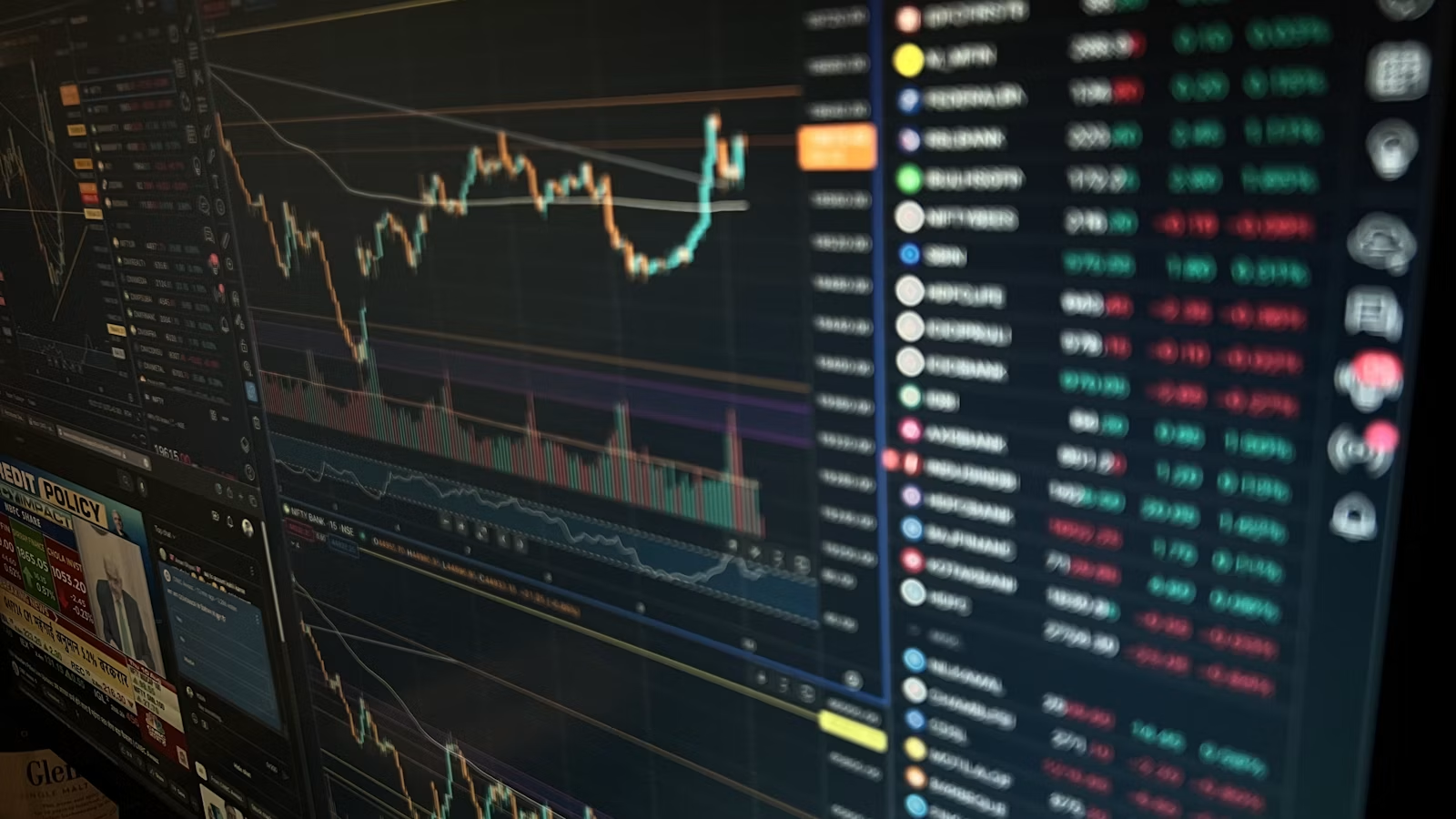
Before buying tech stocks, you should not only look at commission. Real trading cost includes at least explicit fees, implicit costs, and funding or currency conversion costs. Explicit fees appear on your statement, such as commissions, platform fees, and regulatory fees. Implicit costs may be hidden in the bid-ask spread and order execution. Cross-border investing may also involve currency conversion and deposit or withdrawal costs.
Fees and commissions can usually be divided into several categories: costs incurred when trading, account or service-related costs, and ongoing costs attached to certain investment products. Looking only at “US$0 commission” is like buying a plane ticket by looking only at the base fare while ignoring baggage fees, seat selection fees, and payment charges. You may end up misjudging the real cost.
Start with explicit fees. In U.S. stock trading, you may encounter commissions, platform fees, third-party pass-through fees, regulatory-related fees, and settlement-related fees. Different platforms use different names and fee structures. Some charge by share, some by order, and some apply certain fees only to sell orders. For example, at the U.S. regulatory level, the Section 31 fee rate announced for fiscal year 2026 states that, from April 4, 2026, most securities transactions are subject to a rate of US$20.60 per million dollars. The Trading Activity Fee for covered equity securities is also charged on sell transactions based on a per-share rate with a per-trade cap.
Then look at implicit costs. The most typical one is the bid-ask spread. When you buy, your execution price is usually closer to the seller’s ask. When you sell, it is usually closer to the buyer’s bid. The difference between them is a form of trading friction. Popular tech stocks are usually actively traded, so their spreads are often narrower than those of illiquid stocks. But narrow does not mean nonexistent, especially around earnings releases, major news, pre-market or after-hours trading, or high-volatility periods.
Order execution also matters. A zero-commission platform does not mean the platform has no revenue sources. FINRA’s attention to zero-commission trading has covered non-commission fees, order routing, payment for order flow, cash management, and other revenue sources. Ordinary investors do not necessarily need to study every execution detail, but they should at least understand that the execution price itself affects cost.
| Cost Type | Common Items | Easy to See? | Impact on Buy-and-Hold Investors |
|---|---|---|---|
| Explicit fees | Commission, platform fee, regulatory fee, settlement fee | Usually visible on statements | Directly increases buying and selling cost |
| Implicit costs | Spread, slippage, execution price difference | Not always listed separately | Affects real execution price |
| Funding costs | FX conversion, deposit, withdrawal, transfers | Depends on platform and bank | Affects cross-currency total cost |
| Behavioral costs | Frequent trading, chasing rallies, panic selling | Requires self-review | Increases total number of trades |
If you follow long-term opportunities in popular tech stocks, you need to pay attention not only to stock price volatility but also to actual trading costs. U.S. stock trading costs usually include more than commissions; they may also include platform fees, external institution fees, trading activity fees, settlement fees, and more. Using Biya’s fee structure as an example, Biya charges US$0 commission for U.S. stock trading. The platform fee is US$0.005 per share, with a minimum of US$0.99 per order and a maximum of 1% of trade value. External institution fees and trading activity fees total US$0.00396 per share. For fractional share orders with executed quantity below one share, only a platform fee of 1% of the total transaction amount is charged, capped at US$1. Platform fees, external institution fees, and other charges are subject to the Biya U.S. stock fees and the order page.
Summary: Trading cost is not just about “commission.” What you really need to look at is total cost: buy-side fees, sell-side fees, spreads, FX conversion, deposit and withdrawal costs, and order execution. Zero commission can lower the entry barrier, but it does not automatically mean zero cost. For long-term buy-and-hold investors, the most reliable approach is to check estimated fees before placing an order and review the transaction statement after execution. Then judge each cost item in relation to your order size and trading frequency.
For Long-Term Holding, How Much Do Trading Fees Matter? Look at Four Variables

For long-term holding, the impact of trading fees mainly depends on four variables: order size, trading frequency, holding period, and trading method. If you buy US$10,000 once and hold for years, the fee percentage may be very low. If you buy US$50 every week and often switch stocks, the fee percentage can become much higher.
Start with order size. Fixed minimum fees are most sensitive for small orders. Suppose the minimum fee for an order is close to US$1. If you buy US$50, the fee rate is around 2%. If you buy US$500, the fee rate is around 0.2%. If you buy US$5,000, the fee rate is around 0.02%. The same fee feels completely different at different capital levels.
Next is trading frequency. Many investors think they are long-term investors, but their actual behavior may look like this: buy NVIDIA this month, add Tesla next month, sell half before earnings, buy again after a pullback, and then rotate into another semiconductor stock when the AI theme heats up. Every move may seem reasonable on its own, but over a year, the number of trades may be far higher than originally expected.
The third variable is holding period. The longer you hold, the easier it is to spread out a one-time buy-side fee. The shorter you hold, the more a fee acts like a hard hurdle. If you trade short-term swings, the stock price needs to cover both fees and spreads before there is room for net profit. Popular tech stocks can be volatile and may look full of short-term opportunities, but frequent entry and exit also increase trading friction.
The fourth variable is trading method. Whole shares, fractional shares, market orders, limit orders, pre-market trading, and after-hours trading can all affect cost. Fractional shares are useful for small investors who want exposure to high-priced tech stocks, but fractional share fee rules need to be checked separately. Market orders prioritize execution speed, while limit orders emphasize price control. Neither is always better; each fits a different scenario.
| Investment Scenario | Fee Sensitivity | Reason | What to Focus On |
|---|---|---|---|
| One large purchase and long-term holding | Lower | Fees are a small percentage of principal | Fundamentals, valuation, position size |
| Monthly small purchases of tech stocks | Higher | Fixed minimum fees can be amplified | Minimum fees, fractional share rules |
| Fractional purchase of high-priced tech stocks | Medium to high | Separate fee methods may apply | Fractional platform fee, transaction amount |
| Frequent rebalancing of popular sectors | High | Buy/sell fees and spreads repeat | Trading frequency, order execution |
| Selling and converting back to local currency | Medium to high | Sell-side fees and FX costs may stack | Sell-side fees, FX spread |
You can use a simple formula for a quick estimate:
Single-trade fee rate = total fee for one trade ÷ trade value
For example, if you buy US$100 worth of stock and all fees total US$1, the single-trade fee rate is 1%. If you buy US$2,000 and the total fee is US$1, the fee rate is 0.05%. This formula is not perfect because it does not include future selling, spreads, or FX conversion, but it quickly shows whether small trades are being heavily affected by fees.
For a more complete view, use:
Full trading cost = buying cost + selling cost + spread impact + FX cost + deposit and withdrawal cost
This formula is more suitable for long-term investors because you will eventually face selling, rebalancing, or transferring funds back. Looking only at the buy-side cost underestimates the fees in the full investment cycle.
Summary: Long-term holding does not mean fees are unimportant. It means the importance of fees depends on your trading structure. The larger the capital, the fewer the trades, and the longer the holding period, the lower the usual impact. The smaller the capital, the more fragmented the trades, and the more frequent the rebalancing, the higher the impact. Ordinary investors should not only ask whether a platform is cheap, but also ask: based on my order size, buying frequency, and selling plan, what is my actual fee rate?
Popular Tech Stocks Are Liquid, So Why Should You Still Care About Cost?
Popular tech stocks are usually actively traded and highly liquid, so their bid-ask spreads may be narrower than those of less popular stocks. But that does not mean trading cost can be ignored. Stocks such as Apple, Microsoft, NVIDIA, and Tesla are easy to trade, yet your actual execution price can still be affected by order type, trading session, volatility, and platform execution quality.
Good liquidity only reduces part of the cost. Popular tech stocks have deeper order books, and during regular trading hours, their spreads are usually not as wide as those of small-cap or illiquid stocks. But if you trade right after earnings, during macro data releases, around major news, or in pre-market or after-hours sessions, prices can move quickly. The quote you see and the final execution price may not be exactly the same.
Order type is also important. A market order is more likely to be executed and is useful when execution speed matters most. The downside is that it does not guarantee the execution price, especially in volatile markets. A limit order lets you set the highest price you are willing to pay or the lowest price you are willing to accept when selling, but it may not be filled if the market does not reach your price.
There is also a psychological issue: popular tech stocks can easily trigger overtrading. Themes such as AI, semiconductors, electric vehicles, cloud services, and robotics naturally stir emotions. When there is constant news, you may feel that doing nothing means missing out. But in long-term investing, what often increases cost is not holding. It is excessive action.
| Pre-Trade Checklist | Why It Matters |
|---|---|
| Are you trading during regular market hours? | Pre-market and after-hours liquidity and spreads may differ |
| Have you checked the bid-ask spread? | Spread affects real execution cost |
| Are you using the right order type? | Market orders prioritize execution; limit orders prioritize price |
| Have you confirmed estimated fees? | Avoid focusing only on commission |
| Are you trading because of news-driven emotions? | Hot markets can increase trading frequency |
| Do you have a clear holding plan? | Without a plan, rebalancing can become impulsive |
The U.S. market has also placed more emphasis on execution transparency in recent years. SEC discussions around order execution quality aim in part to improve execution quality disclosure and make it easier for investors and the market to compare brokerage execution performance. For ordinary users, this is a reminder not to focus only on commission. You should also care whether your orders are executed at reasonable prices.
If you only plan to buy tech leaders for the long term, the most practical approach is to avoid blindly placing market orders during sharp volatility, check the bid and ask prices as well as estimated fees before trading, and reduce unplanned trades after buying. Good liquidity is an advantage, but it cannot eliminate trading friction for you.
Summary: Popular tech stocks usually have better liquidity, but good liquidity does not mean zero cost. Spreads, order types, trading sessions, and execution quality all affect the final execution price. For long-term investors, the most easily overlooked cost is not one single fee, but the tendency to trade too often because there is so much news around popular stocks. True buy-and-hold investing requires controlling price and cost before placing the order and controlling trading impulses after buying.
How Can Ordinary Investors Judge Whether a Platform’s Fees Suit Buy-and-Hold Investing?
To judge whether a platform is suitable for buy-and-hold investing, do not only look at “US$0 commission.” You should review the full fee schedule, order preview page, transaction statement, fractional share rules, FX rules, and sell-side fees. A platform that works well for someone else may not suit your order size, trading frequency, or region.
First, check the full fee schedule. Do not only look at homepage slogans, and do not only look at “commission.” You need to find out how platform fees are charged, whether there is a minimum fee, whether there is a maximum fee, how third-party pass-through fees are handled, what extra fees may apply when selling, whether fractional shares are charged separately, and whether deposit, withdrawal, or FX conversion costs apply.
Second, check the order preview page. Many platforms show estimated fees before order confirmation, and this is usually closer to your real cost than marketing language. You can test several scenarios with the same platform: US$100, US$500, and US$2,000; whole shares versus fractional shares; buy orders versus sell orders. This gives you a clearer picture of your real fee rate.
Third, check the transaction statement. Estimated fees and actual costs may differ, especially when there are partial fills, regulatory fees, settlement fees, FX conversion, or price movement. After execution, you should be able to understand each item on the statement instead of only noticing that your account balance has changed.
| Item to Check | Why It Matters | What to Focus On for Buy-and-Hold |
|---|---|---|
| Commission | The most visible trading fee | Whether it is truly zero and where it applies |
| Platform fee | Many platforms charge this separately | Whether it is based on shares, order, or value |
| Minimum fee | Most sensitive for small trades | Whether small regular purchases remain reasonable |
| Sell-side fees | Easy to ignore when buying | Whether exit cost is clear |
| Fractional share rules | Common for high-priced tech stocks | Whether orders below one share are charged differently |
| FX rules | Common in international investing | Cost of converting to and from USD |
| Statement transparency | Helps with cost review | Whether each fee item is understandable |
If you regularly follow U.S. tech stocks, you can use U.S. stock information for basic research, then return to trading rules and the fee schedule to assess cost. Biya is a global multi-asset trading wallet that supports U.S. stocks, Hong Kong stocks, and digital asset trading. It also supports converting USDT into major fiat currencies such as USD or HKD. Service availability depends on the user’s location, identity verification result, platform rules, and applicable laws and regulations.
Here is a practical way to compare platforms: do not compare “one fee item.” Compare “total cost.” One platform may have low commission but higher FX costs. Another may have a low platform fee but an unfavorable minimum fee for small orders. Another may have a simple trading fee structure but fractional share rules that do not fit your needs. Whether a platform suits you ultimately depends on your real behavior.
You can judge in this order:
- How much do you usually buy per order?
- How many trades do you expect to make in a year?
- Do you buy fractional shares?
- Do you need currency conversion?
- Might you sell and transfer funds back in the future?
- Does the platform statement clearly break down each fee?
If you can answer these questions clearly, you can form a reasonable view on whether a platform’s fee structure suits you.
Summary: When choosing a platform, do not be led by the single label of “zero commission.” For buy-and-hold investing, the most important things are a clear fee structure, clear order preview, and clear transaction statement. For small regular investors, minimum fees and fractional share rules are especially important. For cross-currency investors, FX and funding costs also matter. The platform that truly suits you is not necessarily the one with the lowest single fee item, but the one whose total cost matches your trading habits.
Fees Matter, But Do Not Treat Them as the Only Decision Factor
Fees affect your net return, but they cannot replace investment judgment. When buying and holding popular tech stocks, you still need to consider company fundamentals, valuation, industry competition, stock volatility, position size, and your own risk tolerance. Low fees only reduce trading friction. They do not make the stock itself less risky.
Many beginners fall into a misconception: the cheaper the platform, the more worthwhile the trade. That is not necessarily true. If low fees encourage you to trade more frequently, you may not save much in cost, and you may instead take on more volatility by chasing rallies and cutting losses emotionally. Cost optimization should serve your investment plan, not push you into placing more orders.
Popular tech stocks are not risk-free. Large technology companies may face high valuations, earnings misses, regulatory changes, supply chain problems, stronger competition, and changes in technology direction. The more popular a stock is, the higher market expectations may be, and the more intense short-term volatility can become. Before buying, you need to ask yourself: Is this a long-term allocation or a short-term trade? How much drawdown can you tolerate? If the stock does not rise for six months, or even falls, can you still hold it?
| Decision Factor Beyond Fees | Question to Ask Yourself |
|---|---|
| Company fundamentals | Do revenue, profit, and cash flow support the valuation? |
| Industry trend | Are AI, cloud, chip, or other growth narratives sustainable? |
| Valuation level | Is a good company already too expensive? |
| Volatility tolerance | Can you accept a 20% or 30% drop? |
| Position size | Is a single stock too large in your portfolio? |
| Holding period | Is this long-term allocation or short-term trading? |
| Compliance and tax | Does it comply with your local rules and reporting requirements? |
| Platform transparency | Are fees, orders, and account rules clear? |
Fee transparency is more important than simply looking “the cheapest.” Long-term investing is not just one trade; it is an ongoing decision process. You need to understand every fee charged, where each cost comes from, and when it occurs. That way, you will not feel that costs are negligible when buying, only to discover more complexity when selling, converting currency, or withdrawing funds.
This is also why you should pay attention to the fee schedule and order confirmation page before trading. For example, Biya provides access to multi-asset trading including U.S. and Hong Kong stocks, but you should still first confirm whether your region meets the applicable service conditions and review the fees shown on the actual order page. Any platform’s fee rules may change due to market conditions, regulatory updates, or product adjustments. The platform’s real-time display should be treated as the final reference.
Another often overlooked point is that low fees can reduce cost, but they cannot prevent poor decisions. Buying the wrong asset, taking an oversized position, paying too high a valuation, or having no exit rules can have a much larger impact than a few dollars in trading fees. For long-term investors, the ideal state is not simply to chase the lowest cost, but to use reasonable costs to execute clear, disciplined, and planned investment actions.
Summary: Fees matter, but they are only one part of the investment decision. Low fees can reduce friction, and transparent fees can reduce confusion, but your long-term result still depends on what you buy, why you buy it, how much you buy, how long you hold, and whether you can tolerate volatility. Before buying popular tech stocks, confirm your investment logic first, then check the fee structure. Control your position and risk before optimizing cost.
If you follow popular tech stocks over the long term, a more rational approach is to separate “whether the stock itself is worth buying” from “whether the trading cost is reasonable.” The former is about investment judgment; the latter is about execution efficiency. You can first study company fundamentals, valuation, and risk, then check the trading platform’s fee schedule, order preview, and transaction statement. For users who meet the applicable service conditions, Biya charges US$0 commission for U.S. stock trading, while platform fees, external institution fees, and other charges are subject to the fee schedule and order page. You can also use web trading to view relevant market access. The above content only introduces public market information, trading rules, and fee structures, and does not constitute investment advice. Before trading, you should fully understand order types, fee structures, and risks, and comply with applicable laws and regulations in your location.
FAQ
Should Buy-and-Hold Investors Still Care About U.S. Tech Stock Trading Fees?
Yes, but the importance depends on trade size and trading frequency. For large, low-frequency purchases, fees may have a smaller impact. For small regular purchases, fractional shares, or frequent rebalancing, fees can continuously affect your real cost. Actual charges should be based on the platform’s fee rules and transaction statement.
Does Zero Commission in U.S. Stock Trading Mean No Trading Cost?
No. Zero commission usually only means the platform does not charge a trading commission. Investors may still face platform fees, regulatory fees, spreads, FX costs, deposit or withdrawal costs, or order execution differences. To judge cost, check the full fee schedule, order confirmation page, and transaction statement.
Do Fees Matter More When Buying Small Amounts of Popular Tech Stocks?
Yes, fees usually matter more for small purchases. Minimum fees, fixed charges, or FX costs are spread across a smaller principal amount, which raises the effective fee rate. If you often make small regular purchases, pay close attention to minimum fees, fractional share rules, and estimated order fees.
How Can Ordinary Investors Calculate Total U.S. Stock Trading Cost?
You can estimate it as “buy-side fees + sell-side fees + spread + FX cost + deposit and withdrawal cost.” Long-term holding should also consider future selling and currency conversion back into local currency. A more accurate method is to check the platform’s order preview and transaction statement item by item.
Is Choosing a Low-Fee Platform Enough for Buying Tech Stocks?
No. Low fees can reduce trading friction, but they cannot replace judgment on company fundamentals, valuation, volatility, position size, and risk tolerance. When choosing a platform, also consider fee transparency, trading rules, account security, and local compliance requirements.
What Fees Should Investors Watch When Buying Fractional Shares of Popular Tech Stocks?
When buying fractional shares, you should check whether the platform has separate fractional share fee rules. Some platforms use different charging methods for orders below one share, which may also affect minimum fee treatment. Before placing an order, review the fee schedule and order confirmation page rather than estimating only based on whole-share rules.
*This article is provided for general information purposes and does not constitute legal, tax or other professional advice from BiyaPay or its subsidiaries and its affiliates, and it is not intended as a substitute for obtaining advice from a financial advisor or any other professional.
We make no representations, warranties or warranties, express or implied, as to the accuracy, completeness or timeliness of the contents of this publication.
Related Blogs of

How to Read a Biya U.S. Stock Trading Statement? A Line-by-Line Explanation of Fee Items


How Is Biya’s U.S. Stock Platform Fee Calculated? What Fees Should You Check Before Placing an Order?


What Does Biya U.S. Stock Zero Commission Mean? A Clear Breakdown of the Fee Structure


How Are Biya U.S. Stock Fractional Share Orders Charged? Fee Explanation for Orders Under 1 Share
Choose Country or Region to Read Local Blog
 Australia
 Austria
 Belgium
 Canada
 Cyprus
 Czech Republic
 Denmark
 Estonia
 Finland
 France
 Germany
 Greece
 Hong Kong
 India
India Indonesia
 Ireland
 Italy
Italy Japan
Japan Latvia
 Lithuania
 Luxembourg
 Malaysia
 Malta
Malta Morocco
 Nepal
Nepal Netherlands
 New Zealand
 Norway
 Pakistan
 Philippines
 Poland
 Portugal
 Romania
 Singapore
 Slovakia
 Slovenia
 South Africa
 South Korea
 Spain
Spain Sweden
 Thailand
 The United States
 Turkey
 United Arab Emirates
 United Kingdom
 Vietnam
Contact Us




BIYA GLOBAL LLC is registered with the Financial Crimes Enforcement Network (FinCEN), an agency under the U.S. Department of the Treasury, as a Money Services Business (MSB), with registration number 31000218637349, and regulated by the Financial Crimes Enforcement Network (FinCEN).
BIYA GLOBAL LIMITED is a registered Financial Service Provider (FSP) in New Zealand, with registration number FSP1007221, and is also a registered member of the Financial Services Complaints Limited (FSCL), an independent dispute resolution scheme in New Zealand.