How Are Biya U.S. Stock Fractional Share Orders Charged? Fee Explanation for Orders Under 1 Share





If you want to buy U.S. stocks with a smaller amount of money, you will likely come across “fractional share orders.” On Biya, the fee rule for U.S. stock fractional share orders with an executed quantity of less than 1 share is straightforward: only a platform fee equal to 1% of the total transaction amount is charged, capped at US$1, with no commission and no third-party charges. The key is to first check whether the executed quantity is truly below 1 share. If the order is 1.5 shares, 2.3 shares, or another non-integer quantity above 1 share, the “under 1 share” rule no longer applies, and the order should be understood under the standard U.S. stock fee schedule.
Key Takeaways
- Biya fractional share orders under 1 share are charged a 1% platform fee.
- The platform fee is capped at US$1 per order, useful for estimating small-order costs.
- Orders under 1 share have no commission and no third-party charges.
- Non-integer orders above 1 share follow the standard U.S. stock fee schedule.
- Check the order preview before placing an order and review the statement after execution.
What Is a Biya U.S. Stock Fractional Share Order, and Why Do Orders Under 1 Share Exist?
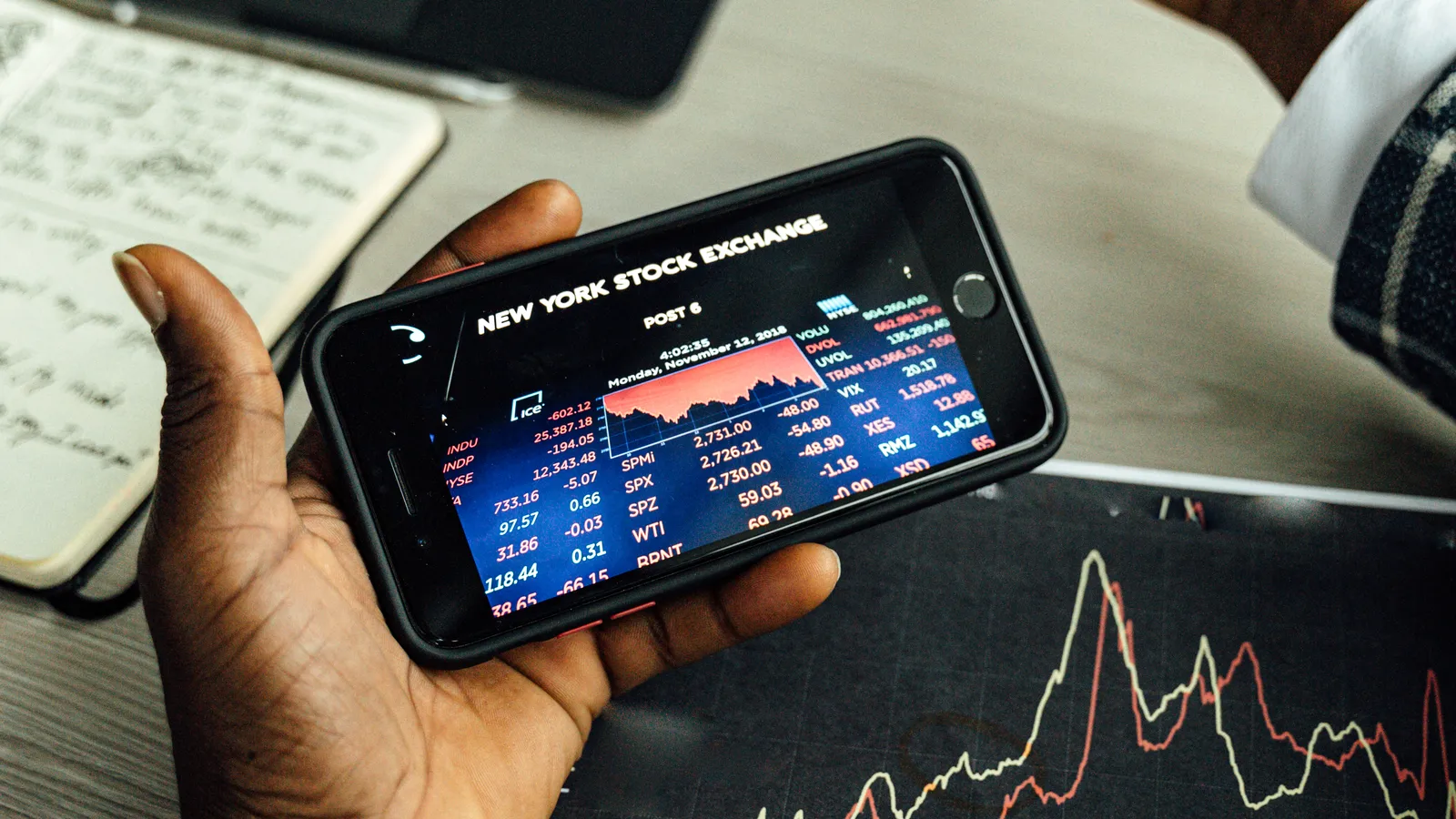
A Biya U.S. stock fractional share order simply means you do not have to buy a full share at once. Instead, you may buy quantities such as 0.1 share, 0.25 share, or 0.8 share. This can be useful if you have a smaller budget, want to get familiar with the U.S. stock trading process, or want exposure to a high-priced stock without buying a full share. However, fractional shares do not make a stock less risky, nor do they automatically mean the fee is always lower. They only make the trading unit smaller than one full share.
In general terms, Investor.gov explains that fractional shares refer to holding less than one full share of a stock or other security. FINRA’s explanation of fractional share investing also notes that fractional shares allow investors to buy part of a stock, such as 0.5 share or 0.1 share, instead of buying one full share.
These orders commonly appear in two types of trading behavior. One is quantity-based ordering, where you enter a specific number of shares, such as 0.2 share. The other is dollar-based ordering, where you decide to buy US$50 worth of a stock and the system converts that amount into a fractional share quantity based on the execution price. For beginners, the most important point is not to memorize every term, but to understand one key question: is the final executed quantity less than 1 share?
Common fractional share order scenarios can be understood this way:
| Scenario | Order Example | What You Need to Check |
|---|---|---|
| Small purchase of a high-priced stock | Buy 0.1 share | Whether the under-1-share fee rule applies |
| Dollar-based stock purchase | Buy US$50 | How many shares the order is ultimately converted into |
| Buying an ETF in batches | Buy 0.3 share each time | Transaction amount and platform fee per order |
| Buying a non-integer quantity | Buy 1.5 shares | Whether the order has already exceeded 1 share |
The most common confusion is that “fractional share” and “under 1 share” are not exactly the same thing. A 0.5-share order is both a fractional share order and an under-1-share order. But a 1.5-share order also contains a fractional component, yet the total executed quantity is already above 1 share. Fee rules may differ depending on the executed quantity, so you should not assume that any order with a decimal point automatically follows the under-1-share fee rule.
Fractional share trading may also involve differences in order types, eligible securities, transfer handling, voting rights, and dividend treatment. FINRA’s guidance on order handling reminds firms to handle fractional share orders and execution records according to relevant rules. Ordinary users do not need to study regulatory reporting details, but they should at least understand that fractional share orders are not always handled in exactly the same way as full-share orders.
Summary: The core idea behind a Biya U.S. stock fractional share order is that you can participate in U.S. stock trading with less than 1 share. What really matters for fee calculation is not whether the order has a decimal point, but whether the executed quantity is below 1 share. Orders such as 0.3 share or 0.8 share fall under the under-1-share category, while 1.5 shares or 3.2 shares are non-integer orders above 1 share and should be assessed using the standard U.S. stock fee schedule. Once you understand this distinction, platform fees, commissions, and third-party charges become much easier to read.
How Does Biya Charge U.S. Stock Fractional Share Orders Under 1 Share?

Biya’s fee rule for U.S. stock fractional share orders under 1 share can be summarized in one sentence: when the executed quantity is less than 1 share, only a platform fee equal to 1% of the total transaction amount is charged, capped at US$1, with no commission and no third-party charges. This rule comes from Biya’s pricing information and applies specifically to orders where the executed share quantity is below 1 share. It does not apply to all U.S. stock orders.
Core Fee Rule: 1% Platform Fee, Capped at US$1
You can remember a simple formula:
Platform fee for fractional share orders under 1 share = total transaction amount × 1%, capped at US$1
For example, if you execute a US$20 fractional share order, the platform fee is US$20 × 1% = US$0.20. If the transaction amount is US$100, the platform fee is US$1. If the transaction amount is US$300, 1% would normally be US$3, but because the fee is capped at US$1, the actual platform fee is still US$1.
| Transaction Amount | Platform Fee Calculation | Actual Platform Fee |
|---|---|---|
| US$20 | 20 × 1% | US$0.20 |
| US$50 | 50 × 1% | US$0.50 |
| US$100 | 100 × 1% | US$1.00 |
| US$300 | 300 × 1%, but capped | US$1.00 |
One important phrase here is total transaction amount. The amount you see when placing an order may only be an estimate. The actual fee is usually confirmed based on the execution price, executed quantity, and final execution result. So you can use the estimated transaction amount to do a quick calculation before placing an order, but the final amount should still be checked in the order preview and post-trade statement.
What Fees Are Not Charged on Orders Under 1 Share?
Biya’s pricing explanation for fractional share orders under 1 share is not only about the 1% platform fee. It also states that there is no commission and no third-party charges. In other words, when the executed quantity is below 1 share, you do not need to add commission, external institution fees, trading activity fees, or similar third-party charges on top of the 1% platform fee.
However, this statement must be understood in the correct context. It only applies to U.S. stock fractional share orders where the executed quantity is below 1 share. If you buy 2 shares, 10 shares, or 1.5 shares, you should not directly assume “no commission and no third-party charges” under this special rule. Different order types correspond to different fee schedules, so a special rule should not be expanded to cover all U.S. stock trades.
Do Not Ignore Execution Changes When Estimating Fees
Fractional share orders often appear together with dollar-based investing. For example, if you plan to buy US$80 worth of a stock, the final executed share quantity and transaction amount may differ slightly if the stock price changes before execution. The SEC’s explanation of a market order notes that a market order can guarantee execution, but not the execution price. If you want to control the price, you usually need to understand order types such as limit orders.
So you can use “transaction amount × 1%” as an initial estimate, but you should not treat the estimate as the final statement. The actual fee should be based on what the platform displays, the order page, and the final execution result.
Summary: The fee formula for Biya U.S. stock fractional share orders under 1 share is simple: total transaction amount × 1%, capped at US$1, with no commission and no third-party charges. You can use this formula to quickly estimate the cost of a small order, but you first need to confirm that the executed quantity is truly below 1 share. Once the executed quantity reaches or exceeds 1 share, this special rule should no longer be applied. For actual charges, refer to Biya’s pricing information, order preview, and executed trade statement.
What Is the Difference Between Orders Under 1 Share, Orders Above 1 Share, and Whole-Share Orders?

When judging the fee for a Biya U.S. stock fractional share order, the key dividing line is “1 share.” If the executed quantity is below 1 share, you can look at the under-1-share fractional share rule. If the executed quantity is above 1 share, even if it includes a decimal, it should follow the standard U.S. stock fee schedule. If the executed quantity is a whole number, it is generally treated under the usual U.S. stock order logic. Once you separate these three categories, the fee structure becomes much easier to understand.
Orders Under 1 Share: Focus on the Transaction Amount Percentage
Orders under 1 share, such as 0.1 share, 0.25 share, or 0.8 share, are mainly charged based on a platform fee equal to 1% of the total transaction amount, capped at US$1 per order. These orders are common when making small purchases, buying high-priced stocks, or placing dollar-based orders.
For example, if a stock has a relatively high price and you do not want to buy a full share, you may choose to buy US$50 worth of that stock. The final execution may be 0.x share. As long as the executed quantity is under 1 share, you can estimate the fee using the under-1-share fractional share order rule.
Non-Integer Orders Above 1 Share: Do Not Use the Under-1-Share Rule
Orders such as 1.5 shares, 2.2 shares, or 5.8 shares look like “fractional share” orders, but their total executed quantity is already above 1 share. Biya’s pricing information explains that non-integer orders with an executed share quantity above 1 share are charged according to the standard fee schedule.
This is where users most often make mistakes. These orders do include a fractional component, but the fee rule is not based on whether there is a decimal point. It is based on whether the total executed share quantity is below 1 share. If you buy 1.5 shares, you should not focus only on the 0.5-share portion. The entire 1.5-share order should be treated as a non-integer order above 1 share.
Whole-Share Orders: Follow the Standard U.S. Stock Fee Structure
Whole-share orders are easier to understand, such as 1 share, 5 shares, or 20 shares. These are generally assessed under the standard U.S. stock fee schedule. Biya charges US$0 commission for U.S. stock trading, with a platform fee of US$0.005 per share, a minimum of US$0.99 per order, and a maximum of 1% of the trade value. External institution fees and trading activity fees total US$0.00396 per share. Platform fees, external institution fees, and other charges are subject to the pricing information and order page display.
| Order Type | Example | Key Fee Consideration |
|---|---|---|
| Fractional share order under 1 share | 0.3 share | 1% of total transaction amount, capped at US$1 |
| Non-integer order above 1 share | 1.5 shares | Charged under the standard U.S. stock fee schedule |
| Whole-share order | 10 shares | Check commission, platform fee, and third-party charges |
| Dollar-based order | Buy US$100 | Look at the final executed share quantity |
If you are checking a stock through U.S. stock quotes, you can first look at the current price and roughly estimate how many shares your budget may buy. Before entering the order page, this helps you judge whether the order will likely fall under the “under 1 share” category or the “above 1 share” category.
Summary: The difference between orders under 1 share, non-integer orders above 1 share, and whole-share orders mainly lies in the fee calculation basis. Orders of 0.x share apply Biya’s under-1-share fractional share fee rule. Orders of 1.x shares or more should be charged under the standard fee schedule. Whole-share orders are also assessed under standard U.S. stock trading fees. When judging the fee, do not only look at whether there is a decimal point. First check whether the final executed quantity is below 1 share. This dividing line matters more than the word “fractional” itself.
Why Should You Not Judge Fractional Share Costs Only by “Zero Commission”?
When looking at Biya U.S. stock fractional share fees, zero commission is certainly important, but it is not the whole story. U.S. stock trading costs may include not only commission, but also platform fees, external institution fees, trading activity fees, settlement-related charges, and other items. The special feature of Biya’s fractional share orders under 1 share is that there is no commission and no third-party charge; only a 1% platform fee applies, capped at US$1. Other U.S. stock orders still need to be assessed under the full fee structure.
Many beginners naturally interpret “zero commission” as “zero cost,” but these are not the same thing. Commission is only one part of the fee structure. Platform fees and pass-through fees may still exist. Biya charges US$0 commission for U.S. stock trading, while platform fees, external institution fees, and other charges are subject to the pricing information and order page display.
You can break U.S. stock trading costs into several layers:
| Fee Layer | Question to Ask | How to Understand Orders Under 1 Share |
|---|---|---|
| Commission | Is commission charged? | No commission for this Biya order type |
| Platform fee | Does the platform charge a service fee? | 1% of total transaction amount, capped at US$1 |
| Third-party charges | Are external institution or regulatory fees charged? | No third-party charges for this Biya order type |
| Order execution | Is the execution price the same as expected? | Check the order type and execution result |
| Statement details | Can the final charge be verified? | Refer to the post-trade statement |
If you are paying attention to popular stocks or trading opportunities after a hot IPO, you should look not only at price movement, but also at actual trading costs. Popular stocks may experience large price swings during the early trading period or when news is concentrated. Before trading, you should fully understand order types, fee structures, and risks. The SEC’s explanation of a limit order notes that a limit order can restrict the buying or selling price, but it does not guarantee execution. This means both fee estimates and trading experience may be affected by how the order is executed.
Another often-overlooked point is that different platforms may support fractional shares differently. Eligible securities, supported order types, transfer handling, and dividend treatment may vary. FINRA reminds investors to understand how their brokerage handles fractional shares and related restrictions. For example, some platforms may not support fractional trading for all stocks or ETFs, while others may have special rules on transferring out fractional shares, voting rights, or order types.
When reviewing fractional share fees, it is useful to check these questions:
- Is the final executed share quantity below 1 share?
- Does the order only charge a platform fee, with no commission and no third-party charges?
- Is there a cap on the platform fee?
- Does the stock or ETF support fractional share trading?
- Are you using a market order, limit order, or another order type?
- Does the post-trade statement match the order preview?
Summary: Zero commission does not mean zero cost. For Biya U.S. stock fractional share orders under 1 share, the key fee rule is a platform fee equal to 1% of the total transaction amount, capped at US$1, with no commission and no third-party charges. For non-integer orders above 1 share and ordinary whole-share orders, you still need to check the standard U.S. stock fee schedule. The right habit is to separate commission, platform fee, third-party charges, order execution, and statement details, instead of focusing only on “zero commission.”
How Can You Estimate Biya Fractional Share Order Fees Before Placing an Order?
You can estimate Biya fractional share order fees in a simple order: first check whether the executed quantity is below 1 share, then look at the expected transaction amount, use the 1% platform fee formula, and finally review the order preview and post-trade statement. This method is useful for small purchases, high-priced stocks, dollar-based orders, and beginners who want to understand the fee structure.
Step 1: Check Whether the Order Is Under 1 Share
Start by looking at the quantity you plan to trade. If it is 0.2 share, 0.5 share, or 0.9 share, it is clearly below 1 share and can be estimated using the under-1-share rule. If it is 1 share, 1.2 shares, or 3.5 shares, do not use the under-1-share formula.
This matters even more for dollar-based orders because you are entering an amount, not a share quantity. For example, if you enter US$80, the final executed share quantity depends on the execution price. If the stock price is high, the executed quantity may be below 1 share. If the stock price is lower, the executed quantity may exceed 1 share. Fee calculation should follow the final execution result.
Step 2: Estimate the Platform Fee Using the Total Transaction Amount
Once you confirm that the order will likely be under 1 share, you can use this formula:
Estimated platform fee = estimated total transaction amount × 1%, capped at US$1
For example, if you expect to execute a US$30 order, the platform fee is about US$0.30. If you expect to execute a US$120 order, the platform fee is capped at US$1. This estimate helps you build a cost expectation before placing an order, especially when trying a small order or comparing the cost of batch purchases.
Step 3: Check the Order Preview and Post-Trade Statement
A fee estimate is only an estimate, not the final amount charged. Before placing the order, check the order preview. After the order is executed, review the execution record and statement details. If the price changes, the order is partially filled, or the order is canceled and resubmitted, the actual result may differ from the original estimate.
U.S. stock trading also involves settlement cycles. FINRA’s explanation of T+1 notes that the standard settlement cycle for U.S. securities markets is now the next business day after the trade date. This concept does not directly change the fractional share platform fee formula, but it does affect how you understand the trade date, settlement date, and fund availability. The SEC’s explanation of a cash account also reminds investors to pay attention to settlement and trading restrictions in cash accounts.
Before placing an order, you can use this checklist:
- Check the order quantity: is the expected execution below 1 share?
- Check the order amount: estimate the total transaction amount.
- Apply the formula: total transaction amount × 1%, capped at US$1.
- Review the order preview: confirm the fee items and estimated charge.
- Review the trade statement: verify the final executed quantity and fee details.
If the relevant services are available in your region, you can use web trading to view available features, the order page, and trading displays. Service availability depends on the user’s location, identity verification result, platform rules, and applicable laws and regulations.
Summary: Estimating Biya fractional share order fees does not require you to study a complicated fee table from the start. First check whether the order is under 1 share, then use “total transaction amount × 1%, capped at US$1” as an estimate, and finally confirm the result through the order preview and post-trade statement. This process is especially useful for beginners, small test orders, and dollar-based purchases. Remember that an estimate is not the final statement. Market price, executed quantity, order type, and platform display may all affect the actual result.
When Should You Pay Special Attention to Biya’s Under-1-Share Fractional Share Fees?
You should pay special attention to Biya’s under-1-share fractional share fees when making small trades, buying high-priced stocks, investing by dollar amount in batches, or simply trying to understand U.S. stock fee structures. The advantage is that the rule is clear: a 1% platform fee based on the total transaction amount, capped at US$1, with no commission and no third-party charges. But this is not investment advice and should not replace your own assessment of stock risk, price volatility, and funding needs.
Small Test Orders: Learn the Fee Structure and Statement First
If you are new to U.S. stock trading, you may not want to buy a full share immediately. Fractional share orders can help you use a smaller amount to get familiar with order placement, execution, fee preview, and statement records. At this stage, the most useful goal is not to pursue returns, but to understand how each fee item appears and where to verify it after execution.
Biya is a global multi-asset trading wallet that supports U.S. stocks, Hong Kong stocks, digital assets, and other asset functions. For users who want to understand U.S. stock trading costs first, small orders can help them learn the fee structure before deciding whether to use related features more actively.
High-Priced Stocks: You Do Not Need to Buy a Full Share at Once
Some U.S. stocks have relatively high prices, and buying one full share may require more capital. This is where fractional shares can be useful. You may participate with a smaller amount instead of buying one full share at once. Investor.gov’s explanation of fractional shares also notes that when you do not have enough money to buy a full share, fractional shares may allow you to buy part of a stock.
However, being able to buy a smaller unit does not mean the risk is lower. Stock prices still move up and down, and popular stocks may be more volatile. If you buy 0.2 share, you still bear losses proportionally if the stock price falls. If you buy 0.8 share, any gain is also proportional to your position size. Fractional shares reduce the trading unit, but they do not change the market risk of the underlying stock.
Batch Purchases: Estimate the Cost of Each Order First
If you often buy in batches, such as US$50 or US$100 each time, you need to pay attention to the fee ratio of each order. Biya’s under-1-share fractional share orders have a US$1 cap, so the fee percentage may feel different depending on the transaction amount. For smaller orders, it is especially useful to calculate the platform fee ratio first, instead of looking only at the purchase amount and ignoring actual cost.
| Use Case | What to Focus On | What to Watch Out For |
|---|---|---|
| Small test order | Platform fee ratio and cap | Does not represent long-term total cost |
| High-priced stock | Whether participation below 1 share is possible | Price volatility still applies |
| Batch buying | Fee share per order | Does not guarantee a better average cost |
| Beginner learning statements | Whether fee items are clear | Refer to the executed trade statement |
| Popular stock trading | Order type and execution price | Volatility may amplify the trading experience |
If you want to view quotes, trades, and statements on mobile, you can use the Biya App. If you prefer using a desktop, you can also view related features through the web version. Biya charges US$0 commission for U.S. stock trading, while platform fees, external institution fees, and other charges are subject to the pricing information and order page display.
Summary: Biya’s under-1-share fractional share fee rule is most worth reviewing when making small test orders, buying high-priced stocks, investing by dollar amount in batches, or learning how to read trading statements. It helps you quickly estimate the cost of a single order, but it should not be used to decide whether a stock is worth buying, nor does it guarantee better trading results. A more practical approach is to first confirm whether the order is under 1 share, then review the platform fee, order preview, and executed statement, while also considering your own risk tolerance and applicable regional rules.
Before Placing an Order on Biya, Understand Fractional Share Fees First
If you are interested in U.S. stock fractional share trading, the most important thing is not to rush into placing an order, but to first understand the fee rule. Biya’s rule for U.S. stock fractional share orders under 1 share is relatively clear: only a platform fee equal to 1% of the total transaction amount is charged, capped at US$1, with no commission and no third-party charges. However, non-integer orders above 1 share and ordinary whole-share orders should be understood under the standard U.S. stock fee schedule.
Before trading, you can first check Biya’s pricing to confirm the latest fee information, then estimate the platform fee based on your order amount. If the relevant services are available in your region, you may complete identity verification through Biya and view the available features. Service availability depends on the user’s location, identity verification result, platform rules, and applicable laws and regulations.
Biya is a global multi-asset trading wallet that supports USDT conversion into major fiat currencies such as USD and HKD, as well as U.S. stock, Hong Kong stock, and digital asset trading. What matters most is not simply remembering “zero commission,” but understanding the fee structure before placing an order and reading the statement details after execution. Public market trading involves risk. The information above only explains trading rules and fee structures and does not constitute investment advice.
FAQ
Does Biya Charge Commission on U.S. Stock Fractional Share Orders Under 1 Share?
Biya does not charge commission on U.S. stock fractional share orders under 1 share. When the executed quantity is below 1 share, the key cost is a platform fee equal to 1% of the total transaction amount, capped at US$1. The final fee should still be checked on the order page and trade statement.
How Can Users Check Biya Fractional Share Fees Before Placing an Order?
Users can check Biya fractional share fees through the order preview before submitting the trade. For U.S. stock fractional share orders under 1 share, the platform fee can be estimated as 1% of the total transaction amount, capped at US$1. The final amount should be verified after execution in the statement details.
Are Biya U.S. Stock Fractional Share Orders Suitable for Small Test Trades?
Biya U.S. stock fractional share orders under 1 share may be suitable for users who want to understand the trading process with a smaller amount. They can help users review order pages, fee previews, and statements, but they do not reduce market risk or guarantee better investment results.
Does Biya Support Fractional Share Trading for All U.S. Stocks and ETFs?
Biya fractional share availability may depend on the specific U.S. stock or ETF, platform rules, and order conditions. Users should check whether the target security supports fractional trading before placing an order. Availability may also vary based on account status, region, verification result, and applicable rules.
What Should Users Check When Selling Biya U.S. Stock Fractional Shares?
When selling Biya U.S. stock fractional shares, users should check the order preview, executed quantity, transaction amount, and statement details. Even when a special fee rule applies to orders under 1 share, the final cost should be based on the platform’s displayed fee information and actual execution result.
*This article is provided for general information purposes and does not constitute legal, tax or other professional advice from BiyaPay or its subsidiaries and its affiliates, and it is not intended as a substitute for obtaining advice from a financial advisor or any other professional.
We make no representations, warranties or warranties, express or implied, as to the accuracy, completeness or timeliness of the contents of this publication.
Related Blogs of

What Does Biya U.S. Stock Zero Commission Mean? A Clear Breakdown of the Fee Structure


How Is Biya’s U.S. Stock Platform Fee Calculated? What Fees Should You Check Before Placing an Order?


How to Read a Biya U.S. Stock Trading Statement? A Line-by-Line Explanation of Fee Items


Which Users Is Biya U.S. Stock Trading Suitable For? Fees, Rules, and What to Know Before Using It

Choose Country or Region to Read Local Blog
 Australia
 Austria
 Belgium
 Canada
 Cyprus
 Czech Republic
 Denmark
 Estonia
 Finland
 France
 Germany
 Greece
 Hong Kong
 India
India Indonesia
 Ireland
 Italy
Italy Japan
Japan Latvia
 Lithuania
 Luxembourg
 Malaysia
 Malta
Malta Morocco
 Nepal
Nepal Netherlands
 New Zealand
 Norway
 Pakistan
 Philippines
 Poland
 Portugal
 Romania
 Singapore
 Slovakia
 Slovenia
 South Africa
 South Korea
 Spain
Spain Sweden
 Thailand
 The United States
 Turkey
 United Arab Emirates
 United Kingdom
 Vietnam
Contact Us




BIYA GLOBAL LLC is registered with the Financial Crimes Enforcement Network (FinCEN), an agency under the U.S. Department of the Treasury, as a Money Services Business (MSB), with registration number 31000218637349, and regulated by the Financial Crimes Enforcement Network (FinCEN).
BIYA GLOBAL LIMITED is a registered Financial Service Provider (FSP) in New Zealand, with registration number FSP1007221, and is also a registered member of the Financial Services Complaints Limited (FSCL), an independent dispute resolution scheme in New Zealand.