How to Understand Biya U.S. Stock Trading Costs? Breaking Down Commission, Platform Fees, and Fractional Share Fees





Biya U.S. stock trading costs should not be judged by the “commission” field alone. Biya charges US$0 commission for U.S. stock trading, but actual costs may still include platform fees, external institution fees and trading activity fees, CAT fees, settlement fees, fractional share order fees, bid-ask spreads, execution prices, and currency conversion costs. Before placing an order, what you really need to assess is whether the fee ratio is high relative to the transaction amount, whether the order triggers a minimum fee, whether it is a fractional share order below one share, and whether the post-trade statement matches the order page.
Key Takeaways
- Biya charges US$0 commission for U.S. stocks, but trading costs are not zero.
- Platform fees are calculated by share quantity and are subject to minimum and cap rules.
- Buy and sell orders do not always have the same fee considerations.
- Fractional share orders below one share follow a separate fee rule.
- Small orders, low-priced stocks, and frequent trading require closer attention to fee ratios.
- Post-trade statements are important for verifying actual charges.
Why Biya U.S. Stock Trading Costs Should Not Be Judged by Commission Alone
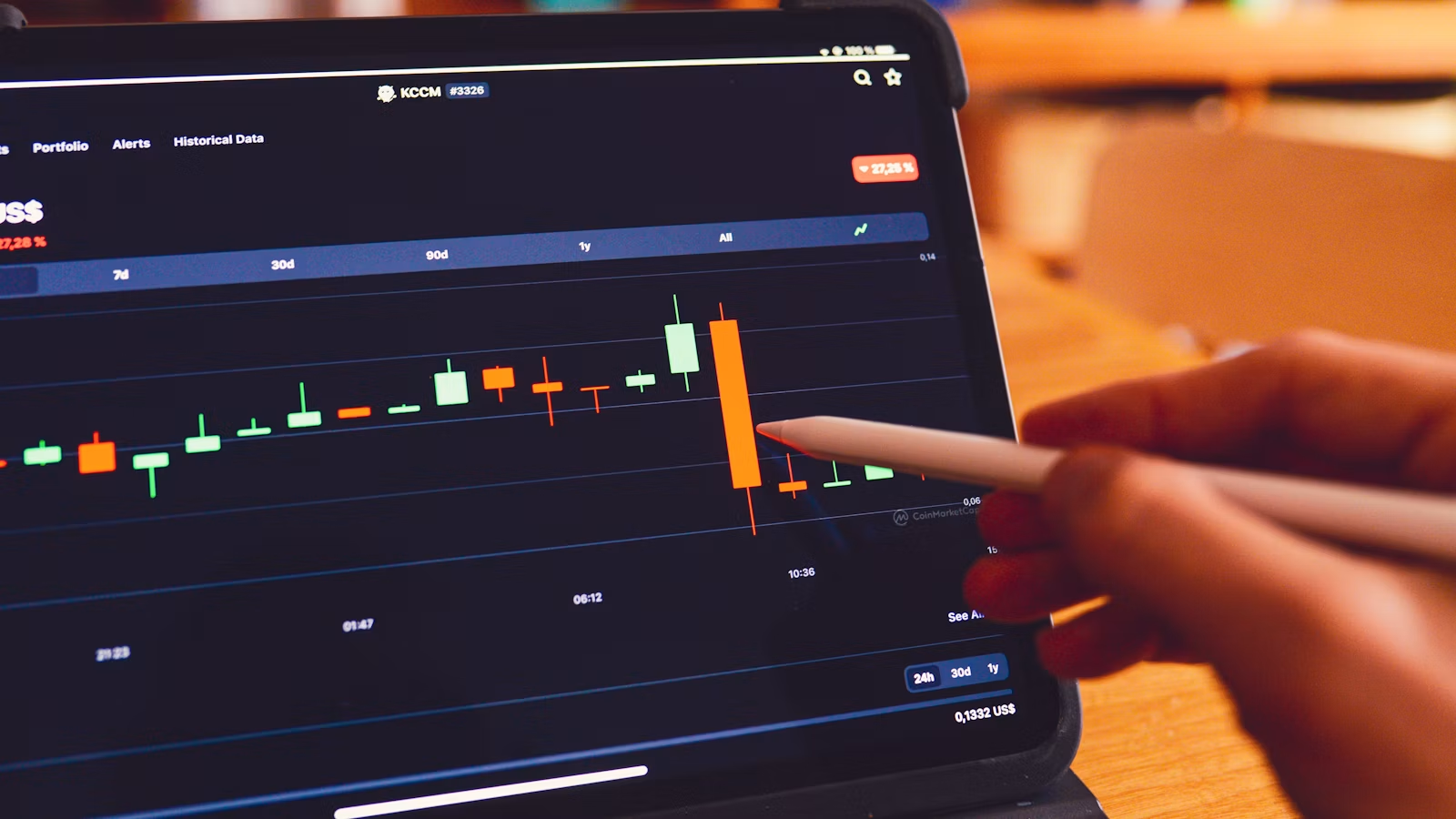
Biya charges US$0 commission for U.S. stock trading, but “zero commission” only means the commission item is zero. It does not mean the entire order has no trading cost. According to Biya’s U.S. stock commission adjustment, U.S. stock trading commission is US$0, while platform fees, external institution fees and trading activity fees, CAT fees, and settlement fees still follow corresponding rules. When understanding costs, you should look at commission, platform fees, third-party fees, and execution price together.
Commission is the fee charged by a broker or trading platform for trade execution services. A platform fee is more closely related to trading systems, account services, order handling, and platform capabilities. Both can affect the final cost paid by users, but they differ in name and calculation method. In addition, the U.S. stock market may also involve external institution fees, trading activity fees, regulatory-related fees, and settlement-related fees.
| Cost Item | Is It Commission? | Does It Affect Actual Charges? | How to Check Before Placing an Order |
|---|---|---|---|
| Commission | Yes | Yes | Check the commission field |
| Platform fee | No | Yes | Check platform fee rules and the order page |
| External institution fees and trading activity fees | No | Yes | Check the fee schedule and account statement |
| CAT fee | No | More relevant when selling | Check sell order details |
| Settlement fee | No | Yes | Check the post-trade statement |
| Bid-ask spread and execution price | No | Yes, it affects position cost | Check order type and execution price |
FINRA notes in Fees and Commissions that buying and selling stocks, bonds, and other investment products typically involves related costs, and these costs vary depending on account type, investment services, and product type. In other words, investors should not focus only on the most visible fee item, but should understand the overall fee structure behind accounts, trades, and investment products.
This is also why “zero commission” can easily lead to misunderstandings. Users often look at commission first and then decide whether a platform is “cheap.” However, real trading cost depends on the final amount charged. For example, even if commission is zero, a small order may still be affected by a minimum platform fee. Even if the platform fee is not high, a sell order may involve sell-side fees. Even if the fee itself is low, a volatile order may still result in execution price differences that change the actual position cost.
A more reasonable approach is to first understand the fee structure, then review the order page estimate, and finally verify the cost through the post-trade statement. You do not need to memorize every single fee item, but you should know which fees change with share quantity, which fees are affected by order direction, and which costs come from execution price or currency conversion.
Summary: Biya U.S. stock trading costs should not be judged only by “US$0 commission.” Zero commission does reduce visible trading costs, but platform fees, external institution fees and trading activity fees, CAT fees, settlement fees, bid-ask spreads, and currency conversion costs may still affect the final result. To decide whether an order is suitable to execute, you should look at the fee ratio relative to the transaction amount, order direction, executed shares, and post-trade statement, rather than focusing only on the commission field.
How to Break Down Biya Standard U.S. Stock Order Fees

The core fees of a standard Biya U.S. stock order include commission, platform fees, external institution fees and trading activity fees, CAT fees, and settlement fees. Biya charges US$0 commission for U.S. stock trading. The platform fee is US$0.005 per share, with a minimum of US$0.99 per order and a maximum of 1% of the transaction value. External institution fees and trading activity fees are US$0.00396 per share. The fee schedule and order page should be the main references before placing an order.
Standard order fees can be broken down as follows:
| Fee Item | Biya Fee Rule | Main Influencing Factor | What Users Should Pay Attention To |
|---|---|---|---|
| Trading commission | US$0 | Whether it is a U.S. stock trade | Do not misread it as zero total cost |
| Platform fee | US$0.005/share, minimum US$0.99, maximum 1% of transaction value | Executed shares and transaction amount | Small orders and low-priced stock orders |
| External institution fees and trading activity fees | US$0.00396/share | Executed shares | Cost of high-share orders |
| CAT fee | Applies to sell orders | Sell direction and executed shares | Check the sell order page |
| Settlement fee | US$0.003/share, maximum 7% of transaction value | Executed shares and transaction amount | Verify through the post-trade statement |
The key point about the platform fee is that it is calculated “by share quantity.” If you buy 10 shares, the base platform fee is 10 × US$0.005. If you buy 1,000 shares, the base platform fee increases with the number of shares. However, the actual fee also depends on the minimum charge of US$0.99 per order and the maximum cap of 1% of the transaction value. Small orders are most likely to be affected by the minimum fee, while large low-priced stock orders require closer attention to the cap.
External institution fees and trading activity fees are better understood as “market and trading infrastructure costs.” In the U.S. market, for example, the FINRA Trading Activity Fee is a fee related to the cost of regulating member firms. Whether different platforms pass it through, how it is displayed, and whether it is combined into a broader fee item should be based on the platform’s fee explanation and statement.
You can divide standard order costs into two layers. The first layer includes the commission and platform fee clearly listed by the platform. The second layer includes external institution fees, trading activity fees, CAT fees, settlement fees, and other costs related to the market trading process. Ordinary users do not need to study the regulatory background of every fee in depth, but they should know that these items may jointly affect actual charges.
Summary: The cost structure of a standard Biya U.S. stock order is not limited to commission. It consists of commission, platform fees, external institution fees and trading activity fees, CAT fees, and settlement fees. You should focus on three questions: whether the order triggers the minimum platform fee, whether the per-share fee is approaching the cap, and whether the sell order involves additional fees. Biya charges US$0 commission for U.S. stock trading, while platform fees, external institution fees, and other fees are subject to the fee schedule and order page.
Why Biya Fees May Differ Between Buying and Selling U.S. Stocks

Biya U.S. stock buy and sell orders have different cost considerations. When buying, you mainly need to consider platform fees, external institution fees, execution price, bid-ask spread, and currency conversion costs. When selling, in addition to these items, you should pay special attention to CAT fees and other sell-side fees. In simple terms, buying focuses more on “position-building cost,” while selling focuses more on how much remains after deducting all fees from the proceeds.
The cost of a buy order is usually easier to understand. After you enter the stock ticker, purchase quantity, and order type, the platform will display estimated fees based on share quantity, estimated amount, and fee rules. At this stage, what affects your experience is not only the fee schedule but also the order type. Investor.gov’s explanation of Types of Orders shows that market orders focus on immediate execution but do not guarantee an execution price, while limit orders focus on a specified price or better but do not guarantee execution.
Sell orders require an additional layer of attention. CAT stands for Consolidated Audit Trail. FINRA’s introduction to the Consolidated Audit Trail explains that it is used to collect and identify order, cancellation, modification, and execution records in U.S. listed equities and options markets. Under Biya’s fee rules, CAT fees apply to sell orders, so you cannot estimate sell-side costs purely based on buy-side fee intuition.
| Order Direction | Main Fees to Watch | Commonly Overlooked Issue | Review Focus |
|---|---|---|---|
| Buy | Platform fee, external institution fees, execution price, currency conversion cost | Market order execution price may change | Estimated fees on the order page |
| Sell | Platform fee, external institution fees, CAT fee, settlement fee | Sell-side fees may be overlooked | Post-trade statement |
| Rebalancing | Fees from multiple buy and sell orders | Two-way trading costs accumulate | Monthly statement review |
| Frequent trading | Repeated accumulation of single-order fees | Fee ratio may be underestimated | Total number of trades |
Settlement also affects how you interpret what happens after execution. The SEC has stated that the U.S. securities market has moved to a T+1 standard settlement cycle, shortening most regular securities transactions from T+2 to one business day after the trade date. The settlement cycle itself is not a platform fee, but it affects fund availability, trade record confirmation, and the timing of statement review.
If you follow popular IPOs or highly volatile stocks, fee assessment should also include price volatility. Popular stocks may experience wide bid-ask spreads and execution price fluctuations in the early trading stage. Before trading, you should fully understand order types, fee structures, and risks. Low fees cannot offset price volatility risk, and price volatility cannot replace fee checking.
Summary: Biya U.S. stock buy and sell orders should not be evaluated with exactly the same cost intuition. When buying, focus on platform fees, execution price, bid-ask spread, and currency conversion. When selling, also pay attention to CAT fees, settlement fees, and the final amount received. Especially in rebalancing, popular stock trading, or frequent buying and selling, fees that appear small on a single order may accumulate across multiple trades. Checking the post-trade statement is necessary for confirming real costs.
How to Understand Biya U.S. Stock Fractional Share Fees Separately
The key criterion for Biya U.S. stock fractional share fees is not whether the position has decimals, but whether the executed share quantity is below one share. For fractional share orders with executed quantity below one share, only a platform fee of 1% of the total transaction amount is charged, capped at US$1. If the executed quantity is more than one share but not a whole number, the standard fee schedule applies. Therefore, the fee logic for 0.5 shares and 1.5 shares is not the same.
Investor.gov explains Fractional Share Investing as allowing investors to hold less than one full share of a stock. This can be especially attractive for high-priced stocks because users can participate with a smaller amount instead of buying a full share at once.
However, while fractional shares lower the entry threshold, cost assessment should not be skipped. Biya fractional share fees should be viewed in two categories:
| Order Type | Executed Shares | Fee Rule | Relevant Scenario |
|---|---|---|---|
| Fractional share order below one share | Less than 1 share | 1% of total transaction amount as platform fee, capped at US$1 | Small test orders and small purchases of high-priced stocks |
| Non-integer order above one share | More than 1 share but not a whole number | Standard fee schedule applies | 1.2 shares, 2.5 shares, 10.3 shares, etc. |
| Whole-share order | 1 share or more, whole number | Standard fee schedule applies | Regular buying and selling |
For example, if you buy 0.3 shares of a stock, it is a fractional share order below one share and should be understood under the below-one-share rule. If you buy 2.3 shares, although the position still has a decimal, it is already above one share and no longer falls under the separate “below one share” rule. It should be treated under the standard order fee structure.
New users often underestimate fractional share costs because fractional share order amounts are usually small, and the absolute fee amount may not look high. However, from a fee ratio perspective, small orders are more sensitive. The same fee under US$1 may be barely noticeable on an order worth several hundred dollars, but it may feel more significant on an order worth only a few dozen dollars.
If you use the U.S. stock search tool to check high-priced stocks before considering fractional share exposure, you should confirm three things before placing an order: whether the executed share quantity is below one share, whether the order page displays the fee under the fractional share rule, and whether the post-trade statement matches the order page.
Summary: Biya U.S. stock fractional share fees depend on the dividing line of “below one share.” If the executed quantity is below one share, the platform fee is 1% of the total transaction amount and capped at US$1. If the executed quantity is above one share but not a whole number, it should be understood under the standard fee schedule. Fractional shares can lower the entry threshold for high-priced stocks, but small orders are more sensitive to fee ratios, so you should check the order page before placing an order and review the statement after execution.
How Biya U.S. Stock Costs Differ Across Trading Habits
The same Biya U.S. stock fee rules affect different trading habits differently. Small trades are more likely to be affected by the minimum platform fee. Large purchases of low-priced stocks require closer attention to per-share fees and cap rules. Small purchases of high-priced stocks depend more on execution price, while frequent trading requires attention to cumulative costs. When judging whether costs are high or low, the key is not the single fee amount, but the fee ratio relative to the transaction amount.
Trading habits can be divided into four broad categories:
| Trading Habit | Most Sensitive Cost | Commonly Overlooked Issue | How to Evaluate |
|---|---|---|---|
| Small purchases | Minimum platform fee | Fee ratio may be high | Fee ÷ transaction amount |
| Large purchases of low-priced stocks | Per-share platform fee | More shares make the fee more noticeable | Check whether the cap is approached |
| Small purchases of high-priced stocks | Execution price and spread | Fees may be low, but execution price volatility can be high | Check order type |
| Frequent trading | Cumulative cost across many trades | Single-order fees are underestimated | Monthly statement review |
| Selling and rebalancing | CAT fee and settlement fee | Sell-side fees may be overlooked | Check the post-trade statement |
Small trades require the closest attention to minimum charges. If your order amount is very small, even if the base platform fee calculated by shares is not high, the minimum fee may lead to a higher fee ratio. In this case, the issue is not a single fee rate number, but whether the order amount is being split too finely.
Large purchases of low-priced stocks are the opposite. You may think low-priced stocks have a low entry threshold, but if you buy many shares, per-share fee items become more noticeable. In this case, you should look at the platform fee, external institution fees and trading activity fees, and the transaction value cap together.
If you follow trading opportunities after popular IPOs begin trading, you should pay attention not only to price volatility but also to actual trading costs. U.S. stock trading costs usually include more than commission. They may also include platform fees, external institution fees, trading activity fees, settlement fees, and other items. Popular IPOs may experience significant price volatility in the early trading stage, so you should fully understand order types, fee structures, and risks before trading.
Frequent trading requires regular review. FINRA reminds investors in Pay Attention to Your Brokerage Account Statements to regularly review account statements and trade confirmations to confirm whether account activity accurately reflects their investment decisions. For frequent traders, statements are not just a post-trade formality; they are a cost management tool.
Summary: Biya U.S. stock costs affect different users in different ways. Small orders require attention to minimum fees. Large purchases of low-priced stocks require attention to share quantity and caps. Small purchases of high-priced stocks require attention to execution price. Frequent trading requires attention to cumulative fees. When evaluating cost, you should not only ask “how much was charged for this order,” but also “what percentage of the transaction amount is this fee, will it occur repeatedly, and does it match my trading frequency and risk tolerance?”
How to Check the Real Cost of a Biya U.S. Stock Order Before Placing It
Before placing a Biya U.S. stock order, you can check real trading cost in the following order: fee schedule — order confirmation page — execution report — account statement. The fee schedule helps you understand the rules. The order confirmation page shows the estimated fees for the specific order. The execution report tells you the actual execution price. The account statement helps you verify the final charges. This process is more reliable than memorizing a single fee rate.
You can use the checklist below before placing an order:
| Check Order | Item to Check | Key Question |
|---|---|---|
| Step 1 | Fee schedule | Have commission, platform fees, or fractional share fees changed? |
| Step 2 | Stock ticker and order direction | Is it a buy, sell, or rebalancing order? |
| Step 3 | Executed shares | Is it below one share? Is the share quantity large? |
| Step 4 | Order amount | Is the fee ratio too high? |
| Step 5 | Order type | Is it a market order or limit order? |
| Step 6 | Order confirmation page | Are the estimated fees in line with expectations? |
| Step 7 | Execution report | Did the actual execution price deviate from expectations? |
| Step 8 | Statement details | Are the platform fee, external fees, and settlement fees clear? |
FINRA’s explanation of brokerage statements notes that account statements usually contain investment holdings, account activity, and information that should be checked for errors or irregularities. For ordinary investors, one of the most important uses of a statement is to match the estimated cost before placing an order with the actual charge after execution.
If you use Biya for multi-asset management, you should also include the funding path in your cost understanding. Biya is a global multi-asset trading wallet that supports USDT conversion into major fiat currencies such as U.S. dollars or Hong Kong dollars, as well as U.S. stock, Hong Kong stock, and digital asset trading. Service availability depends on the user’s location, identity verification results, platform rules, and applicable laws and regulations.
If services are available in your region, you can further review Biya U.S. stock trading fees. Before placing an order, do not rely only on a static fee table or past experience. The actual order page should be the primary reference. After execution, use the statement to confirm fee items, execution price, and fund changes.
Summary: The real cost of a Biya U.S. stock order should be checked through a fixed process. First, review the fee schedule to understand commission, platform fees, fractional share fees, and third-party fees. Then check the order confirmation page to assess the estimated charge for the specific order. After execution, review the execution report and statement to confirm the actual execution price and final fees. By forming this closed loop, you can more clearly distinguish fee rules, execution price, currency conversion, and position cost.
Understand U.S. Stock Fees on Biya Before Placing an Order
If you plan to follow or trade U.S. stocks through Biya, a more prudent approach is not to look only at “zero commission,” but to first understand the full fee structure. Biya charges US$0 commission for U.S. stock trading. The platform fee is US$0.005 per share, with a minimum of US$0.99 per order and a maximum of 1% of the transaction value. External institution fees and trading activity fees are US$0.00396 per share. For fractional share orders with executed quantity below one share, only 1% of the total transaction amount is charged as a platform fee, capped at US$1.
You can first use the Biya App to review account and trading features, then check the specific fees on the order confirmation page. Biya charges US$0 commission for U.S. stock trading, while platform fees, external institution fees, and other fees are subject to the fee schedule and order page. Before trading, you should fully understand order types, fee structures, and risks. The information above only explains publicly available market information, trading rules, and fee structures, and does not constitute investment advice.
FAQ
Why Does the Fee Ratio of a Single Biya U.S. Stock Order Matter?
The fee ratio of a single Biya U.S. stock order helps you judge whether a small trade is overly affected by the minimum fee. The fee amount itself may not be large, but if the transaction amount is small, the fee ratio can be amplified. Before placing an order, you should assess the order amount, share quantity, and estimated fees shown on the order page.
Are Fees More Sensitive When Buying Low-Priced U.S. Stocks on Biya?
Fees may be more sensitive when buying low-priced U.S. stocks on Biya. Because platform fees and some other fees are calculated by share quantity, buying many shares of a low-priced stock may make the fee impact more noticeable. You should check per-share fees, the transaction value cap, and the order confirmation page together.
Can Biya U.S. Stock Execution Spreads Affect Position Cost?
Biya U.S. stock execution spreads can affect position cost. Even if commission and platform fees are relatively low, market orders, volatile market conditions, and bid-ask spreads may cause the actual execution price to deviate from expectations. Before placing an order, you should understand the order type and rely on the actual execution report.
Where Should Investors Check Changes to Biya U.S. Stock Fee Rules?
Changes to Biya U.S. stock fee rules should be checked first through the fee schedule, order confirmation page, and post-trade statement. Articles, tutorials, or past experience can help with understanding, but they cannot replace the platform’s real-time display. For actual charges, platform rules and statement details should prevail.
How Can Frequent Biya U.S. Stock Traders Review Costs?
Frequent Biya U.S. stock traders can review executed shares, number of trades, platform fees, external fees, sell-side fees, and execution spreads on a monthly basis. The focus should not be only on single-order fees, but on cumulative cost as a percentage of trading amount and account performance fluctuations.
How Should Investors Check Mixed Fractional and Whole-Share Purchases on Biya?
When making mixed fractional and whole-share purchases on Biya, first confirm whether the executed quantity of each order is below one share. Orders below one share should be understood under the fractional share rule. Non-integer orders above one share follow the standard fee schedule. The final reference should still be the order page and account statement.
*This article is provided for general information purposes and does not constitute legal, tax or other professional advice from BiyaPay or its subsidiaries and its affiliates, and it is not intended as a substitute for obtaining advice from a financial advisor or any other professional.
We make no representations, warranties or warranties, express or implied, as to the accuracy, completeness or timeliness of the contents of this publication.
Related Blogs of

Biya U.S. Stock Trading Fees Explained: Zero Commission, Platform Fees, and External Fees


What Does Biya U.S. Stock Zero Commission Mean? A Clear Breakdown of the Fee Structure


Why You Should Check the Biya Fee Center Before Trading U.S. Stocks


How to Read a Biya U.S. Stock Trading Statement? A Line-by-Line Explanation of Fee Items
Choose Country or Region to Read Local Blog
 Australia
 Austria
 Belgium
 Canada
 Cyprus
 Czech Republic
 Denmark
 Estonia
 Finland
 France
 Germany
 Greece
 Hong Kong
 India
India Indonesia
 Ireland
 Italy
Italy Japan
Japan Latvia
 Lithuania
 Luxembourg
 Malaysia
 Malta
Malta Morocco
 Nepal
Nepal Netherlands
 New Zealand
 Norway
 Pakistan
 Philippines
 Poland
 Portugal
 Romania
 Singapore
 Slovakia
 Slovenia
 South Africa
 South Korea
 Spain
Spain Sweden
 Thailand
 The United States
 Turkey
 United Arab Emirates
 United Kingdom
 Vietnam
Contact Us




BIYA GLOBAL LLC is registered with the Financial Crimes Enforcement Network (FinCEN), an agency under the U.S. Department of the Treasury, as a Money Services Business (MSB), with registration number 31000218637349, and regulated by the Financial Crimes Enforcement Network (FinCEN).
BIYA GLOBAL LIMITED is a registered Financial Service Provider (FSP) in New Zealand, with registration number FSP1007221, and is also a registered member of the Financial Services Complaints Limited (FSCL), an independent dispute resolution scheme in New Zealand.