Why Did Space ETFs Suddenly Become Popular? How Does the SpaceX IPO Affect Space-Themed Funds?





The recent rise of Space ETFs is not mainly because the space industry suddenly became a low-risk sector. The core reason is that SpaceX IPO expectations have pushed commercial space, satellite internet, defense communications, lunar missions, and rocket launch supply chains into mainstream investor attention. According to Reuters’ reporting on Space ETFs, space-themed ETFs have seen clear fund inflows amid SpaceX IPO expectations. What you need to understand is that Space ETFs can provide thematic exposure to the space industry, but they do not equal direct investment in SpaceX, nor do they imply certain returns.
Key Takeaways
- Space ETFs are heating up mainly because of SpaceX IPO expectations and a revaluation of commercial space.
- Space-themed funds usually cover satellites, rockets, defense, communications, and aerospace supply chains.
- If SpaceX goes public, it may change the holdings, weights, and capital flows of some ETFs.
- Different Space ETFs vary greatly; active, index-based, and thematic products should not be treated as the same.
- Space-themed funds can be highly volatile, so holdings, expense ratios, liquidity, and valuation risks matter.
- Ordinary investors should distinguish between industry trends, ETF exposure, and actual trading costs.
Why Did Space ETFs Suddenly Become Popular?

The most direct catalyst behind the sudden popularity of Space ETFs is SpaceX IPO expectations. In the past, commercial space was often viewed as a high-risk, niche, and specialized investment theme. A potential SpaceX listing has made ordinary investors, institutional capital, and fund companies pay renewed attention to the “space economy.” This is not just the popularity of a single stock; it is the market rethinking the long-term value of rocket launches, satellite internet, defense communications, and space infrastructure.
Reuters mentioned in its report on US space stocks that SpaceX IPO enthusiasm has drawn attention to several U.S. space-related stocks, while the market has started discussing whether SpaceX’s listing could change how Wall Street values the space economy. This type of enthusiasm usually affects publicly tradable names first, such as Rocket Lab, Planet Labs, AST SpaceMobile, Intuitive Machines, Redwire, and Virgin Galactic, and then further affects thematic ETFs that hold these stocks.
Space ETFs are also gaining attention because they provide ordinary investors with a more diversified entry point than individual small-cap space stocks. Many investors may not be able to participate directly in SpaceX IPO allocations, and they may not have the ability to research small-cap commercial space companies one by one. As a result, they may turn to space-themed funds, hoping to gain indirect exposure through a basket of companies.
The reasons behind the popularity of Space ETFs can be divided into several categories:
| Reason for Popularity | Impact on Space ETFs | What to Watch Out For |
|---|---|---|
| SpaceX IPO expectations | Increase attention to the space theme | Expectations may be priced in early |
| Starlink commercialization | Strengthens the satellite internet narrative | ETFs may not directly hold SpaceX |
| NASA lunar missions | Raise the policy value of commercial space | Contract cycles are long and slow to realize |
| Defense communications demand | Increases institutional attention | Affected by budgets and policy changes |
| Small-cap space stock rallies | Push thematic fund NAV volatility | Fundamentals vary widely |
| New ETF launches | Expand investable tools | Product similarity and liquidity risk |
However, “suddenly popular” does not mean “lower risk.” The space industry still has high R&D investment, high capital expenditure, high technical failure risk, and strong regulatory characteristics. Rocket launch accidents, satellite deployment delays, weaker-than-expected customer orders, financing dilution, and changes in government budgets can all affect related companies’ stock prices. Space ETFs can diversify single-company risk, but they cannot eliminate the volatility of the entire theme.
Another point to note is that ETF inflows themselves may create short-term crowded trades. When large amounts of capital buy similar holdings because of the same theme, some stocks may rise too far in advance. If SpaceX IPO progress falls short of expectations, or if market risk appetite declines, thematic funds may also experience rapid pullbacks.
Summary: Space ETFs are heating up not because space industry risks have suddenly disappeared, but because the SpaceX IPO has become a strong catalyst, bringing satellite internet, rocket launches, defense communications, lunar missions, and commercial space supply chains into mainstream investor attention. Fund inflows show that market attention is rising, but they may also indicate short-term crowding. Ordinary investors need to understand that a Space ETF buys a basket of space-related companies or thematic exposure; it is not the same as directly buying SpaceX. Even if the SpaceX IPO succeeds, that does not automatically mean all space-themed funds will rise. To judge the value of a Space ETF, you should look at fund holdings, weights, expense ratios, liquidity, tracking index, active management rules, and the fundamentals of major holdings, rather than only focusing on the “SpaceX IPO” label.
What Do Space ETFs Actually Buy? Space-Themed Funds Are Not the Same as SpaceX
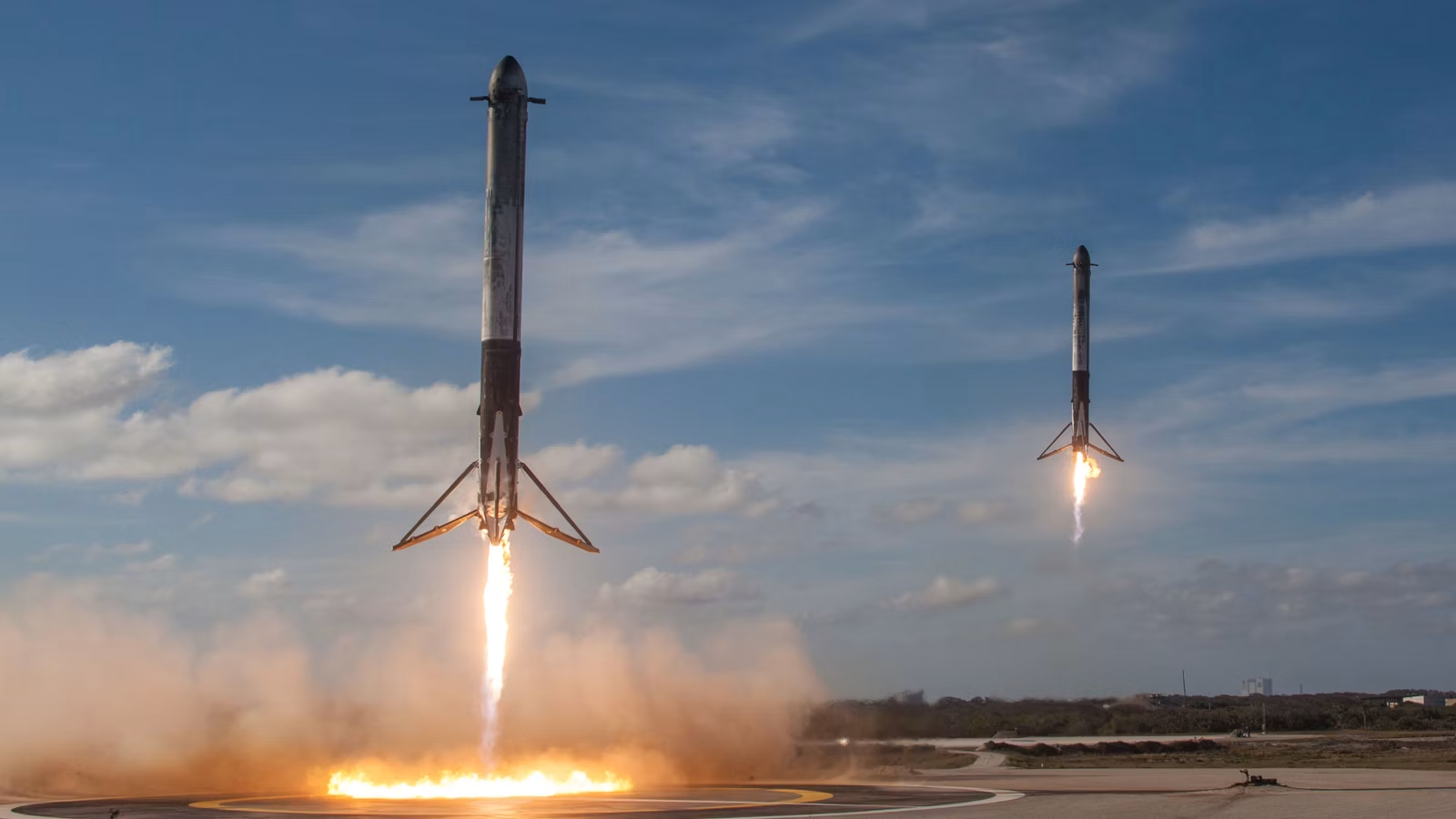
A Space ETF is not a substitute for SpaceX stock. It is a basket of companies related to space, satellites, defense, communications, aerospace, and related technologies. It may cover commercial rockets, satellite communications, Earth observation, defense space, aerospace supply chains, semiconductors, navigation, robotics, and software companies. Just because a fund name contains “Space” does not mean it is highly related to SpaceX, nor does it mean it only holds pure commercial space companies.
Different Space ETFs can have very different investment logic. Some lean more toward commercial space and satellite internet, some lean more toward aerospace and defense, while others include robotics, 3D printing, artificial intelligence, materials, and energy storage as “space exploration-related technologies.” Therefore, when looking at a Space ETF, you should not only look at the name; you need to look at the fund rules and holdings.
For example, ARK’s ARKX is an actively managed ETF whose goal is to invest in companies related to space exploration and defense innovation. Its website states that it generally invests mainly in related domestic and foreign stocks. The advantage of active management is that fund managers can adjust positions based on changes in the theme. The disadvantage is that holdings depend more heavily on manager judgment and may experience style drift.
Procure’s UFO is more of an index-based space economy thematic ETF. Its website shows that it tracks the VettaFi SPACE Index, has an expense ratio of 0.75%, and discloses information such as number of holdings and net assets. Index-based products are usually more transparent, but they may also mechanically hold companies with very different fundamentals because of the index methodology.
| ETF / Type | Possible Characteristics | What Ordinary Investors Should Check |
|---|---|---|
| ARKX | Actively managed, space and defense innovation | Active stock selection, holding changes, expense ratio |
| UFO | Space economy thematic index | Index rules, space purity, liquidity |
| ROKT | Broader frontier exploration / aerospace theme | Whether it truly focuses on commercial space |
| Newly launched Space ETFs | May be built around the SpaceX IPO narrative | AUM, trading volume, holding transparency |
| Thematic / leveraged products | May have higher volatility | Leverage, turnover, daily decay risk |
Before SpaceX goes public, most ordinary ETFs cannot directly hold publicly traded SpaceX common shares because SpaceX remains a private company. They gain indirect exposure more often through related listed companies, such as satellite operators, commercial rocket companies, Earth observation companies, defense contractors, communications equipment companies, and aerospace supply chain firms.
This creates a problem: what you buy may not be SpaceX, but a basket of companies that “the market believes are related to SpaceX.” Some of these companies may have real orders, revenue, and technical moats; others may simply be lifted by thematic enthusiasm. Reuters’ reporting on space stocks also shows that under SpaceX IPO enthusiasm, different space stocks do not move in exactly the same way, which means thematic trading cannot replace fundamental analysis.
When ordinary investors look at a Space ETF, they should at least check four things: first, whether the top 10 holdings are truly related to the space industry; second, whether the weight of a single stock is too high; third, whether the fund may include SpaceX after it goes public; and fourth, whether the expense ratio, trading volume, and fund size fit their trading needs.
Summary: A Space ETF is not an equivalent substitute for SpaceX. It expresses thematic exposure to the space economy through a basket of listed companies. Different funds may cover rocket launches, satellite communications, Earth observation, defense space, aerospace supply chains, robotics, semiconductors, and software. Products such as ARKX, UFO, and ROKT differ in management style, index rules, holding concentration, and expense ratios. Before the SpaceX IPO, many ETFs can only obtain indirect exposure through related companies or peers. After SpaceX goes public, whether a fund buys it, how much it buys, and when it buys will still depend on the fund prospectus, index rules, liquidity, and investment restrictions. Ordinary investors should not only look for the word “Space” in a fund name; they should review holdings, expense ratio, asset size, trading volume, major holdings, and risk disclosures.
How Will the SpaceX IPO Affect Space-Themed Funds?

The impact of the SpaceX IPO on Space ETFs can be divided into direct and indirect effects. The direct effect is that some funds may eventually shift from “indirectly holding the space supply chain” to “directly allocating to a core company.” The indirect effect is that SpaceX may become a valuation anchor for commercial space, prompting the market to revalue satellite communications, rocket launches, Earth observation, lunar missions, and defense space companies.
If SpaceX successfully lists, some index-based ETFs will need to consider whether their tracked indexes allow newly listed companies to be included, while active ETFs will depend on whether the fund manager considers the valuation and risk appropriate. Even if a fund wants to buy, it may not be able to buy a large amount immediately. Initial free float, trading volume, fund size, investment restrictions, and position limits will all affect actual buying pace.
SpaceX’s valuation-anchor effect may be even more important. In the past, the market found it difficult to value commercial space companies consistently because their business models differ greatly: Rocket Lab is more focused on rocket launches and space systems; AST SpaceMobile is more focused on direct-to-device satellite communications; Planet Labs is more focused on Earth observation data; Intuitive Machines is more focused on lunar missions; Redwire is more focused on space infrastructure and components. If SpaceX lists at a very high valuation, the market may reassess these companies’ growth potential and relative discounts.
The impact paths of the SpaceX IPO on Space ETFs can be understood this way:
| Impact Path | Possible Result | Main Uncertainty |
|---|---|---|
| Direct inclusion in holdings | ETF gains direct SpaceX exposure | Fund rules, liquidity, free float |
| Valuation anchor reset | Peers and supply chain are revalued | Whether fundamentals support valuation |
| Fund inflows into thematic funds | AUM, trading volume, and attention rise | Whether capital is short-term |
| New ETF launches | More products built around the space theme | Product similarity and liquidation risk |
| Major holding volatility | Small-cap space stocks may swing sharply | Earnings, financing, and order execution |
| Index changes | Some indexes may include SpaceX | Timing and weight uncertainty |
Space ETFs may also absorb some demand from investors who “cannot directly buy SpaceX.” Ordinary investors may not receive IPO allocation, or they may feel that single-stock volatility is too high in the early trading stage, so they may participate in the space theme indirectly through ETFs. This can increase short-term trading volume in ETFs and may also push up the valuations of related holdings.
But this logic has limits. The ETF’s holdings determine whether it can truly benefit from the SpaceX IPO. If a fund holds a large amount of major defense stocks, traditional aerospace companies, or broad technology stocks, its sensitivity to SpaceX may be lower than a fund whose name is more focused on the “space economy.” Conversely, if a fund holds many high-volatility small-cap space stocks, its short-term upside may be higher, but its drawdown risk may also be greater.
Summary: The SpaceX IPO may affect Space ETFs both directly and indirectly. The direct effect is that some funds may eventually include SpaceX in their holdings, especially products that fit index rules or active allocation logic. The indirect effect is that SpaceX may become a valuation anchor for commercial space, pushing the market to reassess satellite communications, rocket launches, lunar missions, Earth observation, and defense space companies. In the short term, the SpaceX IPO may increase traffic and capital attention for Space ETFs. In the medium term, what truly determines ETF performance is the revenue, contracts, technical progress, cash flow, and valuation of the companies it holds. Ordinary investors should avoid equating “SpaceX going public” with “all Space ETFs will rise.” Instead, they should break down whether the fund can buy SpaceX, how large the weight might be, whether major holdings are healthy, and whether fees and liquidity are reasonable.
What Is the Difference Between Buying a Space ETF and Buying Space Stocks Directly?
The biggest difference between buying a Space ETF and directly buying space stocks is that an ETF provides basket exposure and can diversify the risk of a single company failing. But it may also make you buy holdings that are not highly related to SpaceX or pure commercial space. Buying individual space stocks gives more concentrated exposure and may offer greater upside, but it may also bring higher volatility. Neither approach is low risk; the sources of risk are simply different.
The risk of a single space stock is usually highly concentrated. A commercial space company may experience a major share-price move because of one launch accident, one mission delay, one financing dilution, or one regulatory review. Many small-cap space companies are still in the stage of losses, financing, and technical validation. Their revenue scale may be limited, cash flow unstable, and customer concentration high.
The advantage of an ETF is diversification. Even if one company’s mission fails, the fund’s net asset value may not suffer the same degree of impact. But ETFs also have drawbacks: you may buy some companies you do not actually want to hold. For example, some space ETFs may simultaneously hold traditional defense stocks, aerospace giants, satellite communications companies, software companies, and industrial technology companies. Their relationship with the SpaceX IPO may not be fully aligned.
| Comparison Dimension | Space ETF | Direct Space Stock |
|---|---|---|
| Risk diversification | Higher | Lower |
| Research difficulty | Medium; look at fund holdings and rules | Higher; look at company fundamentals |
| SpaceX relevance | Depends on whether it holds SpaceX or indirect exposure | Depends on the specific company relationship |
| Fees | Management fee and bid-ask spread | No fund fee, but trading costs apply |
| Volatility | Lower than most small-cap single stocks, but still high | Can be very high |
| Suitable investors | Those who want diversified thematic exposure | Those who can research individual stocks and tolerate volatility |
Buying space stocks directly requires stronger research ability. You need to understand what the company actually sells, who its customers are, whether orders are sustainable, how long its cash can last, whether it needs further financing, whether technical milestones are verifiable, and whether the valuation has already priced in excessive expectations. For example, companies that are all classified under the space theme—Rocket Lab, Planet Labs, AST SpaceMobile, Intuitive Machines, and Virgin Galactic—have different business models, revenue quality, and risk structures.
Fees and liquidity are also different. ETFs have management fees; for example, ARKX and UFO both show expense ratios around 0.75%. Individual stocks do not have fund management fees, but they may involve higher volatility, slippage, and timing risk. ETFs also require attention to bid-ask spreads, trading volume, premiums and discounts, fund size, and holding transparency. Newly launched Space ETFs with small asset size may have insufficient liquidity or a higher risk of future closure.
Summary: The core value of a Space ETF is diversification. It can reduce the impact of a single company failure or financing dilution, but it cannot eliminate the overall volatility of the space theme. Directly buying space stocks may provide more concentrated exposure, but it can also involve higher risk, because commercial space companies commonly face technical validation, launch accidents, order delays, cash burn, and regulatory review. ETFs may be more suitable for investors who want to participate in the space theme without betting on a single company. Individual stocks are more suitable for investors who can research financials, contracts, technical progress, and valuation. Whichever approach you choose, you should not focus only on SpaceX IPO enthusiasm. You also need to look at holding quality, valuation levels, expense ratios, liquidity, trading costs, and personal risk tolerance.
How Can Ordinary Investors Judge Whether a Space ETF Is Worth Watching?
The first step in judging a Space ETF is not looking at the fund name, but looking at what it actually holds. Words like “Space,” “Aerospace,” “Defense,” and “Innovation” in a fund name may cover completely different assets. You need to first review the top 10 holdings, industry distribution, country distribution, single-stock weights, and whether the fund truly covers commercial space and satellite internet. Then look at expense ratio, fund size, trading volume, and risk disclosures.
Holdings are the most important checkpoint. If most of a fund’s top 10 holdings are major defense and aerospace companies, it may be more like an aerospace and defense ETF. If it heavily holds satellite communications, small-cap space, Earth observation, and commercial rocket companies, then it is more like a space economy thematic ETF. Both can be investable, but their risks and expectations are completely different.
The second step is to look at management style. Actively managed ETFs can adjust holdings flexibly and may allocate to SpaceX faster after its listing, but they may also deviate from the theme because of manager judgment. Index-based ETFs are more transparent, but you need to check whether the index methodology allows newly listed stocks to be included, whether position caps are in place, and whether it requires companies to derive revenue from space-related businesses.
The third step is to look at fees and liquidity. Expense ratios affect long-term holding costs, bid-ask spreads affect entry and exit costs, and AUM and daily trading volume affect liquidity. UFO’s website discloses information such as number of holdings, net assets, and expense ratio. Such data is suitable as a foundation for ETF evaluation, rather than relying only on news enthusiasm.
You can use the following checklist to evaluate a Space ETF:
| Checkpoint | Why It Matters |
|---|---|
| Are the top 10 holdings clear? | Helps identify what you are actually buying |
| Does it cover commercial space and satellite internet? | Helps judge thematic relevance |
| Is there a mechanism to include SpaceX after listing? | Helps assess future direct exposure potential |
| Is any single holding too concentrated? | Helps judge concentration risk |
| Is the expense ratio acceptable? | Helps judge long-term holding cost |
| Are AUM and trading volume sufficient? | Helps judge liquidity |
| Are bid-ask spreads and premiums/discounts reasonable? | Helps judge trading cost |
| Are risk disclosures clear? | Helps judge whether it matches risk tolerance |
Finally, you need to assess whether it fits your investment goals. Space ETFs are thematic funds and should not be treated like traditional broad-market index funds. They may be suitable for a small thematic allocation, but not as a complete replacement for core assets. Especially around the SpaceX IPO, fund prices may reflect optimistic expectations in advance. If you buy only because of news heat, it is easy to lose your judgment standard during volatility.
Summary: To judge whether a Space ETF is worth watching, you should first look at holdings, then rules, and finally fees and risks. A fund name containing “Space” does not mean it is highly related to SpaceX, nor does it mean it only buys commercial space companies. What truly needs to be checked includes top 10 holdings, weight concentration, index methodology, active management rules, expense ratio, AUM, trading volume, bid-ask spreads, premiums/discounts, and risk disclosures. The SpaceX IPO will increase attention on Space ETFs, but it may also create short-term crowding in some funds. Ordinary investors are better off treating Space ETFs as thematic exposure to satellite internet, commercial space, defense communications, and space supply chains, rather than as substitutes for SpaceX stock. Whether a fund is worth watching depends on whether its holdings match your goals and whether its fees and risks are acceptable.
What Trading Costs and Compliance Boundaries Should You Watch When Space ETFs Become Popular?
The popularity of Space ETFs does not mean they are low-risk opportunities. Thematic ETFs may be driven in the short term by SpaceX IPO expectations, media coverage, and fund inflows, but they may also fall quickly after expectations are priced in. In addition to fund holdings and industry logic, you need to look at ETF management fees, bid-ask spreads, trading volume, premiums/discounts, platform fees, FX costs, order execution, and your own risk tolerance.
Reuters’ report on hot IPOs noted that many recent popular IPOs have not necessarily outperformed the market. This is also relevant to SpaceX IPO and Space ETF enthusiasm. A hot theme can bring attention, but it cannot replace valuation, fundamentals, and trading discipline.
ETFs themselves have management fees, such as ARKX and UFO products with expense ratios around 0.75%. In addition, buying and selling ETFs may involve trading commissions, platform fees, external agency fees, FX costs, bid-ask spreads, and slippage. For cross-currency investors, exchange rate changes and conversion paths also affect actual results. Many people only look at ETF NAV movements but ignore the real costs in the buying and selling process.
| Cost / Risk | Why It Matters | How to Check |
|---|---|---|
| ETF management fee | Affects long-term returns | Check the fund expense ratio |
| Bid-ask spread | Affects execution cost | Check order book and trading volume |
| Liquidity | Affects whether you can enter and exit smoothly | Check AUM and daily trading volume |
| FX cost | Affects cross-currency trading results | Check conversion path and statements |
| Platform fees | Affect actual trading cost | Check fee center and order page |
| Thematic volatility | Affects drawdowns | Check holdings and valuation |
| Compliance restrictions | Affect service availability | Check location and platform rules |
If you follow Space ETFs, SpaceX IPO, commercial space, or satellite internet-related U.S. stock opportunities, you can use BiyaPay to learn about U.S. stock, Hong Kong stock, and multi-asset trading access. BiyaPay is a global multi-asset trading wallet that supports U.S. and Hong Kong stock trading as well as digital asset trading. Its U.S. stock trading commission is $0, while platform fees, external agency fees, and other costs are subject to the fee center and order page. Service availability depends on the user’s location, identity verification results, platform rules, and applicable laws and regulations.
It should be emphasized that space-themed funds, SpaceX IPO, and ETF holding analysis can only be used to understand public market information and product structures. They do not constitute investment advice. Hot IPOs or thematic ETFs may experience significant volatility in the early stage. Before trading, you should fully understand order types, fee structures, fund documents, risk disclosures, and your own tolerance.
Summary: The rise of Space ETFs only means that market attention is increasing. It does not mean low risk or certain returns. Ordinary investors should look beyond SpaceX IPO, fund holdings, and inflows, and also review ETF management fees, bid-ask spreads, trading volume, premiums/discounts, platform fees, FX costs, and order rules. Thematic ETFs usually carry higher risks than broad-market index funds, especially around hot IPOs, when prices may reflect optimistic expectations in advance. BiyaPay can serve as one tool for understanding U.S. stock market information, multi-asset trading, and fee structures, but specific service availability depends on the user’s location, identity verification results, platform rules, and applicable laws and regulations. Any content related to Space ETFs, space stocks, or the SpaceX IPO should not be understood as a return guarantee or buy recommendation.
If you follow Space ETFs, SpaceX IPO, commercial space, or satellite internet-related investment opportunities, you should not only look at fund holdings and thematic popularity, but also understand the fee structure of U.S. ETF trading. Users who meet the applicable service conditions can use web trading to understand market access and use the U.S. stock screening tool to look up publicly traded stocks. BiyaPay’s U.S. stock trading commission is $0. The platform fee is $0.005 per share, with a minimum of $0.99 per order and a maximum of 1% of trade value. External agency fees and trading activity fees are $0.00396 per share. The fee center also states that fractional-share orders with less than one share filled are charged only 1% of the total transaction value as the platform fee, capped at $1. Actual fees should still follow the fee center, order page, and applicable rules. This content does not constitute investment advice.
FAQ
Will Space ETFs Directly Hold SpaceX Stock?
Whether a Space ETF directly holds SpaceX stock depends on whether SpaceX is listed, the fund rules, index methodology, and fund manager decisions. Before SpaceX goes public, most funds can only gain indirect exposure through space supply chain companies or peers. Even after listing, it does not mean all ETFs will buy it immediately.
Will the SpaceX IPO Make All Space ETFs Rise?
The SpaceX IPO does not guarantee that all Space ETFs will rise. It may increase attention and inflows into the space theme, but fund performance still depends on holding structure, the fundamentals of major holdings, valuation, market sentiment, expense ratios, and liquidity. The market may trade expectations in advance, and volatility may still occur after the official listing.
What Are the Differences Between Space ETFs Such as ARKX, UFO, and ROKT?
The differences between ARKX, UFO, and ROKT mainly lie in management style, index rules, holding scope, and space purity. ARKX is more actively managed, UFO is more of a space economy thematic index product, and ROKT may cover a broader frontier exploration or aerospace theme. Investors should check the latest holdings and expense ratios before investing.
Are Space ETFs Suitable for Long-Term Holding by Ordinary Investors?
Whether Space ETFs are suitable for long-term holding depends on your risk tolerance and understanding of the space industry. They are thematic funds, and their volatility and concentration are usually higher than broad-market index funds. They may be more suitable as a small thematic allocation rather than a substitute for core asset allocation.
What Fees Should Investors Check When Buying Space ETFs?
When investing in Space ETFs, investors should check ETF management fees, bid-ask spreads, platform fees, external agency fees, FX costs, and order execution costs. Fees do not only appear in the fund expense ratio; they also appear in the actual buying and selling process. Specific costs should follow fund documents, broker statements, and platform fee disclosures.
Which Is Riskier: Space ETFs or Buying Space Stocks Directly?
Buying individual space stocks directly is usually riskier, because technical failures, financing dilution, order delays, or regulatory changes may have a concentrated impact on the stock price. Space ETFs can diversify single-stock risk, but they are still affected by overall space-theme volatility, valuation pullbacks, and fund holding structure.
*This article is provided for general information purposes and does not constitute legal, tax or other professional advice from BiyaPay or its subsidiaries and its affiliates, and it is not intended as a substitute for obtaining advice from a financial advisor or any other professional.
We make no representations, warranties or warranties, express or implied, as to the accuracy, completeness or timeliness of the contents of this publication.
Related Blogs of

Where Can You Find SpaceX IPO Documents? A Guide to SEC Disclosures, the S-1 Prospectus, and Listing Announcements


How Many Shares Will Be Freely Tradable After the SpaceX IPO? Understanding New Share Issuance, Secondary Share Sales, and Lock-Up Periods


Are the SpaceX IPO and Starlink IPO the Same Thing? The Difference Between a Parent Company Listing and a Business Spin-Off


When Will SpaceX Go Public? A Breakdown of the IPO Timeline, Exchange Listing, and Trading Process

Choose Country or Region to Read Local Blog
 Australia
 Austria
 Belgium
 Canada
 Cyprus
 Czech Republic
 Denmark
 Estonia
 Finland
 France
 Germany
 Greece
 Hong Kong
 India
India Indonesia
 Ireland
 Italy
Italy Japan
Japan Latvia
 Lithuania
 Luxembourg
 Malaysia
 Malta
Malta Morocco
 Nepal
Nepal Netherlands
 New Zealand
 Norway
 Pakistan
 Philippines
 Poland
 Portugal
 Romania
 Singapore
 Slovakia
 Slovenia
 South Africa
 South Korea
 Spain
Spain Sweden
 Thailand
 The United States
 Turkey
 United Arab Emirates
 United Kingdom
 Vietnam
Contact Us




BIYA GLOBAL LLC is registered with the Financial Crimes Enforcement Network (FinCEN), an agency under the U.S. Department of the Treasury, as a Money Services Business (MSB), with registration number 31000218637349, and regulated by the Financial Crimes Enforcement Network (FinCEN).
BIYA GLOBAL LIMITED is a registered Financial Service Provider (FSP) in New Zealand, with registration number FSP1007221, and is also a registered member of the Financial Services Complaints Limited (FSCL), an independent dispute resolution scheme in New Zealand.