What Changes Could the Commercial Space Industry See After the SpaceX IPO? What Should Investors Watch?




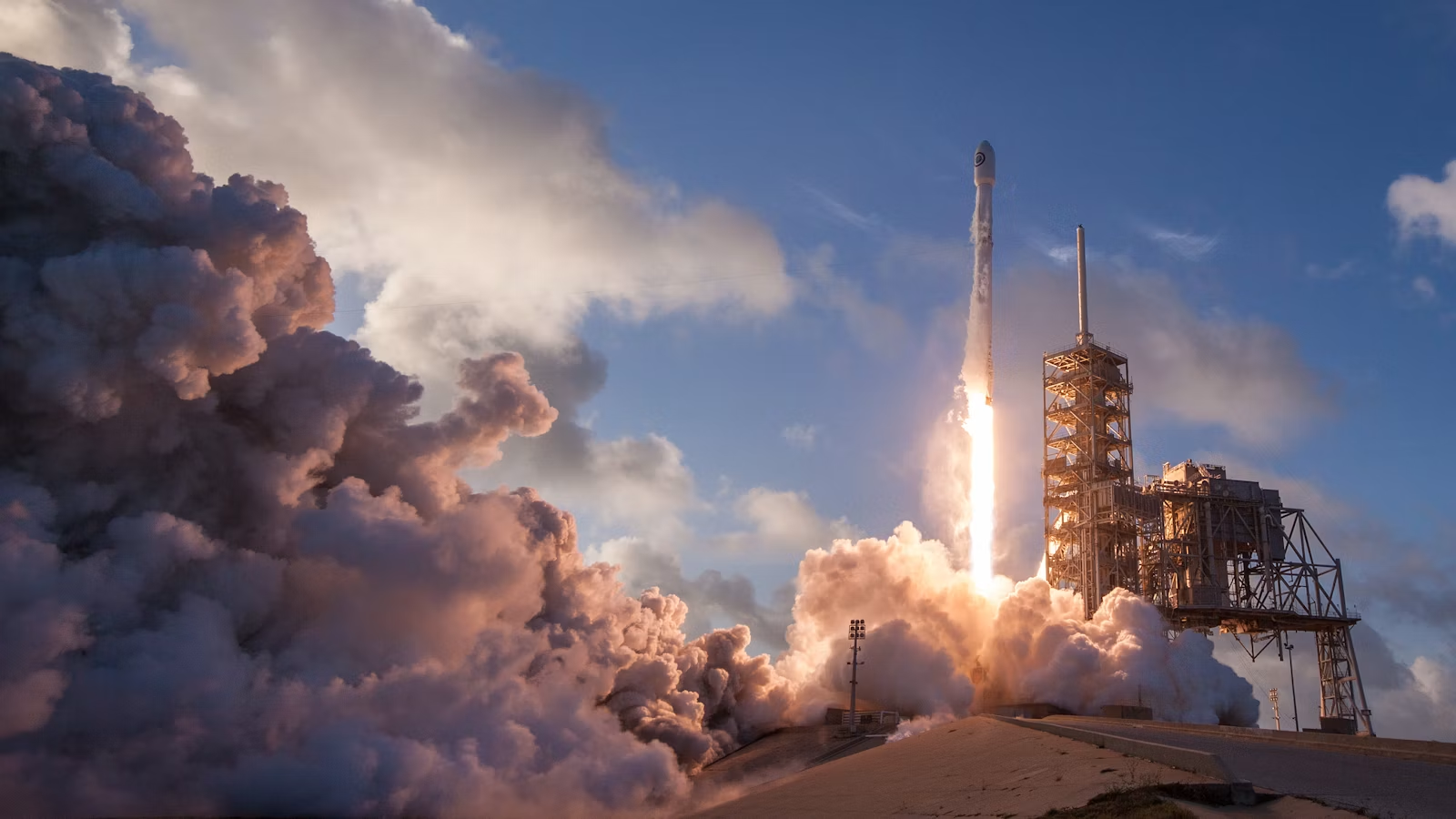
The SpaceX IPO could become an important turning point for the commercial space industry, but it will not automatically put the entire sector into a phase of certain high growth. A more accurate view is that SpaceX’s listing will bring the commercial space leader’s revenue structure, losses, Starlink, AI infrastructure, launch capability, and corporate governance into the public-market pricing system. What you need to watch is not only SpaceX itself, but also whether launch services, satellite internet, Earth observation, defense space, space ETFs, and related public companies can truly generate cash flow.
Key Takeaways
- The SpaceX IPO may move commercial space from private-market valuation into public-market pricing.
- Industry changes will not be limited to rockets; they will also involve satellite internet, AI, defense, and data services.
- Starlink, launch costs, cash flow, capital expenditure, and regulatory approvals are key indicators.
- Space-related public stocks may attract attention, but differences in fundamentals could lead to clear divergence.
- A high-valuation IPO may lift the sector, but it may also cause capital rotation and valuation volatility.
- Investors should look at public filings, trading rules, fee structures, and risk tolerance at the same time.
Why Could the SpaceX IPO Become a Turning Point for the Commercial Space Industry?
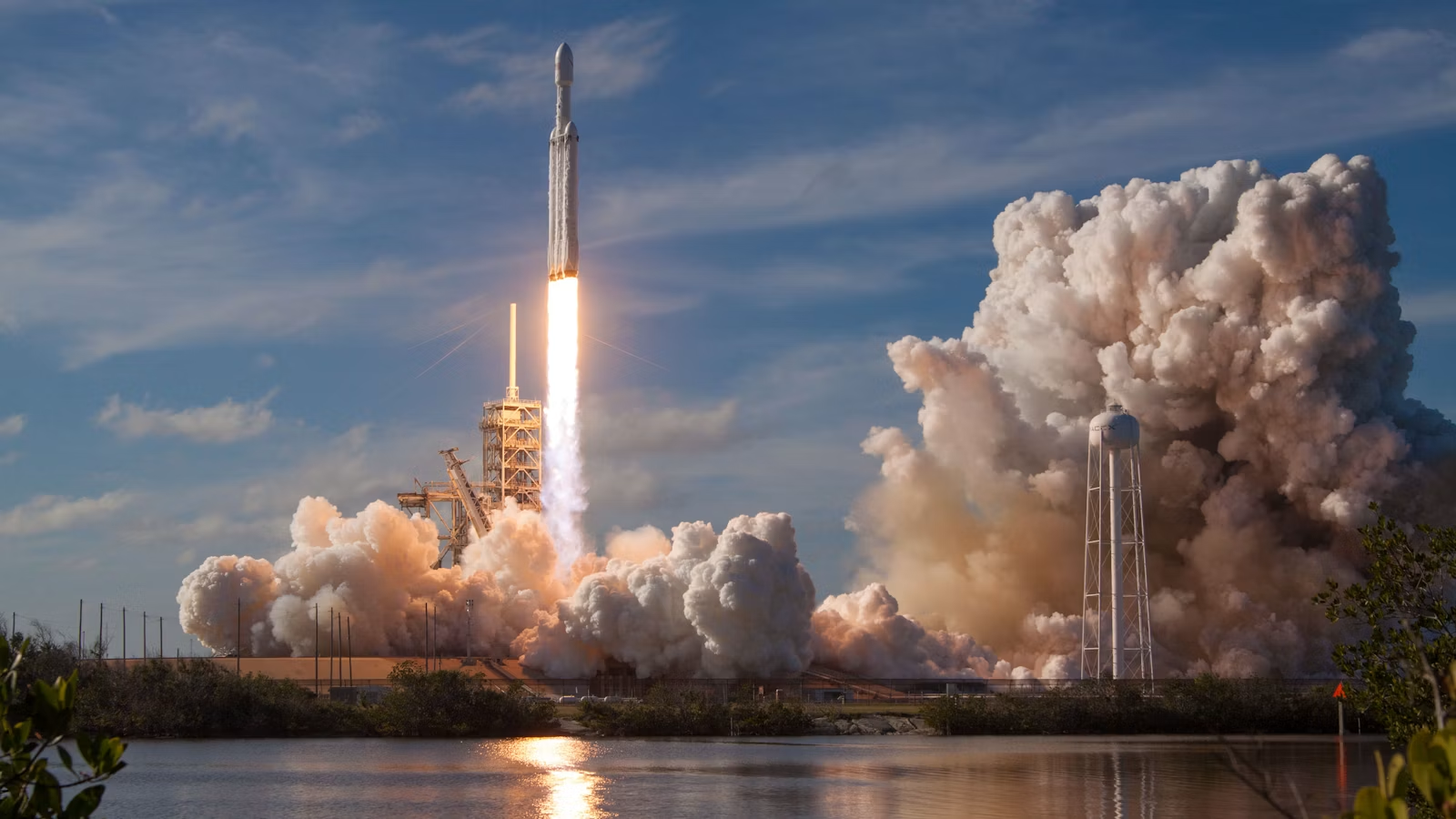
The significance of the SpaceX IPO is not just financing. It means that a commercial space leader will, for the first time, be valued at large scale by the public market. In the past, SpaceX’s valuation mainly came from private financing rounds, secondary-market transactions, and market speculation. After listing, investors will reassess it through its prospectus, financial reports, risk factors, orders, cash flow, and governance structure. Commercial space will also move from being a “niche technology theme” to a clearer public asset category.
SpaceX’s S-1 filing already allows the market to directly observe its business structure, risk factors, and equity arrangements. For the commercial space industry, this transparency is important: in the past, many investors knew that SpaceX had reusable rockets, Starlink, and a Mars vision, but it was difficult to systematically compare revenue, losses, capital expenditure, and business contribution. Listing will force the market to break the “vision” into more verifiable indicators.
Reuters reported that the SpaceX IPO could proceed at a valuation of about US$1.75 trillion and may become one of the world’s largest IPOs. If this valuation is achieved, SpaceX will not only be a space company, but also a comprehensive pricing anchor for technology, communications, AI, defense, and infrastructure assets. Its price-to-sales ratio, cash flow, loss structure, and business growth rate may all be used by the market to compare Rocket Lab, AST SpaceMobile, Planet Labs, Iridium, Viasat, and space ETFs.
Commercial space itself is no longer simply a rocket-launch story. Space Foundation data shows that the global space economy reached US$613 billion in 2024, with the commercial sector contributing the main growth. The World Economic Forum and McKinsey estimate that the space economy could reach US$1.8 trillion by 2035. This shows that commercial space is extending from “sending satellites into space” into communications, navigation, Earth observation, defense security, AI computing, and data services.
| Dimension | Before the SpaceX IPO | Possible Change After the SpaceX IPO |
|---|---|---|
| Valuation reference | Private financing and market estimates | Real-time public-market pricing |
| Information disclosure | Limited disclosure as a private company | More transparency in financial reports, risks, and related-party transactions |
| Investor structure | Mainly private funds, employees, and institutions | Institutions, ETFs, and retail investors may all participate |
| Industry narrative | Rockets, Starlink, Mars vision | Space, communications, AI, defense, data |
| Sector impact | Scattered themes and limited liquidity | May form a pricing anchor for commercial space |
The reason the SpaceX IPO may become a turning point is that it brings commercial space from a “high-barrier private-market asset” into the public market. Investors will no longer only hear stories; they will continuously track revenue, losses, Starlink growth, launch frequency, AI operations, capital expenditure, and regulatory risks. However, higher industry attention does not mean lower risk. Commercial space remains a high-technology, capital-intensive, heavily regulated industry, and SpaceX’s leadership position cannot be directly extended to all space companies as equal investment value.
Summary: The core reason the SpaceX IPO could change the commercial space industry is that it brings the industry leader into the public-market pricing system. It will make it easier for investors to compare the real commercial value of launch services, satellite internet, AI infrastructure, defense space, and data services. But this does not mean commercial space will become a low-risk industry. You need to distinguish between “more capital attention on the industry” and “a company truly generating stable profits.” SpaceX may become a valuation anchor, but it may also become a risk benchmark.
How Could the Competitive Landscape of Commercial Space Change After the SpaceX IPO?

After the SpaceX IPO, commercial space competition may shift from “who can launch rockets” to “who can turn space infrastructure into stable revenue.” Launch services will still matter, but Starlink, satellite internet, defense contracts, Earth observation data, AI computing, and global connectivity services will become new competitive focal points. Investors need to look at business models, not just whether a company belongs to the space theme.
Launch services remain SpaceX’s foundation. Reusable rockets, high launch frequency, and scaled operations have given SpaceX advantages in cost and reliability. The Satellite Industry Association’s 2026 report mentioned that there were 325 launches globally in 2025, including 296 commercially procured satellite launches, up 32% from 2024. This shows that launch demand is still expanding, but it also means competitors must meet higher requirements for frequency, cost, and success rates.
Satellite internet may be the more important change. Starlink is not just a satellite constellation; it may also be the core of SpaceX’s revenue, cash flow, and global infrastructure narrative. After the IPO, the market will ask stricter questions: Is Starlink’s user growth sustainable? Is ARPU stable? Can terminal costs decline? Can network capacity support more regions? Are regulatory approvals progressing smoothly? These questions will affect how investors value SpaceX and will also create valuation pressure for OneWeb, Amazon Kuiper, traditional satellite operators, and terrestrial telecom operators.
AI infrastructure further expands the boundaries of commercial space. Reuters reported that SpaceX’s AI business generated about US$818 million in revenue in the first quarter of 2026, but also produced a significant operating loss. The boundaries between AI computing, data centers, electricity, energy storage, satellite communications, and cloud services are becoming more blurred. Commercial space companies are no longer just deploying equipment in space; they are competing for positions in the future infrastructure of communications, data, and computing.
| Segment | Possible Change | Affected Company Types | Investor Focus |
|---|---|---|---|
| Launch services | Cost and frequency competition intensifies | Rocket companies, satellite manufacturers | Launch success rate, unit cost, backlog |
| Satellite internet | Competition in users and network capacity | Satellite operators, telecom companies | User count, ARPU, terminal cost, regulatory approvals |
| Earth observation | Greater pressure to commercialize data products | Remote sensing and data analytics companies | Subscription revenue, government contracts, renewal rates |
| Defense space | Government procurement becomes more important | Defense space and satellite security companies | Contract size, policy support, order cycle |
| AI infrastructure | Space companies enter the computing narrative | Data centers, power, energy storage companies | Computing contracts, losses, capital expenditure |
The competitive landscape will also reflect “the strong getting stronger” and greater divergence among niche companies. After SpaceX gains more capital and public-market attention through listing, it may continue expanding investment in rockets, Starship, Starlink, AI, and defense projects. For small and mid-sized space companies, this is both positive and pressuring. The positive side is that investors will take commercial space more seriously. The pressure is that the market will compare them against SpaceX’s cost, scale, technology, and financing capabilities.
Summary: After the SpaceX IPO, commercial space competition will no longer be only about launch services. More importantly, it will be about who can build stable revenue around satellite internet, data services, defense demand, and AI infrastructure. Launch success rate, constellation size, and technical capability are only the first step. Cash flow, user growth, ARPU, capital expenditure, and regulatory approvals are the key factors that determine a company’s long-term value. Investors should not put all space companies into the same category; real divergence will come from commercialization capability.
Which Parts of the Commercial Space Value Chain May Be Affected First?

The first impact of the SpaceX IPO will not be on a single stock, but on how the commercial space value chain is priced. Upstream engines, materials, satellite components, and ground equipment; midstream launch services, constellation deployment, and orbital operations; and downstream broadband connectivity, remote-sensing data, navigation, and defense applications may all be reassessed. The key question is: which link has pricing power, and which link is merely a passive supplier?
Upstream segments may face both order expansion and pricing pressure. SpaceX, Amazon Kuiper, OneWeb, defense constellations, and remote-sensing companies all need satellite platforms, electronic components, propulsion systems, composite materials, antennas, ground stations, and testing equipment. Expanding industry demand helps supply chain companies win orders, but SpaceX’s scale may also compress margins for some standardized components. For upstream companies, investors should focus on customer concentration, gross margin, R&D capability, and whether they own irreplaceable technology.
Traditional industrial companies are also moving into space hardware. Reuters reported that German parts manufacturer Schaeffler is partnering with Spire Global to develop European space hardware and satellite platforms, aiming to build space mission capabilities for European defense, weather, and security applications, and to generate about €250 million in revenue from the partnership by 2030. This shows that the commercial space supply chain is expanding from specialist space companies into advanced manufacturing, sensors, materials, and industrial software companies.
The midstream segment is where SpaceX has the clearest advantage. Launch services, constellation deployment, rocket recovery, launch sites, ground stations, and orbital management determine the deployment speed of commercial space infrastructure. After the IPO, if SpaceX gains stronger capital support, Starship, Starlink satellite deployment, and defense launch missions may continue to accelerate. For competitors, a single successful launch is no longer enough; they must prove long-term advantages in cost, reliability, capacity, and order execution.
Downstream applications are what truly determine cash flow. Satellite broadband, aviation and maritime communications, enterprise networks, emergency communications, agricultural monitoring, weather, insurance, energy inspections, defense intelligence, and Earth observation data are the key areas that determine whether commercial space can make money sustainably. McKinsey and WEF divide the space economy into infrastructure and expanded applications, emphasizing that space-enabled technologies will affect communications, positioning and navigation, climate, agriculture, transportation, insurance, and many other industries.
| Value Chain Position | Representative Segments | Possible Change After the SpaceX IPO | Investor Focus |
|---|---|---|---|
| Upstream | Rockets, engines, materials, satellite components | Order expansion and pricing pressure coexist | Gross margin, customer concentration, R&D investment |
| Midstream | Launch services, constellation deployment, ground stations | Competition in scale and reliability intensifies | Launch frequency, success rate, capital expenditure |
| Downstream | Broadband, remote sensing, navigation, data services | Revenue models receive more attention | User count, renewal rate, government contracts |
| Supporting services | Insurance, software, space security | Risk management demand rises | Compliance, space debris, cybersecurity |
| Financial markets | Space stocks, ETFs, IPOs | Sector valuations are reordered | Liquidity, holdings structure, volatility |
Opportunities in the commercial space value chain will not be evenly distributed. Upstream companies may have orders, but not necessarily high margins. Midstream companies may have technical barriers, but capital expenditure is heavy. Downstream companies may be closer to customers, but they must prove that data and connectivity services can generate recurring payments. Investors should pay more attention to whether revenue is repeatable, whether customers are willing to pay over the long term, whether gross margin is improving, and whether cash burn is under control—not just whether a company’s name includes “space,” “satellite,” “rocket,” or “orbit.”
Summary: The impact of the SpaceX IPO on the value chain will begin with valuation and capital attention, and then spread to orders, pricing, capital expenditure, and business models. Upstream analysis should focus on supply chain orders and pricing pressure. Midstream analysis should focus on launch frequency and orbital deployment efficiency. Downstream analysis should focus on whether connectivity and data services can generate stable cash flow. Companies with long-term value are usually not those that merely have a space concept, but those that control technical barriers, customer relationships, or pricing power in a specific link of the chain.
How Will the SpaceX IPO Affect Space-Related Public Market Assets?
The SpaceX IPO may increase public-market attention on space-related assets, but it will not make all space stocks benefit equally. Rocket Lab, AST SpaceMobile, Planet Labs, Iridium, Viasat, Intuitive Machines, Redwire, space ETFs, and defense space companies may all be compared again by investors. What truly determines their performance is order quality, revenue visibility, cash flow, valuation, and their competitive relationship with SpaceX.
Reuters reported that SpaceX IPO enthusiasm has already lifted attention on U.S. space stocks. Planet Labs, Intuitive Machines, AST SpaceMobile, Virgin Galactic, and others showed varying degrees of movement on related trading days, while Rocket Lab’s performance was more differentiated. Rising attention toward U.S. space companies shows that SpaceX may prompt more retail and institutional investors to reassess the space economy. But sector excitement does not equal simultaneous fundamental improvement.
Rocket Lab is one of the most commonly compared public launch companies. It has both launch services and space systems businesses, but its scale, launch frequency, capital strength, and cost structure differ significantly from SpaceX. SpaceX’s listing may raise industry valuation, but it may also make investors ask more directly: “Who can come close to SpaceX’s efficiency?” AST SpaceMobile is closer to the satellite communications and direct-to-cell satellite narrative, with potential benefits from network deployment and carrier partnerships; its risks lie in capital expenditure, regulatory approvals, and commercialization progress. Planet Labs is more focused on Earth observation data. Its core is not rockets, but data subscriptions, government customers, and enterprise renewals.
ETF and index capital may also amplify volatility. If SpaceX enters major indexes or thematic ETFs after listing, passive capital may create buying demand. But if the free float is limited, valuation is too high, or index inclusion happens quickly, short-term prices may also become more crowded. For ordinary investors, buying a space ETF does not mean purely investing in SpaceX. Many space ETFs also hold defense, communications, industrial, software, satellite operation, and traditional aerospace companies, so their benefit logic is not exactly the same.
| Asset Type | Potential Benefit | Main Risk | Indicator to Watch |
|---|---|---|---|
| Launch companies | Higher industry attention | Wider cost gap versus SpaceX | Launch orders, cash burn, success rate |
| Satellite communications | Starlink raises market awareness | Intensified competition, ARPU pressure | User growth, spectrum approvals, terminal cost |
| Remote-sensing data | Government and enterprise demand rises | Slow commercialization | Subscription revenue, contract renewals, data quality |
| Defense space | Geopolitical security demand increases | Government budget cycles | Backlog, contract duration, policy changes |
| Space ETFs | Sector capital inflows | Mixed holdings quality | Holdings structure, expense ratio, liquidity |
A high-valuation industry leader going public may also cause capital rotation. If SpaceX raises capital at a very large scale, some funds that were originally allocated to space-concept stocks, AI infrastructure stocks, technology growth stocks, and defense space stocks may move toward SpaceX. The result may not be “the whole sector rising,” but rather “the leader absorbs liquidity while weaker fundamental companies come under pressure.” This often happens in high-profile IPOs, especially when market risk appetite declines and capital becomes more concentrated in the strongest leaders instead of spreading across all thematic names.
If you are watching trading opportunities after the SpaceX IPO, you also need to include actual costs in your judgment. U.S. stock trading costs usually do not include only commission; they may also include platform fees, external institution fees, trading activity fees, fractional-share fees, foreign exchange costs, and differences in order types. Biya charges US$0 commission for U.S. stock trading; platform fees, external institution fees, and other costs are subject to the fee center and order page. Service availability depends on the user’s location, identity verification result, platform rules, and applicable laws and regulations.
Summary: The SpaceX IPO may increase attention on the public-market space sector, but it will not give all related stocks the same revaluation. Within the sector, the market will focus more on real orders, cash flow, customer quality, technical barriers, and differentiation from SpaceX. Investors should be cautious about the simple assumption that “because SpaceX has a high valuation, all space stocks are cheap.” Public markets will ultimately price space companies separately as launch, communications, data, defense, industrial manufacturing, and ETF assets.
What Risks and Indicators Should Investors Focus On?
After the SpaceX IPO, the most important question for investors is not whether commercial space is popular, but whether high valuations have already priced in excessive expectations, whether revenue can turn into cash flow, whether regulation may limit expansion, and whether AI, Starlink, and launch businesses can generate sustainable profits. Commercial space is a high-technology, capital-intensive, heavily regulated industry. It should not be judged only by vision and news popularity.
The first risk is valuation risk. If SpaceX lists at an ultra-large valuation, the market will assume that it can continue growing across launch, Starlink, AI, defense, and long-term space infrastructure. The higher the expectation, the lower the margin for error. If revenue growth, margins, cash flow, or capital expenditure fall short of expectations, share-price volatility may be magnified. High-valuation IPOs also often involve low free float, sharp first-day volatility, and increased supply after lock-up periods expire.
The second risk is commercialization risk. Technical breakthroughs in commercial space are important, but technical success does not equal profitable success. Reusable rockets do not guarantee high launch-business margins. More satellites do not guarantee stable user ARPU. AI revenue growth does not mean computing operations can become profitable quickly. You need to separate technical capability, revenue growth, margin improvement, and operating cash flow. For Starlink in particular, user count, network capacity, terminal cost, regional regulation, and enterprise customer penetration all matter.
The third risk is regulatory and geopolitical risk. Space resources are not a completely free market. Spectrum, orbits, launch licenses, export controls, defense contracts, space debris, and cybersecurity can all affect commercialization speed. FCC materials noted that growth in the satellite industry creates new questions for regulators: how to support innovation and competition while ensuring responsible and sustainable use of space. This means commercial space companies face not only competitors, but also cross-border regulation, spectrum coordination, and safety responsibilities.
| Risk Category | Specific Form | What Investors Should Watch |
|---|---|---|
| Valuation risk | High valuation, low free float, amplified volatility | Price-to-sales ratio, cash flow, lock-up period |
| Profitability risk | Revenue growth with expanding losses | Segment gross margin, operating cash flow |
| Technical risk | Launch failures, constellation deployment delays | Success rate, insurance, backup plans |
| Regulatory risk | Spectrum, orbit, and launch-license restrictions | Licenses, regional coverage, policy changes |
| Geopolitical risk | Defense dependence, export controls | Government customer share, contract duration |
| Trading risk | Sharp price swings in early IPO trading | Order types, fees, position control |
To evaluate commercial space companies, you can start with six indicators: whether revenue is clearly broken down by business segment, whether gross margin is improving, whether operating cash flow is turning positive, whether capital expenditure is controllable, whether the customer mix is balanced between government and commercial clients, and whether regulatory approvals cover core markets. If a company has only a long-term story but lacks orders, revenue, cash flow, and customer renewal ability, the higher the market excitement, the greater the drawdown risk.
Summary: The SpaceX IPO may bring commercial space to a higher level of attention, but it will also expose industry risks more clearly in the public market. You should focus on valuation, cash flow, losses, capital expenditure, regulation, geopolitical risks, and trading costs. Launch success, satellite count, and news attention are only part of the picture. A more stable analysis should convert technical capability into financial indicators, convert industry narratives into orders and cash flow, and then decide whether to participate based on your own risk tolerance.
How Can Ordinary Investors Build a Framework After the SpaceX IPO?
Ordinary investors can observe commercial space changes after the SpaceX IPO through four lines: company disclosures, industry data, sector prices, and trading rules. Start with SpaceX’s prospectus and financial reports, then look at global space economy and satellite industry data, then observe related public-market assets, and finally confirm your own trading costs, account eligibility, and risk tolerance. This is more reliable than simply following hot news.
First, review public filings. SpaceX’s prospectus, risk factors, segment revenue, losses, capital expenditure, cash flow, ownership structure, and related-party transactions are the foundation for judging IPO quality. Do not only look at financing size and valuation numbers. Also look at where revenue comes from, where losses come from, and whether Starlink and AI operations can support long-term growth. For other space companies, also prioritize annual reports, quarterly reports, order backlog, and cash burn over company presentations.
Second, look at industry data. Space Foundation, SIA, McKinsey, WEF, FCC, and other sources can help you understand the overall scale of commercial space, satellite launch volume, industry revenue, regulatory trends, and long-term growth assumptions. Different institutions use different definitions: some count the global space economy, some count commercial satellite revenue, and some emphasize the spillover value of space technology across industries. You should not mix all numbers together; instead, check the statistical scope, time period, and whether terrestrial applications are included.
Third, watch public-market prices. SpaceX’s first trading day, first week, first earnings report, lock-up period, index inclusion, and ETF holding changes may all affect space-sector sentiment. You can watch trading volume and price changes in Rocket Lab, AST SpaceMobile, Planet Labs, Iridium, Viasat, Intuitive Machines, Redwire, and space ETFs. If share prices rise without improvement in revenue, orders, or cash flow, it is more likely to be a short-term thematic trade. If a company discloses new contracts and improved earnings quality, it is worth deeper analysis.
| Observation Level | Key Question | Common Basis |
|---|---|---|
| Company level | How do SpaceX’s businesses generate revenue and losses? | Prospectus, financial reports, risk factors |
| Industry level | Is commercial space continuing to expand? | Space Foundation, SIA, McKinsey |
| Sector level | Are space stocks rising only on sentiment? | Share price, trading volume, ETF flows |
| Trading level | Are order fees and execution rules clear? | Fee center, order confirmation page |
| Risk level | Can your position withstand IPO volatility? | Risk budget, investment horizon |
Fourth, look at trade execution. Hot IPOs and space-concept stocks often have large volatility. Opening prices, first-day trading prices, limit orders, pre-market and after-hours trading, fractional-share rules, foreign exchange, and fees all affect the real experience. You can use U.S. stock market information to keep tracking related stocks and sector changes, and if you meet the applicable service eligibility requirements, use U.S. stock trading to understand order and fee structures. The related content only introduces public market information, trading rules, and fee structures, and does not constitute investment advice.
For users who continuously follow the SpaceX IPO, commercial space, AI infrastructure, and technology stocks, Biya can serve as a multi-asset observation entry point. Biya is a global multi-asset trading wallet that supports U.S. stocks, Hong Kong stocks, and cryptocurrency trading, and also supports conversion from USDT into major fiat currencies such as U.S. dollars or Hong Kong dollars. Biya charges US$0 commission for U.S. stock trading; the platform fee is US$0.005 per share, with a minimum of US$0.99 per order and a maximum of 1% of trade value; external institution fees and trading activity fees total US$0.00396 per share. For fractional orders with executed share quantity below one share, only a platform fee of 1% of the transaction amount is charged, capped at US$1. Specific fees, order rules, account requirements, and service availability are subject to the fee center, order page, identity verification results, platform rules, and local regulatory requirements.
Summary: After the SpaceX IPO, ordinary investors do not need to predict every short-term move. Instead, they should build a repeatable observation framework. First verify facts through public filings, then judge trends with industry data, then observe the price reaction of space stocks and ETFs, and finally check personal trading costs and risk boundaries. Commercial space may be a long-term megatrend, but every company, stock, and ETF has different risk-return characteristics. The more popular an IPO is, the more important it is to put information sources, fee structures, order rules, and position control first.
FAQ
Will the SpaceX IPO Make Commercial Space Stocks Rise Broadly?
Not necessarily. The SpaceX IPO may increase attention on the commercial space sector, but companies differ significantly in launch capability, order quality, cash flow, and valuation. Divergence within the sector may become more obvious, and SpaceX’s valuation should not be directly applied to all space stocks.
Will Starlink Become More Important After the SpaceX IPO?
Yes, it will receive more attention. Starlink may be an important pillar of SpaceX’s revenue and cash flow, but investors still need to watch user growth, ARPU, terminal cost, network capacity, and regulatory approvals in different regions—not only satellite count and coverage.
What Financial Indicators Matter Most in Commercial Space Investing?
Investors should focus on revenue growth, gross margin, operating cash flow, capital expenditure, backlog, and changes in losses. Launch success rate and technological breakthroughs are important, but they cannot replace analysis of earnings quality, customer structure, and cash flow.
What Impact Could the SpaceX IPO Have on Rocket Lab?
The impact could go both ways. SpaceX’s listing may raise industry attention, but it may also intensify cost and scale competition. Rocket Lab still needs to prove its value through launch orders, space systems revenue, cash flow, and technological differentiation.
Can Ordinary Investors Use ETFs to Gain Exposure to Commercial Space?
They can consider related ETFs, but should check the holdings structure carefully. Some space ETFs may include defense, communications, industrial, and technology companies, and may not directly benefit from the SpaceX IPO. Expense ratios and liquidity may also affect returns.
*This article is provided for general information purposes and does not constitute legal, tax or other professional advice from BiyaPay or its subsidiaries and its affiliates, and it is not intended as a substitute for obtaining advice from a financial advisor or any other professional.
We make no representations, warranties or warranties, express or implied, as to the accuracy, completeness or timeliness of the contents of this publication.
Related Blogs of

What Is the Limit for Personal Overseas Remittances? Reporting, Tax, Settlement and Risk Control Explained


Claude Pro and Claude API Payment Guide: Cards, Billing and Failed Payment Fixes


What to Do When Your OpenAI API Balance Is Not Enough? Top-Up Amount, Billing Rules, and Budget Control


Choose Country or Region to Read Local Blog
 Australia
 Austria
 Belgium
 Canada
 Cyprus
 Czech Republic
 Denmark
 Estonia
 Finland
 France
 Germany
 Greece
 Hong Kong
 India
India Indonesia
 Ireland
 Italy
Italy Japan
Japan Latvia
 Lithuania
 Luxembourg
 Malaysia
 Malta
Malta Morocco
 Nepal
Nepal Netherlands
 New Zealand
 Norway
 Pakistan
 Philippines
 Poland
 Portugal
 Romania
 Singapore
 Slovakia
 Slovenia
 South Africa
 South Korea
 Spain
Spain Sweden
 Thailand
 The United States
 Turkey
 United Arab Emirates
 United Kingdom
 Vietnam
Contact Us




BIYA GLOBAL LLC is registered with the Financial Crimes Enforcement Network (FinCEN), an agency under the U.S. Department of the Treasury, as a Money Services Business (MSB), with registration number 31000218637349, and regulated by the Financial Crimes Enforcement Network (FinCEN).
BIYA GLOBAL LIMITED is a registered Financial Service Provider (FSP) in New Zealand, with registration number FSP1007221, and is also a registered member of the Financial Services Complaints Limited (FSCL), an independent dispute resolution scheme in New Zealand.