
How to Choose the Most Reliable Way to Convert USDT to HKD in 2026? Full Breakdown of Common Paths, Costs, and Receipt Methods for Chinese Users




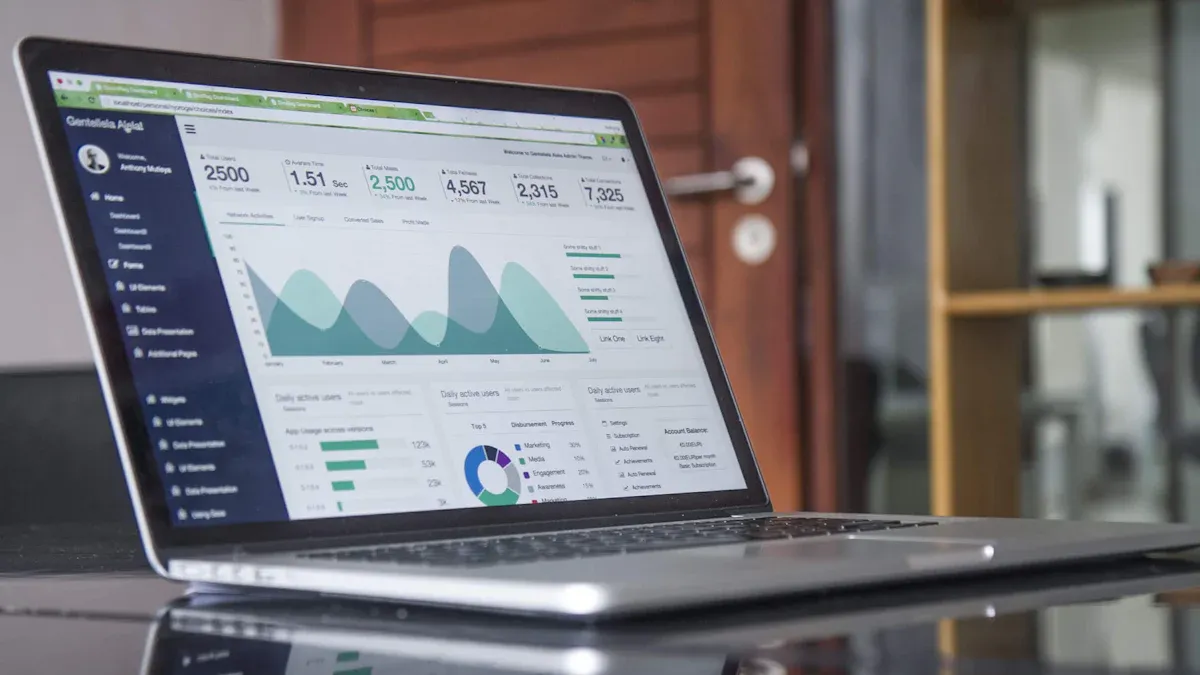
If you are searching for “USDT to HKD” in 2026, you are probably not just looking for an exchange rate number, but want to solve more practical problems: which path is more reliable, how costs are actually calculated, and whether the HKD received can be used for payments, transfers, or funding accounts afterward. For Chinese users, converting USDT to HKD is no longer a single-point exchange issue, but a fund path selection question of “how digital assets can more smoothly land as HKD and continue to be used.” What is truly worth comparing is not only the price, but also compliance status, receipt format, subsequent usability, and the cost of risk explanation.
Key Takeaways
- When choosing USDT to HKD conversion, do not look only at the quoted rate — you must also factor in network fees, withdrawal fees, and slippage together.
- For Chinese users, whether the path is clear and whether the HKD is easy to use after receipt is often more important than the instantaneous exchange rate.
- In 2026, Hong Kong’s stablecoin and virtual asset regulations are clearer, making platform compliance more critical.
- Where the HKD ultimately lands determines whether it is convenient for payments, transfers, or investment and turnover afterward.
- The truly “reliable” path is not a universal answer, but one that matches your purpose, amount, and frequency.
Why “USDT to HKD Conversion” Has Become a High-Frequency Need for Chinese Users in 2026

How Chinese Users Typically Search for This Topic in 2026
From Chinese search expressions, the most common user questions are not “What is USDT,” but “USDT to HKD,” “Best rate for USDT to HKD,” “How to withdraw USDT after converting to HKD,” “Is converting USDT to HKD safe,” and “Can USDT converted to HKD be used to fund Hong Kong stocks.” Behind these search terms are at least four real intentions: comparing prices and rates, comparing paths and receipt methods, worrying about risks and compliance, and wanting to use the HKD for payments, transfers, or investments. In other words, users are not looking up a term — they are looking for an executable fund solution.
The 4 Most Common Usage Scenarios for This Type of Demand
When you convert USDT to HKD, it is usually not just to “have one more HKD number in your account.” More common goals fall into four categories: first, for Hong Kong-related consumption or payments; second, for cross-border receipts, payments, or transfers; third, to prepare for funding Hong Kong stocks, cross-border investments, or related accounts; fourth, using USDT as a cross-border fund bridge, converting to HKD first and then making further arrangements. Because “HKD” is often an intermediate link rather than the final destination for many users, this article must place “whether it can continue to be used after conversion” on equal importance with “how to convert.”
Why 2026 Places Greater Emphasis on “Whether the Path Is Compliant” Than Before
A clear change in 2026 is that Hong Kong’s stablecoin regulation and virtual asset platform regulation are both clearer than in the past. The Hong Kong Monetary Authority explicitly states that the regulatory regime for stablecoin issuers under the Stablecoin Ordinance took effect on August 1, 2025; while the Hong Kong Securities and Futures Commission continues to update its list of licensed virtual asset trading platforms and clearly distinguishes between “fully licensed,” “in application,” and “unregulated” platforms. For you, this means that when converting USDT to HKD in 2026, you can no longer just ask “whether it can be converted,” but must ask “whether this path can be stably reused in the future.”
Decision Factors Chinese Users Care About Most
You can summarize the points Chinese users care about most under this topic into the following 6:
- Whether the real-time exchange rate has an advantage
- Whether fees and slippage are transparent
- What form the HKD receipt takes
- Whether it is convenient for subsequent withdrawal, transfer, or payment
- Whether there are risks of problematic funds in OTC/C2C
- Whether the platform or path has a clear review and compliance framework
Core Summary
USDT to HKD conversion has become a high-frequency demand in 2026 because it connects not a single transaction, but subsequent payments, transfers, investments, and cross-border fund arrangements. For Chinese users, what truly needs to be compared has never been just the exchange rate, but whether the path is compliant, easy to explain, and convenient for continued use.
What Are the Mainstream Paths for Converting USDT to HKD? Understand the 4 Common Types First

Path 1: OTC/C2C Direct Conversion to HKD — Advantage Is Flexibility, Difficulty Is High Counterparty Risk
The biggest advantage of this method is flexibility, fast response, and relatively low barriers. Many users’ first thought when encountering “USDT to HKD” is to find a merchant or over-the-counter counterparty for direct matching. The problem is that while this path looks the most direct on the surface, it actually carries the highest counterparty risk. What you bear is not only price fluctuation, but also the quality of the counterparty’s funds, problematic funds, subsequent explanation costs, and “whether it is easy to use after receipt.” Many Chinese competitor contents only emphasize “it can be converted” and “it is fast,” but rarely explain thoroughly “whether the account will have additional friction after conversion” — this is exactly the layer most easily overlooked when you make path choices.
Path 2: In-Platform Conversion Followed by Withdrawal — Suitable for Users Who Value Standardized Processes
Another common path is to complete the conversion from USDT to fiat or intermediate currencies within a centralized platform, then proceed with withdrawal or outgoing transfer. Its advantages are a more standardized process, clearer interface, and easier steps to review; its disadvantages lie in needing to pay extra attention to whether the platform supports HKD, where withdrawals go, KYC level requirements, and fee structure. Especially in 2026, whether the platform operates under a clear regulatory framework is more important than before, because “usable” and “more reliable” are no longer the same thing. The Hong Kong Securities and Futures Commission explicitly reminds the public to check the official licensed list rather than relying solely on the platform’s own claims of “in application” or “similar to licensed.”
Path 3: First Convert to Another Fiat or Intermediate Currency, Then to HKD
Some users do not convert USDT directly to HKD in one step, but first convert to USD or go through an intermediate node before landing as HKD. The benefit of this approach is that at certain times and on certain platforms, it may offer better depth or more flexible funding channels; however, the cost is obvious: more steps, harder-to-control fees, more complex paths, and higher explanation costs for receipt. If you only look at the exchange rate at a single point in time, you may mistakenly think this path is more cost-effective; but when you add up the exchange spreads, fees, and time across all links, it may not be better.
Path 4: Integrated Fund Path Oriented Toward Subsequent Payment or Investment Scenarios
There is another type of path more suitable for long-term users, with the focus not on “the moment of conversion,” but on “how to continue using it after conversion.” This type of path is better for people who already have needs for multi-currency exchange, international remittances, or Hong Kong/US stock fund arrangements. For example, if you do not just want to turn USDT into HKD but also want to continue with transfers, payments, or investment connections afterward, then integrated fund paths like BiyaPay — which handle both digital assets and fiat exchange, global receipts/payments, and Hong Kong/US stock trading — are usually easier to manage than temporarily piecing together multiple nodes. The core here is not the brand itself, but that “path integration” significantly reduces friction in every subsequent step.
Quick Comparison of the 4 Path Types
| Path Type | Typical Advantages | Main Risks | Fee Transparency | HKD Receipt Form | Best Suited For |
|---|---|---|---|---|---|
| OTC/C2C | Flexible, fast | Counterparty risk, problematic funds | Medium to low | Depends on counterparty | Small-amount, temporary needs |
| In-platform conversion + withdrawal | Standardized process | KYC, withdrawal restrictions | Medium | Depends on platform capability | Users who value standardization |
| Convert via intermediate currency/fiat first | Flexible path | More steps, higher total cost | Low to medium | Multi-stage receipt | Users with complex needs |
| Integrated fund path | Strong subsequent connectivity | Requires full understanding of product capabilities | Higher | Better for continued use | High-frequency, long-term users |
Core Summary
There is no universal “most reliable for everyone” path for converting USDT to HKD. The truly reasonable approach is to first determine whether you want speed, standardization, flexibility, or strong connectivity for subsequent payments and investments. More paths and more nodes do not necessarily mean higher level; in many cases, the solution that is easiest to understand and most convenient to reuse is actually the most reliable.
Is Converting USDT to HKD Expensive? Costs Should Be Broken Down into These 4 Layers

Layer 1 Cost: The Quoted Rate You See Is Not Equal to the HKD You Actually Receive
One point many users easily overlook is that the “USDT/HKD reference price” shown on a platform’s homepage is not equal to the final HKD amount you actually receive. In addition to the nominal exchange rate, actual receipt is affected by order depth, bid-ask spread, and slippage at execution. Especially with larger amounts, even a small difference in quoted rate can be amplified in the final amount received. Therefore, the question “which platform offers the best rate for USDT to HKD” cannot be answered with a single screenshot — you must look at the real transaction logic of the entire trade.
Layer 2 Cost: On-Chain Network Fees Directly Affect Small-Amount Conversion Experience
According to Bitget’s 2026 withdrawal rules explanation, TRC-20 remains a commonly used low-cost network for individual users in many scenarios, with typical withdrawal fees around 1 USDT, while ERC-20 fees can fluctuate sharply with Ethereum network congestion and may be significantly higher than TRC-20 during peak times. This means that for small-amount trial users, network fees have a very obvious impact on total cost; but for large-amount users, slippage and withdrawal structure are often more critical than network fees.
Layer 3 Cost: Withdrawal Fees, Outgoing Fees, and HKD Receipt Thresholds
Many comparison articles only stop at the step of “USDT to HKD” and do not continue to ask: where does the HKD go? How do you receive it? Do you need to withdraw again? Is there a minimum threshold? These are the second-stage costs. If you still need to withdraw the HKD to an account, make another transfer, or connect to payment or investment links after conversion, this part of the cost can be substantial. For Chinese users, what should truly be compared is the total cost “from USDT to usable HKD,” not the surface cost “from USDT to some account balance number.”
Layer 4 Cost: Invisible Time Cost and Failure Cost
There is one type of cost that is most easily overlooked: time and failure costs. Examples include KYC supplementary documents, withdrawal delays, temporary path switching, and restricted use after receipt. These do not appear directly in fee tables but have a major impact on actual experience. To avoid fabricating unverified tests, this article does not include nonexistent “first-hand receipt tests,” but based on publicly available 2026 fee structures, we provide a scenario-based breakdown: for small-amount users, network fees and minimum thresholds are most sensitive; for medium-amount users, total exchange spreads and withdrawal fees are more critical; for high-frequency users, the most expensive factor is often not the single fee, but the repeated cost of having to re-explain and re-adapt the path each time. This “total friction cost” is precisely the part that most competitor articles do not expand on.
4-Layer Cost Breakdown for USDT to HKD Conversion
| Cost Layer | Typical Items | Impact on Small-Amount Users | Impact on Large-Amount Users | Easily Overlooked? |
|---|---|---|---|---|
| Quoted Rate Layer | Bid-ask spread, slippage | Medium | High | Yes |
| Network Fee Layer | TRC-20, ERC-20 and other network fees | High | Low to medium | No |
| Withdrawal Layer | HKD withdrawal fee, minimum threshold | Medium | High | Yes |
| Friction Layer | Delays, supplementary documents, failure redo | Medium | High | Very easily |
Core Summary
Whether converting USDT to HKD is expensive cannot be judged by a single exchange rate number. You must look at least at these 4 layers of costs simultaneously: nominal quoted rate, on-chain fees, withdrawal or receipt fees, and the time and failure costs in the process. For Chinese users, what is most easily overlooked is often not the handling fee itself, but the total cost brought by “having to deal with it several more times after conversion.”
How Can You Use HKD After Receipt? Different Receipt Methods Determine Your Subsequent Freedom
Receipt to Platform Balance, Electronic Wallet, or Bank Account — Subsequent Usability Varies Greatly
The two words “receipt” sound simple, but their actual meanings are completely different. HKD received to platform balance usually means you are still within the system; receipt to a certain wallet or collection account means you have entered the next stage; receipt to a directly usable bank or payment scenario means it has truly landed. Many people mistakenly think “it has been converted” equals “it can be used,” but this is not the case. You need to ask: can this HKD continue to be used for payments, transfers, or withdrawals? What are the costs after withdrawal? Is it convenient for the next step of investment or multi-currency scheduling?
If You Are Converting for Payment or Transfer, Which Conditions Should You Focus On Most
If you convert HKD to use it rather than just to look at it, what you should focus on most is not the instantaneous exchange rate, but subsequent freedom. For example: does it support outbound payments, is it convenient for cross-border receipts and payments, is it suitable for Hong Kong local scenarios, and can it still be easily switched to other currencies? If you will continue with consumption, payments, or cross-border turnover afterward, the value of integrated tools becomes significantly higher. For example, in a global multi-asset trading wallet like BiyaPay, USDT to HKD conversion is not the end point — it can later connect to multi-currency exchange, international remittances, and even card scenarios. This is more suitable for long-term users than “converting first and then temporarily finding a way to use it.”
If You Are Converting for Hong Kong Stocks or Cross-Border Investment, How to Choose the HKD Receipt Form
The most common mistake investment-type users make is treating “conversion” as the goal itself. In reality, what you truly care about is whether the HKD after receipt can conveniently continue into Hong Kong stocks or other investment scenarios. If you still need to research stocks, arrange funding, or continue cross-market fund scheduling afterward, it is best to choose a path that connects more easily with investment scenarios from the beginning. For example, when arranging Hong Kong or US stocks, you can directly refer to BiyaPay’s web trading and stock inquiry. This makes the “exchange—receipt—investment” chain more natural, rather than finding a new tool for every step.
Receipt Method Recommendations for 3 Typical User Types
- Small-amount trial type: Prioritize low thresholds, network fees, and whether the first-time process is easy to complete.
- Payment/transfer type: Prioritize whether HKD lands conveniently for use and whether subsequent transfers are smooth.
- Investment/turnover type: Prioritize whether it can continue to connect with Hong Kong stock funding, multi-currency exchange, and long-term fund management.
Core Summary
What is most easily underestimated in USDT to HKD conversion is not the moment of exchange, but the freedom after HKD receipt. Where it lands, what it can still do, and whether it is suitable for continued payments or investments — these factors often determine your real satisfaction with the path more than the quoted rate.
For Chinese Users, Which Risks Are Most Worth Avoiding in Advance
Risk 1: Looking Only at Exchange Rate, Not at Fund Source and Counterparty
The most common misconception in the Chinese market is directly equating “slightly lower exchange rate” with “more cost-effective.” But if the HKD path you receive has higher explanation costs, more complex counterparties, and is harder to use after receipt, then the transaction may not be more worthwhile. Especially in OTC/C2C scenarios, you are not facing an abstract price, but real counterparties. The price can be very attractive, but once problems arise later, what you bear is not just the handling fee, but friction across the entire fund chain.
Risk 2: Completing Only the Conversion Without Considering Chinese Users’ Receipt and Explanation Issues
For Chinese users, USDT to HKD conversion is not simply “asset to currency,” but “how digital assets can more smoothly land in usable HKD scenarios.” If you only focus on how to convert in the front end and completely ignore how it lands afterward, how to keep records, and whether it is convenient to explain, then even if the conversion succeeds this time, it does not mean the path is suitable for your long-term use. This risk is downplayed in many competitor contents, but from an actual decision-making perspective, it is precisely the most important layer.
Risk 3: Mistaking “Platform Usable” for “Path Long-Term Reliable”
The Hong Kong Securities and Futures Commission clearly states on its virtual asset trading platform list page that the public should distinguish between fully licensed platforms, applicants, and unregulated platforms, and should not assume long-term reliability just because a platform “appears usable.” The reality in 2026 is that regulatory status has become an important part of path judgment. If you mistake “able to do one transaction today” for “suitable to do this way in the future,” you are likely to encounter problems when reusing the path later.
Risk Screening Checklist for Chinese Users Before Converting USDT to HKD
| Risk Point | Common Manifestation | Why It Causes Problems | How You Can Avoid It in Advance |
|---|---|---|---|
| Counterparty risk | Only focusing on low price | Uncontrollable fund quality | Prioritize more standardized process paths |
| Unclear receipt path | Received but hard to use | High subsequent friction | Check receipt form before deciding |
| KYC/withdrawal restrictions | Cannot withdraw after conversion | Incomplete path | Verify rules and thresholds in advance |
| Restricted use | Can only stay at one layer | Cannot continue payments/investments | Choose solutions better suited to subsequent scenarios |
| Insufficient record keeping | Cannot explain clearly when problems arise | High explanation cost | Develop habit of recording and traceability |
Core Summary
For Chinese users, the biggest risk in USDT to HKD conversion is not “being unable to find a place to convert,” but making decisions too quickly and ignoring counterparty quality, receipt form, subsequent use, and path reusability. The truly reliable solution is usually not the one with the lowest price, but the one with the least friction, easiest to explain, and most convenient for continued use.
If You Want to Choose a “More Reliable” Solution, Judge by These 3 Types of Needs in 2026
Small-Amount Trial Type: Prioritize Transparent Costs and Low Operation Thresholds
If this is your first time dealing with USDT to HKD conversion or the amount is small, the most important thing is not to pursue the “most perfect solution,” but to first find a path with transparent fees, clear process, controllable network fees, and low barriers. What you should focus on most at this point is: whether transaction depth is sufficient, whether network fees are friendly, whether the minimum withdrawal threshold is high, and whether the HKD after receipt is truly understandable and usable.
Daily Use Type: Prioritize Payment and Transfer Convenience After HKD Lands
If you already have needs for Hong Kong payments, cross-border receipts/payments, or frequent turnover, your judgment criteria should upgrade from “able to convert” to “whether it is convenient to keep using after conversion.” Such users should look more at subsequent freedom rather than just front-end quotes. You can even put “payment convenience” before “exchange rate advantage,” because for daily users, real costs often come from repeated hassle rather than single handling fees.
Investment/Turnover Type: Prioritize Path Reusability and Fund Scheduling Capability
If you are converting HKD for Hong Kong stocks, US stocks, or longer-term multi-currency fund arrangements, “path reusability” is the most important. What you need is not one-time success, but a chain that can continue to be used in the future. At this time, platforms that support multi-currency exchange, international remittances, switching between digital assets and fiat, and subsequent investment connectivity are more valuable than single-point exchange tools. For example, BiyaPay supports both USDT to HKD conversion and exchange among more than thirty fiat currencies and over two hundred digital currencies, and can connect with Hong Kong/US stock trading and global receipts/payments; for high-frequency turnover users, this integrated capability is usually more worth considering than a single “cheaper one time.”
Which Type of Need Do You Belong To? Quick Self-Assessment
- Are you most concerned about trying once at low cost, or using it frequently in the future?
- After converting to HKD, is it for spending, transferring, or investing?
- Do you need to continue switching between HKD, USD, and RMB?
- Will you repeatedly use the same path, or is it just one transaction?
- Are you more afraid of handling fees, or more afraid of unclear subsequent paths that are hard to explain?
Core Summary
There is no single answer to “how to choose the most reliable way to convert USDT to HKD.” Small-amount trial users should focus more on transparent costs and low thresholds; daily use users should focus on payment freedom after HKD lands; investment and turnover users should focus on whether the path can be reused long-term. First clarify which type you are, then choose the path — this is usually more effective than blindly comparing prices from the start.
FAQ
Is converting USDT to HKD legal?
It depends on the entity you use, the platform, and the regulatory framework you are under. For ordinary users, the focus is not on abstract debate, but on prioritizing paths with clear rules, transparent review, and sufficient risk disclosure.
Must USDT to HKD go through OTC?
Not necessarily. OTC/C2C is only one method. You can also consider in-platform conversion followed by withdrawal, or integrated fund paths better suited for subsequent payments and investments.
Why does the final amount received differ so much even for the same HKD conversion?
Because real costs include not only the quoted rate, but also slippage, network fees, withdrawal fees, minimum thresholds, and time costs in the process. Looking at only one quote usually underestimates the total cost.
Can I withdraw HKD after converting USDT to HKD?
Many paths can achieve some form of “landing,” but the key lies in where it lands, what the withdrawal thresholds and restrictions are, and whether it is convenient to continue using after receipt.
Can the HKD received be directly used to fund Hong Kong stocks?
Not necessarily — it depends on whether your receipt form and chosen path are suitable for continuing to connect with investment scenarios. For investment-type users, this step should be planned before conversion.
How should small-amount and large-amount users choose paths?
Small-amount users are more sensitive to network fees and thresholds; large-amount users are more sensitive to slippage, total exchange spreads, and path stability. The larger the amount, the more important reusability and explanation costs become, rather than just looking at single-transaction rates.
When converting USDT to HKD in 2026, what you truly need to choose is not “today’s cheapest price,” but a path that can complete the conversion, smoothly land the HKD, and allow continued use. For Chinese users, the more it involves cross-border funds, the more you should upgrade from “price” to a full judgment framework of “price + path + receipt form + subsequent use + risk explanation.” Only in this way will the solution you choose not be a one-time scheme, but a more reliable one.
*This article is provided for general information purposes and does not constitute legal, tax or other professional advice from BiyaPay or its subsidiaries and its affiliates, and it is not intended as a substitute for obtaining advice from a financial advisor or any other professional.
We make no representations, warranties or warranties, express or implied, as to the accuracy, completeness or timeliness of the contents of this publication.
Related Blogs of

Crypto-Related Stocks vs Digital Assets: What Investors Actually Own

Crypto Trading Bots: Types, Costs, and Security Risks



Choose Country or Region to Read Local Blog
 Australia
 Austria
 Belgium
 Canada
 Cyprus
 Czech Republic
 Denmark
 Estonia
 Finland
 France
 Germany
 Greece
 Hong Kong
 India
India Indonesia
 Ireland
 Italy
Italy Japan
Japan Latvia
 Lithuania
 Luxembourg
 Malaysia
 Malta
Malta Morocco
 Nepal
Nepal Netherlands
 New Zealand
 Norway
 Pakistan
 Philippines
 Poland
 Portugal
 Romania
 Singapore
 Slovakia
 Slovenia
 South Africa
 South Korea
 Spain
Spain Sweden
 Thailand
 United States
 Turkey
 United Arab Emirates
 United Kingdom
 Vietnam