
How to Choose an Overseas Bank Account? What to Know About Account Opening, Currency Exchange, Payments, and Asset Diversification





For mainland Chinese users, an overseas bank account is not something where “the more, the better.” It is also not simply for holding USD, HKD, or SGD. What truly matters is whether you have a clear need for cross-border payments, overseas spending, tuition payments, foreign-currency exchange, asset diversification, or backup funds.
When choosing an overseas account, you need to evaluate account-opening requirements, account type, currency support, remittance channels, fee structure, deposit protection, and tax compliance at the same time.
The following guide walks you through how to choose and use an overseas bank account based on real needs, covering demand analysis, jurisdiction selection, account-opening procedures, currency exchange, payment collection, and asset safety. It also highlights the most common pitfalls.
Key Takeaways
- Start with your use case. Different overseas accounts are suited for payment collection, spending, currency exchange, or backup funds.
- Account opening depends heavily on identity documents, address proof, tax residency declarations, and source-of-funds materials.
- Currency exchange costs are not only about exchange rates; spreads, fees, and intermediary bank charges also matter.
- Mainland Chinese users must still comply with personal foreign-exchange management rules when moving funds across borders.
- Asset diversification does not mean avoiding regulation. CRS and overseas income reporting must be taken seriously.
- For long-term use, pay attention to account-freezing risks, deposit protection, and account stability.
Why Do You Need an Overseas Bank Account? Start With Use Cases
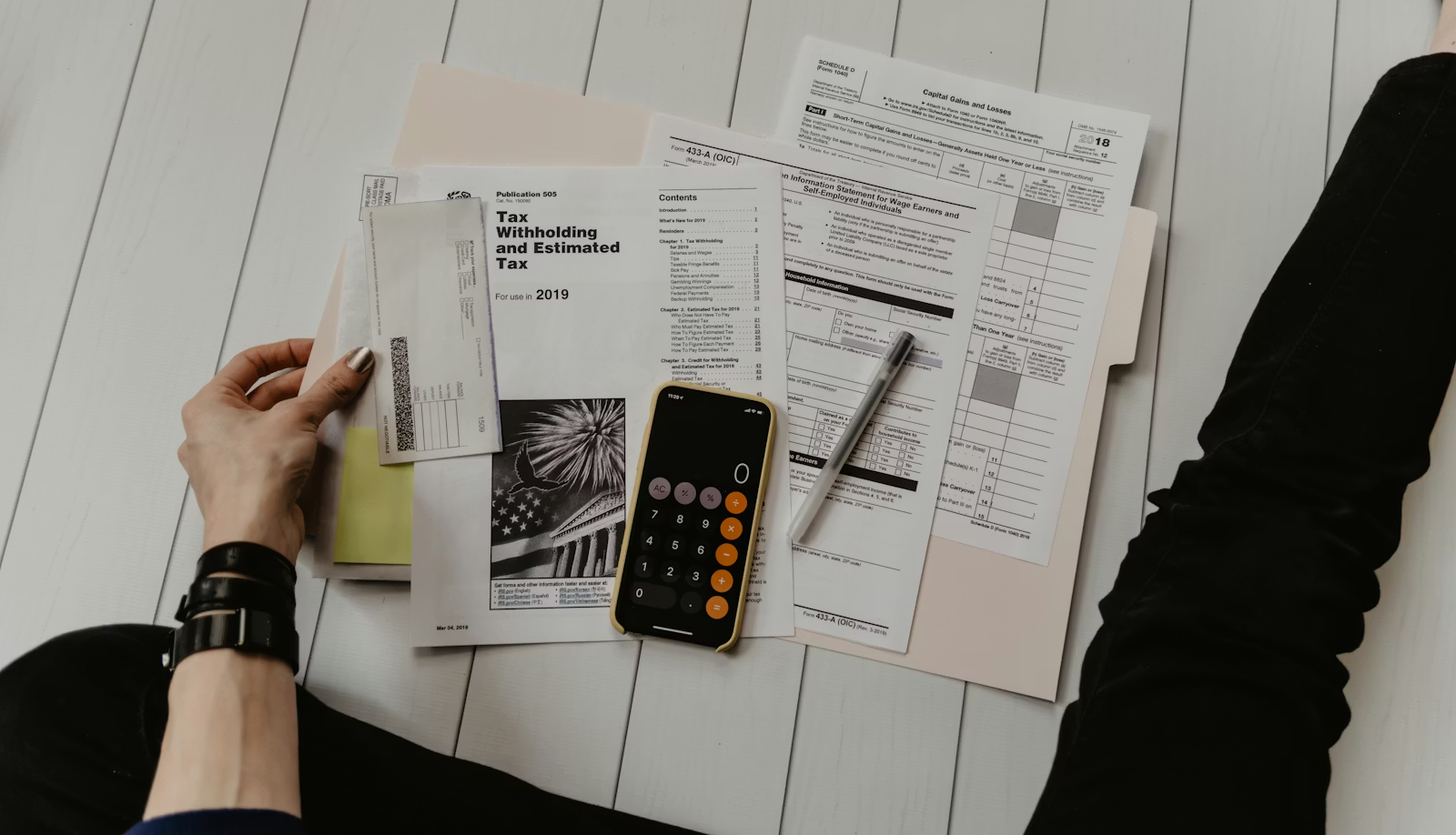
Account Opening, Payment Collection, Currency Exchange, and Asset Diversification
Many people search for terms such as “how to open an overseas bank account,” “Hong Kong bank account opening,” “Singapore bank account,” “USD account,” or “overseas payment account.” On the surface, they are looking for account-opening methods. In reality, the underlying needs can be very different.
Some people need accounts for tuition payments, overseas travel, and daily card spending. Some need them for freelance work, cross-border e-commerce, or overseas salary payments. Others want to hold foreign currencies such as USD, HKD, or SGD as family backup funds or for asset diversification.
So do not start by asking, “Which overseas bank is easiest to open?” Instead, first ask yourself: will this account be used for receiving payments, spending, currency exchange, savings, or as a funding channel for overseas investment and living?
If you only travel abroad occasionally, a multi-currency card and a low-cost currency exchange account may be enough. If you need to receive overseas salaries or platform payouts over the long term, you should pay more attention to name consistency, payment routes, transaction proof, and tax documents.
Search intent can be divided into four categories:
| Search Question | Underlying Need | Key Comparison Points |
|---|---|---|
| How to open an overseas bank account | Obtain an overseas account | Eligibility, documents, jurisdiction |
| How to receive payments with a USD account | Receive overseas funds | SWIFT, local account details, receiving fees |
| Is currency exchange through an overseas account cost-effective? | Reduce FX costs | Exchange rate, spread, fees, limits |
| Are overseas accounts safe? | Asset diversification and stability | Regulation, deposit protection, tax compliance |
Bank Accounts, Brokerage Accounts, and E-Money Accounts Are Different
“Overseas account” is a broad term. It can include traditional bank accounts, digital bank accounts, multi-currency e-money accounts, brokerage cash accounts, and trading wallets. They may all appear to support payments, currency exchange, or foreign-currency holding, but their regulatory status, fund protection, use cases, and risk-control rules are different.
Traditional bank accounts are usually more suitable for salary deposits, large wire transfers, savings, and long-term fund storage. Their advantage is a mature banking system, while their drawbacks are stricter account-opening reviews and potentially higher cross-border wire fees.
Digital bank accounts are more convenient, but in some regions they may only serve local residents or users with local phone numbers and addresses.
Multi-currency accounts are more suitable for daily currency exchange, spending, and small to medium-sized cross-border payments. For example, Wise supports multi-currency balances and account details for certain currencies, but its legal status and deposit protection coverage are different from those of traditional bank accounts.
If you also want to connect an overseas account with securities, Hong Kong stocks, U.S. stocks, or digital asset trading, you can consider wallets or trading accounts with multi-asset capabilities. For example, a global multi-asset trading wallet such as BiyaPay may be suitable for people who need global payments, international remittances, USDT-to-USD or USDT-to-HKD conversion, and U.S. or Hong Kong stock trading.
The Most Common Cross-Border Account Needs for Mainland Chinese Users
For mainland Chinese users, overseas bank accounts are mainly used in four scenarios.
The first is overseas spending and travel backup. You need to check whether the card supports Visa or Mastercard, whether foreign transaction fees apply, how ATM withdrawal fees are charged, and whether merchants may trigger DCC, or dynamic currency conversion. DCC is a cost many people overlook. When you pay by card overseas, if the POS machine asks whether you want to settle in RMB, it may look convenient, but the exchange rate may be poor.
The second is cross-border payment collection. Freelancing, remote work, overseas salary payments, cross-border e-commerce, and platform payouts all require attention to whether the account supports the receiving currency, whether the payer accepts the account details, whether SWIFT deposits are stable, and whether the recipient name matches your contract, invoice, and platform identity.
The third is currency exchange and transfers. Do not only look at “real-time exchange rates” or “zero fees.” You should also look at platform spreads, fixed fees, intermediary bank fees, receiving bank fees, and arrival speed. Different accounts may have very different costs for small, frequent transactions versus large, infrequent transactions.
The fourth is asset diversification. Asset diversification is not simply about moving money out. You need to consider the account jurisdiction, bank regulation, deposit protection, tax residency, CRS information exchange, and overseas income reporting.
Overseas bank accounts are suitable for people with genuine cross-border needs, such as tuition payments, overseas work, cross-border payment collection, overseas spending, multi-currency cash management, family backup funds, or compliant asset diversification. They should not be treated as tools to avoid foreign-exchange rules, taxes, or regulation.
Before choosing an account, first confirm your use case, then decide the account jurisdiction, account type, and acceptable fee range. Do not choose only based on “which bank is easy to open.”
How to Choose an Overseas Bank Account? Start With Jurisdiction, Account Type, and Account-Opening Requirements

Choose by Jurisdiction: How Hong Kong, Singapore, the U.S., the U.K., and Europe Differ
The first step in choosing an overseas bank account is choosing the jurisdiction. Different regions have very different account-opening logic, account purposes, and compliance requirements.
Hong Kong accounts are relatively familiar to mainland Chinese users. Language, distance, and financial products are closer to home. They are suitable for HKD and USD payment collection, Hong Kong and U.S. stock funding, and family backup funds. However, in recent years, Hong Kong banks have generally paid more attention to KYC, source of funds, account purpose, and account activity. If documents are insufficient, users may be asked to provide additional explanations.
Singapore accounts are suitable for multi-currency cash management and international payments. Singapore has a mature financial system, but account-opening thresholds are often not low. Banks may focus more on your residence, occupation, source of wealth, and account-opening purpose. If you do not have local status, a long-term residence plan, or a clear wealth-management need, the success rate may not be high.
U.S. accounts are suitable for USD payment collection, ACH, local payments, and U.S. living scenarios. However, for non-U.S. residents, personal account opening often requires more identity documents, address proof, tax forms, or in-person conditions.
The U.K. and Europe have more e-money accounts, multi-currency accounts, and digital bank options. Mainland Chinese users should pay particular attention to supported regions, card delivery, account restrictions, and long-term usage stability.
| Jurisdiction | Suitable Uses | Main Requirements | Notes |
|---|---|---|---|
| Hong Kong | HKD/USD payment collection, Hong Kong and U.S. stock funding, backup funds | Identity proof, address, purpose, source of funds | Long-term inactivity may lead to restrictions |
| Singapore | Multi-currency management, international payments, wealth management | Assets, identity, tax declaration | Check foreign-currency deposit protection coverage |
| United States | USD payment collection, ACH, local spending | Address, identity, tax forms | More restrictions for non-residents |
| U.K./Europe | Multi-currency accounts, EUR/GBP payments | Supported region, address, compliance review | E-money accounts are not the same as bank accounts |
Choose by Account Function: Daily Account, Multi-Currency Account, Savings Account, or Wealth Management Account
After choosing the jurisdiction, you also need to look at account function.
A daily account is suitable for income, expenses, transfers, card payments, and bill payments. A multi-currency account is suitable for holding currencies such as USD, HKD, SGD, EUR, and GBP. A savings account or fixed deposit account is suitable for low-frequency fund storage. A wealth management account may be linked to funds, bonds, insurance, stocks, and other products.
You need to avoid one misconception: do not expect one account to solve every problem.
For example, a multi-currency account may be suitable for currency exchange and spending, but not necessarily for holding large long-term balances. A brokerage cash account is suitable for trading, but not necessarily for daily payment collection. A traditional bank account is suitable for large deposits and long-term stability, but may not offer low costs for small, frequent currency exchange.
If your need is “overseas payment collection + currency exchange + U.S./Hong Kong stock trading,” you can layer your accounts: a traditional bank account handles core funds and backup funds, a multi-currency account handles daily currency exchange and payment collection, and a trading wallet or brokerage account handles investment transactions.
For example, when you need to look up overseas-listed company information or research U.S. and Hong Kong stock trading, you can use stock search together with your own account structure, while ensuring your fund arrangements match your risk tolerance and compliance requirements.
Account-Opening Checklist: Identity, Address, Tax, Source of Funds, and Purpose
The core of overseas bank account opening is not “filling in forms,” but KYC and AML review. KYC means “know your customer,” and AML means anti-money laundering. Banks need to assess who you are, where your money comes from, what the account will be used for, and whether your transactions match your identity and income.
Common materials include:
| Document Type | Common Documents | Purpose |
|---|---|---|
| Identity proof | ID card, passport, Exit-Entry Permit for Hong Kong and Macau, visa | Proves your identity and travel eligibility |
| Address proof | Utility bill, bank statement, residence proof | Proves your place of residence |
| Tax declaration | Tax residency declaration, TIN | Supports CRS and tax information identification |
| Income proof | Payslips, tax records, employment proof | Explains source of funds |
| Purpose proof | Admission letter, contract, invoice, platform documents | Explains account-opening and transaction purpose |
| Asset proof | Bank statements, deposit certificate, investment proof | Supports large-value or wealth management account opening |
Regarding CRS, China has implemented the automatic exchange of financial account information for tax purposes. Financial institutions identify the tax residency of account holders and collect and report relevant financial account information. The tax residency declaration you fill in during account opening must be true and consistent. You should not enter arbitrary information just to open an account.
The first step in choosing an overseas bank account is not finding the “easiest” bank, but clarifying the account jurisdiction, account function, and your own eligibility. You need to compare the use cases of Hong Kong, Singapore, U.S., U.K., and European accounts, then check identity documents, address proof, tax residency declarations, source of funds, and account-opening purpose.
The better an account matches your real needs, the more stable your later currency exchange, payment collection, and risk-control explanations will be.
What Is the Account-Opening Process? From Document Preparation to Account Activation

Before Opening an Account: Clarify the Purpose and Prepare Supporting Documents
The most important task before opening an account is explaining clearly why you need it. Banks do not like vague purposes such as “I want to allocate overseas assets” or “I may use it in the future.”
Clearer explanations include tuition payments, overseas salary deposits, cross-border service payments, overseas travel spending, family overseas backup funds, or uses related to existing overseas work, study, or business arrangements.
You can prepare documents in three layers.
The first layer is basic documents: ID card, passport, Exit-Entry Permit for Hong Kong and Macau or visa, phone number, email address, and residential address.
The second layer is supporting documents: address proof, salary statements, tax records, employment proof, company business documents, and platform payment records.
The third layer is enhanced documents: source-of-funds explanation, contracts, invoices, admission letters, rental contracts, overseas employer letters, and historical transaction statements.
It is recommended to prepare a PDF folder in advance and name documents by category, such as “identity — address — income — purpose — source of funds.” This helps you answer questions more quickly whether you open the account online, go through video verification, or communicate with an offline branch.
Online Account Opening, In-Person Account Opening, and Witness Account Opening
Overseas account opening usually has three routes.
Online account opening is the most convenient, but it often has the most regional and identity restrictions. Many digital banks or multi-currency accounts support app-based account opening, but approval depends on your location, document type, address, and risk score. The advantage is speed. The disadvantage is that if the review fails, there may be limited room to explain.
In-person account opening is more suitable for people with complex documents, larger funds, or a need for traditional bank accounts. You can explain your purpose face to face and submit physical documents. In some cases, the approval rate may be higher. The disadvantage is higher travel cost, appointment requirements, and uncertainty.
Witness account opening or cross-border account opening is usually offered by some international banks to eligible customers. The bank may require you to already be a high-net-worth customer, meet average asset thresholds, or pass relationship manager review. It is more convenient, but it does not mean there are no thresholds. Account maintenance fees, minimum balance requirements, and follow-up transaction reviews should also be confirmed in advance.
Account-opening methods compared:
| Account-Opening Method | Advantages | Disadvantages | Suitable For |
|---|---|---|---|
| Online account opening | Convenient and fast | Many regional and identity restrictions | Small amounts, multi-currency use, daily use |
| In-person account opening | Better communication and more complete account types | Higher cost and appointment required | Long-term use and traditional bank needs |
| Witness account opening | May not require overseas travel | High threshold and strict review | Existing banking relationship or asset base |
After Account Opening: Activation, Initial Funding, Payment Tests, and Security Settings
Successful account opening does not mean the account can already be used stably. You still need to complete four steps.
First is activation. This includes bank card activation, online banking, mobile app setup, SMS verification, email verification, two-factor authentication, and backup verification methods. Overseas accounts are especially vulnerable to problems when phone numbers expire, email accounts become inaccessible, or device changes make verification impossible. Security settings should be completed early.
Second is a small initial funding test. Do not transfer a large amount right away. You can first test local transfers, cross-border wires, currency exchange, card payments, withdrawals, and payment collection. Keep screenshots, transaction numbers, and arrival records for every step.
Third is building payment explanations. For salary deposits, keep employment contracts. For platform payouts, keep platform statements. For service payments, keep contracts and invoices. The more complete your source-of-funds explanations are, the easier it is to use the account stably over the long term.
Fourth is setting limits and alerts. Enable transaction notifications, login alerts, transfer limits, card-freeze functions, and backup contact methods. If the account supports virtual cards, you can separate online subscriptions and travel spending from your main account balance.
The basic process of opening an overseas bank account is: first clarify the account purpose and prepare identity, address, tax, income, and source-of-funds documents; then choose online account opening, in-person account opening, or witness account opening based on your situation; after the account is opened, activate the bank card and online banking, use small amounts to test funding, payment collection, currency exchange, withdrawals, and card spending, and set up two-factor authentication, transaction alerts, and limit management.
What Should You Know About Currency Exchange and Cross-Border Transfers?

What Makes Up Currency Exchange Costs?
Many people compare currency exchange only by looking at the exchange rate. That is not enough. The real cost includes at least six parts: exchange-rate spread, fixed fee, platform service fee, SWIFT wire fee, intermediary bank fee, and receiving bank fee.
The exchange-rate spread is the most hidden cost. A platform may advertise “no fee,” but hide the cost between the buying and selling rates. Fixed fees are more visible, such as a few dollars or several dozen Hong Kong dollars per transaction. SWIFT wires may also pass through intermediary banks, which can deduct fees from the remitted amount. As a result, the amount received may be lower than the amount sent.
You can use a simple formula to estimate total cost:
Total cost = exchange-rate loss + platform fee + sending bank fee + intermediary bank fee + receiving bank fee + time cost
If you only exchange USD 500, fixed fees matter a lot. If you exchange USD 50,000, exchange-rate spreads matter more. Large exchanges require special attention to spreads because a 0.3% difference on USD 50,000 equals USD 150.
| Cost Item | Common Location | How to Check |
|---|---|---|
| Exchange-rate spread | Bank or platform quote | Compare mid-market rate with actual execution rate |
| Fixed fee | Transfer confirmation page | Check fixed amount per transaction |
| Service fee | FX or transfer page | Check whether it is charged as a percentage |
| SWIFT fee | Bank wire transfer | Check sending bank fee schedule |
| Intermediary bank fee | Cross-border transfer chain | May not be precisely known in advance |
| Receiving bank fee | Receiving bank | Check the receiving bank’s fee rules |
Fee Differences Among Banks, Wise, Revolut, and Other Multi-Currency Accounts
Different platforms are suitable for different amounts and scenarios.
Traditional banks are suitable for large transfers with complete compliance documents. Their advantages are system stability and strong offline service, while their disadvantages may include higher wire fees, intermediary bank fees, and exchange-rate spreads.
Multi-currency accounts are suitable for small to medium-sized amounts, frequent currency exchange, and spending. Their fee transparency is usually higher, but account type, available regions, and fund protection should be checked separately.
Wise shows fees by currency and transaction type. Some routes support relatively low percentage-based transfer fees, and its multi-currency account can be used to hold and convert multiple currencies. It is suitable for users who care about FX transparency and cross-border payment efficiency.
In Revolut Singapore Standard plan fees, currency exchange during weekends or when FX markets are closed may incur additional charges. Standard users may also be affected by fair usage limits. Therefore, you should not only check whether multi-currency support is available, but also your regional version, plan level, and transaction timing.
If your fund route also involves USDT conversion into USD or HKD, cross-border remittances, and trading account connections, you can include U.S. and Hong Kong stock trading in your overall fund-flow design. However, you still need to distinguish the roles: bank accounts handle fiat deposits and withdrawals, while multi-asset wallets handle conversion, trading, and cross-border payments.
Mainland Chinese Users Need to Pay Attention to Personal Foreign-Exchange Rules
Mainland Chinese users also need to pay attention to personal foreign-exchange management rules.
According to relevant guidance from China’s State Administration of Foreign Exchange, individual foreign-exchange settlement and domestic individual foreign-exchange purchases are subject to an annual facilitation quota. The quota is equivalent to USD 50,000 per person per year for each category. Within the quota, transactions can generally be handled at banks with valid identity documents. For current-account purchases that exceed or do not use the facilitation quota, supporting documents showing the actual transaction amount and purpose are required, such as study, medical treatment, travel, or family support documents.
This means an overseas account is not a tool to bypass foreign-exchange rules. When you purchase foreign currency domestically, remit funds overseas, pay tuition, spend on travel, or make other current-account payments, the transaction should match a genuine underlying purpose.
Banks may ask about the purpose of funds, recipient, receiving account, contract, or invoice. The more complete your documents are, the smoother the transaction will be.
It is especially important to distinguish current-account and capital-account items. Study, travel, salaries, and service trade are usually current-account items. Overseas property purchases, direct investment, and securities derivatives investment may involve capital-account restrictions or additional requirements. Before making a remittance, confirm the required documents with the handling bank instead of transferring money first and explaining later.
To judge whether currency exchange and cross-border transfers through an overseas account are cost-effective, do not only look at the surface exchange rate. You need to compare exchange-rate spreads, fixed fees, platform service fees, SWIFT fees, intermediary bank fees, receiving bank fees, arrival time, and transaction limits. Mainland Chinese users also need to confirm that the fund purpose complies with personal foreign-exchange rules and prepare authenticity documents such as contracts, invoices, admission letters, and bills.
How Should Payment Collection and Card Spending Be Arranged? Focus on Payment Routes, Currencies, and Account Stability
For Cross-Border Payments, First Check the Payment Route: Local Account Details or SWIFT
The most important factor in cross-border payment collection is the route. There are two common routes: local account details and SWIFT.
Local account details mean you receive local receiving information in a country or region, such as local account details for USD, EUR, GBP, or SGD. The payer can pay as if making a local transfer, usually with faster arrival and lower fees. However, this method is limited by currency, region, account type, and payer requirements, and is not suitable for every payment scenario.
SWIFT has broader coverage and is more commonly used by traditional banks and corporate payers, but fees and arrival times are more uncertain. Cross-border wires may pass through intermediary banks, and the payer, sending bank, intermediary bank, and receiving bank may all affect the final amount received.
If you are a freelancer, cross-border service provider, or overseas employee, confirm in advance which payment method the payer supports. Do not only check whether the account can generate receiving details. You also need to check whether the recipient name, account jurisdiction, payment reference, and platform review requirements match.
| Payment Route | Advantages | Disadvantages | Suitable Scenarios |
|---|---|---|---|
| Local account details | Lower fees and faster arrival | Limited supported currencies | Platform payouts, freelance payments |
| SWIFT wire | Broad coverage | Uncertain fees and longer arrival time | Corporate payments, large cross-border transfers |
| Multi-currency wallet | Flexible currency exchange and payment collection | Account nature must be checked | Small to medium-sized multi-currency management |
| Traditional bank account | Stronger stability | Higher account-opening and maintenance thresholds | Salaries, large funds, long-term backup |
What Should Freelancers, Cross-Border E-Commerce Sellers, and Overseas Salary Recipients Prepare?
If you use an overseas account to receive payments, document management is more important than the account itself. Bank or platform risk controls do not only look at transaction amount. They also assess whether transactions match your identity, occupation, and historical behavior.
For freelance payments, keep contracts, quotations, invoices, delivery records, client emails, and platform statements.
For cross-border e-commerce payments, keep store backend records, order records, logistics documents, invoices, refund records, and platform settlement statements.
For overseas salary payments, keep employment contracts, payslips, employer letters, tax documents, work visas, or remote-work explanations.
The payment name should also be consistent. Ideally, the account holder, contract signer, platform-verified person, and recipient should be the same.
If you often receive and send payments on behalf of others, account risk will increase significantly. Even if the amounts are not large, long-term inflows and outflows involving multiple parties may trigger requests for additional documents.
Before receiving payments, check:
- Whether the payer accepts a personal account or requires a business account;
- Whether the receiving currency matches the contract currency;
- Whether the recipient name matches the contract and platform identity;
- Whether invoices, contracts, or service descriptions are required;
- Whether funds need to be exchanged, transferred out, or reported after arrival;
- Whether intermediary bank or receiving bank fees may apply.
Overseas Spending and Withdrawals: Card Fees, Foreign Transaction Fees, ATM Fees, and Chargeback Risks
Overseas accounts often come with debit cards, virtual cards, or multi-currency cards. When using them, focus on four types of fees: card issuance fees, foreign transaction fees, ATM withdrawal fees, and excess usage fees.
Debit cards are suitable for daily spending and ATM withdrawals. Credit cards are suitable for hotel deposits, car rentals, flight bookings, and purchases requiring stronger protection. Virtual cards are suitable for online subscriptions and reducing fraud risk. Multi-currency cards are suitable for travel and spending in multiple currencies.
Different cards vary significantly in weekend exchange rates, free ATM withdrawal limits, chargeback handling, and freeze rules.
You should also avoid DCC. When paying by card overseas, if the merchant asks you to choose “RMB settlement” or “local currency settlement,” it is usually better to choose the local currency and let your card issuer or multi-currency account handle the exchange. DCC exchange rates are often not transparent and can add another layer of cost.
If you frequently spend overseas, exchange currency, and trade in multiple markets, you can separate your daily spending account, main bank account, and trading account.
Do not directly link your main account to many online merchants. Keep only the necessary balance on spending cards. Let trading accounts handle only investment and exchange functions. This way, if a card is frozen or compromised, your main funds will not be fully affected.
When using overseas accounts for payment collection and spending, the key is confirming routes, currencies, and supporting documents. For payment collection, determine whether the payer supports local account details or SWIFT, and keep contracts, invoices, platform statements, and salary proof. For spending, pay attention to foreign transaction fees, ATM fees, weekend exchange fees, and DCC.
The key to account stability is clear transaction purpose, name consistency, and explainable documentation.
What Should You Know About Asset Diversification and Compliance? Focus on Regulation, Tax, and Account Safety
Asset Diversification Is Not Regulatory Avoidance: Understand CRS and Overseas Income Reporting
Many people open overseas accounts for asset diversification. But asset diversification does not mean avoiding regulation, nor does it mean no reporting is required. You need to consider foreign-exchange compliance, tax residency, CRS information exchange, and overseas income reporting at the same time.
CRS refers to the automatic exchange of financial account information for tax purposes. According to the OECD’s Common Reporting Standard, financial institutions in participating jurisdictions identify the tax residency of account holders and exchange information such as account balances, interest, dividends, and certain financial asset income.
If a Chinese resident individual earns overseas income, they also need to determine reporting obligations according to individual income tax rules.
This is why you should not fill in tax residency declarations casually when opening an account. If you are a Chinese tax resident, you should truthfully state your Chinese tax residency and taxpayer identification number.
Interest, dividends, securities gains, or other income generated in your overseas account should also be assessed under Chinese tax law and local tax law to determine whether reporting and tax credit treatment are required.
Based on public rules from banks and platforms, create your own transaction record sheet to record every foreign-exchange purchase, remittance, arrival, currency exchange, payment receipt, and reporting document.
How to Compare Deposit Protection: Protection Limits Differ in Hong Kong, Singapore, and Other Regions
Account safety should not be judged only by bank reputation. You also need to look at the deposit protection system. Different regions have different protection limits, covered currencies, and eligible institutions.
Hong Kong’s Deposit Protection Scheme has raised the protection limit to HK$800,000 per depositor per member bank. Singapore’s Deposit Insurance Scheme generally protects eligible Singapore-dollar deposits of each depositor with each scheme member, up to S$100,000. Foreign-currency deposits, structured deposits, investment products, and similar products are usually not covered under the same scope.
This is important for mainland Chinese users. You may think your funds are “safe in a Singapore bank,” but if you hold USD, structured products, funds, or brokerage account balances, whether they are protected by deposit insurance depends on the specific product and account type. E-money accounts, multi-currency wallets, and brokerage accounts may not enjoy traditional bank deposit protection.
| Region/Account | Common Protection Logic | What to Check |
|---|---|---|
| Hong Kong bank deposits | HK$800,000 limit per depositor per member bank | Whether it is an eligible deposit |
| Singapore bank deposits | Eligible SGD deposits up to S$100,000 | Whether foreign currency is covered |
| E-money accounts | Usually regulated under payment institution or e-money rules | Whether deposit insurance applies |
| Brokerage accounts | May be subject to investor compensation or custody rules | How cash and securities are segregated |
Common Reasons Accounts Are Frozen or Closed
Overseas accounts are often frozen or closed not because of one single issue, but because multiple risk signals appear together.
Common reasons include unclear account purpose, sudden large transactions after long inactivity, frequent payments among many parties, mismatch between recipient and contract, insufficient source-of-funds explanation, abnormal login locations, expired documents, inconsistent tax residency declarations, high-risk counterparties, or use of the account for receiving and sending funds on behalf of others.
You can reduce risk by following these practices:
- Log in regularly and avoid long-term inactivity;
- Keep your phone number, email, and address valid;
- Update the bank promptly when your documents are renewed;
- Prepare source-of-funds proof before large deposits;
- Do not receive or send funds on behalf of others;
- Keep payment references consistent with contract purposes;
- Save proof for every important transaction;
- Reply promptly when you receive account review emails.
If you use multiple accounts, consider building a layered structure: main account — transfer account — spending account — trading account.
The main account holds core funds. The transfer account handles currency exchange and remittances. The spending account handles card expenses. The trading account handles U.S. stocks, Hong Kong stocks, or cryptocurrency trading.
This can improve fund-management efficiency and reduce the impact of problems with any single account.
When using overseas accounts for asset diversification, the focus is not simply moving money overseas. The focus is choosing regulated accounts, understanding deposit protection coverage, keeping proof of source of funds and transaction purpose, and handling overseas income and CRS information exchange according to tax residency rules.
Long-term safe use of overseas accounts requires clear account purpose, stable transaction behavior, complete documentation, and avoiding third-party payment collection or unexplained large inflows and outflows.
FAQ
Can Mainland Chinese Users Open Overseas Accounts?
They can try, but whether an account can be opened depends on jurisdiction, bank policy, identity documents, address proof, account purpose, and KYC review. Hong Kong, Singapore, U.S., U.K., and European accounts have very different eligibility conditions. Do not rely only on other people’s experiences.
Can Overseas Accounts Bypass Foreign-Exchange Quotas?
No, they should not be understood that way. Mainland residents still need to comply with personal foreign-exchange management rules when purchasing foreign currency or remitting money. Annual facilitation quotas, genuine purpose documents, and current-account and capital-account restrictions do not disappear just because you have an overseas account.
Are Wise and Revolut Bank Accounts?
They are more commonly used as multi-currency accounts, e-money accounts, or payment accounts. Their functions are similar to some banking services, but their regulatory status, deposit protection, supported regions, and fee rules differ from traditional banks. You should check these separately before use.
Do You Need to Pay Tax on Payments Received Into an Overseas Account?
Whether tax applies depends on your tax residency, income type, source-of-income rules, and Chinese tax law. If a Chinese tax resident earns overseas income, they usually need to assess reporting obligations under the law and keep contracts, statements, and tax documents.
Will Overseas Accounts Be Exchanged Under CRS?
Financial account information that falls under CRS rules may be identified, collected, and exchanged by overseas financial institutions. Tax residency declarations should be filled in truthfully when opening an account. Account balances, interest, dividends, and certain financial asset income may all be involved in information exchange.
How Much Money Is Safer to Keep in an Overseas Account?
There is no universal amount. You should assess this based on account purpose, liquidity needs, deposit insurance limits, bank stability, currency risk, tax compliance, and your own risk tolerance. Large amounts should not be kept in only one account or one institution.
*This article is provided for general information purposes and does not constitute legal, tax or other professional advice from BiyaPay or its subsidiaries and its affiliates, and it is not intended as a substitute for obtaining advice from a financial advisor or any other professional.
We make no representations, warranties or warranties, express or implied, as to the accuracy, completeness or timeliness of the contents of this publication.
Related Blogs of

Online Bank-to-Bank Transfers: Account Linking, Steps, and Limits


US to Portugal Online Money Transfer Limits: Per-Transaction Caps Explained





Choose Country or Region to Read Local Blog
 Australia
 Austria
 Belgium
 Canada
 Cyprus
 Czech Republic
 Denmark
 Estonia
 Finland
 France
 Germany
 Greece
 Hong Kong
 India
India Indonesia
 Ireland
 Italy
Italy Japan
Japan Latvia
 Lithuania
 Luxembourg
 Malaysia
 Malta
Malta Morocco
 Nepal
Nepal Netherlands
 New Zealand
 Norway
 Pakistan
 Philippines
 Poland
 Portugal
 Romania
 Singapore
 Slovakia
 Slovenia
 South Africa
 South Korea
 Spain
Spain Sweden
 Thailand
 United States
 Turkey
 United Arab Emirates
 United Kingdom
 Vietnam