Want to Use Digital Currency to Deposit into Hong Kong Stocks? First Distinguish Between Real Holdings and Tokenized Exposure





If you have recently been researching “digital currency deposit into Hong Kong stocks,” you are most likely not just asking whether it is possible to buy, but confirming: whether the USDT or other digital assets you hold can enter the Hong Kong stock market more smoothly; and if so, whether what you ultimately receive is real Hong Kong stock holdings or some kind of tokenized exposure. These two outcomes may both look like “buying Hong Kong stocks,” but they differ greatly in account relationship, trading venue, risk structure, fund repatriation, and long-term usability.
For Asian Chinese-speaking users, clearly distinguishing this step is far more important than first comparing speed and fees. According to Interactive Brokers’ deposit instructions and Wise’s HKD account explanation, multi-currency and HKD paths do exist; however, Hong Kong regulators have also imposed additional risk management requirements on tokenised products.
Key Takeaways
- Using digital currency to deposit into Hong Kong stocks is not just one path — at least two categories must be distinguished: real holdings and tokenized exposure.
- Not having a Hong Kong bank card does not mean there are no alternative deposit options for Hong Kong stocks.
- Multi-currency accounts, international remittances, and digital asset exchanges solve the funding path, not the securities themselves.
- Tokenized products are not necessarily equivalent to traditional Hong Kong stock holdings, and their risk boundaries are also different.
- What truly matters is not just whether you can buy in, but what you buy, how to repatriate funds, and whether it can be used long-term.
Why the Phrase “Digital Currency Deposit into Hong Kong Stocks” Easily Mixes Up Two Types of Products
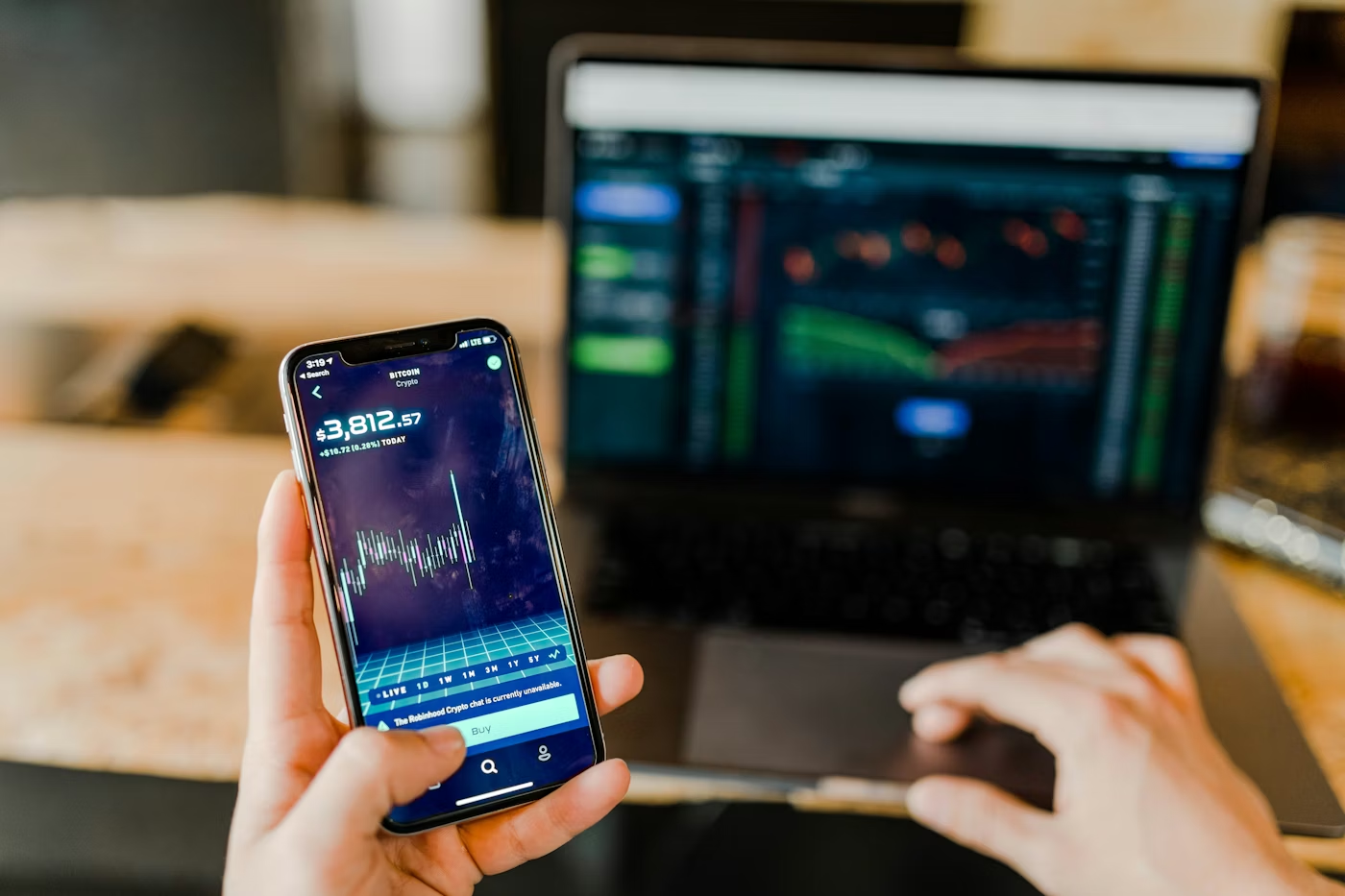
Why Chinese-speaking users tend to treat “depositing into Hong Kong stocks” and “buying Hong Kong stocks” as the same thing
In real search scenarios, users rarely ask questions with extreme precision. You will see many people directly search for “USDT buy Hong Kong stocks,” “digital currency deposit into Hong Kong stocks,” or “how to buy Hong Kong stocks without a Hong Kong card.” These expressions mix three actions together: first, where the funds come from; second, how the money enters the trading system; and third, what you ultimately hold. For most beginners, this mixing is very natural because what they really want to solve is “whether I have a way to use the money I currently hold to participate in Hong Kong stocks as soon as possible.” However, from the perspective of content judgment and risk judgment, these three questions cannot be treated as one.
It is precisely because of this that many articles may lead you to mistakenly believe: as long as digital currency appears in the path, the final result is roughly the same. In fact, it is not. Digital currency can be just a funding source, or it can directly become a certain on-chain financial product. The former is closer to traditional Hong Kong stock investment, while the latter is more like another form of obtaining Hong Kong stock price exposure.
What are real Hong Kong stock holdings and what are tokenized Hong Kong stock exposures?
If you follow the path of “first converting digital assets into fiat, then entering an account that supports Hong Kong stock trading,” the role of digital currency is mainly as a funding tool. You ultimately buy Hong Kong stocks within the securities system and hold standard securities positions in the trading account. In this logic, digital currency solves the entry threshold and fund migration, rather than replacing Hong Kong stocks themselves.
However, if you directly purchase tokenized products that map Hong Kong stock prices or rights on a certain platform, what you receive may not be Hong Kong stocks in the traditional sense but digitized products under the platform’s or structural arrangement. In its 2023 circular on tokenisation of SFC-authorised investment products, the Hong Kong Securities and Futures Commission (SFC) already clearly treats tokenisation as an arrangement that requires additional conditions and risk management. In other words, the regulator itself is reminding you: tokenisation does not automatically equal the underlying holdings in a traditional securities account.
Why you must first distinguish these two types of paths before talking about cost and speed
Many people’s first concern is “is it fast,” “are the fees high,” or “can it bypass the Hong Kong card.” These questions are certainly important, but they should come second. The first-layer question is always: what exactly did you buy, and what type of risk are you actually bearing? Because if this step is not clarified, all subsequent judgments will be off track.
For example, the same phrase “digital currency deposit into Hong Kong stocks” may result in you holding real Hong Kong stocks in a Hong Kong stock account, or it may result in you holding mapped products issued by a platform. The core risks of the former are closer to market fluctuations and traditional trading rules, while the latter may additionally stack platform, custody, liquidity, and product structure risks. For short-term participants, this difference may be ignored; but for long-term allocators, it will grow larger and larger.
What framework will this article use to help you judge?
Therefore, this article will not turn it into a simple tutorial, nor will it only list platform names. The judgment sequence more suitable for you is: first look at path classification, then look at holding structure, then look at risk and regulatory boundaries, and finally judge whether the path suits you. This sequence better matches the value of a review-style article and is closer to the information hierarchy you need in real decision-making.
You can understand this article as a “judgment framework”: it does not help you choose the most aggressive path but helps you first clearly separate “looks like Hong Kong stocks” from “actually holding Hong Kong stocks.” If you later want to see more practical paths, such as how to put Hong Kong stocks, US stocks, and digital assets into the same fund logic, you can further look at BiyaPay’s web trading portal or stock query to first understand how multi-asset accounts handle such demands.
| The Appearance You See | The Actual Possible Result |
|---|---|
| Digital currency can buy Hong Kong stocks | May be converting to fiat first then buying real Hong Kong stocks |
| Able to trade “Hong Kong stocks” within the platform | May be tokenized securities or mapped products |
| Can participate without a Hong Kong card | May rely on multi-currency accounts, international remittances, or platform closed loops |
| Seem to rise and fall in sync | Legal relationship, settlement method, and repatriation capability may not be the same |
First Look at Path Classification: Three Common Ways Asian Users “Enter Hong Kong Stocks with Digital Currency”
Path One: Convert Digital Assets to Fiat First, Then Enter an Account That Supports Hong Kong Stock Trading
This is the type of path closest to “real Hong Kong stock holdings.” Its core logic is not “directly using digital currency to buy stocks” but first treating digital assets as a funding source, then going through conversion, deposit, and other steps to enter a formal account that can trade Hong Kong stocks. At this point, what you ultimately obtain is stock holdings in the securities system, not custom mapped products within a platform.
Why is this path being discussed more and more? Because it separates two demands: digital assets solve the flexibility and starting-point issues of cross-border funds, while the Hong Kong stock account solves real trading and holding issues. For Asian users, this separation is very practical, especially when you do not have a Hong Kong bank card and do not want to rebuild a whole traditional offshore structure just to enter the market.
Path Two: Complete Hong Kong Stock-Related Fund Access Through Multi-Currency Accounts or International Remittance Tools
The keyword for this type of path is not “securities” but “bridge.” For example, Wise’s HKD account details show that the HKD account can receive funds via FPS, CHATS, and SWIFT; while IBKR’s official page also clearly states that a Wise profile can be connected to IBKR, with Wise completing currency conversion and transferring supported currencies into the IBKR account. For users, this means “not having a traditional Hong Kong card” does not equal having no alternative entry at the HKD or multi-currency level.
But here you must distinguish: multi-currency accounts and international remittance tools solve “how the money gets there,” not “you automatically own securities holdings because of it.” Treating tools as products is the first-layer misjudgment many people make.
Path Three: Directly Obtain Hong Kong Stock Price Exposure Through On-Chain or In-Platform Products
This path is attractive because it is usually expressed most simply: you do not need to think too much about account issues, do not need to first understand brokers, routing, or deposit notifications — as long as you have digital assets in hand, you may obtain some kind of Hong Kong stock price exposure within the platform. For some users, this path appears to have a lower threshold, faster pace, and smaller learning cost.
But you must realize that this type of path most easily creates the illusion of “I have already bought real Hong Kong stocks.” In reality, what you receive is likely a tokenized security, derivative mapped product, or synthetic exposure within a platform closed loop. Its economic performance may be close to Hong Kong stocks, but the underlying legal relationship, trading rules, clearing path, and counterparty risk may not be the same as real Hong Kong stock holdings.
Why the same phrase “digital currency deposit into Hong Kong stocks” can lead to completely different final results
This is the most misleading aspect of the topic. You are searching for one phrase, but in reality it covers at least three paths: digital assets as a funding source entering real Hong Kong stock accounts, multi-currency tools as intermediate bridges, and tokenized exposures within platforms. All three may be packaged as “participating in Hong Kong stocks with digital currency,” but the product forms presented to you in the end are completely different.
If you only look from the experience perspective, they all seem to help you “enter Hong Kong stocks faster.” But if you look from the perspective of holding structure and long-term usage value, their differences are very large. The more you prepare to include Hong Kong stocks in long-term asset allocation rather than a one-time short-term operation, the less you can ignore this distinction.
| Common Path | Role Digital Currency Plays | Final Holding Form |
|---|---|---|
| Convert to fiat first then deposit into securities account | Funding source | Closer to real Hong Kong stock holdings |
| Multi-currency account/remittance tool connection | Funding bridge | Depends on which account it enters later |
| Direct trading of “Hong Kong stocks” within platform | Direct participation tool | May be tokenized exposure |
If you want to put “digital asset exchange, Hong Kong stock trading, and subsequent fund flow” into one continuous experience, entrances like BiyaPay download can help you first understand from the product level what a multi-asset wallet combined with multi-market trading looks like, rather than getting stuck in a single-point tutorial.
Understanding Structural Differences: What Exactly Is the Difference Between Real Hong Kong Stock Holdings and Tokenized Exposure?

What exactly do you hold: stocks in a securities account or mapped products issued by a platform?
This may be the most critical question in the entire article. The core of real Hong Kong stock holdings is that you bought stocks within the securities trading account system. Your account, orders, executions, and holding records are ultimately connected to traditional securities trading logic. What you care about is the price of the Hong Kong stocks themselves, company fundamentals, Hong Kong stock market rules, and account services.
Tokenized exposure usually means: you hold a digitized product under a certain platform, structure, custody, or issuance arrangement. It may map a certain Hong Kong stock or attempt to pass on certain economic rights, but this does not automatically equal directly owning that stock in a traditional securities account. For users, the most dangerous thing is not not knowing, but “thinking you know.”
Are your trading and settlement completed in the traditional securities system or closed within the platform system?
Real holdings generally rely on the traditional securities market’s trading, custody, and settlement system. The trading hours, currency arrangements, execution methods, and deposit/withdrawal paths you see are all related to a formal securities service framework. This type of path may not look as “seamless,” but the rules are clear and responsibility boundaries are relatively well-defined.
In contrast, tokenized exposure is more likely to be closed within the platform. What you experience is “faster and more like an internet product,” but the platform itself takes on more structural roles: it may be the interface party, part of the issuance arrangement, or even the key node for liquidity, custody, and information disclosure. The Hong Kong SFC and HKMA have successively issued documents requiring institutions to establish additional internal controls before selling and distributing tokenised products, which itself shows that this structure is not simply “the same product in a different shell.”
Does your risk come from market fluctuations or is it also stacked with platform and structural risks?
Buying Hong Kong stocks naturally involves market fluctuation risk. But if you follow the tokenized exposure path, the risk usually does not come only from the stocks themselves. You may also face additional variables such as whether the issuance arrangement is transparent, whether the platform continues to operate, how custody and counterparty risks are controlled, whether trading liquidity is stable, and whether product information disclosure is sufficient.
In other words, real Hong Kong stock holdings are more like bearing “market + account service” risks; tokenized exposure is more like a composite of “market + platform + structure + technology” risks. For beginners, this additional stacking is often the hardest to intuitively perceive.
If you want to allocate to Hong Kong stocks long-term in the future, why will these differences be amplified?
If you only want to observe the market in the short term, some structural differences may temporarily not be obvious. But if you plan to include Hong Kong stocks in your asset allocation for the next few years, these differences will become increasingly important. You will start to care about dividend rights, long-term transparency, fund repatriation after selling, whether you can continue switching to US stocks or other assets, and whether this path can truly last for many years.
Therefore, what long-term allocators should really ask is not “which path is the coolest” but “which path is most suitable for long-term holding.” For this point, many seemingly “more advanced” solutions may not actually be more suitable for you than traditional holdings.
| Comparison Dimension | Real Hong Kong Stock Holdings | Tokenized Exposure |
|---|---|---|
| Holding Form | Stocks in securities account | Digitized products issued or arranged by platform |
| Trading System | Traditional securities trading and settlement | More likely closed within the platform |
| Risk Sources | Mainly market risk | Market risk plus stacked platform and structural risks |
| Suitable Scenarios | Long-term allocation and continuous holding | More suitable for specific strategies or phased participation |
| Fund Repatriation | More reliant on traditional account rules | Depends on platform structure and exit mechanisms |
Risk and Regulatory Boundaries: Why Hong Kong Imposes Additional Requirements on Tokenized Products
Why Hong Kong regulators particularly emphasize risk management for tokenised products
From the regulatory expression, Hong Kong is not simply opposing tokenisation. The real attitude is closer to: it can be done, but the additional risks must be clearly explained and controlled. The SFC’s circular issued in November 2023 clearly stated that it would consider allowing tokenisation of SFC-authorised investment products under certain conditions; while the HKMA’s February 2024 circular on sale and distribution of tokenised products also requires authorised institutions to establish sufficient systems, processes, and controls before selling and distributing such products.
What does this mean? It means regulators do not treat tokenised products as “exactly the same as before, just with a different technology shell.” On the contrary, the reason regulators issue separate documents is because they believe these products bring new issues outside the traditional framework.
What are the common new risks added by tokenized products?
You can understand these additional risks in four layers:
The first layer is platform and issuance arrangement risk. If you rely on a certain platform’s structural design, then the platform’s stability, operational capability, and rule transparency all become your risk sources.
The second layer is technical and operational risk. When involving on-chain wallets, transfers, addresses, and system interfaces, user errors and technical defects will be amplified.
The third layer is liquidity and exit risk. Some products look easy to buy, but the conditions for selling, exchanging, or repatriating may be more stringent.
The fourth layer is information understanding risk. You think you bought “stocks,” but in fact it is only some kind of mapping tool — this understanding gap itself can cause decision errors.
Why “being able to buy” does not equal “suitable for long-term use”
Many products can make “being able to buy” sound very attractive, but what is truly difficult is making the path still worthwhile in one year, three years, or even longer. Long-term use will expose more issues: whether your funds can flow in and out stably, whether product information is sufficiently transparent, whether you can explain this path long-term, and whether it remains smooth when expanding to more assets in the future.
Therefore, for long-term users, evaluating a path cannot be based only on the first-order experience. It is not difficult to buy in the first time; what is difficult is being able to continue using it with confidence every time afterward.
If you care about safety, traceability, and fund explanation, what should you remember most in this section?
If this section is compressed into one sentence, it is: first confirm the product structure, then talk about path efficiency. For Asian Chinese-speaking users, the sense of security often does not come from “cheapest” or “fastest” but from “I know what I bought, I know where the money came from, and I know how it will go out later.” This is also why platforms like BiyaPay, which emphasize multi-asset trading, fiat and digital asset exchange, global collections/payments, and safety review mechanisms, are more suitable to be understood in the context of “long-term funding paths” rather than “one-time speculative entries.”
What you should really pursue is not a mysterious shortcut but a path that can withstand review and is suitable for long-term use.
- First look at holding form
- Then look at trading system
- Then look at additional risks
- Finally compare speed and fees
How to Choose What Suits You Better: Judge According to Goal, Funding Source, and Usage Cycle
If what you want is “real allocation to Hong Kong stocks,” what should you prioritize?
If your goal is to hold Hong Kong stocks long-term, observe company fundamentals, and participate in more standard market trading, then you should prioritize “whether I ultimately receive real Hong Kong stock holdings.” Because this relates to all your subsequent judgments: how is the long-term transparency, whether repatriation is smooth, and whether it is suitable as part of formal asset allocation.
Such users usually should not put “can I buy in faster” first but should put “whether the holding structure is clear” first. Because the biggest fear in long-term investment is not spending a little more time but making a wrong premise judgment.
If you care more about efficiency, threshold, and flexibility, why are you easily attracted to tokenized exposure?
If you are already quite familiar with the digital asset market and are comfortable with on-chain products and platform trading, then tokenized exposure does easily attract you. It usually has three characteristics: simple expression, low threshold, and fast entry. You do not need to first deeply understand traditional brokerage accounts, international remittances, or Hong Kong stock deposit instructions — the platform folds many complex processes away.
But this kind of attraction is more suitable for users who “know what tool they are using” and not for users who “think it is no different from real Hong Kong stocks.” The former is making an active choice; the latter is being misled by surface similarity.
If you already have multi-currency funds or digital assets, which three questions should you ask yourself first?
First, do I want stock holdings or is Hong Kong stock price exposure enough?
Second, can I accept the additional risks brought by the platform or structure itself?
Third, in the future, will I need to move this money to other markets, convert it back to fiat, or put it into the same system as global collections/payments?
If among these three questions you lean more toward long-term, multi-market, and clear holdings, then you should lean toward the real holdings path. If you lean toward short-term participation and strategy testing, and understand what tokenized exposure itself is, then it is more reasonable to look at such products.
For Asian Chinese-speaking users, what is the most practical judgment sequence?
The most practical sequence is not “first find the fastest platform” but:
- First confirm what result you want
- Then confirm your current funding starting point
- Then see where this path ultimately takes you
- Finally compare efficiency, fees, and user experience
If you want to put Hong Kong stocks, US stocks, fiat exchange, and digital assets into a more complete fund framework, you can take a look at BiyaPay’s multi-asset trading logic or stock query page. You do not need to use it immediately, but at least it can help you understand: a good path does not only serve one deposit but can support more subsequent asset actions.
| User Type | What to Prioritize Looking At |
|---|---|
| People who want to hold Hong Kong stocks long-term | Real holdings, repatriation capability, transparency |
| People who want to test Hong Kong stock trends short-term | Path convenience, but must accept structural differences |
| Users who already hold USDT | First distinguish between converting to deposit or directly buying exposure |
| People with global fund scheduling needs | Long-term account system and multi-market compatibility |
Don’t Just Look at This One Deposit: Fund Repatriation and Long-Term Asset Arrangements After Hong Kong Stocks
Why using digital currency to deposit into Hong Kong stocks should not only look at “buying in”
Many people put all their attention on “how to buy in faster” when researching this topic. But if you are seriously doing asset allocation, this is only the first step of the entire process. After buying in, you will sooner or later face selling, repatriation, currency exchange, re-allocation, or even transferring funds to other markets for continued use.
A path truly worth adopting is not only responsible for sending money into Hong Kong stocks but can also remain clear, stable, and usable throughout its entire life cycle.
What different impacts will real holdings and tokenized exposure bring to subsequent fund scheduling?
If you hold real Hong Kong stock holdings, subsequent selling, HKD management, cross-currency conversion, and entering other markets are usually easier to incorporate into standardized financial paths. What you focus on is account services and asset arrangements.
If you hold tokenized exposure, subsequent scheduling relies more on the product’s own exit mechanisms, platform arrangements, and exchange capabilities. It may be usable, but it is not necessarily suitable for more complex long-term asset scheduling. Every additional action you take later will amplify this difference a little more.
If you also want to continue with US stocks, digital assets, or global collections/payments, this distinction will be even more obvious
Many Asian users research Hong Kong stocks not because Hong Kong stocks are the only destination but because they treat them as part of an entire global asset allocation chain. Today you may want to convert USDT into Hong Kong stock holdings; tomorrow you may want to convert part of the HKD into USD to allocate to US stocks, or use profits for global collections/payments and daily spending.
In this case, whether the path has “multi-asset compatibility” becomes very important. This is also why platforms like BiyaPay, which place digital asset exchange, fiat conversion, Hong Kong/US stock trading, and international collections/payments within the same product logic, are better able to support such long-term user needs rather than just one-time trading needs.
What this article wants to help you build is not just “whether you can deposit” but “how to judge whether a funding path is worth using long-term”
If the entire article is summarized in one sentence, it is: using digital currency to deposit into Hong Kong stocks is not impossible, but you must first distinguish whether you are following the “real holdings path” or the “tokenized exposure path”. Only after clearly seeing this root question do the subsequent comparisons of speed, fees, and convenience make sense.
For you, what is truly worth learning is not a single isolated trick but a set of judgment logic. Because once you learn how to judge, whether it is Hong Kong stocks, US stocks, or conversions between digital assets and fiat in the future, you will be clearer about what tool you are actually using and what risks you are bearing.
- Think about the destination of funds after selling even before depositing
- Look at long-term use first, then choose the current path
- Do not mistake “being able to buy” for “suitable for long-term holding”
- The value of a path depends on whether it can be used repeatedly
FAQ
Does using digital currency to deposit into Hong Kong stocks necessarily mean buying real Hong Kong stocks?
Not necessarily. You may first convert digital assets into fiat and then enter a formal Hong Kong stock trading account; or you may simply buy some kind of tokenized product or price mapping tool.
Can I still participate in Hong Kong stocks without a Hong Kong bank card?
It is possible. The key is not whether you have a Hong Kong card but whether the account system and funding path you use support HKD or multi-currency access. Public explanations from IBKR and Wise show that multi-currency and HKD paths do exist.
What is the biggest difference between tokenized Hong Kong stocks and real Hong Kong stocks?
The biggest difference lies in holding form and risk structure. Real Hong Kong stock holdings are closer to traditional securities account relationships; tokenized exposure usually stacks additional risks at the platform, structural, and technical levels.
Why does Hong Kong regulation particularly emphasize tokenised products?
Because in addition to market fluctuations, such products may also introduce new risks in custody, technology, internal controls, and disclosure, so both the Hong Kong SFC and HKMA require stricter risk management.
If I mainly want to hold Hong Kong stocks long-term, what should I prioritize looking at?
First look at whether you receive standard holdings, then look at fund repatriation, long-term transparency, and whether the path can be used sustainably. Speed and fees should come later.
If I also want to do multi-market allocation in the future, why is this issue even more important?
Because path choice will affect your subsequent currency exchange, repatriation, re-investment, and global collections/payments arrangements. The deposit method you choose today may determine whether your entire future asset system flows smoothly.
*This article is provided for general information purposes and does not constitute legal, tax or other professional advice from BiyaPay or its subsidiaries and its affiliates, and it is not intended as a substitute for obtaining advice from a financial advisor or any other professional.
We make no representations, warranties or warranties, express or implied, as to the accuracy, completeness or timeliness of the contents of this publication.
Related Blogs of

How to Read Pure Storage and NetApp Earnings? ARR, Cloud Revenue, Gross Margin, and Cash Flow Metrics


How Should You View Shanghai Fudan’s Non-Volatile Memory Business? Application Scenarios, Competition, and Risks


How Should You View Seagate’s HAMR Technology? Nearline HDD Capacity Upgrades and the Supply-Demand Cycle

HBM/DRAM, NAND, and HDD in AI Storage: A Comparison of Elasticity, Cycles, and Risks

Choose Country or Region to Read Local Blog
 Australia
 Austria
 Belgium
 Canada
 Cyprus
 Czech Republic
 Denmark
 Estonia
 Finland
 France
 Germany
 Greece
 Hong Kong
 India
India Indonesia
 Ireland
 Italy
Italy Japan
Japan Latvia
 Lithuania
 Luxembourg
 Malaysia
 Malta
Malta Morocco
 Nepal
Nepal Netherlands
 New Zealand
 Norway
 Pakistan
 Philippines
 Poland
 Portugal
 Romania
 Singapore
 Slovakia
 Slovenia
 South Africa
 South Korea
 Spain
Spain Sweden
 Thailand
 The United States
 Turkey
 United Arab Emirates
 United Kingdom
 Vietnam
Contact Us




BIYA GLOBAL LLC is registered with the Financial Crimes Enforcement Network (FinCEN), an agency under the U.S. Department of the Treasury, as a Money Services Business (MSB), with registration number 31000218637349, and regulated by the Financial Crimes Enforcement Network (FinCEN).
BIYA GLOBAL LIMITED is a registered Financial Service Provider (FSP) in New Zealand, with registration number FSP1007221, and is also a registered member of the Financial Services Complaints Limited (FSCL), an independent dispute resolution scheme in New Zealand.