
How to Invest in Hong Kong Stocks with HSBC in 2026: A Step-by-Step Guide





Image Source: pexels
Want to invest in Hong Kong stocks efficiently? By choosing HSBC and combining it with innovative financial tools such as BiyaPay, you can easily manage fund transfers and web-based trading. Compared with platforms like Wise and PayPal, BiyaPay has earned investors’ trust with its low transaction fees, transparent exchange rates, and fast arrival times. You can refer to the table below to understand how BiyaPay performs in the market:
| Aspect | Details |
|---|---|
| Market penetration | Supports multi-asset investing, covering Hong Kong stocks, U.S. stocks, and cryptocurrencies |
| User reviews | Low fees, easy operation, and fast settlement are widely praised by users |
| Security | Top-level encryption and biometric authentication protect account security |
In 2026, southbound capital continues to flow into the technology sector, with AI and frontier technology becoming major investment themes. You only need to download the relevant app to seize market opportunities and begin your global asset allocation journey.
Key Takeaways
- You can open an account online through the HSBC app. The process is simple, approval is fast, and there is no need to visit Hong Kong in person, saving both time and effort.
- There are multiple ways to transfer funds into a Hong Kong stock account. BiyaPay stands out for its fast arrival, low fees, and strong security, making it ideal for efficient fund movement.
- Choosing a compliant trading platform and broker, while understanding trading hours and order types, can help you seize investment opportunities and reduce risk.
- When investing in Hong Kong stocks, you need to pay attention to trading fees, exchange rate costs, and tax filing. Proper planning can improve returns and compliance.
- There are many risks involved in Hong Kong stock investing. It is recommended to diversify investments, use secure tools to protect your account and funds, and continue learning while refining your strategy.
Account Opening Process
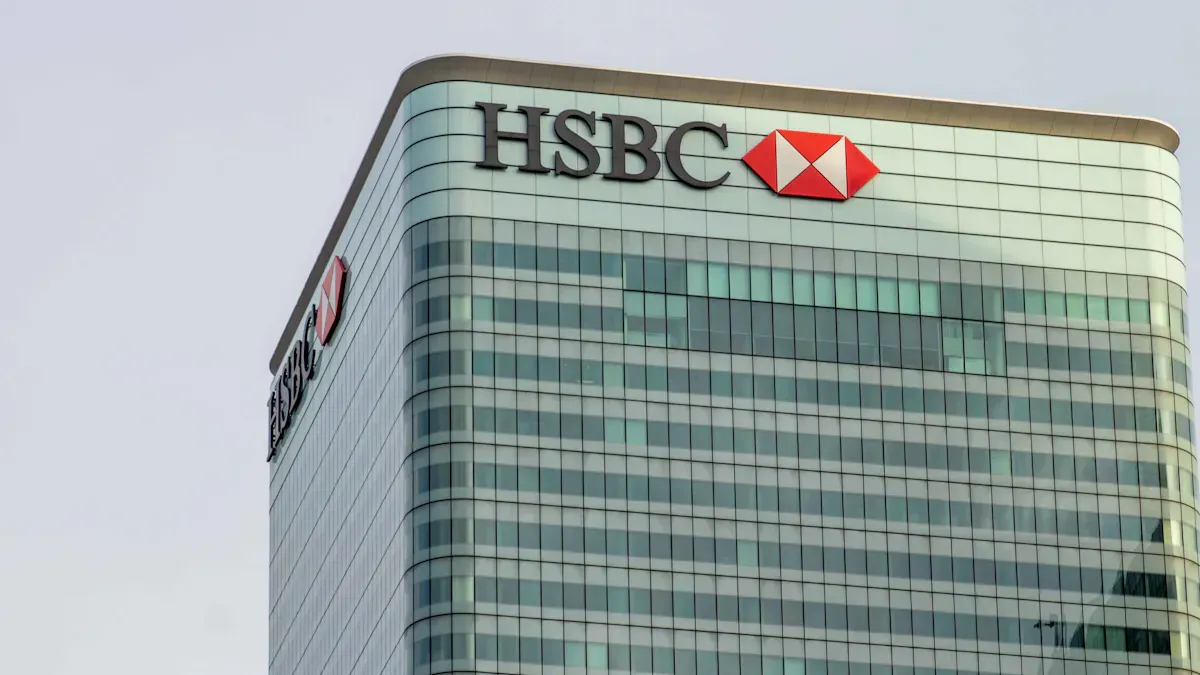
Image Source: pexels
Online Account Opening Steps
You can complete the online account opening process for an HSBC Hong Kong stock investment account directly from home. Just follow these steps:
- Download and install the HSBC Hong Kong app.
- Register for an HSBC One account and fill in your personal information and reason for opening the account.
- Verify your Mainland Travel Permit for Hong Kong and Macao and upload your immigration record.
- Wait for system review, which is usually completed within 1–2 business days.
- After the account is opened successfully, activate online banking so you can manage your Hong Kong stock investment account at any time.
Tip: You do not need to visit an HSBC branch in Hong Kong in person. You only need to go to Hong Kong for activation within 90 days, which greatly saves time and effort.
Offline Account Opening Process
HSBC has currently suspended offline account opening services. You do not need to visit a Hong Kong branch, as the online process is more efficient. Compared with traditional offline account opening, the online method is more suitable for Mainland investors, with easier operation and faster review.
Required Documents and Review
To open a Hong Kong stock investment account, you need to prepare the following materials:
- A valid original ID card (clear photo or scanned copy of both sides)
- Passport (if additional identity verification is required)
- Proof of address (utility bill or bank statement from the past three months, showing your name and address)
- Hong Kong bank card (if available)
- Mainland bank card (supports cross-border remittance)
- Signature specimen
- Tax residency declaration
The review process generally takes 1–2 business days. You can check app notifications at any time to track your progress.
Activating Your Hong Kong Stock Investment Account
Once the account opening process is complete, you can officially activate your Hong Kong stock investment account. You can invest in Hong Kong stocks through the HSBC app, online banking, and other supported channels. For fund transfers, platforms such as BiyaPay, Wise, and PayPal all support global remittance. Among them, BiyaPay focuses on speed, convenience, and security, offering fast arrival times and an easy operating process to help you allocate funds more efficiently. Choosing the right funding tool can improve your investment efficiency and help you seize new opportunities in the Hong Kong stock market.
Funding Your Account
Transferring Funds from Mainland China
You can choose from several ways to transfer funds into your HSBC Hong Kong stock account. Common methods include:
- Bank wire transfer: You need to exchange RMB into HKD in advance and fill in the account details of the Hong Kong partner bank designated by the broker. Funds usually arrive within 1–3 business days.
- Third-party payment methods (such as FPS): Funds arrive in real time, making them suitable for urgent Hong Kong stock investments.
- Bank-securities transfer (only for Hong Kong bank accounts): Transfer directly through Hong Kong online banking without using a traditional wire transfer, and settlement is usually faster.
Tip: When making a bank wire transfer, the remittance note is required, otherwise your deposit may be delayed. Third-party payments require HKD exchange in advance, while bank-securities transfers do not require a wire transfer and are easier to operate.
Foreign Exchange and Settlement Time
You can exchange RMB into HKD or USD through a Mainland bank. After the exchange, the funds can be transferred into your HSBC Hong Kong account through a wire transfer or third-party payment method. Different channels have different settlement speeds. Bank wires are relatively slower, while third-party payments are generally faster. You should choose the most suitable method based on your Hong Kong stock investment needs.
Using BiyaPay to Transfer Funds
If you are looking for a more efficient and secure fund transfer experience, BiyaPay is worth considering. BiyaPay supports global payments, international remittance, and real-time exchange between more than 30 fiat currencies and over 200 digital currencies. You can exchange USDT into USD or HKD and withdraw directly to your HSBC Hong Kong stock account.
BiyaPay operates fully online, supports full-process tracking, and charges a remittance fee as low as 0.5%. In the fastest cases, funds can arrive in real time, and even in slower cases, they typically arrive the next day. Through BiyaPay, you can also directly trade U.S. stocks, Hong Kong stocks, and digital currencies, while enjoying 0 maker fees.
BiyaPay holds financial service licenses in multiple countries and regions, including the United States, Canada, and New Zealand, and uses advanced encryption technology to protect your funds. Compared with Wise and PayPal, BiyaPay offers stronger advantages in settlement speed, supported currencies, and security. You can easily start your global asset management journey through BiyaPay or its web trading platform.
BiyaPay is built around speed, convenience, and security, helping you invest in Hong Kong stocks more efficiently and move funds with ease.
How to Invest in Hong Kong Stocks

Image Source: pexels
Choosing a Trading Platform
If you want to invest in Hong Kong stocks efficiently, the first step is choosing the right trading platform. HSBC offers a variety of options, including the HSBC Trade25 app, online banking, and counter services. You can switch flexibly between platforms according to your needs and investing habits. The table below summarizes mainstream platform features and their target users:
| Trading Platform | Features | Suitable For |
|---|---|---|
| HSBC Securities | Provides convenient securities services and is suitable for users who want integrated fund management. | Investors seeking convenience and security |
| Interactive Brokers | Offers a powerful proprietary trading platform, suitable for active traders and professional investors. | Active traders and professional investors |
You can quickly place orders through the HSBC app, check real-time market quotes, and manage your assets. If you are looking for maximum efficiency and multi-currency fund transfers, innovative financial tools such as BiyaPay, Wise, and PayPal are also worth considering. BiyaPay supports global multi-currency remittance, same-day arrival, and strong security. Wise is known for transparent exchange rates, while PayPal is convenient for small fund transfers. You can choose the platform that best fits your fund size and trading frequency.
Tip: Choose licensed brokers and banking platforms regulated by the Hong Kong Securities and Futures Commission to protect your funds and avoid unnecessary risk.
Order Placement Process
When preparing to invest in Hong Kong stocks, you need to understand the standard order placement process. The steps below will help you open an account smoothly and trade safely:
- Choose your account opening route
- You can open an account with a Hong Kong broker, which is suitable for investors with relatively smaller capital who want access to the full Hong Kong stock market.
- If your capital is at least RMB 500,000, the Stock Connect route may be more suitable, although it only allows investment in large-cap stocks.
- Prepare account opening materials
- Valid ID documents (ID card, Mainland Travel Permit for Hong Kong and Macao, or passport)
- Proof of address (utility bill or bank statement from the past three months)
- Hong Kong bank card (not required but useful for fund transfers)
- Choose an account opening method
- You can visit a Hong Kong broker’s office in person, or apply online through video witness verification or identity authentication.
- Deposit and withdrawal process
- For deposits, funds must be transferred from your Hong Kong bank account to the broker’s designated sub-account. Never transfer directly to the broker’s corporate account.
- Withdrawals can only be made to a Hong Kong bank account under your own name.
- Fees and commissions
- You need to understand broker commissions, platform fees, custody fees, and other charges. Internet brokers generally have lower fees.
- Risk reminders
- Hong Kong stocks have no daily price movement limit and can be highly volatile.
- Choose a licensed broker regulated by the Hong Kong SFC to safeguard your funds.
- Suggested process for beginners
- Assess your capital and investment goals
- Compare brokers based on account opening convenience and fees
- Open a Hong Kong bank account
- Submit your application online
- Deposit funds and start trading
You can choose the most suitable account opening and trading method based on your own capital situation and investment goals. When investing in Hong Kong stocks, it is recommended to diversify your portfolio to reduce the risk of holding a single stock. For short-term investing, pay attention to market sentiment; for long-term investing, focus on company fundamentals and profitability.
Trading Hours and Order Types
You need to understand the trading hours and order types in the Hong Kong stock market so that you can seize the best trading opportunities. The Hong Kong market is divided into multiple trading sessions, each corresponding to different types of operations:
| Trading Session | Time | Order Type |
|---|---|---|
| Pre-opening session | 9:00 - 9:30 | At-auction limit order |
| Continuous trading session | 9:30 - 12:00 | Enhanced limit order |
| 13:00 - 16:00 | Enhanced limit order | |
| Order cancellation time | 9:00 - 9:15; 9:30 - 12:00; 12:30 - 16:00 | Cancellation |
Common order types include:
- Limit orders
- At-auction limit orders
- Enhanced limit orders
You can flexibly choose order types based on market conditions and your own strategy. Since Hong Kong stocks do not have daily price movement limits and can be highly volatile, it is recommended that you manage your position sizes carefully and diversify your investments to reduce risk.
Friendly reminder: Hong Kong’s technology sector performed strongly in 2026, with AI, frontier technology, intelligent mobility, brain-computer interfaces, and AI pharmaceuticals emerging as major investment themes. Analysts believe Hong Kong tech stocks have reasonable valuations and attractive value. You can use horizontal comparison, vertical comparison, and macroeconomic analysis to evaluate target companies and build effective investment strategies. Diversifying your portfolio and tracking market trends can improve your chances of success in Hong Kong stock investing.
If you want to allocate funds more efficiently, platforms such as BiyaPay, Wise, and PayPal all support global asset management and fund transfers. BiyaPay focuses on speed, convenience, and security, supports same-day arrival and multi-currency exchange, and helps you seize opportunities in Hong Kong’s technology sector.
Fees and Taxes
Commissions and Stamp Duty
When investing in Hong Kong stocks, you must understand the basic fees involved. The Hong Kong stock market charges transaction levies and stamp duty on every trade. The table below clearly shows the main fee standards:
| Type | Rate |
|---|---|
| Transaction levy | 0.0027% of the transaction amount |
| Stamp duty | 0.13% (paid by both buyers and sellers) |
Every time you buy or sell stocks, you need to pay stamp duty, and neither side is exempt. Although the transaction levy is small, it can still affect your overall returns over time. When choosing a broker, you should also pay attention to platform commissions and custody fees. Internet brokers such as Interactive Brokers and Futu generally offer lower fees and may be better suited to frequent traders.
Exchange Rate Costs
When you exchange RMB into HKD or USD, exchange rate costs directly affect your investment cost. The calculation of exchange rate costs includes net exchange settlement and net settlement mechanisms. Actual costs are affected by the timing of settlement exchange rates, reference exchange rates, and market differences. You can use platforms such as BiyaPay, Wise, or PayPal for currency exchange and transfers. BiyaPay supports real-time exchange between multiple currencies, fast settlement, and transparent fees. Wise is known for transparent exchange rates, while PayPal is suitable for smaller transfers. Choosing flexibly based on your fund size and timing needs can help reduce exchange losses.
Tax Filing Considerations
After earning returns from Hong Kong stock investing, you need to pay attention to tax compliance. Hong Kong does not levy tax on individual capital gains, but as a Mainland investor, you still need to file annual declarations according to Chinese tax law. You should keep all trading records and fund transfer records for future tax review. It is recommended to consult a professional tax advisor to ensure accurate filing and avoid unnecessary legal risks caused by oversight.
Tip: Proper planning of fees and taxes can make your Hong Kong stock investing more efficient and your returns more stable.
Risks and Important Considerations
Types of Investment Risk
When investing in Hong Kong stocks, you must stay alert to multiple risks at all times. The Hong Kong stock market has a complex structure, and the main risks include:
- Restrictions on stock scope: Some stocks are only available to specific investor groups.
- Quota controls: Investment quotas may be limited by policy or platform rules.
- Trading day risk: Holiday arrangements differ from Mainland China, making it easy to miss trading opportunities.
- Exchange rate risk: Fluctuations between RMB, HKD, and USD directly affect returns.
- Differences in order types: Different brokers support different order types, which affects trading strategy.
- Communication failures: Network or system failures may delay or prevent trades.
- Trading restrictions on certain equity products: Some equity securities are subject to special trading rules.
- Market suspension risk: In extreme market conditions, trading may be suspended temporarily, affecting liquidity.
- Odd lot trading restrictions: Small-share transactions may be restricted and have lower liquidity.
- T+0 round-trip trading risk: Hong Kong stocks support T+0 trading, which increases volatility and risk.
- Differences in order submission rules: Order submission rules differ from those in Mainland China and can easily cause errors.
- Restrictions on IPO subscriptions: New share subscriptions may have higher thresholds and limited opportunities.
You also need to pay attention to market volatility and policy changes. For example, during the quarterly Hang Seng Index adjustment in 2025, heavyweight stocks such as Alibaba and Tencent saw significant end-of-day turnover and clear price swings. During the 2026 MSCI China Index adjustment, related stocks also showed higher volume on the effective date, with obvious technical characteristics. These events may affect your investment decisions and returns.
Investing in Hong Kong stocks requires you to closely monitor market dynamics, diversify your holdings reasonably, and avoid major losses caused by single events.
Compliance and Account Security
Account security is a key issue that cannot be ignored when investing in Hong Kong stocks. Common risks include:
- Insufficient protection of fund security. Some overseas brokers are not regulated by the China Securities Regulatory Commission, and there may be hidden risks in fund custody and settlement. In extreme cases, funds could be frozen or become difficult to recover.
- Difficulty in legally protecting your investment rights. If disputes arise, it can be difficult to defend your rights through Mainland legal channels.
You can reduce risk by choosing compliant platforms and secure tools. Third-party platforms such as BiyaPay, Wise, and PayPal each offer different advantages in fund transfers and account security. BiyaPay uses multiple verification mechanisms and advanced encryption technology, keeps user funds strictly separated from the platform’s own funds, and combines them with a robust risk control system to effectively defend against malicious attacks and abnormal transactions. Wise and PayPal also have certain security measures, but BiyaPay performs better in multi-currency support and settlement speed.
Choosing compliant and secure fund transfer tools such as BiyaPay can significantly improve account security and fund efficiency, making Hong Kong stock investing more reassuring.
After completing the full process of investing in Hong Kong stocks, you will have a clearer understanding of the key details at every step.
- You should prepare compliant documents in advance, operate step by step, plan your funds carefully, and pay attention to trading fees and exchange rate risks.
- You can flexibly choose tools such as BiyaPay, Wise, or PayPal according to your own needs to improve fund transfer efficiency.
- You need to create a scientific investment plan, manage your emotions well, and pay attention to major market themes such as AI and technology stocks.
Continuous learning and strategy optimization can help you move forward steadily in a complex market.
FAQ
How do I choose the most suitable fund transfer tool?
You can choose based on settlement speed, fees, and supported currencies. BiyaPay offers fast arrival and broad currency support. Wise is known for transparent exchange rates, while PayPal is suitable for smaller transfers. Compare platforms and choose the best fit for your needs.
What are the main documents required to invest in Hong Kong stocks?
You need to prepare identity documents, proof of address, bank cards, and tax declarations. Complete documents can speed up the review process. It is best to prepare clear photos or scans in advance.
What are the main risks of investing in Hong Kong stocks?
You may face risks such as market volatility, exchange rate fluctuations, and policy changes. Diversifying your investments, following market trends, and using secure platforms such as HSBC, BiyaPay, and Wise can help reduce risk.
How are Hong Kong stock trading hours different from A-shares?
Hong Kong stock trading is divided into morning and afternoon sessions. You need to pay attention to holiday differences and time zone arrangements to avoid missing trading opportunities. Planning ahead and placing orders flexibly can help.
How can I protect my account and funds?
You should choose regulated platforms and enable two-factor authentication. BiyaPay uses advanced encryption, while Wise and PayPal also provide security measures. Regularly checking your account can help prevent abnormal operations.
*This article is provided for general information purposes and does not constitute legal, tax or other professional advice from BiyaPay or its subsidiaries and its affiliates, and it is not intended as a substitute for obtaining advice from a financial advisor or any other professional.
We make no representations, warranties or warranties, express or implied, as to the accuracy, completeness or timeliness of the contents of this publication.
Related Blogs of

Wire Transfer Requirements: Sender and Beneficiary Details Checklist

Crypto Trading Bots: Types, Costs, and Security Risks



Choose Country or Region to Read Local Blog
 Australia
 Austria
 Belgium
 Canada
 Cyprus
 Czech Republic
 Denmark
 Estonia
 Finland
 France
 Germany
 Greece
 Hong Kong
 India
India Indonesia
 Ireland
 Italy
Italy Japan
Japan Latvia
 Lithuania
 Luxembourg
 Malaysia
 Malta
Malta Morocco
 Nepal
Nepal Netherlands
 New Zealand
 Norway
 Pakistan
 Philippines
 Poland
 Portugal
 Romania
 Singapore
 Slovakia
 Slovenia
 South Africa
 South Korea
 Spain
Spain Sweden
 Thailand
 United States
 Turkey
 United Arab Emirates
 United Kingdom
 Vietnam