How to Handle Tech Stock Pullbacks at High Levels? Use Crypto Assets and USD Long-Short Hedging to Manage Risk





Image Source: pexels
When tech stocks experience pullbacks at high levels, you need to focus on companies’ free cash flow and capital expenditures, which helps determine whether the corporate fundamentals remain solid.
- Recently, U.S. tech stock rotation has been pronounced, with some giants underperforming, AI sector enthusiasm cooling, and the market raising more questions about the substitutability of core services.
- You can improve portfolio risk resistance by diversifying investments, increasing cash or stablecoin allocations, configuring gold and crypto assets, while combining USD long-short hedging strategies.
- Diversified allocation helps cope with uncertainty in the tech industry.
Core Key Points
- Focus on companies’ free cash flow and capital expenditures to judge whether tech stock fundamentals remain solid.
- Adopt diversified investment strategies, allocate to cash, stablecoins, gold, and crypto assets to enhance portfolio risk resistance.
- Use profit-taking and position-reduction strategies to lock in gains in time and avoid losses caused by greed.
- Dynamically adjust core holdings, focus on companies’ innovation capabilities and information transparency to optimize the portfolio.
- Utilize long-short strategies in crypto assets and USD hedging tools to reduce risks brought by market volatility.
Strategies for Handling Tech Stock Pullbacks at High Levels
Image Source: pexels
Profit-Taking and Batch Position Reduction
When tech stocks pull back at high levels, you can use various profit-taking and position-reduction strategies to protect gains. Market data shows the following methods perform significantly well in actual operations:
- Percentage-based exit strategy: You can set 10%, 20%, or 30% profit targets and partially sell once reached to avoid drawdowns caused by greed.
- Trailing stop-loss method: As the stock price rises, you can dynamically adjust the stop-loss level to lock in already realized gains.
- Batch selling strategy: Gradually reduce positions at different price ranges to capture more profits while maintaining some market exposure.
- Technical analysis: You can combine chart patterns and indicators to find precise selling points.
- Support and resistance levels: When the stock price reaches strong resistance zones, it is often a natural selling opportunity.
These strategies not only help you lock in gains during tech stock pullback phases at high levels but also reduce decision-making risks caused by emotional fluctuations.
Retaining Core Holdings and Dynamic Adjustment
During high-volatility periods, you need to determine which tech stocks qualify as core assets. Retaining core holdings contributes to long-term returns, but dynamic adjustment is equally important. The table below shows the advantages of core holdings in high-tech companies and the effects of dynamic portfolio adjustment:
| Evidence Type | Specific Content |
|---|---|
| Earnings Volatility | Earnings volatility of high-tech companies is three times that of tangible assets; attention must be paid to uncertainty brought by R&D expenditure. |
| Information Transparency | High-tech companies provide more financial information through conference calls and other means, reducing specific risks. |
| Innovation Returns | More innovative companies have a higher probability of achieving excess returns in the future. |
You can prioritize retaining core holdings based on companies’ innovation capabilities and information transparency. At the same time, dynamic portfolio adjustment can effectively reduce maximum drawdown and improve the risk-return ratio. The table below shows the performance of different portfolio models during tech stock pullbacks at high levels:
| Model | Maximum Drawdown | Calmar Ratio | Portfolio Turnover Rate |
|---|---|---|---|
| MinVar | -7% | Significant improvement | 2.06 |
| MV | N/A | N/A | 9.12 |
| 60/40 Fixed Portfolio | N/A | N/A | N/A |
You can adopt low-volatility strategies (such as MinVar) to reduce losses during tech stock pullbacks at high levels while maintaining reasonable portfolio turnover.
Focus on Free Cash Flow and Capital Expenditures
During tech stock pullbacks at high levels, you need to focus on companies’ free cash flow and capital expenditures. Financial analysts typically evaluate company financial performance and industry comparisons through income statements, balance sheets, and cash flow statements. You can use this data to build financial models and forecast revenue, expenses, and profitability.
The table below shows the return comparison between cash flow-focused tech stocks and the overall index across different market cycles:
| Market Cycle | Date Range | Russell 1000 Cash Flow Focused | Russell 1000 |
|---|---|---|---|
| Post-Global Financial Crisis Recovery | 2009-03-09 – 2020-02-19 | 548% | 536% |
| Post-Financial Crisis to Covid Market Shock | 2020-03-23 – 2022-01-12 | 109% | 119% |
| Post-Covid Market Shock to 2022 Market Shock | 2022-10-12 – 2025-02-19 | 88% | 77% |
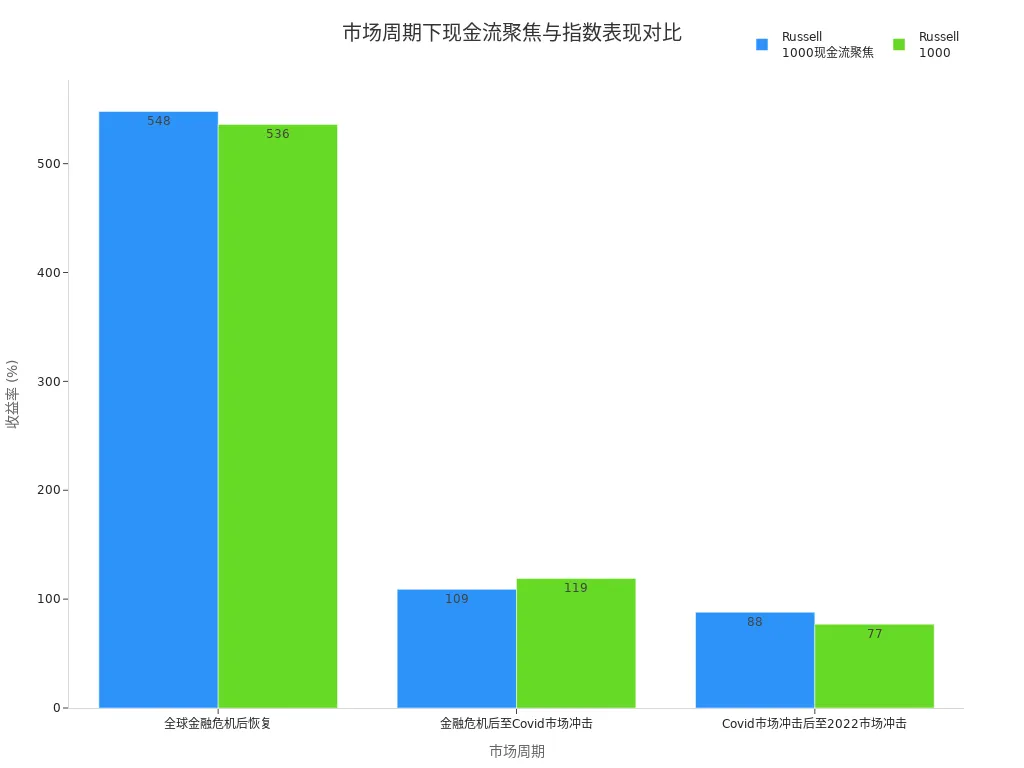
You can see that tech stocks with ample cash flow perform more steadily during market pullbacks. Companies with reasonable capital expenditures can usually continue innovating and withstand industry cyclical fluctuations. Analysts also pay attention to Material Risk Indicators (MRI) to identify ESG risks and opportunities, helping you determine future priority investment areas.
Tip: You can allocate 5% of funds to cash or stablecoins (such as USDT, USDC) to enhance liquidity and defensive capabilities. Diversifying the portfolio and appropriately allocating gold helps reduce non-systematic risk. Gold performs stably during periods of market stress in the U.S., effectively dispersing losses caused by tech stock pullbacks at high levels.
Through the above strategies, combined with fundamental analysis of companies and multi-asset allocation, you can scientifically respond to tech stock pullbacks at high levels and improve portfolio risk resistance.
Hedging Risk with Crypto Assets

Image Source: pexels
Introduction to Long-Short Strategies
You can use long-short strategies in crypto assets to hedge risks brought by tech stock pullbacks at high levels. Mainstream hedging tools include futures contracts, options contracts, and perpetual swaps.
- Futures contracts allow you to buy or sell cryptocurrencies at a predetermined price on a future date, suitable for locking in price fluctuations.
- Options contracts give you the right (but not the obligation) to buy or sell cryptocurrencies at a specific price within a certain period, offering greater flexibility.
- Perpetual swaps have no expiration date, allowing you to hold hedging positions indefinitely, suitable for long-term risk management.
These strategies can help reduce portfolio volatility during periods of market stress, but note that during market shocks, the correlation between crypto assets and stocks increases, weakening diversification effects. Bitcoin long-short strategies perform poorly in risk-adjusted metrics, with large drawdowns, indicating that technical, sentiment, or momentum signals cannot fully protect the portfolio.
Choosing Suitable Crypto Assets
You need to select hedging-appropriate coins based on cryptocurrency attributes, blockchain type, consensus mechanism, team background, whitepaper, source code, historical security incidents, wallet distribution, liquidity, and legal review.
- Evaluate the effectiveness of coins as hedging tools, using variance-optimal hedging frameworks to analyze mainstream coins such as BTC, ETH, BNB, ADA, XRP.
- Pay attention to new features introduced by developers in whitepapers or GitHub pages to identify potential future changes and enhancements.
- Study the hedging effects of cryptocurrencies in different market environments, especially the conditional probability of Bitcoin in reducing volatility.
| Asset Class | Annualized Volatility | Average Weekly Return | Weekly Sharpe Ratio |
|---|---|---|---|
| Cryptocurrency | 55% | >1% | Similar to stocks |
| Tech Stocks | About 14% | <0.3% | Similar to cryptocurrency |
You can see that crypto asset volatility is much higher than tech stocks; allocation ratios are recommended to be controlled at 5%-10% to avoid excessive risk exposure.
Practical Recommendations and Risk Warnings
When implementing crypto asset hedging strategies, you need to assess your own risk tolerance and choose suitable hedging tools and coins.
- Closely monitor market trends to determine the best entry and exit points for hedging positions.
- Control trading frequency to avoid over-hedging and increased transaction costs.
- Consider transaction fees and margin requirements in risk assessment, as these costs affect overall profitability.
Tip: When using futures and options for cryptocurrency hedging, be vigilant about market risk, liquidity risk, operational risk, and regulatory risk. Ignoring market dynamics or transaction costs may erode profits. You can conduct cryptocurrency trading and fund management through compliant platforms such as BiyaPay to improve security and liquidity.
You can reasonably utilize crypto asset long-short strategies in combination with asset allocation during tech stock pullbacks at high levels to enhance portfolio risk resistance.
USD Long-Short Hedging
USD Index and Investment Tools
During tech stock pullbacks at high levels, you often pay attention to changes in the US Dollar Index (US Dollar Index). The USD Index reflects the strength of the dollar relative to a basket of major currencies. Typically, when global risk sentiment deteriorates, the USD Index appreciates because investors view the dollar as a safe-haven asset. For example, historical data shows that during global risk-aversion events, funds often flow into the dollar and U.S. Treasuries. However, in April 2025, an exception occurred: despite rising risk perception, the dollar depreciated while the euro strengthened. This reminds you that the dollar does not remain strong under all market stress conditions.
You can participate in USD long-short hedging through various investment tools, including forex futures, currency ETFs, foreign currency savings accounts, gold, commodities, cryptocurrencies, etc. The table below summarizes common USD hedging tools and their characteristics:
| Tool Type | Main Features | Applicable Scenarios |
|---|---|---|
| Forex Futures | High leverage, strong liquidity | Short-term hedging |
| Currency ETFs | Easy to trade, diversified risk | Medium- to long-term allocation |
| Gold | Inflation hedge, safe-haven properties | When market volatility intensifies |
| Cryptocurrency | Decentralized, high volatility | Diversified allocation |
| Foreign Currency Accounts | Direct holding of foreign currency, high flexibility | Long-term asset allocation |
Long-Short Hedging Operation Methods
You can achieve USD long-short hedging through the following steps:
- Diversified investment: Allocate part of assets to stocks or bonds denominated in other currencies such as euro and yen to reduce single-currency USD risk.
- Gold and commodities: Invest in gold and other commodities as hedging tools during USD depreciation.
- Cryptocurrency: Appropriately allocate Bitcoin and other crypto assets as a supplement for value storage.
- Foreign currency accounts: Open foreign currency savings accounts to directly hold euro, yen, etc.
- International real estate: Invest in real estate outside the United States to diversify currency risk.
- Stocks benefiting from a weak dollar: Focus on export-oriented or multinational companies, which have stronger profitability when the dollar weakens.
You can flexibly choose combinations of the above methods based on your risk preference and investment horizon.
Key Points of Risk Management
When conducting USD long-short hedging, you need to closely monitor international market changes and adjust USD positions in a timely manner. Investors usually increase the currency hedging ratio of USD-denominated assets during changes in global economic conditions to cope with exchange rate fluctuations. During the cross-asset sell-off in April 2025, U.S. Treasuries failed to provide the expected stability, leading global investors to increase USD currency hedging ratios.
You should also pay attention to the following risk management points:
- Regularly evaluate the currency exposure of the portfolio to prevent excessive single-currency risk.
- Combine market liquidity and transaction costs to reasonably select hedging tools.
- Maintain portfolio diversification and avoid over-concentration in any single asset class.
- Pay attention to policy changes and geopolitical risks, and adjust hedging strategies in a timely manner.
Through scientific management of USD long-short hedging, you can effectively reduce the impact of exchange rate fluctuations on assets in complex market environments such as tech stock pullbacks at high levels and improve overall portfolio resilience.
Asset Allocation During Tech Stock Pullbacks at High Levels
Asset Allocation Recommendations
During tech stock pullbacks at high levels, you need to build a diversified asset portfolio to reduce risks from single assets. Joint allocation of tech stocks, crypto assets, USD, and gold can improve overall resilience. You can refer to asset distributions for different investor types and scientifically formulate investment plans based on your own risk preference.Within this kind of multi-asset hedging framework, the execution path itself also affects risk control. Many users separate “checking markets, switching assets, and rebalancing positions,” which often increases friction and operating error. A product such as BiyaPay, positioned as a multi-asset trading wallet, is easier to understand from a unified allocation perspective, where payments, trading, and fund management can be handled in a more continuous workflow.
If you first need to judge whether tech stocks still deserve allocation, you can begin with stock information lookup, then move into the trading entry according to your portfolio rhythm. For users switching among USD, HKD, and digital assets, that review-first, execute-second structure is usually more helpful for controlling drawdowns and maintaining liquidity.
| Investor Type | Stocks | Bonds | Other Investments | Cryptocurrency |
|---|---|---|---|---|
| Conservative | 50% | 35% | 10% | 5% |
| Moderate | 55% | 25% | 5% | 15% |
| Aggressive | N/A | N/A | N/A | 15-25% |
You can see that conservative investors keep cryptocurrency allocation at 5%, while moderate and aggressive investors appropriately increase the proportion. Gold and USD assets as part of “Other Investments” can effectively hedge fluctuations caused by tech stock pullbacks at high levels. When allocating assets, it is recommended to combine the actual situation of the U.S. market and avoid excessive concentration in any single sector.
Multi-asset portfolios outperform single-asset portfolios during crises. The table below shows performance differences of multi-asset funds during tech stock pullbacks at high levels:
| Portfolio Type | Performance Difference During Crisis (Monthly) | Annualized Performance Difference (%) | Statistical Significance |
|---|---|---|---|
| Multi-Asset Equity Funds | 0.6676% | 8.01% | 5% |
| Multi-Asset Funds Overall | 0.4307% | 5.17% | Significant |
You can enhance portfolio risk resistance and long-term returns through diversified allocation. Gold, USD, and crypto assets perform stably during periods of U.S. market stress and can effectively disperse losses caused by tech stock pullbacks at high levels. You can also use global payment platforms such as BiyaPay to achieve real-time exchange between crypto assets, USD, and HKD, optimizing fund liquidity and asset allocation efficiency.
Tip: When allocating assets, it is recommended to allocate part of funds to gold and USD to enhance defensive capabilities. Cryptocurrency allocation is suggested to be controlled at 5%-15% to avoid excessive exposure to high volatility risk. You can flexibly adjust the proportions of tech stocks, bonds, and other assets based on your own risk tolerance.
Dynamic Adjustment Under Market Environments
During tech stock pullbacks at high levels, you need to dynamically adjust asset allocation according to changes in market environment. Asset correlations rise significantly during crises, potentially rendering traditional diversification strategies ineffective. The table below shows correlations of different asset classes before and after market environment changes:
| Asset Class | Correlation Before Market Environment Change | Correlation After Market Environment Change |
|---|---|---|
| Global Stocks | 7% | 76% |
| Bonds | 7% | 76% |
| Real Estate | 7% | 76% |
| Commodities | 7% | 76% |
You can see that after market environment changes, asset correlations increase substantially, weakening the effect of traditional diversified investment strategies. You need to adopt dynamic adjustment strategies, promptly reduce exposure to risk assets, and increase allocations to cash, gold, and USD assets. Volatility management strategies can effectively and at low cost overcome diversification failures. In declining markets, momentum strategies that sell risk assets provide left-tail diversification, helping you avoid extreme losses.
You can also use derivatives such as futures and options to enhance hedging and arbitrage strategies. Futures and options allow you to lock in prices, hedge market risks, and protect portfolios from adverse price movements. You can use options in volatile markets to protect large holdings of tech stocks and prevent price declines. Derivatives provide tools for risk hedging, enhance returns, and enable efficient portfolio management. They offer flexibility and arbitrage opportunities, promoting market efficiency.
- Futures and options tools can help you lock in prices of tech stocks, crypto assets, and gold, reducing losses from market volatility.
- During periods of U.S. market stress, you can use options to protect core tech stock holdings and improve portfolio resilience.
- Dynamic asset allocation combined with derivative strategies can effectively respond to tech stock pullbacks at high levels and market environment changes.
Note: When using futures and options, pay attention to transaction costs, liquidity, and margin requirements. It is recommended to perform real-time exchange of crypto assets and USD through compliant platforms (such as BiyaPay) to enhance fund security and liquidity. You also need to regularly assess portfolio risk and adjust asset allocation in a timely manner to ensure investment objectives match the market environment.
Through diversified asset allocation and dynamic adjustment strategies, you can scientifically respond to tech stock pullbacks at high levels and improve portfolio risk resistance and long-term returns.
When tech stocks pull back at high levels, you should combine multi-dimensional strategies such as fundamental analysis, diversified allocation, crypto assets, and USD long-short hedging. Tech stocks are highly volatile, and high valuations carry both risks and opportunities. You can refer to the table below to understand the advantages of multi-strategy combinations:
| Evidence Source | Argument |
|---|---|
| Multi-Strategy Hedge Funds: An Overview | Multi-strategy hedge funds optimize risk management and return potential, reducing dependence on a single market. |
- Understand personal financial goals, assess risk tolerance, and regularly adjust the portfolio.
- Diversified investment and flexible response to market changes help achieve long-term steady growth.
FAQ
What is the recommended allocation ratio for cash and stablecoins during tech stock pullbacks at high levels?
You can allocate 5%-15% of funds to cash or stablecoins (such as USDT, USDC) to enhance liquidity and defensive capabilities in response to market uncertainty.
How to choose coins when hedging tech stock risk with crypto assets?
You should prioritize mainstream coins with strong liquidity and high transparency, such as BTC and ETH. You also need to pay attention to the historical volatility and market depth of the coins to avoid liquidity risks from niche coins.
Which investors is the USD long-short hedging strategy suitable for?
If you focus on global asset allocation or hold large amounts of non-USD assets, you can adopt USD long-short hedging strategies. This helps reduce the impact of exchange rate fluctuations on the portfolio.
How to use BiyaPay to optimize asset allocation and liquidity?
You can achieve real-time exchange between crypto assets, USD, and HKD through BiyaPay. You can also utilize its global payment and fund management services to improve asset liquidity and cross-border fund efficiency.
What issues should be noted in asset allocation during drastic market environment changes?
You need to regularly assess asset correlations and risk exposure. You should also promptly adjust allocations to cash, gold, and USD assets, use futures and options tools for risk hedging, and protect portfolio safety.
*This article is provided for general information purposes and does not constitute legal, tax or other professional advice from BiyaPay or its subsidiaries and its affiliates, and it is not intended as a substitute for obtaining advice from a financial advisor or any other professional.
We make no representations, warranties or warranties, express or implied, as to the accuracy, completeness or timeliness of the contents of this publication.
Related Blogs of

How Do AI Servers Drive Storage Demand? The Roles of HBM, Server DRAM, Enterprise SSDs, and HDDs


How Should SSDs and HDDs Work Together in AI Data Centers? Performance, Capacity, Cost, and Hot vs. Cold Data Compared

Is SMIC 0981.HK a Memory Chip Stock? The Relationship Between Foundry Manufacturing and the Memory Supply Chain


AI Storage Supply Chain Map: Chips, HDDs, SSDs, Packaging Equipment, and Enterprise Storage Systems

Choose Country or Region to Read Local Blog
 Australia
 Austria
 Belgium
 Canada
 Cyprus
 Czech Republic
 Denmark
 Estonia
 Finland
 France
 Germany
 Greece
 Hong Kong
 India
India Indonesia
 Ireland
 Italy
Italy Japan
Japan Latvia
 Lithuania
 Luxembourg
 Malaysia
 Malta
Malta Morocco
 Nepal
Nepal Netherlands
 New Zealand
 Norway
 Pakistan
 Philippines
 Poland
 Portugal
 Romania
 Singapore
 Slovakia
 Slovenia
 South Africa
 South Korea
 Spain
Spain Sweden
 Thailand
 The United States
 Turkey
 United Arab Emirates
 United Kingdom
 Vietnam
Contact Us




BIYA GLOBAL LLC is registered with the Financial Crimes Enforcement Network (FinCEN), an agency under the U.S. Department of the Treasury, as a Money Services Business (MSB), with registration number 31000218637349, and regulated by the Financial Crimes Enforcement Network (FinCEN).
BIYA GLOBAL LIMITED is a registered Financial Service Provider (FSP) in New Zealand, with registration number FSP1007221, and is also a registered member of the Financial Services Complaints Limited (FSCL), an independent dispute resolution scheme in New Zealand.