- More
- Download
Funds Cannot Return to China After Selling US Stocks? Use a Multi-Currency Wallet Supporting Fiat Instant Exchange to Safely Realize Profits





Image Source: unsplash
You may have found that funds being unable to return to China after selling US stocks has become a real challenge faced by many investors. The United States has recently strengthened restrictions on financial ties with China, and cross-border investment flows are under strict control, with some companies even facing the risk of delisting from US securities exchanges. Traditional repatriation channels are clearly affected by policy, making capital flows more complex. You can consider using a multi-currency wallet that supports fiat instant exchange to enable safe, compliant, and efficient fund repatriation, reducing risks brought by policy uncertainty.
Key Points
- After selling US stocks, funds returning to China face foreign exchange controls and policy restrictions; carefully choose the method of capital circulation.
- Multi-currency wallets help you manage multiple currencies, reduce the risk of single-currency fluctuations, and improve capital flow efficiency.
- The fiat instant exchange function allows you to quickly exchange different fiat currencies within the wallet, avoiding the cumbersome processes of traditional banks.
- Choose compliant wallet service providers to ensure fund safety and compliance, reducing regulatory risks.
- Pay attention to policy changes, reasonably arrange capital flows, and ensure every step of the operation is conducted within the compliance framework.
Reasons Why Funds Cannot Return to China After Selling US Stocks
Foreign Exchange Controls and Capital Flow Restrictions
When funds cannot return to China after selling US stocks, you first encounter China’s strict foreign exchange controls. In recent years, China has continuously strengthened management of cross-border capital flows, with stricter foreign exchange policies to be implemented on January 1, 2026. The main measures include:
- Banks are required to retain transaction records for 10 years and conduct identity verification for transfers exceeding USD 700.
- The individual annual foreign exchange purchase quota of USD 50,000 will be strictly enforced.
- Banks have introduced facial recognition technology to enhance identity verification security.
- Although foreign-invested enterprises can convert capital account foreign currency into RMB, the State Administration of Foreign Exchange may adjust limits based on the international balance of payments situation.
These policies directly affect your ability to smoothly repatriate funds after cashing out US stocks. Even though some policies have been relaxed recently — such as reducing the negative list for capital account income and expanding facilitation measures for foreign individuals purchasing property — the overall trend remains focused on preventing capital outflows. If capital outflow pressure increases in the future, relevant controls may tighten again.
Limitations of Traditional Repatriation Channels
You may consider returning funds through traditional channels, but these methods have obvious limitations. Common channels and their main restrictions are as follows:
| Channel | Main Limitations |
|---|---|
| Dividend Distribution | Must first cover losses and statutory reserves; the process is complex and approval is strict. |
| Service Fee Payment | Large service fees require commercial substance and are subject to strict review by tax and foreign exchange authorities to prevent improper capital outflows. |
In addition, traditional channels involve cumbersome operational processes, requiring preparation of multiple documents and approvals. For example, you need to hire an accountant to prepare relevant forms, and bank review cycles typically last 7–15 business days; if documents are incomplete, the time may extend to more than 30 days. High service fees and long waiting times further exacerbate the real dilemma of funds being unable to return to China after selling US stocks.
Multi-Currency Wallet and Fiat Instant Exchange Solutions
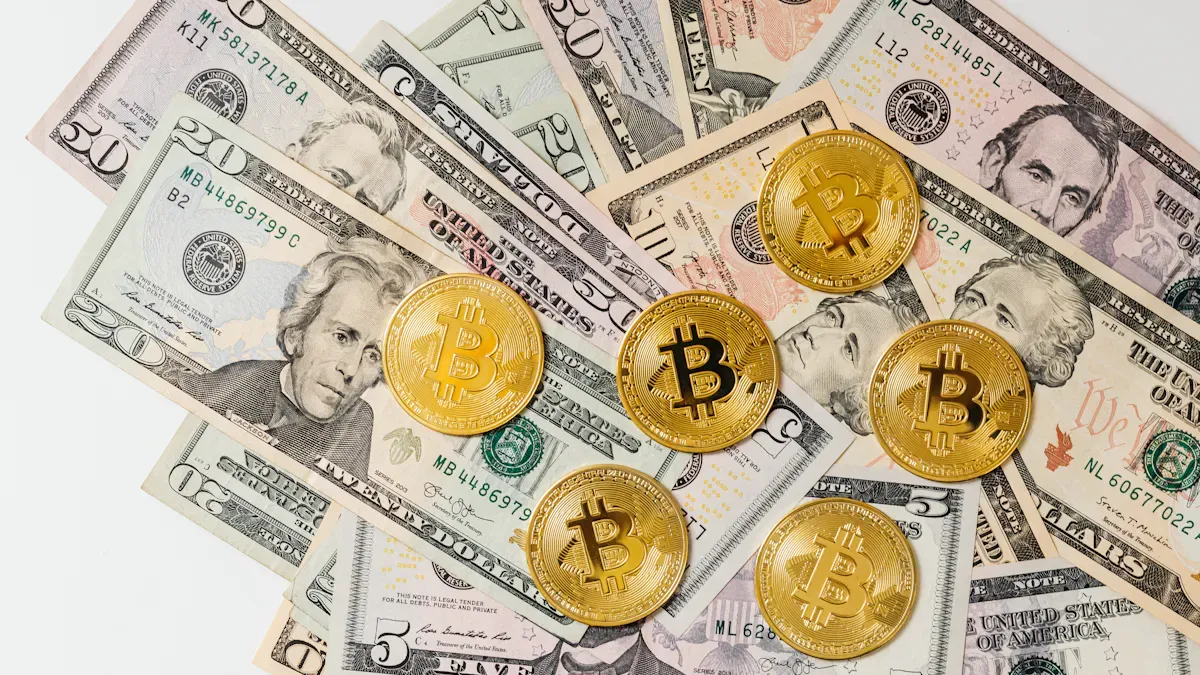
Image Source: pexels
Functions and Advantages of Multi-Currency Wallets
When facing the problem of funds being unable to return to China after selling US stocks, you can choose a multi-currency wallet as a new tool for capital management and cross-border circulation. Multi-currency wallets have the following core functions and advantages:
- Asset diversification: You can hold multiple fiat currencies (such as USD, HKD, SGD, etc.) in the same wallet, achieving asset diversification and reducing risks from fluctuations in a single currency.
- Simplified management: You only need one account to manage assets in all currencies, easily view balances and transaction records, and reduce errors caused by multi-platform operations.
- Cost-effectiveness: Multi-currency wallets usually offer more competitive exchange rates, reducing handling fees for cross-border transfers and exchanges. For example, some wallets support low-cost exchange between USD and HKD, SGD, etc., helping you save on capital circulation costs.
- Enhanced security: You can protect account security through two-factor authentication, encryption protocols, and other multi-layered security measures to prevent asset theft or misuse.
- Accessibility and convenience: Mobile apps allow you to manage and schedule funds anytime and anywhere, whether in the United States, Hong Kong, or Singapore, enabling efficient capital operations.
When choosing a multi-currency wallet, focus on the following aspects:
| Selection Factor | Description |
|---|---|
| Security | Whether it adopts advanced encryption technology, two-factor authentication, and complies with international security standards (e.g., PCI DSS). |
| Fees | Compare cross-border transaction fees, exchange rates, and withdrawal fees across different wallets and choose the lowest-cost provider. |
| User Experience | Whether the wallet interface is friendly, operations are convenient, and it supports multiple payment methods (e.g., bank wire, credit card, digital currency, etc.). |
| Compliance | Whether it holds relevant financial licenses and complies with regulatory requirements in the United States, Hong Kong, Singapore, etc. |
Many global payment platforms are also equipped with real-time fraud detection and monitoring systems, further enhancing fund security. You can compare rates and services across different providers to select the wallet tool best suited to your needs.
Principles of Fiat Instant Exchange
Fiat instant exchange refers to the ability to achieve real-time exchange and settlement between different fiat currencies within a multi-currency wallet. Its underlying mechanisms mainly include the following aspects:
- The multi-currency wallet itself supports storage and management of multiple currencies, simplifying cross-currency transaction processes.
- You only need a few clicks within the wallet to complete exchanges, deposits, withdrawals, and transfers between USD, HKD, SGD, etc., without waiting for lengthy traditional bank reviews.
- Transaction processing time is significantly shortened, usually completed in seconds to minutes, greatly improving capital flow efficiency.
- You can send and receive funds instantly, meeting diverse needs such as cross-border payments, investment repatriation, etc.
Major financial markets such as Singapore and Hong Kong impose strict regulation on fiat instant exchange services. For example, the Monetary Authority of Singapore requires stablecoin issuers to complete redemptions by the next business day, while the Hong Kong Monetary Authority requires completion within five business days and continuously monitors secondary market activities to ensure market transparency and compliance.
When using fiat instant exchange services, prioritize wallet providers licensed in Hong Kong, Singapore, and other regions. For example, some wallets support real-time exchange between USD and HKD, SGD, etc., and cooperate with Hong Kong licensed banks to ensure safe and compliant settlement. You should also pay attention to exchange rates and fees across different wallets and choose the optimal solution to improve fund repatriation efficiency.
In this type of workflow, the value of the tool is not just completing one exchange. More importantly, it helps place post-sale fund receipt, conversion, and onward transfer into one clearer path. You can first review multi-currency fund management through the BiyaPay website, then use its exchange rate converter to assess real-time conversion costs between currencies such as USD and HKD. If cross-border payout or family fund arrangements are needed afterward, its remittance service can also be included in the settlement plan.
As a multi-asset wallet, BiyaPay is better suited here as a supporting layer within the fund repatriation process, covering payment, trading, and fund-management scenarios, and operating with relevant compliance registrations in jurisdictions including the United States and New Zealand. The practical advantage is keeping conversion, transfer, and record management more coherent instead of switching repeatedly across separate channels.
Fiat instant exchange not only increases the speed and flexibility of capital flows but also helps you avoid the cumbersome processes and high costs of traditional channels. You can flexibly select exchange currencies and withdrawal methods based on your needs to achieve efficient and secure fund repatriation.
Fund Transfer and Fiat Instant Exchange Process
Steps to Transfer US Stock Funds into the Wallet
When funds cannot return to China after selling US stocks, you can achieve efficient capital circulation through a multi-currency wallet. The following are typical operation steps:
- Withdraw funds from US brokerage account
You first need to withdraw funds from your US brokerage account to a personal overseas bank account. Most US brokerages support wire transfer (Wire Transfer), usually arriving in 1–3 business days. You need to confirm the brokerage’s withdrawal policy and handling fees in advance (generally USD 25–50). - Receive funds in overseas bank account
You can choose licensed banks in Hong Kong, Singapore, etc., as receiving accounts. For example, Hong Kong licensed bank accounts support multi-currency receipts, facilitating subsequent operations. You must ensure account information is filled in accurately to avoid funds being returned due to errors. - Transfer funds into multi-currency wallet
You can transfer funds from the overseas bank account to the multi-currency wallet via bank transfer (SWIFT or local transfer). For example, BiyaPay supports deposits in USD, HKD, and other currencies, usually arriving in 1–2 business days. You need to generate a dedicated receiving account in the wallet to ensure funds arrive safely. - Confirm funds in wallet
You can check arrival status in real time within the wallet. Some wallets support arrival SMS or app push notifications, improving capital management efficiency.
Tip: You should keep all transfer vouchers and transaction records throughout the process for subsequent compliance verification and capital tracing.
Fiat Instant Exchange and Withdrawal Process
After completing fund deposit, you can use the fiat instant exchange function to achieve real-time exchange between multiple currencies and safely withdraw funds. The specific process is as follows:
- Select exchange currency
Within the multi-currency wallet, choose the currency you need to exchange. For example, if you hold USD, you can choose to exchange to HKD or SGD. Some wallets like BiyaPay support real-time rate queries to help you select the best exchange timing. - Initiate instant exchange
Enter the exchange amount; the system automatically displays the current rate and estimated arrival amount. After confirmation, submit the exchange request, usually completed in seconds to minutes. - Fund settlement and arrival
After completing the instant exchange, funds are automatically transferred to the target currency account. You can choose to keep them in the wallet or initiate withdrawal. During withdrawal, bind the receiving bank account (e.g., Hong Kong licensed bank), enter the withdrawal amount, and confirm. Most wallets support arrival within 1–2 business days, and some offer real-time arrival. - Compliance review and risk control
During withdrawal, some wallets conduct identity verification (KYC) and source-of-funds review according to regulatory requirements. You must truthfully fill in personal information and upload relevant proof materials to ensure compliant capital flows. Avoid using informal channels or evading regulation to prevent funds from being frozen or generating legal risks.
| Step | Key Points | Estimated Time | Fee Range (USD) |
|---|---|---|---|
| US brokerage withdrawal | Fill in accurate information, note fees | 1–3 business days | 25–50 |
| Bank arrival | Choose licensed bank, verify account info | 1–2 business days | 0–20 |
| Wallet deposit | Generate dedicated account, real-time arrival alert | 1–2 business days | 0–10 |
| Fiat instant exchange | Real-time rate, completed in seconds | Seconds–minutes | 0.1%–0.5% |
| Wallet withdrawal | Bind bank account, compliance review | 1–2 business days | 10–30 |
Note: Throughout the entire process, prioritize wallet providers licensed in Hong Kong, Singapore, and other regions to ensure fund safety and compliance. Avoid operating through informal channels to prevent unnecessary risks from violating foreign exchange controls.
Through the above process, you can efficiently and safely achieve fund repatriation, circumventing policy barriers that prevent funds from returning to China after selling US stocks. You should emphasize compliance in every step, retain relevant vouchers, and ensure smooth and worry-free capital flows.
Security and Compliance Analysis
Fund Security Safeguards
When conducting cross-border capital flows, your greatest concern is fund security. Multi-currency wallets adopt multiple security technologies to ensure your assets are fully protected during transfers and storage. You can experience the following security measures:
- Multi-factor authentication (2FA) effectively prevents account theft.
- Biometric access, such as fingerprint or facial recognition, enhances account exclusivity.
- Encryption protocols secure data transmission and storage.
When using mainstream multi-currency wallets such as BiyaPay, these security technologies have become standard configurations. You can also use the wallet’s real-time monitoring function to stay aware of account activity at any time and detect abnormal operations immediately. In the context of funds being unable to return to China after selling US stocks, choosing a wallet with high security standards helps reduce risks of theft or misuse.
Compliance Risk Prevention
When conducting cross-border capital operations, you must emphasize compliance risks. Multi-currency wallets strictly comply with international compliance requirements such as anti-money laundering (AML) and know your customer (KYC). During account opening and capital flows, you usually undergo identity verification, transaction monitoring, and suspicious activity reporting. The table below shows compliance measures of mainstream wallets:
| Compliance Measure | Description |
|---|---|
| Identity Verification | Ensures the authenticity of user identity |
| Transaction Monitoring | Monitors transactions to identify suspicious activities |
| Suspicious Activity Reporting | Reports suspicious transactions to regulatory authorities |
| Regular Audits and Regulatory Communication | Ensures ongoing compliance and maintains contact with regulators |
In actual operations, you will also encounter complex regulatory requirements involved in cross-border payments, including AML, KYC, sanctions screening, and foreign exchange controls. You can improve compliance efficiency and reduce violation risks by choosing wallets that adopt automated compliance tools and regulatory technology (RegTech) solutions. You should continue to monitor regulatory changes in different countries, reasonably arrange capital flows, and ensure every step of the operation is conducted within the compliance framework.
Advantages of the Solution for Funds Unable to Return to China After Selling US Stocks
Applicable Scenarios
When dealing with the issue of funds being unable to return to China after selling US stocks, you often face various practical needs. Multi-currency wallets and fiat instant exchange solutions are suitable for the following typical scenarios:
- You need to flexibly transfer cash proceeds from US stocks to Hong Kong, Singapore, etc., avoiding time and quota restrictions of traditional banks.
- You want to quickly exchange between different currencies to reduce losses caused by exchange rate fluctuations.
- You have needs for cross-border payments, family remittances, overseas investment, etc., and need to control capital flows at any time.
- You value fund arrival speed and transparency, avoiding delays due to bank holidays or non-business hours.
Multi-currency wallets such as BiyaPay support multi-currency management and real-time exchange, helping you efficiently schedule funds globally. You can select the optimal currency and withdrawal path based on your needs to improve capital utilization efficiency.
Multi-currency wallets support multiple payment methods, allowing you to operate in your preferred currency and improve overall payment experience. You can see arrival amounts in real time, avoiding unexpected fees.
Comparison Between Multi-Currency Wallets and Traditional Channels
When choosing a fund repatriation tool, focus on core factors such as transaction speed, fees, and user satisfaction. The table below compares the main differences between multi-currency wallets (e.g., BiyaPay) and traditional bank channels:
| Comparison Factor | Multi-Currency Wallet and Instant Exchange Solutions | Traditional Bank Channels |
|---|---|---|
| Transaction Speed | Faster, usually seconds to minutes | Slower, often 1–3 business days, longer during holidays |
| Fees | Lower, more competitive rates, transparent fees | Higher, may include hidden fees and unfavorable rates |
| User Satisfaction | Higher, convenient operation, good mobile support | Lower, cumbersome process, slow service response |
When using a multi-currency wallet, you can better control currency fluctuation impact during transactions. You do not need to worry about bank business hour restrictions; funds can arrive anytime, especially advantageous in high-volume or cross-border payment scenarios. Transactions initiated on weekends, holidays, or outside business hours in traditional banking systems are usually delayed until the next business day, affecting your capital flow efficiency.
- Multi-currency wallets support multi-currency management, facilitating international transactions.
- You can access accounts anytime via mobile apps, improving capital scheduling flexibility.
- You can see arrival amounts in real time, avoiding unexpected fees.
In the context of funds being unable to return to China after selling US stocks, choosing multi-currency wallets and fiat instant exchange solutions can significantly improve the speed and security of fund repatriation, meeting diverse cross-border capital needs.
You can effectively solve the problem of funds being unable to return to China after selling US stocks through multi-currency wallets and fiat instant exchange solutions. You can flexibly manage multi-currency assets and improve capital flow efficiency. You should select appropriate tools based on your needs, pay attention to compliance requirements, and ensure safe fund repatriation. You also need to continue monitoring policy changes and reasonably manage risks.
FAQ
Is a multi-currency wallet safe?
You can confidently use mainstream multi-currency wallets. They adopt multi-layered encryption and multi-factor authentication technologies and strictly comply with international security standards. You can also detect anomalies in time through real-time monitoring functions to protect fund safety.
What fees are involved in fiat instant exchange?
When using fiat instant exchange, you usually pay an exchange handling fee of 0.1%–0.5%. Some platforms also charge withdrawal fees, generally USD 10–30. You should check specific rates in advance and plan capital operations reasonably.
How to choose the right wallet provider?
You should prioritize wallet providers licensed in Hong Kong and other regions. Compare security, fees, user experience, and compliance. Platforms such as BiyaPay provide multi-currency management and real-time exchange services for Chinese-speaking users, meeting diverse needs.
How long does it take for funds from a US brokerage to arrive in a multi-currency wallet?
Withdrawal from a US brokerage to an overseas bank account usually takes 1–3 business days, and transfer to a multi-currency wallet generally takes 1–2 business days. You should retain transfer vouchers for subsequent verification.
Do I need to provide identity information when using a multi-currency wallet?
You need to complete identity verification (KYC) during account opening and withdrawal, submitting valid documents and related materials. This ensures compliant capital flows and reduces the risk of regulatory investigation.
*This article is provided for general information purposes and does not constitute legal, tax or other professional advice from BiyaPay or its subsidiaries and its affiliates, and it is not intended as a substitute for obtaining advice from a financial advisor or any other professional.
We make no representations, warranties or warranties, express or implied, as to the accuracy, completeness or timeliness of the contents of this publication.
Related Blogs of

Are SMH, SOXX, and Hardware Leaders Absorbing Outflows from Software Stocks?


AI Revenue Quality at IBM, Oracle, and ServiceNow: Breaking Down Subscription, Cloud, and Consulting Businesses


How Much Is Venmo Worth in the PayPal Acquisition Case? User Scale, Revenue, and Strategic Value


What Is Kevin Warsh’s Policy Framework? How It Affects the U.S. Dollar, Treasuries, and Tech Stocks

Choose Country or Region to Read Local Blog
 Australia
 Austria
 Belgium
 Canada
 Cyprus
 Czech Republic
 Denmark
 Estonia
 Finland
 France
 Germany
 Greece
 Hong Kong
 India
India Indonesia
 Ireland
 Italy
Italy Japan
Japan Latvia
 Lithuania
 Luxembourg
 Malaysia
 Malta
Malta Morocco
 Nepal
Nepal Netherlands
 New Zealand
 Norway
 Pakistan
 Philippines
 Poland
 Portugal
 Romania
 Singapore
 Slovakia
 Slovenia
 South Africa
 South Korea
 Spain
Spain Sweden
 Thailand
 United States
 Turkey
 United Arab Emirates
 United Kingdom
 Vietnam
Contact Us



