Sports Betting Legalization Accelerates: Who Will Be the Biggest Winner in 2026 — MGM or Penn Entertainment?




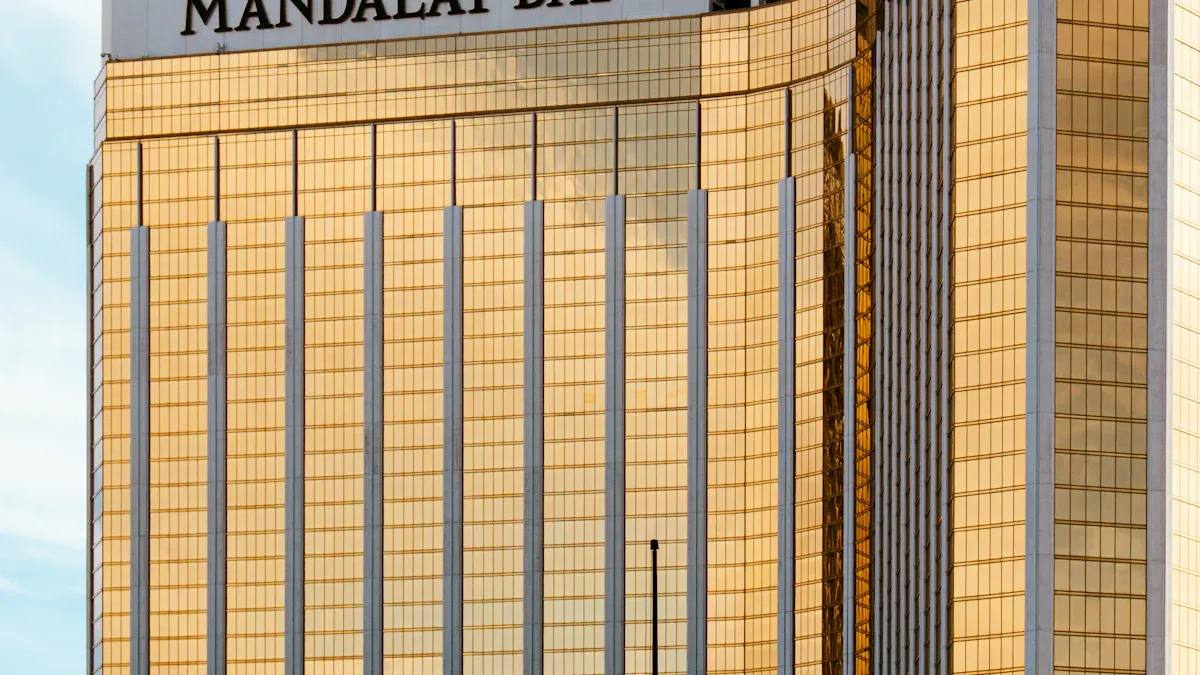
Image Source: unsplash
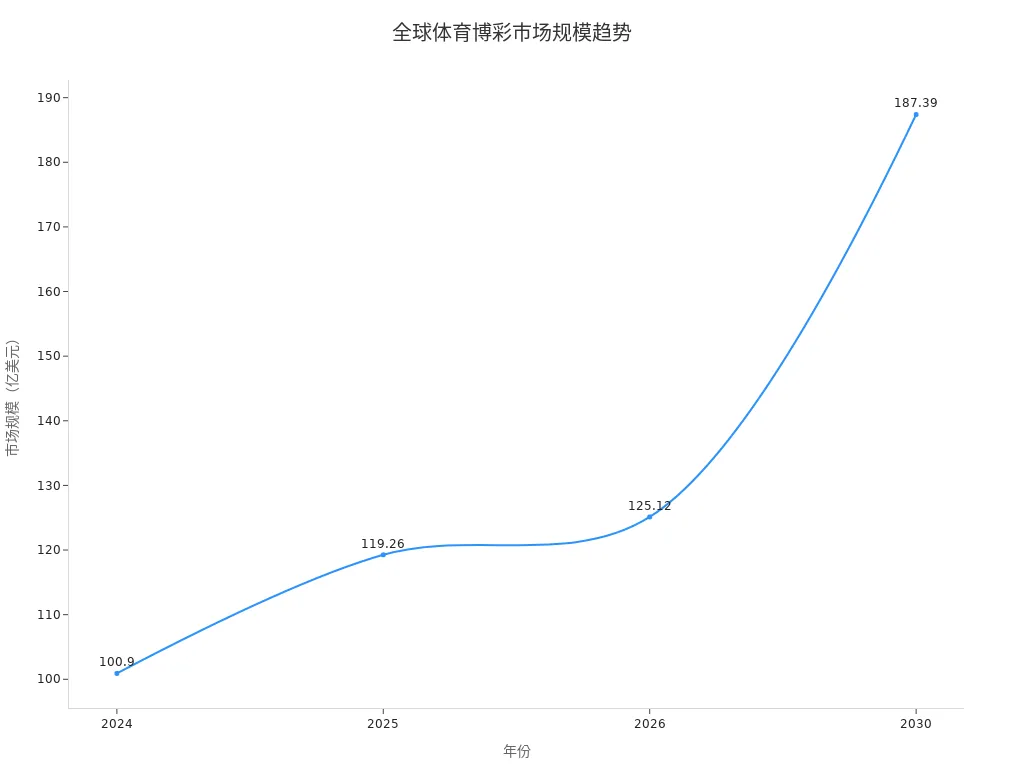
MGM is showing strong growth momentum amid the global wave of sports betting legalization. Analyzing the 2026 market landscape, MGM is poised to become the biggest winner thanks to its market share, technology integration, and diversified product advantages. Data shows the global sports betting market size is expected to reach $125.12 billion in 2026, with a continuously rising compound annual growth rate.
| Year | Market Size (USD Billion) | Projected Growth Rate |
|---|---|---|
| 2024 | 100.9 | 11% (2025–2030) |
| 2025 | 119.26 | N/A |
| 2026 | 125.12 | N/A |
| 2030 | 187.39 | N/A |
Industry analysts commonly use market share, product offerings, technology integration, and operational maturity as benchmarks to evaluate corporate leadership. MGM stands out in these key dimensions and possesses long-term competitive advantages.
Key Takeaways
- MGM demonstrates strong growth in the global sports betting market and is expected to become the biggest winner in 2026.
- Sports betting legalization has driven higher participation rates and user spending, with mobile betting accounting for up to 80%.
- MGM leverages its powerful brand and loyalty program to continuously attract high-value customers and increase market coverage.
- Penn Entertainment enhances brand visibility and expands online market share through its partnership with ESPN.
- Technological innovation and compliant payment solutions will improve user experience and drive sustainable industry growth.
Impact of Sports Betting Legalization

Image Source: pexels
Industry Landscape Changes
Sports betting legalization has triggered profound changes in the global industry structure. Since the U.S. began gradually liberalizing sports betting in 2018, industry revenue and participation rates have risen significantly. Data shows that in 2023 the participation rate reached 12% and is expected to rise to 20% by 2025, with mobile betting accounting for 80%. Average annual user spending remains at $3,284, reflecting increased user stickiness and spending power.
| Year | Participation Rate | Average Spend (USD) | Mobile Betting Share |
|---|---|---|---|
| 2023 | 12% | 3,284 | 80% |
| 2025 | 20% | 3,284 | 80% |
The competitive landscape has also evolved:
- Mobile and online betting platforms have risen rapidly, allowing users to participate anytime, anywhere.
- Legalization and improved regulatory frameworks have driven market expansion, attracting substantial capital and new entrants.
- Leading companies are increasing investment in technology, promoting the application of artificial intelligence, blockchain, and other innovations to enhance user experience and operational efficiency.
The global sports betting market is projected to reach $238 billion by 2029, with a compound annual growth rate of 10.73%. In 2024 the market size is expected to be $89.2 billion, growing to $167.8 billion by 2034 at a CAGR of 6.50%. Sports betting legalization has become the core driver of industry growth.
Current Policy Status in the Chinese Market
Mainland China maintains a strict prohibition policy on sports betting. According to the latest regulatory information, China completely bans all gambling activities under unified central government oversight. In contrast, U.S. states have autonomous legislative power, allowing various forms of gambling regulated independently by each state. The table below highlights policy differences between the two countries:
| Country | Legal Restrictions | Regulatory Approach |
|---|---|---|
| China | Complete prohibition of all gambling activities | Strict central government ban |
| United States | Varies by state; multiple forms of gambling permitted | Each state decides and regulates gambling activities |
This policy difference significantly affects the global strategies of MGM and Penn Entertainment. MGM’s international strategy allows flexible market focus on the U.S. and other legalized regions. Penn Entertainment relies more heavily on the U.S. domestic market and benefits from the ongoing legalization process there. Legal barriers in China limit direct expansion for both companies in Chinese-speaking regions, prompting them to intensify investment and innovation in compliant markets.
Market Position Comparison
MGM Strengths Analysis
MGM Resorts demonstrates multiple competitive advantages in the sports betting legalization wave. The company leverages strong brand recognition and iconic properties to continuously attract high-value customers. Its global footprint in key markets such as Las Vegas and Macau significantly boosts market coverage. The MGM Rewards loyalty program, with over 40 million members, greatly enhances customer retention and repeat business.
Through large-scale operations, MGM achieves economies of scale and efficiently manages and invests in infrastructure. The company remains a leader in digital innovation; the BetMGM platform delivers an omnichannel experience that integrates online and offline resources, improving user stickiness and conversion rates.
Although BetMGM’s U.S. market share trails FanDuel and DraftKings, its brand influence and loyalty program lay a solid foundation for future growth. In the second half of 2025, BetMGM’s handle growth slowed to 16%, but its overall market position remains solid.
- High brand recognition and unique property assets
- Global strategic layout covering key markets
- Large-scale loyalty program membership
- Strong digital innovation and excellent platform experience
Penn Entertainment Strengths
Penn Entertainment exhibits unique advantages in the sports betting industry through a balanced and resilient business model. By resetting its digital operations, the company has reduced risk and focused on profitability. Stable cash flow from regional casinos provides financial flexibility and risk resilience. Its diversified structure and clear path to sustainable returns allow Penn to remain competitive in mature markets.
| Strength Type | Description |
|---|---|
| Business Model | Balanced and resilient model adaptable to market fluctuations |
| Digital Reset | Reduced risk and focus on profitability |
| Cash Flow Stability | Stable cash flow from regional casinos enhances financial flexibility |
| Diversified Structure | Diversified business structure with clear return paths |
Penn Entertainment’s partnership with ESPN has greatly increased brand visibility and market credibility. By transforming Barstool Sportsbook into ESPN BET, the company leverages ESPN’s broad media reach to expand its online sports betting market share. The launch of ESPN BET created cross-selling opportunities with 27 million loyal ESPN members. In November 2023, Penn signed a $1.5 billion 10-year licensing agreement with ESPN, further solidifying its market position.
Weaknesses and Challenges
MGM Resorts faces high financial leverage pressure, with a debt-to-equity ratio as high as 963.1 and significant financial risk. Its net profit margin is only 1.2%, leaving limited earnings buffer during revenue fluctuations or cost increases. Penn Entertainment lacks profitability in its interactive business and is expected to report EBITDA losses in 2024.
Both companies must navigate stringent regulatory barriers. Penn operates in 28 jurisdictions across North America, requiring separate license applications in each region — a time-consuming and costly process. In 2025, Penn expects capital project expenditures of $490.9 million. Intense market competition means new entrants must contend with giants like DraftKings, requiring massive marketing and technology investments.
While sports betting legalization fuels industry expansion, it also intensifies competition and compliance pressure. Companies must continuously improve operational efficiency and profitability to maintain leadership in this highly competitive environment.
- MGM has high financial leverage and low net profit margin
- Penn’s interactive business lacks profitability
- Regulatory barriers and high capital investment
- Intensified industry competition and fierce market share battles
Key Influencing Factors
Policy Changes
The pace of sports betting legalization directly determines companies’ market access and expansion speed. U.S. states continue to relax policies, driving rapid industry growth. States such as New Jersey, Pennsylvania, and Michigan have established mature online betting regulatory frameworks, providing a compliant operating foundation for MGM and Penn Entertainment. Since single-game sports betting was legalized in Canada in 2021, market vitality has increased significantly. When entering new markets, companies typically prioritize localization strategies to ensure marketing complies with local regulations and deeply understand target users’ sports preferences.
Market Expansion
The North American online gambling market continues to expand, with sports betting legalization delivering substantial benefits. Canada’s market is expected to grow at a compound annual rate of 14.5% from 2025 to 2030, driven by widespread mobile device adoption and secure payment methods. MGM has strengthened its leading position in North America through digital innovation and strategic partnerships. Penn Entertainment actively expands into emerging online sports betting segments, leveraging stable cash flow from regional casinos to support market growth.
- Rapid growth in the North American online gambling market; sports betting legalization creates new opportunities
- Strong cultural affinity and high user participation in the Canadian market
- Both MGM and Penn Entertainment actively expand in emerging markets
Technological Innovation
Technological innovation has become the core of competition in the sports betting industry. Leading companies continuously optimize mobile platforms, enhance data analytics capabilities, and achieve more accurate user behavior prediction. The table below shows major current industry technological innovations and their impact:
| Innovation Feature | Impact |
|---|---|
| Improved speed and reliability | 90% of withdrawals processed in under one minute, greatly enhancing user experience |
| BetBuilder tool | Pre-match betting volume up 80%, market share increased to 12% |
| Real-time in-play betting combinations | Supports MLB and NFL with real-time tracking and in-app research tools |
| Quacca Bar feature | Over 60% of bets built and edited in-app |
| Game expansion | 150 new games released monthly, 20% early access or exclusive titles |
MGM continues to invest heavily in digital innovation, with the BetMGM platform integrating multiple cutting-edge technologies. Penn Entertainment enhances platform interactivity and content richness through its ESPN partnership.
Brand and User Base
Brand recognition and user loyalty determine long-term competitiveness. Sports betting legalization has spurred marketing and content innovation; companies boost brand visibility through event sponsorships, content marketing, and social media strategies. MGM relies on strong brand influence and its loyalty program to continuously attract high-value customers. Penn Entertainment expands its user base through partnerships with prominent media outlets like ESPN.
- Enhanced brand recognition builds customer trust and improves retention rates
- Event sponsorship and content innovation help acquire new customers
- Emotional user connection influences betting behavior and increases platform stickiness
2026 Winner Prediction

Image Source: unsplash
Data & Trends
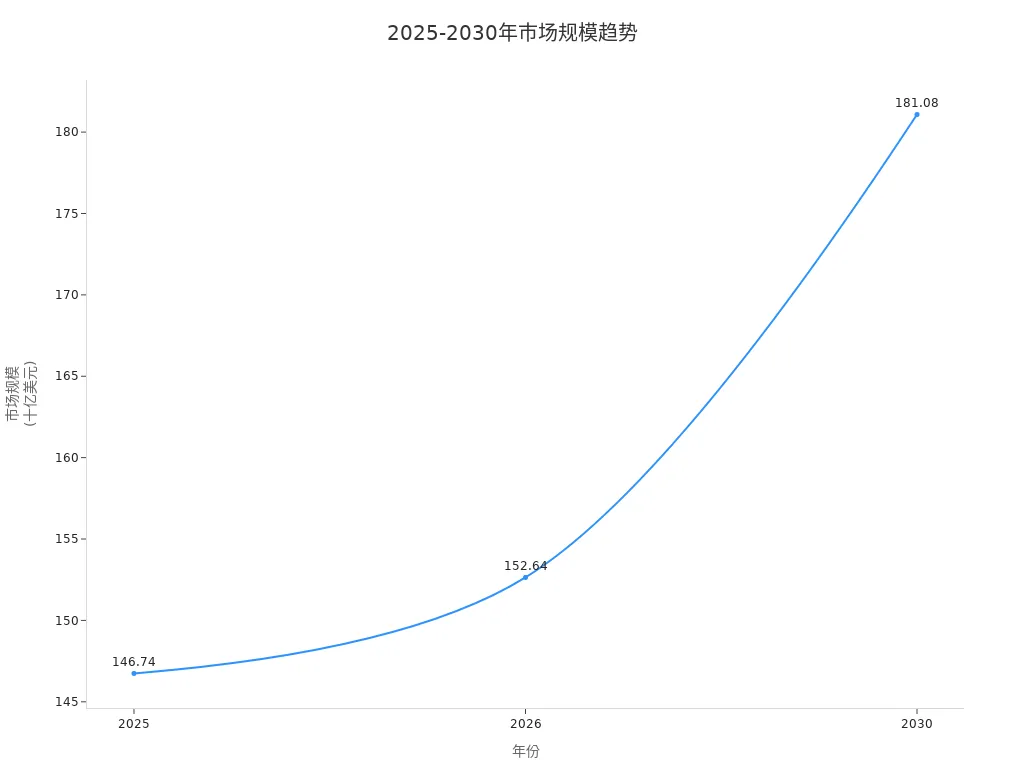
The sports betting market will continue its growth trajectory in 2026. According to the latest data, the global sports betting market size is expected to reach $146.74 billion in 2025 and rise to $152.64 billion in 2026, with a compound annual growth rate of 4%. By 2030, the market is projected to reach $181.08 billion, driven primarily by policy relaxation and technological innovation in North America and Europe.
| Year | Market Size (USD Billion) | Compound Annual Growth Rate (CAGR) |
|---|---|---|
| 2025 | 146.74 | — |
| 2026 | 152.64 | 4% |
| 2030 | 181.08 | 4.4% |
MGM Resorts International continues to drive product innovation, launching customized experiences such as MGM Riches slots to strengthen user stickiness. Penn Entertainment meets diverse user needs through diversified segment coverage in online sports betting and iCasino. BiyaPay, as a compliant payment solution, provides efficient settlement and multi-currency support, becoming an important tool for sports betting platforms to enhance user experience and fund flow efficiency — especially prominent in cross-border payment scenarios for Chinese-speaking users.
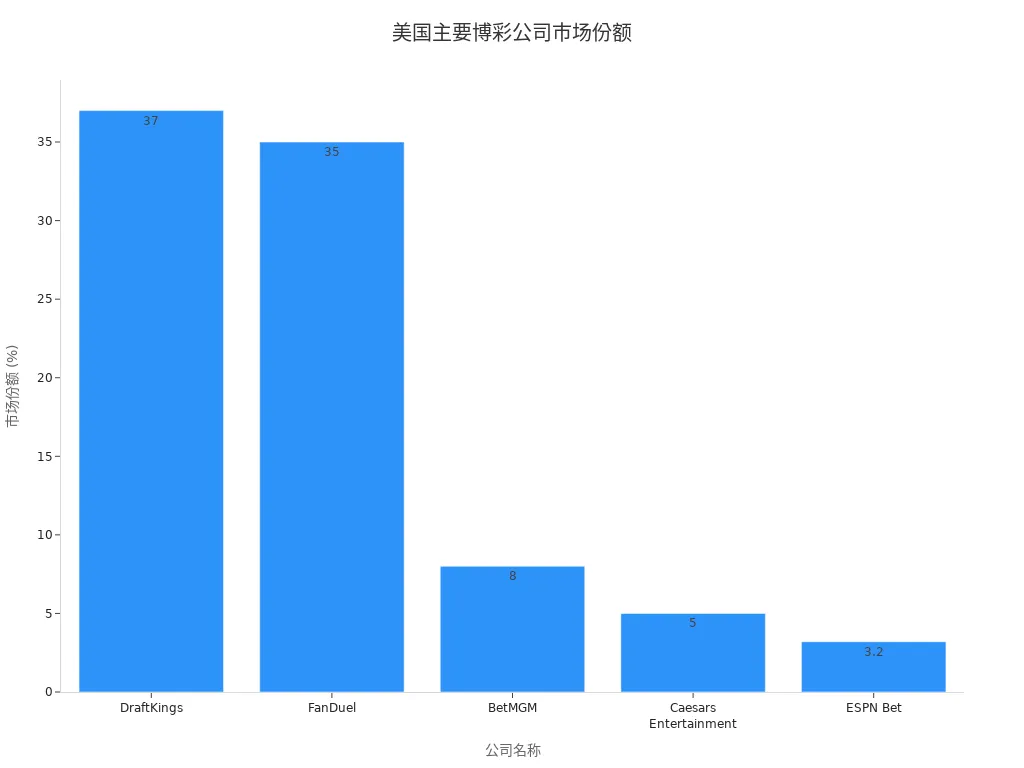
Industry data shows BetMGM holds an 8% U.S. market share, while ESPN BET holds 3.2%. Although DraftKings and FanDuel still dominate, MGM and Penn Entertainment are steadily increasing market share through product innovation and operational optimization. Slowing promotional spending and improving operational efficiency have become the main themes for 2026; companies are focusing more on long-term profitability and user lifetime value.
Strategic Positioning
MGM and Penn Entertainment each have distinct strategic approaches. MGM adopts an ecosystem integration strategy, deeply combining online sports betting with casino, entertainment, and hotel businesses to create strong synergies. The company has established partnerships with major sports leagues including the NBA, WNBA, NHL, and MLS, boosting brand influence and user conversion rates. The BetMGM brand enjoys high recognition and leverages MGM’s global resources to continuously expand market coverage.
Penn Entertainment focuses on a media adjacency strategy, using its ESPN BET partnership to deepen penetration among mainstream sports media audiences. In 2023, Penn ended its ESPN collaboration and shifted focus to theScore Bet brand to improve profitability and operational efficiency. PENN Play™ loyalty program membership surpassed 32 million, with retail and digital business interaction growing 28%. North American iCasino achieved a quarterly revenue record in Q3 2025, increasing market share from 2.5% to 3.9%. The board approved a $750 million stock repurchase program, signaling confidence in future cash flow and enterprise value.
| Company | Market Strategy | Description |
|---|---|---|
| MGM | Ecosystem Integration | Deep synergy between online sports betting and casino, entertainment, hotel businesses to enhance user value |
| Penn Entertainment | Media Adjacency | Leverages mainstream sports media partnerships to expand brand influence and market penetration |
If you are reading this type of sector analysis as an investor, the next step is usually not just comparing which operator runs a stronger sportsbook, but also reviewing how MGM and Penn Entertainment perform as listed companies. At that point, it makes more sense to use stock information lookup to check share-price movement, company data, and market performance before deciding whether to keep tracking the theme or move into an actual position.
In that context, BiyaPay is better understood within cross-market asset allocation rather than as part of a betting workflow. It is a multi-asset trading wallet covering payments, investing, trading, and fund management, with support for conversion between multiple fiat currencies and digital assets; when the discussion shifts from industry observation to cross-border funding arrangements, that framing stays closer to the article’s compliance-focused logic.
BiyaPay provides compliant, efficient fund settlement services for sports betting platforms, supporting multi-currency and cross-border payments to optimize user deposit and withdrawal experiences. For platforms targeting Chinese-speaking users, BiyaPay’s localized services and risk control capabilities serve as important support for international market expansion.
Reasons for Winning
Analysts generally believe MGM is more likely to become the biggest winner in the sports betting market in 2026. Key reasons include:
- Brand & Market Position: MGM holds a leading position in the regulated U.S. sports betting market; BetMGM enjoys high brand recognition and rich league partnerships. Data shows BetMGM’s market share is 8%, higher than ESPN Bet’s 3.2%.
- Ecosystem Advantage: MGM enhances user lifetime value and stickiness through online-offline business integration. Its loyalty program and diversified product lines deliver stable cash flow and repeat purchase rates.
- Technology & Product Innovation: MGM continues investing in digital innovation; new products like MGM Riches improve user experience. Introduction of compliant payment tools such as BiyaPay optimizes fund flow and risk control, strengthening platform competitiveness.
- Risk Management Capability: MGM possesses strong financial and operational resilience, enabling it to withstand slowing promotional spend and pressure from new competitors. Although new entrants like Flutter Entertainment pose potential threats, MGM’s mature market positioning and brand moat provide a foundation for sustained leadership.
| Company | Market Share |
|---|---|
| DraftKings | 37% |
| FanDuel | 35% |
| BetMGM | 8% |
| Caesars Entertainment | 5% |
| ESPN Bet | 3.2% |
Although Penn Entertainment has made progress in media partnerships and iCasino, its overall market share and brand influence still lag behind MGM. Entry of new competitors such as Bet365 and Flutter Entertainment will intensify market competition, prompting operators to accelerate product and service innovation. With ecosystem integration, brand resources, and technological innovation, MGM possesses the core competitiveness to win in the 2026 sports betting market.
In summary, MGM is expected to become the biggest winner in the 2026 sports betting industry through its diversified strategy, strong brand, technological innovation, and compliant payment systems. The application of payment solutions such as BiyaPay will further enhance platform operational efficiency and user experience, providing strong support for sustainable industry growth.
MGM is expected to hold a leading position in the 2026 sports betting market thanks to its powerful brand, ecosystem integration, and technological innovation.
- Real-time betting and esports drive market growth; smartphone penetration boosts user participation.
- Industry transformation accelerates, with regulatory environments and data transparency continuing to improve.
| Development Trend | Description |
|---|---|
| Prediction Markets | Expected to contribute 44% of long-term trading volume; surge in volume driven mainly by sports |
| Technology Dependence | Mobile and real-time betting dominate; digital transformation deepens continuously |
Industry observers should pay attention to emerging segments, regulatory reforms, and technological advances to timely capture market changes and new opportunities.
FAQ
What impact does sports betting legalization have on MGM and Penn Entertainment’s businesses?
Sports betting legalization accelerates market expansion for both companies. MGM leverages its global layout advantages, while Penn Entertainment benefits from the U.S. domestic market. Policy relaxation brings new user growth and revenue increases; companies must continuously optimize compliant operations.
Why is mainland China’s sports betting policy critical to global companies’ strategies?
Mainland China strictly prohibits sports betting, preventing global companies from entering the market directly. MGM and Penn Entertainment must adjust strategies, focus on the U.S. and other legalized regions, avoid legal risks, and enhance international competitiveness.
What is the competitive landscape for BetMGM and ESPN Bet in the U.S. market?
BetMGM holds an 8% market share, while ESPN Bet holds 3.2%. Both improve user experience through product innovation and brand partnerships. DraftKings and FanDuel still dominate, with ongoing competitive pressure.
How does technological innovation drive development in the sports betting industry?
Technological innovation improves platform speed, reliability, and user experience. Real-time betting, data analytics, and mobile app optimization attract more users. Companies enhance market competitiveness and achieve business growth through continuous R&D.
What role does BiyaPay play in sports betting platforms?
BiyaPay provides efficient, compliant fund settlement services for sports betting platforms. It supports multi-currency and cross-border payments, optimizing user deposit and withdrawal experiences. Chinese-speaking users benefit from localized services that improve fund circulation efficiency.
*This article is provided for general information purposes and does not constitute legal, tax or other professional advice from BiyaPay or its subsidiaries and its affiliates, and it is not intended as a substitute for obtaining advice from a financial advisor or any other professional.
We make no representations, warranties or warranties, express or implied, as to the accuracy, completeness or timeliness of the contents of this publication.
Related Blogs of

How Is China’s Memory Supply Chain Different from Overseas Memory Leaders? A Comparison with Micron, SanDisk, Western Digital, and Seagate


How Does NAND Price Increase Affect SanDisk? Enterprise SSDs, Consumer Storage, and Margin Leverage


Why Can’t HBM Exist Without Advanced Packaging? The Role of TSV, CoWoS, and Packaging Equipment


HBM/DRAM, NAND, and HDD in AI Storage: A Comparison of Elasticity, Cycles, and Risks

Choose Country or Region to Read Local Blog
 Australia
 Austria
 Belgium
 Canada
 Cyprus
 Czech Republic
 Denmark
 Estonia
 Finland
 France
 Germany
 Greece
 Hong Kong
 India
India Indonesia
 Ireland
 Italy
Italy Japan
Japan Latvia
 Lithuania
 Luxembourg
 Malaysia
 Malta
Malta Morocco
 Nepal
Nepal Netherlands
 New Zealand
 Norway
 Pakistan
 Philippines
 Poland
 Portugal
 Romania
 Singapore
 Slovakia
 Slovenia
 South Africa
 South Korea
 Spain
Spain Sweden
 Thailand
 The United States
 Turkey
 United Arab Emirates
 United Kingdom
 Vietnam
Contact Us




BIYA GLOBAL LLC is registered with the Financial Crimes Enforcement Network (FinCEN), an agency under the U.S. Department of the Treasury, as a Money Services Business (MSB), with registration number 31000218637349, and regulated by the Financial Crimes Enforcement Network (FinCEN).
BIYA GLOBAL LIMITED is a registered Financial Service Provider (FSP) in New Zealand, with registration number FSP1007221, and is also a registered member of the Financial Services Complaints Limited (FSCL), an independent dispute resolution scheme in New Zealand.