How to Invest in Microsoft (MSFT) and Google (GOOG) Without a Hong Kong Bank Card? Zero-Threshold Practical Guide




Image Source: pexels
You do not need a Hong Kong bank card to successfully invest in US stocks such as Microsoft (MSFT) and Google (GOOG). With just a Chinese ID card or passport, you can easily fund your account through international securities firms or online brokers using a Chinese bank card, electronic payment tools, or virtual bank accounts.
You can enjoy a simple, secure, and compliant investment process with fully transparent fund flows and support for multiple convenient methods.
If your main concern is how to bridge funds without a Hong Kong bank card, BiyaPay can be understood as a transfer layer before brokerage funding. You can first use its real-time fiat exchange rate comparison tool, then convert funds into the currency required by your broker and arrange the next funding step. If you are still comparing targets, its stock information lookup can also help you review codes and market quotes for names such as Microsoft and Google. As a multi-asset trading wallet, BiyaPay covers cross-border payments, fund management, and HK/U.S. stock funding-related scenarios, with relevant licenses and registrations in jurisdictions including the U.S. and New Zealand.
Key Takeaways
- You can open an account using a Chinese ID card or passport and easily invest in US stocks without a Hong Kong bank card.
- Choose international securities firms or online brokers that support mainland Chinese users — account opening is simple with low barriers.
- Multiple funding methods are available, including Chinese bank cards, electronic payment tools, and virtual bank accounts, ensuring fund safety.
- Pay attention to trading fees and commissions; select a platform suitable for your trading frequency to reduce investment costs.
- Regularly monitor positions and returns, flexibly adjust investment strategies, and ensure efficient fund circulation.
How to Choose a Broker Without a Hong Kong Bank Card

Image Source: pexels
International Securities Firms and Online Brokers
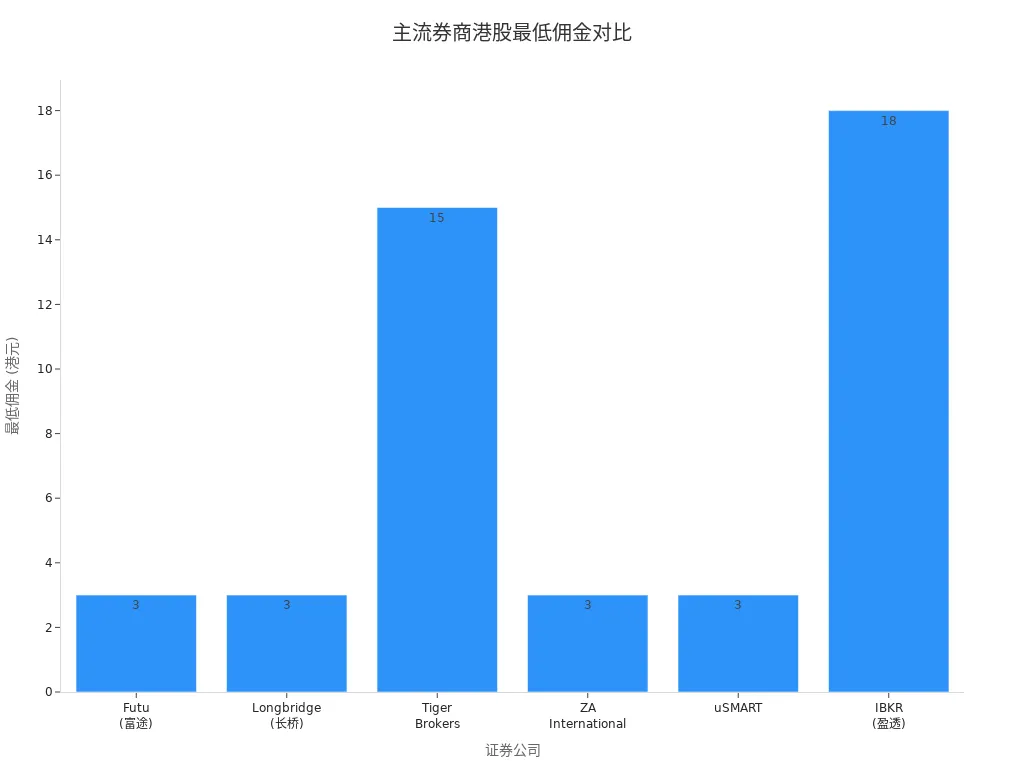
You can choose international securities firms or online brokers to invest in US stocks. Even without a Hong Kong bank card, you can still complete account opening using a Chinese ID card or passport. International brokers such as Futu, Longbridge, Tiger Brokers, ZA International, uSMART, and IBKR all support mainland Chinese users and do not require a Hong Kong bank account. Online brokers typically offer more convenient account opening processes and lower entry barriers. You only need to submit identity information online, and the platform will automatically review the documents.
The table below shows the account opening requirements and main features for mainland Chinese users of several major international brokers:
| Broker | Minimum Deposit | ID Requirement | Requires HK Bank? | IPO Subscription | HK Stock Commission | Key Features |
|---|---|---|---|---|---|---|
| Futu | None | Chinese ID | No | Yes | 0.03% (min USD 0.38) + USD 1.92 platform fee | Free Level 2 data; large retail user base |
| Longbridge | None | Chinese ID | No | Yes | 0.03% (min USD 0.38) + USD 1.92 platform fee | Clean interface; powerful IPO tools |
| Tiger Brokers | None | Chinese ID | No | Yes | 0.06% (min USD 1.92) + USD 1.92 platform fee | Multi-market access (US, HK, SG, AU) |
| ZA International | None | Chinese ID | No | Yes | 0.03% (min USD 0.38) | Promotions until March 2026 |
| uSMART | None | Chinese ID | No | Yes | 0.03% (min USD 0.38) | Dark pool trading; AI-assisted features |
| IBKR | None | Chinese ID + Passport | No | Limited (via IBKR HK entity) | 0.08% (min USD 2.30) | Institutional-grade platform; global markets |
As you can see, none of these platforms require a Hong Kong bank card. You only need to prepare a Chinese ID card or passport to complete account opening.
Platforms Supporting Mainland Users
You can choose platforms that support mainland Chinese users for investment. Online brokers such as Futu, Longbridge, Tiger Brokers, and uSMART all accept Chinese ID cards for account opening. You do not need to provide a Hong Kong bank card or overseas residence proof. Some platforms like IBKR require both a Chinese ID and passport, but the overall process remains straightforward.
You can use a Chinese bank card, electronic payment tools, or virtual bank accounts to fund these platforms. Some platforms also support third-party payment solutions such as BiyaPay, which helps Chinese-speaking users achieve global fund transfers, USD funding, and HK/US stock account top-ups. You can select the most suitable funding method based on your needs.
The table below compares changes in account opening requirements for some platforms:
| Company Name | Previous Requirement | Current Requirement |
|---|---|---|
| Tiger Brokers | Overseas residence proof or work permit | Overseas permanent residence proof |
| Futu Securities | Overseas residence proof or work permit | Overseas permanent residence proof |
| Interactive Brokers | None | More difficult for mainland residents |
You can see that some platforms have adjusted requirements for mainland Chinese users, but most online brokers still support Chinese ID card account opening without needing a Hong Kong bank card.
Fees and Commission Comparison
When choosing a broker, you need to pay attention to trading fees and commissions. Most international securities firms and online brokers charge a fixed percentage commission for US stock trading. You can refer to the table below for commission rates of major trading types:
| Trading Type | Commission Rate |
|---|---|
| Hong Kong stocks | 0.125% |
| US stocks | 0.125% |
| China A-shares | 0.125% |
For US stock trading, you will usually encounter minimum commissions and platform service fees. Taking Futu and Longbridge as examples, the minimum US stock commission is USD 0.38 and the platform service fee is USD 1.92. Tiger Brokers has a minimum US stock commission of USD 1.92 and the same platform service fee of USD 1.92. You can choose the platform most suitable for your trading frequency and capital size.
You can also use global payment solutions such as BiyaPay to achieve USD funding and HK/US stock account top-ups, further reducing fund transfer costs. You don’t need to worry about not having a Hong Kong bank card — platforms support Chinese bank cards, electronic payments, and virtual bank account funding with transparent fees and secure fund protection.
You can flexibly choose brokers and funding methods based on your identity documents, source of funds, and trading needs. Not having a Hong Kong bank card will not be an obstacle to investing in US stocks.
Account Opening Process and Required Documents
Identity Verification Requirements
When opening an account, you need to prepare basic identity verification documents. International securities firms and online brokers usually require you to submit valid identity proof and address proof. Common identity documents include Chinese passport, national ID card, driver’s license, or alien ID card. Address proof can include mortgage statements, lease agreements, utility bills within the last 12 months, or bank statements. Some platforms may also request additional documents such as bank passbook copies, mobile phone bills, or household registration books. The table below summarizes common account opening documents:
| Document Type | Specific Requirements |
|---|---|
| Identity Proof | Passport, national ID, driver’s license, alien ID |
| Address Proof | Mortgage statement, lease agreement, utility bill, bank statement |
| Additional Documents (Chinese users) | Bank passbook copy, mobile bill, household registration book |
Opening with Passport or ID Card
You can choose to open an account using a Chinese ID card or passport. Most international securities firms and online brokers support Chinese ID card account opening without requiring a Hong Kong bank card. Some platforms recommend uploading both passport and ID card to speed up the review process. When uploading documents, ensure the information is clear and the validity period is sufficient. Some platforms may request proof of overseas residence or work for the last three months, but in most cases only identity and address proof are needed.
Tip: When uploading documents, it is recommended to use color scans or high-definition photos to avoid review delays due to blurry images.
Common Review Issues
During the account opening process, you may encounter the following common review issues:
- Uploaded documents are not clear, causing review failure
- Address proof does not meet requirements (e.g., bills older than 12 months)
- Document information does not match registration information
- Missing additional documents, delaying review progress
You should prepare all materials in advance, carefully check document information, and ensure uploaded content is authentic and valid. If issues arise, contact the broker’s customer service promptly for professional guidance. You don’t need to worry about not having a Hong Kong bank card — platforms provide various identity verification and document review solutions for Chinese users to help you complete account opening smoothly.
Funding Methods Without a Hong Kong Bank Card
When investing in US stocks such as Microsoft and Google, even without a Hong Kong bank card, you can complete funding through multiple convenient methods. Current mainstream brokers and payment platforms offer diversified funding channels for mainland Chinese users to accommodate different funding sources and operating habits. You can choose the most suitable method based on your needs to ensure fund safety and efficient arrival.
Mainland Chinese Bank Card Funding
You can directly use a mainland Chinese bank card for funding. Some Hong Kong licensed brokers support recharging US stock accounts via UnionPay channels or RMB funds. You only need to bind your bank card on the broker platform and follow the instructions to complete the transfer. Some platforms also support third-party payment toolsto achieve RMB-to-USD currency exchange and funding, suitable for Chinese-speaking users who want a simplified process.
Common mainland bank card funding methods include:
- UnionPay card direct transfer: Some brokers support UnionPay card top-ups, with funds usually arriving within 1–3 business days.
- Through third-party payment platforms: supporting RMB-to-USD exchange and recharge to US stock accounts — convenient operation, suitable for first-time investors.
- Online bank transfer: You can complete cross-border remittance via online banking; some platforms support automatic incoming recognition.
When choosing bank card funding, pay attention to the platform’s single-transaction and daily funding limits as well as any additional handling fees.
Electronic Payments and Virtual Banks
Electronic payments and virtual banks provide more flexible funding options. You can complete fund top-ups through the following methods:
- Wise transfer: Wise supports multi-currency transfers with transparent fees and fast arrival. You can transfer from a mainland Chinese bank card in RMB or USD to a US stock broker account — suitable for users with frequent cross-border fund flows.
- PayPal: Some brokers support PayPal funding, suitable for users with international payment needs. Pay attention to PayPal’s exchange rates and fee policies.
- Virtual bank accounts (such as ZA Bank): You can open a Hong Kong licensed virtual bank account to obtain a dedicated USD account. Transfers via virtual banks offer clear fund flow paths, high compliance, and are suitable for investors with higher fund security requirements.
When choosing electronic payments or virtual bank funding, understand the platform’s compliance requirements for account verification and proof of fund sources in advance. Some platforms may require additional identity or address proof documents.
Tip: You can flexibly choose bank card, electronic payment, or virtual bank funding methods based on your funding source and operating habits. Combining multiple channels helps improve fund circulation efficiency.
Funding Fees and Arrival Time
Different funding methods vary in handling fees and arrival time. You should consider both cost and efficiency when choosing to ensure funds arrive promptly and avoid impacting investment operations due to delays.
The table below compares processing times for common funding methods:
| Payment Method | Processing Time |
|---|---|
| Card payment | Usually less than 10 minutes |
| Bank transfer | Up to 3 business days |
You can refer to the following common arrival times:
- Electronic fund transfers (e.g., Wise, virtual banks): Usually arrive within 1 business day; in some cases real-time arrival is possible.
- International bank transfers: Generally take 1–5 business days, depending on bank processing speed and intermediary links.
- UnionPay card payment: Most platforms complete crediting within 1–3 business days.
Regarding fees, cross-border transfer platforms like Wise typically charge 1%–2%, with the exact amount depending on the actual transaction. Virtual banks and some third-party payment platforms may charge fixed fees or percentage-based fees. Carefully read the platform’s fee explanation before operating and plan fund flow paths reasonably.
Recommendation: For the first funding, you can choose a small test transfer to confirm arrival speed and fee details before making larger transfers, reducing fund risk.
You don’t need to worry about not having a Hong Kong bank card — current mainstream brokers and payment platforms provide diversified and compliant funding solutions for mainland Chinese users. You can flexibly choose according to your needs and easily achieve efficient fund circulation for US stock investment.
Practical Guide to Buying US Stocks
Image Source: pexels
Searching for Microsoft and Google
After completing account opening and funding, you can directly search for Microsoft (MSFT) and Google (GOOG) stocks on the broker platform. Most international securities firms and online brokers provide convenient search and filtering functions. You can follow these steps:
- Log in to your broker account.
- Confirm that the account has completed real-name verification and has available funds.
- Enter “MSFT” or “GOOG” in the platform’s search bar.
- View the stock details page and use the charts and analysis tools provided by the platform to understand historical trends and the latest quotes.
- Decide whether to proceed based on your investment objectives.
Tip: You can use the platform’s K-line charts, volume, financial data, and other tools to help determine the best buying timing.
Placing Orders and Execution
After deciding to buy Microsoft or Google stock, you need to place a buy order. Online brokers typically support market orders and limit orders. The specific process is as follows:
- Select the stock you want to buy (e.g., MSFT or GOOG).
- Enter the buy quantity and choose market order or limit order.
- Confirm order details, including price, quantity, and estimated total amount (in USD).
- Submit the order and wait for the system to match and execute.
- After execution, you can view position details in your account.
You can flexibly adjust the order type based on market fluctuations. Market orders are suitable for immediate execution, while limit orders are suitable for investors with specific price expectations.
Viewing Positions and Returns
After completing the purchase, you can check your positions and returns at any time on the broker platform. The platform will display in real time the number of Microsoft and Google shares you hold, current market value, unrealized profit/loss, and other information. You can also set price alerts to stay informed of market changes.
Recommendation: Regularly monitor position performance, flexibly adjust positions based on market dynamics and your personal investment plan. Most platforms support exporting trade records for investment review and tax reporting.
Withdrawal and Fund Safety
Withdrawing to Mainland Chinese Bank Cards
After completing US stock investments, you can safely transfer funds back to a Chinese bank card through multiple methods. Common withdrawal paths include:
- Transfer via Hong Kong licensed bank accounts — clear fund flow path and high compliance.
- Use third-party payment platforms (such as BiyaPay) for cross-border USD transfers — convenient for Chinese-speaking users.
- Utilize assistance from relatives/friends — some investors choose to have relatives/friends receive funds in overseas accounts before transferring back to China.
- Withdraw via UnionPay credit card — some brokers support this method with relatively fast arrival.
You can choose the most suitable withdrawal method based on your needs and fund size. Some methods may involve additional document verification — it is recommended to understand platform requirements in advance.
Withdrawal Fees and Arrival Time
Different withdrawal methods vary in fees and arrival time. Carefully check the platform’s announcements and fee explanations before operating.
- Withdrawal via Hong Kong licensed bank account: Fees usually range from USD 10–30, with arrival in 1–3 business days.
- Using third-party payment platforms: Fees generally 1%–2%, with faster arrival; some platforms can achieve same-day crediting.
- UnionPay credit card withdrawal: Fees and arrival time depend on the broker’s specific policy; some platforms support real-time arrival.
It is recommended to perform a small test withdrawal first to confirm arrival speed and fee details before making larger transfers, reducing fund risk.
Fund Safety and Compliance
When choosing brokers and withdrawal channels, prioritize platforms with strong fund safety measures and compliance. International securities firms and online brokers typically:
- Calculate client reserve obligations daily to ensure client fund safety.
- Enforce real-time margin requirements to reduce risks from market fluctuations.
- Do not hold proprietary inventory, reducing platform bankruptcy risk.
You can further enhance fund safety by choosing platforms regulated by Hong Kong or US financial authorities. Compliant platforms regularly disclose fund management information, ensuring your funds remain protected.
Friendly reminder: Regularly monitor broker announcements and stay informed of withdrawal policy changes. If you experience delays or anomalies, contact platform customer service immediately to protect your rights.
Risks and Compliance Reminders
Fund Safety Risks
When investing in US stocks through international securities firms or online brokers, you need to be aware of various fund safety risks. Common risks include:
- Regulatory compliance risk. Some platforms may not be directly regulated by US or Hong Kong financial authorities, making fund safety difficult to guarantee.
- Insufficient information transparency. Some brokers disclose limited information, making it hard for investors to obtain timely account changes and fund flow details.
- Policy change risk. The Chinese government may introduce new cross-border fund management measures, affecting fund circulation efficiency.
- Business environment uncertainty. Policy adjustments by the Chinese Communist Party regarding business operations may impact broker compliance and fund safety.
When selecting platforms, prioritize brokers regulated by Hong Kong or US financial authorities and regularly follow platform announcements to ensure funds remain in a safe environment.
Tax Compliance Recommendations
When opening an international securities account, be sure to truthfully complete the W-8BEN form. This form confirms your non-US person status and allows you to enjoy a lower dividend withholding tax rate under the US-China tax treaty, saving tax on each US stock dividend received. You also need to pay attention to US tax compliance requirements and plan investment income reasonably.
| Tax Requirement | Explanation |
|---|---|
| No capital gains tax | Non-US persons are not required to pay capital gains tax on US securities transactions. |
| Dividend withholding tax | Non-US persons are subject to 30% dividend withholding tax. |
After completing the W-8BEN form, you can reduce the dividend withholding tax rate from 30% to 10% under the US-China tax treaty. It is recommended to keep relevant tax documents for subsequent declaration and compliance checks.
- W-8BEN form: Must be completed during account opening to confirm non-US person status and apply for tax treaty benefits.
- Tax treaty benefits: Enjoy lower dividend withholding tax rate, increasing net investment returns.
Anti-Fraud Tips
During cross-border investment, be vigilant against various fraud risks. Common fraud tactics include impersonating broker customer service, forging platform websites, and inducing transfers. You can take the following measures to enhance security:
- Only operate through the broker’s official website or official app; avoid clicking unknown links.
- Never disclose account passwords, verification codes, or other sensitive information to third parties.
- Regularly check account fund movements and contact customer service immediately if anomalies are found.
- Be cautious of high-return promises and beware of illegal stock recommendations and fake investment projects.
If you encounter suspicious situations, contact the broker’s official customer service or a Hong Kong licensed bank immediately to protect your fund safety. Staying alert and reasonably diversifying funds are important safeguards for cross-border investment.
You can easily invest in US stocks such as Microsoft and Google using a Chinese ID card or passport combined with various funding methods. The entire process is simple, zero-barrier, and funds are secure. When operating, pay attention to challenges such as foreign exchange and capital controls, VPN access restrictions, and tax reporting. It is recommended to closely follow platform policy changes and contact customer service promptly if issues arise. Feel free to leave comments if you have any questions.
FAQ
Can I successfully invest in US stocks without a Hong Kong bank card?
Yes, you can successfully invest in US stocks. Most international securities firms and online brokers support account opening with a Chinese ID card or passport and provide various funding methods without requiring a Hong Kong bank card.
Is fund safety guaranteed during funding and withdrawal?
Yes, when you choose platforms regulated by Hong Kong or US financial authorities, fund safety is ensured. Platforms typically use segregated accounts to manage client funds and regularly disclose fund status.
How long does it generally take for funds to arrive after funding?
Funding via bank card or electronic payment usually takes 1 to 3 business days. Some third-party payment platforms can achieve faster arrival; check the specific timing in platform announcements.
What taxes are required when investing in US stocks?
As a non-US person, you do not need to pay capital gains tax on US stock transactions. US stock dividends are subject to 10% to 30% withholding tax, depending on the tax treaty and W-8BEN form completion.
Can I open an account without overseas residence proof?
Yes, you can open an account using a Chinese ID card or passport. Some platforms may require additional address proof, but most online brokers do not mandate overseas residence proof.
*This article is provided for general information purposes and does not constitute legal, tax or other professional advice from BiyaPay or its subsidiaries and its affiliates, and it is not intended as a substitute for obtaining advice from a financial advisor or any other professional.
We make no representations, warranties or warranties, express or implied, as to the accuracy, completeness or timeliness of the contents of this publication.
Related Blogs of

How to Read Pure Storage and NetApp Earnings? ARR, Cloud Revenue, Gross Margin, and Cash Flow Metrics


How Should You View Seagate’s HAMR Technology? Nearline HDD Capacity Upgrades and the Supply-Demand Cycle

HBM/DRAM, NAND, and HDD in AI Storage: A Comparison of Elasticity, Cycles, and Risks


How Should You View Shanghai Fudan’s Non-Volatile Memory Business? Application Scenarios, Competition, and Risks

Choose Country or Region to Read Local Blog
 Australia
 Austria
 Belgium
 Canada
 Cyprus
 Czech Republic
 Denmark
 Estonia
 Finland
 France
 Germany
 Greece
 Hong Kong
 India
India Indonesia
 Ireland
 Italy
Italy Japan
Japan Latvia
 Lithuania
 Luxembourg
 Malaysia
 Malta
Malta Morocco
 Nepal
Nepal Netherlands
 New Zealand
 Norway
 Pakistan
 Philippines
 Poland
 Portugal
 Romania
 Singapore
 Slovakia
 Slovenia
 South Africa
 South Korea
 Spain
Spain Sweden
 Thailand
 The United States
 Turkey
 United Arab Emirates
 United Kingdom
 Vietnam
Contact Us




BIYA GLOBAL LLC is registered with the Financial Crimes Enforcement Network (FinCEN), an agency under the U.S. Department of the Treasury, as a Money Services Business (MSB), with registration number 31000218637349, and regulated by the Financial Crimes Enforcement Network (FinCEN).
BIYA GLOBAL LIMITED is a registered Financial Service Provider (FSP) in New Zealand, with registration number FSP1007221, and is also a registered member of the Financial Services Complaints Limited (FSCL), an independent dispute resolution scheme in New Zealand.