Will AI Software Take Over the World? Invest Directly in Nasdaq Tech ETF (QQQ) Using Cryptocurrency





Image Source: pexels
Have you ever wondered whether AI software really will take over the world? Analyses from Tom Lee and Cathie Wood show that AI technology is driving global industry transformation. It is projected that by 2030, wage spending on knowledge work will exceed $10 trillion, and corporate investment in AI and related software is expected to yield approximately 10x returns. Cathie Wood believes that AI advancements will greatly enhance the productivity of knowledge workers, enabling companies to achieve significant cost savings and efficiency improvements. As AI influence continues to rise, the relationship between cryptocurrency and financial investment is also undergoing changes.
| Evidence Type | Description |
|---|---|
| Market Cap of Digital Assets | Reports indicate that the market cap of digital assets may reach $20 trillion, highlighting their importance in financial investment. |
| Shift in Investor Perception | Under unstable economic conditions, investors’ views on cryptocurrency are changing, especially the potential of Bitcoin as a store of wealth. |
| Impact of AI on Investment Strategies | Reports emphasize that AI is changing how investors conduct research, driving the importance of original research. |
If you believe in the future of AI and technology, you may want to use cryptocurrency to invest in tech ETFs such as QQQ. However, note that QQQ is not a pure tech ETF, and you should rationally evaluate opportunities and risks when investing.
Key Points
- AI technology is driving global industry transformation, with wage spending on knowledge work projected to exceed $10 trillion by 2030.
- When investing in QQQ, understand the actual connection between its holdings and the AI industry; QQQ is not a pure tech ETF and includes multiple sectors.
- Combining cryptocurrency with ETF investment provides convenient investment channels, and using stablecoins can reduce cross-border transfer costs.
- Investors should pay attention to market volatility and compliance risks, reasonably control position sizes, and avoid significant losses.
- Continuously learn the latest developments in AI and cryptocurrency, and scientifically formulate investment strategies based on your own risk tolerance.
AI Software Taking Over the World and New Investment Trends

Image Source: unsplash
AI Narrative and Crypto Market Cycles
You will find that discussions about AI software taking over the world continue to drive cycles in the crypto market. The combination of AI and blockchain has become a focal point in the industry. Many projects are no longer just superficially labeled with AI, but are focused on solving real problems. For example, distributed inference networks allow multiple devices to collaboratively complete AI inference tasks, improving efficiency. Blockchain’s transparent data and smart contract mechanisms are gradually becoming the infrastructure for new business activities, supporting efficient global collaboration.
In the AI era, traditional company contracts and bank transfer methods can no longer meet the needs of efficient collaboration. You can see that decentralized autonomous organizations (DAOs) and on-chain transparent data enable strangers worldwide to collaborate and complete complex tasks. This new governance model provides a solid foundation for AI-driven investment strategies.
- The evolution of the AI narrative makes investors more selective when choosing assets, with stricter scrutiny of AI-related tokens.
- Bitcoin, due to its simple investment logic, may benefit in the context of AI software taking over the world.
- Smaller crypto assets require more complex business models to gain attention.
AI Gold Rush and Investor Opportunities
If you follow the trend of AI software taking over the world, you should realize that the market is in a new wave of AI gold rush. Capital is flowing from traditional tech sectors to emerging industries such as industry, electrification, and healthcare. Bitcoin and mainstream crypto assets need to prove their value in portfolio diversification, rather than merely following AI-driven trading trends.
You can use platforms such as BiyaPay, combined with stablecoins like USDT, to participate in global digital asset investment. Blockchain technology provides you with a transparent and efficient trading environment. The deep integration of AI and blockchain will bring more innovative opportunities for investors. You need to monitor market changes, rationally assess risks, and seize the new opportunities brought by AI software taking over the world.
The Real Relationship Between QQQ and the AI Industry
QQQ Holdings and AI Exposure
When considering investing in QQQ, you should understand the actual connection between its holdings and the AI industry. QQQ tracks the Nasdaq-100 Index, which includes the 100 largest non-financial companies in the United States by market capitalization. Many well-known tech companies such as Microsoft, Apple, NVIDIA, and Google are included, and these companies have deep involvement in AI. For example, NVIDIA focuses on AI chips, Google advances AI search and cloud computing, and Microsoft continues to innovate in AI office software and cloud services. These companies drive the discussion heat around AI software taking over the world.
You can see that QQQ has a relatively high weight in the technology sector, accounting for about 60%. This means that when you invest in QQQ, you are actually indirectly participating in the growth of the AI industry chain. However, QQQ also includes multiple sectors such as consumer goods, healthcare, and industrials. You need to analyze rationally and not simply assume that QQQ is equivalent to an AI-themed ETF.
Misconception That QQQ Is a Pure Tech ETF
Many investors mistakenly believe that QQQ is a pure tech ETF. In reality, QQQ has a relatively diversified industry distribution. You can refer to the table below to understand the specific sector allocation of QQQ:
| Sector | Percentage |
|---|---|
| Technology | 60% |
| Consumer Discretionary | 20% |
| Healthcare | 10% |
| Industrials | 5% |
| Telecommunications | 3% |
| Consumer Staples | 2% |
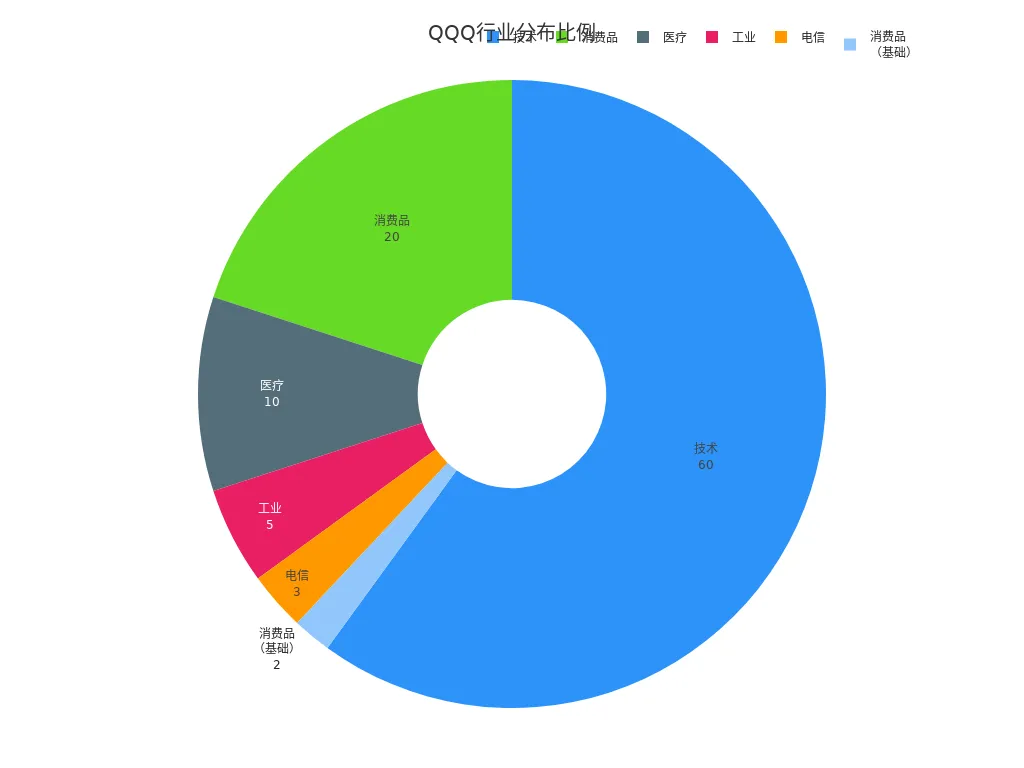
You can see that although the technology sector has the highest weight, consumer discretionary, healthcare, and other sectors also have significant allocations. Industry experts such as Cathie Wood point out that although AI-related companies occupy an important position in QQQ, the actual weight of AI in the entire ETF is far below 100%. When investing, you cannot simply use the logic of AI software taking over the world to predict the full performance of QQQ. You need to combine your own investment goals and risk preferences to rationally evaluate QQQ’s sector distribution and future potential.
Process of Investing in QQQ Using Cryptocurrency

Image Source: pexels
Channels Supporting Cryptocurrency Investment in ETFs
If you want to invest in Nasdaq tech ETFs (such as QQQ) using cryptocurrency, you can choose from multiple channels. Currently, some global fintech platforms already support exchange and investment between digital currency and U.S. stock ETFs. For example, BiyaPay provides Chinese-speaking users with real-time exchange services between USDT and USD/HKD, and supports fund deposits and withdrawals for U.S. stocks and Hong Kong stocks. You can use BiyaPay to convert USDT to USD, then transfer to a brokerage account that supports ETF trading to complete your QQQ investment.
You can also pay attention to digital currency services offered by some licensed Hong Kong banks. These banks have gradually opened exchange between digital currency and fiat, and allow users to participate in U.S. stock ETF investment through compliant accounts. When choosing channels, you should prioritize the platform’s compliance, fund security, and service fees. You can compare exchange rates, handling fees, and arrival speed across different platforms to select the investment path that best suits you.
Tom Lee mentioned that the stablecoin business has become the “ChatGPT moment” for cryptocurrency. It has been widely adopted by consumers and merchants, and now banks also want to offer stablecoins. Most of the transactions occur on Ethereum.
You can see that the widespread adoption of stablecoins greatly improves investment liquidity. When investing in QQQ, you can use stablecoins such as USDT to achieve efficient fund circulation and reduce the time and cost of cross-border transfers.
If you care more about execution efficiency in practice, it also helps to compare conversion routes, settlement speed, and how smoothly the next funding step connects to your brokerage account. A multi-asset trading wallet such as the BiyaPay official website offers conversion between digital assets and multiple fiat currencies, while also supporting fund movement for U.S. and Hong Kong stock-related scenarios. Before entering an ETF position, you can use its fiat exchange rate comparison tool to check real-time pricing and conversion costs, then decide whether converting USDT into USD makes sense for the allocation.
From a compliance and fund-management perspective, the value of this kind of tool is not only speed, but also process clarity. BiyaPay holds relevant financial registrations and licensing in jurisdictions including the United States and New Zealand, which makes it a practical reference point for cross-border allocation, fund routing, and multi-market investing. The actual QQQ purchase, however, should still follow the broker’s trading rules, fee schedule, and account requirements.
Investment Operation Steps and Precautions
In actual operations, you can follow these steps to complete cryptocurrency investment in QQQ:
- Choose a compliant platform
You need to select a compliant platform that supports exchange between digital currency and U.S. stock ETFs, such as BiyaPay or digital currency services from licensed Hong Kong banks. - Complete identity verification
You must complete the KYC (real-name authentication) process to ensure account security and compliance. - Exchange funds
You can exchange stablecoins such as USDT for USD or HKD; the platform will settle based on real-time exchange rates. - Transfer funds
Transfer the exchanged USD to a brokerage account that supports ETF trading; some platforms support one-stop transfers. - Place order to invest in QQQ
On the brokerage platform, select the QQQ ETF, enter the investment amount, and confirm the order. - Manage funds and assets
Regularly check your investment account and monitor fund security and asset changes.
During the operation process, pay attention to the following matters:
- Verify the platform’s compliance qualifications and avoid using unregulated platforms.
- Monitor exchange rate fluctuations and handling fees to reasonably control investment costs.
- Ensure the source and use of funds are legal to avoid risks such as money laundering.
- Keep all transaction vouchers for subsequent compliance review.
Tom Lee believes that stablecoins play an important role in enhancing investment liquidity, especially in the context of their integration into the financial system and changing regulatory attitudes. He compares the current stablecoin moment to cryptocurrency’s “ChatGPT moment,” indicating a surge in institutional acceptance and profitability. You can leverage this trend to improve investment efficiency and seize the new opportunities brought by AI software taking over the world.
Legal and Compliance Risks
When investing in QQQ using cryptocurrency, you must attach great importance to legal and compliance risks. Regulatory policies for digital currency and ETF investment vary across jurisdictions. When selecting platforms and banks, prioritize licensed institutions to ensure all fund flows and investment activities comply with local laws and regulations.
You need to pay attention to the following compliance points:
- Anti-money laundering and counter-terrorism financing
You must cooperate with the platform to complete identity verification and source-of-funds review to prevent funds from being used for illegal activities. - Tax declaration
You should proactively declare relevant tax information for digital currency exchange and ETF investment in accordance with the laws of your place of residence. - Cross-border fund flow restrictions
Understand and comply with regulations on cross-border fund flows in relevant countries and regions to avoid account freezes or asset losses due to non-compliant operations. - Investor suitability management
Allocate investment proportions reasonably based on your own risk tolerance to avoid significant losses due to market volatility.
During the investment process, continue to monitor policy changes and platform announcements and adjust investment strategies in a timely manner. Understand that compliance is the prerequisite for ensuring fund security and investment returns. Only on a legal and compliant basis can you truly enjoy the convenience and opportunities brought by cryptocurrency and global asset allocation.
Advantages and Risk Analysis
Advantages of Investing in ETFs Using Cryptocurrency
When considering investing in ETFs (such as QQQ) using cryptocurrency, you can gain multiple advantages. First, convenience is extremely high. You can invest in ETFs through compliant platforms just like buying and selling stocks or bonds; the entire process is very familiar to ordinary investors. You do not need complicated cross-border transfers — simply use stablecoins such as USDT, achieve real-time exchange between USDT and USD through services like BiyaPay, and then transfer to a brokerage account that supports ETF trading.
You can also enjoy a high degree of regulatory transparency. Cryptocurrency ETFs are usually issued by qualified financial institutions, and platforms strictly comply with anti-money laundering and compliance requirements, providing you with a safe trading environment. During the investment process, all fund flows and asset changes can be traced, greatly reducing operational risks.
Diversification and tax efficiency are also significant advantages. Some ETFs include multiple digital assets or leading industry companies in the same fund, allowing you to achieve asset diversification by purchasing just one ETF and reducing risks from single-asset volatility. Certain jurisdictions also provide tax optimization schemes for ETF investments, helping you improve overall return efficiency.
You can quickly understand the main advantages of investing in ETFs using cryptocurrency through the following points:
- High convenience and simple operation process
- Regulatory transparency and guaranteed fund security
- Portfolio diversification to spread risk
- Improved tax efficiency and optimized return structure
Potential Risks and Market Challenges
While enjoying the convenience brought by investing in ETFs using cryptocurrency, you must also face potential risks and market challenges. First, market volatility is high. Cryptocurrency prices are influenced by global policies, technological progress, and market sentiment, and may experience sharp fluctuations in the short term. Although investing in ETFs achieves diversification, you still need to pay attention to systemic risks in the overall market.
Compliance risks cannot be ignored either. Regulatory policies for digital currency and ETFs vary significantly across jurisdictions. When choosing platforms and banks, you must prioritize licensed institutions to ensure all operations comply with local laws and regulations. You also need to pay attention to tax declaration and cross-border fund flow restrictions to avoid asset freezes or losses due to compliance issues.
Market trends are constantly changing. You will find that thematic investing is driving the market, with AI-related ETFs outperforming the S&P 500 index. Investor interest continues to rise in areas such as AI chip manufacturers, software giants, robotics technology, and energy infrastructure. At the same time, some cryptocurrency ETFs are shifting focus to crypto mining stocks, which are transitioning toward AI infrastructure. You need to closely follow industry developments and adjust investment strategies in a timely manner.
During the investment process, pay attention to the following challenges:
- High market volatility — reasonably control position sizes
- Rapid changes in compliance policies — continue monitoring regulatory developments
- Sector theme rotation — adjust asset allocation promptly
- Tax and cross-border fund flows require compliant declaration
Impact of Technological Development on Investment Methods
You are in an era of rapid development of AI and cryptocurrency technology. Discussions about AI software taking over the world have driven investment booms in data centers, digital infrastructure, and energy sectors. You can indirectly participate in the growth of these industries through ETFs and capture the new wave of technological dividends.
Latest data shows that the QQQ ETF is heavily invested in tech stocks that benefit from the AI wave. Over the past 20 years, the QQQ ETF has delivered a return of 1610%, with a compound annual growth rate of 15.2%. Grand View Research predicts that over the next decade, global spending on AI in hardware, software, and services will grow at an annual rate of 30%. If you focus on AI and the technology sector, you can achieve diversified investment in future winning companies through ETFs.
| Theme | Details |
|---|---|
| QQQ ETF Investment | This ETF is heavily invested in tech stocks likely to benefit from the artificial intelligence wave. |
| Investment Return | Over the past 20 years, QQQ ETF has delivered a return of 1610%, with a compound annual growth rate of 15.2%. |
| AI Spending Forecast | Spending on artificial intelligence in hardware, software, and services is expected to grow at 30% annually until 2033. |
| Future Winners | Many listed companies are likely to become major winners in market growth. |
You can also see that sector-specific ETFs have become an important tool for modern investors. ETFs in areas such as artificial intelligence, cybersecurity, and biotechnology are growing rapidly, providing you with diversified investment options. When making decisions, combine your own risk tolerance to rationally evaluate the opportunities and challenges brought by technological development.
Tip: You should continue learning the latest developments in AI and cryptocurrency, monitor ETF sector allocations and market trends, and scientifically formulate investment strategies to avoid blindly chasing highs or panic selling.
Investment Recommendations and Decision References
Suitable Investor Types
When considering investing in tech ETFs (such as QQQ) through cryptocurrency, first determine whether this type of investment suits you. Crypto assets and related ETFs carry high risk and volatility and are suitable for investors with a certain risk tolerance and investment experience. You can refer to the following factors for self-assessment:
- The extreme price volatility of crypto assets may cause dramatic fluctuations in investment value.
- Investors face a significant risk of losing their entire investment.
- Crypto assets have lower liquidity, which may exacerbate price volatility.
- Crypto assets and related entities have limited registration and lack necessary investor protections.
- Regulatory changes may affect the market acceptance and value of crypto assets.
If you have strong risk tolerance, can withstand short-term asset fluctuations, and are willing to continuously monitor market and policy changes, then you are more suitable for participating in this type of investment. You should also possess basic financial knowledge and understand the rules related to ETFs, cryptocurrency, and cross-border fund flows.
Formulating a Reasonable Investment Strategy
When formulating an investment strategy, combine your own goals, market trends, and views from industry experts. Currently, the popularity of artificial intelligence in investment and business continues to rise, and more investors hope to capture growth opportunities brought by AI through tech ETFs (such as QQQ and VGT). Data shows that the Vanguard Information Technology ETF (VGT) has grown more than 657% over the past decade, while the S&P 500 grew 328%. QQQ provides you with additional exposure to key tech companies and hedges AI growth against other sectors through its 64% technology sector weighting.
You can refer to the following suggestions:
- Clearly define investment objectives and reasonably allocate asset proportions to avoid excessive concentration in a single category.
- Pay attention to ETF holdings structure and diversify across themes such as AI, chips, and energy.
- Regularly evaluate your portfolio and adjust positions in a timely manner to cope with market volatility and policy changes.
- Choose compliant platforms for fund exchange and investment operations, prioritizing fund security and compliance.
“AI will continue to be a major force in the market, both because of its disruptive potential and because of the tailwinds it will create across industries and market sectors.” — Sharma
Experts predict that over the next five years, artificial intelligence and its infrastructure construction will become the main drivers of stock market growth. You should continue to follow the latest developments in AI and cryptocurrency, combine your own risk tolerance, and scientifically formulate investment strategies to seize the long-term opportunities brought by technological change.
You can see that discussions about AI software taking over the world are driving innovation in technology and cryptocurrency investment. The Invesco QQQ ETF provides you with investment channels covering the AI value chain, including semiconductors, AI software, and cloud computing. By holding diversified stocks, you reduce the risk of individual stock volatility while enjoying the growth potential of leading companies such as Nvidia, Apple, and Microsoft. You should pay attention to the ETF’s expense ratio, historical performance, and sector concentration, and set reasonable return expectations. You also need to regularly evaluate market changes, combine your own risk tolerance, refer to suggestions from institutions such as BlackRock, and reasonably allocate cryptocurrency proportions. You can use resources such as the investor education center to continue learning and optimizing investment decisions.
FAQ
How do you invest in Nasdaq tech ETFs like QQQ using USDT?
You can convert USDT to USD through platforms such as BiyaPay, then transfer to a brokerage account that supports U.S. stock ETF trading to complete your QQQ investment. Ensure the platform is compliant and fund flows are transparent.
What elements should you focus on when choosing a platform for digital currency and ETF investment?
You should prioritize the platform’s compliance qualifications, fund security, service fees, and arrival speed. You also need to verify whether the platform supports U.S. stock ETF deposits/withdrawals and real-time exchange between USDT and USD.
What are the main risks when investing in QQQ?
You need to pay attention to market volatility, changes in compliance policies, tax declaration, and cross-border fund flow restrictions. You should also be alert to platform security risks, reasonably control position sizes, and avoid losses due to sharp market fluctuations.
How do you ensure the investment process is compliant and funds are secure?
You should choose licensed financial institutions or compliant platforms, complete identity verification and source-of-funds review. You also need to keep all transaction vouchers, proactively declare relevant tax information, and continue monitoring policy changes.
How do you control costs and improve efficiency during the investment process?
You can compare service fees and exchange rates across different platforms and choose platforms with fast arrival times and transparent fees. You should also utilize stablecoins to improve fund liquidity and optimize the cross-border investment experience.
*This article is provided for general information purposes and does not constitute legal, tax or other professional advice from BiyaPay or its subsidiaries and its affiliates, and it is not intended as a substitute for obtaining advice from a financial advisor or any other professional.
We make no representations, warranties or warranties, express or implied, as to the accuracy, completeness or timeliness of the contents of this publication.
Related Blogs of

Is Hua Hong Semiconductor 1347.HK Related to Memory? Mature Nodes, Embedded Applications, and the Semiconductor Cycle


What Are NOR Flash, SLC NAND, and EEPROM? Why They Help Explain Hong Kong-Listed Memory-Related Stocks


Micron MU vs Western Digital WDC: Which Logic Is Stronger, AI Memory or Data Center Hard Drives?

How to Read the Inventory Cycle of Memory Stocks? Inventory, Customer Restocking, and Price Inflection Signals

Choose Country or Region to Read Local Blog
 Australia
 Austria
 Belgium
 Canada
 Cyprus
 Czech Republic
 Denmark
 Estonia
 Finland
 France
 Germany
 Greece
 Hong Kong
 India
India Indonesia
 Ireland
 Italy
Italy Japan
Japan Latvia
 Lithuania
 Luxembourg
 Malaysia
 Malta
Malta Morocco
 Nepal
Nepal Netherlands
 New Zealand
 Norway
 Pakistan
 Philippines
 Poland
 Portugal
 Romania
 Singapore
 Slovakia
 Slovenia
 South Africa
 South Korea
 Spain
Spain Sweden
 Thailand
 The United States
 Turkey
 United Arab Emirates
 United Kingdom
 Vietnam
Contact Us




BIYA GLOBAL LLC is registered with the Financial Crimes Enforcement Network (FinCEN), an agency under the U.S. Department of the Treasury, as a Money Services Business (MSB), with registration number 31000218637349, and regulated by the Financial Crimes Enforcement Network (FinCEN).
BIYA GLOBAL LIMITED is a registered Financial Service Provider (FSP) in New Zealand, with registration number FSP1007221, and is also a registered member of the Financial Services Complaints Limited (FSCL), an independent dispute resolution scheme in New Zealand.