2026: The First Year of Crypto Asset Legalization – Embrace Regulation and Step into the Light with BiyaPay's Fiat License





Image Source: unsplash
In 2026, the first year of crypto asset legalization has become a global trend, with many countries establishing clear regulatory frameworks. Users and businesses should prioritize compliant platforms holding fiat licenses, such as BiyaPay, and proactively embrace regulation to gain security and legal protection. Major economies, led by the United States, regard compliance as a prerequisite for market participation.
| Country | Legal Status | Description |
|---|---|---|
| United States | Legal (Regulated) | Treated as property for tax purposes, subject to MSB regulations |
| United Kingdom | Legal (Regulated) | Updated Financial Services Act in 2023 |
| European Union | Legal (MiCA Regulation) | Crypto asset framework |
| Canada | Legal (Regulated) | Taxed as business income or capital gains |
| Japan | Legal (Regulated) | Early adopter with clear rules |
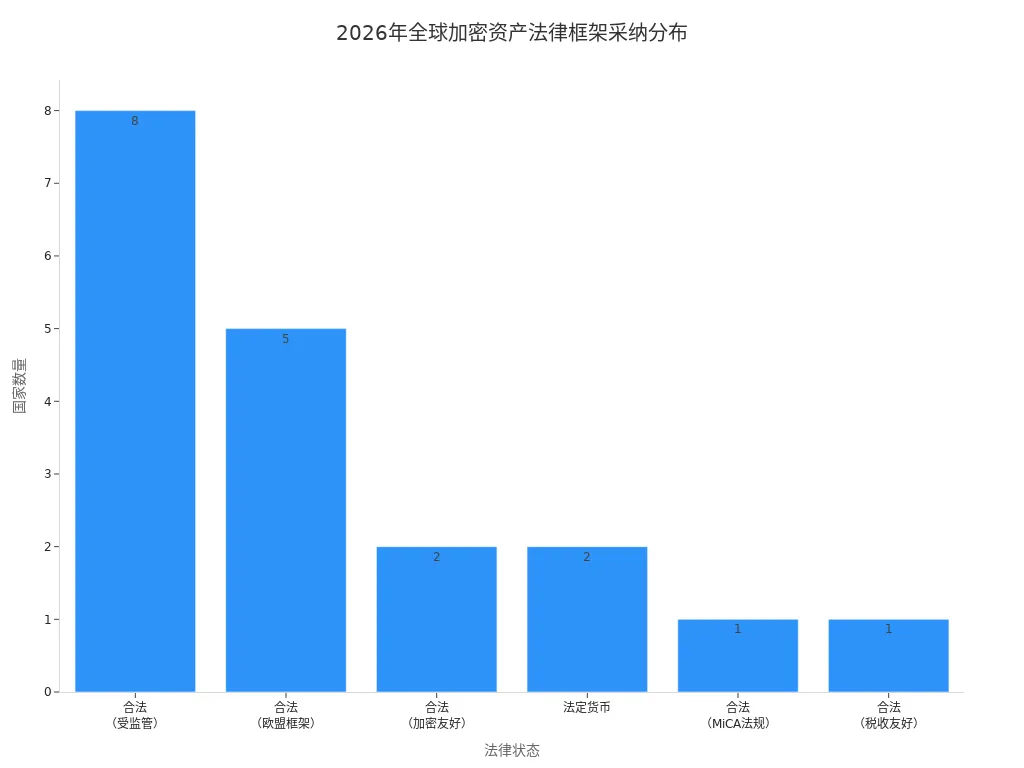
- Hong Kong and other regions are implementing multi-layered digital asset regulation, promoting compliant platforms as the mainstream choice.
- BiyaPay, with its fiat license and compliant services, provides users and businesses with higher security and trust assurance.
Key Points
- 2026 is a pivotal year for crypto asset legalization, with multiple countries worldwide establishing regulatory frameworks; users should choose compliant platforms to ensure security.
- As a platform holding a fiat license, BiyaPay offers high security and trust assurance, helping users legally participate in crypto asset trading.
- Compliant platforms must adhere to strict regulatory requirements, including anti-money laundering measures and transparent transaction processes, to protect user assets and enhance market trust.
- Increased adoption of digital assets by institutional investors is driving market liquidity and product diversification; users should seize this new opportunity.
- Choosing compliant platforms like BiyaPay reduces legal risks, improves capital flow efficiency, and ensures asset security and legitimate appreciation.
Changes in the First Year of Crypto Asset Legalization

Image Source: unsplash
Significance of Legalization
2026 is regarded as the first year of crypto asset legalization, with major global economies successively introducing new regulations to push the industry toward compliance and transparency. The United States passed the GENIUS Act in 2025, establishing a federal-level digital asset legal framework for the first time, covering licensing for payment stablecoins, 1:1 reserves, audits, and information disclosure requirements, with full implementation planned for 2026. Japan plans to submit legislation during the 2026 parliamentary session to reduce the crypto tax rate to 20%, attracting more compliant capital and innovative enterprises.
| Country | Description of Legislative Changes |
|---|---|
| Japan | Plans to submit legislation during the 2026 parliamentary session to reduce the crypto tax rate to 20%. |
| United States | Representative Steil pushes regulators to finalize stablecoin legislation by this date. |
The first year of crypto asset legalization not only brings legal certainty to the industry but also provides a solid foundation for innovation and competitiveness. The evolution of global regulatory frameworks is driving institutional investors and enterprises to actively allocate digital assets, with stablecoins and tokenization becoming key market focuses.
Regulatory Requirements
The new wave of regulatory requirements sets higher standards for crypto asset platforms. Taking the United States and the United Kingdom as examples, regulators require platforms issuing “qualified stablecoins” to obtain FCA authorization, ensuring assets are fully supported by statutory trusts. Regulation also includes prudential requirements such as capital adequacy, liquidity, and concentration risk; platforms must comply with consumer duty, prohibit insider trading and market manipulation, and disclose inside information.
| Type of Regulatory Requirement | Specific Content |
|---|---|
| Stablecoins and Custody | Issuing “qualified stablecoins” requires FCA authorization, with assets fully supported in statutory trusts. |
| Prudential Requirements | Includes capital adequacy, liquidity, and concentration risk requirements. |
| Conduct and Corporate Standards | Compliance with FCA conduct of business rules and fulfillment of consumer duty. |
| Market Abuse | Prohibition of insider trading and market manipulation, requiring disclosure of inside information. |
| Trading Platforms and Lending | Rules set for platforms and lending activities, potentially restricting lending products for retail clients. |
The first year of crypto asset legalization drives platforms to continuously strengthen compliance measures, particularly in anti-money laundering, tax reporting, and governance structures. Compliance teams must possess blockchain technology understanding to ensure platform operations meet multiple regulatory requirements.
Impact on Users and Businesses
The first year of crypto asset legalization brings entirely new opportunities for users and businesses. First, the significant increase in institutional investor adoption of digital assets drives market liquidity and product diversification. Second, the launch of derivatives such as ETFs deeply integrates crypto assets with traditional financial infrastructure, allowing investors to enjoy lower spreads and higher liquidity.
- Global regulatory frameworks continue to evolve, supporting national strategies and innovative development.
- The United States continues to lead globally in GENIUS Act implementation and regulatory innovation, prompting other countries to follow.
- Institutional adoption of digital assets accelerates, with stablecoins and tokenization becoming emerging key areas.
In terms of platform operations, new regulatory requirements prompt enterprises to strengthen compliance team building and improve anti-money laundering and tax reporting processes. Compliant participation becomes the core path to safeguarding user asset security and sustainable enterprise development.
Advantages of Embracing Regulation and Compliance
Security Assurance
The first year of crypto asset legalization drives a comprehensive upgrade of industry security standards. Compliant platforms effectively prevent financial crimes through rigorous anti-money laundering (AML) programs, protecting user assets from illegal activities. As a platform holding a fiat license, BiyaPay conducts regular internal and external audits to ensure data security and operational transparency. The platform establishes comprehensive compliance processes to reduce risks of money laundering, data breaches, and regulatory scrutiny.
- Compliance programs reduce money laundering risks and enhance data security.
- Anti-money laundering measures protect users from illicit activities.
- Regular audits strengthen regulators’ confidence in the platform’s compliance culture.
Market Trust
Regulatory compliance not only enhances platform security but is also key to building market trust. BiyaPay promotes investor and stakeholder trust in the platform through transparent compliance measures and ethical practices. The platform implements effective anti-money laundering programs to reduce regulatory scrutiny risks and safeguard investor rights. Compliance provides an accountability framework, giving investors confidence in asset integrity and security.
- Compliance promotes transparency and accountability.
- Investors gain greater confidence in platform security and integrity.
- Ongoing compliance practices help build long-term partnerships.
Risk Prevention and Control
Compliant platforms adopt structured policies and processes to strengthen risk prevention and control capabilities. BiyaPay establishes a multi-layered risk management system, developing specific countermeasures for risks such as crypto malware, third-party software vulnerabilities, unregulated trading platforms, and phishing attacks. The platform regularly reviews workflows to ensure alignment with regulatory requirements and requires custodians to provide and test incident and disaster protocols. The table below shows the recommended risk management framework for compliant platforms:
| Risk Type | Countermeasures |
|---|---|
| Crypto malware and ransomware | Authenticate through secure email gateways and filter potentially harmful communications. |
| Use of third-party software | Establish regulatory oversight and approve whitelists for applications to reduce introduced vulnerabilities. |
| Unregulated or illegal trading platforms | Establish a centralized management entity responsible for the production, management, and supervision of cryptocurrencies. |
| Phishing attacks | Use multi-factor authentication (MFA) to increase user identity verification security. |
| Cryptocurrency account security | Implement multi-factor authentication (MFA) to provide an additional layer of protection. |
| User confusion | Improve user interfaces, provide educational resources, and set up dedicated help desks to enhance accessibility. |
| Data privacy and information security | Comply with the Digital Operational Resilience Act (DORA) to address technology, security, and infrastructure risks in the financial sector. |
Platforms continuously enhance risk prevention and control capabilities by establishing structured policies, regularly reviewing processes, and improving disaster protocols. The first year of crypto asset legalization brings higher standards to the industry, making compliant platforms the preferred choice for users and businesses.
BiyaPay’s Compliance Advantages
Fiat License Assurance
BiyaPay has obtained fiat-related licenses issued by authoritative regulatory authorities in major global financial markets, ensuring all business processes operate under a legal and compliant framework. The platform holds Money Services Business (MSB) licenses in the United States and Canada, and is registered as a Financial Service Provider (FSP) in New Zealand, providing a solid compliance foundation for global users. The multi-license system not only meets regulatory requirements in different jurisdictions but also provides strong assurance for user fund security and cross-border transaction compliance. Specific license information is as follows:
| License Type | Registered Country/Region | Registration Number |
|---|---|---|
| Money Services Business (MSB) | United States | 31000218637349 |
| Money Services Business (MSB) | Canada | N/A |
| Financial Service Provider (FSP) | New Zealand | FSP1007221 |
By strictly adhering to local regulatory policies, BiyaPay continuously improves anti-money laundering, customer identity verification, and fund flow monitoring mechanisms, ensuring the platform remains at the forefront of industry compliance amid the first year of crypto asset legalization. For Chinese-speaking users, choosing a platform with multi-country fiat licenses helps reduce legal risks in cross-border fund flows and enhances flexibility and security in asset allocation.
Service Offerings
BiyaPay focuses on providing diversified, compliant financial services to global users and businesses, covering global collections and payments, international remittances, real-time conversion between fiat and digital currencies, USDT to USD or HKD exchange, funding support for U.S. stocks and Hong Kong stocks trading, and digital currency trading services. With compliance at its core, the platform is committed to creating a one-stop multi-asset management experience for users. Main service offerings include:
| Core Service | Description |
|---|---|
| Cross-border Payments | Supports international fund transfers, facilitating global transactions for users. |
| Stock Trading | Provides trading functions for U.S. and Hong Kong stocks to meet users’ investment needs. |
| Currency Conversion | Enables flexible conversion of major fiat currencies and digital assets within a single account, improving fund utilization efficiency. |
| Multi-Asset Trading Wallet | As a multi-asset trading wallet, it integrates multiple financial services into one, simplifying the user experience. |
| Compliant Operations | Operates under multiple regulatory frameworks, including U.S. MSB and New Zealand FSP registrations, enhancing the control environment for fund flows and customer data. |
Through compliant operations, BiyaPay supports users in efficiently and securely managing funds and allocating assets globally. The platform pays special attention to cross-border payment and asset flow needs of Chinese-speaking users, offering flexible currency conversion and multi-market investment channels to help users seize new opportunities brought by the first year of crypto asset legalization.
User Rights Protection
BiyaPay places great importance on user asset security and privacy protection, establishing a multi-layered, comprehensive security protection system. The platform adopts end-to-end encryption, differential privacy, and zero-trust architecture to prevent unauthorized access and data breaches. Through regular permission reviews and manual audit mechanisms, it ensures sensitive data is accessible only to necessary personnel or devices. BiyaPay also introduces real-time monitoring systems to detect and respond to potential security threats promptly. Main user protection measures include:
- Advanced Encryption: The platform implements advanced encryption algorithms to safeguard user data and asset security.
- Multi-Factor Authentication: Users can enable multi-factor authentication to add an extra security layer to wallets.
- Biometric Authentication: Supports facial recognition or fingerprint scanning to enhance account access security.
- Real-Time Monitoring: The system monitors around the clock to detect and address security risks promptly.
- Regular Security Audits: The platform conducts regular security audits to proactively identify and fix potential vulnerabilities.
BiyaPay continuously optimizes security technologies and compliance processes to provide industry-leading asset protection and privacy assurance for users. With compliance at its core, the platform ensures all services meet international regulatory standards, helping users achieve safe, compliant, and sustainable asset management goals in the first year of crypto asset legalization.
BiyaPay Compliance Participation Process

Image Source: pexels
Registration and Verification
BiyaPay provides users with an efficient yet rigorous registration and verification process, ensuring every user can safely participate in crypto asset trading under a compliant framework. Users must submit basic identity information, including name, contact details, and residence, via the official website or mobile app. The platform adopts multiple identity verification mechanisms, requiring users to upload valid identification documents and undergo facial recognition or fingerprint authentication. The verification process includes two-factor authentication (2FA) to effectively reduce account misuse risks. BiyaPay holds licenses such as U.S. MSB and New Zealand FSP, strictly complying with global financial regulatory requirements to ensure all registered users meet national compliance standards. The platform implements anomaly checks to monitor suspicious behavior in real time during registration, safeguarding user identity information security.
The registration process emphasizes compliance and security, with all data stored and transmitted using end-to-end encryption technology. The platform regularly reviews verification mechanisms to ensure alignment with standards of licensed banks in Hong Kong and other institutions. After completing verification, users can enjoy BiyaPay’s diversified financial services, with all fees and exchange rates priced in USD, transparent and open.
Asset Management
BiyaPay provides users with professional asset management services to ensure fund security and segregation. Through its multi-asset trading wallet, the platform enables real-time conversion and management between fiat and cryptocurrencies. All user assets are strictly segregated from the platform’s own funds, using an independent custody account model that complies with U.S. MSB and New Zealand FSP regulatory requirements. The platform enables two-factor authentication to prevent unauthorized account access. During asset management, BiyaPay implements anomaly checks to promptly detect and block suspicious activities. Users can view asset balances, transaction records, and fund flows at any time, with all amounts displayed in USD for unified management by international users.
- BiyaPay holds multi-country financial licenses to ensure asset segregation and security.
- Two-factor authentication effectively prevents account misuse.
- Anomaly check mechanisms ensure transparency and security in the asset management process.
The platform provides cross-border remittance services for users in mainland China and globally, with all fund flows conducted within a compliant framework. Users can achieve instant conversion between USD and mainstream cryptocurrencies such as USDT and BTC via the BiyaPay wallet; the platform automatically settles based on real-time exchange rates, with all service fees priced in USD, open and transparent. The asset management process aligns with standards of licensed banks in Hong Kong, ensuring fund security and compliance.
Compliant Trading
Against the backdrop of the first year of crypto asset legalization, BiyaPay continuously optimizes compliant trading processes to ensure all transactions meet international regulatory standards. The platform emphasizes adherence to global financial regulations and maintains close cooperation with regulatory authorities in various countries to ensure compliance across different regions. Users can complete bidirectional conversions between cryptocurrencies and fiat through the BiyaPay multi-asset trading wallet, supporting the full process from C2C purchases to local payments. All transactions occur within a compliant framework, with the platform monitoring trading behavior in real time to prevent risks such as money laundering and market manipulation.
| Compliance Procedure | Description |
|---|---|
| Adherence to Global Financial Regulations | BiyaPay emphasizes compliance with financial regulatory requirements in various countries to ensure platform operations meet international standards. |
| Cooperation with Global Regulatory Authorities | BiyaPay continuously cooperates with global regulatory authorities to ensure compliance in different regions. |
| Multi-Jurisdictional Service Provision | As a multi-jurisdictional provider, BiyaPay holds U.S. MSB registration and New Zealand FSP registration, ensuring cross-border transfers occur within regulatory frameworks. |
Users can select different trading tool paths based on their technical background; the platform supports multi-asset trading wallets to meet diverse needs of U.S. market investors. Through BiyaPay’s cross-border remittance services, users can transfer funds within a compliant framework, with all transaction amounts, service fees, and exchange rates displayed in USD. The platform regularly reviews trading processes to ensure alignment with standards of licensed banks in Hong Kong and other institutions, safeguarding transaction security and compliance.
Through its global compliance framework, BiyaPay provides safe, transparent, and compliant crypto asset trading experiences for users in mainland China and worldwide. The platform continuously optimizes compliance measures to help users seize new industry opportunities in the first year of crypto asset legalization and achieve asset security and legitimate appreciation.
Compliance Trends and Future Outlook
Industry Opportunities
The first year of crypto asset legalization propels the global financial market into a new phase. The U.S. market continues to lead in regulatory innovation and compliance practices, attracting substantial institutional capital and technology enterprises. As regulatory frameworks gradually improve, the integration of digital assets with traditional financial systems accelerates, with stablecoins, tokenized assets, and cross-border payments becoming industry growth drivers. Enterprises and users can better leverage blockchain technology in compliant environments to enhance asset liquidity and transparency. As a platform holding multi-country fiat licenses, BiyaPay adapts to regulatory changes, providing users with safe and compliant multi-asset management and trading services. The industry as a whole advances toward high-standard compliance, technological innovation, and globalization, with more compliant products and services expected to emerge in the future to meet diverse needs.
Suggestions for Embracing Regulation
Enterprises and users in the crypto asset field should proactively embrace regulation and establish robust compliance systems. Compliance teams need to deeply understand blockchain technology to ensure effective communication with regulators. Implement strong anti-money laundering programs, establish data retention policies, and enhance corporate compliance culture. When collaborating with third-party vendors, risk-based due diligence must be conducted. Regular internal and external audits help identify potential issues and demonstrate the effectiveness of compliance programs. Common compliance pitfalls for new entrants include rushing into markets, underestimating application complexity, failing to appoint suitable compliance officers, neglecting transaction monitoring and reporting obligations, weak internal compliance training, and failure to adapt to evolving regulations. Enterprises should avoid these pitfalls, continuously optimize compliance processes, and enhance risk prevention capabilities.
Professional advice: Enterprises should treat compliance as a core strategy, continuously invest resources in building compliance teams, and regularly review policies and processes to ensure platform operations always meet the latest regulatory requirements.
Platform Selection Recommendations
When selecting crypto asset platforms, users should focus on market liquidity, data reliability, compliance, and accessibility. Market liquidity ensures trading efficiency, while data reliability guarantees transparent price discovery. Platforms must strictly comply with anti-money laundering and customer due diligence regulations in major markets such as the United States. Accessibility is reflected in simple platform operations and rich trading pairs. As a compliant platform, BiyaPay holds multi-country fiat licenses, offering transparent pricing mechanisms and high-liquidity trading environments, supporting multi-asset management and cross-border payments. Users should prioritize platforms with authoritative licenses, compliant operations, technical security, and comprehensive services to ensure asset security and legitimate appreciation.
Under this framework, the question is not only whether a platform supports trading, but whether fiat access, fund movement, and later asset management are placed within the same compliance structure. A service such as the BiyaPay website, positioned as a multi-asset trading wallet covering cross-border payments, trading, and fund management scenarios, allows users to first review conversion costs through its free exchange rate comparison tool, and then plan how funds may be used through related functions such as international remittance. For users who value regulatory certainty, platforms with publicly available licensing and registration information are usually easier to evaluate for long-term and more stable participation in global markets.
| Selection Criteria | Description |
|---|---|
| Market Liquidity | Sufficient trading volume for high buy/sell efficiency |
| Data Reliability | Transparent and accurate pricing data |
| Compliance | Strict adherence to anti-money laundering, KYC, and other regulations |
| Accessibility | Simple platform operations with rich trading pairs |
The first year of crypto asset legalization brings entirely new opportunities for users in mainland China and globally. Choosing compliant platforms and proactively embracing regulation becomes the key path to achieving safe, legal, and sustainable development.
The first year of crypto asset legalization propels global markets toward a new stage of compliance. Enterprises and users choosing platforms with fiat licenses, such as BiyaPay, can effectively address complex regulatory requirements, strengthen anti-money laundering measures, and reduce legal risks. Compliant participation not only safeguards asset security but also creates conditions for innovation, capital formation, and investor protection. Enterprises enhance financial management capabilities through cryptocurrencies, expand customer bases, and seize development opportunities brought by industry transformation.
FAQ
What is a fiat license, and what does it mean for crypto asset platforms?
A fiat license is issued by financial regulatory authorities, authorizing platforms to legally provide currency exchange, payment, and other services. Platforms holding fiat licenses can safeguard fund security, meet regulatory requirements, and enhance user trust.
How does BiyaPay ensure user asset security?
BiyaPay adopts multiple security measures, including end-to-end encryption, multi-factor authentication, independent custody accounts, and real-time monitoring systems. The platform conducts regular security audits to proactively prevent potential risks and ensure user asset security.
How can users in mainland China legally participate in the crypto asset market?
Users can complete identity verification and asset management through licensed compliant platforms like BiyaPay. The platform strictly complies with anti-money laundering and customer due diligence requirements, with all transactions conducted under regulatory frameworks to ensure compliance and security.
What is the essential difference between BiyaPay and unlicensed platforms?
BiyaPay holds multi-country fiat licenses, strictly implements regulatory policies, ensures transparent fund flows, and protects user rights under the law. Unlicensed platforms lack regulation, posing higher legal and security risks and struggling to safeguard user interests.
What are the main advantages for enterprises in choosing compliant platforms after legalization?
Enterprises choosing compliant platforms like BiyaPay can reduce legal risks, improve fund flow efficiency, and enhance market trust. Compliant platforms help enterprises expand international business, meet multi-market regulatory requirements, and achieve sustainable development.
*This article is provided for general information purposes and does not constitute legal, tax or other professional advice from BiyaPay or its subsidiaries and its affiliates, and it is not intended as a substitute for obtaining advice from a financial advisor or any other professional.
We make no representations, warranties or warranties, express or implied, as to the accuracy, completeness or timeliness of the contents of this publication.
Related Blogs of

Why Is HDD Supply and Demand Tightening? AI Data Centers, Long-Term Agreements, and Western Digital/Seagate Pricing Power


How Do AI Servers Drive Storage Demand? The Roles of HBM, Server DRAM, Enterprise SSDs, and HDDs


What Is the Relationship Between ASMPT 0522.HK and HBM? The Role of Advanced Packaging Equipment in the AI Memory Supply Chain


What Is the Difference Between DRAM Contract Price and Spot Price? Which Indicator Should Investors Watch?

Choose Country or Region to Read Local Blog
 Australia
 Austria
 Belgium
 Canada
 Cyprus
 Czech Republic
 Denmark
 Estonia
 Finland
 France
 Germany
 Greece
 Hong Kong
 India
India Indonesia
 Ireland
 Italy
Italy Japan
Japan Latvia
 Lithuania
 Luxembourg
 Malaysia
 Malta
Malta Morocco
 Nepal
Nepal Netherlands
 New Zealand
 Norway
 Pakistan
 Philippines
 Poland
 Portugal
 Romania
 Singapore
 Slovakia
 Slovenia
 South Africa
 South Korea
 Spain
Spain Sweden
 Thailand
 The United States
 Turkey
 United Arab Emirates
 United Kingdom
 Vietnam
Contact Us




BIYA GLOBAL LLC is registered with the Financial Crimes Enforcement Network (FinCEN), an agency under the U.S. Department of the Treasury, as a Money Services Business (MSB), with registration number 31000218637349, and regulated by the Financial Crimes Enforcement Network (FinCEN).
BIYA GLOBAL LIMITED is a registered Financial Service Provider (FSP) in New Zealand, with registration number FSP1007221, and is also a registered member of the Financial Services Complaints Limited (FSCL), an independent dispute resolution scheme in New Zealand.