- More
- Download
Barrier for Companies Expanding to Latin America: Solutions for Repatriating Funds Under Complex Forex Controls in Mexico, Brazil, and Beyond




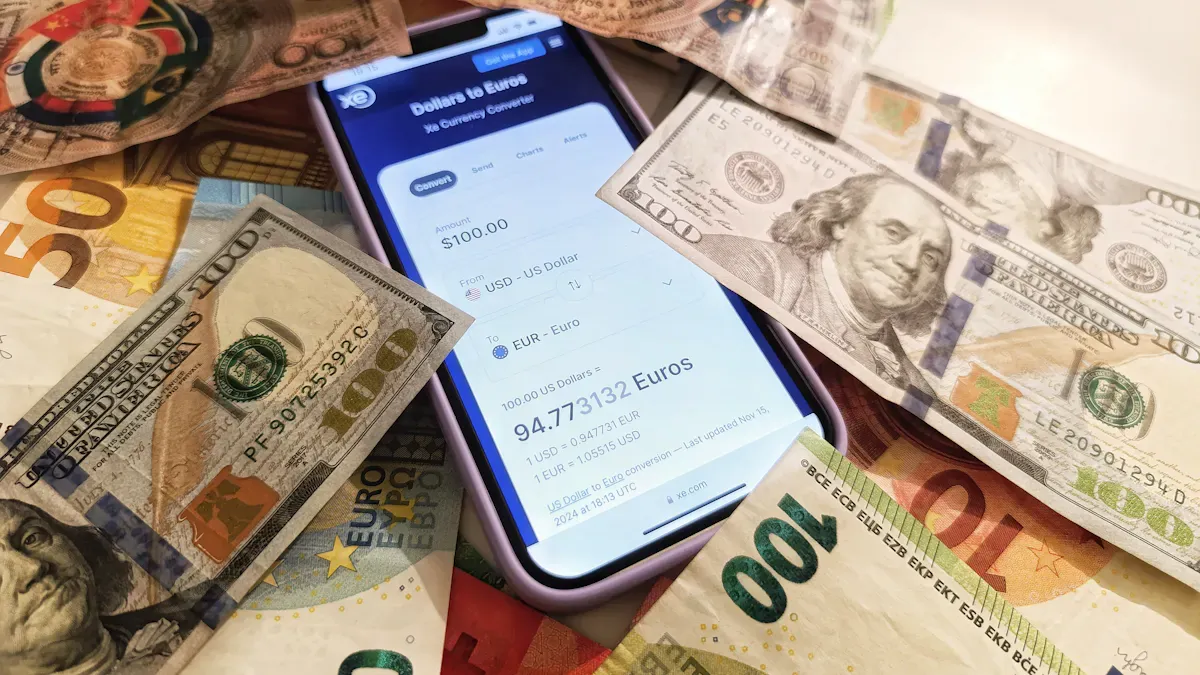
Image Source: pexels
When companies expand into Latin American markets, you will find that fund repatriation becomes the biggest obstacle. Mexico and Brazil have recently adjusted their forex policies, directly affecting capital flows. For example, Brazil reduced the IOF-FX tax rate on foreign investment returns to 0%, creating a more favorable environment for capital repatriation. Mexico, on the other hand, increased the interest tax rate on net assets and the withholding tax on financial investments, requiring companies to reassess their repatriation strategies. The table below summarizes the main policy changes and their impacts:
| Policy Change | Impact | Effective Date |
|---|---|---|
| Increase in net asset interest tax rate from 15% to 20% | Affects corporate fund repatriation strategies | January 1, 2026 |
| Introduction of 5% withholding tax on certain financial investments | May require portfolio reevaluation | January 1, 2026 |
| Online gambling operation tax rate increased from 12% to 18% | Increases operating costs for gambling operators | October 1, 2025 |
| IOF-FX tax rate on foreign investment returns reduced to 0% | Creates a more favorable environment for foreign investors and capital repatriation | Immediate effect |
You need to closely follow the latest policy developments and, combined with real cases, find compliant and efficient paths for fund repatriation.
Key Takeaways
- Pay close attention to forex policy changes in Mexico and Brazil, adjust fund repatriation strategies promptly, and ensure compliance.
- Adopt localized payment solutions to improve capital circulation efficiency, reduce exchange losses, and enhance customer trust.
- Use aggregated payment platforms to integrate multiple payment channels, simplify cross-border collection processes, and increase fund repatriation efficiency.
- Select compliant third-party payment institutions to ensure fund security and quickly complete multi-currency settlements.
- Regularly communicate with legal advisors, stay sensitive to policy dynamics, and avoid risks caused by compliance oversights.
Current Status of Forex Controls for Companies Expanding into Latin America

Image Source: pexels
Mexico Forex Policy
When conducting business in Mexico, you must pay attention to its strict forex management measures. Since 1994, Mexico has implemented a free-floating exchange rate, allowing the market to determine the rate, and capital and investment transactions also follow market mechanisms. To prevent money laundering, Mexico has set clear restrictions on USD cash deposits. You can refer to the table below to understand the USD deposit limits for different entities:
| Type | Limit Amount |
|---|---|
| Monthly deposit limit for account holders | Not exceeding USD 4,000 |
| Daily deposit by Mexican citizens without accounts | USD 300 per day, not exceeding USD 1,500 per month |
| Monthly cash exchange limit for tourists without accounts | Not exceeding USD 1,500 |
| Monthly cash deposit limit for businesses in border and tourist areas | Exceeding USD 14,000 (subject to specific conditions) |
You also need to note that since 2016, the Bank of Mexico (Banxico) has introduced a central clearing house, improving the clearing efficiency of USD receipts. For companies expanding abroad, restrictions on USD cash deposits and changes in clearing services directly affect the flexibility and compliance of cross-border capital flows.
Brazil Forex Policy
In recent years, Brazil has carried out major reforms to its forex regulatory system. In 2021, Brazil passed a new forex regulatory framework, replacing more than 40 fragmented regulations and greatly simplifying investment and capital flow processes. You can refer to the table below to understand Brazil’s main forex control mechanisms:
| Mechanism Type | Description |
|---|---|
| Forex Market | Daily average trading volume of USD 21 billion, accounting for approximately 0.27% of the global market. |
| Forex Regulatory Framework | The new framework simplifies regulations and expands the scope of foreign currency account activities. |
| Currency Conversion and Transfer | Foreign investors can freely convert Brazilian currency; forex transactions are fully liberalized. |
| Foreign Loan Approval | All foreign loans require approval from the Central Bank of Brazil, usually granted automatically. |
| Forex Transaction Reporting | All forex transactions must be reported to the Central Bank, including detailed identification data. |
When conducting business expansion in Brazil, you will benefit from a more open forex environment, but you still need to strictly comply with reporting and approval procedures.
Impact on Fund Repatriation
When repatriating funds in Latin American markets, you must face multiple challenges. First, Mexico’s strict restrictions on USD cash deposits may hinder capital flows and increase compliance costs. Second, the Brazilian real fluctuates significantly against the USD exchange rate, requiring companies to flexibly adjust pricing and repatriation strategies. You also need to pay attention to the following points:
- Although forex transactions in Brazil are liberalized, all cross-border capital flows must be reported to the Central Bank, with high compliance requirements.
- Businesses in Mexico’s border and tourist areas can enjoy higher cash deposit limits, but they must meet specific conditions and the scope of application is limited.
- Policy changes in both countries are frequent; companies expanding abroad need to continuously monitor the latest regulations and adjust repatriation paths in time.
Only by deeply understanding local forex policies can you formulate efficient and compliant fund repatriation solutions for business expansion.
Fund Repatriation Solution Comparison

Image Source: unsplash
Localized Payment Solutions
When conducting business in Latin American markets, adopting localized payment solutions can significantly improve fund repatriation efficiency. Payment habits in Latin America are diverse, with bank transfers, invoice payments, cash, credit cards, and other methods coexisting; in many scenarios, local payment methods perform better than international credit cards. If you choose localized payments, you need to cooperate with local acquirers or establish a legal entity. For example, in Brazil, foreign entities must partner with local acquirers or set up a company to handle domestic payments. In Mexico, companies must comply with value-added tax (VAT) and local tax laws; non-compliance may result in fines or service interruptions.
The advantage of localized payment solutions lies in reducing currency conversion fees, improving capital circulation speed, and enhancing customer trust. You can leverage global payment platforms such as BiyaPay, which supports real-time exchange between local fiat currencies and USD, HKD, USDT, and other currencies to meet the diverse needs of Chinese-speaking users. BiyaPay accesses local clearing networks compliantly, helping you achieve efficient capital repatriation and reduce exchange losses.
In this context, businesses should look beyond the local collection channel itself and also evaluate whether conversion costs and repatriation routes are transparent. For example, they can first use the BiyaPay website and its exchange rate comparison tool to estimate the conversion cost of common settlement currencies such as USD and HKD, then align that with their actual treasury workflow through its international remittance service. As a multi-asset wallet, BiyaPay covers cross-border payments, fund conversion, and multi-currency management, and it also discloses relevant compliance registrations such as U.S. MSB and New Zealand FSP, making it a reasonable reference point when assessing fund return efficiency and transparency.
Supporting local payment methods is not just an optimization issue but a basic requirement for companies expanding into Latin American markets. Ignoring local payment habits will make it difficult to improve market penetration and customer conversion rates.
Aggregated Payment & Cross-Border Collection
Aggregated payment solutions provide you with the ability to integrate multiple payment channels and simplify cross-border collection processes. Through an aggregated payment platform, you can access multiple local payment institutions at once and achieve unified fund settlement. Taking Airwallex’s acquisition of MexPago as an example, companies can compliantly handle Mexican peso, USD, and other multi-currency funds through licensed local aggregated payment platforms, improving repatriation efficiency.
Aggregated payment platforms usually embed compliance monitoring functions to help you meet regulatory requirements in different countries. You do not need to manage all compliance processes separately; the platform assists in completing KYC, anti-money laundering, sanctions screening, and other operations. This model is suitable for companies planning rapid expansion in Latin American markets, especially in multi-currency and multi-channel collection scenarios.
You can also choose global collection service providers such as BiyaPay, which enable fast local payments, cross-border settlements, and fiat-to-cryptocurrency exchanges through a single API. BiyaPay supports real-time USDT to USD/HKD conversion, meeting your diverse needs in the fund repatriation process.
Third-Party Payment Solutions
Third-party payment solutions provide you with flexible cross-border fund repatriation channels. You can choose third-party payment institutions holding local payment licenses, such as payment acquirers or electronic money issuers in Brazil. These institutions can help you collect and settle funds compliantly and support various local payment methods.
As a global payment and exchange platform, BiyaPay supports real-time fiat and cryptocurrency exchange, USDT to USD/HKD conversion, U.S. and Hong Kong stock fund flows, cryptocurrency trading, and other functions, making it suitable for Chinese-speaking users’ diversified fund repatriation needs in Latin American markets. You do not need to establish a local entity; you can complete compliant collection and repatriation through BiyaPay, greatly reducing operational barriers.
The advantages of third-party payment solutions lie in fast settlement and transparent fees. Taking Fintech solutions as an example, relying on advanced payment networks, cross-border payments can be completed in seconds, far superior to the days or even ten-day settlement cycles of traditional bank transfers.
Bank Compliance Path
The bank compliance path remains the preferred choice for many large companies expanding into Latin American markets. You can open USD accounts through licensed Hong Kong banks and use capital reserve accounts, paid-in capital allocation, debt financing, and other methods to achieve fund repatriation. For example, Brazil allows companies to inject and repatriate funds through capital reserve accounts without negative tax consequences. If you use debt financing, loans must be registered with the Central Bank of Brazil, and principal and interest can later be remitted overseas.
The advantage of the bank compliance path lies in strong compliance and controllable risks. You need to continuously and verifiably comply with local regulations; banks will assist you in responding to regulatory changes and ensure secure capital flows. Licensed Hong Kong banks enjoy high reputation in the global compliance system and are suitable for business expansion projects with extremely high compliance requirements and large fund sizes.
Solution Pros & Cons Comparison
When selecting a fund repatriation solution, you should comprehensively consider factors such as company size, business model, compliance requirements, and capital flow speed. The table below compares mainstream solutions:
| Solution Type | Advantages | Challenges | Applicable Scenarios |
|---|---|---|---|
| Localized Payment | High cost-effectiveness, reduces exchange losses, improves customer trust, strong compliance | Complex technical integration, requires local partners, high compliance requirements | Companies that need to deeply penetrate local markets and improve conversion rates |
| Aggregated Payment / Cross-Border Collection | Multi-channel integration, compliance monitoring, rapid expansion, high settlement efficiency | Need to adapt to multi-country regulations, high platform dependency, sudden transaction changes may cause fund freezing | Multi-currency, multi-channel collection, companies with rapid expansion plans |
| Third-Party Payment | Fast settlement, transparent fees, no need for local entity, supports multi-currency/cryptocurrency exchange | Requires local payment licenses, high compliance documentation requirements, must cope with multi-country regulation | Light-asset operations, flexible repatriation, Chinese-speaking users |
| Bank Compliance Path | Strong compliance, controllable risks, suitable for large amounts, high global reputation | Long approval process, slow settlement, requires continuous compliance investment, strict regulatory review | Large enterprises, large fund sizes, high compliance requirements |
You also need to pay attention to fees and settlement times of different solutions. Traditional bank transfers have high fees and settlement cycles up to ten days. Fintech solutions such as BiyaPay, relying on new payment networks, enable cross-border payments to be completed in seconds, greatly improving capital flow efficiency. International credit cards, transfers, and other methods require attention to exchange losses and taxes.
In the process of business expansion, choosing the right fund repatriation solution will directly affect fund security, compliance risks, and market expansion speed. It is recommended to flexibly configure multiple solutions based on actual business needs, continuously monitor policy changes in Latin America, and ensure compliant and efficient fund repatriation.
Case Studies of Fund Repatriation for Companies Expanding Abroad
Mexico Local Collection Practice
When conducting business in Mexico, you must strictly follow local collection procedures. Companies usually need to complete a series of compliance steps to ensure safe and efficient fund repatriation. The table below summarizes the main operation process:
| Step | Specific Requirements |
|---|---|
| Company Registration | Register with the Public Commercial Registry of Mexico and obtain RFC (tax number) from SAT |
| IMMEX Program | Allows export-oriented manufacturers to defer VAT on imports |
| Environmental and Land Use Permits | Apply at local, state, and federal levels depending on project scale |
| Operating License | Issued by the municipality |
| Energy Registration | Coordinate industrial power connection with CFE |
| Labor and Social Security Obligations | Register employees and comply with relevant legal requirements |
Through localized payment platforms such as BiyaPay, you can achieve real-time exchange between Mexican peso and USD, meeting the diverse fund repatriation needs of Chinese-speaking users. Compliant operations not only improve capital circulation efficiency but also enhance customer trust and reduce tax and regulatory risks.
Brazil Compliant Repatriation Experience
In the process of fund repatriation in Brazil, you face strict forex controls and complex tax requirements. All international capital flows require legitimate reasons and detailed documentation support. Companies usually adopt the following measures:
- Classify each transfer and provide supporting documents.
- Comply with different rules and tax requirements according to the nature of each operation (profits, dividends, loans, etc.).
- Foreign direct investment must be formally registered; some operations require tax withholding before remittance.
- Rely on licensed Hong Kong bank channels, using capital reserve accounts and debt financing to achieve compliant fund repatriation and ensure compliance and fund security.
The table below shows the main compliance challenges and solutions:
| Compliance Challenge | Solution |
|---|---|
| Strict regulations of the Central Bank of Brazil (BACEN) | Detailed planning and legal consulting services |
| Requirements of the Brazilian Federal Revenue Service (RFB) | Ensure compliance with necessary regulations and documentation requirements |
| Mandatory documentation for each transfer | Classify and manage with complete supporting documents |
| Proper registration of foreign investment | Complete formal registration process as required |
Through aggregated payment platforms such as BiyaPay, you can quickly complete multi-currency settlements and avoid the long settlement cycles and high fees of traditional bank channels. Compliant planning and legal consulting services are key guarantees for fund repatriation.
Case Summary
In the process of fund repatriation in Latin American markets, you need to be vigilant about financial fragility caused by dollarization and risks of forced currency conversion. The complexity of monetary policy may exacerbate inflation and depreciation expectations, affecting investor confidence. When companies expand abroad, it is recommended to:
- Prioritize localized payment and aggregated payment platforms to improve capital circulation efficiency.
- Rely on licensed Hong Kong bank channels to ensure compliant repatriation of large amounts.
- Continuously monitor policy changes and flexibly adjust repatriation strategies.
- Combine legal consulting and compliance planning to avoid systemic risks.
Only by deeply understanding local policies and operation processes can you achieve safe and efficient fund repatriation and support steady business expansion.
Compliance & Risk Prevention
Key Points of Compliant Operations
When repatriating funds in Mexico and Brazil, you must strictly comply with local forex and tax regulations. Compliant operations include accurately declaring capital flows, preparing complete supporting documents, and timely completing Central Bank reports. You need to focus on classifying fund purposes and ensure every remittance has a legitimate basis. During business expansion, it is recommended to regularly communicate with legal advisors, follow policy adjustments in time, and avoid risks caused by compliance oversights.
Compliance processes not only safeguard fund security but also enhance corporate reputation. Ignoring compliance details may lead to regulatory investigations and tax penalties.
Risk Prevention Recommendations
During the fund repatriation process, common risks include regulatory complexity, tax implications, currency convertibility restrictions, and cross-company lending difficulties in Brazil. It is recommended that you take the following measures:
- Establish efficient operational structures and optimize capital flow paths.
- Classify and manage every fund with complete documentation.
- Monitor exchange rate fluctuations and reasonably schedule settlement timing.
- Regularly review tax policies to avoid unnecessary tax burdens.
You should also strengthen internal compliance training to improve the team’s sensitivity to local policies. Through aggregated payment platforms and legal consulting services, you can effectively reduce systemic risks in the fund repatriation process.
Policy Trend Outlook
You need to continuously monitor the latest developments in forex policies in Mexico and Brazil. The table below summarizes recent policy trends in both countries and their impact on fund repatriation:
| Aspect | Description |
|---|---|
| Forex Policy | The Central Bank of Brazil sets adjustable exchange rate bands for the USD and real and maintains a crawling peg. |
| Capital Flow Regulation | Different regulations apply to forex inflows and outflows; capital outflows require prior authorization from the Central Bank. |
| Foreign Investment Restrictions | Foreign investors’ investments are restricted to two types of fixed-income funds and must be conducted through specific programs of the National Monetary Council. |
| Current Payment Approval | Payments not covered by current regulations require Central Bank approval, including remittance of income from foreign direct investment and royalties for technical assistance. |
| Factors Affecting Fund Repatriation | The complex interaction between capital controls, liberalization measures, and external economic conditions affects capital repatriation. |
When companies expand into Latin American markets, you need to closely monitor the dynamics of policy liberalization and capital controls and flexibly adjust repatriation strategies. Policy changes will directly affect capital flow efficiency and compliance risks; it is recommended to plan ahead and maintain communication with regulators to ensure smooth fund repatriation.
When companies expand into Latin American markets, fund repatriation faces complex policy and compliance challenges. Mainstream solutions each have their advantages, with compliance and risk prevention always at the core. The table below summarizes the latest policy highlights in Argentina:
| Key Policy | Description |
|---|---|
| Profit and Dividend Remittance | Companies can remit profits and dividends at the official exchange rate |
| Investment Promotion System | Submitting investment projects can enjoy preferential forex market policies |
You need to continuously monitor policy changes and flexibly adjust strategies. Industry experts recommend:
- Regularly question assumptions and flexibly adjust risk management
- Risk management policies must align with actual economic conditions
- Establish policy flexibility to adapt to economic fluctuations
You can only ensure fund security and efficient repatriation by planning ahead.
FAQ
How to ensure compliance during the fund repatriation process?
You need to regularly review local forex and tax policies, prepare complete fund flow documents, and maintain communication with professional legal advisors to ensure every capital movement has a legitimate basis.
Which companies are localized payment solutions suitable for?
If you plan to deeply penetrate Latin American markets and improve customer conversion rates, localized payment solutions are more suitable. This approach helps reduce exchange losses, improve capital circulation efficiency, and enhance customer trust.
How do aggregated payment platforms help you cope with multi-country regulations?
Aggregated payment platforms integrate compliance monitoring and KYC processes, automatically adapting to regulatory requirements in different countries. You do not need to manage compliance processes in each country separately; the platform assists in completing key compliance operations.
What risks should be noted when choosing third-party payment solutions?
You need to focus on payment license compliance, fund security, and settlement transparency. It is recommended to choose service providers with good reputation and compliant qualifications to ensure a safe and efficient fund repatriation process.
How do forex policy changes affect fund repatriation?
Policy adjustments may impact capital flow speed, tax burdens, and compliance requirements. You should continuously monitor policy dynamics, adjust repatriation paths in time, and reduce compliance and exchange rate risks
*This article is provided for general information purposes and does not constitute legal, tax or other professional advice from BiyaPay or its subsidiaries and its affiliates, and it is not intended as a substitute for obtaining advice from a financial advisor or any other professional.
We make no representations, warranties or warranties, express or implied, as to the accuracy, completeness or timeliness of the contents of this publication.
Related Blogs of

Under the IBM Shock, Which Has the Highest Enterprise IT Budget Exposure: NOW, CRM, ADBE, or ORCL? A Risk Ranking


What Does ASML’s Guidance Upgrade Mean for TSMC, Nvidia, and U.S. Semiconductor Equipment Stocks?


AMAT, LRCX, or KLAC: Which Company Benefits Most from the Semiconductor Equipment Cycle? How ASML’s Guidance Transmits Across the Supply Chain

Will PayPal Accept Stripe’s Offer? Three Major Obstacles: Board Approval, Financing, and Regulation

Choose Country or Region to Read Local Blog
 Australia
 Austria
 Belgium
 Canada
 Cyprus
 Czech Republic
 Denmark
 Estonia
 Finland
 France
 Germany
 Greece
 Hong Kong
 India
India Indonesia
 Ireland
 Italy
Italy Japan
Japan Latvia
 Lithuania
 Luxembourg
 Malaysia
 Malta
Malta Morocco
 Nepal
Nepal Netherlands
 New Zealand
 Norway
 Pakistan
 Philippines
 Poland
 Portugal
 Romania
 Singapore
 Slovakia
 Slovenia
 South Africa
 South Korea
 Spain
Spain Sweden
 Thailand
 United States
 Turkey
 United Arab Emirates
 United Kingdom
 Vietnam
Contact Us



