- More
- Download
Withdrawal Requires Bank Statements and Personal Tax Certificate? A Complete Guide to 2026 Personal Digital Asset Tax Compliance Requirements




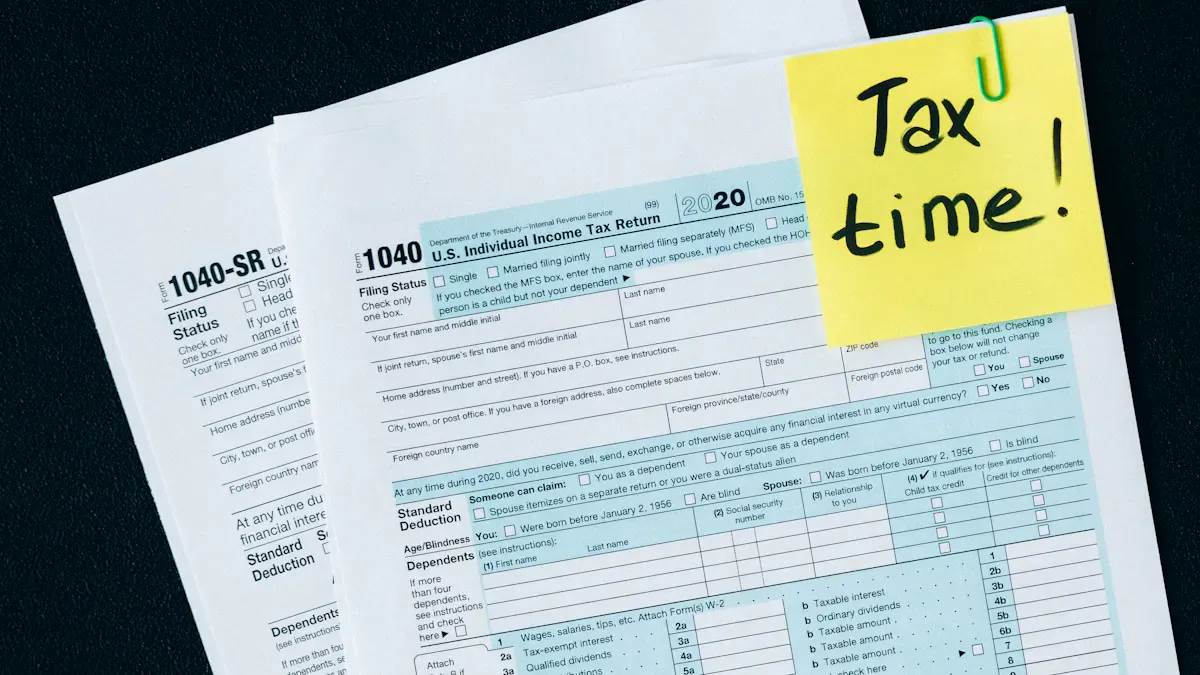
Image Source: pexels
In 2026, digital asset withdrawal requirements have become significantly stricter. You need to pay close attention to the upgraded supervision by tax authorities over personal digital asset income. SEC and CFTC will further issue guidance, promoting compliant access to digital assets. The IRS has simplified the electronic delivery process for Form 1099-DA, and brokers are required to notify clients of policy changes in advance. When you perform digital asset withdrawals in mainland China, bank statements and personal income tax certificates have become mandatory documents. Cross-border supervision and declaration procedures have also undergone noticeable changes, with compliance risks continuing to increase.
Core Key Points
- In 2026, digital asset withdrawal requirements are stricter — bank statements and personal tax certificates are required to ensure compliance.
- Follow the latest tax policies and reporting obligations to avoid high fines and audit risks caused by unreported transactions.
- Regularly organize and back up all transaction records to ensure materials are authentic and complete in preparation for future tax audits.
- Understand the impact of CRS and CARF mechanisms on digital assets to ensure transparency and compliance in cross-border transactions.
- Proactively track changes in tax policies, adjust declaration strategies promptly, and safeguard your rights and compliant reputation.
Withdrawal Requirements & New Regulatory Normal
Policy Changes and Legal Basis
In 2026, you will find that withdrawal requirements have become the new normal for digital asset management. Tax authorities continue to strengthen supervision over personal income, while the liquidity and transparency of digital assets have significantly improved. When conducting digital asset withdrawals, you must comply with the most current policy regulations.
You need to pay attention to the following key policy changes:
| Document Type | Description |
|---|---|
| Rule | The Commodity Futures Trading Commission (CFTC) withdrew the final interpretive guidance issued on June 24, 2020, titled “Retail Commodity Transactions Involving Certain Digital Assets.” |
| Date | The withdrawal of this guidance took effect on December 10, 2025. |
You also need to understand the impact of CRS 2.0 and CARF mechanisms on digital assets. CRS 2.0 updated the framework for automatic exchange of cross-border financial account information, adapting to the circulation of modern digital currencies. CARF specifically addresses regulatory challenges in crypto asset transactions, ensuring visibility of activities across jurisdictions.
Digital asset service providers are now required to follow stricter reporting and due diligence obligations. These changes make your withdrawal activities far more transparent and significantly increase your tax compliance responsibilities.
Major Risks and Consequences
During the digital asset withdrawal process, you face multiple risks. Common risks include:
- Credit and counterparty risk: The counterparty may fail to fulfill its obligations, especially in unregulated environments.
- Liquidity risk: Insufficient market liquidity may cause price volatility and trading difficulties.
- Technical and operational risks: Technical failures and smart contract vulnerabilities may result in asset losses.
- Legal and regulatory risks: Legal uncertainty may expose you to unfair accusations.
If you fail to comply with withdrawal requirements and tax reporting obligations, the consequences can be severe. In 2025, the total penalties assessed by the IRS reached as high as $30 billion, demonstrating strong enforcement power. Failing to report cryptocurrency transactions can lead to audits, fines, and even criminal charges for tax evasion. You should also note that non-compliance with FBAR and FATCA reporting requirements can result in substantial penalties.
Many taxpayers previously believed cryptocurrency transactions were anonymous and did not need reporting. Today, centralized exchanges, blockchain analytics firms, and regulators have greatly enhanced monitoring capabilities, ensuring every digital asset withdrawal can be traced and verified.
You should proactively record all transactions, use professional cryptocurrency tax software, accurately report every taxable event, and complete required forms. If you discover errors in past filings, correct them voluntarily before the tax authority contacts you to minimize compliance risks.
2026 New Compliance Rules
Scope and Applicable Parties
The 2026 digital asset tax compliance new rules will affect your digital asset operations both in mainland China and globally. You need to pay attention to the following applicable parties and asset types:
- Digital asset brokers
- Cryptocurrency
- Tokens
- Non-fungible tokens (NFTs)
The U.S. Infrastructure Investment and Jobs Act (IIJA) of 2021 amended Section 6045 of the Internal Revenue Code. As a broker, you are required to report digital asset transactions using Form 1099-DA starting January 1, 2025. Whether you are an individual or institution, as long as you engage in buying, selling, exchanging, or holding digital assets in cross-border accounts, you must comply with withdrawal requirements and the new compliance rules.
Overview of Compliance Requirements
You need to understand the core compliance requirements for digital assets in 2026. According to final regulations issued by the U.S. Treasury in July 2024, brokers must report the cost basis of digital asset sales and dispositions. This change aligns cryptocurrency tax reporting rules with those for investment assets such as stocks and bonds. The main compliance requirements are as follows:
| Compliance Requirement | Description |
|---|---|
| Reporting Obligation | Brokers must report digital asset transactions, including sales and exchanges. |
| Cost Basis Reporting | Starting in 2026, brokers must report the cost basis of digital asset sales and dispositions. |
| Backup Withholding Requirement | Backup withholding applies when the broker lacks a valid taxpayer identification number. |
You should also note that brokers are required to report gross proceeds for transactions in 2025 and later, and report cost basis for specific transactions starting in 2026. If you fail to provide a valid taxpayer identification number, backup withholding will automatically apply, affecting your cash flow and withdrawal process.
CRS and Cross-Border Regulation
In 2026, the CRS (Common Reporting Standard) mechanism further strengthens reporting obligations for financial institutions. When you open or manage digital asset accounts, financial institutions will conduct stricter verification of your tax information. Key changes include:
| CRS Change | Actual Impact |
|---|---|
| Digital products such as electronic money and similar accounts included in scope | Certain e-money wallets and digital value products are treated as reportable financial accounts, requiring institutions to apply CRS due diligence for the first time. |
| All tax residencies must be captured and reported | Financial institutions must record and report all your declared tax residencies, ensuring onboarding processes and systems support multiple tax residencies. |
| More detailed customer information required | Onboarding requires structured tax data and valid tax self-certification, including TIN for each tax residency. |
| Stricter verification of customer information | Institutions must check consistency between tax self-certification and KYC data; inconsistencies trigger investigation and evidence retention. |
| Ongoing monitoring required | Institutions must continuously monitor changes in customer circumstances and update tax data and self-certification promptly. |
| Updated CRS reporting format | Annual reports must use the new OECD CRS XML schema to ensure accurate data mapping and file integrity. |
| Increased regulatory scrutiny | Regulators will intensify review of onboarding, data quality, and evidence; addressing gaps early reduces audit and penalty risks. |
In managing cross-border digital asset accounts, you should also monitor the ongoing expansion of licensing scopes by U.S. and global banking regulators for digital assets and distributed ledger activities. Globally, 85 jurisdictions have implemented or are advancing virtual asset travel rule legislation, with compliance pressure continuing to rise. You should proactively cooperate with financial institutions’ due diligence efforts, ensuring all tax information is accurate and complete to reduce risks from future tax audits and withdrawal requirements.
Document Preparation & Withdrawal Requirements

Image Source: unsplash
Bank Statement Preparation
When preparing for digital asset withdrawals, bank statements are the most fundamental document. Bank statements can prove the source and destination of your funds, assisting tax authorities in verifying compliance. You should apply to a Hong Kong licensed bank or other compliant financial institution for complete statements covering the past 12 to 24 months. Statements should include all credits, debits, remittances, conversions, etc., preferably denominated in USD to facilitate unified review by cross-border regulators.
When using BiyaPay and similar global payment and digital currency exchange services, the platform automatically generates detailed transaction records. You can download these statements as supporting documents for submission to banks or tax authorities. Ensure the statement information matches actual transactions to avoid discrepancies in amounts, dates, or accounts.
Tip: For cross-border e-commerce, Hong Kong Talent Scheme, or similar programs, the required bank statement coverage is usually at least 12 months; some high-net-worth scenarios may require over 24 months. Plan ahead and regularly save and back up all statement files.
Obtaining Personal Income Tax Certificate
When conducting digital asset withdrawals in China / mainland China, the personal income tax certificate is an indispensable document. It reflects your income sources, tax payment status, and declaration compliance. You can apply online via the China Individual Income Tax mobile app or the official tax bureau website. Select the “Income Tax Payment Details” or “Tax Payment Records” type, covering the most recent 1–2 full tax years.
When applying for the Hong Kong Top Talent Pass, declaring cross-border e-commerce income, or making large withdrawals through BiyaPay, tax authorities will closely scrutinize the authenticity and completeness of your personal tax certificate. Ensure all digital asset-related income has been truthfully declared to avoid omissions or errors.
Note: If you encounter undeclared historical income or missing documents during declaration, promptly file supplementary declarations and complete the required proofs to reduce future audit risks.
Organizing Other Supporting Documents
In addition to bank statements and personal tax certificates, you should also prepare other supporting materials for withdrawal. Common documents include:
- Income proof: labor contracts, service agreements, dividend resolutions, project settlement statements, etc., proving the legitimate source of digital assets.
- Transaction details: records exported from the BiyaPay platform, including crypto-to-fiat conversions, fiat deposits/withdrawals, USDT to USD/HKD, etc.
- Asset holding proof: digital wallet addresses, blockchain explorer screenshots, platform asset attestation letters, etc., to verify asset ownership.
- Declaration forms: Form 1099-DA, CRS self-certification forms, foreign account information forms, etc., to satisfy cross-border regulatory requirements.
Organize all documents chronologically and clearly label income type, amount, currency, and counterparty. In cross-border e-commerce, Hong Kong Talent Scheme, and similar scenarios, document coverage usually spans 12–24 months; some high-net-worth individuals may need to provide longer historical records.
At this stage, the goal is not only to collect enough documents, but to make sure the source of funds, conversion path, and receiving account can be matched clearly from start to finish. If you regularly use the BiyaPay website for cross-border remittance, asset conversion, or transfer of trading funds, it is worth archiving those exported records together with bank statements and tax documents, so the flow of funds is easier to explain during a review.
From a documentation standpoint, the value of this type of record is that it can cover multiple links at once, including remittance, asset conversion, and account movement history. As a multi-asset wallet, BiyaPay covers cross-border payments, fund management, and several trading scenarios, and operates under frameworks such as U.S. MSB and New Zealand FSP, which can serve as a supporting reference when organizing compliance materials.
Recommendation: Regularly export transaction details from platforms like BiyaPay, combine them with bank statements and personal tax certificates to create a complete withdrawal document package, improving declaration efficiency.
Declaration Process
After preparing all materials, follow this process for withdrawal declaration:
- Initial Material Review: Organize all bank statements, personal tax certificates, income proofs, etc., conduct a self-check to ensure consistency.
- Platform Submission: Initiate withdrawal on compliant platforms such as BiyaPay, upload required documents, and fill in withdrawal amount, currency, receiving account, etc.
- Bank Compliance Review: Hong Kong licensed banks or other institutions will review your materials for compliance, focusing on fund source, tax status, and transaction details.
- Tax Authority Verification: For large withdrawals or cross-border declarations, tax authorities may request additional documents or conduct interviews. Cooperate actively and submit required proofs promptly.
- Funds Arrival: Upon approval, funds will be settled in USD and transferred to the designated account. Retain all declaration and receipt records for future self-audit and compliance checks.
Throughout the entire declaration process, strictly adhere to withdrawal requirements, ensuring all materials are authentic, complete, and traceable. If you encounter incomplete documents or errors in historical declarations, voluntarily supplement and correct them to reduce future compliance risks.
Tax Audits & Response Strategies

Image Source: pexels
Common Audit Triggers
During digital asset withdrawals, you may encounter various tax audit scenarios. Tax authorities typically focus on large fund movements, frequent cross-border transfers, discrepancies between reported income and declarations, etc. If you conduct large withdrawals via Hong Kong licensed banks, the bank’s compliance team will first perform a preliminary review of your statements and personal tax certificate. Tax authorities may later request additional proof of income source, asset holding evidence, or historical transaction details. The likelihood of audit increases significantly when declaring cross-border e-commerce, crypto conversions, or Talent Scheme projects.
Self-Review & Supplementary Filing
You should periodically self-review all digital asset-related transactions and declaration records. Cross-check bank statements, personal tax certificates, and platform transaction details to verify every fund flow and income type. If you discover omissions, amount discrepancies, or missing documents in past declarations, voluntarily file supplementary reports with the tax authority. Submit supplementary applications via the tax bureau website or Individual Income Tax app and complete required proofs. Proactive supplementary filing helps reduce penalty risks in future audits and strengthens your personal compliance profile.
Emergency Response
If you receive a tax audit notice, immediately gather all withdrawal-related materials. Prepare bank statements, personal tax certificates, income proofs, transaction details, etc., and submit them as required. During the audit, maintain communication with tax officers and provide supplementary information promptly. If documents are missing or historical data is hard to trace, explain the actual situation and provide reasonable justification. You may also engage professional tax advisors to ensure the audit process proceeds smoothly and compliance risks are minimized.
Compliance Recommendations & Risk Mitigation
Daily Document Management
Effective daily document management is critical during digital asset withdrawals. Regularly organize bank statements, personal tax certificates, and platform transaction details to ensure materials are complete, authentic, and traceable. Create dedicated folders categorized by year and currency to store all records. Pay attention to wallet-level tracking to ensure every digital asset movement is accurately documented. If you hold multiple crypto accounts, review whether taxpayer information is accurate and up-to-date, and respond promptly to brokers’ requests for W-9 updates or verification. Collaborating with tax advisors to model future tax outcomes can help identify potential risks early.
Tip: Regularly export platform transaction details and bank statements, combine them with personal tax certificates to build a complete compliance document package — this greatly improves declaration efficiency and audit readiness.
Key Declaration Pitfalls to Avoid
When declaring digital asset withdrawals, avoid these common mistakes that most easily trigger tax risks:
- Failing to report all transactions.
- Mixing personal and business activities.
- Incorrectly reporting losses and wash sales.
- Failing to report DeFi and NFT transactions.
- Using incorrect cost basis methods or omitting cost basis.
Ensure all digital asset-related transactions are truthfully reported, distinguish personal from business income, and calculate gains/losses accurately. Use the correct cost basis method during declaration to prevent data inconsistencies that trigger audits. For DeFi or NFT transactions, proactively include relevant details to ensure complete reporting. For large withdrawals, consult tax advisors in advance and establish effective anti-corruption compliance procedures to reduce enforcement risks and protect your reputation.
Monitoring Policy Updates
Continuously track the latest developments in digital asset tax policy. Regularly check the tax bureau website, financial institution announcements, and professional news sources to stay informed of changes. The IRS is considering expanding the allowable forms list in Form 1099-B composite statements, potentially allowing Form 1099-MISC to report common staking rewards in the digital asset industry — this change will affect your compliance obligations. By organizing historical transaction records and keeping taxpayer information current, you can better respond to future policy shifts. Coordinate with tax and wealth advisors to develop guidelines addressing potential extortion and anti-corruption risks, enhancing overall compliance capability.
Recommendation: In M&A, investment, or large withdrawal scenarios, conduct due diligence early, monitor policy developments, proactively adjust declaration strategies, and protect your interests.
You must take withdrawal requirements and new compliance rules seriously, ensuring standardized document preparation and declaration processes. Regularly self-audit materials, supplement and correct issues promptly, and reduce compliance risks.
- OECD’s CRS 2.0 and CARF will drive improved global digital asset tax transparency.
- These policies will cover electronic money, CBDCs, and crypto assets, standardizing data formats and strengthening due diligence.
Proactively adapting to the new rules allows you to better protect your rights.
FAQ
How long should bank statements cover for withdrawals?
You usually need to provide bank statements covering the most recent 12 to 24 months. Hong Kong licensed banks set different periods depending on withdrawal amount and declaration scenario. Prepare in advance to ensure complete and authentic details.
How to obtain a personal income tax certificate? What information is needed?
You can apply for a personal income tax certificate via the China Individual Income Tax app or official tax bureau website. Select “Income Tax Payment Details” or “Tax Payment Records,” covering the most recent 1 to 2 tax years.
What are the main compliance risks in digital asset withdrawals?
You face risks such as incomplete tax declarations, inconsistent documents, unclear fund sources, etc. Failure to declare as required may result in tax authority audits and penalties.
What information do financial institutions verify under CRS?
When opening digital asset accounts, institutions verify your tax residency, taxpayer identification number, KYC information, and self-certification. Ensure all information is accurate and complete.
How should you respond to a tax audit?
Immediately gather bank statements, personal tax certificates, and transaction details. Cooperate actively with the tax authority and supplement materials promptly. Consult professional tax advisors if needed.
*This article is provided for general information purposes and does not constitute legal, tax or other professional advice from BiyaPay or its subsidiaries and its affiliates, and it is not intended as a substitute for obtaining advice from a financial advisor or any other professional.
We make no representations, warranties or warranties, express or implied, as to the accuracy, completeness or timeliness of the contents of this publication.
Related Blogs of

Are SMH, SOXX, and Hardware Leaders Absorbing Outflows from Software Stocks?


What Is Kevin Warsh’s Policy Framework? How It Affects the U.S. Dollar, Treasuries, and Tech Stocks


AI Revenue Quality at IBM, Oracle, and ServiceNow: Breaking Down Subscription, Cloud, and Consulting Businesses


Understanding Net Interest Margin and Provision Changes Through JPM, BAC, and Citi
Choose Country or Region to Read Local Blog
 Australia
 Austria
 Belgium
 Canada
 Cyprus
 Czech Republic
 Denmark
 Estonia
 Finland
 France
 Germany
 Greece
 Hong Kong
 India
India Indonesia
 Ireland
 Italy
Italy Japan
Japan Latvia
 Lithuania
 Luxembourg
 Malaysia
 Malta
Malta Morocco
 Nepal
Nepal Netherlands
 New Zealand
 Norway
 Pakistan
 Philippines
 Poland
 Portugal
 Romania
 Singapore
 Slovakia
 Slovenia
 South Africa
 South Korea
 Spain
Spain Sweden
 Thailand
 United States
 Turkey
 United Arab Emirates
 United Kingdom
 Vietnam
Contact Us



