The Wisdom of Capital Sedimentation: After Winning U, Don’t Rush to Convert to RMB – Earn High USD Interest in a Multi-Asset Wallet





Image Source: pexels
After winning U in a high USD interest rate environment, you do not need to rush to exchange it for RMB. The wisdom of capital sedimentation lies in how to let assets continue to appreciate while maintaining liquidity. High interest rates are drawing increasing investor attention to diversified allocation; managing USD assets through a multi-asset wallet allows you to both diversify risk and capture yield opportunities in international markets. You can use diverse asset portfolios and flexible financial instruments to balance safety and returns. When making decisions, it is recommended that you always rationally weigh risk against return and avoid blindly chasing short-term gains.
Key Takeaways
- In a high USD interest rate environment, delaying the conversion of USD to RMB can increase overall returns.
- A multi-asset wallet helps you diversify risk, manage different types of assets, and maintain liquidity.
- Pay attention to the interest rate differential between USD and RMB, and rationally choose the timing for currency exchange to avoid blindly pursuing short-term gains.
- Select compliant and secure platforms to ensure asset safety and reduce policy risk.
- Regularly review and rebalance your investment portfolio to keep it aligned with financial goals and improve capital efficiency.
The Wisdom of Capital Sedimentation and Timing of Currency Exchange

Image Source: pexels
USD vs. RMB Interest Rate Differential
When considering the wisdom of capital sedimentation, you first need to focus on the interest rate differential between USD and RMB. Over the past five years, the interest rate differential between USD and RMB has experienced significant fluctuations; these fluctuations are mainly driven by policy adjustments from the People’s Bank of China and the global economic environment. Changes in the interest rate differential not only affect the trend of the USD/RMB exchange rate but also directly impact the return level of holding USD assets.
- The interest rate differential between USD and mainland China has widened significantly in certain periods, attracting more investors to hold USD assets for higher interest income.
- With adjustments to mainland China’s monetary policy, the interest rate differential sometimes narrows, leading to appreciation expectations for the USD/RMB exchange rate.
- RMB has experienced appreciation and depreciation in different stages; the interest rate differential and macroeconomic conditions jointly drive significant exchange rate changes.
You need to understand that changes in the interest rate differential affect the opportunity cost of holding USD assets. When USD interest rates are higher than RMB rates, the wisdom of capital sedimentation lies in delaying currency exchange to leverage the high USD interest rate environment and increase overall returns. Conversely, if the differential narrows and RMB appreciation expectations strengthen, timely exchange may be more advantageous.
Exchange Rate and Liquidity Considerations
In the wisdom of capital sedimentation, exchange rate fluctuations and liquidity management are equally critical. When deciding whether to convert USD to RMB, you must comprehensively consider the exchange rate differences between onshore (CNY) and offshore (CNH) markets, liquidity conditions, and the regulatory environment.
- Mainland China imposes strict regulation on RMB, with capital controls limiting the free flow of funds and resulting in exchange rate differences between CNY and CNH.
- Investor perceptions of CNH accessibility and speculation make the offshore market more volatile, with spreads often widening.
- Onshore and offshore markets have different liquidity conditions; global economic conditions and market dynamics also influence pricing differences between the two.
In actual operations, you should closely monitor the USD/CNH vs. USD/CNY price comparison. When USD/CNH is higher than USD/CNY, exporters typically prefer to convert USD to RMB (CNH), while importers may sell RMB to buy CNY. When the two are equal, market participants need to combine interest rate differential changes and market expectations to flexibly adjust exchange timing.
If the goal is not to convert back into local currency immediately, but to judge whether holding USD-denominated assets still makes more sense for now, this is usually the point where cost comparison becomes more useful than execution. A practical approach is to check BiyaPay’s exchange rate comparison tool first, review the live conversion relationship across currencies, and then decide whether immediate settlement is necessary or whether preserving flexibility is the better choice. For users who may still need cross-border fund movement or later allocation, comparing first and acting second is often the steadier path.
BiyaPay is better understood here as a multi-asset wallet covering cross-border payments, asset conversion, market access, and fund management. In a context where users may keep USD exposure for a longer period and wait for a better window, its stock information page and official website can also serve as reference points for checking scope and planning the next move within the same capital-management framework.
Understanding the differences between USD/RMB and USD/CNH helps you better manage currency risk. Businesses and individuals can optimize trading structures and reduce exchange rate fluctuation risks by analyzing these differences. For users with frequent cross-border fund flows, developing effective currency risk management strategies is especially important.
Maintaining liquidity in USD assets prevents market failure and ensures you can smoothly deploy funds when needed. Adequate liquidity not only supports broader market functions but also gives you stronger resilience during economic stress. The wisdom of capital sedimentation requires you to rationally allocate USD and RMB assets in a high interest rate environment, flexibly grasp exchange timing, and improve overall capital efficiency.
Advantages of Multi-Asset Wallets
Asset Safety and Convenience
When choosing a multi-asset wallet, your first concern should be fund safety. Biyapay and similar multi-asset wallets adopt multiple security measures to protect user assets:
- Third-party audits to ensure platform compliance and transparency
- Incident response plans to quickly address sudden risks
- Strict adherence to compliance standards to reduce policy risk
- Strong encryption technology to protect data transmission and storage
- Distributed key generation to prevent single points of failure
- Two-factor authentication to enhance account security
- Hardware security modules (HSM) providing physical-level protection
- Cold storage technology keeping private keys completely offline to prevent network attacks
- Hot wallet real-time monitoring and automatic threat detection to secure daily operations
Multi-asset wallets also bring you extremely high convenience. You can manage multiple currencies in a single platform without frequently switching accounts. The table below shows the main features of multi-asset wallets:
| Feature | Description |
|---|---|
| Storage | Users can easily save crypto assets and fiat in one interface, eliminating the need for extra accounts. |
| Send/Receive | Easily send and receive multiple currencies within a single platform. |
| Conversion | Enables near-instant conversion, supporting integration of fiat and crypto as well as real-time fiat-to-fiat swaps. |
You can experience bank-level security and convenience through platforms like Biyapay, especially suitable for Chinese-speaking users conducting global asset allocation and cross-border fund flows.
Diversification and Risk Resistance
The wisdom of capital sedimentation lies in risk diversification. A multi-asset wallet provides you with the ability to diversify allocation, helping you withstand market volatility:
- Asset allocation: You can allocate investments across different asset classes, such as fiat, cryptocurrency, fixed-income products, etc.
- Rebalancing techniques: The platform supports periodic portfolio adjustments to maintain target asset proportions.
- Understanding the importance of different asset classes: Including stocks, fixed income, cash, and real estate, etc., to optimize risk and return.
- Multi-asset allocation effectively mitigates market fluctuations and helps you remain rational during market turmoil.
- Regular portfolio rebalancing promotes “buy low, sell high” and eliminates emotional influence.
Through a multi-asset wallet, you can flexibly respond to global market changes and improve overall capital efficiency.
Yield Channels and High-Interest Products
A multi-asset wallet not only ensures safety and liquidity but also provides you with diverse yield channels. You can select different types of high-interest products to enhance the return on USD assets. The table below shows common asset classes and their expected returns:
| Asset Class | Expected Return |
|---|---|
| Stocks | 20%+ (historical return) |
| Fixed Income | 200 bps (positive return) |
| Staked Stablecoins | Varies by platform |
You can participate in USDC savings, sDAI, sUSDS, and other stable products through platforms like Biyapay. These products are usually denominated in USD and combine treasury bonds, stable fee income, or liquid staking rewards to deliver steady returns with strong liquidity. Some Hong Kong licensed banks also offer multi-currency wealth management products to meet the diversified needs of high-net-worth clients. When selecting products, focus on yield, liquidity, lock-up period, and platform service fees, and combine the wisdom of capital sedimentation to formulate the optimal allocation plan.
High-Yield Strategies in Multi-Asset Wallets
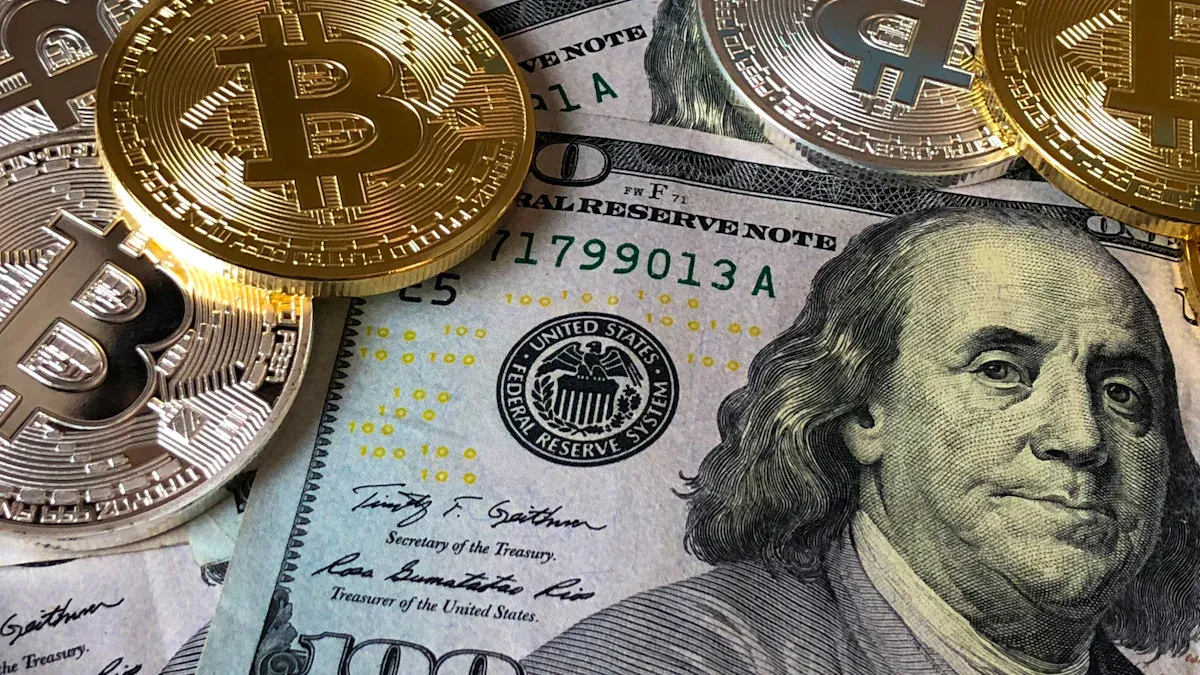
Image Source: pexels
Platform Selection and Operation Process
When choosing a multi-asset wallet platform, first focus on compliance and security. Compliant platforms not only safeguard your funds but also ensure flexible global asset management. Taking Biyapay as an example, the platform adopts end-to-end encryption, distributed key generation, two-factor authentication, and multiple other security measures to minimize the risk of asset theft. You can refer to the table below for a systematic evaluation of the platform’s compliance and reliability:
| Item | Importance |
|---|---|
| End-to-end encryption | Protects user data and transactions |
| Distributed key generation | Prevents single points of failure |
| Two-factor authentication | Adds an extra layer of protection |
| Third-party audit | Verifies wallet security claims |
| Open-source code | Allows public review of vulnerabilities |
| Regulatory compliance | Ensures legal use and anti-money laundering measures |
| Multi-currency support | Enables flexible asset management |
| Data privacy laws | Protects user information |
| Incident response plan | Prepares for hacker attacks or downtime |
In actual operations, you can efficiently complete asset management by following these steps:
- Register and complete identity verification to ensure account compliance.
- Enable two-factor authentication to enhance account security.
- Deposit USD or other assets into the wallet via bank transfer or cryptocurrency top-up.
- Select high-yield products within the platform and flexibly allocate funds.
- Monitor returns in real time and adjust the portfolio as needed.
You can also check whether the platform regularly updates security features, has a dedicated user support team, and is compatible with emerging crypto assets. The wisdom of capital sedimentation requires caution in platform selection, prioritizing safety, compliance, and user experience.
High-Yield Product Types
A multi-asset wallet provides you with diverse high-yield product choices to help you achieve high returns on low-cost funds. You can flexibly allocate the following product types based on your risk tolerance and liquidity needs:
- High-yield cash accounts: Daily liquidity with funds managed by participating program banks; suitable for short-term capital sedimentation.
- Stablecoin savings products (such as USDC savings, sDAI, sUSDS): Denominated in USD, combining treasury bonds, stable fee income, or liquid staking rewards; delivering steady returns with strong liquidity.
- Fixed-income wealth management products: Longer lock-up periods with yields higher than ordinary savings; suitable for medium- to long-term capital allocation.
- Multi-currency wealth management portfolios: Supporting multiple fiat and crypto assets to diversify risk and increase overall returns.
- Automatic reinvestment plans: The platform automatically reinvests returns to help you achieve compounding growth.
Taking Biyapay as an example, the platform supports multi-currency high-yield products with fees and returns denominated in USD, making it easy for you to compare returns across different products. When selecting products, focus on core indicators such as yield, liquidity, lock-up period, and platform service fees, and combine the wisdom of capital sedimentation to formulate the optimal allocation plan.
Yield Calculation and Reinvestment
When investing in high-yield products, yield calculation and reinvestment strategies directly affect asset growth speed. Platforms usually provide yield simulation tools to help you intuitively understand the long-term effects of different investment methods. The table below shows the long-term difference between simply collecting returns and automatic reinvestment:
| Investment Method | Annual Return | Total After 10 Years | Total After 20 Years |
|---|---|---|---|
| No reinvestment of returns | 10.30% | $2,660 | N/A |
| Automatic reinvestment of returns | 12.20% | $3,165 | N/A |
Every time you reinvest returns, you can purchase more units, further increasing future return potential. Automatic reinvestment also helps you maintain investment discipline, continuously accumulating assets regardless of market fluctuations. Many platforms (such as Biyapay) support automatic reinvestment plans with no additional fees, greatly improving capital utilization efficiency. You can also allocate reinvested returns to different asset classes to rebalance the portfolio and further diversify risk.
The wisdom of capital sedimentation lies not only in selecting high-yield products but also in scientifically utilizing reinvestment mechanisms to allow your assets to grow continuously under the compounding effect of time. Through reasonable allocation and dynamic adjustment, you can effectively hedge inflation and maintain the long-term purchasing power of your assets.
Risk Warnings
Platform and Policy Risks
When choosing a multi-asset wallet, you must pay attention to the platform’s own security and changes in the policy environment. Common platform risks include:
- Counterparty risk: When third parties control assets, understanding the custodian’s identity is critical and directly affects your risk tolerance.
- Operational resilience: Cybersecurity controls and operational risk management determine whether the platform can handle service disruptions.
- Business continuity and asset recovery: Service providers should have contingency plans to ensure smooth asset transfer and recovery in emergencies.
Policy risks are equally important. The regulatory framework continues to evolve, affecting the classification, reserve requirements, and operational oversight of stablecoins. You can refer to the table below for main policy points:
| Evidence Type | Content |
|---|---|
| Regulatory framework | Regulation continues to evolve across multiple jurisdictions, directly impacting stablecoin strategies and requiring ongoing monitoring and adaptation to compliance frameworks. |
| Transparency mechanisms | Regular audits, real-time reserve composition reporting, and clear risk communication help build trust. |
| Policy commitments | Policy protection for legitimate access to open blockchains, maintaining the legal status of self-custody and USD-backed stablecoins. |
You should continuously monitor platform compliance and policy changes, choosing platforms with transparency and contingency capabilities.
Exchange Rate Fluctuation Impact
The historical volatility of the USD/RMB exchange rate is significant and directly affects your asset returns. You need to note:
- From 1998 to 2007, the USD/RMB exchange rate fluctuated dramatically, causing substantial changes in asset value.
- NDF market volatility clustering means large fluctuations often occur consecutively, and risk should not be underestimated.
- RMB has linkages with other Asian currencies; regional market changes also affect your asset performance.
You can hedge exchange rate risk through diversification into international markets, currency hedging strategies, or foreign exchange forward contracts to reduce the impact of single-currency fluctuations on assets. The wisdom of capital sedimentation lies in combining multiple tools to dynamically adjust asset structure and improve overall risk resistance.
Liquidity and Lock-Up Periods
When managing a multi-asset wallet, liquidity risk and lock-up period arrangements are equally important. Best practices include:
- Regularly reviewing liquidity status, especially during market volatility.
- Clearly defining internal asset allocation and access permissions to prevent operational errors.
- Developing contingency plans to respond to market crashes, exchange failures, or regulatory changes.
- Using multi-signature wallets for high-value reserves to enhance security.
- Diversifying liquidity sources to avoid concentrating all assets on a single platform or pool.
You should also regularly monitor and stress-test asset pools, rationally plan contractual obligations, and ensure funds can be flexibly deployed when needed. Choosing audited platforms and diversifying asset allocation help reduce overall liquidity risk.
Case Studies
Return vs. Risk Comparison
When allocating USD high-yield products in a multi-asset wallet, common investment strategies include conservative, balanced, and aggressive types. The risk and return potential vary across different strategies. The table below shows the risk and return characteristics of three typical portfolios:
| Investment Strategy | Risk Level | Return Potential |
|---|---|---|
| Conservative Portfolio | Low | Medium |
| Balanced Portfolio | Medium | Medium-High |
| Aggressive Portfolio | High | High |
In actual operations, you may encounter the following challenges:
- Portfolio integration is relatively difficult. New on-chain assets have not yet established a clear position in crypto portfolios; although they can hedge market volatility, integration is complex and adoption is limited.
- Price discovery mechanisms have limitations. Some real-world assets rely on single-source pricing, leading to pricing accuracy and timeliness risks that affect liquidity.
- Compliance and onboarding processes are cumbersome. KYC requirements and onboarding procedures may reduce the user base and limit asset liquidity.
- Redemption time asymmetry. Some real-world assets have longer redemption cycles and cannot meet instant settlement needs, affecting fund deployment efficiency.
When selecting investment strategies, you should combine your own risk tolerance and liquidity needs to rationally allocate assets and avoid blindly chasing high returns.
Summary of Practical Experience
In managing USD assets, you have accumulated many practical experiences. Security is always the top priority. You unify the management of diverse assets through a multi-asset wallet, significantly improving operational convenience. Compliance is equally important; adhering to regulatory standards helps reduce policy risk. You also need to fully understand various fees and transaction processes to avoid unnecessary losses due to information asymmetry.
Platforms like Uphold provide you with a simplified management interface, allowing you to manage both fiat and cryptocurrency on a single platform. This centralized management approach not only improves efficiency but also reduces reliance on traditional banks. In actual operations, you should regularly review asset allocation, monitor market changes, and flexibly adjust investment strategies to ensure fund safety and maximize returns.
You need to manage USD assets rationally and fully utilize the opportunities brought by the high-interest-rate environment. The wisdom of capital sedimentation lies in bucket management of cash, regular review and rebalancing of the investment portfolio to keep it aligned with financial goals. You should tailor strategies to your actual situation, weigh returns against risks, and flexibly adjust approaches. Continuously monitor market changes, maintain learning and vigilance, and achieve efficient asset appreciation.
- Holding excessive cash hinders long-term goals
- Fed rate cuts may reduce cash yields and increase opportunity costs
- Regularly review the portfolio and optimize asset allocation
FAQ
What is the difference between a multi-asset wallet and a traditional bank account?
You can manage multiple currencies and digital assets simultaneously in a multi-asset wallet, enjoying higher flexibility and global liquidity. Traditional bank accounts usually support only a single fiat currency, with limited cross-border operations.
How to judge the safety of high-yield products?
You should check whether the platform has undergone third-party audits, publicly discloses reserve proofs, and has robust risk control mechanisms. Choosing compliant and transparent platforms helps reduce fund risk.
When is the best time to exchange currency in a high USD interest rate environment?
You need to combine the USD-RMB interest rate differential, exchange rate trends, and your own fund needs to flexibly choose the timing for currency exchange. In a high-interest-rate environment, delaying exchange helps increase overall returns.
How does a multi-asset wallet help diversify risk?
You can allocate different types of assets in a multi-asset wallet, such as fiat, stablecoins, and fixed-income products. Diversified investment helps reduce risk from fluctuations in a single market.
How is fund liquidity ensured?
You should choose platforms that support on-demand withdrawals and multi-currency exchanges, and regularly review asset allocation. Rationally arrange lock-up periods and liquidity ratios to ensure funds can be flexibly deployed when needed.
*This article is provided for general information purposes and does not constitute legal, tax or other professional advice from BiyaPay or its subsidiaries and its affiliates, and it is not intended as a substitute for obtaining advice from a financial advisor or any other professional.
We make no representations, warranties or warranties, express or implied, as to the accuracy, completeness or timeliness of the contents of this publication.
Related Blogs of

Why Is HBM Supply So Tight? Explaining Capacity, Packaging, and Long-Term Customer Agreements


Which Products Are Affected by NAND Price Increases? SSDs, Smartphones, Servers, and Consumer Electronics


What Is QLC NAND? Why Enterprise SSDs and AI Data Centers Are Paying Attention


Which Storage Chip Concept Stocks Are There in 2026? Classification of Related U.S. and Hong Kong Companies

Choose Country or Region to Read Local Blog
 Australia
 Austria
 Belgium
 Canada
 Cyprus
 Czech Republic
 Denmark
 Estonia
 Finland
 France
 Germany
 Greece
 Hong Kong
 India
India Indonesia
 Ireland
 Italy
Italy Japan
Japan Latvia
 Lithuania
 Luxembourg
 Malaysia
 Malta
Malta Morocco
 Nepal
Nepal Netherlands
 New Zealand
 Norway
 Pakistan
 Philippines
 Poland
 Portugal
 Romania
 Singapore
 Slovakia
 Slovenia
 South Africa
 South Korea
 Spain
Spain Sweden
 Thailand
 The United States
 Turkey
 United Arab Emirates
 United Kingdom
 Vietnam
Contact Us




BIYA GLOBAL LLC is registered with the Financial Crimes Enforcement Network (FinCEN), an agency under the U.S. Department of the Treasury, as a Money Services Business (MSB), with registration number 31000218637349, and regulated by the Financial Crimes Enforcement Network (FinCEN).
BIYA GLOBAL LIMITED is a registered Financial Service Provider (FSP) in New Zealand, with registration number FSP1007221, and is also a registered member of the Financial Services Complaints Limited (FSCL), an independent dispute resolution scheme in New Zealand.