Investing in the "Attention Economy": U.S. Stock Logic Behind Meta and Snap Capturing World Cup Traffic





Image Source: pexels
During the World Cup, user activity on social media giants such as Meta and Snap surges significantly. They attract continuous attention from Chinese-speaking users through event-related content, driving platform traffic growth. Traffic dividends become the focus of competition among advertisers, and the attention economy demonstrates strong monetization power in this context. Investors should pay attention to how traffic translates into platform revenue and profits, while also considering how to seize the opportunities and risks brought by traffic surges.
Key Takeaways
- During the World Cup, social media platform traffic surges, with Meta and Snap attracting large numbers of users and driving advertising revenue growth.
- Advertisers use precise targeting and real-time data analysis to enhance brand exposure and conversion rates during high-traffic periods.
- The core of the attention economy lies in converting user attention into commercial value; platforms must optimize content and advertising systems to maintain user engagement.
- Investors should focus on social media platforms’ user behavior analysis and advertising optimization capabilities to capture opportunities from traffic dividends.
- Traffic fluctuations and policy regulation are the main risks faced by social media platforms; investors need to remain vigilant about these uncertainties.
World Cup Traffic Dividend

Image Source: unsplash
Drivers of Traffic Explosion
As one of the most watched sporting events globally, the World Cup dramatically increases user activity on social media platforms. Data shows that during the 2022 Qatar World Cup, social media interactions increased by 621% compared to the 2018 final. FIFA’s overall digital channel traffic rose by 24%. Social media engagement exploded by 448%, with 811 million accounts participating—a new record for global sporting events. FIFA’s TikTok follower count also doubled in a short period, reaching 12 million.
Chinese-speaking users showed extremely high participation enthusiasm during the event. Among the 18–34 age group, 83% planned to watch the World Cup, and 75% of football fans expressed strong interest in event content. Users not only followed match results but also actively participated in content sharing, commenting, and interaction, continuously pushing platform traffic higher.
These phenomena indicate that during the World Cup, social media platforms become the preferred venues for global users to obtain information, express opinions, and interact. The traffic explosion brings platforms an unprecedented attention dividend.
Social Platform Traffic Distribution
In the context of surging traffic, how social platforms allocate and utilize this traffic becomes a key focus for advertisers and investors. Platforms like Meta and Snap use algorithmic recommendations to precisely push popular event content to target user groups, increasing content exposure and user stickiness.
Advertisers closely monitor traffic distribution and prioritize platforms with high user activity and frequent interactions for advertising placement.
Platforms optimize content ecosystems to attract more creators and brands, forming a virtuous cycle. Effective traffic allocation not only improves advertising conversion rates but also brings substantial revenue growth to platforms. The attention economy plays a central role in this process, driving social media platforms to achieve traffic monetization and commercial value enhancement.
Attention Economy and Traffic Monetization
Meta’s Monetization Path
During the World Cup, Meta fully unlocks the value of the attention economy through diversified advertising products and content ecosystems. The platform leverages strong user behavior analysis capabilities to precisely capture the interest points of Chinese-speaking users. Meta’s advertising products performed strongly during the event, with relevant metrics showing high levels in power, influence, and enjoyment.
| Metric | Average Percentile |
|---|---|
| Power | 59 |
| Influence | 62 |
| Enjoyment | 74 |
| Brand Awareness | 40 |
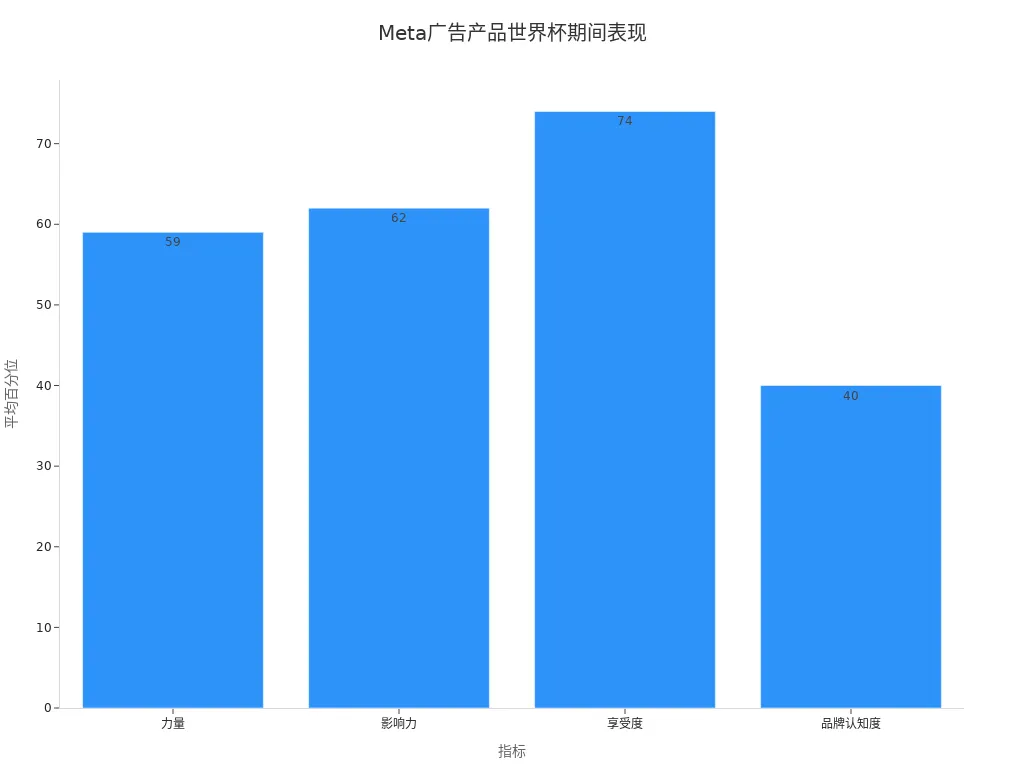
Meta improves user engagement and advertising conversion rates through personalized content recommendations and advertising optimization. For example, the “We Are Rugby” ad touched users with authentic stories and emotional resonance, ranking in the top 15% for influence; the ITV ad attracted viewers with humor, ranking in the top 10% for enjoyment. The platform also enhances resilience and scalability through diversified revenue streams (such as short videos, brand partnerships, community commerce, etc.).
Snap’s Monetization Strategy
Snap also benefited from the attention economy during the World Cup. The platform focuses on young users, using AR filters, short videos, and interactive content to attract participation from Chinese-speaking users. Snap optimizes advertising strategies through real-time data analysis to improve advertisers’ return on investment.
- User behavior analysis helps Snap deeply understand user preferences, improving the precision of ad targeting.
- Real-time insights allow advertisers to flexibly adjust content, capture high-traffic moments, and maximize exposure and conversions.
- Diverse ad formats (such as Snap Ads, brand challenges, interactive stickers) meet the marketing needs of different brands.
Snap actively builds a creator ecosystem, encouraging content innovation and increasing platform activity. By optimizing user experience and content distribution, the platform continuously enhances user stickiness, creating more high-value traffic for advertisers.
Advertisers and Content Ecosystem
During the World Cup, advertisers place high importance on the exposure and conversion opportunities brought by social platform traffic. Platforms like Meta and Snap become the main battlegrounds for brands’ digital marketing. Advertisers achieve efficient monetization through the following approaches:
| Evidence Point | Description |
|---|---|
| High Attention | The World Cup is the most-watched sporting event globally; social media usage surges, and consumers actively engage online during matches. |
| Digital Planning | Consumers search online for World Cup-related travel, tickets, and merchandise; brands need visibility on digital platforms. |
| Real-Time Marketing | Brands create viral spread by quickly reacting to World Cup moments, using social media war rooms and instant content production teams. |
| Trackable ROI | Digital marketing provides measurable results, allowing brands to optimize the performance of each impression. |
| Local Business Opportunities | Local businesses in host cities attract tourists through digital marketing, increasing exposure and sales. |
Advertisers leverage the high-attention environment to precisely target event fans and active users with advertising, capturing the most commercially valuable audiences. The platform content ecosystem also becomes more diverse due to the World Cup traffic surge, with creators, brands, and users jointly driving content innovation.
The essence of the attention economy is converting user attention into measurable commercial value. Meta and Snap continuously improve platform monetization capabilities through enhanced user engagement, personalized content recommendations, and diversified revenue streams. User behavior analysis and advertising optimization technologies help advertisers achieve high exposure and high conversions, driving mutual growth for platforms and brands.
Investment Logic Analysis

Image Source: pexels
Impact of Traffic Dividend on Performance
During the World Cup, traffic surges on social media platforms like Meta and Snap directly drive performance improvement. Platforms attract large numbers of Chinese-speaking users through event-related content, and advertisers increase their budgets. Financial reports from Meta and Snap show that the traffic dividend brings significant revenue growth and improved user activity.
| Key Metric | Description |
|---|---|
| Q4 Earnings Per Share | $8.88 |
| 2026 Q1 Revenue Guidance | $53.5 billion to $56.5 billion |
| Expected Growth Rate | Nearly 30% |
| Capital Expenditure Plan | $115 billion to $135 billion |
| Stock Price | Approaching $740 |
| AI Integration | Optimizes advertising systems on Instagram and Facebook |
Meta optimizes advertising systems through AI integration, improving advertiser placement efficiency. Snap maintains user stickiness through innovative content formats and interactive experiences. Both platforms achieve dual growth in advertising revenue and user scale during the World Cup, sending positive signals to the U.S. stock market.
Sustainability of the Attention Economy
After the World Cup ends, how platforms sustain the traffic dividend becomes a key concern for investors. The sustainability of the attention economy depends on multiple factors:
- Continuous innovation in digital technology drives content ecosystem upgrades and improves user experience.
- Sports tourism and organizational strategies help platforms expand new businesses and enhance risk resistance.
- Existing technologies emphasize the role of sports content in reducing carbon footprint and promoting green development.
- Content design focuses on capturing user attention, with algorithms playing a key role in predicting and guiding user behavior.
- Major sporting events have significant impact on public and media attention; platforms need to integrate digital technology to stimulate sports enthusiasts’ participation in sustainability practices.
Meta and Snap maintain user activity by continuously optimizing content distribution and advertising systems. Platforms also actively introduce new technologies to drive content innovation and extend user dwell time. Only by continuously improving content quality and user experience can platforms maintain traffic and monetization capabilities after the World Cup.
Risks and Countermeasures
Traffic fluctuations and regulatory challenges are the main risks faced by social media platforms. Meta and Snap adopt multiple measures to address these uncertainties and ensure long-term development.
| Strategy | Description |
|---|---|
| Data Privacy Compliance | Meta will launch updates in 2025 requiring businesses to obtain explicit user consent before uploading contact information for custom audience targeting. |
| Advertising Targeting Policy | Platforms implement refined advertising targeting policies, restricting overly personalized ads and emphasizing data privacy and limited tracking. |
| Addressing Regulatory Challenges | In response to regulatory changes and iOS system updates, Meta takes measures to avoid major financial penalties and operational disruptions. |
Platforms enhance user trust by strengthening data privacy protection. Adjustments to advertising targeting policies help reduce compliance risks. Facing changes in the global regulatory environment, Meta and Snap continuously optimize compliance processes to ensure stable business operations.
While focusing on traffic dividends, investors also need to be alert to uncertainties brought by policy changes, technological upgrades, and shifts in user behavior. Only by continuously improving risk management systems can platforms maintain competitive advantages in the attention economy era.
Investment Recommendations and Outlook
Key Stocks and Opportunities
Meta and Snap demonstrated strong traffic monetization capabilities during the World Cup. Investors can focus on these platforms’ ongoing investments in advertising technology, content innovation, and user growth. Meta improves advertiser placement efficiency through AI-driven advertising optimization and diversified content ecosystems. Snap attracts young Chinese-speaking users and enhances platform stickiness through AR interaction and short video content.
Biyapay, as a cross-border payment solution, meets the diverse payment needs of Chinese-speaking users during global events. The platform ensures fund safety and compliance through cooperation with Hong Kong licensed banks. Investors can pay attention to Biyapay’s expansion potential in global payment scenarios.
In the U.S. stock market, social media and fintech sectors offer high growth potential. Investors can select targets with long-term competitiveness by considering platform user structure, content ecosystem, and technological innovation.
Outlook for Future Traffic Events
Major global events continue to drive traffic growth on social media platforms. In the future, investors should pay attention to the following types of traffic peak events:
| Social Media Platform | Traffic Change | Event Type |
|---|---|---|
| X | +13.3% | Iran War |
| No data | In-depth analysis | |
| TikTok / YouTube / Instagram | No data | Short video news |
| No data | Widely shared news |
X experiences traffic surges during geopolitical events, while Reddit attracts professional users with in-depth analysis content. TikTok, YouTube, and Instagram rapidly disseminate information through short video news, and Facebook maintains advantages in widespread news sharing.
Investors can dynamically adjust allocations to social media and fintech sectors by combining global sporting events, geopolitical conflicts, and major social events. Whether platforms can seize traffic peaks, optimize content distribution, and monetize advertising will directly impact their performance and U.S. stock market valuations.
The World Cup traffic significantly boosted Meta and Snap’s performance, increasing attention in the U.S. stock market. Investors need to understand the role of reputation impact, media narrative, and emotional engagement in brand image. The table below summarizes opportunities and risks in attention economy investing:
| Research Finding | Impact | Description |
|---|---|---|
| Investor Attention and Portfolio Volatility | Positive correlation | Abnormal attention can predict stock volatility |
| Industry Risk Spillover | Intensified | Risk spillover effects strengthened in finance, technology, and other industries |
| Behavioral Factors | Important | Behavioral factors influence investment decisions |
Investors should focus on local business information advantages, remain vigilant about security, reputation, legal, and emerging risks, and rationally seize opportunities brought by traffic dividends based on their own risk preferences.
FAQ
Why Does Social Media Traffic Surge During the World Cup?
The World Cup attracts global attention. User activity among Chinese-speaking audiences increases significantly. Event content drives substantial growth in platform interaction and content sharing volume. Advertisers therefore increase budgets, enabling rapid platform traffic expansion.
How Does the Attention Economy Help Platforms Achieve Revenue Growth?
Platforms analyze user behavior to precisely deliver ads and content. Advertisers leverage high-traffic periods to enhance brand exposure. Platforms’ diversified monetization paths strengthen revenue capabilities, with advertising conversion rates improving markedly.
What Are the Main Risks of Investing in Social Media Platforms?
Platforms face risks from data privacy, policy regulation, and traffic fluctuations. Meta and Snap continuously optimize compliance processes and strengthen data protection. Investors need to monitor uncertainties arising from policy changes and shifts in user behavior.
What Advantages Does Biyapay Offer During Global Events?
Biyapay provides diverse cross-border payment solutions for Chinese-speaking users. The platform cooperates with Hong Kong licensed banks to ensure fund safety and compliance. Users can conveniently complete event-related payments across multiple scenarios.
Which Platform Metrics Should Investors Focus On?
Investors should focus on user activity, advertising revenue, content innovation capabilities, and technology investment. Whether platforms can continuously optimize content distribution and advertising systems will directly affect performance and market valuation.
If you plan to keep tracking event-driven names such as Meta and Snap, it can be helpful to make your verification process a bit more complete instead of looking only at traffic headlines. For example, you can use BiyaPay’s stock information lookup to review share prices, basic company data, and recent performance, then compare that with ad revenue, engagement time, and capital spending disclosed in earnings reports to judge whether this round of “attention monetization” is just a short-term event boost or a sign of improving operating efficiency. If cross-border fund planning is also part of your process, you can use the official website to understand its multi-asset wallet use cases in cross-border payments and fund management. BiyaPay covers payment, trading, and asset-management scenarios, and has relevant registrations and licensing disclosures in jurisdictions including the United States and New Zealand, making it a practical support tool for cross-border investing.
*This article is provided for general information purposes and does not constitute legal, tax or other professional advice from BiyaPay or its subsidiaries and its affiliates, and it is not intended as a substitute for obtaining advice from a financial advisor or any other professional.
We make no representations, warranties or warranties, express or implied, as to the accuracy, completeness or timeliness of the contents of this publication.
Related Blogs of

Enterprise SSD vs Consumer SSD: Price, Endurance, Use Cases, and Related Companies


Which Products Are Affected by NAND Price Increases? SSDs, Smartphones, Servers, and Consumer Electronics


What Is QLC NAND? Why Enterprise SSDs and AI Data Centers Are Paying Attention


Why Is HBM Supply So Tight? Explaining Capacity, Packaging, and Long-Term Customer Agreements

Choose Country or Region to Read Local Blog
 Australia
 Austria
 Belgium
 Canada
 Cyprus
 Czech Republic
 Denmark
 Estonia
 Finland
 France
 Germany
 Greece
 Hong Kong
 India
India Indonesia
 Ireland
 Italy
Italy Japan
Japan Latvia
 Lithuania
 Luxembourg
 Malaysia
 Malta
Malta Morocco
 Nepal
Nepal Netherlands
 New Zealand
 Norway
 Pakistan
 Philippines
 Poland
 Portugal
 Romania
 Singapore
 Slovakia
 Slovenia
 South Africa
 South Korea
 Spain
Spain Sweden
 Thailand
 The United States
 Turkey
 United Arab Emirates
 United Kingdom
 Vietnam
Contact Us




BIYA GLOBAL LLC is registered with the Financial Crimes Enforcement Network (FinCEN), an agency under the U.S. Department of the Treasury, as a Money Services Business (MSB), with registration number 31000218637349, and regulated by the Financial Crimes Enforcement Network (FinCEN).
BIYA GLOBAL LIMITED is a registered Financial Service Provider (FSP) in New Zealand, with registration number FSP1007221, and is also a registered member of the Financial Services Complaints Limited (FSCL), an independent dispute resolution scheme in New Zealand.