Adidas or Nike? Investment Logic in Sports Apparel Stocks from World Cup Sponsor Financial Reports




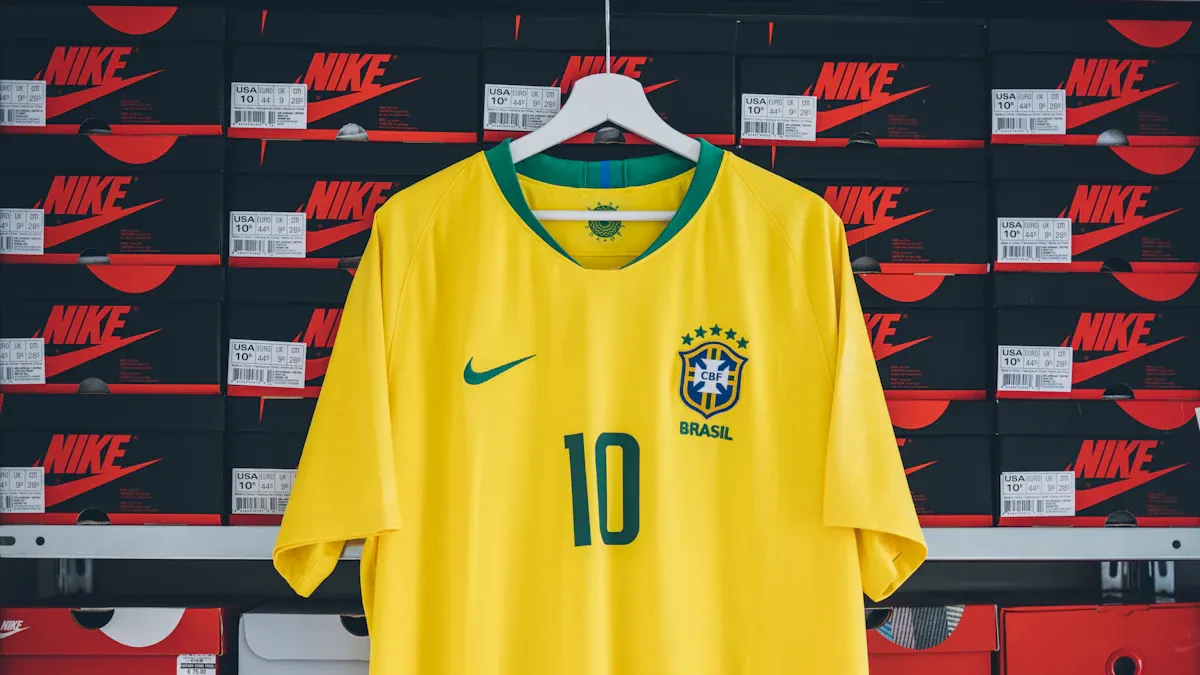
Image Source: unsplash
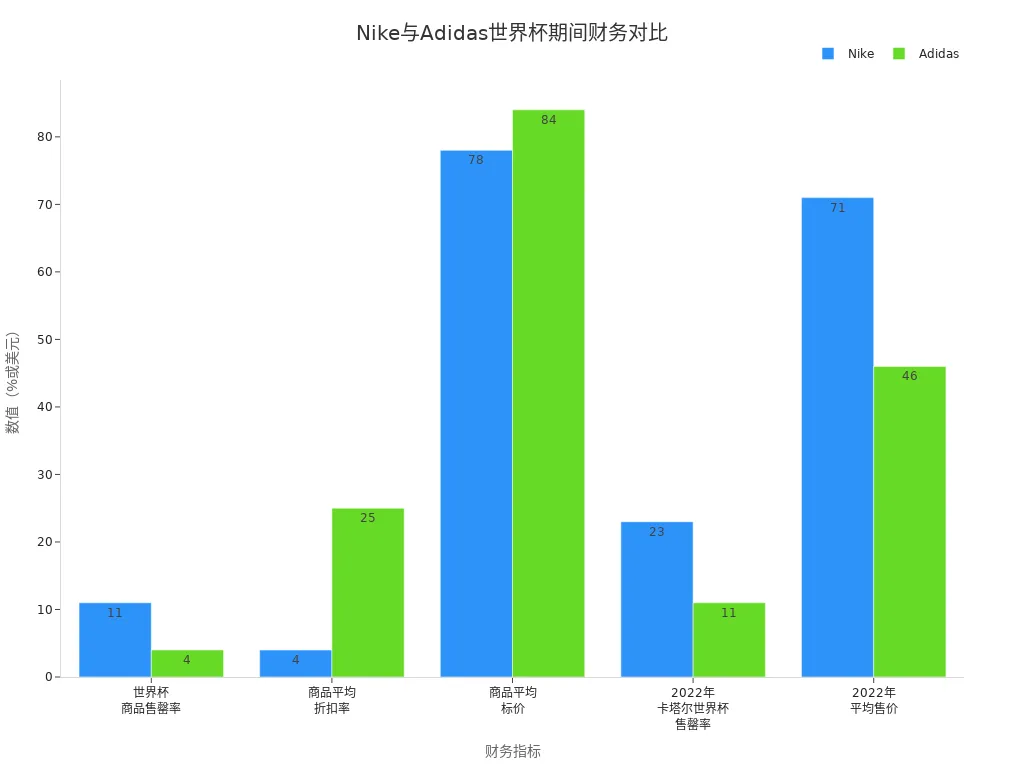
If you are interested in sports apparel stock investments, you often wonder: is Adidas or Nike more worth investing in? Looking at financial data during World Cup periods, Nike outperforms in sell-through rates and average selling prices, while Adidas leverages event sponsorships to achieve brand exposure and market uplift. You can refer to the table below:
| Metric | Nike | Adidas |
|---|---|---|
| World Cup Sell-Through Rate | 11% | 4% |
| Average Discount Rate | 4% | 25% |
| Average Listed Price | $78 | $84 |
| 2022 Qatar World Cup Sell-Through Rate | 23% | 11% |
| 2022 Average Selling Price | $71 | $46 |
- Adidas sponsored the 2010 South Africa World Cup, with 12 teams participating in 38 matches and 2.7 billion viewers watching, greatly enhancing brand influence.
Key Points
- Nike shows superior sell-through rates and average selling prices during World Cup periods, making it suitable for growth-oriented investors.
- Adidas achieves brand exposure and market uplift through event sponsorships, with currently lower valuation, appealing to value investors.
- Focus on changes in profitability and market share of the two brands to help you make informed investment decisions.
- Digital transformation and innovative payment tools such as Biyapay enhance the competitiveness of brands in global markets.
- Combine your risk preference and flexibly allocate stocks of Nike and Adidas to capture industry growth opportunities.
Investment Value Comparison: Adidas vs Nike
Investment Conclusion and Rationale
When choosing between Adidas and Nike, you should first focus on the profitability, valuation level, and future growth potential of the two brands. Adidas demonstrates strong attractiveness in earnings momentum and valuation. You can see that Adidas’s forward price-to-sales ratio is below its long-term median, indicating its valuation is at a historically low level and offers a favorable entry point. Fundamentals continue to improve, global growth prospects are clear, and the risk-reward profile is excellent. Although Nike maintains leadership in brand premium and market share, its stock has experienced greater volatility recently, declining 5.8% over the past three months, while Adidas fell 17.6% in the same period, reflecting different market expectations for the two.
You also need to pay attention to the sponsorship and brand influence strategies of the two companies. Nike secured the German national team sponsorship with an annual contract of USD 100 million, demonstrating its determination in high-level competition. Adidas maintains strength in national team sponsorships and club jersey sales, with brand memory and historical sentiment helping drive sales growth in the short term. When evaluating investment value, you cannot ignore the long-term influence of brands in the global sports consumption market.
If you pay attention to the application of emerging payment tools such as Biyapay in sports consumption scenarios, you will find that both Nike and Adidas are actively laying out digital transformation. Biyapay provides convenient cross-border payment experiences for Chinese-speaking users, helping brands improve user conversion rates in global markets. When evaluating investment value, you can combine these innovative initiatives to further judge the competitiveness of Adidas and Nike in future sports consumption upgrades.
When making investment decisions, you should comprehensively consider earnings momentum, valuation level, brand influence, and innovation capability. Adidas currently offers a more attractive entry point, while Nike leads in brand premium and market share. You can flexibly allocate stocks of the two brands according to your own risk preference and investment horizon.
Key Financial Indicators
When analyzing the investment value of Adidas versus Nike, you must focus on key financial indicators. The following table compares core data of the two companies over the past five years:
| Metric | Adidas | Nike |
|---|---|---|
| ROCE (5-year average) | 15.6% | 27.8% |
| Dividend per Share (USD) | 0.35 | 0.16 |
| Average Inventory Turnover Days | 111.87 days | 85.08 days |
| Sales Revenue per Employee (USD) | Below 395,486.10 | 395,486.10 |
| Forward Price-to-Sales Ratio (P/S) | 1.05X | 1.98X |
| 3-Month Stock Price Change | -17.6% | -5.8% |
| Zacks Rating | #2 (Buy) | #4 (Sell) |
You can see that Nike outperforms in ROCE and sales efficiency per employee, indicating stronger asset utilization and operational capability. Adidas is more attractive in dividends and valuation, with a forward P/S ratio lower than Nike, reflecting the market’s relatively conservative expectations for its future growth but also providing you with a lower entry threshold.
You should also note inventory turnover days. Nike turns inventory faster, helping reduce inventory risk and improve capital efficiency. Adidas has relatively longer inventory turnover days, but with digital transformation and supply chain optimization, future improvement is expected.
- Adidas shows strong earnings momentum and valuation opportunities, suitable for value investors.
- Nike leads in brand premium and operational efficiency, appealing to growth-oriented investors.
- You can monitor the performance of the two brands in digital transformation and globalization by looking at the application of innovative payment tools such as Biyapay.
When choosing between Adidas and Nike, it is recommended to make scientific decisions by combining your investment objectives, risk tolerance, and judgment of industry trends.
If your thinking has moved from brand narrative to actual stock selection, a practical next step is to use Stock Information to compare Nike and Adidas on price behavior, basic company data, and peer positioning, then decide whether you are looking at them as growth-oriented consumer names or as brand assets worth tracking after valuation resets. That usually leads to a more grounded decision than relying only on World Cup sponsorship heat.
From a tool-use perspective, BiyaPay fits more naturally as a supporting entry for market viewing and capital planning. As a multi-asset trading wallet covering cross-border payments, investing, trading, and fund management, it can also provide a follow-up path through the same ecosystem’s trading entry, while business scope and compliance details are best checked on the official site.
Brand and Event Sponsorship Landscape

Image Source: unsplash
Adidas World Cup Sponsorship History
If you follow World Cup history, you will find that Adidas has been the official match ball supplier since 1970. In 2013, Adidas renewed its contract with FIFA until 2030, consolidating its position in global football. The table below shows important milestones of Adidas in World Cup sponsorship:
| Year | Event |
|---|---|
| 1970 | Adidas begins supplying match balls for the World Cup |
| 2013 | Adidas signs agreement with FIFA to extend cooperation until 2030 |
Adidas continuously enhances brand exposure by equipping teams, players, and leagues with its signature three-stripe football gear. During the 2014 World Cup, Adidas’s sponsorship spending approached USD 400 million, and brand exposure once surpassed Nike. You can see that long-term cooperation has formed deep brand memory for Adidas among football fans. However, analysts remain cautious about Adidas’s future revenue and profitability expectations, and market share is facing challenges.
Nike Event Sponsorship Breakthroughs
Nike continues to make breakthroughs in event sponsorships. You will notice that Nike not only sponsors the Olympics but also partners with top athletes and sports teams, gradually entering major events such as the FIFA World Cup, NBA, and NFL. Nike enhances brand awareness through larger marketing budgets and creative advertising. For example, during the 2012 London Olympics, 37% of people believed Nike was an Olympic sponsor, while only 24% thought Adidas was the official sponsor. Nike is also adept at leveraging social media and the freedom of athletes to choose brands, signing nearly 400 athletes as brand ambassadors to further expand influence.
Competition for Jerseys, Stars, and Sports Consumption Resources
When analyzing Adidas versus Nike, you must pay attention to the competition between the two companies in jerseys, star endorsements, and sports consumption resources. Nike significantly improves brand awareness and sales through long-term sponsorship agreements with athletes and team kits. For example, Nike’s partnership with Kaepernick in the “Dream Crazy” campaign brought USD 600 million in brand value growth and a 31% sales increase. Nike also excels in digital business, with online sales growing 75% during the pandemic. Adidas relies on cooperation with FIFA, UEFA, and other organizations, signing multiple national team and club sponsorship agreements to consolidate its position in football. Both companies use celebrities and cultural relevance to attract young consumers, forming their unique brand ecosystems.
Financial Report Comparison and Market Performance

Image Source: pexels
Revenue and Profit Growth
When analyzing the investment value of Adidas versus Nike, you must focus on the revenue and net profit performance of the two companies during World Cup cycles. The World Cup, as one of the most watched sports events globally, directly drives sales peaks for sports apparel brands. You can refer to the table below to understand the financial report data of Nike and Adidas during World Cup periods:
| Company | Revenue (USD billion) | Net Profit (USD billion) |
|---|---|---|
| Nike | 39 | 5 |
| Adidas | 18 | 2 |
Nike significantly leads Adidas in both revenue and net profit. This gap not only reflects Nike’s scale advantage in global markets but also demonstrates its stronger product sales and brand premium capabilities during events. You will find that Nike continuously expands revenue and profit margins by optimizing product structure, increasing the proportion of high-end products, and strengthening digital channels. Adidas relies on brand exposure from major events such as the World Cup to drive short-term sales growth, but overall profitability still needs improvement.
You can also pay attention to the application of emerging payment tools such as Biyapay in sports consumption scenarios. Biyapay provides convenient cross-border payment experiences for Chinese-speaking users, helping Nike and Adidas improve settlement efficiency and user conversion rates in global markets. When selecting investment targets, you can combine the brands’ digital transformation capabilities and payment innovation layouts to judge their future growth potential.
Market Share Changes
When evaluating sports apparel stocks, changes in market share are also worth paying attention to. Nike has consistently maintained a leading market share position over the past decade. You can see:
- Nike holds a dominant position in the global sports apparel industry, benefiting from its scale, direct-to-consumer channel advantages, and deep integration in sports, culture, and performance innovation.
- Although smaller in scale, Adidas competes through its tradition, global reach, and lifestyle business that combines sports, fashion, and street culture.
- Adidas focuses on sustainability and lifestyle branding, continuously attracting young consumers.
You will find that Nike has consolidated its market share through continuous innovation and brand upgrades. Adidas seeks breakthroughs in niche markets and emerging consumption trends. When making investment decisions, you can combine the market positioning and business focus of the two brands to judge their long-term competitiveness.
Impact of Sponsorship Activities on Sales
When analyzing the impact of event sponsorships on brand sales, you need to focus on the direct boost brought by major sports events such as the World Cup. Both Nike and Adidas view the World Cup as an important node for brand exposure and sales growth. You can find that Nike significantly increases sales of jerseys and related products by signing top national teams and star players. Adidas strengthens its brand recognition in football through long-term cooperation with FIFA.
You should also note that sponsorship activities during events not only increase brand awareness but also directly drive product sales. For example, Nike often sells out limited-edition sneakers and jerseys launched during the World Cup in a short time, bringing significant revenue growth. Adidas obtains a large number of orders through sales of the official World Cup match ball and team equipment.
You can observe the growth of cross-border consumption during sports events by looking at the application of innovative payment tools such as Biyapay. Biyapay provides safe and efficient payment experiences for Chinese-speaking users, helping Nike and Adidas achieve sales conversions in global markets. When investing, you should focus on the brands’ comprehensive capabilities in event sponsorship, digital transformation, and payment innovation.
If you want to seize investment opportunities in the sports apparel industry, it is recommended to focus on the financial performance, market share changes, and direct sales impact of sponsorship activities of Nike and Adidas during major events such as the World Cup.
Business Strategy and Brand Exposure
Advertising Investment and Social Platform Strategy
When analyzing brand exposure of Nike and Adidas, you will find that both companies attach great importance to social platforms and content marketing. Nike launched the “GOAT Experiment” film using virtual reality technology, attracting global attention with football stars from different eras. Adidas excels at leveraging its historical heritage and well-known athlete resources, creating themed content such as “family reunion” to strengthen brand emotional connections. Both companies focus on creating high-quality, shareable content across multiple platforms, ensuring timely information updates and increasing user engagement. Adidas also monitors social media to ensure brand discussion volume leads during the World Cup. If you pay attention to digital transformation, you can see the application of innovative payment tools such as Biyapay in sports consumption scenarios, helping brands improve conversion efficiency among Chinese-speaking users and optimize global marketing chains.
Brand Recovery and Innovation Capability
When evaluating brand resilience and innovation capability, you should focus on how the two brands respond to market changes. Although Nike leads in market share, its over-reliance on classic models has led to challenges in new trends. During its shift to a direct-to-consumer sales model, Nike experienced a 10% decline in digital revenue. Analysts believe Nike’s strong resonance with Generation Z consumers will help it recover growth. Adidas actively promotes sustainability, collaborating with Parley for the Oceans to launch shoes made from recycled ocean plastics, meeting consumers’ demand for environmental protection. You will find that Adidas maintains brand competitiveness through strategic sponsorships, innovative products, and sustainability initiatives. Both Nike and Adidas continuously experiment with new cultural strategies and celebrity endorsements to maintain market vitality.
Risks and Challenges
When investing in Nike and Adidas, you must pay attention to the risks brought by global expansion and sports sponsorships. The two companies face fierce competition in marketing strategies and need continuous innovation to remain relevant. Brands must effectively engage with local markets and young consumers to cope with rapidly changing market pressures. External factors such as geopolitical events and supply chain disruptions also pose challenges. For example, Nike faced inventory buildup due to supply chain issues, with inventory reaching USD 9.7 billion at the end of 2022, and digital revenue declining 10% year-over-year. Adidas experienced rising inventory levels during 2022–2023, with demand forecast errors and supply chain disruptions leading to declining profit margins. You can pay attention to the role of digital tools such as Biyapay in optimizing payments and supply chain management, helping brands improve global operational efficiency and reduce external risks.
Investment Logic in Sports Apparel Stocks
Industry Cycle and Growth Potential
When investing in sports apparel stocks, you must understand the impact of industry cycles on Nike and Adidas. Major events such as the World Cup significantly boost sales performance for both brands. Nike maintains a leading market share through innovation and direct-to-consumer strategies. Adidas is driven by tradition and lifestyle, focusing on fashion and street culture. You can refer to the table below to understand the positioning of the two companies in the industry:
| Company | Market Share | Strategic Positioning |
|---|---|---|
| Nike | Leading | Innovation and direct-to-consumer strategy |
| Adidas | Smaller | Tradition and lifestyle-driven business |
You will find that Nike’s stock once fell 31.71% due to weak sales forecasts and inventory pressure. Adidas rose 30.12% due to the popularity of retro-style sneakers and strong financial results. Industry growth potential is also reflected in the different growth expectations for the two companies. Nike’s five-year compound annual growth rate is 13.8%, higher than the industry average. Adidas’s growth rate is 1.0%, with lower market expectations but more attractive valuation.
Brand Power and Globalization
When evaluating Nike and Adidas, brand power and globalization layout are key. Nike consolidates its global influence through long-term cooperation with high-profile teams such as Brazil, France, and England. Nike also actively lays out digital initiatives, for example attracting 20 million users in the Roblox virtual space to enhance brand loyalty. Adidas leverages brand heritage and lifestyle branding to attract different consumer groups. You can also see that since shifting to a multi-brand structure in 2009, Adidas has strengthened penetration into emerging markets such as India, Southeast Asia, and Latin America, expected to bring USD 2–3 billion in revenue by 2028. Adidas focuses on women’s sports and lifestyle categories, which are growing faster than men’s categories and expected to bring more revenue in the future.
Innovation-Driven and Future Trends
When following the sports apparel industry, you must grasp innovation trends. Rising health and fitness awareness drives growth in the sportswear market. The popularity of athleisure blurs the line between sportswear and everyday fashion. Both Nike and Adidas are actively applying artificial intelligence to optimize product development and supply chain management. Nike launched the NikeSKIMS brand focused on female athletes and released new sneakers using Air Zoom technology. Adidas introduced the A-Type luxury series to meet high-end consumer demand. You can see that artificial intelligence not only helps predict consumer behavior but also promotes the development of smart clothing and wearable technology. In the future, innovation capability will become the core driver of sustained growth for sports apparel stocks.
When investing in sports apparel stocks, you should focus on the financial performance, brand power, and event sponsorship strategies of Nike and Adidas. Nike demonstrates strong profitability and market share, while Adidas offers lower valuation and brand emotional advantages. You need to combine innovation capability, globalization layout, and the impact of event sponsorships to flexibly adjust your investment portfolio and seize long-term growth opportunities in the industry.
FAQ
How Do the Financial Reports of Adidas and Nike Influence Your Investment Decisions in the U.S. Market?
You can optimize your U.S. stock portfolio allocation by analyzing revenue, net profit, market share, and other financial report data to judge brand profitability and growth potential.
How Much Does World Cup Sponsorship Drive Brand Sales?
You will find that brand exposure increases significantly during the World Cup, leading to substantial sales growth in jerseys and related products, directly boosting short-term revenue performance for Nike and Adidas.
What Are the Key Initiatives of Nike and Adidas in Digital Transformation?
You can focus on the investments of the two brands in e-commerce channels, social media marketing, and innovative payment tool applications, which help improve global user conversion rates.
Which Industry Trends Should You Focus on When Investing in Sports Apparel Stocks?
You should pay attention to the popularization of healthy lifestyles, the athleisure trend, sustainability development, and artificial intelligence applications—these trends will influence the long-term growth potential of Nike and Adidas.
How Do Nike and Adidas Differ in Their Globalization Layouts?
You can see that Nike consolidates its global position through innovation and premium market strategies, while Adidas achieves diversified growth through multi-brand structures and penetration into emerging markets.
*This article is provided for general information purposes and does not constitute legal, tax or other professional advice from BiyaPay or its subsidiaries and its affiliates, and it is not intended as a substitute for obtaining advice from a financial advisor or any other professional.
We make no representations, warranties or warranties, express or implied, as to the accuracy, completeness or timeliness of the contents of this publication.
Related Blogs of

Why Can’t HBM Exist Without Advanced Packaging? The Role of TSV, CoWoS, and Packaging Equipment


How Should You View Seagate’s HAMR Technology? Nearline HDD Capacity Upgrades and the Supply-Demand Cycle


HBM/DRAM, NAND, and HDD in AI Storage: A Comparison of Elasticity, Cycles, and Risks


How to Read NAND Contract Prices and Spot Prices? Why Enterprise SSDs and Consumer SSDs Do Not Move in Sync

Choose Country or Region to Read Local Blog
 Australia
 Austria
 Belgium
 Canada
 Cyprus
 Czech Republic
 Denmark
 Estonia
 Finland
 France
 Germany
 Greece
 Hong Kong
 India
India Indonesia
 Ireland
 Italy
Italy Japan
Japan Latvia
 Lithuania
 Luxembourg
 Malaysia
 Malta
Malta Morocco
 Nepal
Nepal Netherlands
 New Zealand
 Norway
 Pakistan
 Philippines
 Poland
 Portugal
 Romania
 Singapore
 Slovakia
 Slovenia
 South Africa
 South Korea
 Spain
Spain Sweden
 Thailand
 The United States
 Turkey
 United Arab Emirates
 United Kingdom
 Vietnam
Contact Us




BIYA GLOBAL LLC is registered with the Financial Crimes Enforcement Network (FinCEN), an agency under the U.S. Department of the Treasury, as a Money Services Business (MSB), with registration number 31000218637349, and regulated by the Financial Crimes Enforcement Network (FinCEN).
BIYA GLOBAL LIMITED is a registered Financial Service Provider (FSP) in New Zealand, with registration number FSP1007221, and is also a registered member of the Financial Services Complaints Limited (FSCL), an independent dispute resolution scheme in New Zealand.