Cross-Border Payment Card Locked? Must-Notify Bank Process and Backup Wallet Preparation Before Going to North America




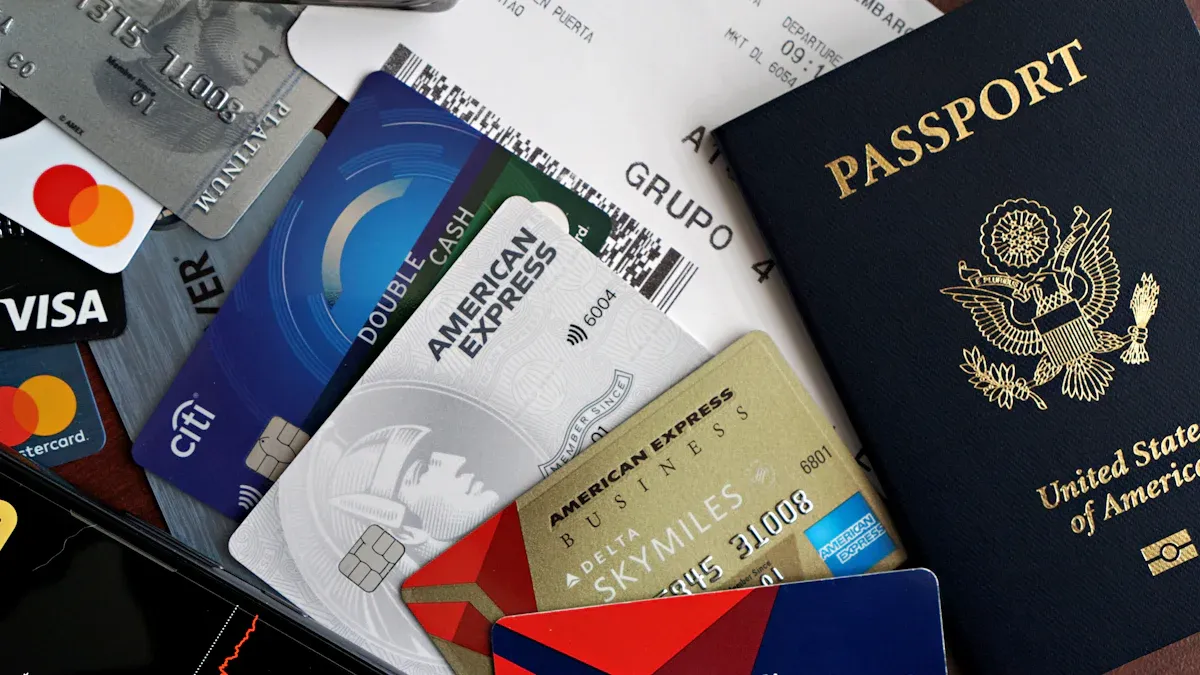
Image Source: pexels
When preparing to travel to North America, you may encounter issues with cross-border payments being locked. Many users find their bank cards unusable because they did not notify the bank in advance. By notifying the bank and preparing backup wallets, you can effectively reduce the risk of payment restrictions. Planning ahead makes your trip payments smoother.
Core Points
- Notifying your bank of your travel plans at least 7 days in advance can significantly reduce the risk of card lock.
- Prepare backup bank cards and international transfer wallets to ensure alternative payment methods are available if payments are restricted.
- Using digital wallets protects your card information and lowers the risk of unauthorized charges.
- Understand your bank’s risk control mechanisms to avoid card locks due to unusual transactions.
- Stay calm and contact the bank promptly to resolve card lock issues, ensuring smooth travel.
Reasons for Cross-Border Payment Card Lock and Prevention
Bank Risk Control Mechanisms
When using your bank card in North America, banks protect your funds through multiple risk control mechanisms. Banks typically monitor transaction patterns and analyze your spending behavior. If your transaction speed suddenly increases or your geographic location changes, the bank may consider it risky. Device recognition is also important—banks check whether the device used matches historical records. Modern fraud engines look beyond transaction amounts and consider a combination of speed, location, merchant type, and device consistency. Behavioral analysis helps banks detect transactions inconsistent with your historical spending and take timely action.
- Banks identify suspicious transactions by monitoring transaction patterns.
- Device recognition confirms transaction legitimacy.
- Behavioral analysis detects abnormal spending.
- Fraud engines emphasize speed, geographic location, merchant type, and device consistency.
Common Card Lock Scenarios
During cross-border payments, you may encounter various card lock scenarios. Bank risk control mechanisms automatically trigger locks based on your transaction behavior. Here are common triggers:
- Location alerts not enabled or outdated. Banks require manual notification of travel plans; most rely on static “travel dates.”
- Foreign transaction block still active. Even cards advertised as “no foreign transaction fees” often retain security features that block all non-US merchant categories.
- Spending speed mismatch. Multiple transactions in a short time are easily flagged as suspicious activity.
- Currency conversion confusion. Choosing to pay in USD may trigger additional fraud checks.
- Card network routing issues. Different networks vary in international processing reliability, potentially causing transaction failures.
- Large transactions. Banks closely monitor large transactions to prevent theft.
- Velocity checks. Rapid repeated transaction attempts are easily identified as attack behavior.
- Failed transaction attempts. Multiple failures trigger risk controls, leading to card lock.
When using your bank card in North America, failing to notify in advance or exhibiting unusual transaction behavior makes cross-border payment lock very likely. Banks prioritize protecting your funds but may affect normal spending.
Preventive Measures
You can take multiple measures to prevent cross-border payment card locks. Advance notification is the most effective method. Notify your bank of your travel plans at least 7 days in advance. Log in to online banking or call customer service to state your destination country, travel dates, and expected transaction volume. You can also ask if advance notice for international logins is required. This allows the bank to adjust risk controls and reduce lock risk.
Advance notification not only reduces lock probability but also helps the bank understand your spending needs and increase transaction success rate.
You can also prepare multi-channel payment methods. Backup bank cards, international transfer wallets, and an appropriate amount of cash help handle unexpected situations. You can choose international transfer wallets like Biyapay to meet cross-border payment needs of Chinese-speaking users. Multi-channel preparation effectively reduces the impact of cross-border payment locks.
- Notify bank of travel plans at least 7 days in advance.
- Log in to online banking or call customer service to state destination, dates, and transaction volume.
- Ask bank if international login notification is needed.
- Prepare backup bank cards, international transfer wallets, and appropriate cash.
- Prioritize safe and easy-to-use international payment tools.
Through these measures, you can significantly reduce the risk of cross-border payment card locks and ensure smooth payments during your North America trip.
Bank Notification Process
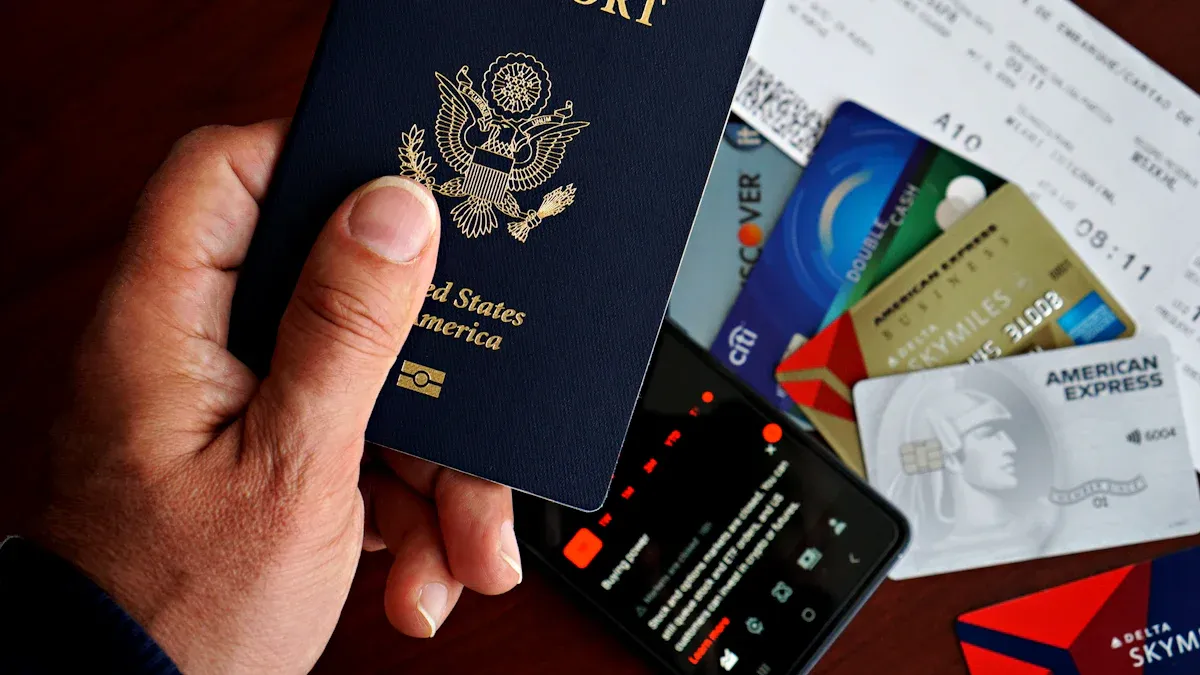
Image Source: pexels
Online Notification
You can notify your bank of travel plans through mobile banking app or online banking. Online notification is simple and suitable for most users. Complete it by following these steps:
- Log in to mobile banking and go to the card management page.
- Select travel notification and click to add travel notice.
- Enter your destination and travel dates.
- Select the bank cards to be notified.
- Save settings to complete notification.
You can edit or delete set travel notifications at any time. Online notification allows the bank to adjust risk controls promptly and reduce cross-border payment lock risk.
Offline Notification
If online channels are inconvenient, choose offline notification. Call bank customer service or visit a branch. When notifying, explain your travel plans to customer service, including destination, departure and return dates. Some banks offer international customer service numbers for timely contact if issues arise in the US. For example, credit card issues call 1.302.738.5719, debit card issues call 1.315.724.4022 (both Eastern Time service).
Notification Information and Precautions
When notifying, provide the following information:
- Travel destination and all involved countries
- Travel start and end dates
- Bank cards planned for use
- Contact information to ensure bank can reach you promptly
Complete notification at least 7 days in advance to avoid cross-border payment locks due to delayed information. Notification validity usually covers your entire trip. Also ensure bank card information and contact details are up to date and understand your card network to confirm normal use in North America. Research local payment methods in advance to ensure your bank card is widely accepted at the destination.
Understanding bank policies and notification process in advance effectively prevents payment restrictions and ensures smooth North America travel.
Backup Wallet Preparation
Image Source: unsplash
Backup Bank Cards
During North America travel, backup bank cards provide important payment security. Choose multiple credit or debit cards and store them separately to reduce loss or theft risk. Many bank apps feature complex security for mobile access, including device binding, biometric authentication, and encrypted local storage. Before travel, enable remote device wipe to protect sensitive financial information. If a card is lost, immediately lock it via digital banking app or credit card portal to prevent unauthorized transactions. Regularly monitor account activity and report any unusual spending promptly. Using digital wallets also reduces card theft risk, as actual card numbers are not shared—each payment uses a unique encrypted token for enhanced security.
When preparing backup bank cards, choose high-quality, compact wallets for easy carrying of multiple cards and cash. Premium material wallets are more durable, suitable for long or frequent travel.
International Transfer Wallet Selection
When selecting international transfer wallets, focus on flexibility, global user base, penetration rate, supported payment methods, multi-currency options, security measures, per-transaction fees, and platform compatibility. International transfer wallets like Biyapay provide convenient cross-border payment experiences for Chinese-speaking users. Choose wallets that support multi-currency, transparent fees, and high security based on your needs. Business travelers may prioritize wallets with RFID protection and high-quality leather; adventurers prefer lightweight, durable, backpack-friendly designs. Ensure the wallet can hold cash, boarding passes, and itineraries for easy access.
If you are worried that your primary bank card could be restricted in North America because of unusual location changes, several rapid transactions, or merchant-category risk controls, it also makes sense to review BiyaPay’s multi-currency fund management and cross-border payment capabilities in advance. It is better understood as a backup funding tool rather than simply “one more card,” because it helps keep an alternative payment path available when your bank card is temporarily limited. In a cross-border travel setting, the point is not to replace your bank, but to reduce the risk of payment interruption at the exact moment you need funds.
- High flexibility, supports multi-platform use
- Multi-currency options, adapts to different payment scenarios
- Transparent fees, easy budget management
- Robust security measures, protects fund safety
Cash Preparation
When traveling in North America, carrying an appropriate amount of cash remains necessary. Some small merchants or special occasions may only accept cash. Cash payments protect privacy, avoid data leakage, and eliminate credit card processing fees. Avoid carrying excessive cash to reduce loss and theft risk. Digital payments are highly popular in North America, improving transaction convenience and security. Track financial records via digital wallets for easy expense management. When preparing cash, store it separately and combine with backup bank cards and digital wallets to enhance overall payment security.
Multi-channel preparation effectively handles emergencies like cross-border payment card locks and ensures smooth North America travel.
Emergency Handling When Cross-Border Payment Card Is Locked
Contact Bank to Unlock
When encountering a cross-border payment card lock in North America, immediately contact the issuing bank. Use official customer service phone, mobile banking app online chat, or email. Prioritize the bank’s pre-provided international customer service number—some offer 24-hour multilingual support. Prepare personal identification, card number, transaction time, and abnormal prompt details. Clearly explain your itinerary and transaction situation to customer service and request account verification and card unlock. Ask if travel notification needs supplementation or risk control adjustment to ensure subsequent transactions proceed smoothly.
When communicating with the bank, stay calm and clearly state the issue to speed up the unlock process.
Enable Backup Payment Methods
If the bank cannot unlock the card in a short time, immediately enable backup payment methods. In North America, quickly activate the following payment tools:
- Digital wallets: Complete payments via phone without physical card or cash, suitable for most merchants.
- Mobile wallets: Recharge via bank or card transfer for convenient bill and shopping payments.
- Buy Now Pay Later: Choose one-time or installment payments for flexible large purchases.
Carry at least three credit or debit cards from different banks, stored separately to reduce loss or theft risk. Appropriate cash helps handle cash-only scenarios. Establish an emergency fund before travel to provide financial support for unexpected situations.
Other Emergency Suggestions
During North America travel, set emergency contacts in advance and record bank customer service numbers and backup payment tool information in both phone and paper notes. Coordinate with travel companions to serve as mutual emergency contacts for assistance if payments are restricted. Follow local embassy/consulate safety alerts and learn emergency assistance channels. After a cross-border payment card lock, promptly enable backup wallets and cash to effectively ensure smooth travel.
Multi-channel preparation and calm response minimize disruptions from payment interruptions and ensure safe, worry-free North America travel.
When traveling in North America, advance notification and multi-layered payment preparation significantly reduce cross-border payment card lock risk. Improve payment security through the following methods:
- Notify bank in advance to prevent credit card declines and ensure legitimate transactions proceed smoothly.
- Prepare at least two credit cards as backups to reduce impact from loss or theft.
- Use digital wallets to lower card fraud risk—actual card numbers are not shared.
- Adopt flexible payment solutions like Buy Now Pay Later or installments to ease financial pressure.
- Choose payment tools supporting multi-currency and local acquiring to increase transaction success rate.
Review notification process, complete backup wallet preparation, and master emergency handling methods. When issues arise, communicate promptly with the bank and reasonably use backup methods to ensure smooth payments during North America travel.
FAQ
How to notify the bank in advance of cross-border payment plans?
Log in to mobile or online banking, find the travel notification feature, and fill in destination and dates. You can also call bank customer service to explain your itinerary. It is recommended to complete notification 7 days in advance to ensure timely bank risk control adjustment.
How to handle a bank card lock?
Immediately contact the issuing bank. Prepare personal information and transaction details and explain the situation to customer service. The bank will verify your account and assist with unlocking. Enable backup payment methods to ensure smooth spending.
What backup wallet options are recommended?
Choose international transfer wallets like Biyapay to meet cross-border payment needs of Chinese-speaking users. Also prepare multiple credit or debit cards stored separately. Prioritize tools supporting multi-currency and global payments.
What to note when preparing cash for North America?
Carry an appropriate amount of cash for small payments. Store it separately to avoid loss. Most merchants support digital payments—use cash only as a supplement. Manage financial records via digital wallets for enhanced security.
How do international transfer wallets ensure fund safety?
Choose wallets with multiple security measures. Biyapay uses encryption and identity authentication to protect funds. Regularly change passwords and enable two-factor verification. Monitor platform fees and compatibility to ensure smooth transactions.
*This article is provided for general information purposes and does not constitute legal, tax or other professional advice from BiyaPay or its subsidiaries and its affiliates, and it is not intended as a substitute for obtaining advice from a financial advisor or any other professional.
We make no representations, warranties or warranties, express or implied, as to the accuracy, completeness or timeliness of the contents of this publication.
Related Blogs of

Is SMIC 0981.HK a Memory Chip Stock? The Relationship Between Foundry Manufacturing and the Memory Supply Chain


What Is the Difference Between HBM3E and HBM4? What Do They Mean for Micron and AI Servers?


What Is the Difference Between DRAM Contract Price and Spot Price? Which Indicator Should Investors Watch?

What Is the Relationship Between ASMPT 0522.HK and HBM? The Role of Advanced Packaging Equipment in the AI Memory Supply Chain

Choose Country or Region to Read Local Blog
 Australia
 Austria
 Belgium
 Canada
 Cyprus
 Czech Republic
 Denmark
 Estonia
 Finland
 France
 Germany
 Greece
 Hong Kong
 India
India Indonesia
 Ireland
 Italy
Italy Japan
Japan Latvia
 Lithuania
 Luxembourg
 Malaysia
 Malta
Malta Morocco
 Nepal
Nepal Netherlands
 New Zealand
 Norway
 Pakistan
 Philippines
 Poland
 Portugal
 Romania
 Singapore
 Slovakia
 Slovenia
 South Africa
 South Korea
 Spain
Spain Sweden
 Thailand
 The United States
 Turkey
 United Arab Emirates
 United Kingdom
 Vietnam
Contact Us




BIYA GLOBAL LLC is registered with the Financial Crimes Enforcement Network (FinCEN), an agency under the U.S. Department of the Treasury, as a Money Services Business (MSB), with registration number 31000218637349, and regulated by the Financial Crimes Enforcement Network (FinCEN).
BIYA GLOBAL LIMITED is a registered Financial Service Provider (FSP) in New Zealand, with registration number FSP1007221, and is also a registered member of the Financial Services Complaints Limited (FSCL), an independent dispute resolution scheme in New Zealand.