Avoid OTC Trading: How to Safely Legitimize Cryptocurrency Through a US Stock Brokerage Account?




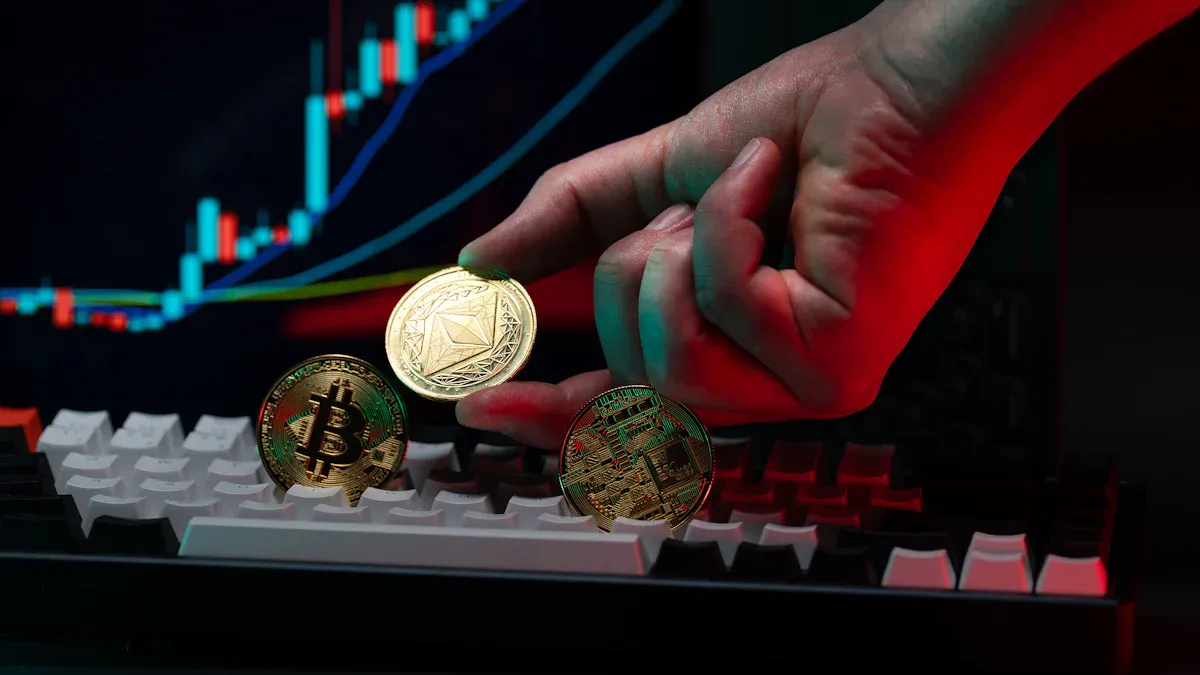
Image Source: pexels
You can safely and compliantly legitimize cryptocurrency through a US stock brokerage account. Avoiding OTC trading is crucial because the OTC market involves counterparty risk, compliance challenges, limited price transparency, and fraud hazards. By choosing compliant processes, you can effectively reduce the risk of fund freezing and legal issues, ensure smooth transfer of funds into a US stock brokerage account, and achieve legitimate asset regularization.
Key Points
- Choose compliant exchanges and avoid OTC trading to ensure transparent fund sources and reduce legal risks.
- Complete KYC identity verification and prepare all necessary proof-of-funds materials to ensure smooth compliance review.
- Retain all transaction records and fund flow vouchers for future compliance checks and tax declarations.
- Regularly monitor policy changes and adjust operational processes in a timely manner to maintain ongoing compliance.
- Consult professional compliance advisors to enhance fund security and avoid legal liability due to improper operations.
Feasibility and Process
Overview of the Operation Process
You can achieve safe and compliant conversion of cryptocurrency through a US stock brokerage account. The overall process mainly includes the following steps:
- Complete KYC identity verification. You need to submit identification materials on a compliant exchange, usually approved within 24–48 hours.
- Transfer cryptocurrency to the exchange. You can choose large, well-known platforms such as Binance or OKX to ensure fund safety.
- Sell cryptocurrency and convert to fiat currency (such as USD or EUR). You can choose market or limit orders based on market conditions; execution time depends on order type and network congestion.
- Withdraw fiat currency to your bank account. You need to bind a bank account on the exchange and choose ACH or wire transfer; funds usually arrive in 1–5 business days.
- Deposit funds from the bank account into the US stock brokerage account. You can complete this through the brokerage platform’s deposit function, with a clear and traceable fund flow path.
Tip: You should avoid OTC trading, choose compliant platforms and processes, ensure transparent fund sources, and reduce legal and account freezing risks.
Fund Flow Path
The fund flow path determines whether your assets can smoothly and safely enter the US stock brokerage account. You need to pay attention to the compliance requirements and proof-of-funds materials at each stage.
| Stage | Compliance Requirements |
|---|---|
| Initiate Exchange | The exchange must obtain licenses in mainland China and relevant regions, complying with MiCA, MSB, VASP, etc., regarding capital, custody, and reporting obligations. |
| Implement Security Measures | The exchange must perform KYC/AML identity verification, transaction monitoring, client traceability, and system security. |
During the operation process, you need to submit the following materials to prove fund sources and legitimacy:
- Identity information: including passport, ID card, proof of residence, etc.
- Transaction records: screenshots or statements of cryptocurrency purchases/sales, fiat deposits, withdrawals, etc.
- Bank statements: detailed records showing fund flows, deposits, withdrawals, etc.
- Mining proof: if involving mining income, provide screenshots of mining clients, hash rate, wallet addresses, etc., along with equipment purchase receipts and bank statements.
At each stage, you must meet KYC requirements; the exchange will continuously monitor transactions to identify risks such as money laundering and terrorist financing. Financial institutions will establish detailed risk profiles to prevent criminals from abusing services. You need to ensure all fund flow paths are clear and materials are complete to facilitate brokerage and bank reviews.
In terms of fund flow time, KYC verification generally takes 24–48 hours, while bank account linking and fund transfers (ACH or wire) usually take 1–5 business days. You should plan in advance to avoid delays affecting fund deposits.
Note: Throughout the entire process, you should retain all operation records and supporting materials to ensure fund sources are traceable. Compliant operations not only protect fund safety but also facilitate subsequent tax declarations and asset management.
Cryptocurrency Conversion and Deposit into Brokerage Account

Image Source: pexels
Choosing Compliant Exchanges
When converting cryptocurrency to fiat currency, you must prioritize large, well-known, and compliant exchanges. International mainstream platforms such as OKX and Binance provide safe and reliable services for Chinese-speaking users. Biyapay, a recently prominent compliant platform, also offers diverse fiat deposit and withdrawal channels for Chinese users. You should avoid OTC trading and steer clear of small or unclear exchanges recommended on social media to effectively reduce risks of asset theft or platform exit scams.
When selecting a compliant exchange, you can refer to the following criteria:
| Selection Criterion | Description |
|---|---|
| Regulatory Compliance | Choose exchanges licensed by local regulatory authorities, such as FinCEN registration in the US or FCA authorization in the UK. |
| Security Features | The exchange should provide strong security measures, including regular audits and fund segregation. |
| Customer Support Quality | Choose exchanges with responsive customer service to get help when needed. |
| Diversity of Payment Methods | The exchange should support multiple payment methods for convenient fiat conversion. |
In actual operations, you should prioritize these criteria to ensure fund safety and compliance.
Fiat Conversion and Deposit into Brokerage Account
After completing KYC authentication on the exchange, you can sell cryptocurrency and convert it to mainstream fiat currencies such as USD. You need to ensure the selected platform has compliant qualifications and can provide complete transaction records and fund flow vouchers. Platforms such as Biyapay, OKX, and Binance typically support multiple withdrawal methods, including wire transfers and third-party payments, making it convenient to transfer funds to your personal bank account.
After withdrawing fiat currency to your bank account, you can complete the fund deposit through the US stock brokerage’s deposit function. US stock brokerages usually conduct compliance reviews for fiat deposits originating from cryptocurrency, mainly including:
- Collecting and verifying your name, address, date of birth
- Reviewing government-issued identification documents
- If necessary, further verifying fund sources, business information, and ultimate beneficial owner information
You should prepare all relevant materials in advance to ensure clear and traceable fund sources. This can effectively reduce the risk of account freezing or investigation, smoothly achieving compliant asset conversion.
Proof of Funds and Compliance

Image Source: pexels
Proof of Fund Sources
When transferring cryptocurrency funds into a US stock brokerage account, you must prepare sufficient proof of fund sources. US stock brokerages usually require you to provide a series of materials that can trace the legitimacy of funds. You can refer to the following common types:
- Bank records showing the source of your accumulated wealth and fund flow path.
- Transaction records of purchasing digital currency, including order details and transaction screenshots issued by the platform.
- Additional evidence proving fund legitimacy, such as W-2 forms, tax returns, or employment confirmation letters.
- Digital wallet and ledger addresses to facilitate verification of cryptocurrency holding and transfer history.
- Bank statements clearly showing the time and method of purchasing cryptocurrency.
When preparing these materials, you should ensure all information is true, complete, and traceable. Some Chinese-speaking users choose to use Hong Kong licensed banks as intermediary accounts to further enhance the transparency and compliance of fund flows. Throughout the entire process, you should always avoid OTC trading, choose legitimate channels, and reduce compliance risks.
Preparation of Compliance Materials
During the fund conversion process, preparation of compliance materials is equally important. You need to establish a complete document system to ensure every step of operation is verifiable. The following are best practices for preparing compliance materials:
- Regular training to ensure you and your team understand the latest regulations and compliance requirements.
- Continuously update compliance policies to adapt to regulatory changes and emerging risks in a timely manner.
- Keep detailed records of all compliance activities, decisions, and reasons for future verification.
- Promptly report suspicious activities to relevant regulatory authorities when discovered.
- Monitor all cryptocurrency-related transactions, especially fund flows involving high-risk addresses.
Through these measures, you can effectively respond to compliance reviews by brokerages and banks and ensure smooth fund deposits. You should also retain both original and electronic copies of all materials for future tax declarations and asset management.
Advantages and Risks of Avoiding OTC Trading
Main Risks of OTC Trading
If you choose OTC trading during cryptocurrency conversion, you are likely to encounter multiple risks. First, OTC trading involves counterparty risk. The counterparty may default or fail to fulfill the transaction, resulting in unsafe fund receipt. Second, OTC trading lacks price transparency, easily leading to prices deviating from market levels and affecting your asset value. You also face compliance uncertainty. Legal requirements vary across regions, increasing legal risks. OTC trading is influenced by constantly changing regulatory requirements, and you must complete KYC and AML procedures; otherwise, you may easily be investigated by regulators. In addition, OTC trading may attract malicious actors who exploit the lack of public oversight to commit fraud. In actual operations, avoiding OTC trading can effectively reduce these risks and protect fund safety.
Tip: By choosing compliant exchanges and US stock brokerage accounts, you can obtain higher fund transparency and security assurance, avoiding asset freezing or legal disputes caused by OTC trading.
Compliance Advantages of US Stock Brokerage Accounts
By using a US stock brokerage account for cryptocurrency fund conversion, you can enjoy multiple advantages brought by compliant processes. US stock brokerage accounts strictly implement KYC and AML reviews to ensure the legitimacy of fund sources. During fund flow, all transaction records are open and transparent, facilitating verification by banks and brokerages. US stock brokerage accounts are regulated by US financial authorities, offering high fund security and low compliance risk. You can also obtain complete proof-of-funds materials, facilitating subsequent tax declarations and asset management. Avoiding OTC trading and choosing US stock brokerage accounts helps improve the compliance and security of fund flows.
Comparison of the Two Methods
During cryptocurrency conversion, you can choose OTC trading or regulated exchanges with US stock brokerage accounts. The table below shows the main characteristics of the two methods:
| Characteristic | OTC Trading | Regulated Exchange with US Stock Brokerage Account |
|---|---|---|
| Cost | Usually lower, avoids slippage and market impact | May be higher, especially for large orders |
| Risk | Counterparty risk, limited price transparency | Open and transparent, may face market volatility and slippage |
| Privacy | High, transactions are not public, personalized service | Low, transaction records are public, lacks personalized support |
| Compliance | High legal risk, complex regulatory requirements | Well-established compliance process, traceable fund sources |
In actual operations, avoiding OTC trading can effectively reduce counterparty and legal risks. Although regulated exchanges and US stock brokerage accounts may have slightly higher costs, you can obtain higher fund safety and compliance assurance. You should prioritize compliant platforms and processes to ensure smooth transfer of funds into US stock brokerage accounts and achieve legitimate asset regularization.
Operation Suggestions and Precautions
Key Points for Risk Prevention
During the process of cryptocurrency conversion and fund transfer into US stock brokerage accounts, you must attach great importance to risk prevention. You should avoid OTC trading, choose compliant platforms, and ensure every step complies with regulatory requirements. You need to retain all transaction records, bank statements, identity materials, and proof of fund sources. This can effectively respond to compliance reviews by brokerages and banks and reduce the risk of fund freezing and legal investigation. You should also understand anti-money laundering regulations to avoid legal liability due to improper operations. The table below shows possible legal consequences of violating anti-money laundering regulations:
| Fine Amount | Description |
|---|---|
| USD 5.1 billion | In 2024, total fines faced by crypto companies due to insufficient anti-money laundering procedures. |
If you are involved in cryptocurrency money laundering charges, you may face heavy fines and imprisonment. Money laundering is a serious felony, with fines and imprisonment depending on the amount laundered. You must ensure clear fund sources and compliant operational processes to avoid any illegal risks.
Record Retention and Tax Advice
Throughout the entire fund flow process, record retention is crucial. You need to retain all operation records and supporting materials from exchanges, banks, and brokerages. This not only facilitates compliance reviews but also provides a basis for subsequent tax declarations. The US Internal Revenue Service (IRS) treats cryptocurrency as property. You must fulfill tax declaration obligations when selling, trading, spending, or earning cryptocurrency. Main tax events include:
- Selling cryptocurrency for USD
- Trading one cryptocurrency for another
- Using cryptocurrency to purchase goods or services
- Receiving mining rewards
- Receiving staking rewards
You need to use forms such as Form 8949 and Schedule D to accurately report all cryptocurrency transactions. You should regularly consult professional tax advisors to ensure compliant declarations and avoid tax penalties due to negligence. Record retention and compliant declarations not only protect fund safety but also facilitate asset management and future investment planning.
To safely and compliantly transfer cryptocurrency into a US stock brokerage account, you must adhere to the following principles:
- Choose compliant platforms and avoid OTC trading to ensure all operations comply with laws and regulations.
- Properly retain transaction and fund flow records for subsequent audits and compliance checks.
- Continuously monitor account activity and promptly respond to anomalies to maintain compliance.
- Regularly monitor policy changes and adjust operational processes in a timely manner.
- Consult professional compliance advisors to enhance fund safety and compliance levels.
FAQ
How to Prove the Legitimate Source of Cryptocurrency Funds?
You can provide exchange buy/sell records, bank statements, wallet addresses, and related tax documents. These materials help US stock brokerages and banks verify your fund sources.
Will a US Stock Brokerage Account Be Frozen Due to Cryptocurrency Deposits?
If you prepare complete proof-of-funds materials and operate through compliant processes, the risk of account freezing is extremely low. You should avoid using OTC channels and prioritize compliant exchanges.
How Long Does It Take to Withdraw Funds from an Exchange to a Bank Account?
You usually receive funds within 1–5 business days. The specific arrival time depends on the exchange’s processing speed and the bank’s system efficiency.
What Taxes Need to Be Paid for Cryptocurrency Conversion and Transfer?
When selling cryptocurrency, you need to declare capital gains tax. You should retain all transaction records and consult a professional tax advisor to ensure tax compliance.
Can Someone Else’s Account Be Used for Cryptocurrency Conversion and Deposit?
You should use your own real-name account for all operations. Using someone else’s account may lead to compliance review failure or even legal risks.
*This article is provided for general information purposes and does not constitute legal, tax or other professional advice from BiyaPay or its subsidiaries and its affiliates, and it is not intended as a substitute for obtaining advice from a financial advisor or any other professional.
We make no representations, warranties or warranties, express or implied, as to the accuracy, completeness or timeliness of the contents of this publication.
Related Blogs of

ASMPT vs Micron: What Is the Difference Between the HBM Equipment Chain and a Memory Chip Manufacturer?


Western Digital WDC vs Pure Storage PSTG: Which Is Better Suited for AI Data Centers, HDD Capacity Storage or All-Flash Arrays?


SanDisk SNDK vs NetApp NTAP: NAND Manufacturer vs Enterprise Storage Services Provider


Seagate STX vs Pure Storage PSTG: Which Benefits More from Cloud Demand, Nearline HDDs or Enterprise Flash Storage?

Choose Country or Region to Read Local Blog
 Australia
 Austria
 Belgium
 Canada
 Cyprus
 Czech Republic
 Denmark
 Estonia
 Finland
 France
 Germany
 Greece
 Hong Kong
 India
India Indonesia
 Ireland
 Italy
Italy Japan
Japan Latvia
 Lithuania
 Luxembourg
 Malaysia
 Malta
Malta Morocco
 Nepal
Nepal Netherlands
 New Zealand
 Norway
 Pakistan
 Philippines
 Poland
 Portugal
 Romania
 Singapore
 Slovakia
 Slovenia
 South Africa
 South Korea
 Spain
Spain Sweden
 Thailand
 The United States
 Turkey
 United Arab Emirates
 United Kingdom
 Vietnam
Contact Us




BIYA GLOBAL LLC is registered with the Financial Crimes Enforcement Network (FinCEN), an agency under the U.S. Department of the Treasury, as a Money Services Business (MSB), with registration number 31000218637349, and regulated by the Financial Crimes Enforcement Network (FinCEN).
BIYA GLOBAL LIMITED is a registered Financial Service Provider (FSP) in New Zealand, with registration number FSP1007221, and is also a registered member of the Financial Services Complaints Limited (FSCL), an independent dispute resolution scheme in New Zealand.