Why Is Canada's Country Code 1




Image Source: unsplash
You might wonder why the country code for Canada is ‘1’. Canada shares country code 1 because it is a founding member of the North American Numbering Plan (NANP). AT&T created this unified system in 1947. It now integrates the networks of twenty countries, including the U.S., Canada, and many Caribbean nations. This shared system makes a call to another member country feel domestic, not international. The calling code for Canada is a piece of telephone history.
Key Takeaways
- Canada shares the country code ‘1’ because it is a founding member of the North American Numbering Plan (NANP).
- AT&T created the NANP in 1947. This plan made long-distance calls possible without an operator.
- The NANP came before modern unique country codes. It treats Canada and other member nations as one dialing zone.
- Calling Canada from the U.S. is like a domestic long-distance call. You dial ‘1’ then the area code and local number.
- The shared ‘1’ code shows the close history between U.S. and Canadian phone systems.
Understanding the North American Numbering Plan
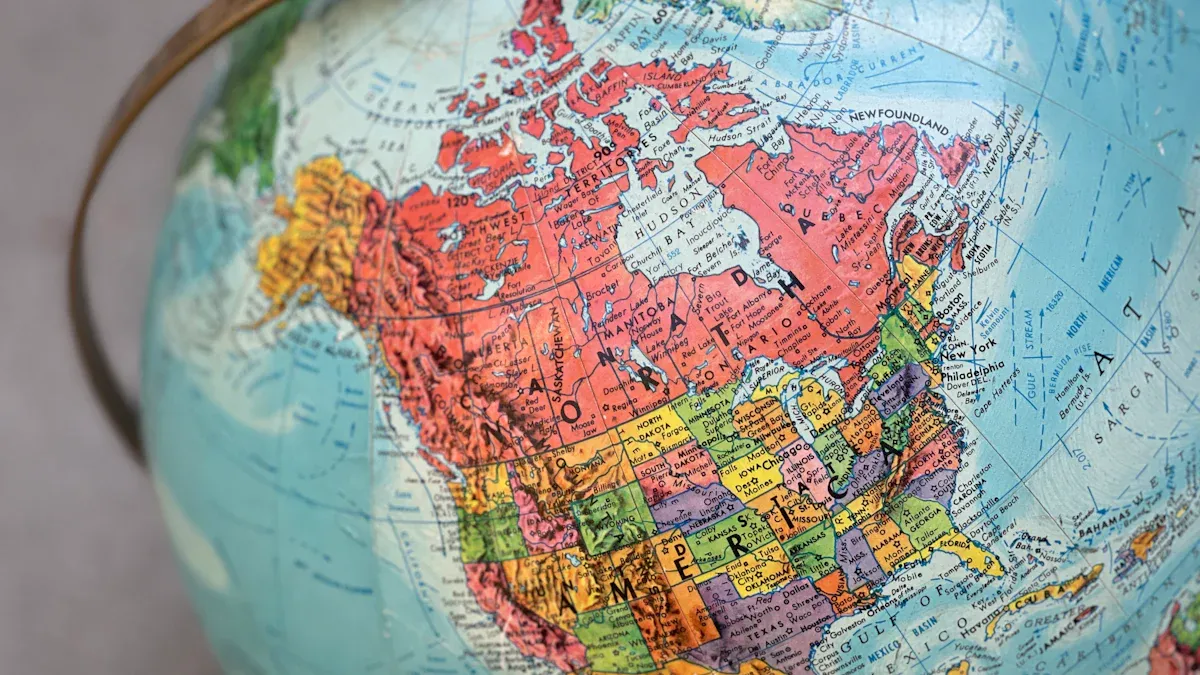
Image Source: pexels
To grasp why Canada uses the ‘1’ code, you need to look back to the mid-20th century. The telephone system was expanding rapidly. This growth created a major technical challenge. A manual system with local operators connecting every call simply could not handle the volume. A new, automated solution was necessary.
A Unified System for a Shared Network
AT&T and Bell Laboratories developed a groundbreaking plan in 1947. They officially named it The North American Numbering Plan. This system standardized telephone numbers to make long-distance dialing possible without an operator. The plan initially included only the United States and Canada. This was a practical choice. The two nations already had a deeply interconnected telecommunications landscape. The NANP later grew to include other territories, but its foundation was this shared U.S.-Canada network. Each country within the plan uses the same dialing format.
How World Zone 1 Was Assigned
You might think the ‘1’ was an arbitrary choice. However, it was part of a larger global organization effort. The International Telecommunication Union (ITU) is a United Nations agency that coordinates global telecom networks. In the years after the NANP was created, the ITU began establishing a worldwide framework.
A Global System Takes Shape The ITU formalized the existing NANP territory by designating it as World Zone 1. At the same time, it established other zones to cover the rest of the globe, such as Region 2 and Region 3. This created a structured, international numbering system for the first time.
This move officially recognized the NANP as the system for North America and integrated it into the global telephone network.
A System Before Unique Country Codes
The most important fact to remember is that the NANP came first. It was created before the modern system of unique country codes was a global standard. In today’s world, you expect every country to have its own distinct code. For example, the United Kingdom has ‘44’ and Japan has ‘81’.
The NANP, however, operates differently. It is a single, integrated zone where multiple nations share one code. Because Canada was a founding partner in this plan, it was assigned numbers within the ‘1’ zone, not given a separate country code. This is why calling a number in Canada feels like calling another state or province. You are dialing within the same numbering plan area, a system that treats each member country as part of a whole.
The Calling Code for Canada in Practice
Now that you understand the history, let’s look at how the calling code for Canada works in the real world. The shared system makes connecting with someone in Canada incredibly straightforward, especially from the United States. You can forget the complex steps often associated with international direct dial calls.
How to Call Canada From the U.S.
When you call Canada from the U.S., your phone network treats it as a domestic long-distance call, not an international one. This is the most significant practical benefit of the NANP. You do not need to dial an exit code or international prefix, such as 011, before the number. The process is seamless because both countries operate within the same numbering zone. This makes it easy to call friends, family, or businesses across the border.
The Standard Dialing Format
To place a call, you will use a simple and familiar 10-digit dialing pattern. The correct country code is ‘1’, which you dial first. This prefix is followed by a three-digit area code and a seven-digit local number.
Here is the step-by-step format:
- Dial 1 (the NANP country code).
- Dial the 3-digit Area Code for the city or region.
- Dial the 7-digit Local Phone Number.
For example, to call a number in Toronto, you would dial: 1-416-555-0199.
If you’re calling across borders (for example, reaching a Canadian merchant, support line, or partner), the dialing format is only part of the equation—billing currency and FX spread can affect what you actually pay. Many international plans settle in USD or CAD, and the final amount may be converted again when it posts to your card. A practical way to keep the math transparent is to benchmark the rate first: use the BiyaPay website and its free currency converter & comparison tool to check the mid-market rate between common billing currencies (USD/CAD) and your home currency, then compare that against what shows up on your statement to spot any meaningful spread. If you also need to move budgets or service fees internationally, reviewing international transfers can help you estimate what should arrive before you initiate a payment.
In terms of positioning, BiyaPay functions as a multi-asset wallet across cross-border payments, fund management, and investing workflows, which can be helpful when you want calls, payments, and transfers tracked under one cost model. For users who care about trust signals, it operates with relevant registrations/licensing in jurisdictions such as the U.S. and New Zealand (e.g., U.S. MSB and NZ FSP). You can also reference the event center for any rule updates tied to account or transaction conditions, so your assumptions stay consistent.
Pro Tip for Mobile Users: If you are calling from a mobile phone, especially from a country outside the NANP, it is best practice to use the plus symbol (
+) before the ‘1’. The+automatically acts as the correct exit code for whatever country you are in. The format would be+1 (Area Code) (Number).
Canada has numerous area codes for its different provinces and cities. Here are a few major ones:
| Area Code | Major City |
|---|---|
| 416 / 647 | Toronto |
| 514 | Montreal |
| 604 | Vancouver |
| 403 | Calgary |
| 780 | Edmonton |
| 613 | Ottawa |
Other NANP Member Countries
The ‘1’ country code is not exclusive to the U.S. and Canada. The NANP includes twenty countries and territories in total. Most of these are Caribbean nations that joined the plan after its creation. Each participating country was assigned its own three-digit area code within the ‘1’ zone.
This means the dialing format remains the same whether you are calling a country like the Bahamas (area code 242), Jamaica (area code 876), or Puerto Rico (area codes 787 and 939). While they are distinct countries, their telephone networks are integrated into the same system, simplifying communication across the region. This is a unique feature compared to other country codes around the world.
The History of Canada in the NANP
Image Source: unsplash
The decision to include Canada in the NANP was not an accident. It was the result of a long history of close cooperation and shared infrastructure between the American and Canadian telephone systems. This integration began long before the 1947 plan was formalized.
Post-War Integration and AT&T’s Role
You can trace the partnership back to the founding of Bell Canada in 1880. AT&T’s forerunner, the American Bell Telephone Company, was a major investor. This financial link led to deep technical collaboration. AT&T provided research, engineering, and operational advice, ensuring the networks in both countries developed with compatible standards. The goal was to create a seamless network across the continent.
A Bell Canada executive once explained the relationship this way: “The present high quality and low cost of service between the U.S. and Canada are dependent upon a smoothly functioning, integrated North American network… The network is planned, designed, engineered and operated as a single entity: The fact that two countries are involved is all but ignored in most instances.”
This quote shows that for the engineers building the system, the border was just a line on a map. The real focus was on creating a single, efficient telephone network for the entire continent. Each country benefited from this shared approach.
An Economic and Technical Decision
Including Canada in the NANP was a practical choice driven by economics and technology. Before 1947, making a long-distance call was a slow, manual process. You had to wait for an operator to connect your call, which could take several minutes. AT&T wanted to create a system for direct-dialing to make the service faster and more efficient. A unified numbering plan was the only way to achieve this.
Because the U.S. and Canadian networks were already so intertwined, creating a separate system for each country made no sense. Instead, AT&T allocated area codes to both countries within the same plan. The United States received seventy-seven area codes, while Canada was assigned nine.
The original Canadian area codes included:
- 416 for Southern Ontario
- 514 for Western Quebec
- 604 for British Columbia
- 902 for the Maritime provinces
This integration treated Canada as a partner from day one. It was a logical extension of the technical and economic ties that already existed between the two countries. The shared country code is a legacy of this forward-thinking decision.
Ultimately, the ‘1’ you dial is not for a single country; it represents the entire North American Numbering Plan region. The calling code for Canada is a legacy of a practical choice made before unique country codes became the global standard. This shared system simplifies calls between each member country. The calling code for Canada remains ‘1’ because of this deep integration.
Today, separate bodies manage the plan for each country:
| Country | Administrative Body |
|---|---|
| United States and its territories | NANPA |
| Canada | COMsolve Inc. |
FAQ
Why don’t Canada and the U.S. have different country codes?
Both countries were founding members of the North American Numbering Plan (NANP). AT&T created this system in 1947 before unique country codes became a global standard. The NANP treats the entire region as one zone, so all members share the ‘1’ code.
Is it more expensive to call Canada from the U.S.?
Most phone plans treat calls to Canada as domestic long-distance, not international. This usually makes them cheaper than other international calls. However, you should always check your specific phone plan for exact rates to avoid surprises on your bill.
Can I call a Canadian toll-free number from the U.S.?
Yes, you can. Most Canadian toll-free numbers (800, 888, etc.) work from the U.S. The process for calling a toll-free number in canada is the same as dialing a domestic one. Just dial 1 + the toll-free number.
What does the + symbol mean before the ‘1’?
The
+symbol is an international dialing prefix. When you use+1on a mobile phone, it automatically replaces the exit code for whatever country you are in. It is a universal shortcut that simplifies calling home when you are traveling abroad.
*This article is provided for general information purposes and does not constitute legal, tax or other professional advice from BiyaPay or its subsidiaries and its affiliates, and it is not intended as a substitute for obtaining advice from a financial advisor or any other professional.
We make no representations, warranties or warranties, express or implied, as to the accuracy, completeness or timeliness of the contents of this publication.
Related Blogs of

How Do AI Servers Drive Storage Demand? The Roles of HBM, Server DRAM, Enterprise SSDs, and HDDs


What Is the Difference Between HBM3E and HBM4? What Do They Mean for Micron and AI Servers?


What Is the Relationship Between ASMPT 0522.HK and HBM? The Role of Advanced Packaging Equipment in the AI Memory Supply Chain


Is SMIC 0981.HK a Memory Chip Stock? The Relationship Between Foundry Manufacturing and the Memory Supply Chain

Choose Country or Region to Read Local Blog
 Australia
 Austria
 Belgium
 Canada
 Cyprus
 Czech Republic
 Denmark
 Estonia
 Finland
 France
 Germany
 Greece
 Hong Kong
 India
India Indonesia
 Ireland
 Italy
Italy Japan
Japan Latvia
 Lithuania
 Luxembourg
 Malaysia
 Malta
Malta Morocco
 Nepal
Nepal Netherlands
 New Zealand
 Norway
 Pakistan
 Philippines
 Poland
 Portugal
 Romania
 Singapore
 Slovakia
 Slovenia
 South Africa
 South Korea
 Spain
Spain Sweden
 Thailand
 The United States
 Turkey
 United Arab Emirates
 United Kingdom
 Vietnam
Contact Us




BIYA GLOBAL LLC is registered with the Financial Crimes Enforcement Network (FinCEN), an agency under the U.S. Department of the Treasury, as a Money Services Business (MSB), with registration number 31000218637349, and regulated by the Financial Crimes Enforcement Network (FinCEN).
BIYA GLOBAL LIMITED is a registered Financial Service Provider (FSP) in New Zealand, with registration number FSP1007221, and is also a registered member of the Financial Services Complaints Limited (FSCL), an independent dispute resolution scheme in New Zealand.