HKD to CNY Exchange Rate Forecast: 2026 Outlook, Key Drivers, and Exchange Strategy





Image Source: unsplash
As of June 2026, the HKD to CNY exchange rate is no longer around the 0.91 level commonly seen in parts of 2025. Recent market data shows that 1 Hong Kong dollar is trading around the 0.86 CNY range. Because the Hong Kong dollar remains linked to the U.S. dollar, the HKD/CNY rate is mainly shaped by two exchange-rate relationships: USD/HKD and USD/CNY.
For people exchanging money, making cross-border payments, managing Hong Kong stock proceeds, or allocating RMB assets, the key question is not whether HKD itself will suddenly move sharply. The more important questions are whether the RMB will continue to strengthen against the U.S. dollar, whether the U.S. dollar will weaken further, and what actual exchange rate and fees your bank or platform offers. This article uses the latest 2026 market position as the starting point and explains the likely scenarios, key drivers, exchange timing, and risk considerations.
Key Points
- As of June 2026, 1 HKD is trading around the 0.86 CNY range, noticeably lower than the 0.90-plus levels seen around late 2025.
- The HKD to CNY rate is driven mainly by USD/CNY, because the Hong Kong dollar remains linked to the U.S. dollar.
- Hong Kong’s Linked Exchange Rate System keeps USD/HKD within the 7.75–7.85 range, giving HKD a stable anchor against USD.
- If the RMB continues to strengthen in the second half of 2026, HKD/CNY may remain under pressure; if USD rebounds or RMB weakens, HKD/CNY may recover toward higher ranges.
- When exchanging money, do not look only at the live market rate. Compare bank spreads, platform fees, transfer charges, settlement currency, and the final executable rate.
Current State of the HKD to CNY Exchange Rate
Recent Trends in 2026
From late 2025 to the first half of 2026, the HKD to CNY exchange rate moved noticeably lower. Around late 2025, 1 HKD was still roughly above 0.90 CNY. By June 2026, market reference rates had moved closer to 0.864 CNY.
This means that the same HKD 10,000 may now convert into roughly CNY 8,600-plus before considering bank spreads and platform fees, compared with over CNY 9,000 around some earlier periods. The actual amount received still depends on the exchange channel, exchange rate spread, service fee, and whether the funds are credited in HKD, USD, CNY, or another currency.
This change does not mean that the Hong Kong dollar has lost its stability mechanism. HKD remains anchored to USD under the Linked Exchange Rate System. The main reason HKD/CNY has moved lower is that the RMB has strengthened against the U.S. dollar.
A simplified way to understand the relationship is:
| Market Change | Likely Impact on HKD/CNY |
|---|---|
| RMB strengthens against USD | HKD/CNY usually falls |
| RMB weakens against USD | HKD/CNY usually rises |
| USD/HKD moves closer to 7.75 | HKD is relatively stronger within the band |
| USD/HKD moves closer to 7.85 | HKD is relatively weaker within the band |
Therefore, when analyzing the HKD to CNY exchange rate, you should not only look at Hong Kong bank rates. You should also follow the U.S. dollar index, USD/CNH, USD/CNY, China’s fixing mechanism, interest-rate spreads, capital flows, and China’s macro policy signals.
Key Data Update
The previous wording that “the 2025 exchange rate stayed between 0.913 and 0.916” is no longer suitable for a current article. In 2026, HKD/CNY has already moved into a lower range, closer to 0.86 in early to mid-June.
The table below provides a more practical 2026 reference:
| Period | Approximate HKD/CNY Level | Key Observation |
|---|---|---|
| Late 2025 | Around 0.90 or above | RMB strength was not yet fully reflected |
| January 2026 | Around 0.89 | HKD/CNY started moving lower |
| March 2026 | Around 0.88 | RMB strength against USD pressured HKD/CNY |
| May 2026 | Around 0.868 | HKD/CNY moved further into a lower range |
| Early to mid-June 2026 | Around 0.864 | The pair entered a lower observation zone |
On the Hong Kong side, the Linked Exchange Rate System remains the foundation of HKD stability. The Hong Kong Monetary Authority maintains USD/HKD within the 7.75–7.85 Convertibility Zone through a currency board system, strong-side and weak-side convertibility undertakings, and liquidity management tools. Hong Kong’s official foreign currency reserves also remain substantial, supporting market confidence in the system.
Summary: The latest HKD to CNY market position is different from the 2025 forecast framework. If an article still says that the pair is mainly in the 0.900–0.916 range, it may underestimate how much RMB strength has already affected HKD/CNY. A more accurate approach is to treat the 0.86 area as the current reference zone and then analyze possible scenarios based on USD and RMB movements.
2026 HKD to CNY Exchange Rate Forecast
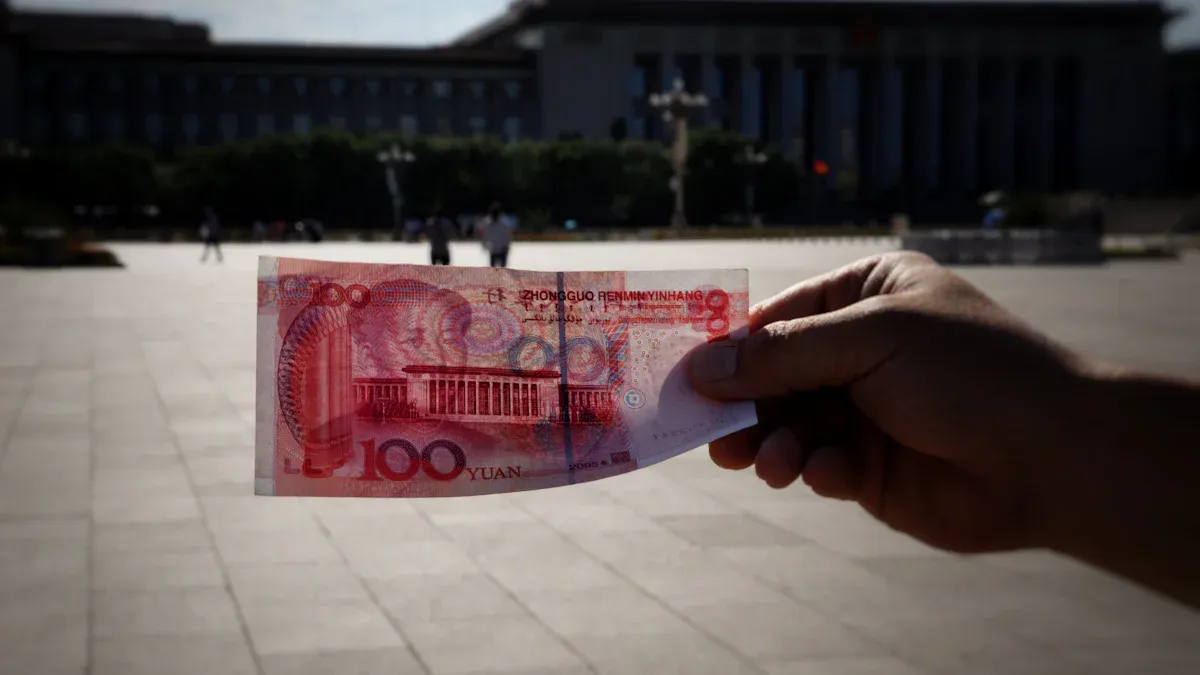
Image Source: unsplash
Base Case: Lower-Range Fluctuation
As of June 2026, HKD/CNY is already in a lower range compared with much of 2025. If the RMB continues to stay strong against the U.S. dollar and USD/HKD remains within the 7.75–7.85 band, HKD/CNY may continue to fluctuate around the 0.85–0.88 area.
If the RMB appreciates further, HKD/CNY could test levels below 0.85. If the U.S. dollar rebounds or the RMB comes under renewed pressure, the pair could recover toward the 0.88–0.90 range.
This is not a guaranteed forecast. It is a scenario-based framework based on the structure of the exchange rate. Since HKD has limited room to move against USD, the biggest variable for HKD/CNY is the direction of RMB against USD.
| Scenario | Possible Conditions | Possible HKD/CNY Range |
|---|---|---|
| RMB continues to strengthen | USD weakens, China’s exports remain resilient, RMB settlement demand rises | Around 0.83–0.86 |
| Base-case fluctuation | USD moves moderately, China’s policy remains stable | Around 0.85–0.88 |
| RMB weakens again | USD rebounds, China’s domestic demand weakens, capital outflow pressure rises | Around 0.88–0.91 |
| Risk-off or geopolitical shock | Trade tension, financial market stress, sharp risk-off moves | Range may widen quickly |
Why the 2025 Forecast Should No Longer Be Used
The previous article stated that the 2025 HKD to CNY rate would stay mostly between 0.900 and 0.916, with a possible year-end range of 0.884 to 0.910. That was a 2025 forecast framework and is no longer suitable for a 2026 article.
There are three main reasons to update the article:
- RMB has already strengthened against USD: This is the main driver behind the decline in HKD/CNY.
- The U.S. dollar direction has become more important: Expectations of U.S. rate cuts or dollar weakness can support RMB.
- China’s policy focus remains on stability: The RMB may not rise in a straight line, but policy signals still aim to avoid disorderly volatility.
The article should therefore move from “2025 full-year forecast” to “2026 current market position and scenario analysis.” This still satisfies the search intent for HKD to CNY forecast, while avoiding outdated rate ranges.
Second-Half 2026 Observation Zones
For the second half of 2026, HKD/CNY can be observed through three practical zones:
| Range | Meaning | How Users Should Read It |
|---|---|---|
| 0.83–0.85 | RMB strengthens further | HKD-to-CNY conversion becomes less favorable |
| 0.85–0.88 | Base-case fluctuation zone | Likely to be the main area to watch |
| 0.88–0.90 | RMB weakens or USD rebounds | More favorable for HKD holders converting into CNY |
If you are converting HKD into CNY, a higher HKD/CNY rate is better. If you already hold RMB and want to convert back into HKD, a lower HKD/CNY level means RMB is relatively stronger. The same exchange-rate move can have opposite effects depending on your funding direction.
Summary: A current 2026 HKD to CNY forecast should not repeat the old “0.900–0.916 with limited fluctuations” view. A more realistic framework is that HKD/CNY has already moved down to around 0.86, and the next move depends mainly on whether the RMB continues to strengthen against USD. For ordinary users, 0.85, 0.88, and 0.90 are more practical observation levels than the outdated 2025 range.
Factors Affecting the HKD to CNY Exchange Rate
Hong Kong’s Linked Exchange Rate System
The Linked Exchange Rate System is the first factor to understand. Under this system, the Hong Kong dollar is kept within the 7.75–7.85 range against the U.S. dollar. HKD does not float freely like many other currencies. This means that most HKD/CNY movement is not caused by sudden changes in HKD policy, but by USD/CNY changes being transmitted into the HKD/CNY rate.
A simple formula helps explain the relationship:
| Formula | Meaning |
|---|---|
| HKD/CNY ≈ USD/CNY ÷ USD/HKD | HKD/CNY is broadly determined by USD/CNY and USD/HKD |
When USD/CNY falls from 7.20 to 6.80, while USD/HKD remains around 7.8, HKD/CNY naturally falls. That is why HKD/CNY can move lower even when Hong Kong’s exchange-rate system remains unchanged.
RMB Policy and China’s Economy
The RMB is affected by China’s economic data, monetary policy, export performance, capital flows, corporate FX settlement, and market sentiment. If exports remain resilient, companies convert more foreign currency into RMB, and the U.S. dollar weakens, the RMB may receive support. If domestic demand remains weak, property-market pressure continues, or policy easing expectations rise, RMB appreciation may slow.
Important indicators include:
- China GDP, industrial production, and retail sales
- CPI, PPI, and PMI
- Export, import, and trade balance data
- The PBOC’s daily fixing and policy statements
- Foreign investment flows into Chinese equities and bonds
- Corporate FX settlement and offshore RMB liquidity
For HKD/CNY, RMB strength or weakness matters more than most short-term Hong Kong-specific news. As long as HKD remains linked to USD, USD/CNY remains the most important driver.
U.S. Dollar and Interest-Rate Spreads
The U.S. dollar is the second key variable. If markets expect the Federal Reserve to cut rates and the U.S. dollar index weakens, the RMB may have more room to strengthen, which can push HKD/CNY lower. If U.S. inflation rebounds, U.S. rates stay high, or the dollar strengthens, the RMB may come under pressure, which can lift HKD/CNY.
Interest-rate spreads between China and the U.S. also matter. When USD assets yield much more than RMB assets, the RMB can face capital outflow pressure. When the yield gap narrows or investors return to Chinese assets, the RMB may receive support.
Hong Kong Liquidity and Interest Rates
Hong Kong local liquidity, HIBOR, the Aggregate Balance, and Hong Kong stock market funding demand can affect short-term HKD interest rates and where USD/HKD trades within the 7.75–7.85 band. However, these factors usually affect USD/HKD within the linked-exchange-rate range, rather than changing the broader direction of HKD/CNY.
Hong Kong IPO activity, dividend flows, risk aversion, and banking-system liquidity can all create short-term HKD moves. But as long as the Linked Exchange Rate System remains stable, their impact on HKD/CNY is usually smaller than the impact of RMB movements against USD.
Summary: HKD/CNY is driven by two layers. The first is Hong Kong’s linked exchange rate system, which keeps HKD anchored to USD. The second is RMB’s movement against USD, which determines the broader direction of HKD/CNY. For investors and exchange users, the key indicators are not only Hong Kong bank board rates, but also USD/CNY, USD/HKD, the U.S. dollar index, China macro policy, and capital flows.
Currency Exchange and Fund Management Strategy
How to Think About Exchange Timing
If you need to convert HKD into CNY, do not make decisions based only on a single day’s exchange rate. After HKD/CNY moved from around 0.90 to around 0.86, the market has already priced in a meaningful RMB strengthening phase. The key question now is whether you have a fixed payment need and whether you can tolerate further downside in HKD/CNY.
A practical approach is to divide your situation into three categories:
| Situation | Suggested Approach |
|---|---|
| You must pay in CNY soon | Do not wait too long for a perfect rate; consider partial conversion or locking in cost |
| You need CNY within 3–6 months | Use staged conversion to avoid betting everything on one rate |
| You are investing in RMB assets | Consider interest rate, product risk, and exchange-rate risk together |
If HKD/CNY rebounds toward 0.88 or above, it becomes relatively more favorable for HKD holders converting into CNY. If it falls toward 0.85 or below, RMB is stronger and conversion becomes less favorable. For short-term planning, 0.85, 0.88, and 0.90 can be used as practical reference levels rather than trying to catch an exact top or bottom.
What Time Is Better for Exchange?
The foreign exchange market trades nearly around the clock, but ordinary users do not need to over-focus on finding the “best hour.” The more important goal is to avoid highly volatile periods and compare actual executable rates across channels.
Useful principles include:
- Avoid making large exchanges immediately before or after U.S. CPI, U.S. non-farm payrolls, Federal Reserve meetings, PBOC policy announcements, or major China data releases.
- Avoid rushed transactions when liquidity is poor or bank spreads are wider.
- For larger amounts, consider staged conversion instead of completing everything at once.
- Compare actual rates from banks, brokers, payment platforms, and FX platforms.
- Check whether minimum fees, transfer charges, intermediary bank fees, or receiving fees apply.
The previous claim that the London opening session is necessarily more advantageous should be softened. London and New York trading hours usually have better liquidity, but that does not guarantee a better retail exchange rate. For ordinary users, the bank or platform’s actual executable rate and fee structure are more important than the theoretical global trading session.
What to Watch When Investing in HKD or RMB Products
If you are not simply exchanging currency, but investing in HKD or RMB products, separate currency risk from product risk. HKD products are usually more influenced by USD interest rates, while RMB products are more influenced by China’s interest-rate environment, RMB exchange-rate movements, and mainland policy conditions.
Common risks include:
- Exchange-rate movements offsetting product returns
- RMB asset liquidity being lower than expected
- Bank or platform products having lock-up periods
- High-yield products carrying credit, duration, or market risk
- Cross-border fund movement being subject to platform rules or regulatory requirements
If you only need RMB for a short-term payment, you should not turn that exchange need into an investment decision. If you are allocating RMB assets for the long term, evaluate RMB interest rates, product duration, fund usage, and the potential downside in the exchange rate.
Summary: HKD to CNY exchange-rate forecasts can help you understand the direction, but they should not replace execution discipline. In actual exchange decisions, staged conversion, fee comparison, and total-cost calculation are more reliable than trying to predict a single perfect rate. For investors, exchange rate is only one factor; product risk, liquidity, lock-up period, and regulatory rules are equally important.
Major Currency Comparisons
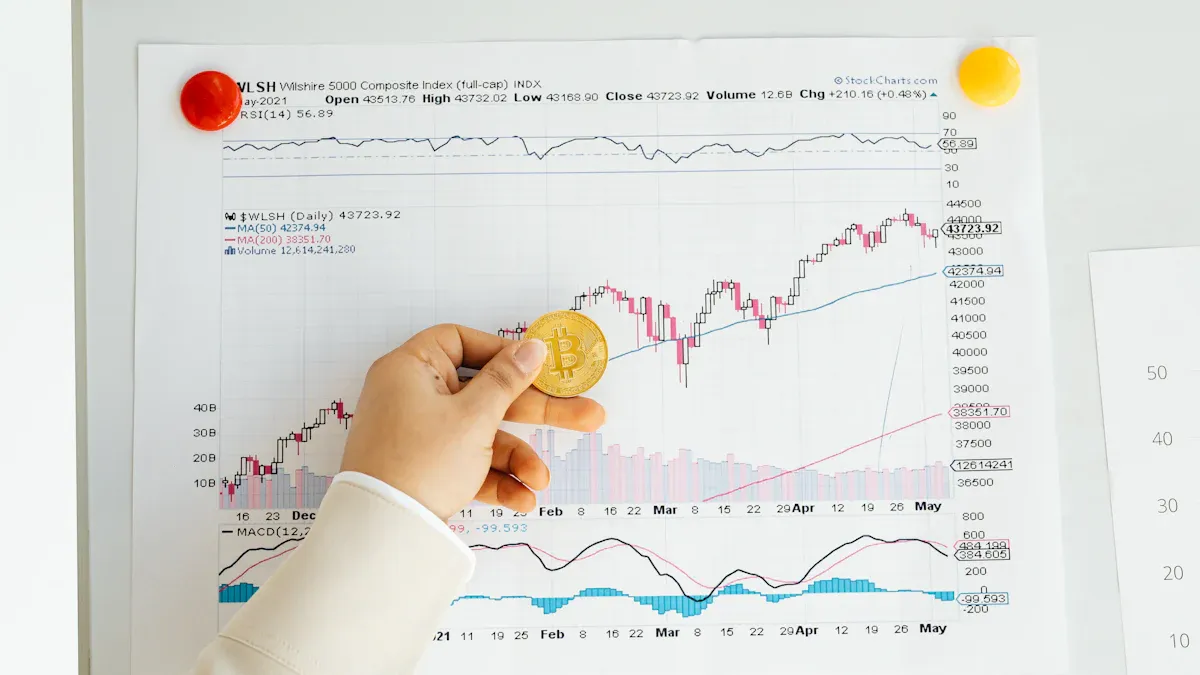
Image Source: pexels
USD to CNY
USD/CNY is the most important reference for HKD/CNY. Because HKD is linked to USD, HKD/CNY broadly follows the direction of USD/CNY. When USD/CNY falls, the RMB is strengthening against the U.S. dollar, and HKD/CNY usually falls. When USD/CNY rises, the RMB is weakening against the U.S. dollar, and HKD/CNY usually rises.
| USD/CNY Move | RMB Meaning | Likely Impact on HKD/CNY |
|---|---|---|
| USD/CNY falls | RMB strengthens | HKD/CNY tends to fall |
| USD/CNY rises | RMB weakens | HKD/CNY tends to rise |
| USD/CNY moves sideways | RMB stable | HKD/CNY often fluctuates in a narrow range |
If markets expect USD/CNY to trend lower in 2026, HKD/CNY may remain in a relatively low range. If the U.S. dollar regains strength, HKD/CNY may rebound.
USD to HKD
USD/HKD is not completely fixed, but under the Linked Exchange Rate System it mainly moves within the 7.75–7.85 range. When USD/HKD is closer to 7.75, HKD is relatively stronger within the band. When USD/HKD is closer to 7.85, HKD is relatively weaker.
For HKD/CNY, USD/HKD movements within the band can affect short-term pricing, but they are usually less important than USD/CNY. In other words, if you want to forecast HKD/CNY, first analyze the RMB’s direction against USD, then look at where HKD is trading within the linked exchange-rate band.
Offshore RMB CNH vs Onshore RMB CNY
When exchanging HKD into RMB, it is also useful to understand the difference between CNY and CNH. CNY usually refers to onshore RMB, which is more directly affected by the PBOC fixing and the onshore interbank market. CNH refers to offshore RMB, which trades actively in Hong Kong and overseas markets and can react more quickly to global capital flows.
| Item | CNY | CNH |
|---|---|---|
| Market | Mainland China | Hong Kong and offshore markets |
| Key Drivers | PBOC fixing, domestic policy, onshore liquidity | International capital flows, USD moves, offshore liquidity |
| Volatility | More policy-guided | Often reacts faster to global sentiment |
If you exchange RMB through a Hong Kong bank or platform, the rate may be closer to offshore RMB market pricing. If the funds eventually enter mainland China, you should also consider receiving, settlement, and usage rules on the mainland side.
EUR, JPY, and Other Currencies
The previous article devoted too much space to EUR/CNY, USD/EUR, and other non-core currency pairs. These currencies can still provide context for global risk appetite, but they are not the main drivers of HKD/CNY.
For HKD to CNY analysis, the priority should be:
- USD/CNY
- USD/HKD
- U.S. dollar index and U.S. interest rates
- China economic data and RMB policy
- Global risk events and safe-haven flows
Summary: The purpose of major currency comparison is not to list every currency pair, but to identify the variables most relevant to HKD/CNY. USD/CNY is the first reference, USD/HKD is the second, and CNH reflects offshore RMB sentiment. EUR, JPY, and other currencies can provide background, but they should not replace USD/CNY and USD/HKD as the core analysis framework.
FAQ
Will the HKD to CNY exchange rate fluctuate significantly in 2026?
It may not fluctuate dramatically, but the old 2025 assumption that HKD/CNY would remain above 0.90 is no longer suitable. As of June 2026, HKD/CNY is around the 0.86 range. If the RMB continues to strengthen, HKD/CNY may stay low. If the U.S. dollar rebounds or the RMB weakens, the pair may recover toward 0.88–0.90.
Is now a good time to convert HKD into CNY?
Compared with late 2025, HKD now converts into fewer RMB, so it is less favorable for HKD holders. Whether you should convert depends on your need. If you must pay in RMB soon, focus on certainty and total cost. If there is no urgent need, staged conversion may reduce the risk of exchanging everything at an unfavorable level.
What is the biggest factor affecting HKD/CNY?
The biggest factor is USD/CNY. Since HKD is linked to USD, HKD/CNY mainly follows the RMB’s movement against the U.S. dollar. Secondary factors include where USD/HKD trades within the linked exchange-rate band, Hong Kong interest rates, Hong Kong equity flows, and broader market risk sentiment.
Will Hong Kong change its linked exchange rate system?
There is currently no clear sign that Hong Kong will change the Linked Exchange Rate System. The HKMA continues to maintain the 7.75–7.85 USD/HKD Convertibility Zone. For ordinary exchange users, the more relevant issue is whether the RMB continues to strengthen against USD, not whether the HKD peg will suddenly change.
When is the best time to exchange currency?
There is no fixed time that is always best. A more practical method is to avoid periods around major economic data releases and central bank decisions, then compare actual executable rates, service fees, and final credited amounts across banks or platforms. For larger amounts, staged conversion can reduce timing risk.
What are the risks of investing in HKD or RMB products?
Key risks include exchange-rate volatility, interest-rate changes, product lock-up periods, liquidity risk, and policy adjustments. Even if a product shows a higher yield, exchange-rate losses may offset returns. Before investing, separate short-term currency exchange needs from long-term asset allocation decisions.
Check the Direction, but Execute Based on Real Costs
The key to understanding the HKD to CNY exchange-rate outlook is recognizing that HKD follows USD, while RMB determines most of the directional movement. In the first half of 2026, HKD/CNY has already fallen from above 0.90 around late 2025 to around 0.86. This means that converting HKD into RMB has become more expensive for HKD holders. If the RMB continues to strengthen, HKD/CNY may stay in a lower range. If the U.S. dollar rebounds, HKD/CNY may recover.
For ordinary users, forecasts can help with direction, but actual decisions should be based on the bank or platform’s executable rate, service fee, settlement speed, and receiving restrictions. If you also need multi-currency conversion, cross-border fund management, U.S. stock, Hong Kong stock, or digital asset trading services, BiyaPay can be considered as one fund management tool. You can use BiyaPay to manage funds across currencies and use its real-time exchange rate converter to estimate conversion costs for HKD, USD, RMB, and other currencies. Actual supported currencies, exchange rates, fees, trading services, and product terms should follow the platform’s current page display and applicable rules.
*This article is provided for general information purposes and does not constitute legal, tax or other professional advice from BiyaPay or its subsidiaries and its affiliates, and it is not intended as a substitute for obtaining advice from a financial advisor or any other professional.
We make no representations, warranties or warranties, express or implied, as to the accuracy, completeness or timeliness of the contents of this publication.
Related Blogs of

ASMPT vs Micron: What Is the Difference Between the HBM Equipment Chain and a Memory Chip Manufacturer?


Western Digital WDC vs Pure Storage PSTG: Which Is Better Suited for AI Data Centers, HDD Capacity Storage or All-Flash Arrays?


Seagate STX vs Pure Storage PSTG: Which Benefits More from Cloud Demand, Nearline HDDs or Enterprise Flash Storage?


Seagate STX vs NetApp NTAP: Hardware Cash Flow vs Enterprise Storage Softwareization

Choose Country or Region to Read Local Blog
 Australia
 Austria
 Belgium
 Canada
 Cyprus
 Czech Republic
 Denmark
 Estonia
 Finland
 France
 Germany
 Greece
 Hong Kong
 India
India Indonesia
 Ireland
 Italy
Italy Japan
Japan Latvia
 Lithuania
 Luxembourg
 Malaysia
 Malta
Malta Morocco
 Nepal
Nepal Netherlands
 New Zealand
 Norway
 Pakistan
 Philippines
 Poland
 Portugal
 Romania
 Singapore
 Slovakia
 Slovenia
 South Africa
 South Korea
 Spain
Spain Sweden
 Thailand
 The United States
 Turkey
 United Arab Emirates
 United Kingdom
 Vietnam
Contact Us




BIYA GLOBAL LLC is registered with the Financial Crimes Enforcement Network (FinCEN), an agency under the U.S. Department of the Treasury, as a Money Services Business (MSB), with registration number 31000218637349, and regulated by the Financial Crimes Enforcement Network (FinCEN).
BIYA GLOBAL LIMITED is a registered Financial Service Provider (FSP) in New Zealand, with registration number FSP1007221, and is also a registered member of the Financial Services Complaints Limited (FSCL), an independent dispute resolution scheme in New Zealand.