Is Microsoft’s AI CapEx Worth It? Evaluating Returns Through Azure, Copilot, and Free Cash Flow





Whether Microsoft’s AI CapEx is worth it cannot be judged by spending scale alone. The real question is whether those investments can turn into Azure consumption, Copilot ARPU, GitHub Copilot usage revenue, RPO, and free cash flow. In the short term, AI infrastructure investment may pressure cloud gross margin and cash flow. In the medium to long term, if Azure continues to grow strongly and Copilot and GitHub embed AI into enterprise workflows, Microsoft’s high CapEx will be easier for the market to view as growth investment rather than a valuation burden.
Key Takeaways
- Whether Microsoft AI CapEx is worth it depends on revenue conversion, not spending scale.
- Azure is the first return indicator, while Copilot measures application-layer monetization.
- Cloud gross margin and free cash flow test the quality of AI ROI.
- If CapEx keeps growing faster than revenue realization, MSFT valuation may face pressure.
- Ordinary investors should consider earnings metrics, fee structures, and volatility risks together.
Why Has Microsoft AI CapEx Become a Market Focus?
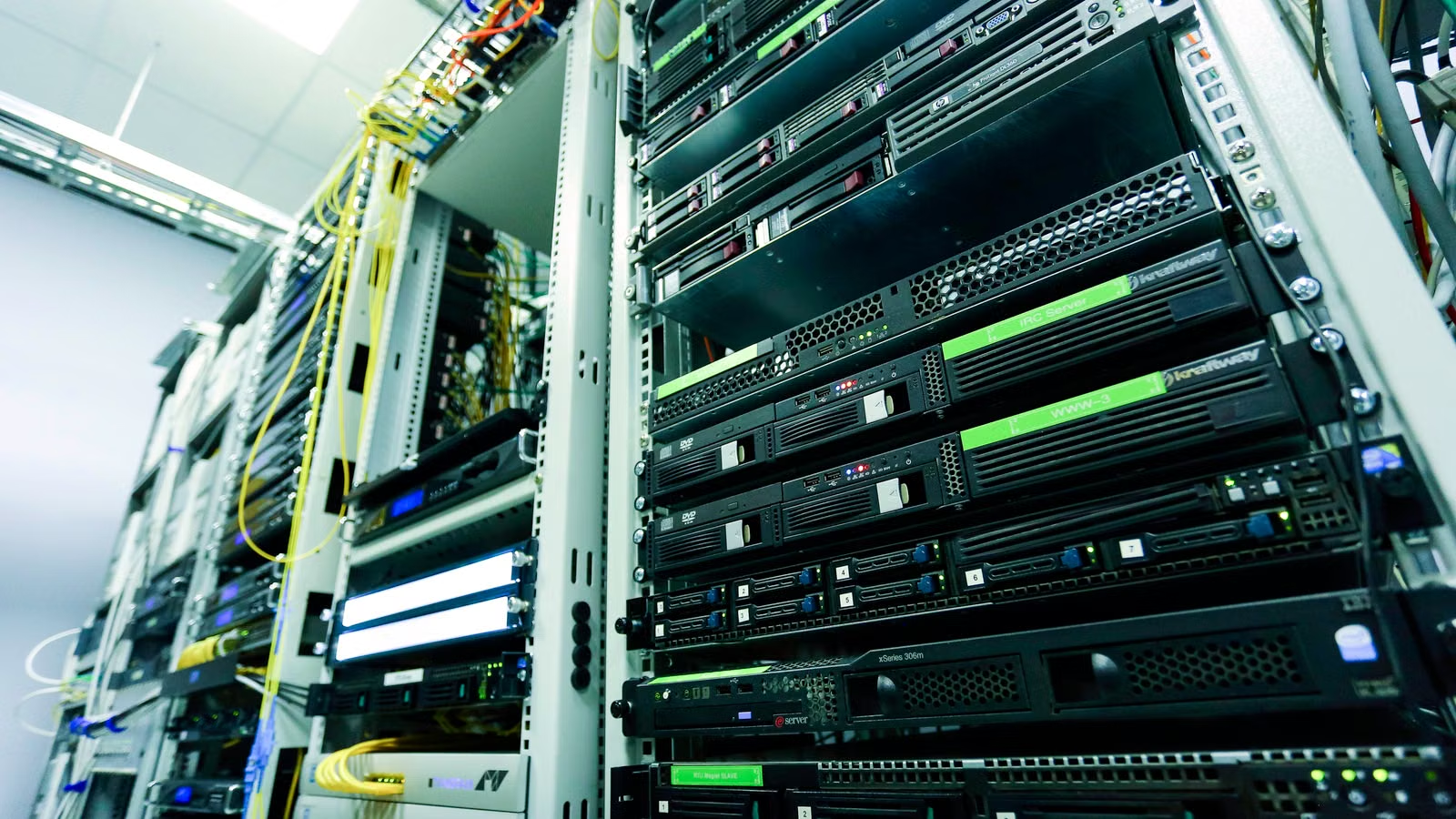
Microsoft AI CapEx has become a market focus because it is no longer just “future growth investment.” It is now a core variable affecting cloud gross margin, free cash flow, and MSFT valuation. In its FY26 Q3 earnings, Microsoft reported revenue of $82.9 billion, up 18% year over year, while Azure and other cloud services revenue grew 40%. These growth figures show demand remains strong, but the market’s real concern is how much capital spending is needed behind that growth and when those investments can turn into cash returns.
AI CapEx Is Not Just About Buying GPUs
Many investors associate AI CapEx directly with GPUs. But for a hyperscaler like Microsoft, AI infrastructure investment is much more complex. It includes GPUs, CPUs, servers, data centers, networking, power, cooling, storage, leases, and long-lived infrastructure assets. GPUs and CPUs are more closely tied to current AI training and inference demand, while data centers and power infrastructure determine how much cloud computing scale Microsoft can support over many years.
Microsoft’s CFO explained during the FY26 Q3 earnings call that quarterly CapEx was $31.9 billion, with roughly two-thirds allocated to short-lived assets such as GPUs and CPUs, and the remaining portion used for long-lived assets that can support monetization for more than 15 years. This split is important because it shows Microsoft’s AI spending includes both short-cycle hardware costs and long-term cloud platform buildout.
| CapEx Item | Related Business | What Investors Should Watch |
|---|---|---|
| GPUs / CPUs | Azure AI, OpenAI, Copilot | Whether they convert into higher usage |
| Data centers | Microsoft Cloud | Whether they expand long-term supply capacity |
| Power and networking | AI training and inference | Whether capacity bottlenecks ease |
| Long-term leased assets | Global cloud regions | Whether they support multi-year revenue |
| R&D compute | Copilot, Foundry, model optimization | Whether unit costs decline |
Why Are Investors Worried About Excessive CapEx?
The issue with high CapEx is not whether Microsoft should invest in AI. The issue is the time gap between investment and return. Microsoft must first purchase chips, build data centers, deploy servers, and then wait for customers to use Azure, Copilot, GitHub Copilot, or other AI applications. Revenue recognition often lags behind cash spending.
This pressure is not unique to Microsoft. Reuters Breakingviews, in its discussion of Big Tech AI infrastructure competition, noted that Alphabet, Amazon, Meta, Microsoft, Oracle, and other major technology companies are making large investments in Nvidia chips, data centers, and energy infrastructure. The market is concerned that the industry may eventually face overinvestment, depreciation pressure, and future price competition.
Microsoft’s advantage is its strong software profit base, deep enterprise customer relationships, and high cloud revenue visibility. Its pressure comes from the fact that AI infrastructure is far more capital intensive than traditional software. When a company shifts from a light-asset software model toward a heavy-asset AI cloud platform, the market naturally reassesses margins, cash flow, and valuation multiples.
Summary: The debate around Microsoft AI CapEx is not whether the company should invest in AI. It is whether the pace of investment is running ahead of visible revenue realization. If CapEx leads to high Azure growth, expanding Copilot usage, stronger RPO, and deeper customer stickiness, it is growth investment. If it mainly raises depreciation, power costs, lease commitments, and free cash flow pressure without a clear monetization path, high CapEx becomes a valuation pressure point for MSFT stock. To judge whether this spending is worth it, investors need to examine Azure, application-layer revenue, cloud gross margin, and free cash flow together.
Can Azure Prove the Return on Microsoft AI CapEx?

Azure is the first layer for testing the return on Microsoft AI CapEx. Microsoft’s Azure and other cloud services revenue grew 40% in FY26 Q3, or 39% in constant currency. Management expects Azure constant-currency growth of 39%–40% in FY26 Q4. If Azure can remain close to 40% growth despite high CapEx, it would suggest AI infrastructure investment is turning into real cloud revenue rather than staying at the narrative level of “possible future returns.”
Azure Growth Needs to Be Split Into AI and Non-AI
Azure growth should not be judged only by the headline growth rate. It needs to be split into AI workloads and non-AI workloads. The AI side includes OpenAI-related demand, Azure AI Foundry, enterprise agents, model inference, and training. The non-AI side includes traditional cloud migration, databases, compute, storage, security, and enterprise systems moving to the cloud.
If Azure growth is mainly driven by an AI boom, the market may worry about high costs, cyclicality, and customer concentration. If AI and non-AI consumption grow together, it suggests Microsoft is not relying on a single hot theme to drive revenue, but is continuing to expand its enterprise customer base at the cloud platform level.
Capacity Release Determines the Speed of Revenue Recognition
Microsoft said on the earnings call that Q3 Azure performance was better than expected partly because capacity was delivered earlier, which supported growth in both AI and non-AI services consumption, while customer demand still exceeded available capacity. This statement suggests Microsoft is facing “supply-constrained growth.” Demand is not the issue. Data centers, chips, power, and server deployment speed affect how quickly revenue can be recognized.
This is also the key to whether high CapEx is reasonable. If customer demand already exceeds supply, building capacity in advance may translate into revenue. If demand begins to slow, new capacity could become a utilization problem.
| Azure Signal | Indicates CapEx Is More Worthwhile | Indicates Rising CapEx Pressure |
|---|---|---|
| Azure growth near 40% | Supply investment is converting into revenue | The market may have priced it in |
| AI and non-AI both grow | Growth structure is more stable | Sustainability still needs proof |
| Customer demand exceeds supply | Future revenue visibility is stronger | CapEx may continue to rise |
| Earlier capacity delivery | Revenue recognition speeds up | Execution requirements become higher |
| Rapid RPO growth | Contracted revenue visibility improves | Realization cycle may be long |
Microsoft Cloud and RPO Are Supporting Verification Metrics
Azure growth alone is not enough. Investors also need to watch Microsoft Cloud and RPO. Microsoft reported that Microsoft Cloud revenue reached $54.5 billion, up 29% year over year, while commercial remaining performance obligation rose to $627 billion, up 99%. High RPO indicates stronger long-term contract visibility and future revenue visibility, but it does not mean immediate monetization. The real questions are how much revenue will be recognized over the next 12 months, what contract duration looks like, which customers are driving growth, and whether Azure consumption quality remains strong.
Summary: Azure is Microsoft AI CapEx’s first scorecard, but investors should not focus only on the growth rate. More important factors include the sources of Azure growth, the pace of capacity release, customer demand strength, RPO structure, and Microsoft Cloud revenue quality. If high Azure growth comes from real enterprise workloads and capacity delivery continues to convert into revenue, AI CapEx will be easier for the market to accept. If Azure growth slows while CapEx and lease commitments continue to rise, MSFT stock may again face questions over AI ROI.
Can Copilot and GitHub Turn AI Investment Into Application-Layer Revenue?
Copilot and GitHub are the second layer for proving whether Microsoft AI CapEx is worth it because they determine whether AI infrastructure can move from “compute supply” to high-value software revenue. Microsoft disclosed that its AI business annual revenue run rate had exceeded $37 billion, up 123% year over year. Microsoft 365 Copilot paid seats had also surpassed 20 million. This shows AI has entered the revenue layer, but investors still need to watch ARPU, usage intensity, renewals, and inference cost.
Microsoft 365 Copilot Should Be Judged by ARPU, Not Just Seats
Copilot paid seats are a scale indicator, while ARPU is a revenue quality indicator. Microsoft embeds Copilot into Word, Excel, PowerPoint, Teams, Outlook, and enterprise workflows. The real value is not letting users “try AI,” but making enterprises willing to keep paying for productivity improvements.
Management said M365 Commercial cloud ARPU growth was driven by E5 and Copilot, and that Q4 net paid seat additions are expected to increase sequentially. For investors, this means Copilot needs to prove three things: enterprise seats continue to expand, paid user activity increases, and unit inference cost does not consume software revenue.
GitHub Copilot Should Be Judged by Usage and Pricing Model
GitHub Copilot is closer to high-frequency developer workflows and can directly affect code generation, code review, agentic coding, and enterprise engineering productivity. GitHub announced that GitHub Copilot usage-based billing will begin on June 1, 2026. Copilot usage will consume GitHub AI Credits and be measured based on token usage.
This change is important for Microsoft AI ROI. In the past, subscription pricing may not have fully covered inference costs for heavy users. Usage-based pricing can make revenue more closely aligned with compute consumption, helping improve unit economics. But it may also make enterprise customers more sensitive to budgets and usage efficiency.
| Application-Layer Metric | Meaning for AI ROI | Risk to Watch |
|---|---|---|
| Copilot paid seats | Shows enterprises are willing to pay | Could still be pilot deployment |
| Copilot ARPU | Shows application-layer monetization | Must offset inference cost |
| GitHub usage | Shows frequent developer usage | Usage cost may be too high |
| Usage-based pricing | Better matches revenue with cost | Customer budget sensitivity may rise |
| Security / Dynamics agents | Expands business scenarios | Sales cycles may be longer |
Application-layer revenue matters more than infrastructure revenue because it sits closer to enterprise workflows. Azure proves Microsoft has compute and cloud platform capacity, but Copilot, GitHub Copilot, Security Copilot, and Dynamics agents prove Microsoft can turn AI into software subscriptions, business automation, and customer stickiness. If high CapEx stays only at the infrastructure layer, it can be exposed to price competition and utilization risk. If it reaches the application layer, Microsoft’s AI investment return becomes higher quality.
Summary: Whether Microsoft AI CapEx is “worth it” cannot be proven by Azure infrastructure revenue alone. Copilot and GitHub must show that AI is being embedded into daily enterprise workflows. If Copilot lifts ARPU, GitHub Copilot usage and revenue grow together, and Security and Dynamics scenarios continue expanding, Microsoft can turn high CapEx into higher-value software revenue. If application-layer paid adoption grows more slowly than infrastructure cost, the certainty of AI ROI will remain under market scrutiny.
How Do Cloud Gross Margin and Free Cash Flow Measure Microsoft AI ROI?
Cloud gross margin and free cash flow are key intermediate indicators for measuring Microsoft AI ROI. Revenue growth shows demand exists. Cloud gross margin shows whether that demand has profit quality. Free cash flow shows whether Microsoft can sustain ongoing capital expenditure. Microsoft’s FY26 Q3 company gross margin was 68%, down year over year, partly due to AI infrastructure investment and increased usage of AI products. Microsoft Cloud gross margin percentage was 66%, also affected by AI investment. Management also expects Microsoft Cloud gross margin percentage to be around 64% in Q4.
Why is cloud gross margin more important than total revenue? Because AI revenue does not automatically equal high-margin revenue. AI inference, model calls, GPU depreciation, server maintenance, electricity, and data center costs all enter the cost base. If Azure and Copilot revenue grow quickly but Microsoft Cloud gross margin continues to decline, the market may worry that Microsoft is buying growth at a higher cost.
Free cash flow is another stress test. Microsoft’s FY26 Q3 cash flow from operations was $46.7 billion, while free cash flow was $15.8 billion. High CapEx has already had a clear impact on FCF conversion. Microsoft’s advantage is its strong software subscription base and large cash flow scale. The risk is that if AI CapEx continues to rise, it may reduce the flexibility for buybacks, dividends, and valuation expansion.
| ROI Indicator | Positive Signal | Negative Signal |
|---|---|---|
| Cloud gross margin | Decline narrows or stabilizes | Continues falling |
| Free cash flow | Remains strong after CapEx | FCF conversion declines |
| CapEx / revenue | Revenue catches up with investment | Investment keeps outpacing revenue |
| Copilot ARPU | Application-layer monetization improves | Seats grow but ARPU is weak |
| RPO recognition pace | Next-12-month recognition improves | Long-cycle contracts dominate |
Several signals would suggest Microsoft AI ROI is improving: Azure consumption grows faster than CapEx; Copilot ARPU and GitHub usage-based revenue improve; Microsoft Cloud gross margin declines at a slower pace; the next-12-month revenue recognition portion of RPO rises; and management stops frequently raising AI CapEx guidance.
Reuters reported that Microsoft expects 2026 capital expenditure to reach $190 billion, with rising component costs, including chips, adding about $25 billion to spending expectations. This explains why the market is so sensitive to AI investment returns. Microsoft is not making a small budget increase. It is reshaping the company’s capital structure and cash flow rhythm.
If you are watching trading opportunities after Microsoft earnings, MSFT stock volatility is not the only factor to consider. Trading costs also matter. U.S. stock trading usually involves more than commissions. It may include platform fees, external institution fees, trading activity fees, FX costs, and execution differences. For example, Biya charges $0 commission for U.S. stock trading, while platform fees, external institution fees, and other costs are subject to the U.S. stock trading fee schedule and the order page. Popular technology stocks may see after-hours gaps, wider spreads, and higher execution volatility after earnings, so investors should understand order types, fee structures, and risks before trading.
Summary: Microsoft AI ROI should not be judged only by “how much AI revenue is growing.” Cloud gross margin and free cash flow should be observed at the same time. Cloud gross margin shows whether AI revenue has profit quality, while free cash flow shows whether Microsoft can sustain ongoing capital expenditure. If Microsoft Cloud gross margin gradually stabilizes, FCF remains strong, and Copilot and GitHub contribute higher ARPU, AI CapEx will be easier to justify. If gross margin keeps falling, FCF conversion weakens, and CapEx continues to rise, the market may reduce the valuation premium attached to MSFT.
How Will MSFT Stock Price Microsoft AI CapEx?
MSFT stock will price Microsoft AI CapEx as either “growth investment” or “cash flow pressure” depending on post-earnings expectation gaps. If Azure continues to grow near 40%, Copilot and GitHub monetization becomes clearer, and cloud gross margin declines within expectations, the market is more likely to continue assigning Microsoft an AI premium. If CapEx grows faster than revenue realization while free cash flow and cloud gross margin both come under pressure, MSFT valuation multiples may compress.
In the optimistic scenario, Azure growth comes in near or above management guidance, AI ARR, Copilot paid seats, and GitHub Copilot usage continue expanding, and free cash flow remains resilient. The market would interpret high CapEx as a way to secure AI supply capacity early.
In the neutral scenario, Azure broadly meets expectations, but CapEx remains high and Copilot metrics grow without clearer revenue breakdowns. The stock may trade sideways because the market does not deny Microsoft’s AI demand, but may not immediately assign a higher valuation either.
In the bearish scenario, Azure growth slows, application-layer AI revenue lacks incremental disclosure, cloud gross margin continues to decline meaningfully, and CapEx guidance rises again. The market may reprice Microsoft from a “high-quality AI growth stock” into a “high-spending cloud infrastructure stock.”
| Scenario | Earnings Signal | Market Interpretation | Possible Impact on MSFT Stock |
|---|---|---|---|
| Optimistic | Strong Azure, strong Copilot, stable FCF | CapEx is growth investment | Valuation has support |
| Neutral | Growth meets expectations, costs remain high | ROI still needs time to prove | Stock may fluctuate sideways |
| Bearish | Growth slows, CapEx rises again | AI investment return is insufficient | Valuation may face pressure |
For ordinary investors, judging whether Microsoft AI CapEx is worth it should not be based only on headlines. A more useful checklist includes: whether Azure maintains high growth, whether Copilot improves ARPU, whether GitHub usage-based pricing improves revenue quality, whether Microsoft Cloud gross margin stabilizes, and whether free cash flow can still support high-intensity investment. If these indicators improve together, Microsoft AI CapEx is more likely to be accepted by the market. If several of them weaken at the same time, stock volatility may increase significantly.
Summary: MSFT stock’s reaction to AI CapEx is not determined by spending scale alone. It depends on how the market understands the chain of “spending—revenue—profit—cash flow.” If Azure and Copilot prove that AI infrastructure has high utilization, strong customer stickiness, and stable revenue conversion, Microsoft’s high CapEx can continue to be tolerated by the market. If CapEx keeps rising while margins and free cash flow come under pressure, the AI narrative may no longer be enough to support a higher valuation. After earnings, the key is not one-day stock movement, but whether the market continues to believe Microsoft can turn AI investment into long-term cash flow.
If you are tracking AI earnings season themes across Microsoft, Alphabet, Nvidia, TSMC, and other companies, you can evaluate each company through six layers: revenue growth, capital expenditure, gross margin, free cash flow, valuation reaction, and trading costs. Through U.S. stock information search, you can check basic U.S. stock information and record earnings dates, pre-market and after-hours volatility, and your own risk tolerance. Availability of related services depends on your location, identity verification results, platform rules, and applicable laws and regulations. The analysis above only introduces public market information, earnings metrics, and fee structures, and does not constitute investment advice. If you need to continue monitoring market data and account records on mobile, you can also use the Biya app for follow-up viewing and management.
FAQ
Is Microsoft AI CapEx Always Good for MSFT Stock?
Microsoft AI CapEx is not always positive for MSFT stock. If CapEx converts into Azure growth, Copilot ARPU, GitHub usage revenue, and stable free cash flow, it is more supportive. If it mainly raises depreciation, lease costs, power costs, and cash flow pressure, the market may lower MSFT valuation multiples.
How Can Azure Growth Verify Microsoft AI Investment Returns?
Azure growth should be evaluated through growth rate, AI and non-AI consumption, RPO, and capacity release. Azure growth alone is not enough. Investors also need to see whether growth comes from real enterprise workloads and whether it leads to revenue recognition, margin stability, and stronger customer stickiness.
What Role Does Copilot Play in Microsoft AI ROI?
Copilot is key to moving Microsoft AI from infrastructure investment to application-layer revenue. Investors should watch Microsoft 365 Copilot paid seats, ARPU, usage frequency, enterprise renewals, and inference costs, rather than judging Copilot only by how popular the product is.
Does Lower Microsoft Cloud Gross Margin Mean AI Investment Has Failed?
Lower Microsoft cloud gross margin does not mean AI investment has failed, but it is a warning signal. Early AI infrastructure investment can pressure margins. If Azure usage, Copilot ARPU, and GitHub revenue improve later, margins may stabilize. If the decline continues for a long time, the market will question AI ROI.
How Should Ordinary Investors Judge Microsoft AI CapEx Risk?
Ordinary investors should evaluate CapEx, free cash flow, Azure guidance, cloud gross margin, and management’s explanation of AI ROI together. Post-earnings stock movement usually comes from expectation gaps, so investors should not rely only on quarterly revenue or EPS, nor should they treat the AI narrative as a guaranteed return.
What Trading Costs Should Investors Watch When Buying Microsoft Stock?
When buying Microsoft stock, investors should watch commissions, platform fees, external institution fees, trading activity fees, FX costs, and execution differences. Fee rules vary by platform, so actual costs should be checked against the platform fee schedule, order page, account statement, and local regulatory requirements. Investors should also understand earnings-related volatility before trading.
*This article is provided for general information purposes and does not constitute legal, tax or other professional advice from BiyaPay or its subsidiaries and its affiliates, and it is not intended as a substitute for obtaining advice from a financial advisor or any other professional.
We make no representations, warranties or warranties, express or implied, as to the accuracy, completeness or timeliness of the contents of this publication.
Related Blogs of

Microsoft Earnings Preview: Can Azure AI Growth Continue to Support MSFT Stock?


Alphabet Earnings Preview: Will AI Search Weigh on Advertising or Drive Google Cloud Growth?


Will SK Hynix’s U.S. Listing Hurt Micron? SKHY vs. MU: Which Stock Is the Better Buy?


How Can One Company’s Earnings Affect the Entire AI Supply Chain? From TSMC and ASML to Micron and Seagate
Choose Country or Region to Read Local Blog
 Australia
 Austria
 Belgium
 Canada
 Cyprus
 Czech Republic
 Denmark
 Estonia
 Finland
 France
 Germany
 Greece
 Hong Kong
 India
India Indonesia
 Ireland
 Italy
Italy Japan
Japan Latvia
 Lithuania
 Luxembourg
 Malaysia
 Malta
Malta Morocco
 Nepal
Nepal Netherlands
 New Zealand
 Norway
 Pakistan
 Philippines
 Poland
 Portugal
 Romania
 Singapore
 Slovakia
 Slovenia
 South Africa
 South Korea
 Spain
Spain Sweden
 Thailand
 The United States
 Turkey
 United Arab Emirates
 United Kingdom
 Vietnam
Contact Us




BIYA GLOBAL LLC is registered with the Financial Crimes Enforcement Network (FinCEN), an agency under the U.S. Department of the Treasury, as a Money Services Business (MSB), with registration number 31000218637349, and regulated by the Financial Crimes Enforcement Network (FinCEN).
BIYA GLOBAL LIMITED is a registered Financial Service Provider (FSP) in New Zealand, with registration number FSP1007221, and is also a registered member of the Financial Services Complaints Limited (FSCL), an independent dispute resolution scheme in New Zealand.